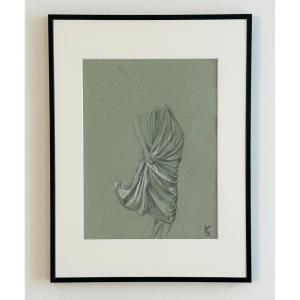

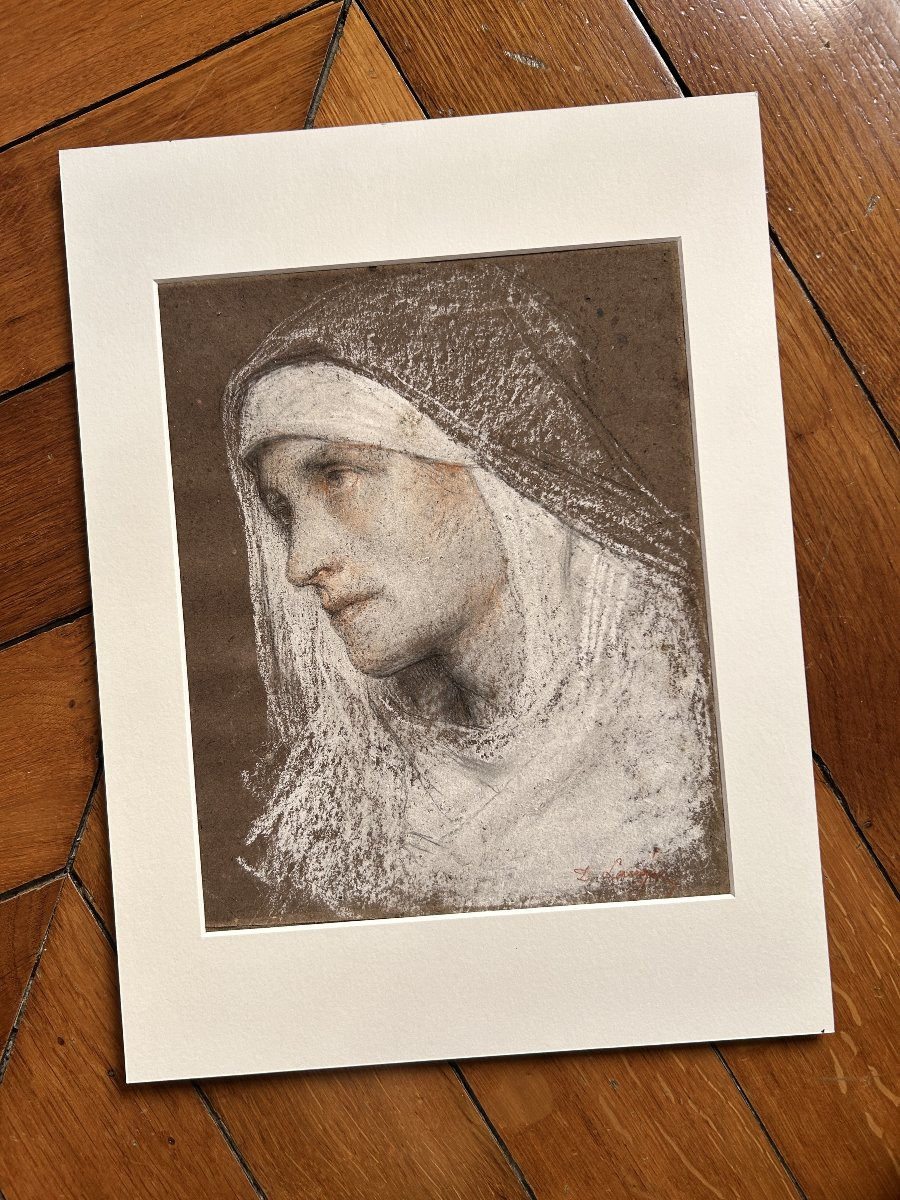




Désiré-françois Laugée (1823-1896), Woman, 1883, Three Crayons
Artist: Désiré-françois Laugée (1823-1896)
Désiré-François LAUGÉE (1823-1896)
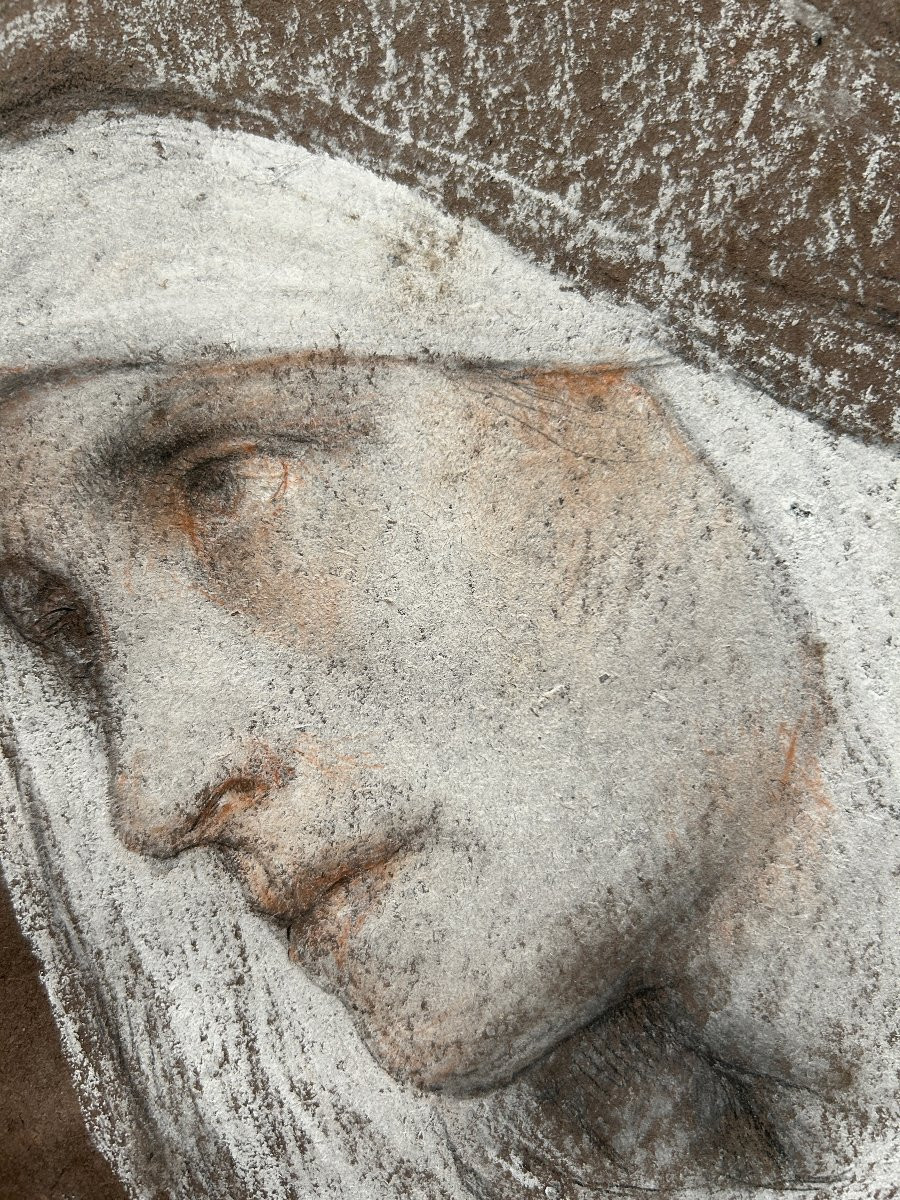
Woman in Left Profile, circa 1883
Preparatory study for the figure on the right of the painting Les Pérelins, held at the Petit Palais, Musée des Beaux-Arts de la Ville de Paris; a figure also found in a portrait entitled Dolor (private collection)
Three pencil drawings on paper laid down on cardboard
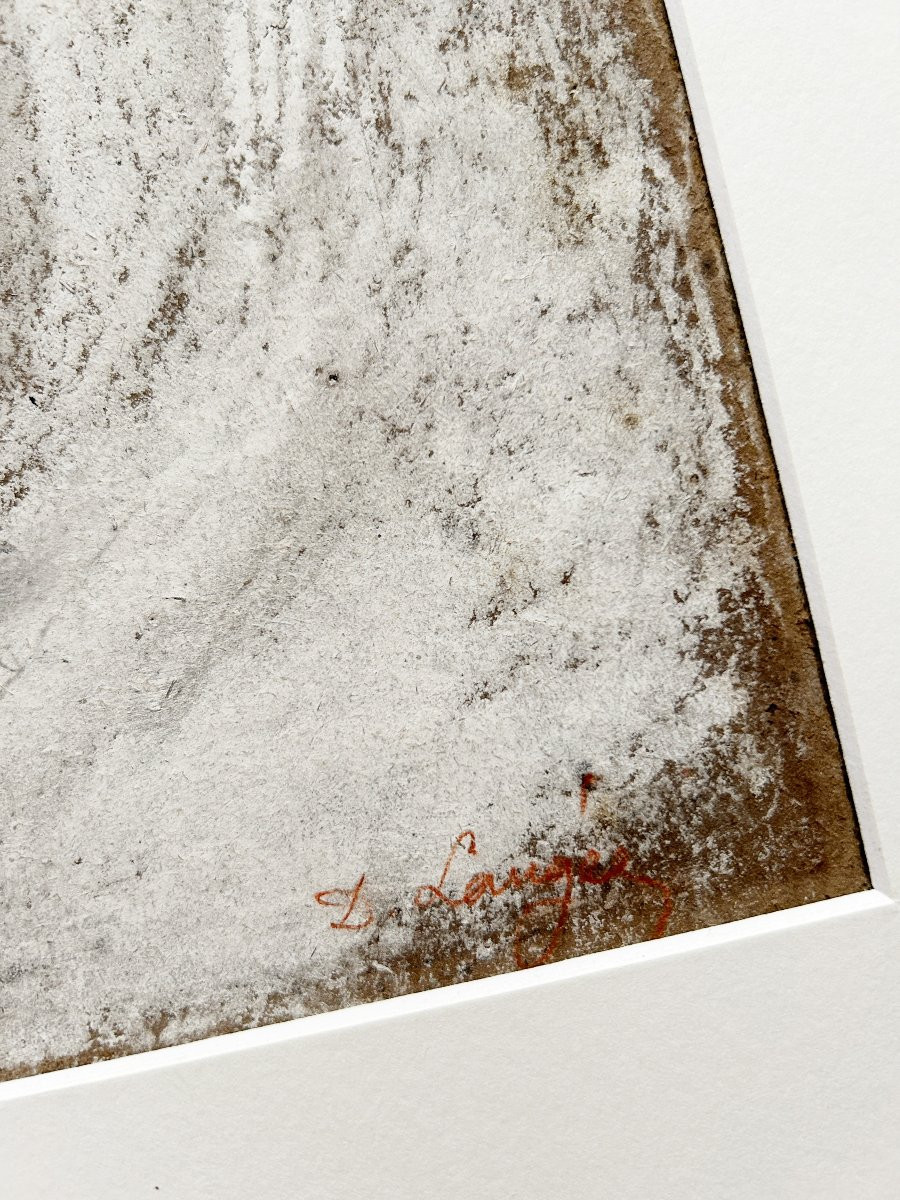
Signed lower right 28 × 22.5 cm
Black lacquered oak frame 40 × 30 cm
Small tear lower left - small stains at the top
Born in Normandy in 1823, Désiré-François Laugée showed an early interest in drawing. He received his first classical training at the drawing school founded by Maurice Quentin de La Tour in Saint-Quentin in the studio of Louis Lemasle (1788-1876). He then enrolled at the École des Beaux-Arts in Paris, studying in the studio of François-Édouard Picot (1786-1868), a student of Jacques-Louis David. From 1845 onward, he exhibited regularly at the Salon. Close to Alexandre Dumas and Victor Hugo, whose portraits he painted several times, the artist was also passionate about poetry.
Having gained recognition at the Salon, Désiré Laugée received numerous private portrait commissions as well as public commissions for large-scale secular (Rouen, Palace of Justice) and religious (Paris, Church of Sainte-Clotilde; Paris, Church of the Holy Trinity) decorations. In addition to historical subjects, the artist flourished in genre painting (The Poppy Harvest earned him a First Class medal in 1861). Peasantry and scenes of rural life in Picardy were among his favorite subjects, which he treated in a naturalistic style. He became friends with Jules Breton (1827-1906), who would influence his son, the painter Georges Laugée (1853-1937).
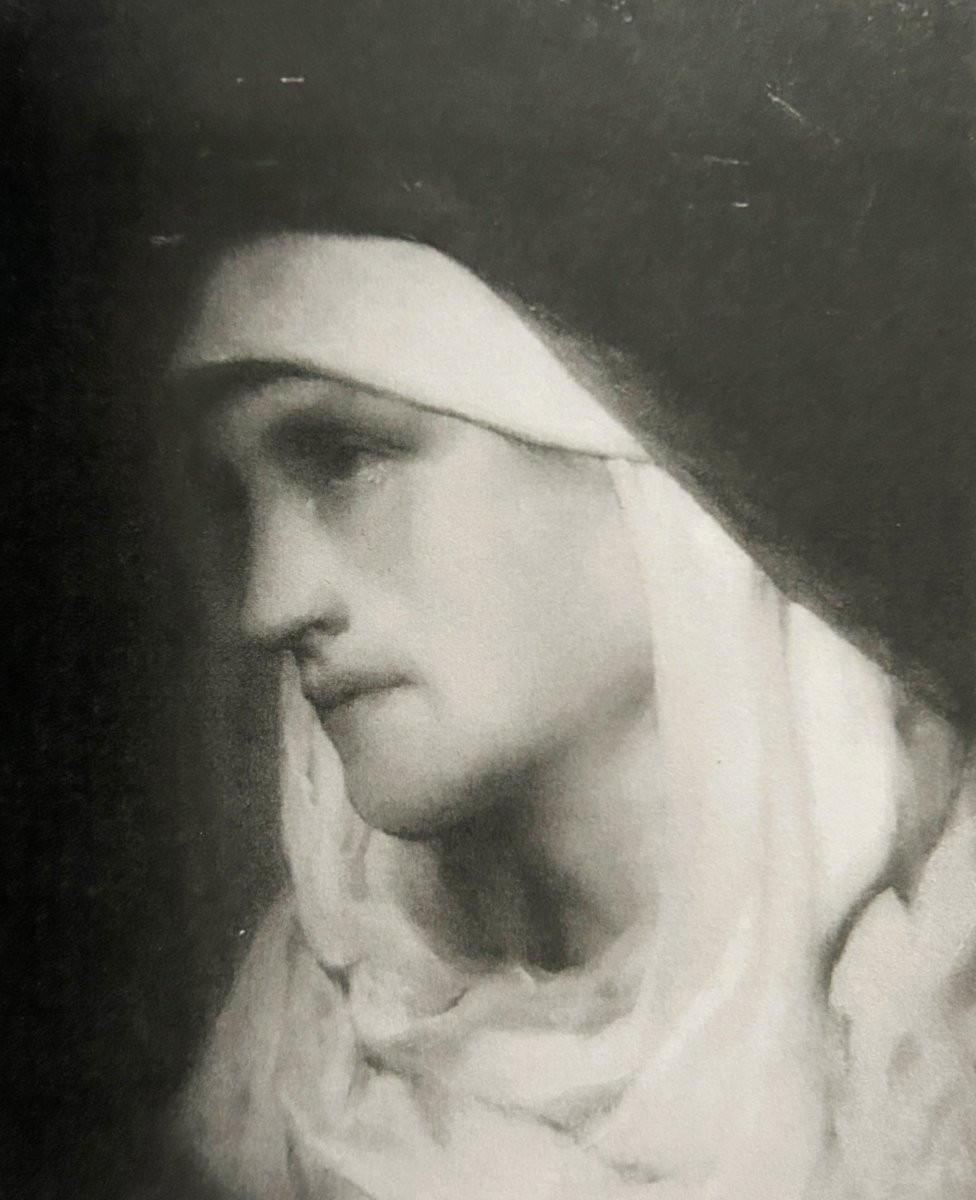
The drawing we are presenting is a preparatory study for the female figure in the painting entitled The Pilgrim, now in the Petit Palais Museum in Paris (ill. 1). This painting was exhibited at the Salon of 1884. It depicts a humble pilgrim couple and their son in a dimly lit interior illuminated by three candles in a subtle interplay of light and shadow. The same female figure appears in a portrait entitled Dolor, dated 1883 (ill. 2). The young woman's expression of sorrow and desolation is skillfully rendered in our drawing, which demonstrates the artist's virtuosity in the use of the three-crayon technique. The intensity of her gaze is particularly emphasized.
Woman in Left Profile, circa 1883
Preparatory study for the figure on the right of the painting Les Pérelins, held at the Petit Palais, Musée des Beaux-Arts de la Ville de Paris; a figure also found in a portrait entitled Dolor (private collection)
Three pencil drawings on paper laid down on cardboard
Signed lower right 28 × 22.5 cm
Black lacquered oak frame 40 × 30 cm
Small tear lower left - small stains at the top
Born in Normandy in 1823, Désiré-François Laugée showed an early interest in drawing. He received his first classical training at the drawing school founded by Maurice Quentin de La Tour in Saint-Quentin in the studio of Louis Lemasle (1788-1876). He then enrolled at the École des Beaux-Arts in Paris, studying in the studio of François-Édouard Picot (1786-1868), a student of Jacques-Louis David. From 1845 onward, he exhibited regularly at the Salon. Close to Alexandre Dumas and Victor Hugo, whose portraits he painted several times, the artist was also passionate about poetry.
Having gained recognition at the Salon, Désiré Laugée received numerous private portrait commissions as well as public commissions for large-scale secular (Rouen, Palace of Justice) and religious (Paris, Church of Sainte-Clotilde; Paris, Church of the Holy Trinity) decorations. In addition to historical subjects, the artist flourished in genre painting (The Poppy Harvest earned him a First Class medal in 1861). Peasantry and scenes of rural life in Picardy were among his favorite subjects, which he treated in a naturalistic style. He became friends with Jules Breton (1827-1906), who would influence his son, the painter Georges Laugée (1853-1937).
The drawing we are presenting is a preparatory study for the female figure in the painting entitled The Pilgrim, now in the Petit Palais Museum in Paris (ill. 1). This painting was exhibited at the Salon of 1884. It depicts a humble pilgrim couple and their son in a dimly lit interior illuminated by three candles in a subtle interplay of light and shadow. The same female figure appears in a portrait entitled Dolor, dated 1883 (ill. 2). The young woman's expression of sorrow and desolation is skillfully rendered in our drawing, which demonstrates the artist's virtuosity in the use of the three-crayon technique. The intensity of her gaze is particularly emphasized.
1 800 €
Period: 19th century
Style: Other Style
Condition: Excellent condition
Material: Paper
Reference (ID): 1731274
Availability: In stock
Print