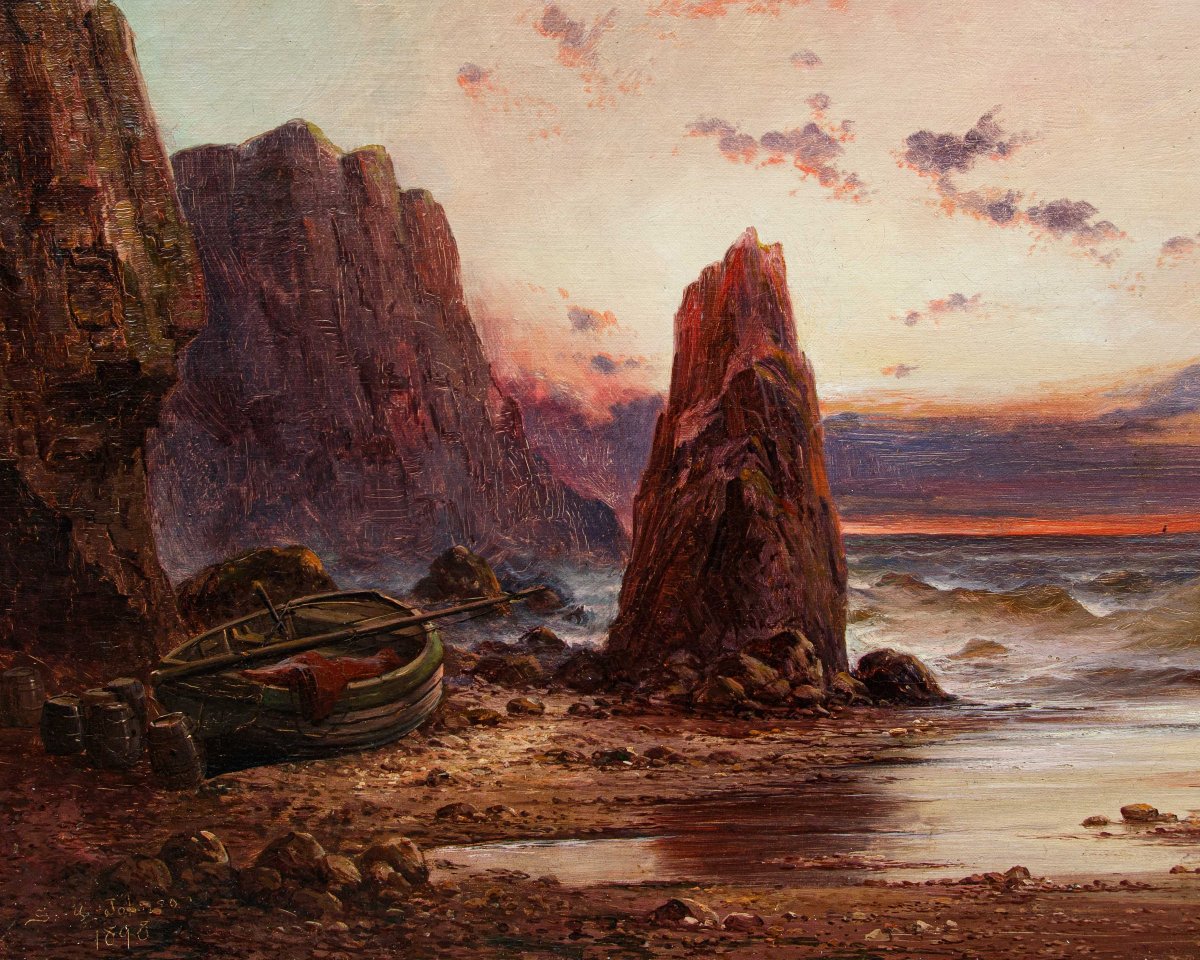


Sidney Yates Johnson (london, Active 1890 – 1926), Sea View At Sunset
Sidney Yates Johnson (London, active 1890 – 1926)
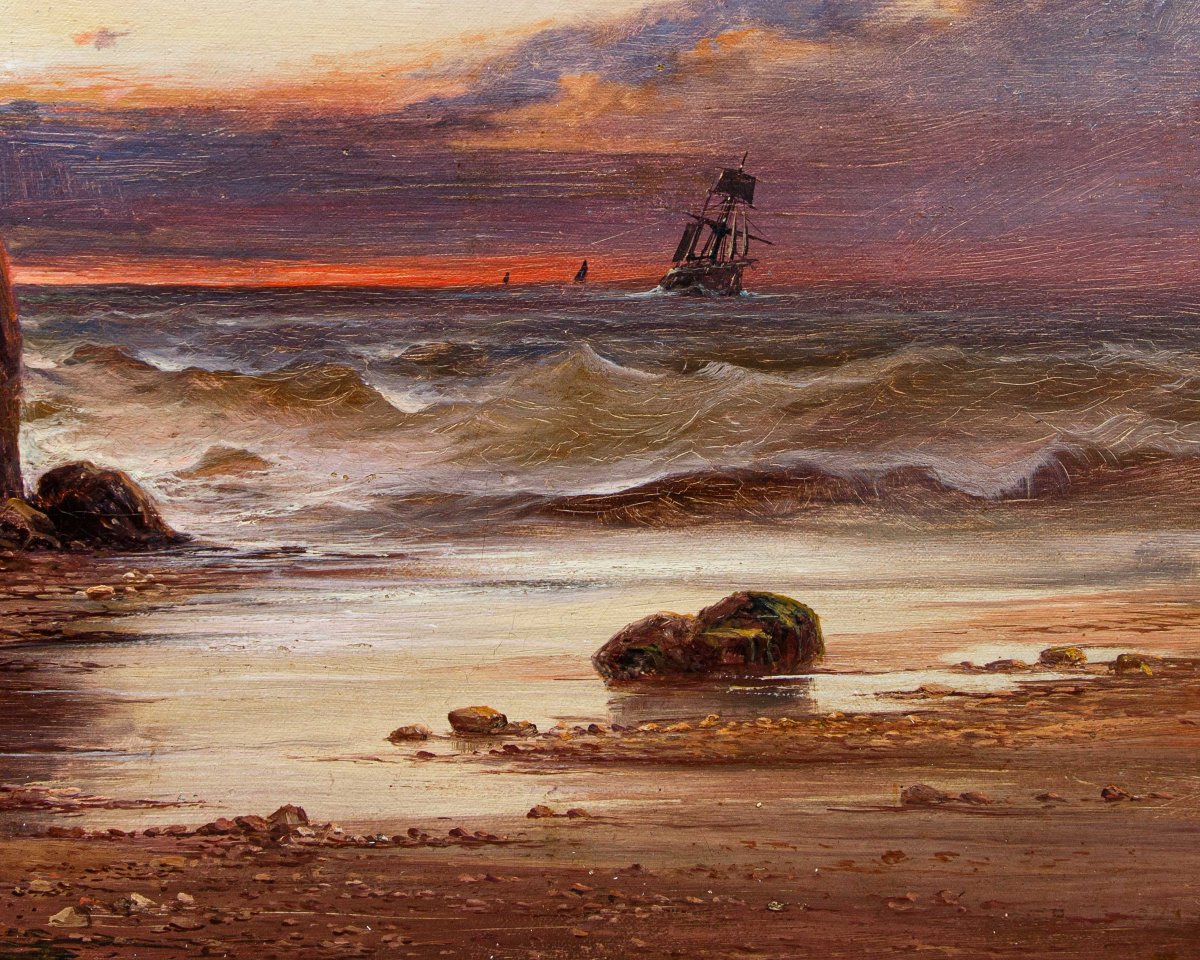
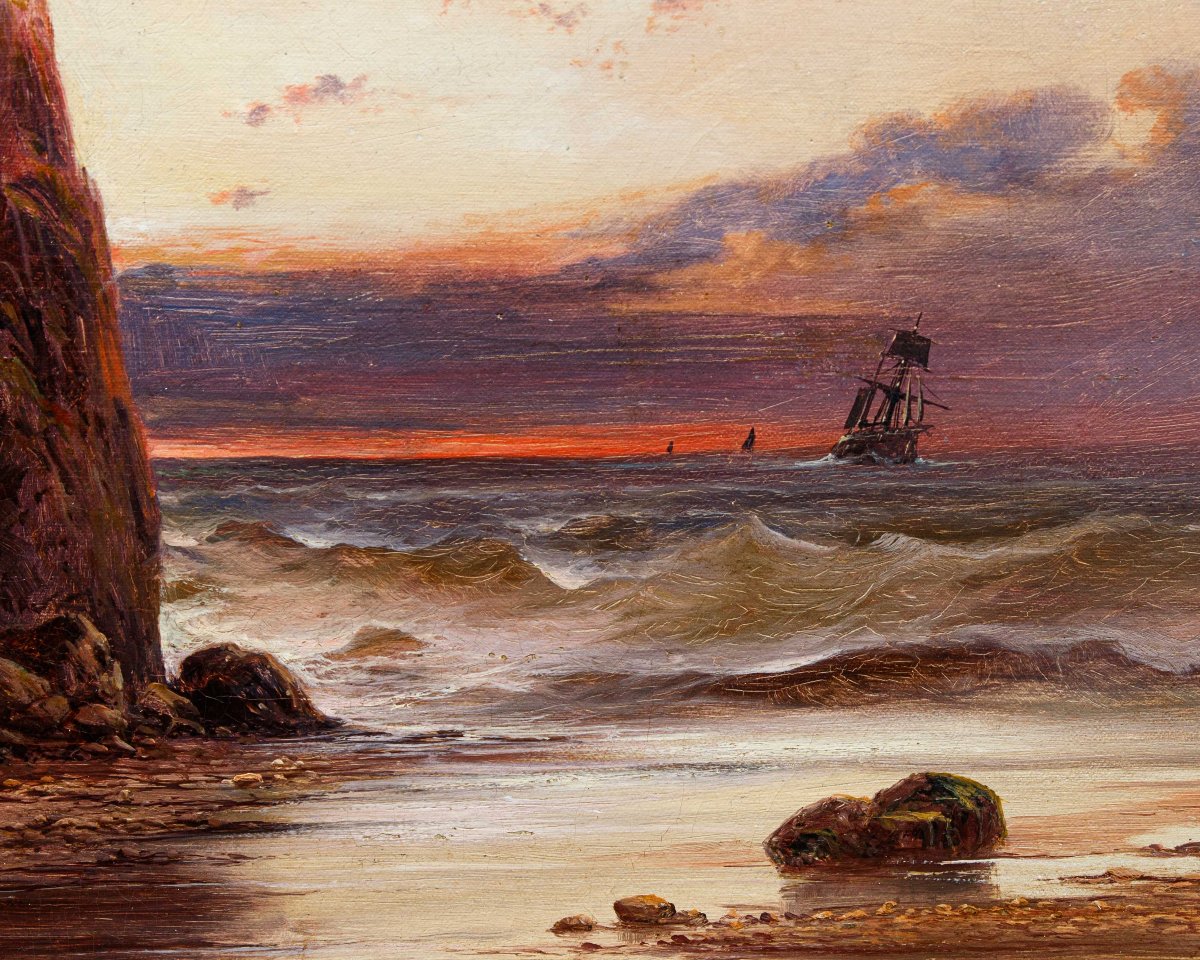
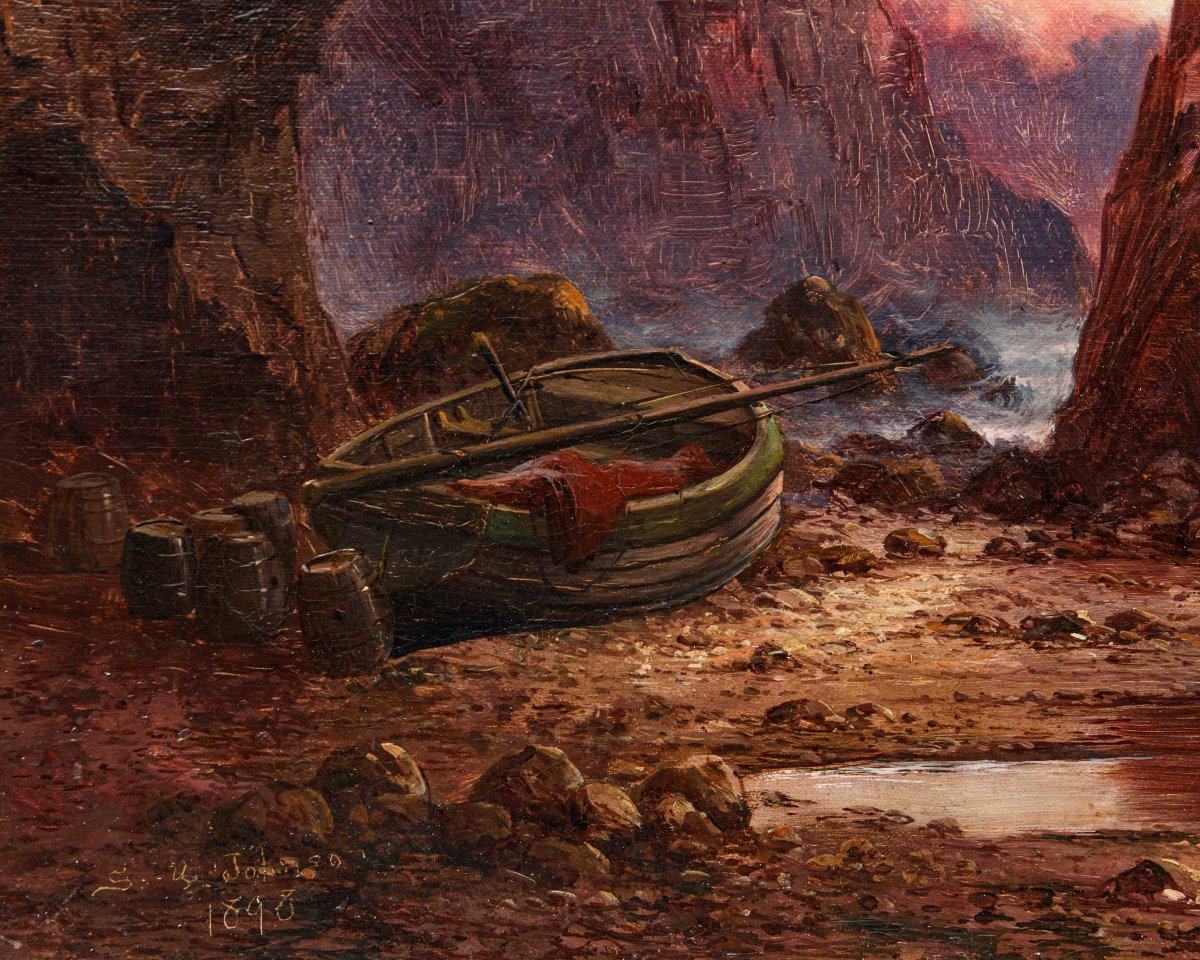
Sea view at sunset
Oil on canvas, 51 x 76 cm
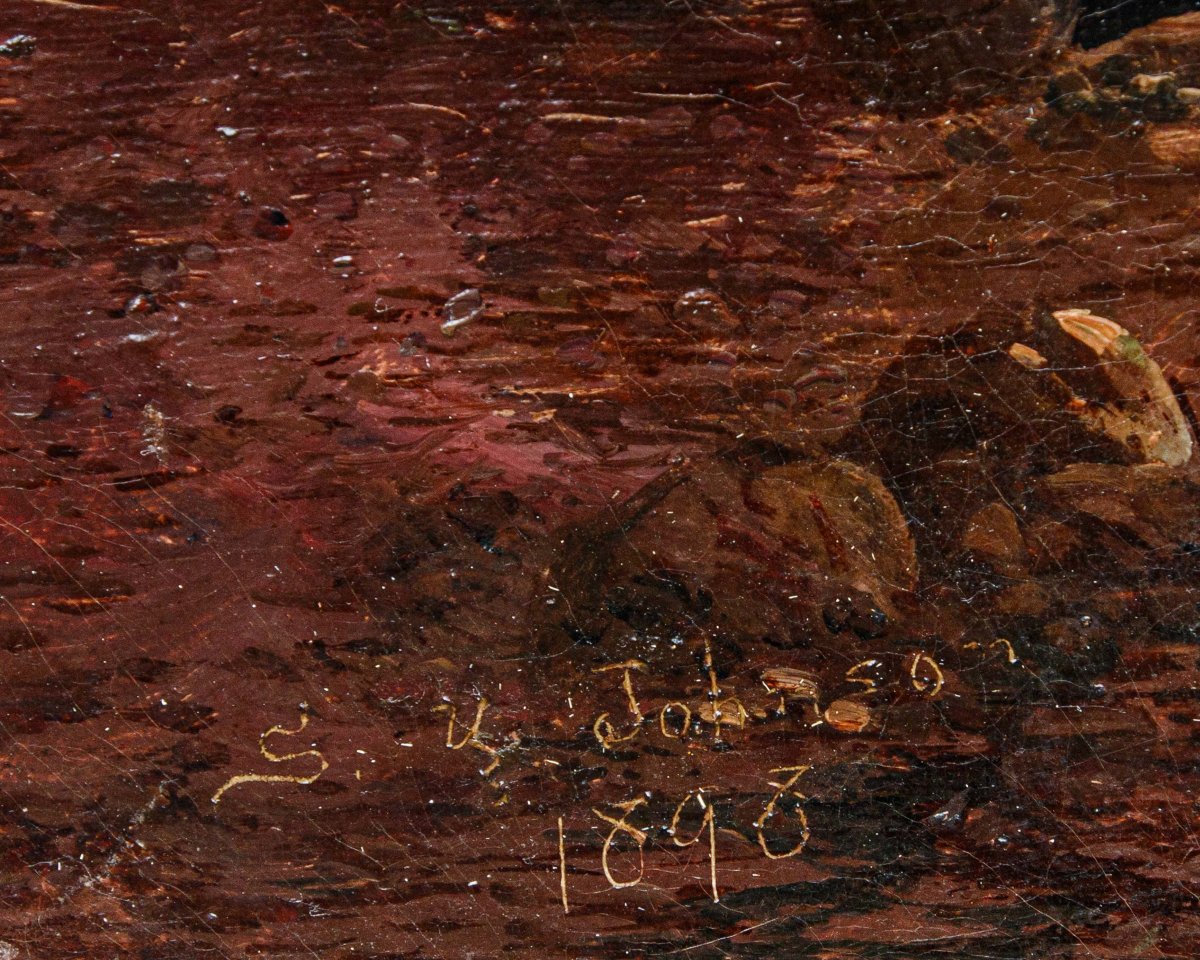
Signed and dated lower left: “S. Y. Johnson 1898”
Sidney Yates Johnson (active between 1890 and 1926 approximately), author of the canvas under examination as expected by the signature at the bottom left, was an English painter whose work is mainly placed in the late Victorian and Edwardian periods. Although the precise details of his birth and death are less well known than during his documented period of activity, Johnson established himself as a prolific and highly regarded oil landscape painter, leaving a significant legacy of idyllic scenes of Britain. Born in London, Johnson undertook a series of significant moves from a young age that shaped his artistic sensibility and his favourite subjects. He moved first to Canterbury and later to Sheerness, Kent, where he settled demonstrating a deep connection to the English countryside and coastal areas. This proximity to different types of landscape profoundly influenced his production: Johnson's period of maximum activity, between 1890 and 1926, saw him in fact specialize in various landscape themes, including large mountain and lake landscapes (particularly of the Scottish Highlands), coastal and marine scenes (often of Cornwall) and finally river and rural views, sometimes with small figures, animals such as typical Highland cattle or even characteristic architectural elements such as cottages and farmhouses.
Johnson's inspiration is rooted in the tradition of 19th-century British landscape painting, which glorified nature, coastlines, and wilderness as symbols of national identity and the Romantic ideal. His works, in fact, show certain stylistic affinities with those of the British painters Henry H. Parker, John Horrace Hooper and Frank Hider, who suggest that Johnson operated within a consolidated school of landscape painters that provided the general public with works of high technical quality, but stylistically still conservative and academic, eschewing the radical experiments of continental Impressionism and Post-Impressionism.
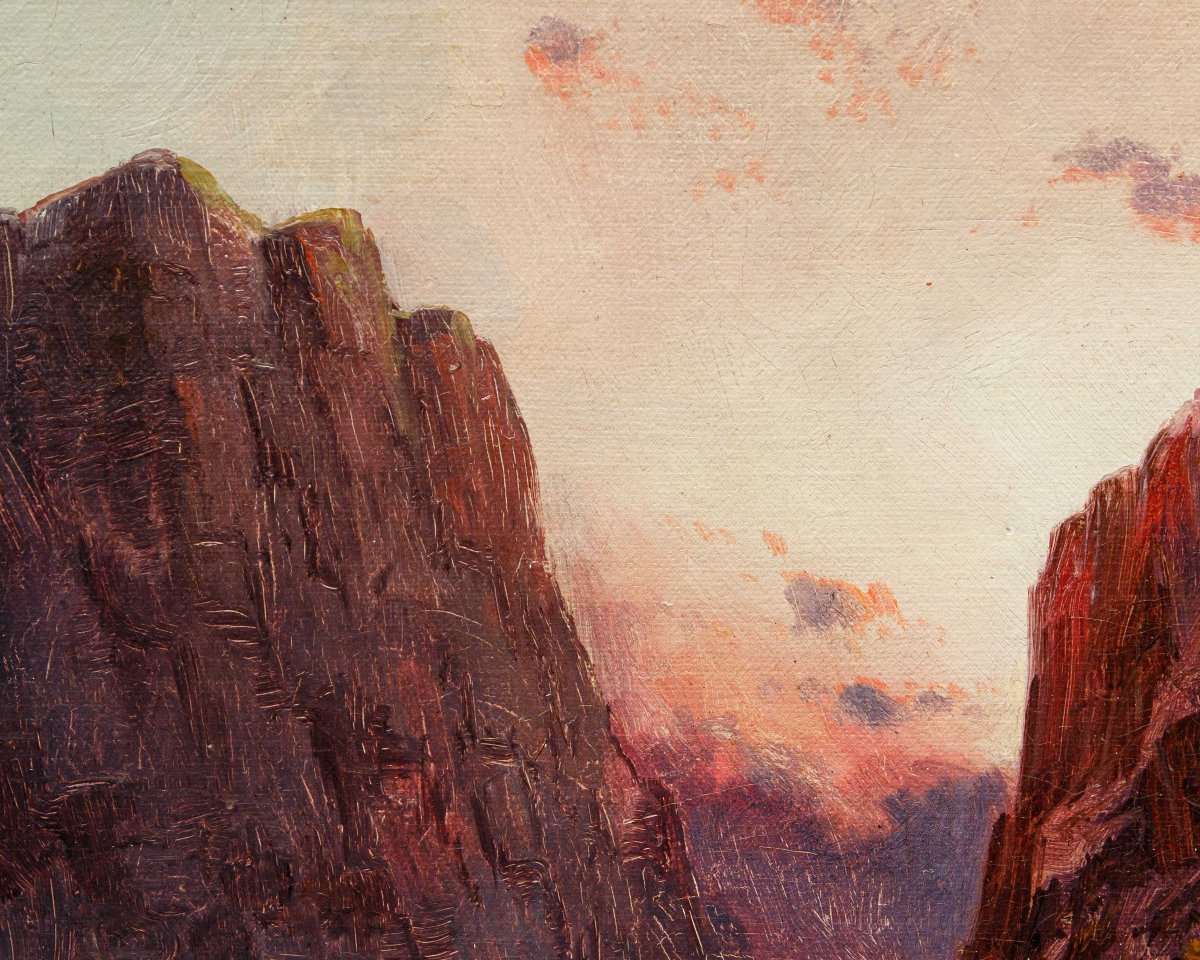
The work in question, a Sea View at Sunset, responds to the strong taste of the time for the evocation of picturesque and remote places, which emanated that idea of an art that was appreciated for its sense of serenity and natural grandeur. Characterized by a loose brushstroke and a marked ability to capture the atmosphere and light effects, especially at dawn or dusk, his compositions reflect a typically Victorian lyricism and taste for idealized landscape.
The artist enjoyed considerable exhibition success in the United Kingdom. His participation in major exhibitions is documented, including eleven exhibitions at the Royal Society of British Artists, as well as significant appearances at the Manchester City Art Gallery and the Walker Art Gallery in Liverpool. Although Johnson did not usually inscribe the exact location of his subjects on canvases, his signature, often scratched into fresh painting (“wet painting”, a distinctive feature), and precise dating testify to his prolificacy and meticulousness.
Sea view at sunset
Oil on canvas, 51 x 76 cm
Signed and dated lower left: “S. Y. Johnson 1898”
Sidney Yates Johnson (active between 1890 and 1926 approximately), author of the canvas under examination as expected by the signature at the bottom left, was an English painter whose work is mainly placed in the late Victorian and Edwardian periods. Although the precise details of his birth and death are less well known than during his documented period of activity, Johnson established himself as a prolific and highly regarded oil landscape painter, leaving a significant legacy of idyllic scenes of Britain. Born in London, Johnson undertook a series of significant moves from a young age that shaped his artistic sensibility and his favourite subjects. He moved first to Canterbury and later to Sheerness, Kent, where he settled demonstrating a deep connection to the English countryside and coastal areas. This proximity to different types of landscape profoundly influenced his production: Johnson's period of maximum activity, between 1890 and 1926, saw him in fact specialize in various landscape themes, including large mountain and lake landscapes (particularly of the Scottish Highlands), coastal and marine scenes (often of Cornwall) and finally river and rural views, sometimes with small figures, animals such as typical Highland cattle or even characteristic architectural elements such as cottages and farmhouses.
Johnson's inspiration is rooted in the tradition of 19th-century British landscape painting, which glorified nature, coastlines, and wilderness as symbols of national identity and the Romantic ideal. His works, in fact, show certain stylistic affinities with those of the British painters Henry H. Parker, John Horrace Hooper and Frank Hider, who suggest that Johnson operated within a consolidated school of landscape painters that provided the general public with works of high technical quality, but stylistically still conservative and academic, eschewing the radical experiments of continental Impressionism and Post-Impressionism.
The work in question, a Sea View at Sunset, responds to the strong taste of the time for the evocation of picturesque and remote places, which emanated that idea of an art that was appreciated for its sense of serenity and natural grandeur. Characterized by a loose brushstroke and a marked ability to capture the atmosphere and light effects, especially at dawn or dusk, his compositions reflect a typically Victorian lyricism and taste for idealized landscape.
The artist enjoyed considerable exhibition success in the United Kingdom. His participation in major exhibitions is documented, including eleven exhibitions at the Royal Society of British Artists, as well as significant appearances at the Manchester City Art Gallery and the Walker Art Gallery in Liverpool. Although Johnson did not usually inscribe the exact location of his subjects on canvases, his signature, often scratched into fresh painting (“wet painting”, a distinctive feature), and precise dating testify to his prolificacy and meticulousness.
2 400 €
Period: 20th century
Style: Other Style
Condition: Good condition
Material: Oil painting
Width: 76
Height: 51
Reference (ID): 1731219
Availability: In stock
Print