THIS OBJECT WAS SOLD
Ruins At Pompeii, Landscape With Roman Columns, Ancient Italy, Louis Agricol Montagné, Avignon, 1879
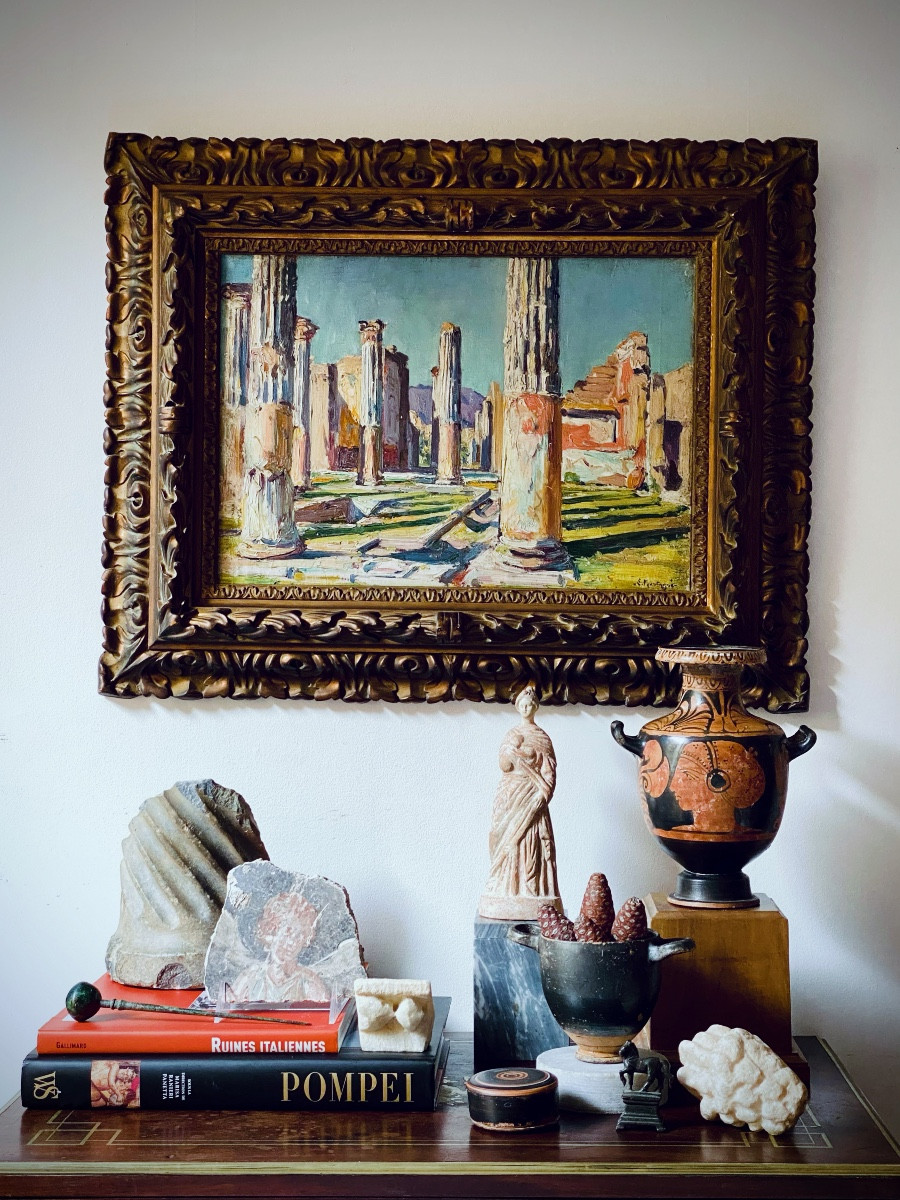
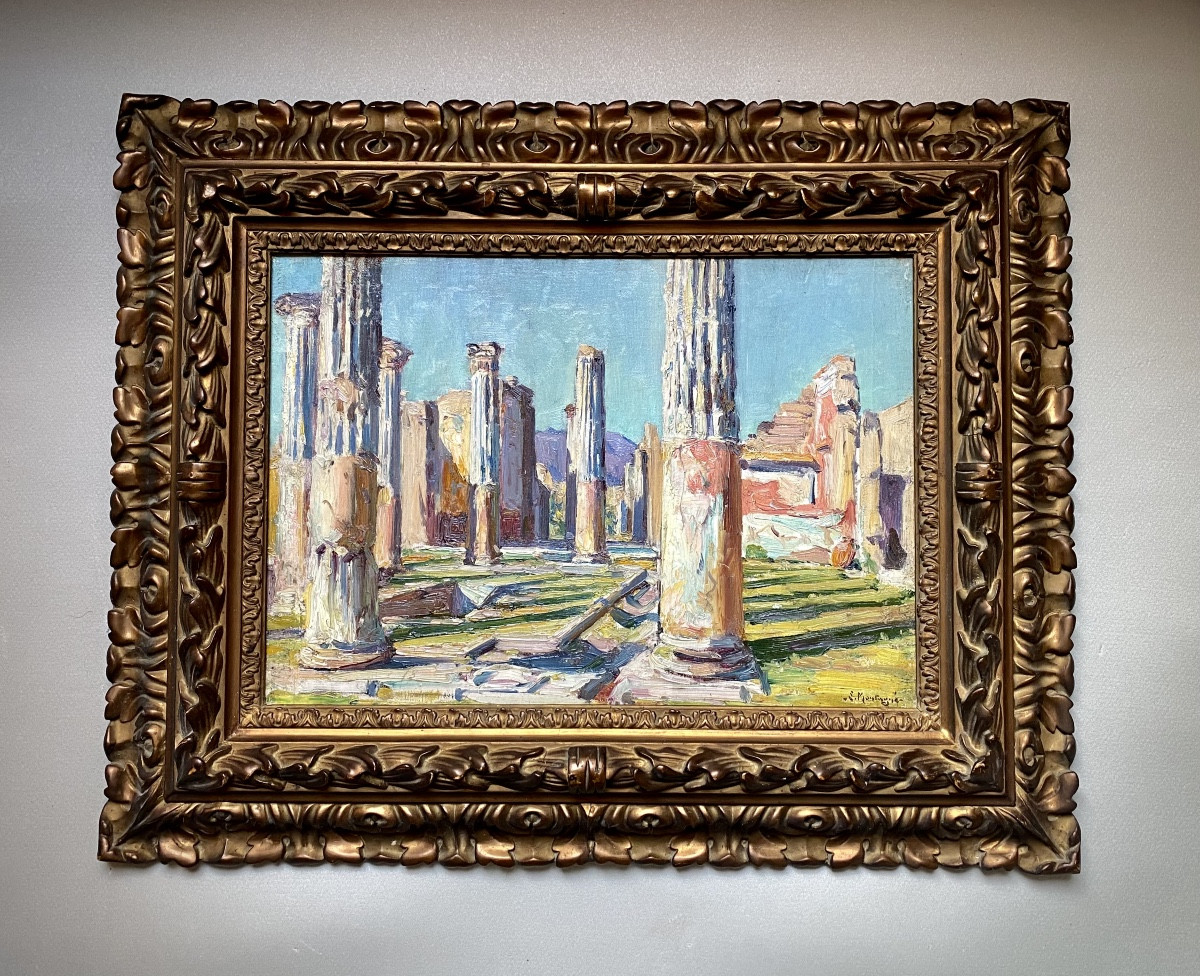
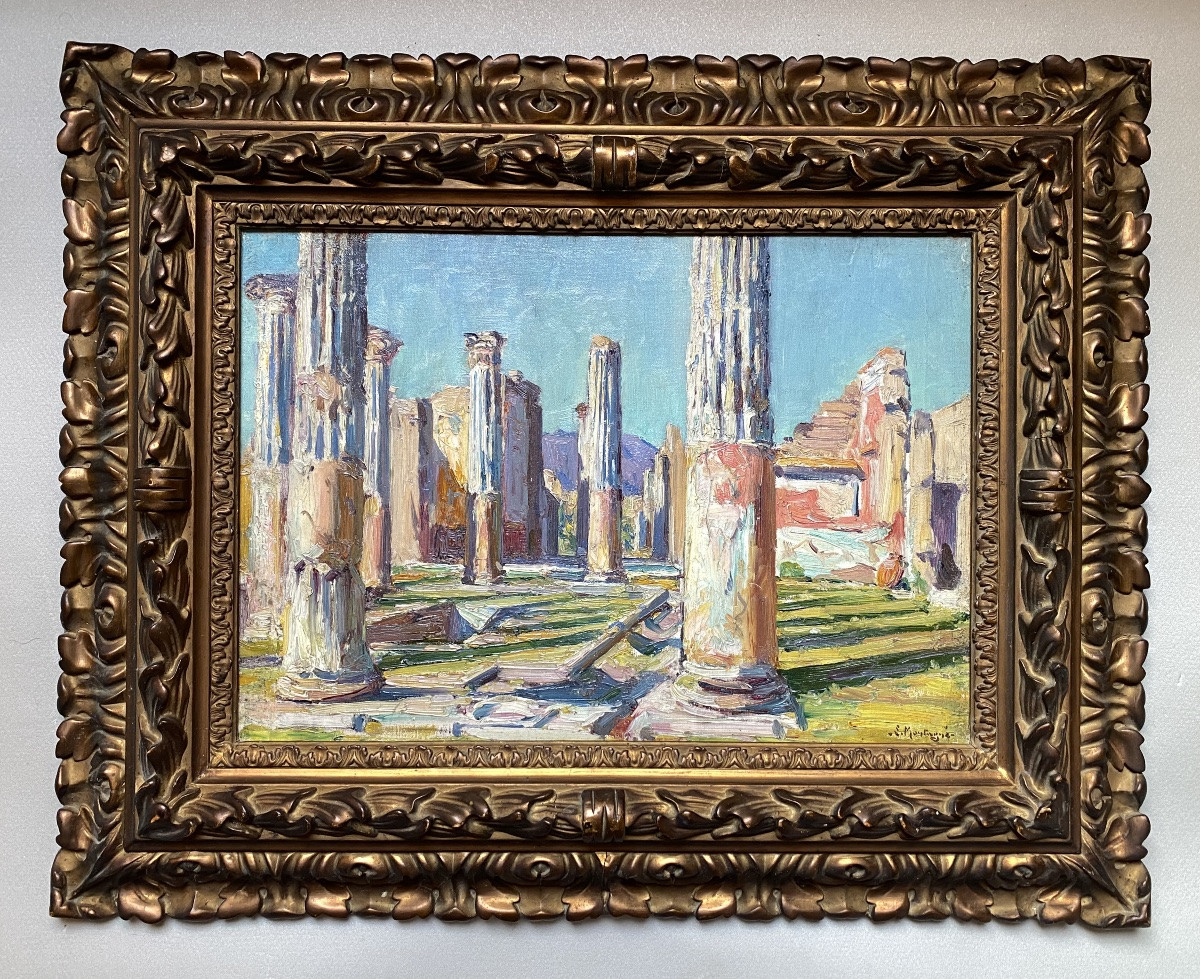
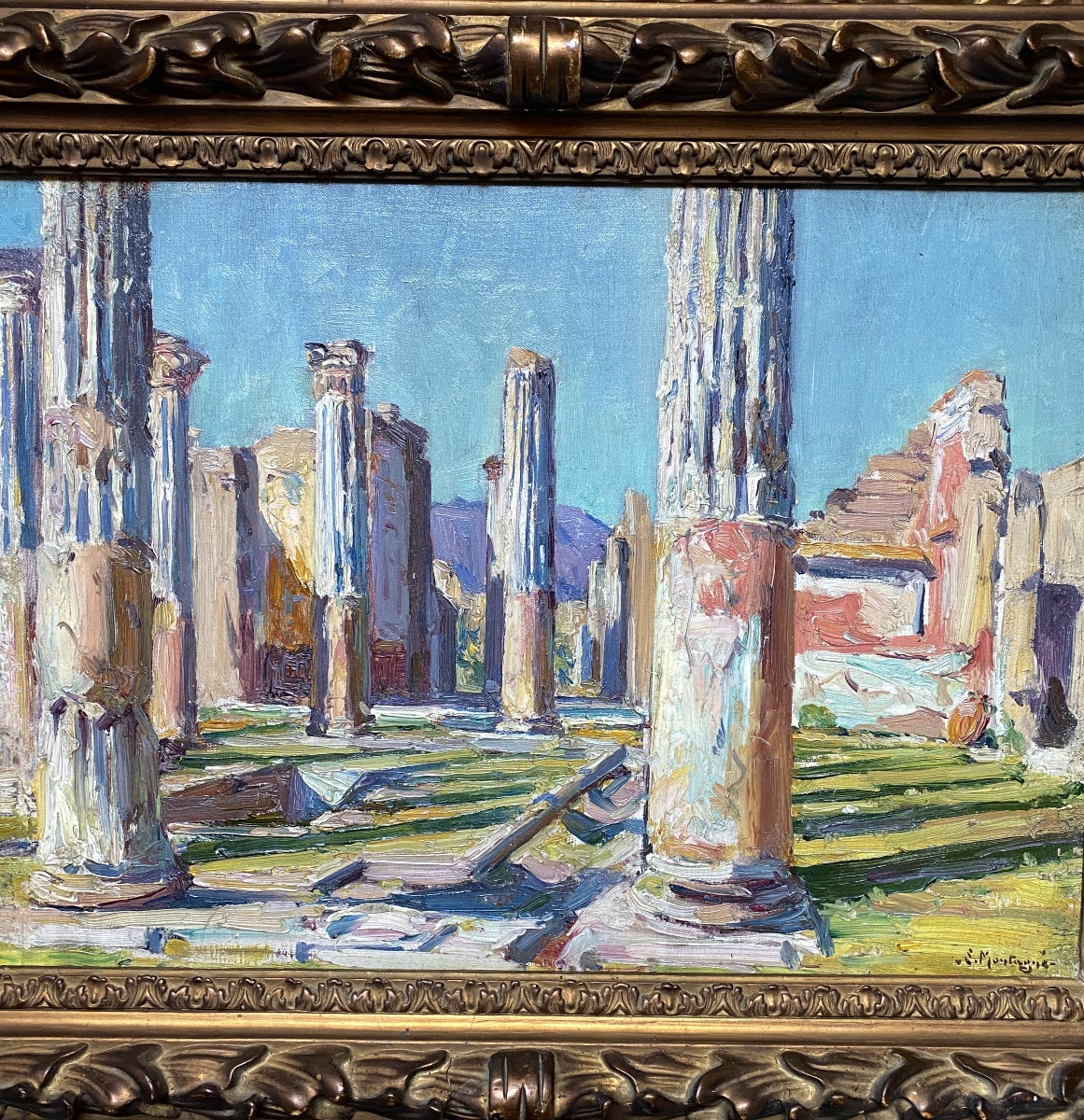
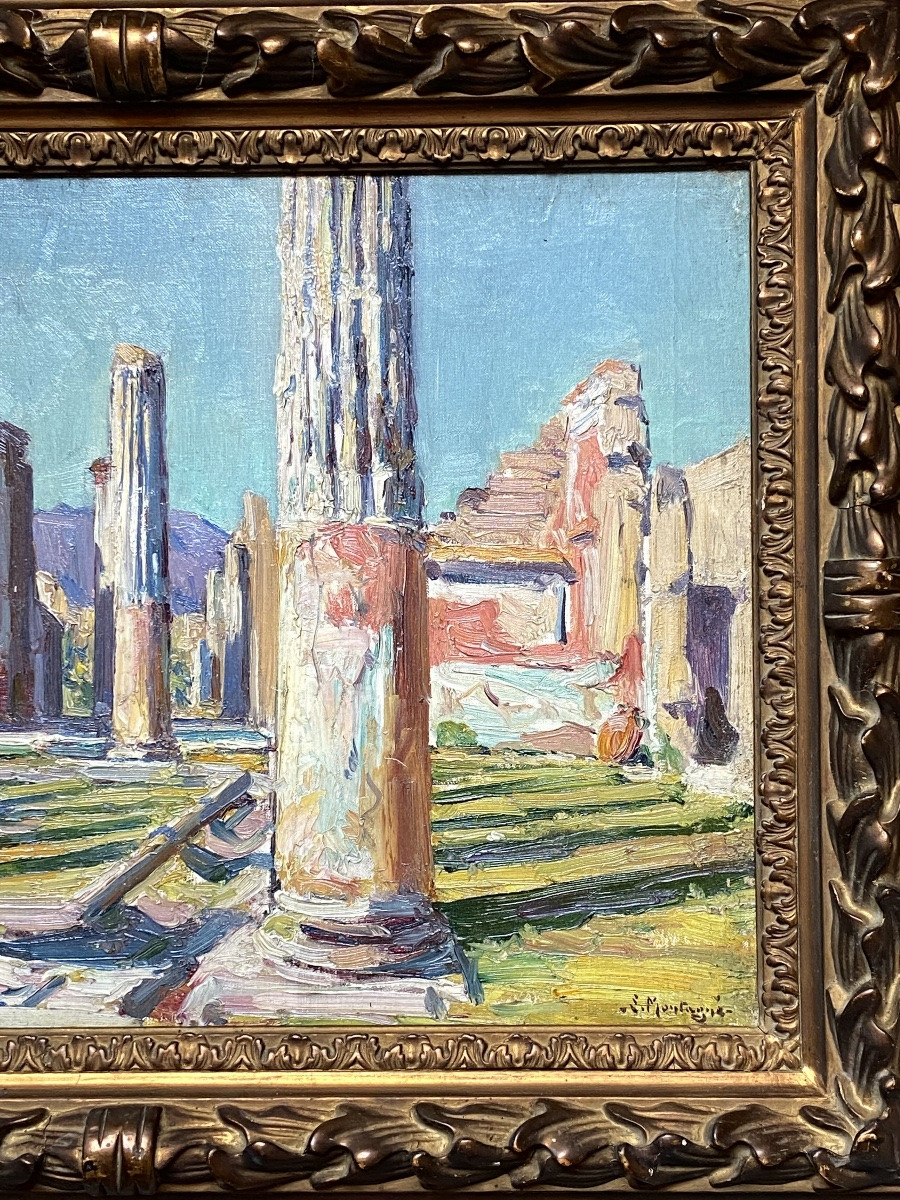


Ruins at Pompeii by Louis Agricol Montaigné (Avignon, 1879 – Paris, 1960) Early 20th century, circa 1910-1920
Oil on canvas, 46 x 33 cm,
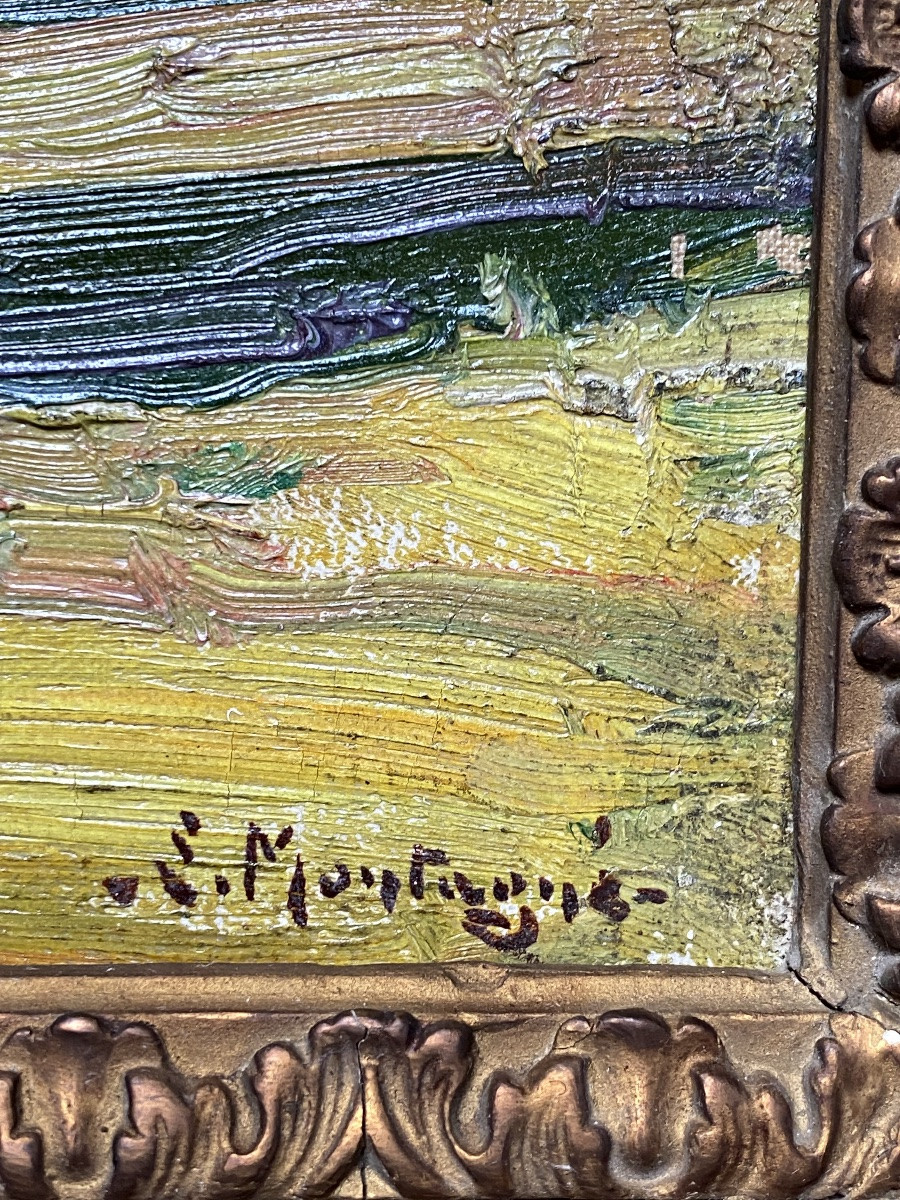
signed lower right
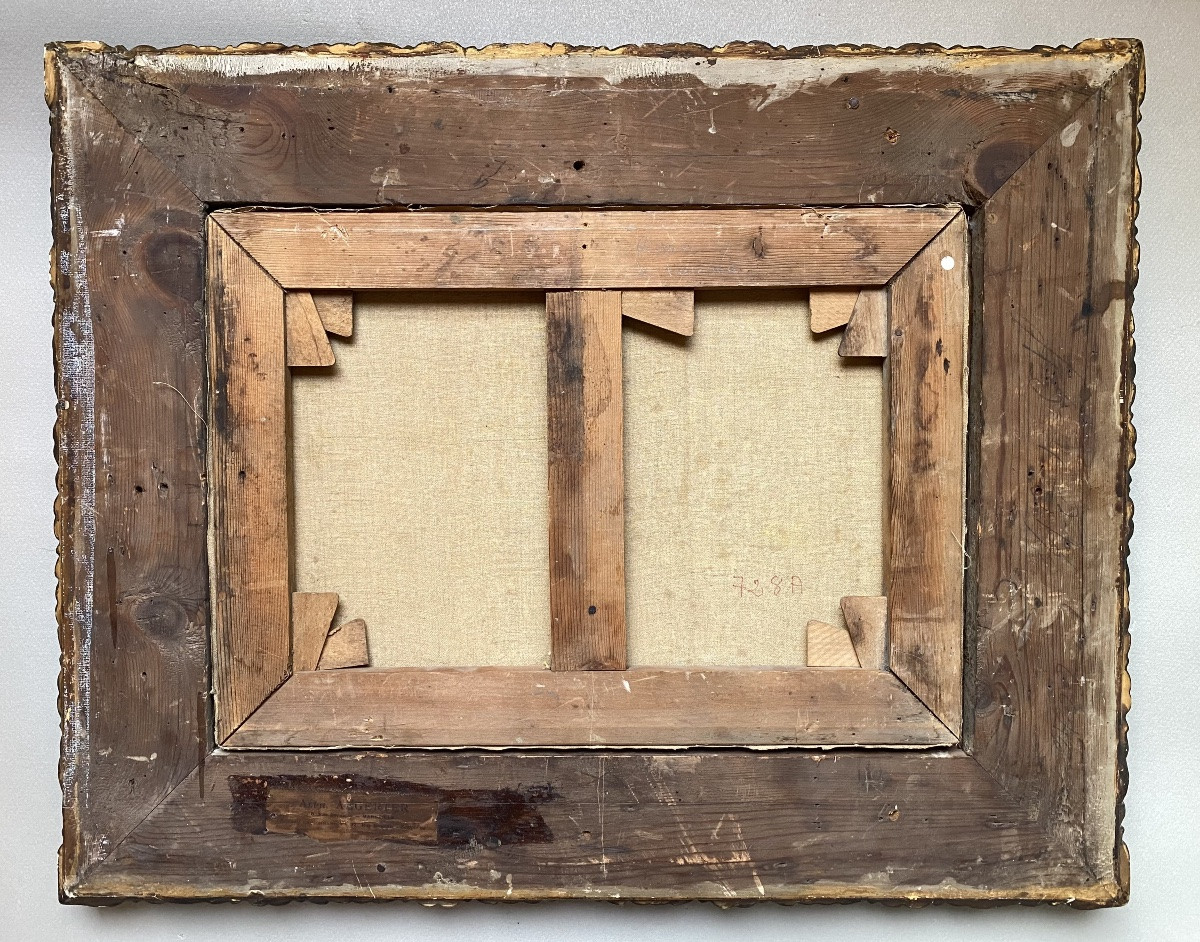
good overall condition
presented in a carved and gilded wooden frame, 67 x 54 cm.
The artist offers a sensitive interpretation of the ancient site. The luminous palette, dominated by ochres, blues, and vibrant greens, accurately captures the brilliance of the Mediterranean light. The free and vibrant brushstrokes, inspired by Impressionism, emphasize atmospheric effects and visual sensation within a highly academic composition, with a concern for rendering the archaeological architectural details. The contrast between the academic composition and the Impressionist touch is very interesting; from two meters away, the rendering gives the impression of a painting from the 1860s, but upon closer inspection, one discovers the vibrancy and the almost abstract impasto of the Impressionist style.
Louis Agricol Montagné belongs to a generation of rare transitional painters, reconciling academic training with the search for modern luminous effects.
Montagné trained in Paris in the studios of Jean-Joseph Benjamin-Constant and Jules Lefebvre. He exhibited at the Salons, where he received awards, and was awarded a travel grant that took him to Italy. This Italian sojourn was pivotal in his career: there, he developed a lasting interest in ancient sites, particularly Pompeii, which he depicted on several occasions. The work presented here belongs to this Italian series, characteristic of his most interesting period. It testifies to her evolution towards a freer style of painting, where academic heritage combines with a post-impressionist sensibility, centered on light, color, and the construction of landscape.
The work is presented in a richly patterned frame; this can be replaced with a simpler 19th-century gilt frame for a more 19th-century look or a modern frame for a contemporary look.
Oil on canvas, 46 x 33 cm,
signed lower right
good overall condition
presented in a carved and gilded wooden frame, 67 x 54 cm.
The artist offers a sensitive interpretation of the ancient site. The luminous palette, dominated by ochres, blues, and vibrant greens, accurately captures the brilliance of the Mediterranean light. The free and vibrant brushstrokes, inspired by Impressionism, emphasize atmospheric effects and visual sensation within a highly academic composition, with a concern for rendering the archaeological architectural details. The contrast between the academic composition and the Impressionist touch is very interesting; from two meters away, the rendering gives the impression of a painting from the 1860s, but upon closer inspection, one discovers the vibrancy and the almost abstract impasto of the Impressionist style.
Louis Agricol Montagné belongs to a generation of rare transitional painters, reconciling academic training with the search for modern luminous effects.
Montagné trained in Paris in the studios of Jean-Joseph Benjamin-Constant and Jules Lefebvre. He exhibited at the Salons, where he received awards, and was awarded a travel grant that took him to Italy. This Italian sojourn was pivotal in his career: there, he developed a lasting interest in ancient sites, particularly Pompeii, which he depicted on several occasions. The work presented here belongs to this Italian series, characteristic of his most interesting period. It testifies to her evolution towards a freer style of painting, where academic heritage combines with a post-impressionist sensibility, centered on light, color, and the construction of landscape.
The work is presented in a richly patterned frame; this can be replaced with a simpler 19th-century gilt frame for a more 19th-century look or a modern frame for a contemporary look.
Explore similar pieces and discover your ideal find:
Other Paintings