



Silver Filigree Mounted Triple Bezoar Amulet. Dutch Colonial, 17th Century.
A silver filigree mounted triple bezoar amulet.
Dutch or Dutch Colonies, 17th century.
Measurements:
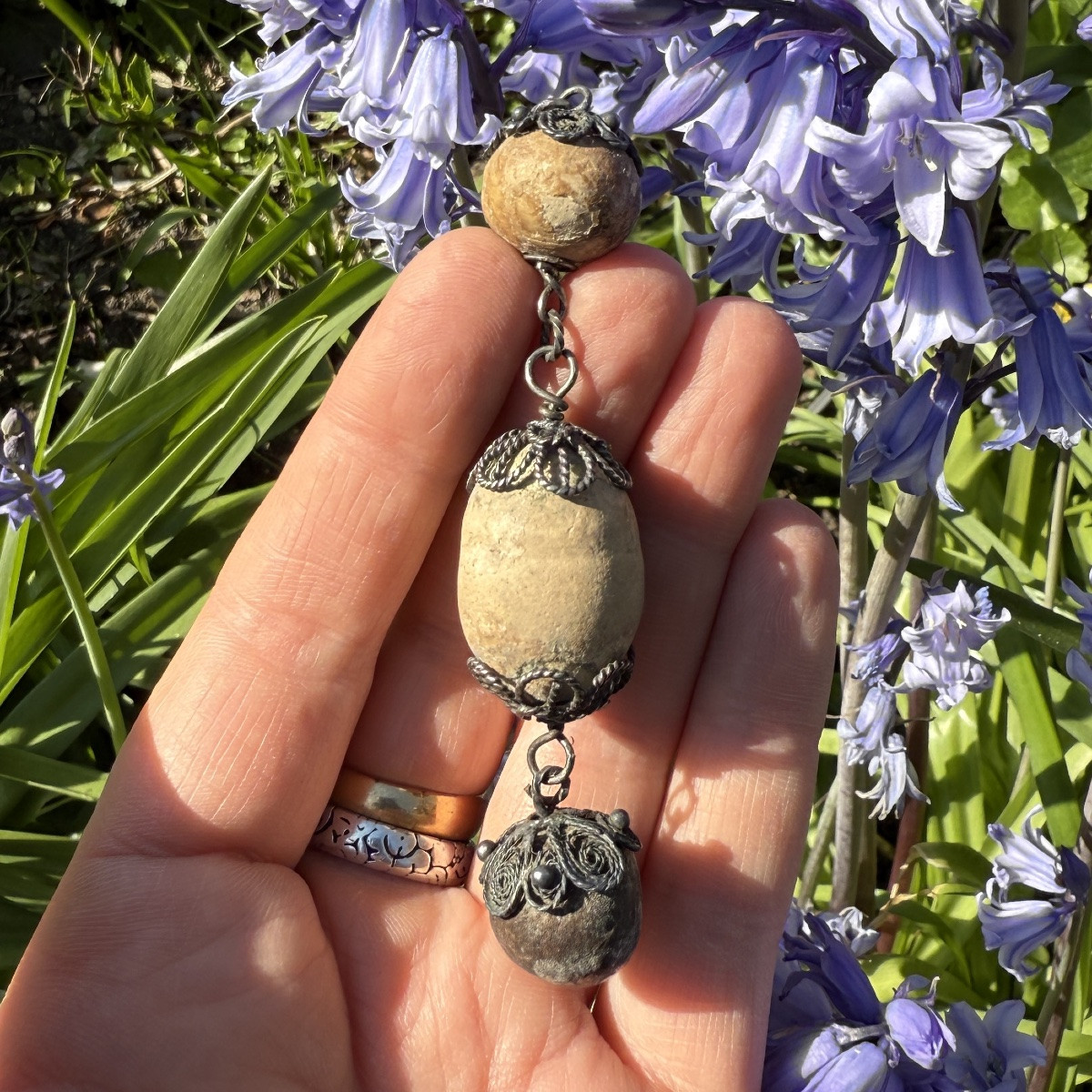
Total drop 9.5 cm including loose bail.
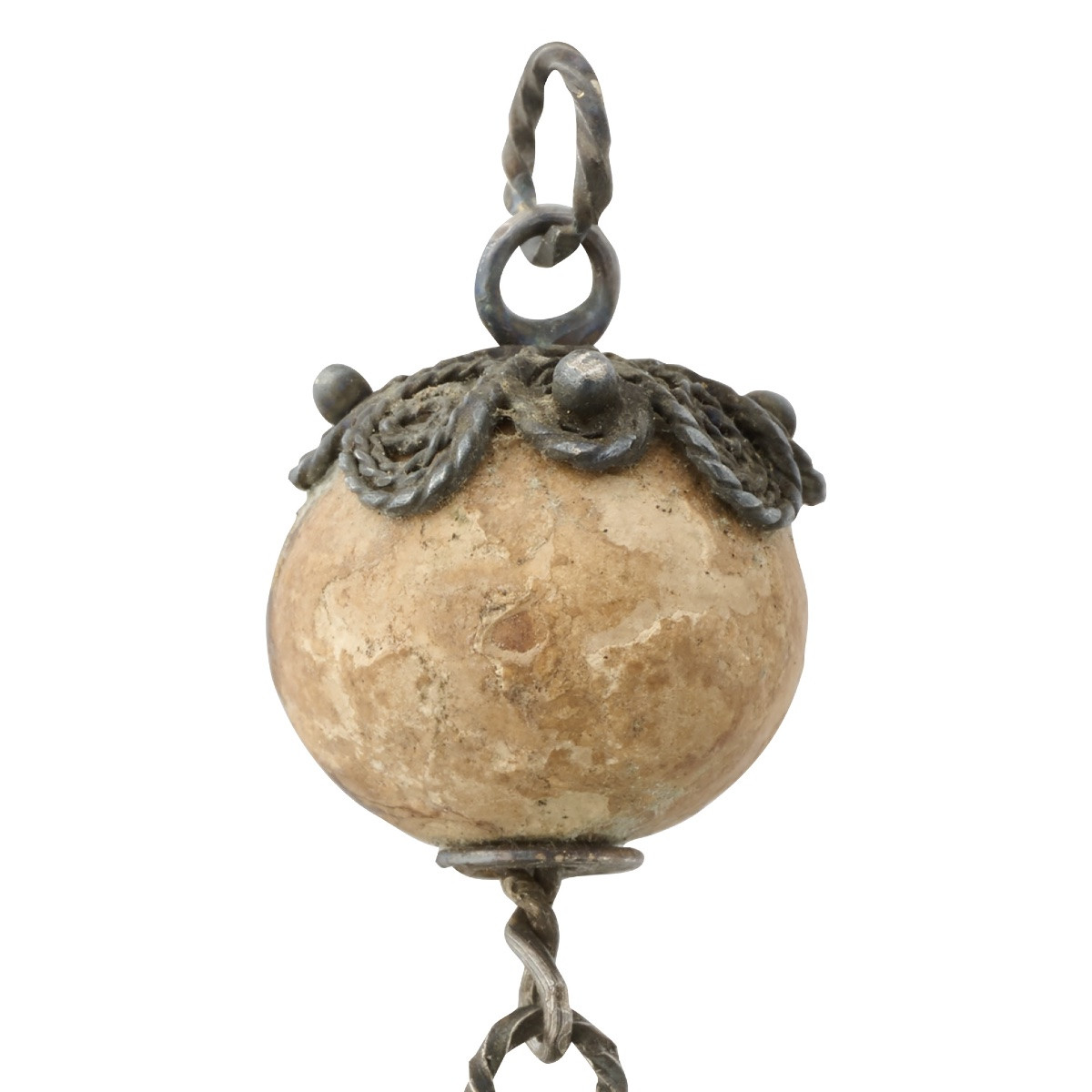
Top bezoar 1.7 cm diameter.
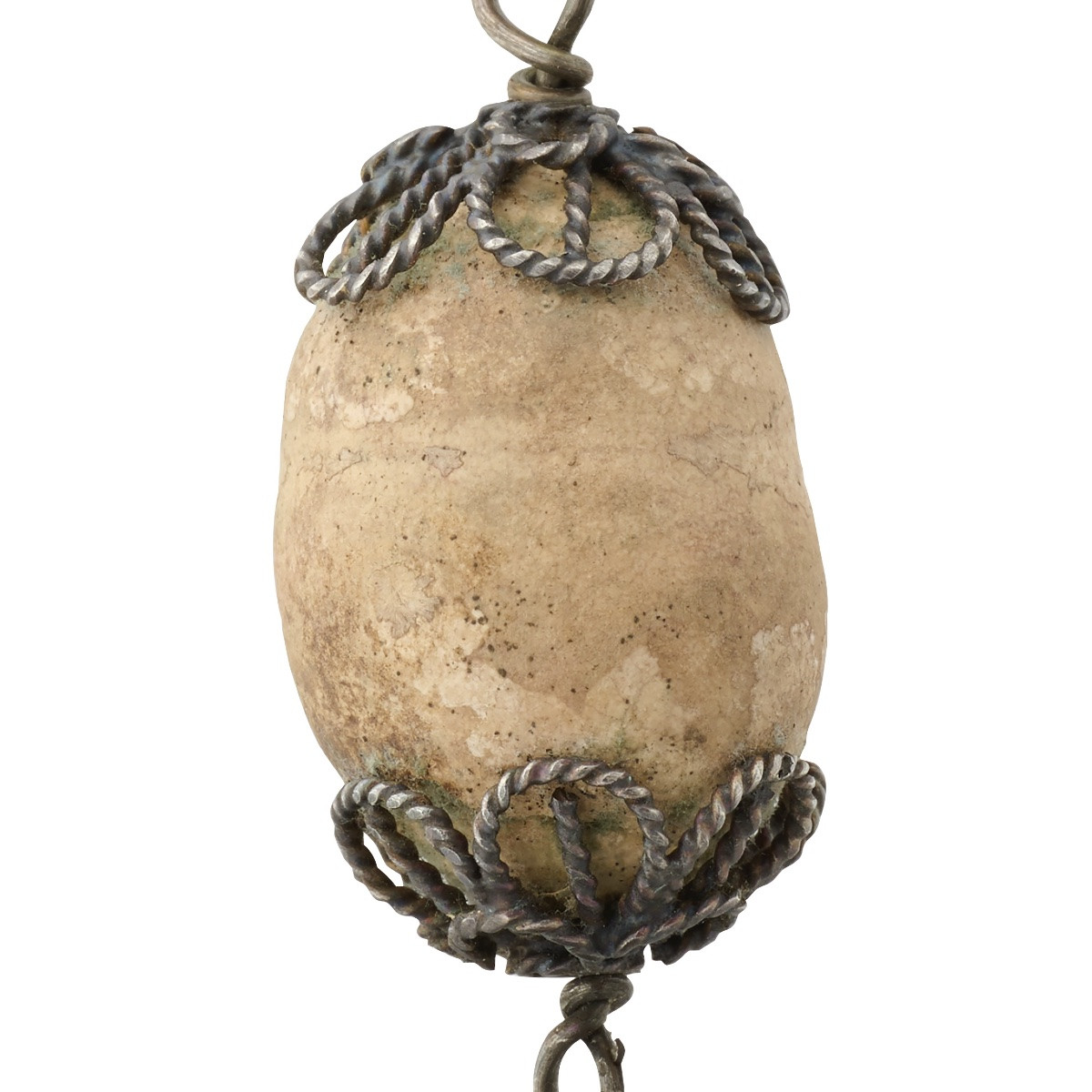
Middle bezoar 2.7 × 1.9 cm.
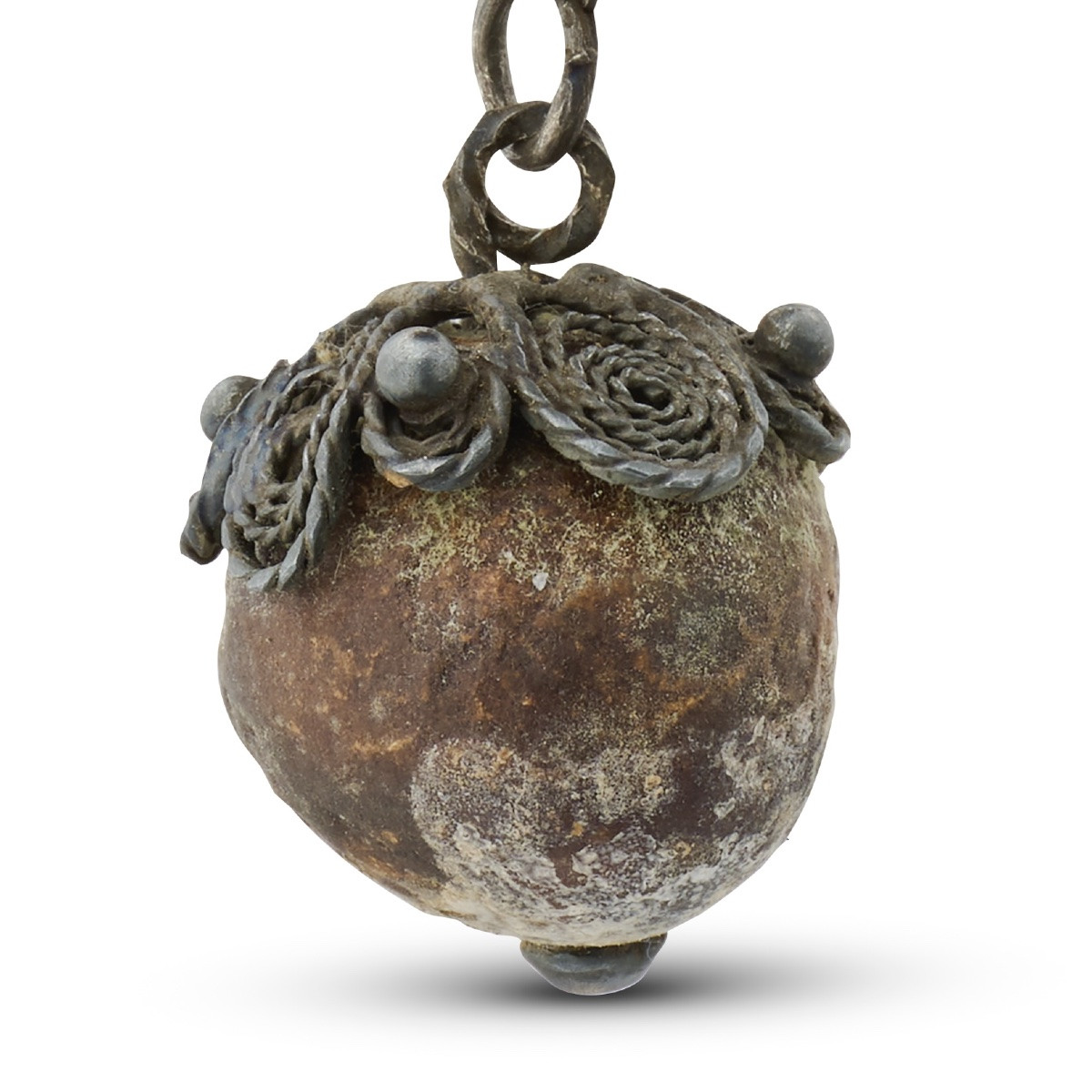
Bottom bezoar 1.5 cm diameter.
Weight: 21 grams.
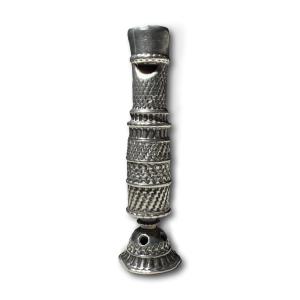
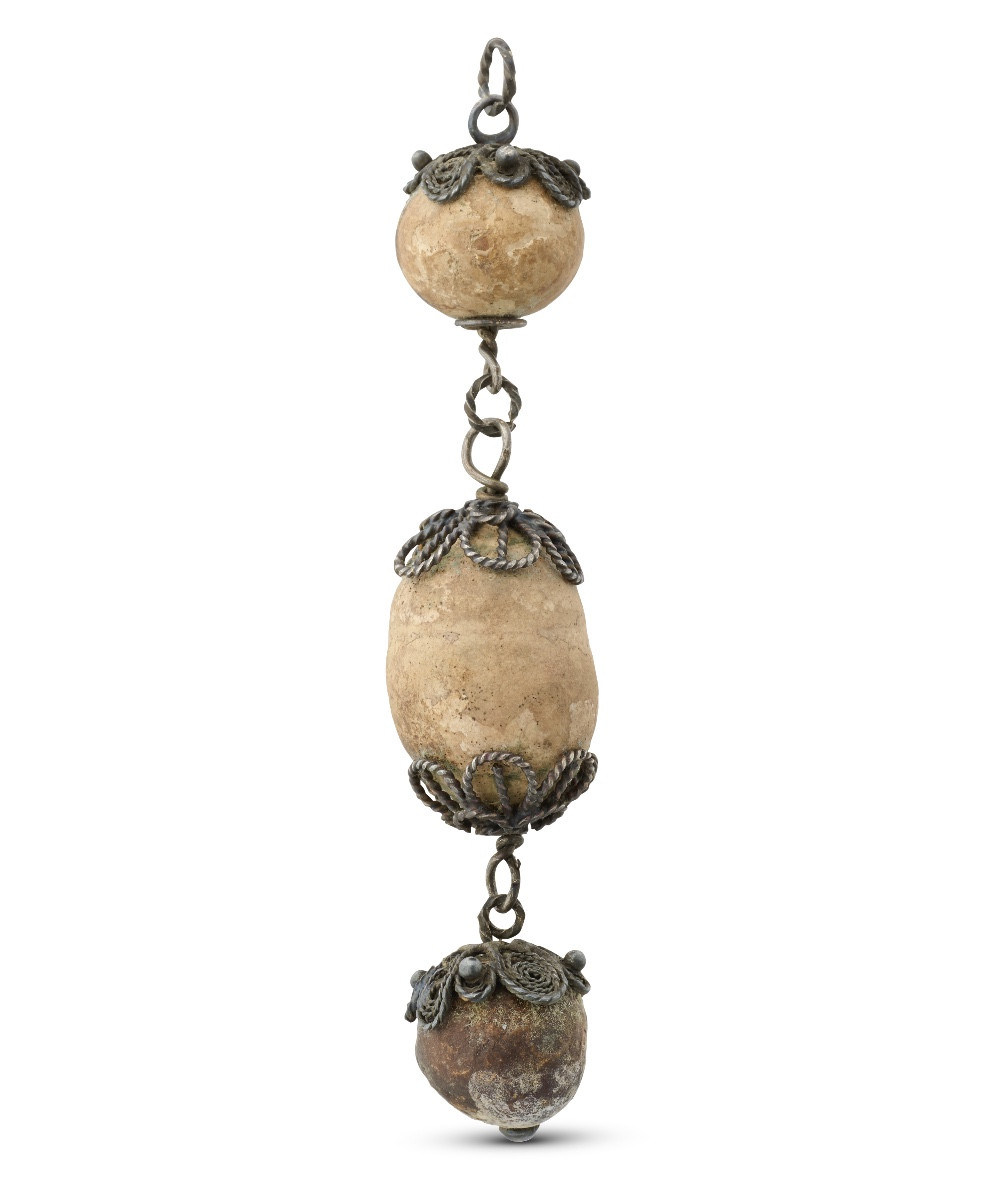
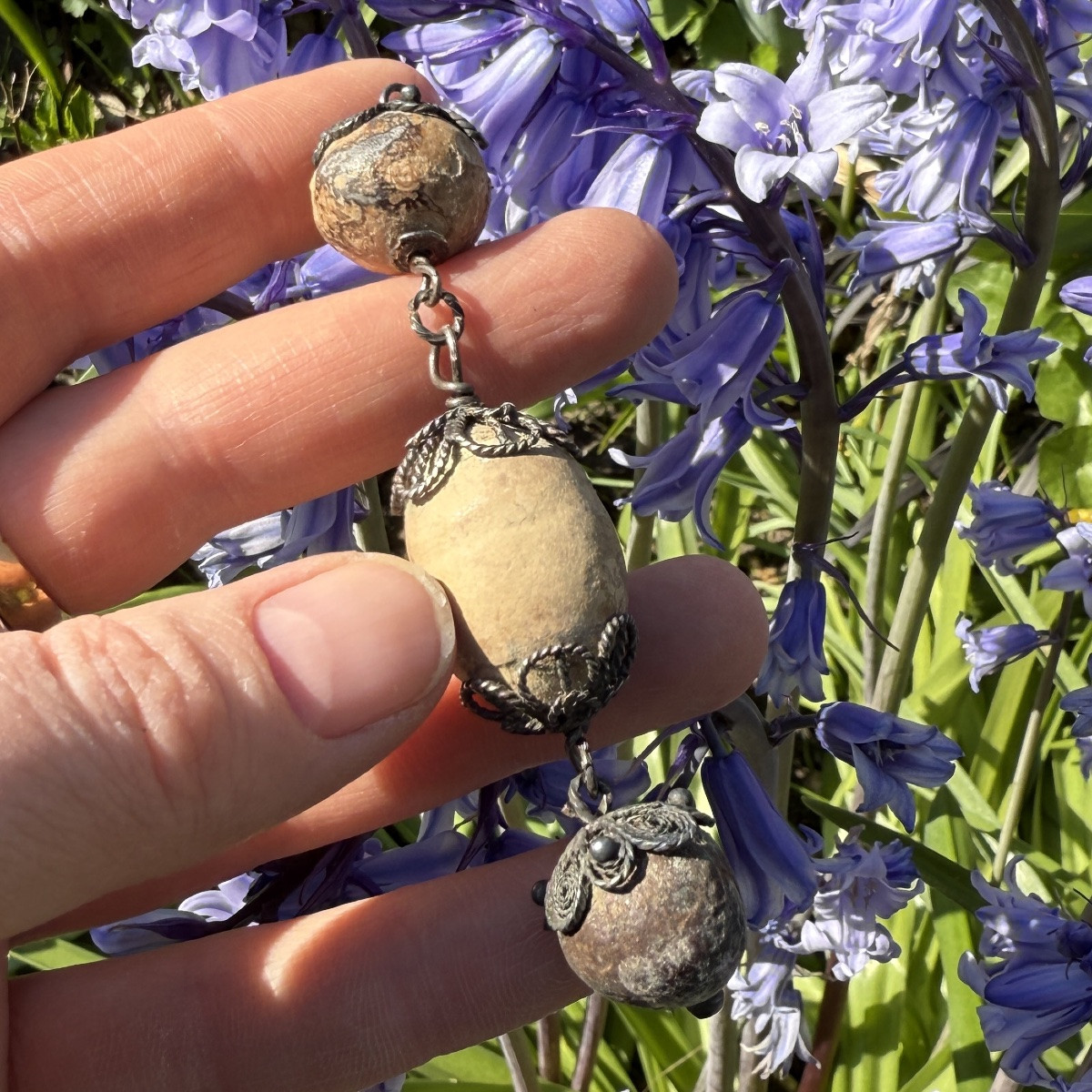
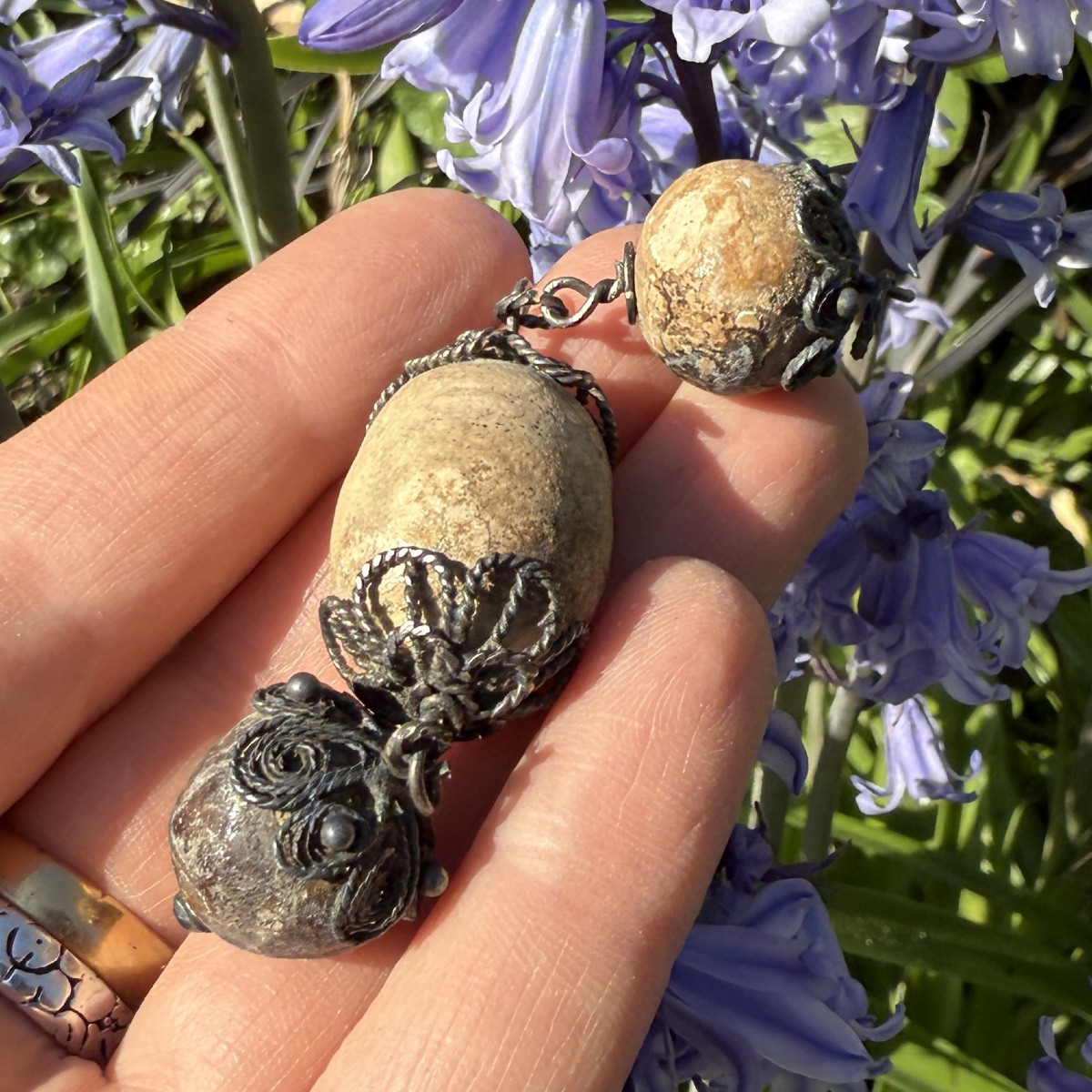
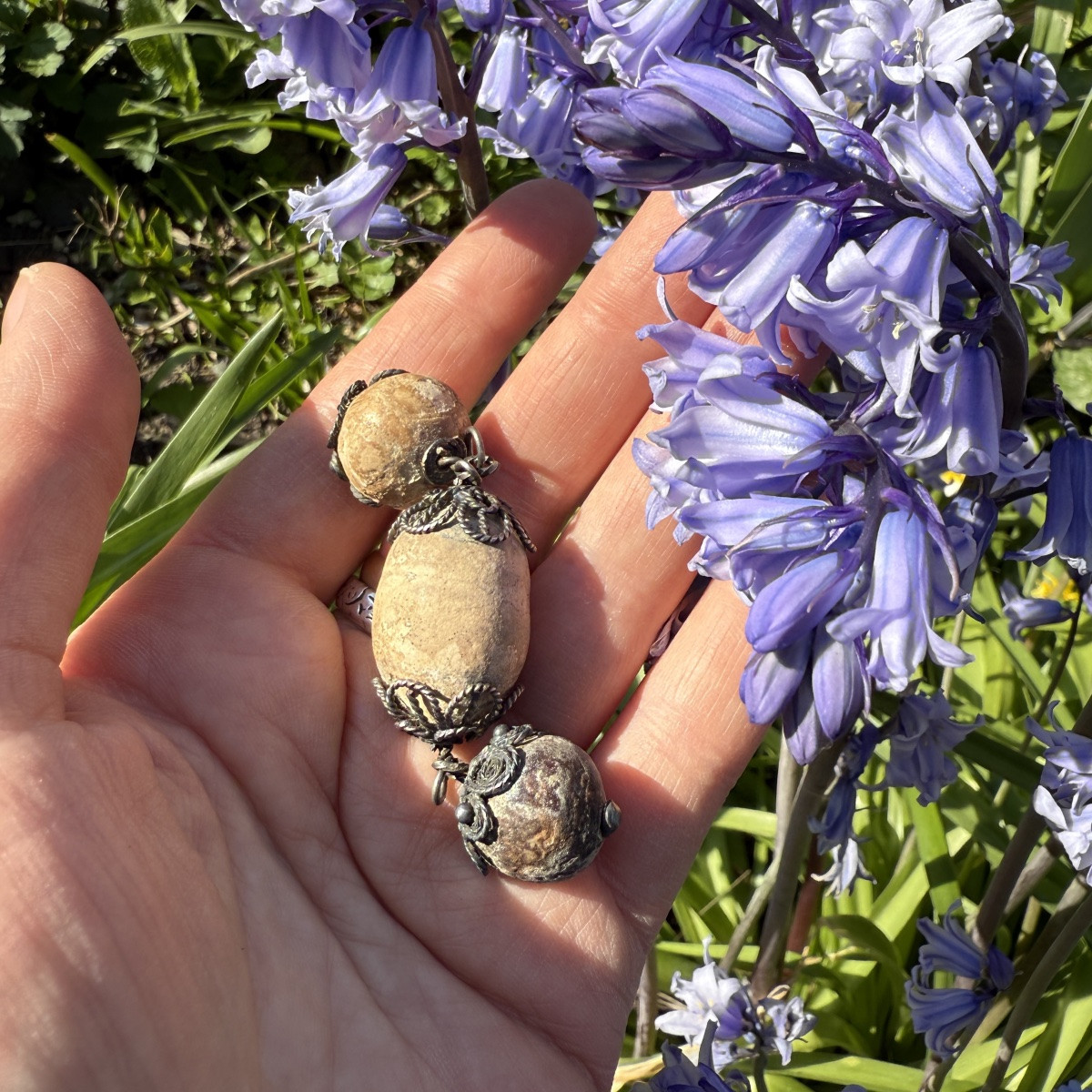
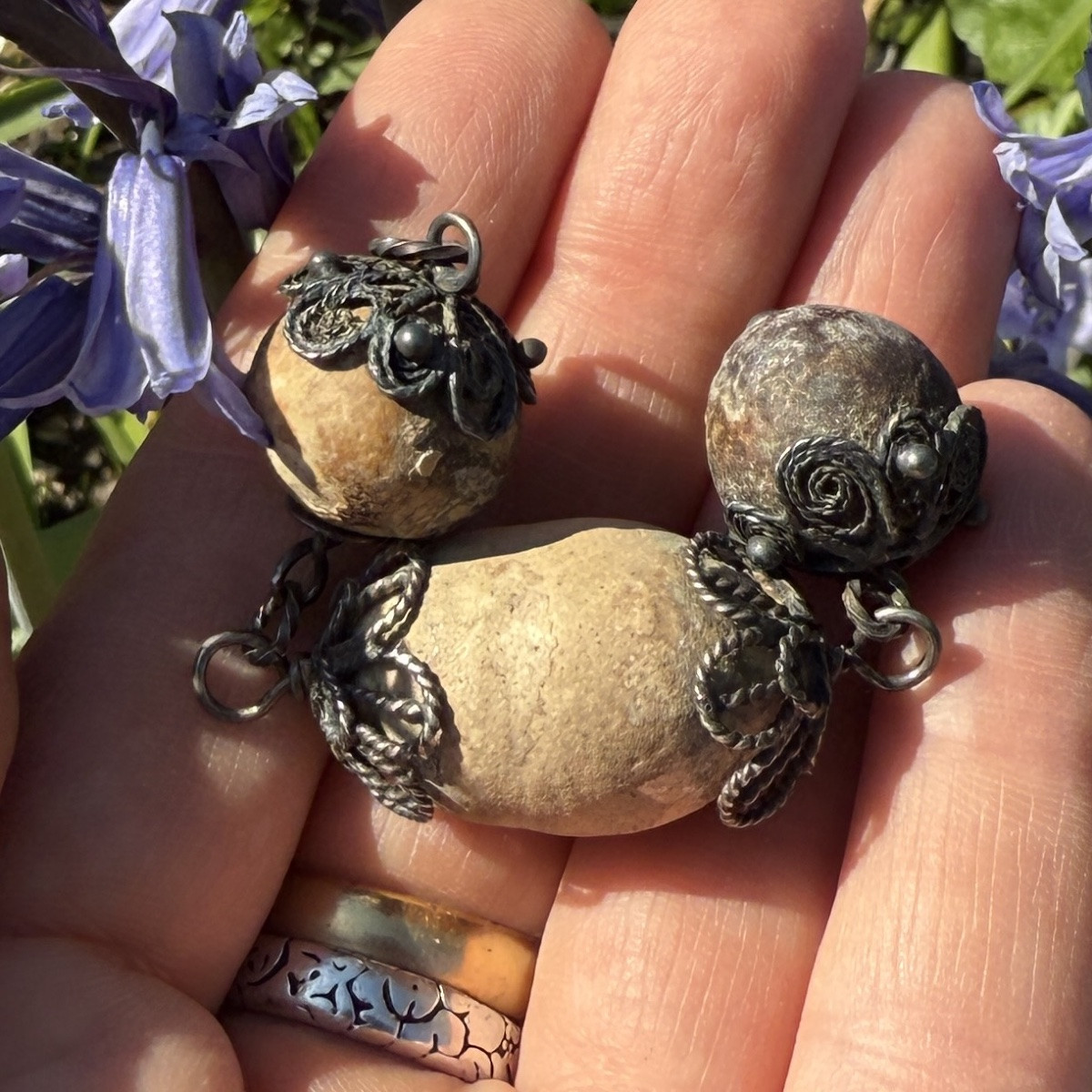
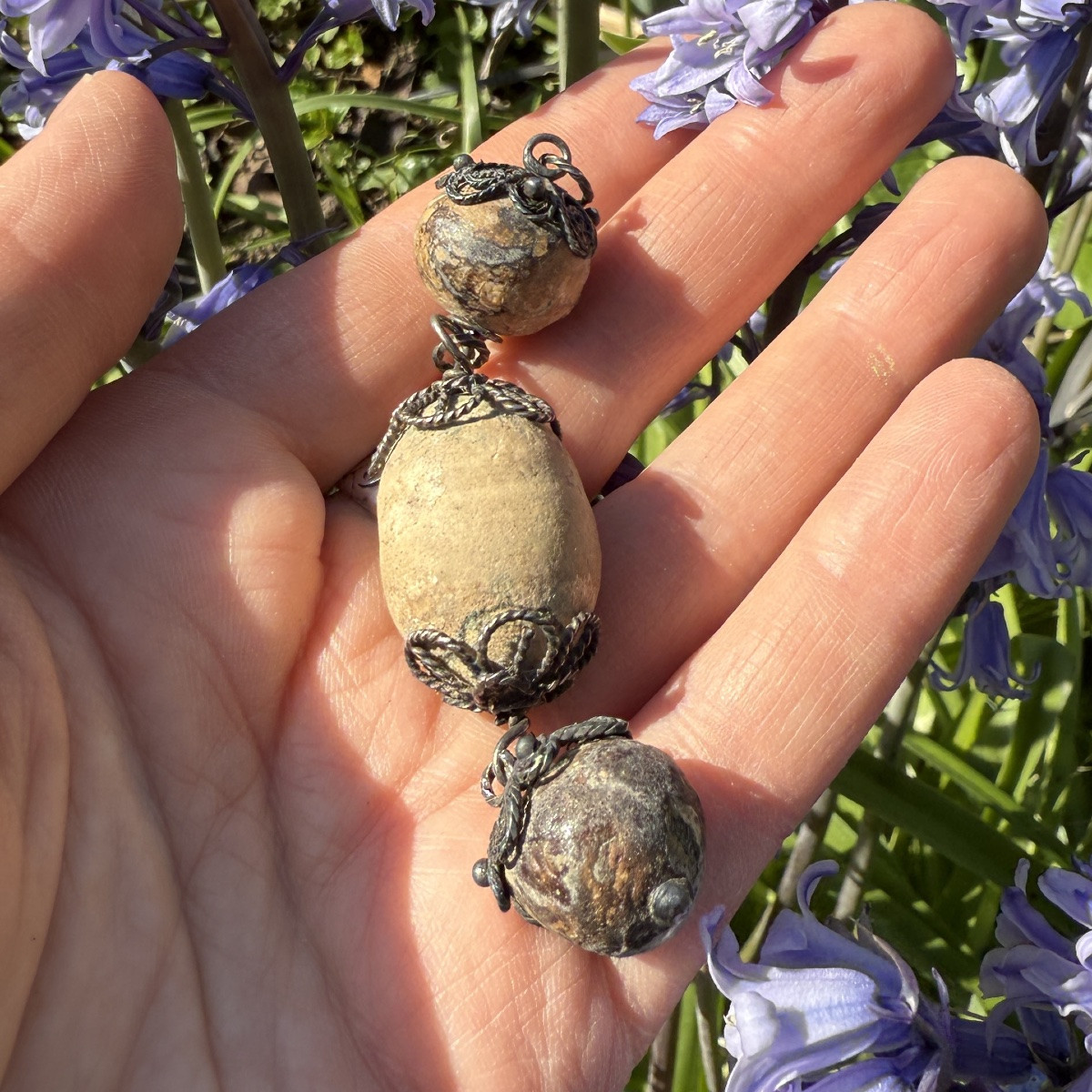
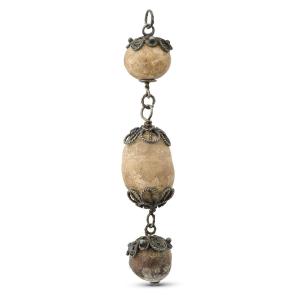
A rare and finely preserved silver mounted amulet composed of three natural bezoars, vertically linked and framed in delicate filigree mounts. The upper and lower bezoars are of rounded form, while the central element is of elongated oval shape, creating a particularly elegant and balanced silhouette. Each stone is secured within openwork silver caps and collars formed of twisted wire, scrolls and leaf-like filigree motifs, the darker patination of the metal providing a striking contrast to the warm buff and brown tones of the bezoars themselves. The arrangement retains its loose suspension rings and has a notably sculptural quality, the three graduated elements moving freely from one another.
Objects of this kind belong to a long tradition of protective and medicinal jewellery in early modern Europe, in which rare natural substances were mounted in precious metal both for display and for use. The bezoar, a hardened concretion formed within the digestive tract of certain animals, was prized for its supposed power to neutralise poison and counteract disease. The word derives from the Persian pād-zahr, meaning “antidote”, and from the medieval period onward bezoars entered European princely, aristocratic and mercantile collections as precious natural curiosities endowed with extraordinary virtues. By the 17th century they were frequently mounted as pendants, rings, cups and other personal objects intended to keep their reputed protective force close to the body.
This amulet is especially appealing for the unusual use of three separate bezoars in a single suspended composition. Such a treatment not only enhanced the visual richness of the jewel but may also have amplified its perceived efficacy and rarity. The refined filigree work points to a goldsmithing tradition associated with Dutch production and with the wider luxury networks of the Dutch colonial world, where exotic materials from Asia, Africa and the Americas were transformed into objects that united natural marvel, devotional function and personal adornment. Both curious and intimate, the present amulet is an evocative survival from a period in which the boundaries between jewellery, medicine and talismanic protection remained deeply intertwined.
Dutch or Dutch Colonies, 17th century.
Measurements:
Total drop 9.5 cm including loose bail.
Top bezoar 1.7 cm diameter.
Middle bezoar 2.7 × 1.9 cm.
Bottom bezoar 1.5 cm diameter.
Weight: 21 grams.
A rare and finely preserved silver mounted amulet composed of three natural bezoars, vertically linked and framed in delicate filigree mounts. The upper and lower bezoars are of rounded form, while the central element is of elongated oval shape, creating a particularly elegant and balanced silhouette. Each stone is secured within openwork silver caps and collars formed of twisted wire, scrolls and leaf-like filigree motifs, the darker patination of the metal providing a striking contrast to the warm buff and brown tones of the bezoars themselves. The arrangement retains its loose suspension rings and has a notably sculptural quality, the three graduated elements moving freely from one another.
Objects of this kind belong to a long tradition of protective and medicinal jewellery in early modern Europe, in which rare natural substances were mounted in precious metal both for display and for use. The bezoar, a hardened concretion formed within the digestive tract of certain animals, was prized for its supposed power to neutralise poison and counteract disease. The word derives from the Persian pād-zahr, meaning “antidote”, and from the medieval period onward bezoars entered European princely, aristocratic and mercantile collections as precious natural curiosities endowed with extraordinary virtues. By the 17th century they were frequently mounted as pendants, rings, cups and other personal objects intended to keep their reputed protective force close to the body.
This amulet is especially appealing for the unusual use of three separate bezoars in a single suspended composition. Such a treatment not only enhanced the visual richness of the jewel but may also have amplified its perceived efficacy and rarity. The refined filigree work points to a goldsmithing tradition associated with Dutch production and with the wider luxury networks of the Dutch colonial world, where exotic materials from Asia, Africa and the Americas were transformed into objects that united natural marvel, devotional function and personal adornment. Both curious and intimate, the present amulet is an evocative survival from a period in which the boundaries between jewellery, medicine and talismanic protection remained deeply intertwined.
4 250 €
Period: 17th century
Style: Renaissance, Louis 13th
Condition: Condition of use
Material: Sterling silver
Reference (ID): 1727409
Availability: In stock
Print