



Renaissance Hunting Cranequin, Dated 1589 — With Maker’s Mark In Shield
Origin: Southern Germany or Flanders
Date: 1589 (engraved)
Material: Forged iron, turned hardwood handle
Length: 30 cm without swinging arm
Markings: Deeply struck maker’s mark featuring a running animal (likely a fox) in a heraldic shield
Inventory tag: Old brass collection tag numbered “447”
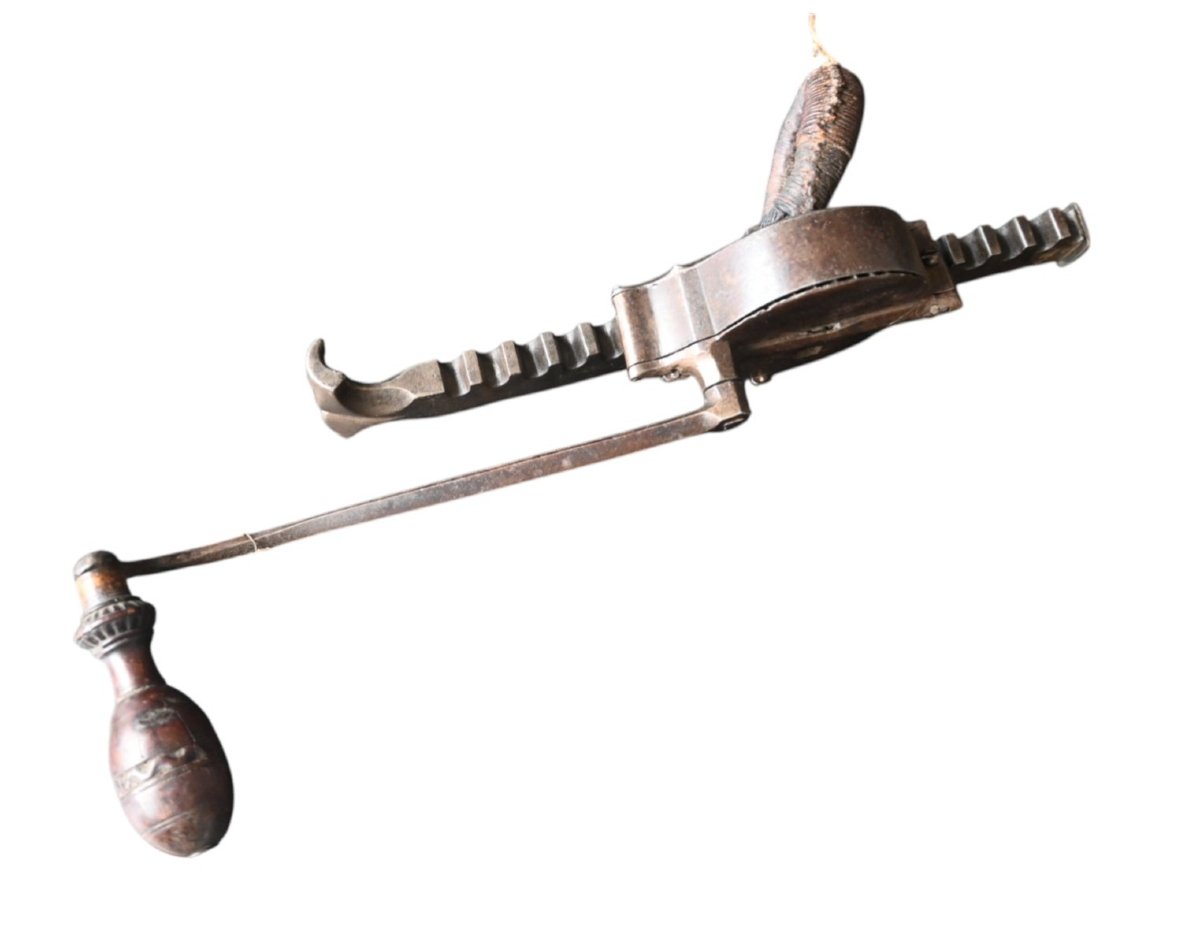
A rare and fully intact Renaissance-era cranequin (crémaillère), finely crafted for tensioning large hunting crossbows. This elegant mechanical windlass exemplifies the sophisticated engineering and artistry of late 16th-century Germanic or Flemish workshops.
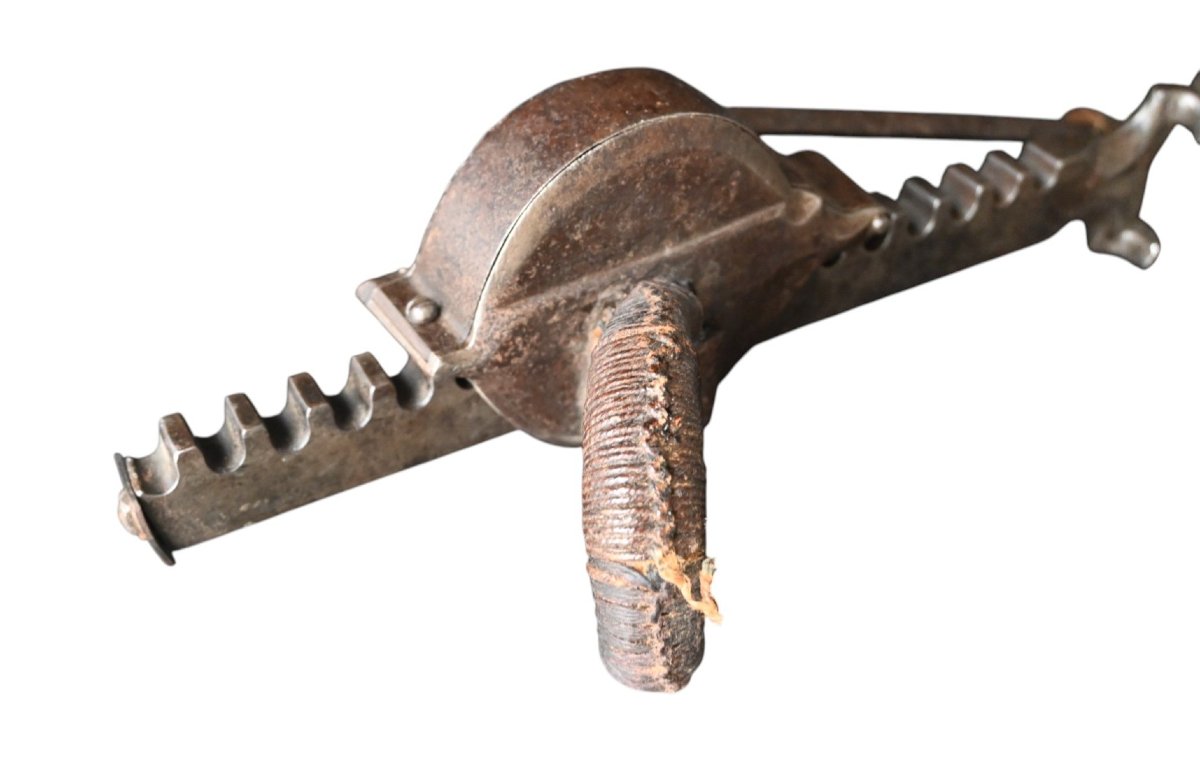
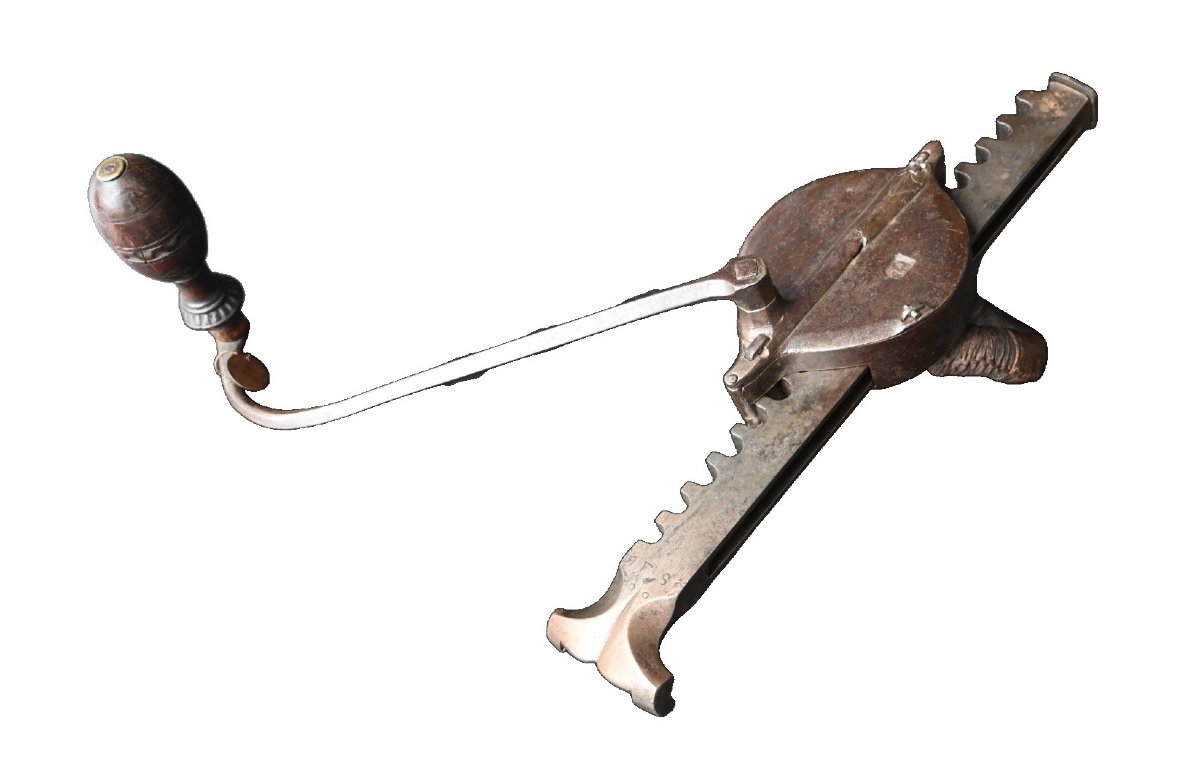
The device features a central circular gear housing, driving a well-forged toothed rack terminating in finely sculpted double-hooked claws. A long crank arm with a gracefully forged shaft turns the gear, and is mounted with its original turned hardwood handle, decorated with delicate grooves and a ringed mid-band. The patina and age of the wood suggest it has remained untouched since the late 1500s.
Stamped on the housing is a maker’s hallmark in the form of a heraldic shield, containing the image of a running animal, most likely a fox — a symbol often associated with cunning, hunting, or used as a personal emblem by 16th-century craftsmen. The mark is deeply struck, original to the forging process, and not added later — indicating this was the identifier of the original artisan or workshop.
At the claw end of the rack is a clear period-engraved date: “1589”, further confirming the piece's authenticity and age. The style of the numerals, including decorative punched dots, corresponds to known workshop practices of the late Renaissance period.
Attached to the handle by wire is a small numbered brass tag ("447"), likely from a private or institutional collection. This detail suggests the piece was cataloged in a former museum or serious private arms collection, though the issuing source remains unverified.
Significance:This cranequin is not of military origin but was almost certainly crafted for aristocratic or noble hunting purposes. The high-quality workmanship, refined aesthetic, and personalized mark all point to a custom-made tool for elite field use, rather than mass military production.
Cranequins of this type, especially dated and marked examples in untouched condition, are increasingly rare on the market and are highly sought after by collectors of antique arms, mechanical devices, and Renaissance hunting gear.
Condition:Mechanism complete and operational
Handle original, stable, with aged but sound wood
Metal with uniform patina; light pitting and surface marks consistent with age
No modern restoration or repair observed
Maker’s mark and date clearly legible
Retains old brass inventory tag "447"
Similar cranequins with heraldic hallmarks and original handles are preserved in:
The Kunsthistorisches Museum, Vienna
The Royal Armouries, Leeds
The Germanisches Nationalmuseum, Nuremberg
Period: 16th century
Style: Renaissance, Louis 13th
Condition: Good condition
Material: Wrought iron
Length: 30 cm
Reference (ID): 1595307
Availability: In stock