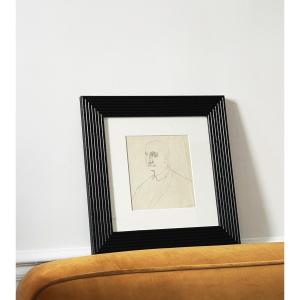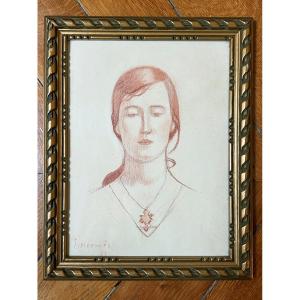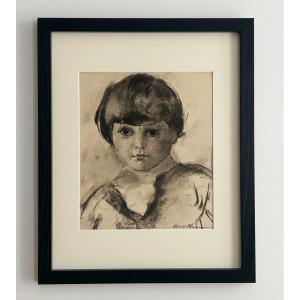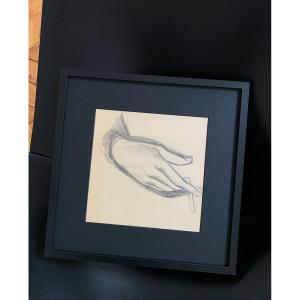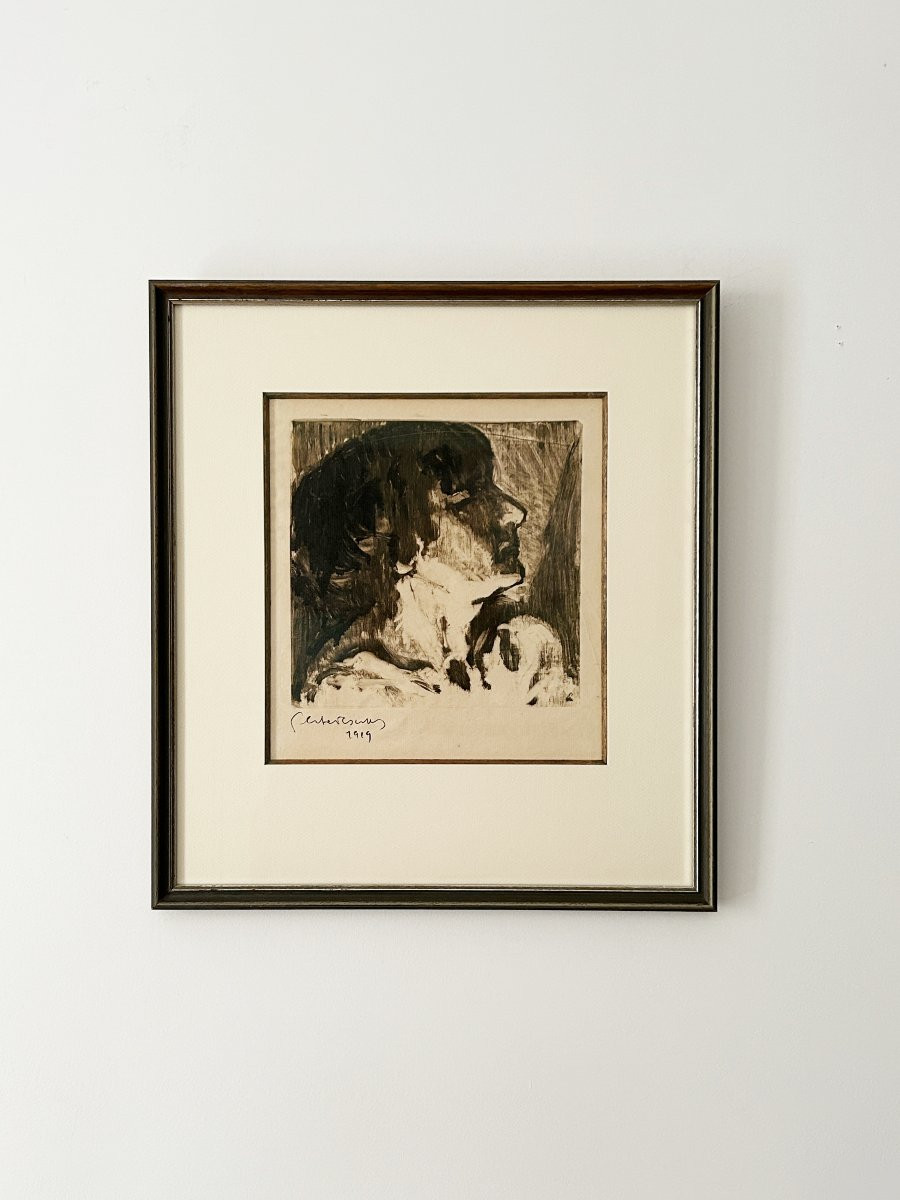

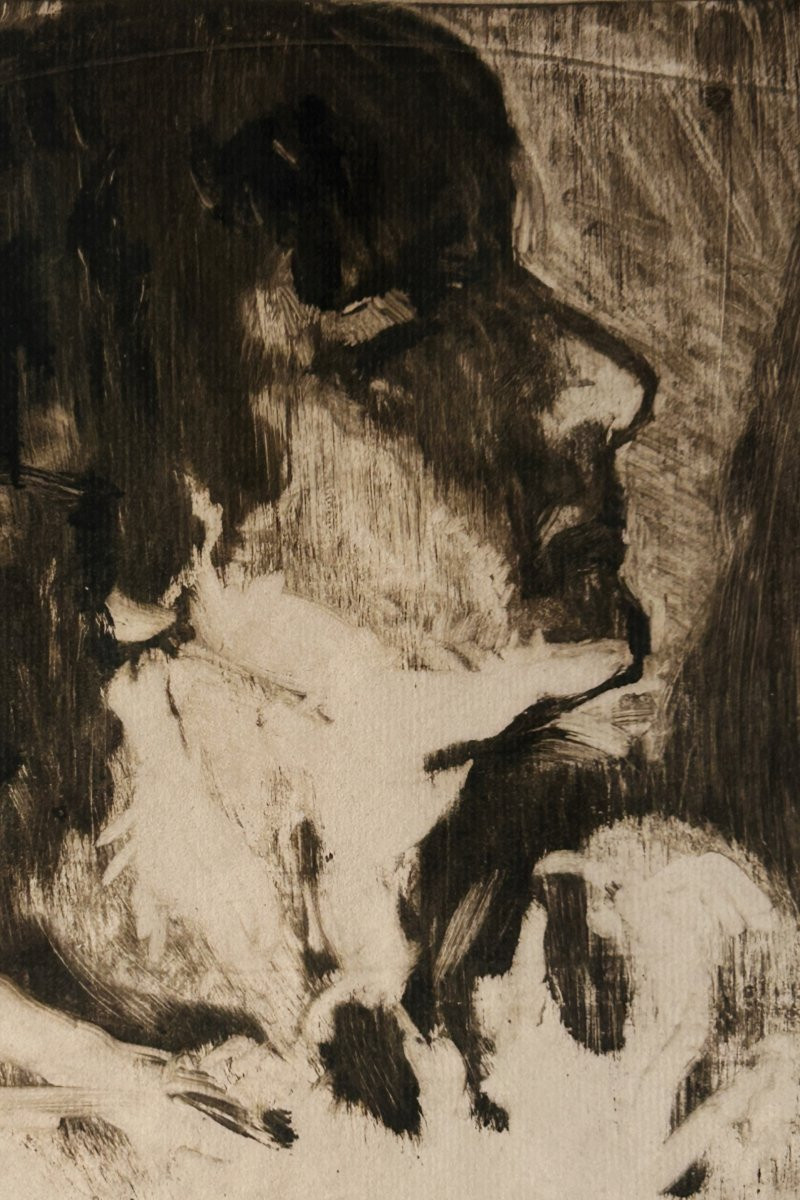


Pierre Combet-descombes (1885-1966), Portrait Of An Androgynous Woman, 1919, Monotype
Artist: Pierre Combet-descombes (1885-1966)
Pierre Combet-Descombes (1885-1966)
Portrait of an Androgynous Woman, 1919
Monotype on paper
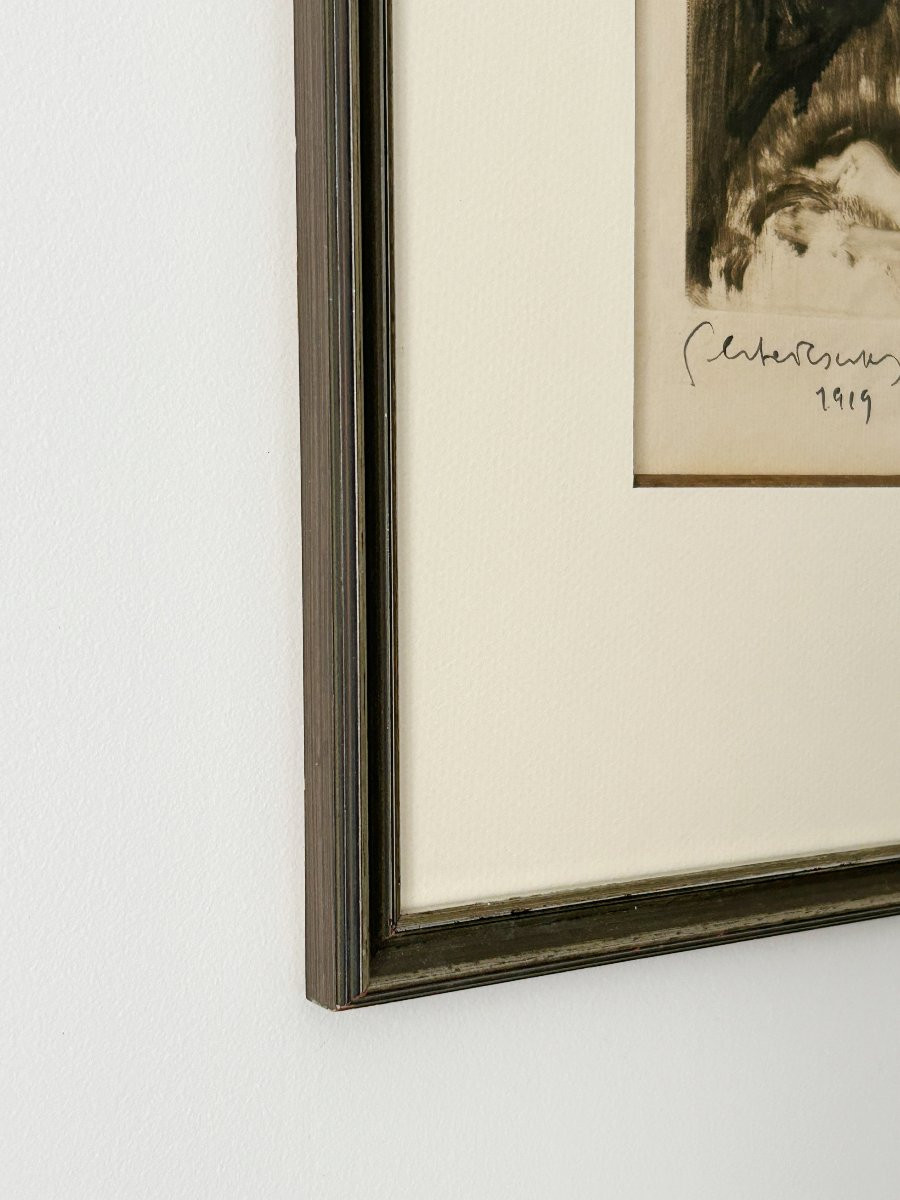
Signed and dated "1919" in the lower left
margin 25 x 23 cm
Framed 43 × 37 cm
Born in Lyon in 1885, Pierre Combet-Descombes received brief training at the École des Beaux-Arts in Lyon, which he entered in 1902. He quickly turned away from formal teaching and presented his first works at the Salon in 1905. A leading figure of the Lyon artistic avant-garde, he was among the founders of the collective Les Ziniars: self-proclaimed ignoramuses who rejected academic teaching. They exerted a real influence on the artistic life of the interwar period and contributed to the emergence of modern art in Lyon. Judging the Salon d'Automne too timid, they created the Salon du Sud-Est in 1925.
A champion of modernity, the artist nevertheless proved reluctant to abandon figurative art. Drawing inspiration from reality, his work explored various themes, among which the female body predominated. The female nude, subjected to all manner of excess, haunted his work. He attributed allegorical functions to it, oscillating “from the celebration of the Virgin with the lily to the quartering of the prostitute.”* He stylized and perverted the bodies of his models, captured in suggestive, even erotic, poses.
Monotype is a creative process intermediate between drawing and printmaking, invented in the mid-17th century by Giovanni Benedetto Castiglione. It consists of drawing with greasy ink or paint on a smooth, non-porous surface such as glass or metal. The image is then transferred by pressure onto a sheet of paper. The artist thus creates a unique work that he can then enhance. This technique allows for a variety of transparency and texture effects. It was popularized at the end of the 19th century, notably by the practice of Edgar Degas.
A master of monotype, Pierre Combet-Descombes kept his works hidden from view in his studio-laboratory, which twice caught fire. Due to their quality, their mystery, and their great expressive power, the artist's monotypes occupy a prominent place in his oeuvre. He developed a powerful visual language by achieving prodigious effects of black and white. The blacks are deep, and the whites, obtained by skimming the ink from the plate rather than leaving the paper untouched, are brilliant. The artist produced numerous series, which he titled such as "Hair" or "Glimpsed Faces," forming variations on the same artistic theme. The monotype we are presenting can be compared to portraits of androgynous women made between 1915 and 1920.
*Jean-Jacques Lerrant, Homage to Pierre Combet-Descombes, Fiftieth anniversary of the death of the founder of the Salon du Sud-Est, 2016.
Portrait of an Androgynous Woman, 1919
Monotype on paper
Signed and dated "1919" in the lower left
margin 25 x 23 cm
Framed 43 × 37 cm
Born in Lyon in 1885, Pierre Combet-Descombes received brief training at the École des Beaux-Arts in Lyon, which he entered in 1902. He quickly turned away from formal teaching and presented his first works at the Salon in 1905. A leading figure of the Lyon artistic avant-garde, he was among the founders of the collective Les Ziniars: self-proclaimed ignoramuses who rejected academic teaching. They exerted a real influence on the artistic life of the interwar period and contributed to the emergence of modern art in Lyon. Judging the Salon d'Automne too timid, they created the Salon du Sud-Est in 1925.
A champion of modernity, the artist nevertheless proved reluctant to abandon figurative art. Drawing inspiration from reality, his work explored various themes, among which the female body predominated. The female nude, subjected to all manner of excess, haunted his work. He attributed allegorical functions to it, oscillating “from the celebration of the Virgin with the lily to the quartering of the prostitute.”* He stylized and perverted the bodies of his models, captured in suggestive, even erotic, poses.
Monotype is a creative process intermediate between drawing and printmaking, invented in the mid-17th century by Giovanni Benedetto Castiglione. It consists of drawing with greasy ink or paint on a smooth, non-porous surface such as glass or metal. The image is then transferred by pressure onto a sheet of paper. The artist thus creates a unique work that he can then enhance. This technique allows for a variety of transparency and texture effects. It was popularized at the end of the 19th century, notably by the practice of Edgar Degas.
A master of monotype, Pierre Combet-Descombes kept his works hidden from view in his studio-laboratory, which twice caught fire. Due to their quality, their mystery, and their great expressive power, the artist's monotypes occupy a prominent place in his oeuvre. He developed a powerful visual language by achieving prodigious effects of black and white. The blacks are deep, and the whites, obtained by skimming the ink from the plate rather than leaving the paper untouched, are brilliant. The artist produced numerous series, which he titled such as "Hair" or "Glimpsed Faces," forming variations on the same artistic theme. The monotype we are presenting can be compared to portraits of androgynous women made between 1915 and 1920.
*Jean-Jacques Lerrant, Homage to Pierre Combet-Descombes, Fiftieth anniversary of the death of the founder of the Salon du Sud-Est, 2016.
700 €
Period: 20th century
Style: Other Style
Condition: Excellent condition
Reference (ID): 1725734
Availability: In stock
Print