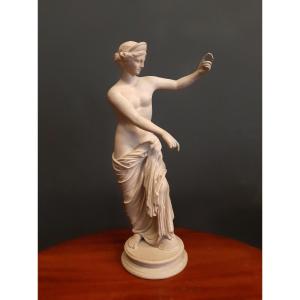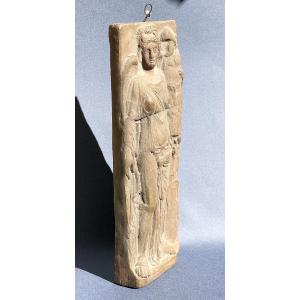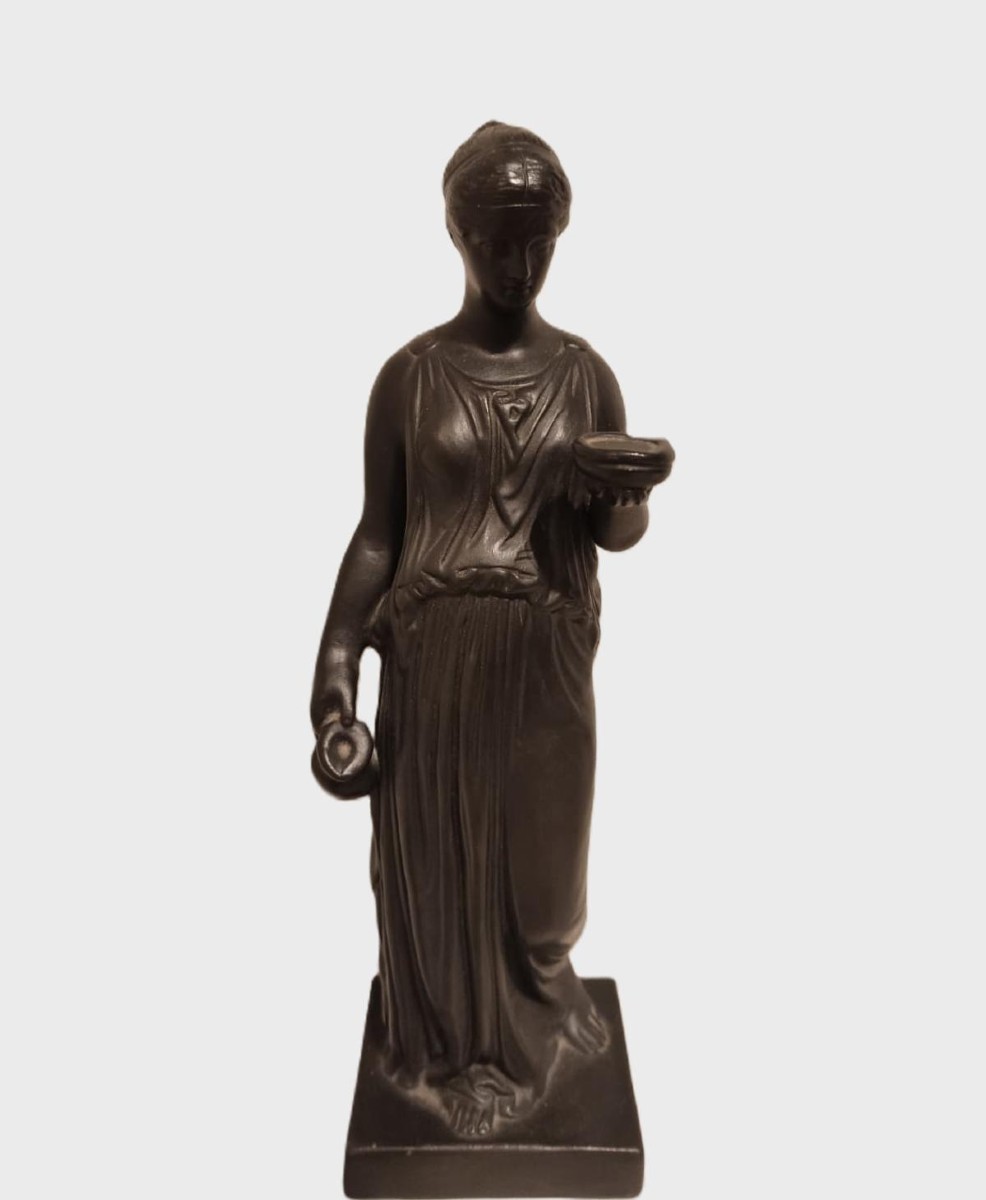
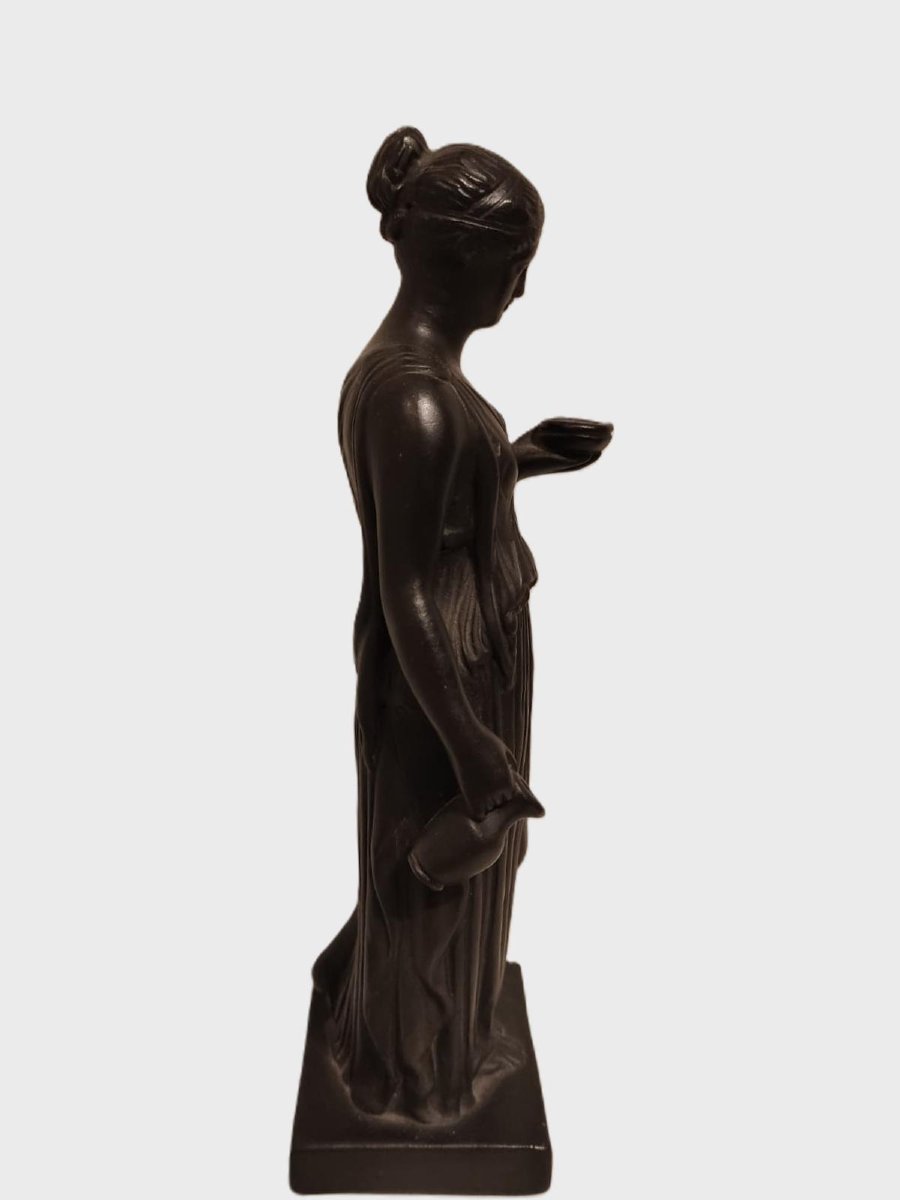
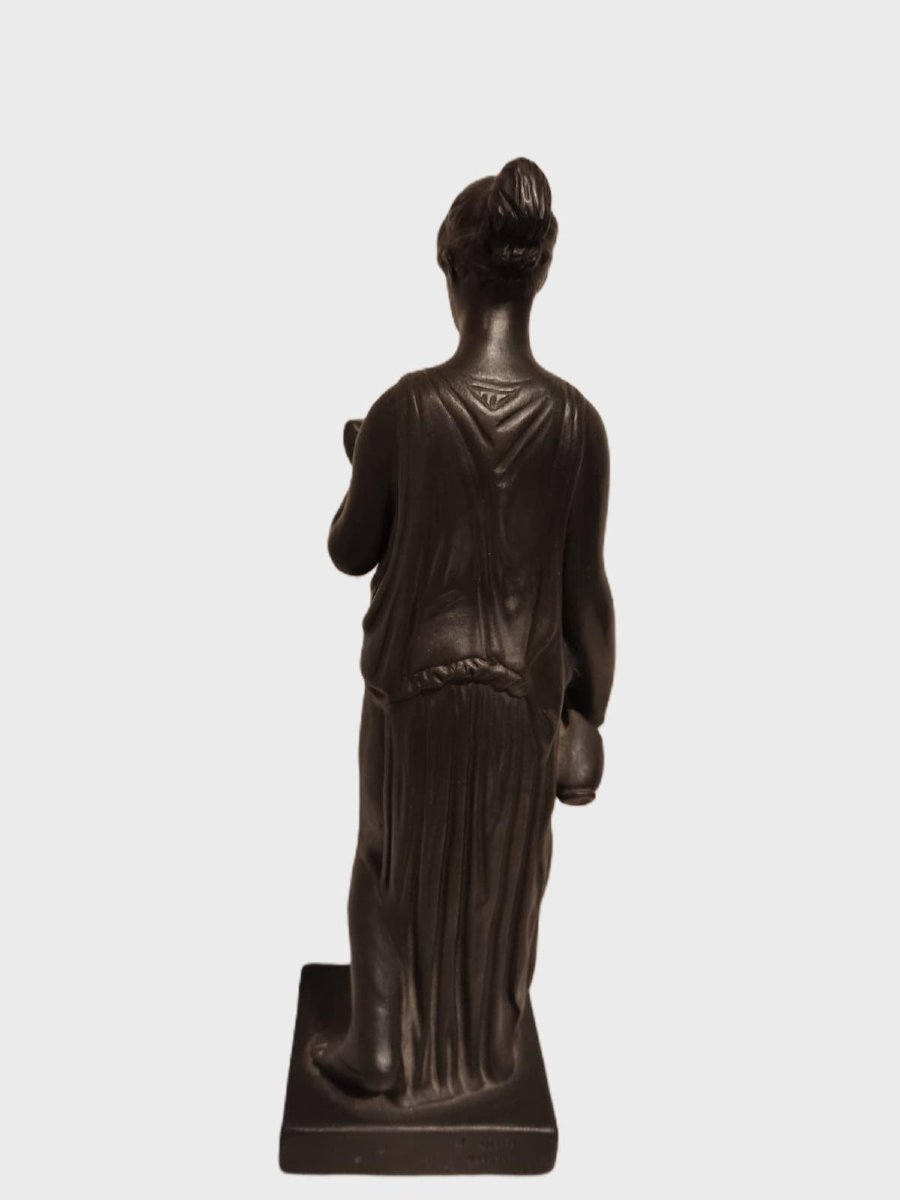
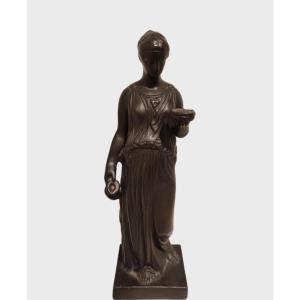


19th Century,black Terracotta Hebe, After Thorvaldsen, Denmark, Hjorth
Artist: After Thorvaldsen
Black terracotta
Denmark, second half of the 19th century.
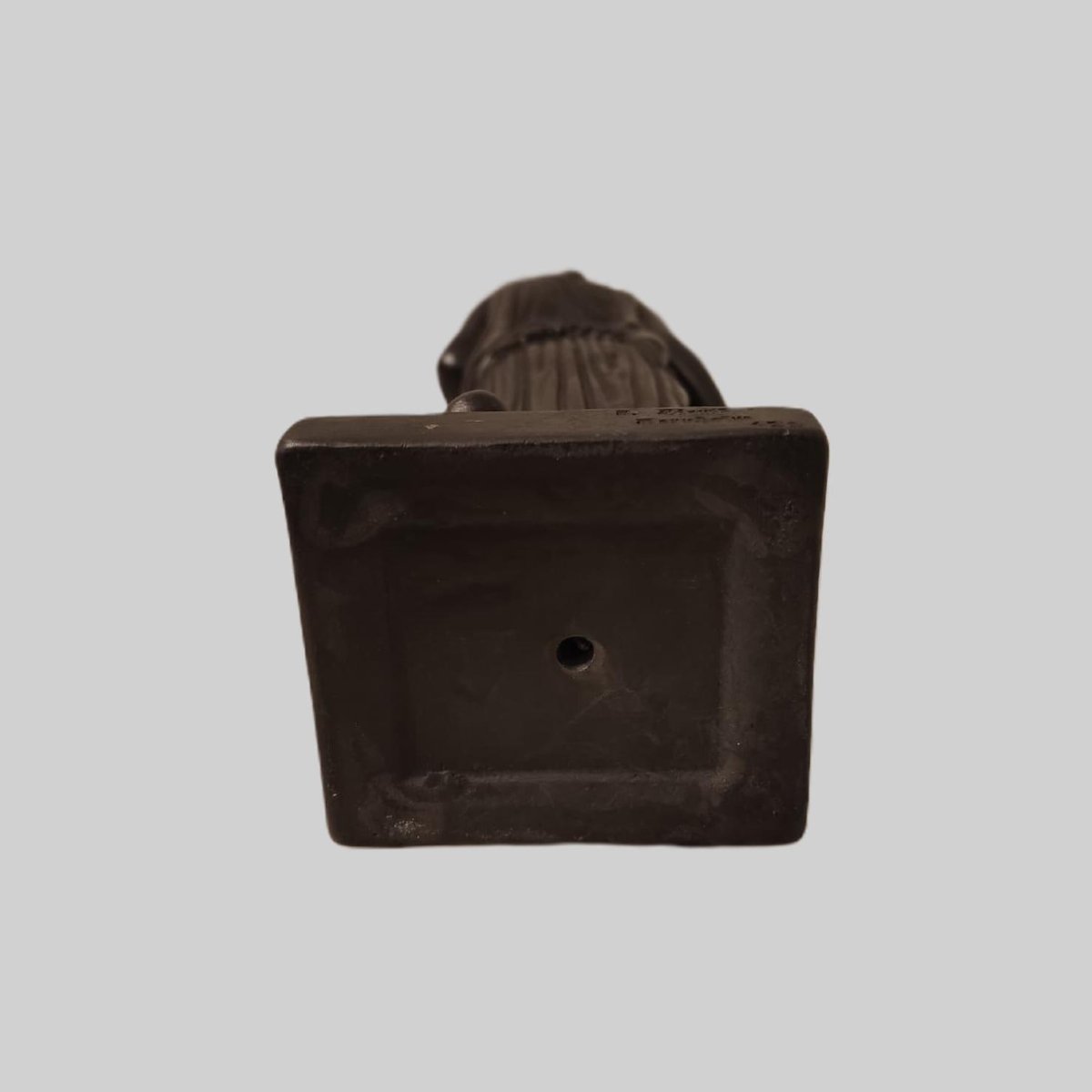
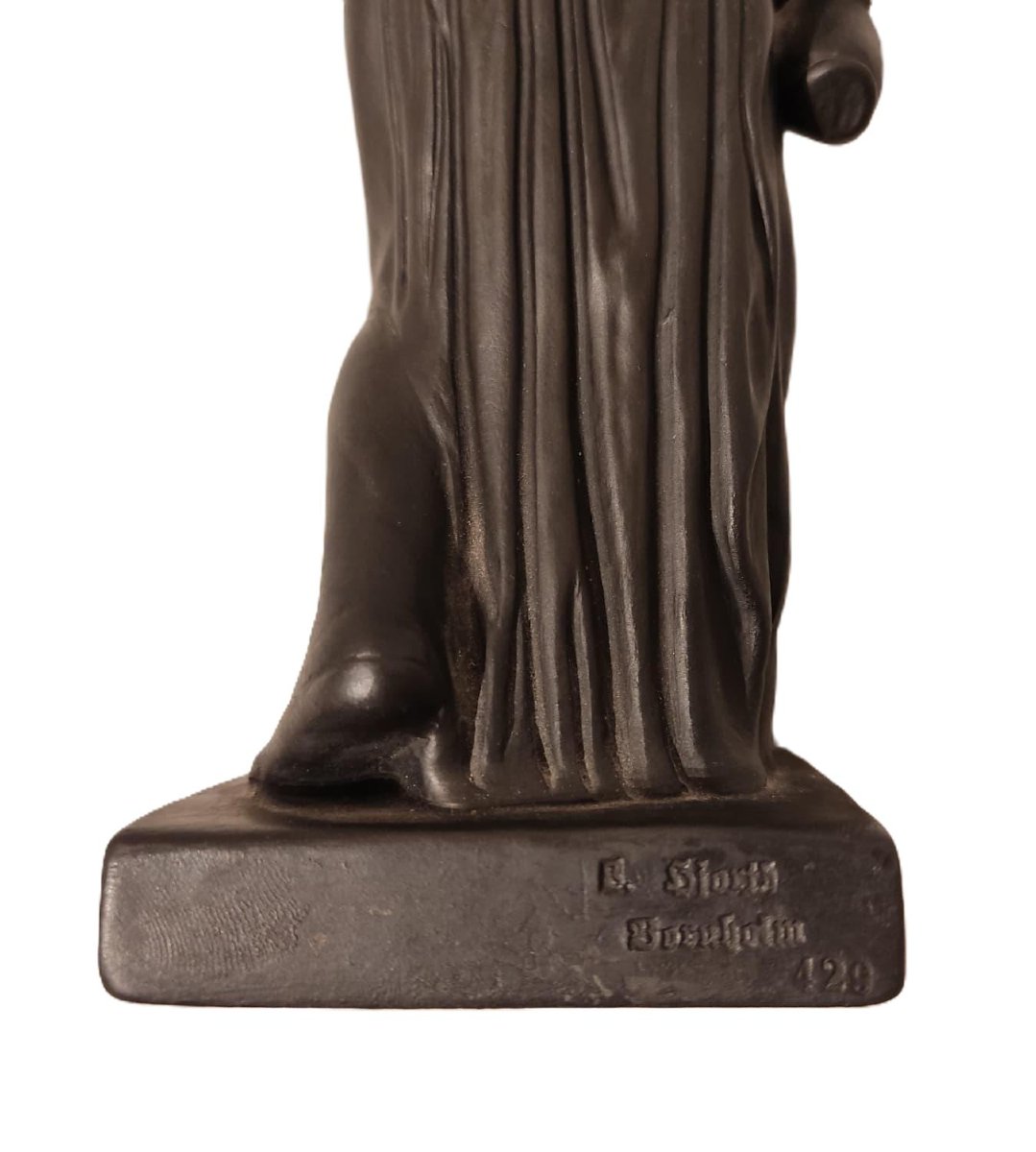
Hjorth Factory, Bornholm, Denmark.
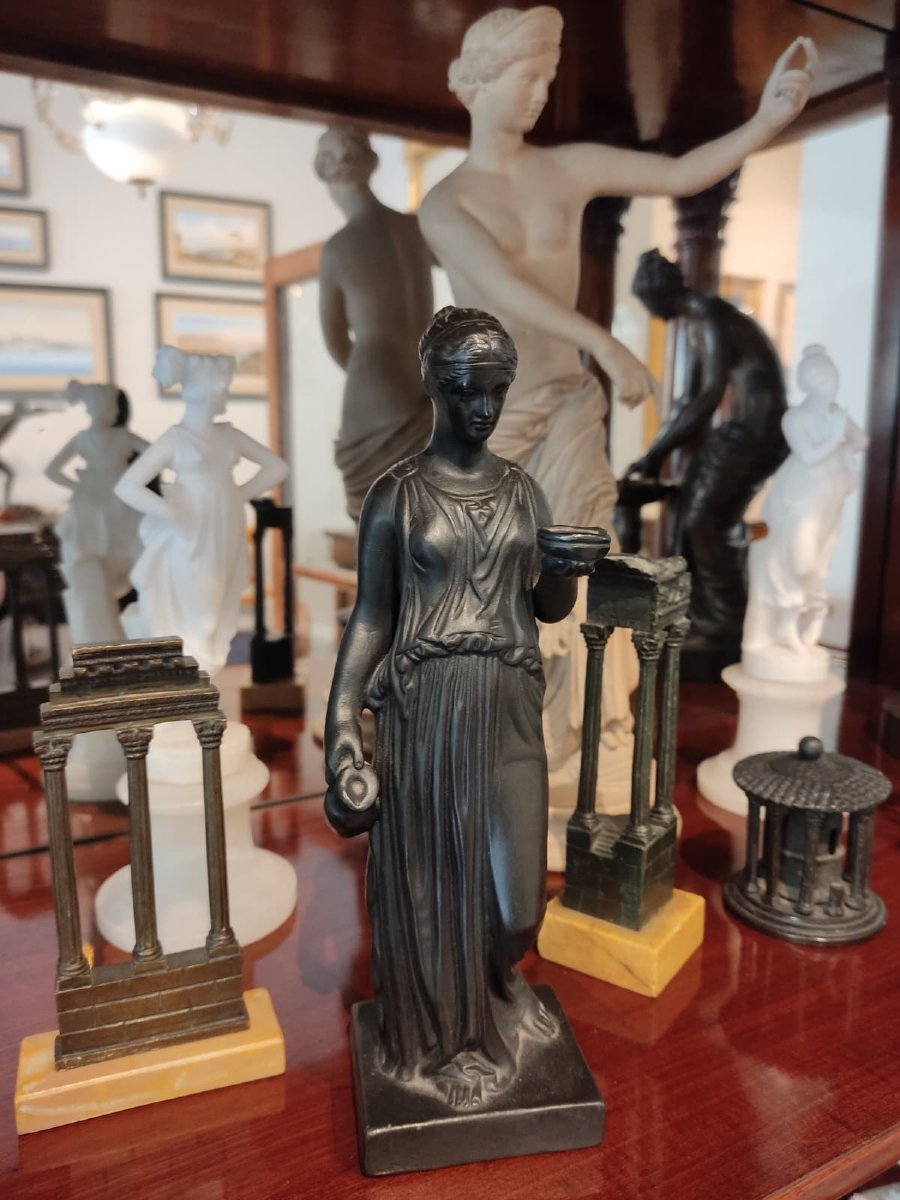
Height 22 cm, base 6.5 x 6 cm.
Bertel Thorvaldsen's sculpture Hebe depicts Hebe, the Greek goddess of youth and cupbearer to the Olympian gods. This work is a fine example of Neoclassical sculpture, reflecting the renewed interest in the ideals of ancient Greek and Roman art in the late 18th and early 19th centuries.
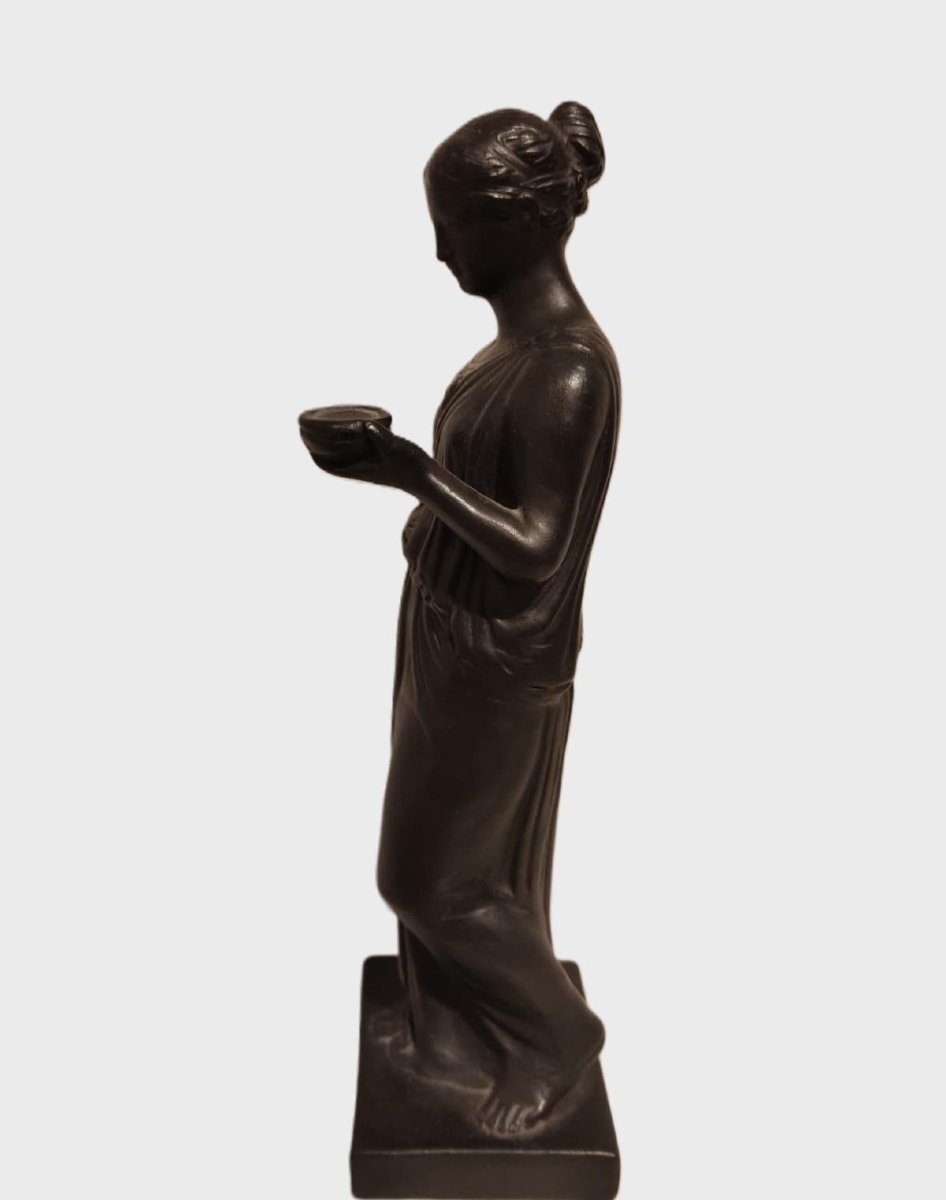
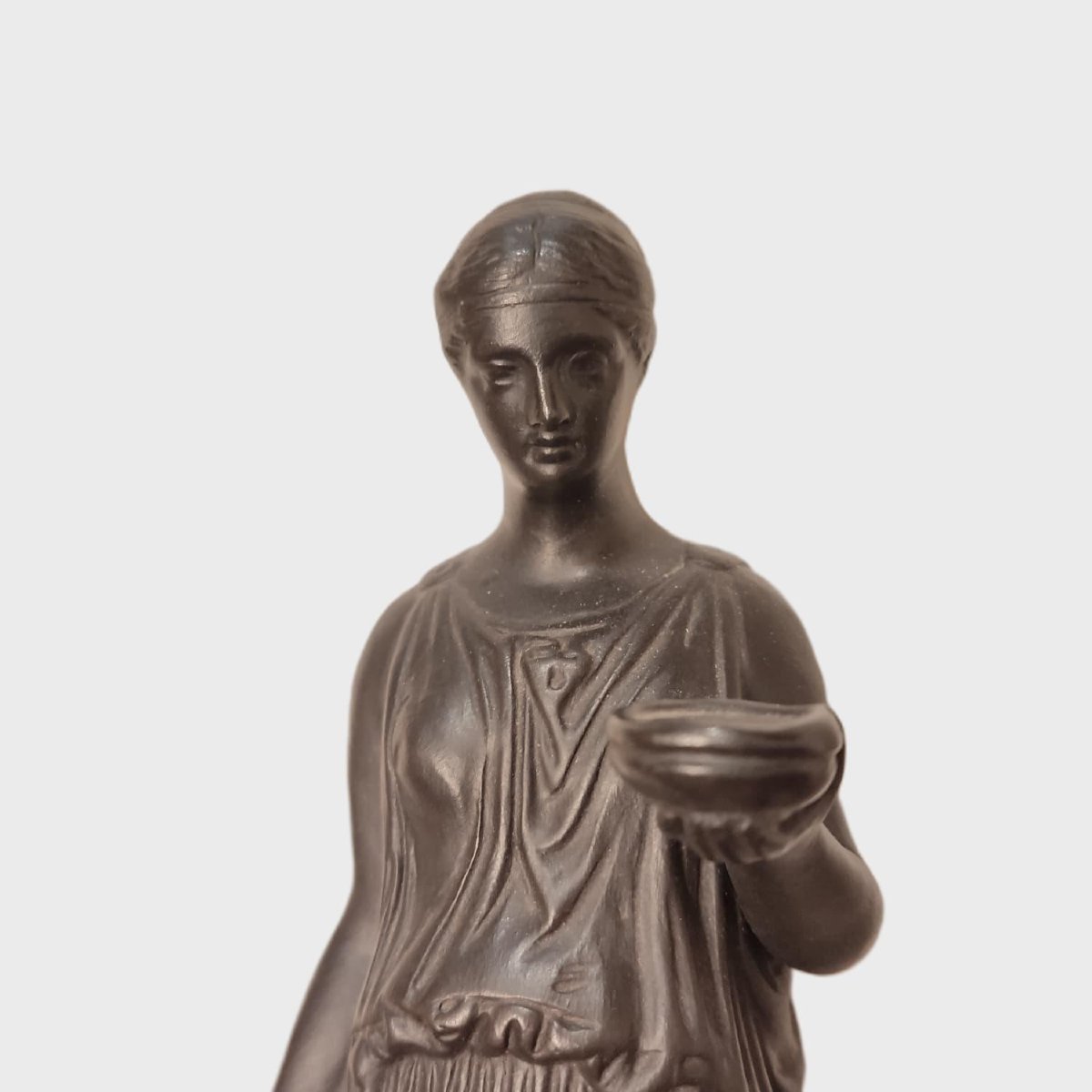
The sculpture portrays Hebe as a graceful young woman in a calm and elegant pose. She is usually shown holding a cup or pouring nectar, symbolizing her role as a servant of the gods who distributes the divine drink that confers immortality. Her posture is balanced and relaxed, often with one leg slightly bent, creating a subtle shift in weight that gives the figure a sense of natural movement. Hebe wears a light and flowing classical garment (a chiton) that gently drapes her body. The folds of the fabric are sculpted with great precision, revealing the form of the body beneath while maintaining modesty and elegance. The delicate treatment of the drapery is characteristic of Thorvaldsen's style and reflects his admiration for ancient Greek sculpture. Her face is serene and idealized, expressing a calm beauty rather than strong emotion. The hair is carefully arranged in classical curls and a neat hairstyle, reinforcing the sculpture's connection to ancient artistic traditions. The smooth surfaces and harmonious proportions give the statue a sense of purity, balance, and timeless beauty, which were central ideals of Neoclassical art.
Thorvaldsen's Hebe was highly influential because it embodied the Neoclassical ideal of perfect form, harmony, and restraint. Artists and collectors alike admired how the sculpture revived the spirit of ancient Greek art while presenting it with the technical refinement of modern sculpture. This work thus helped to establish Thorvaldsen as one of the leading sculptors of the Neoclassical period and to popularize classical mythological themes in European art.
Denmark, second half of the 19th century.
Hjorth Factory, Bornholm, Denmark.
Height 22 cm, base 6.5 x 6 cm.
Bertel Thorvaldsen's sculpture Hebe depicts Hebe, the Greek goddess of youth and cupbearer to the Olympian gods. This work is a fine example of Neoclassical sculpture, reflecting the renewed interest in the ideals of ancient Greek and Roman art in the late 18th and early 19th centuries.
The sculpture portrays Hebe as a graceful young woman in a calm and elegant pose. She is usually shown holding a cup or pouring nectar, symbolizing her role as a servant of the gods who distributes the divine drink that confers immortality. Her posture is balanced and relaxed, often with one leg slightly bent, creating a subtle shift in weight that gives the figure a sense of natural movement. Hebe wears a light and flowing classical garment (a chiton) that gently drapes her body. The folds of the fabric are sculpted with great precision, revealing the form of the body beneath while maintaining modesty and elegance. The delicate treatment of the drapery is characteristic of Thorvaldsen's style and reflects his admiration for ancient Greek sculpture. Her face is serene and idealized, expressing a calm beauty rather than strong emotion. The hair is carefully arranged in classical curls and a neat hairstyle, reinforcing the sculpture's connection to ancient artistic traditions. The smooth surfaces and harmonious proportions give the statue a sense of purity, balance, and timeless beauty, which were central ideals of Neoclassical art.
Thorvaldsen's Hebe was highly influential because it embodied the Neoclassical ideal of perfect form, harmony, and restraint. Artists and collectors alike admired how the sculpture revived the spirit of ancient Greek art while presenting it with the technical refinement of modern sculpture. This work thus helped to establish Thorvaldsen as one of the leading sculptors of the Neoclassical period and to popularize classical mythological themes in European art.
250 €
Period: 19th century
Style: Rome and Antic Greece
Condition: Good condition
Material: Terracotta
Length: 6,5 cm
Width: 6 cm
Height: 22 cm
Reference (ID): 1723308
Availability: In stock
Print