



19th Century Bronze, Replica Of The Spinario Kept At The Capitoline Museums In Rome, France
Spinario
Bronze, France, second half of the 19th century
Height 33.5 cm, width 24 cm, depth 18 cm.
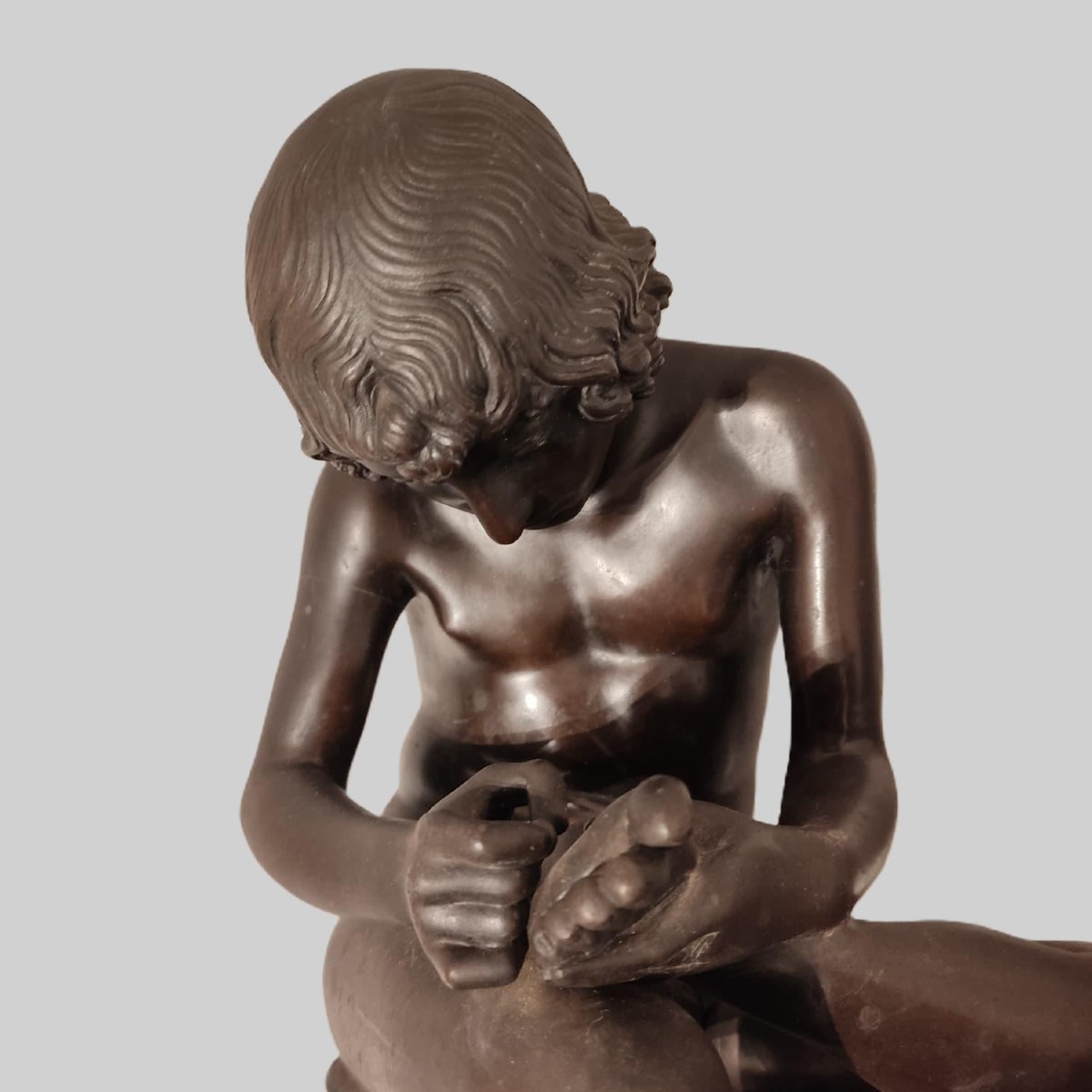
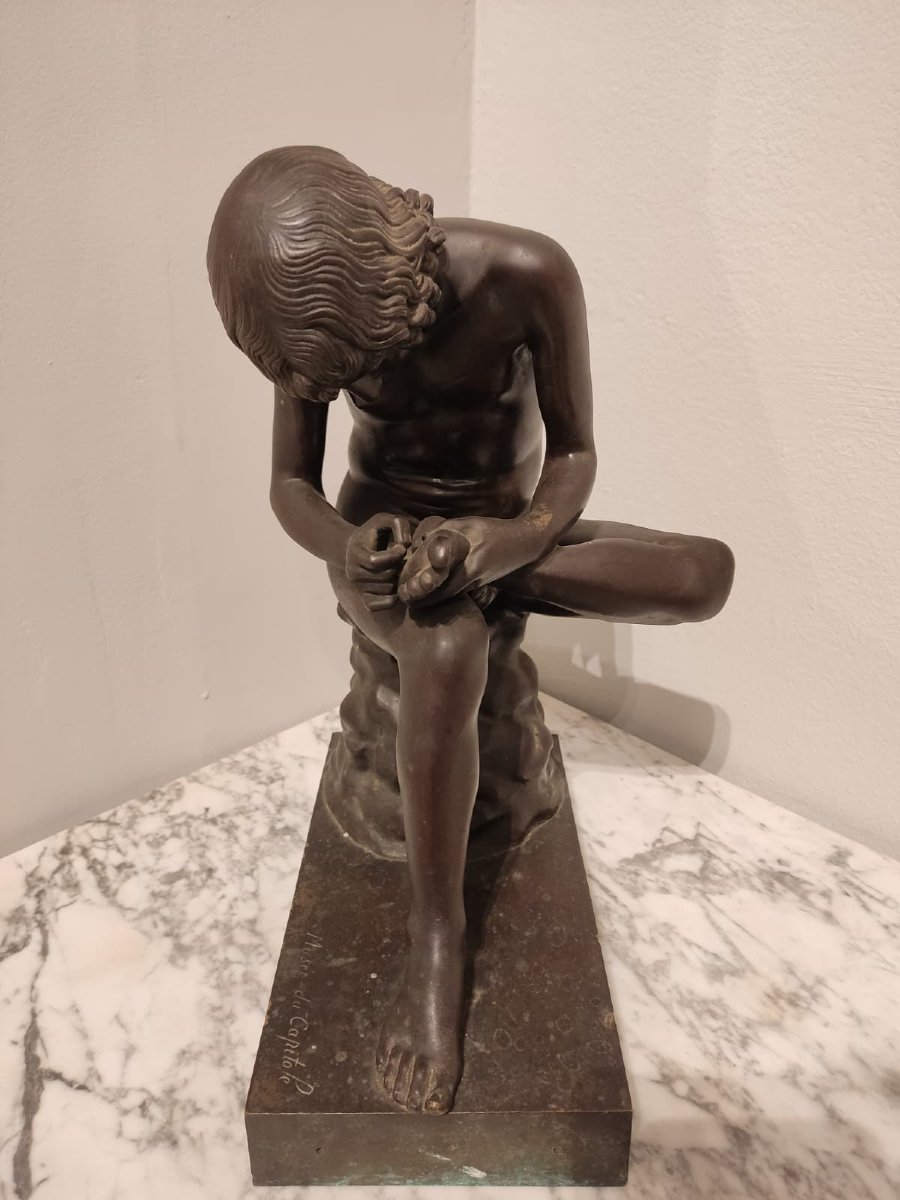
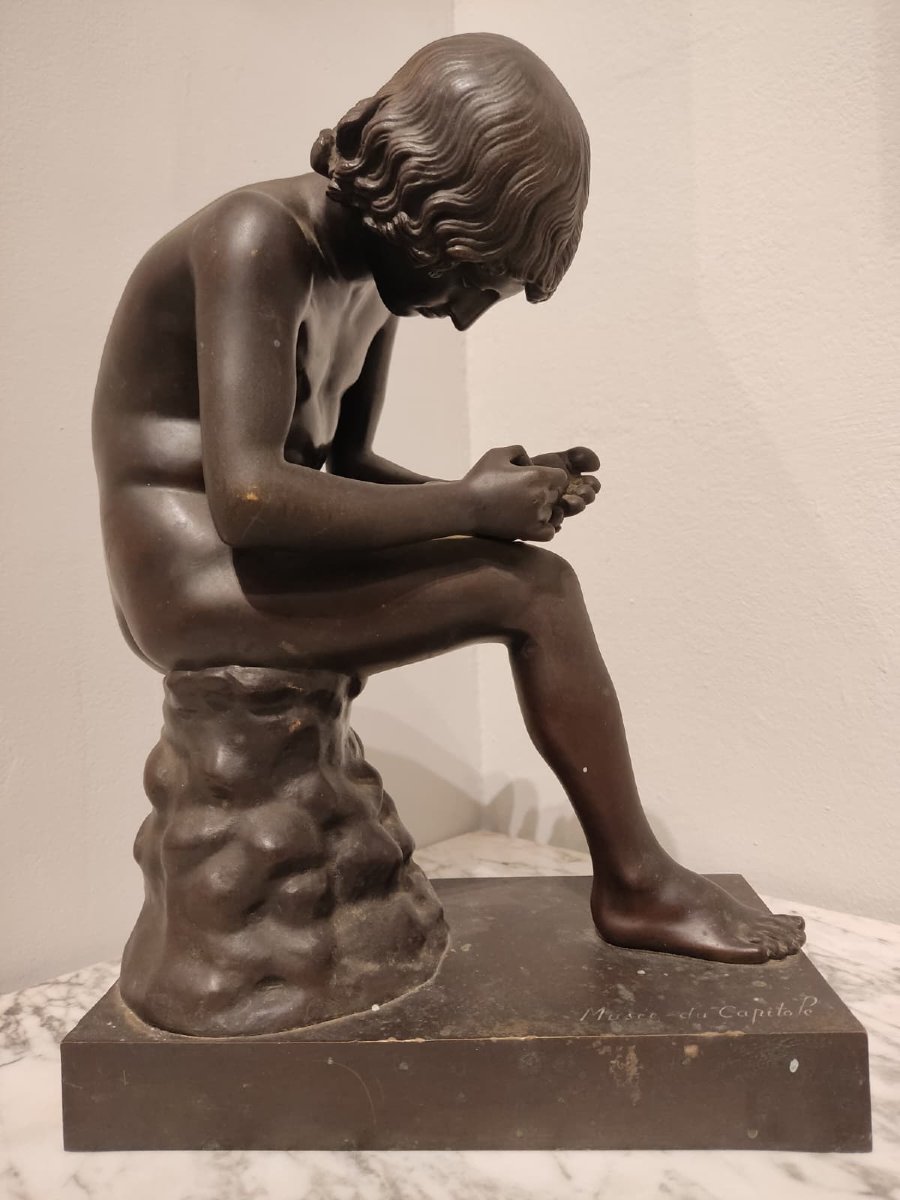
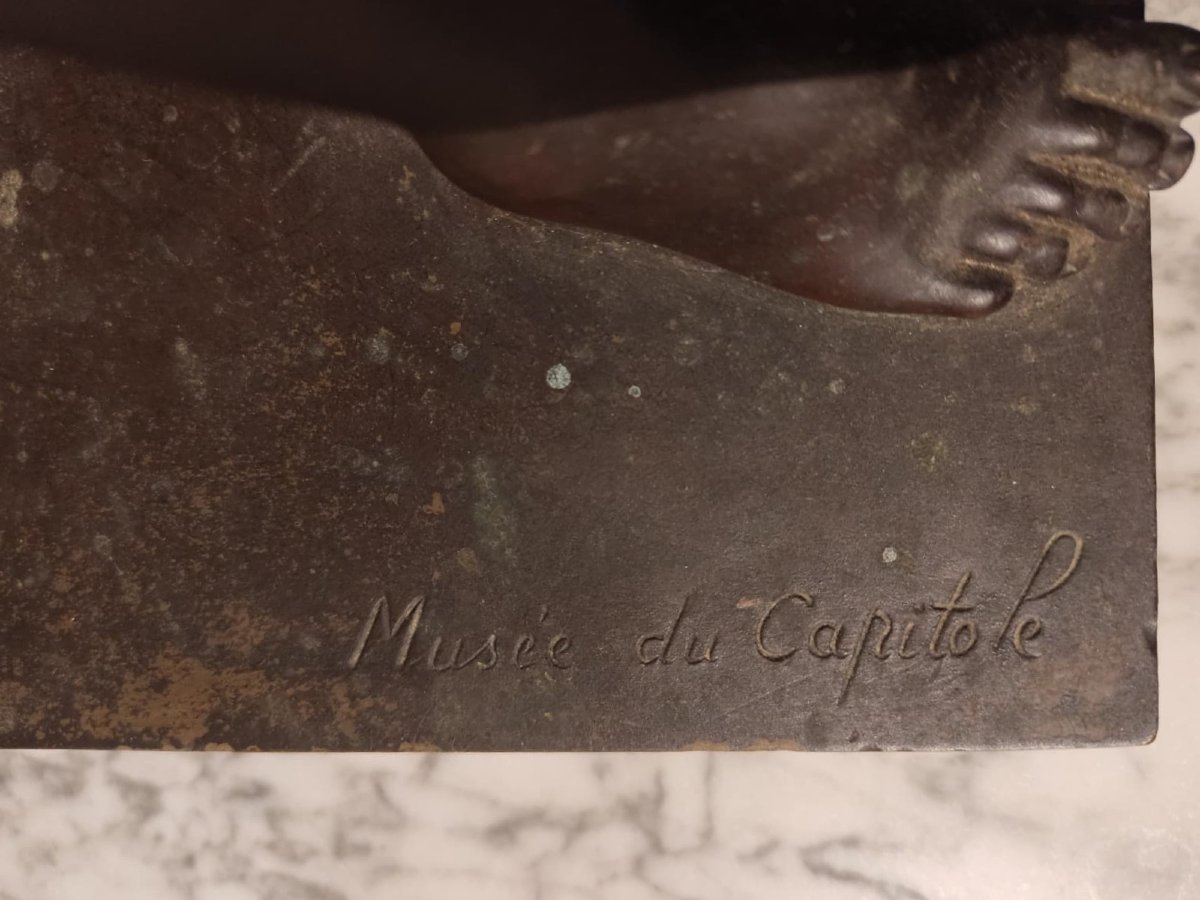
Replica of the Spinario in the Capitoline Museums in Rome.
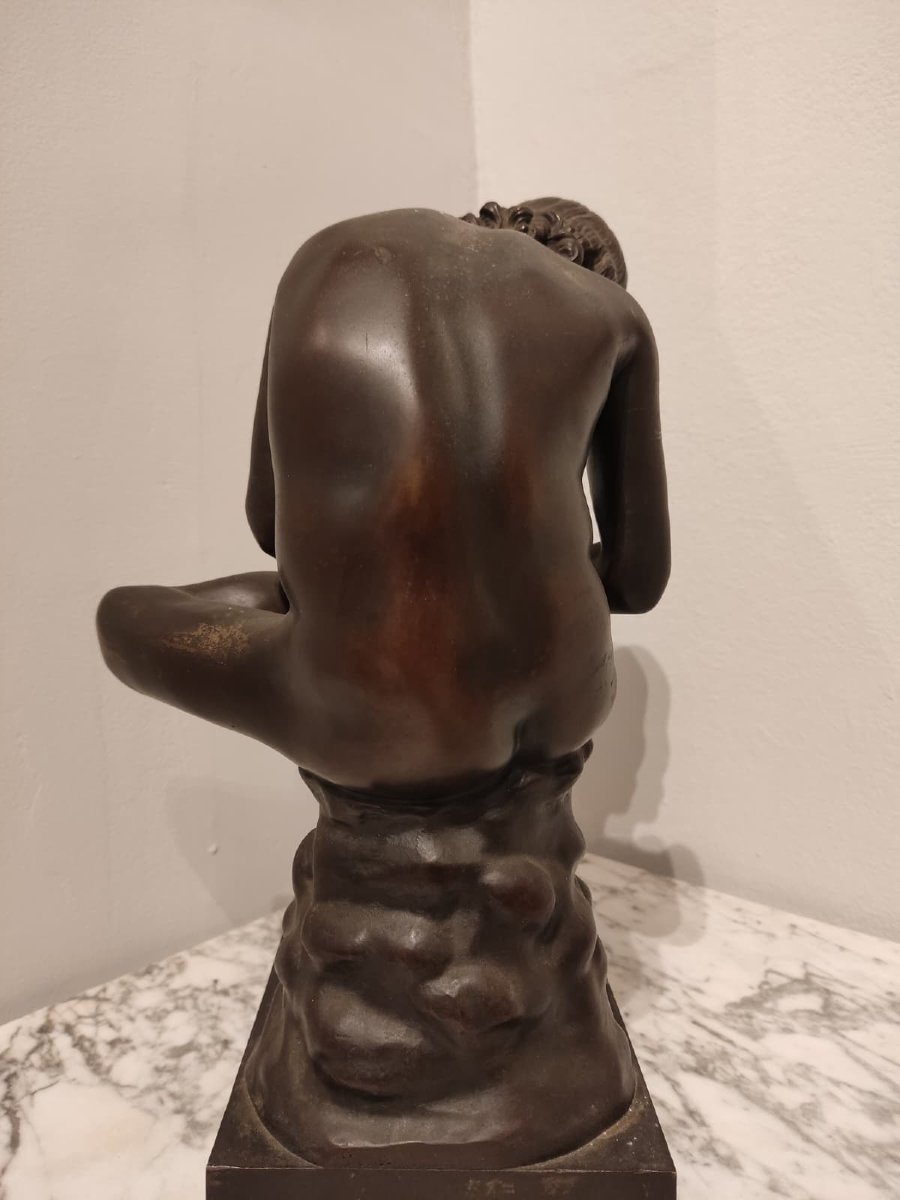
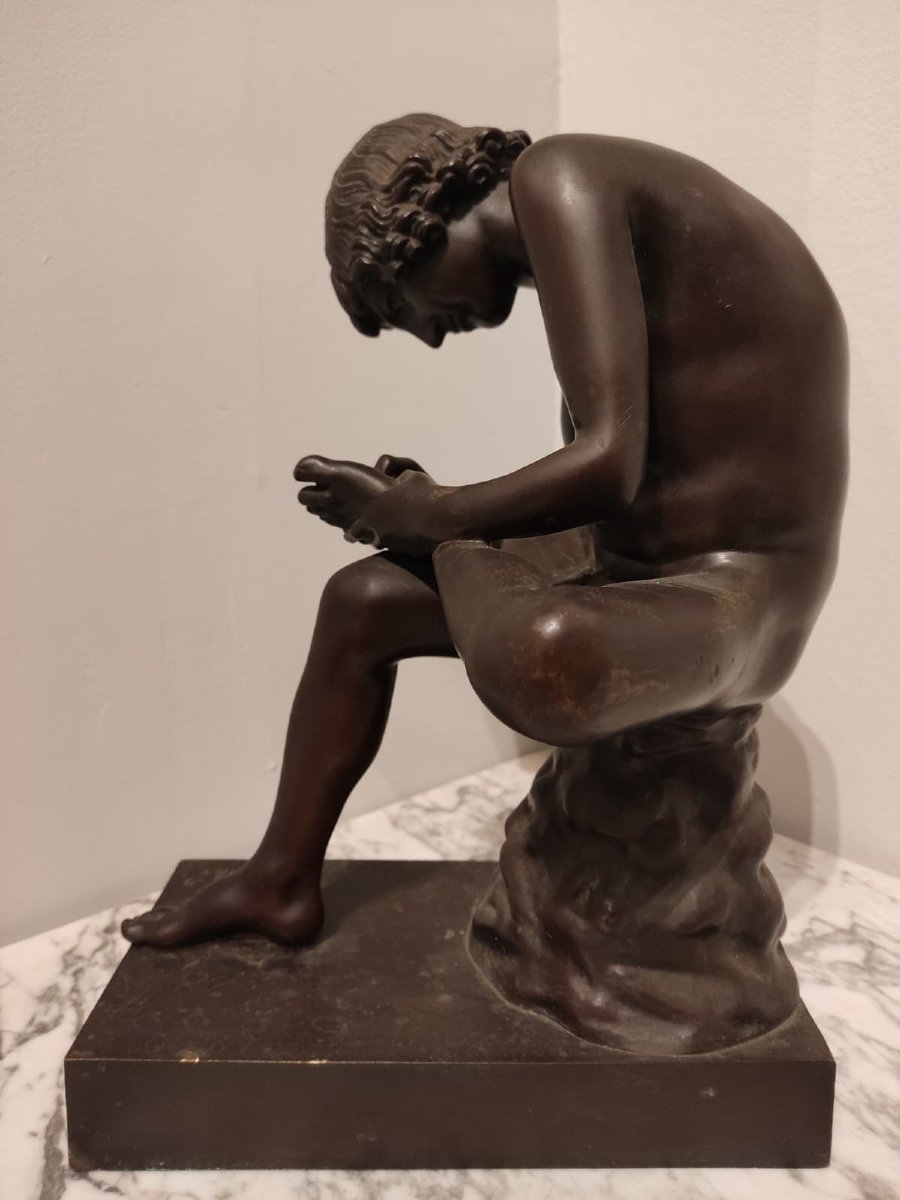
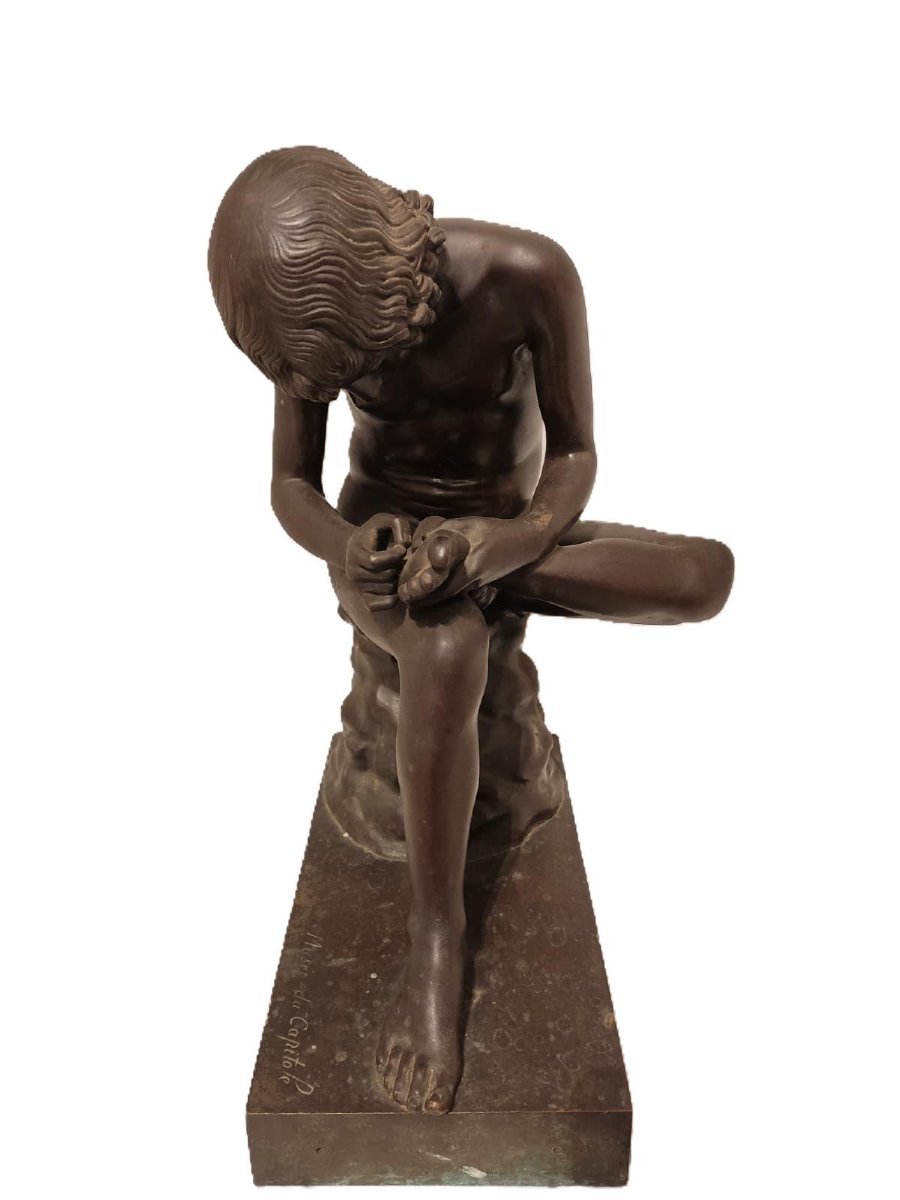
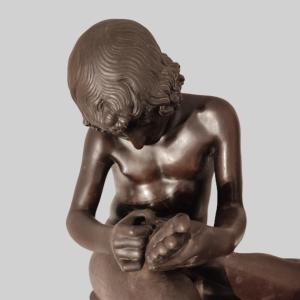
The Spinario, also known as the "Boy with a Thorn," is a famous antique sculpture depicting a young boy calmly removing a thorn from the sole of his foot. The boy sits on a rock-shaped plinth, leaning forward with his head bowed, concentrating. One leg is extended downward while the other is bent and crossed over his knee so he can more easily reach his foot. Using both hands, he delicately removes the thorn from the sole of his foot. His curly hair falls forward, partially obscuring his face as he focuses on this small but painful task. The figure's body is smooth and naturalistic, demonstrating a meticulous attention to anatomy, posture, and balance.
The most famous versions of the sculpture are in bronze, and the best-known example is housed in the Capitoline Museums in Rome. The statue dates to around the 1st century BC, but it reflects artistic traditions stemming from ancient Greek sculpture. Instead of depicting a god, a hero, or a dramatic event, the sculpture captures a quiet, ordinary moment of everyday life.
The Spinario was highly influential, particularly during the Renaissance. Artists and scholars admired it because it had survived from antiquity and exemplified the classical ideals of natural movement, realistic anatomy, and balanced composition. Unlike many ancient sculptures that depicted heroic or mythological subjects, the Spinario showed a simple human gesture, making it intimate and relatable. Renaissance artists studying classical art saw in this statue a perfect example of how the human body could be represented with accuracy and elegance. This is why the Spinario was widely copied and studied by artists of the Renaissance and subsequent periods. Its pose and naturalistic details influenced sculptors and painters who sought to revive the artistic principles of ancient Greece and Rome. The Spinario thus became one of the most recognizable sculptures of classical antiquity and an important model for the development of European art.
Bronze, France, second half of the 19th century
Height 33.5 cm, width 24 cm, depth 18 cm.
Replica of the Spinario in the Capitoline Museums in Rome.
The Spinario, also known as the "Boy with a Thorn," is a famous antique sculpture depicting a young boy calmly removing a thorn from the sole of his foot. The boy sits on a rock-shaped plinth, leaning forward with his head bowed, concentrating. One leg is extended downward while the other is bent and crossed over his knee so he can more easily reach his foot. Using both hands, he delicately removes the thorn from the sole of his foot. His curly hair falls forward, partially obscuring his face as he focuses on this small but painful task. The figure's body is smooth and naturalistic, demonstrating a meticulous attention to anatomy, posture, and balance.
The most famous versions of the sculpture are in bronze, and the best-known example is housed in the Capitoline Museums in Rome. The statue dates to around the 1st century BC, but it reflects artistic traditions stemming from ancient Greek sculpture. Instead of depicting a god, a hero, or a dramatic event, the sculpture captures a quiet, ordinary moment of everyday life.
The Spinario was highly influential, particularly during the Renaissance. Artists and scholars admired it because it had survived from antiquity and exemplified the classical ideals of natural movement, realistic anatomy, and balanced composition. Unlike many ancient sculptures that depicted heroic or mythological subjects, the Spinario showed a simple human gesture, making it intimate and relatable. Renaissance artists studying classical art saw in this statue a perfect example of how the human body could be represented with accuracy and elegance. This is why the Spinario was widely copied and studied by artists of the Renaissance and subsequent periods. Its pose and naturalistic details influenced sculptors and painters who sought to revive the artistic principles of ancient Greece and Rome. The Spinario thus became one of the most recognizable sculptures of classical antiquity and an important model for the development of European art.
1 600 €
Period: 19th century
Style: Rome and Antic Greece
Condition: Excellent condition
Material: Bronze
Length: 24 cm
Width: 18 cm
Height: 33,5 cm
Reference (ID): 1723290
Availability: In stock
Print