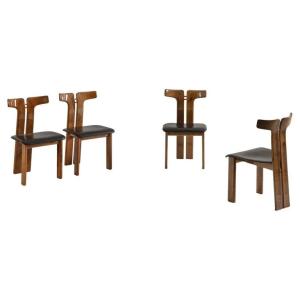


Pierre Cardin 4 Chairs In Walnut And Leather, France
Artist: Pierre Cardin
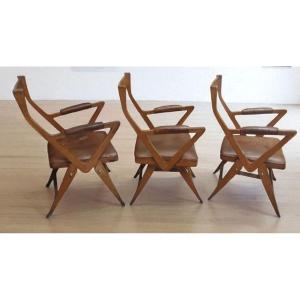
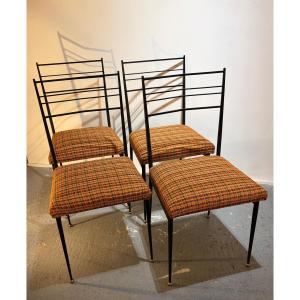
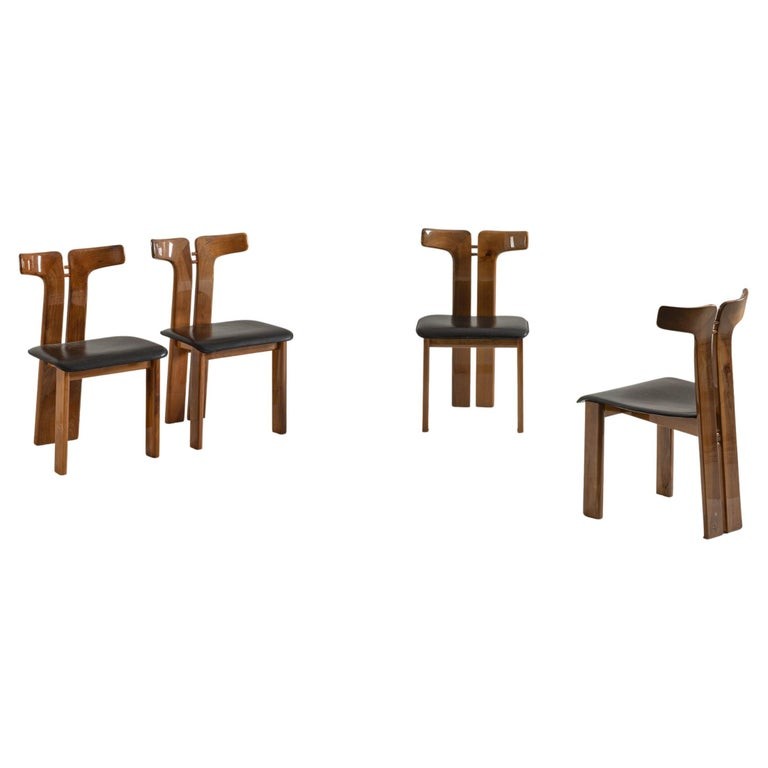
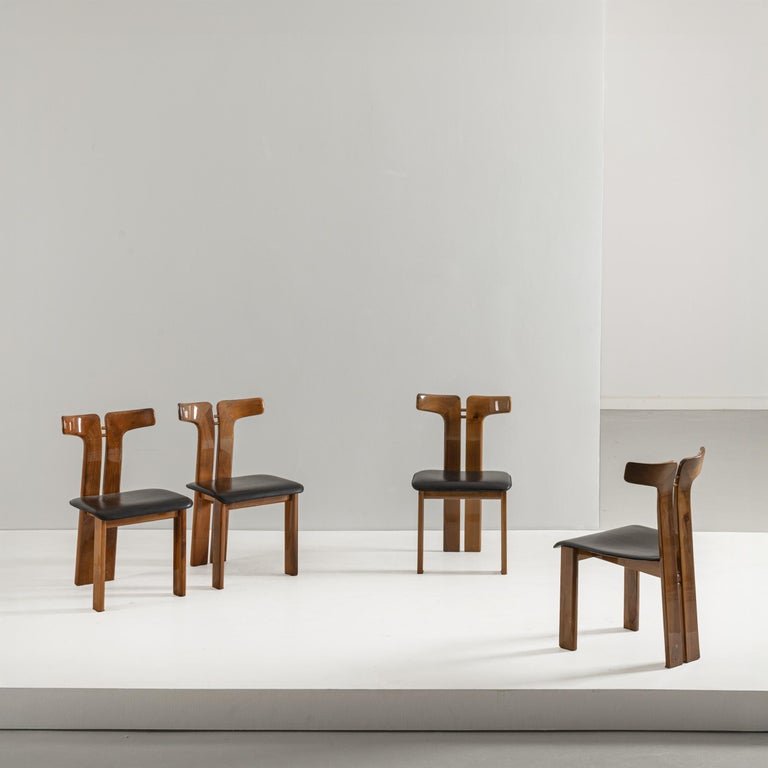
Pierre Cardin, set of 4 dining chairs, walnut, leather, Italy, circa 1970.
This sculptural chair is a creation of the French designer Pierre Cardin (1922-2020).
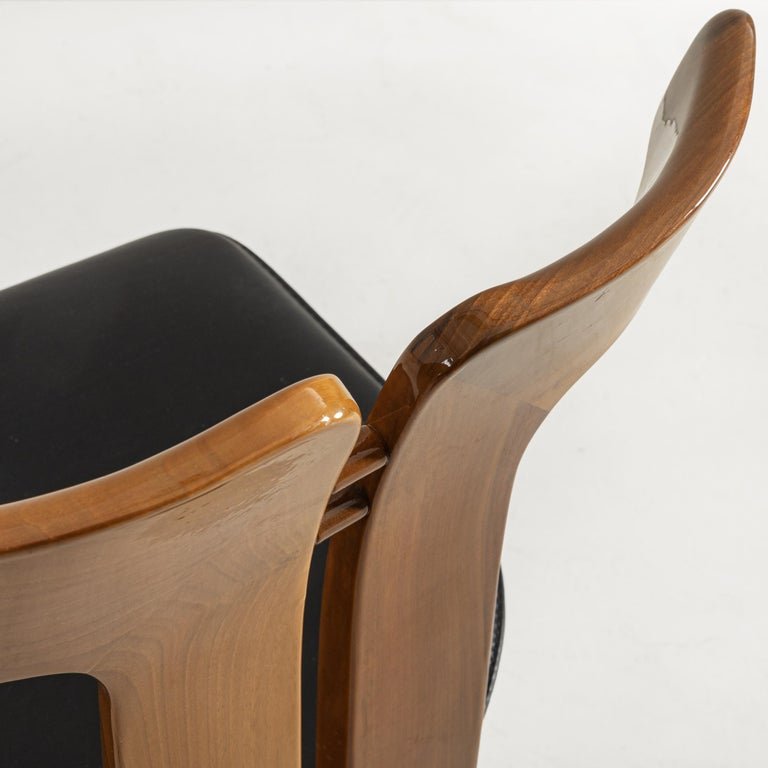
The curved backrest highlights the qualities of the wood and its form in an incomparable way.
These organic lines are manifested in two fluid elements that support the backrest.
They are connected by wooden joints.
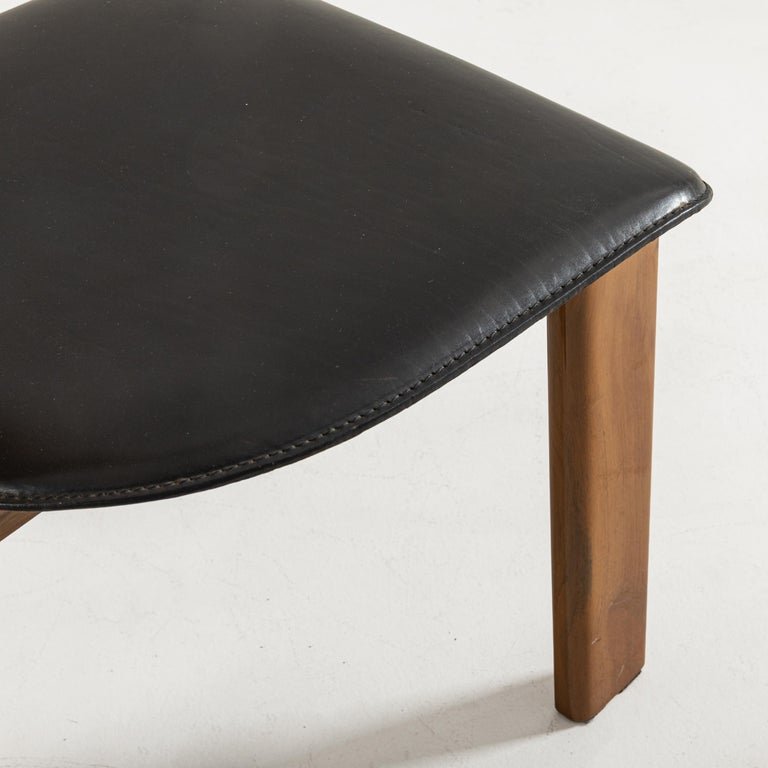
The front legs are made of straight slats.
The frame is made of walnut, which perfectly complements the cognac leather seats.
Pierre Cardin was born near Treviso, in northern Italy. He was the son of Maria Montagner and Alessandro Cardin.[5] His parents were wealthy wine merchants, but they lost their fortune during the First World War.[6] To escape the Blackshirts, they left Italy and settled in Saint-Étienne in 1924 with his ten brothers and sisters.[6][7][8] His father wanted him to study architecture, but from childhood, he was interested in fashion design.[9]
Pierre Cardin dress, thermoformed Dynel, 1968. Cardin moved to Paris in 1945. There, he studied architecture and worked for the Paquin fashion house after World War II. He worked with Elsa Schiaparelli until his appointment as head of Christian Dior's tailoring workshop in 1947, but was refused a position at Balenciaga.[10]
Cardin founded his own fashion house in 1950.[11] His career began when he designed around thirty costumes for a masked ball in Venice, organized by Carlos de Beistegui in 1951. Cardin launched his haute couture production in 1953 with his first collection of women's clothing and became a member of the Chambre Syndicale, a French association of haute couture designers.[12] The following year, he opened his first boutique, Eve,[12] and introduced the "bubble dress," a short, puffy dress created by cutting on the bias over a rigid base.[13][14] He was the first couturier to look to Japan as a haute couture market during his trip there in 1957.[11]
As haute couture began to decline, ready-to-wear experienced a meteoric rise, as did Cardin's designs. He was the first to combine the "mini" and "maxi" skirts of the 1970s by introducing a new hemline adorned with long tassels or fringe.[15]
As early as the 1970s, Cardin launched another trend: "mod chic." This trend was characterized by shapes, or combinations of shapes, that were unprecedented at the time. He was the first to pair extremely short pieces with ankle-length garments. He created dresses with slits and batwing sleeves in original proportions, blending circular movements and gypsy skirts with structured tops. These creations contrasted the geometric shapes that fascinated him with straight and circular lines. Cardin became an icon by initiating this popular fashion movement of the early 1970s.[16]
Inspired by travel and space exploration, Cardin visited NASA (National Aeronautics and Space Administration) in 1970, where he tried on the original spacesuit worn by the first man to walk on the moon, Neil Armstrong.[17] Cardin designed spacesuits for NASA in 1970.[17] Send feedback
This sculptural chair is a creation of the French designer Pierre Cardin (1922-2020).
The curved backrest highlights the qualities of the wood and its form in an incomparable way.
These organic lines are manifested in two fluid elements that support the backrest.
They are connected by wooden joints.
The front legs are made of straight slats.
The frame is made of walnut, which perfectly complements the cognac leather seats.
Pierre Cardin was born near Treviso, in northern Italy. He was the son of Maria Montagner and Alessandro Cardin.[5] His parents were wealthy wine merchants, but they lost their fortune during the First World War.[6] To escape the Blackshirts, they left Italy and settled in Saint-Étienne in 1924 with his ten brothers and sisters.[6][7][8] His father wanted him to study architecture, but from childhood, he was interested in fashion design.[9]
Pierre Cardin dress, thermoformed Dynel, 1968. Cardin moved to Paris in 1945. There, he studied architecture and worked for the Paquin fashion house after World War II. He worked with Elsa Schiaparelli until his appointment as head of Christian Dior's tailoring workshop in 1947, but was refused a position at Balenciaga.[10]
Cardin founded his own fashion house in 1950.[11] His career began when he designed around thirty costumes for a masked ball in Venice, organized by Carlos de Beistegui in 1951. Cardin launched his haute couture production in 1953 with his first collection of women's clothing and became a member of the Chambre Syndicale, a French association of haute couture designers.[12] The following year, he opened his first boutique, Eve,[12] and introduced the "bubble dress," a short, puffy dress created by cutting on the bias over a rigid base.[13][14] He was the first couturier to look to Japan as a haute couture market during his trip there in 1957.[11]
As haute couture began to decline, ready-to-wear experienced a meteoric rise, as did Cardin's designs. He was the first to combine the "mini" and "maxi" skirts of the 1970s by introducing a new hemline adorned with long tassels or fringe.[15]
As early as the 1970s, Cardin launched another trend: "mod chic." This trend was characterized by shapes, or combinations of shapes, that were unprecedented at the time. He was the first to pair extremely short pieces with ankle-length garments. He created dresses with slits and batwing sleeves in original proportions, blending circular movements and gypsy skirts with structured tops. These creations contrasted the geometric shapes that fascinated him with straight and circular lines. Cardin became an icon by initiating this popular fashion movement of the early 1970s.[16]
Inspired by travel and space exploration, Cardin visited NASA (National Aeronautics and Space Administration) in 1970, where he tried on the original spacesuit worn by the first man to walk on the moon, Neil Armstrong.[17] Cardin designed spacesuits for NASA in 1970.[17] Send feedback
13 500 €
Period: 20th century
Style: Design 50's and 60's
Condition: Good condition
Material: Wallnut
Length: 47
Width: 47
Height: 78
Reference (ID): 1720988
Availability: In stock
Print