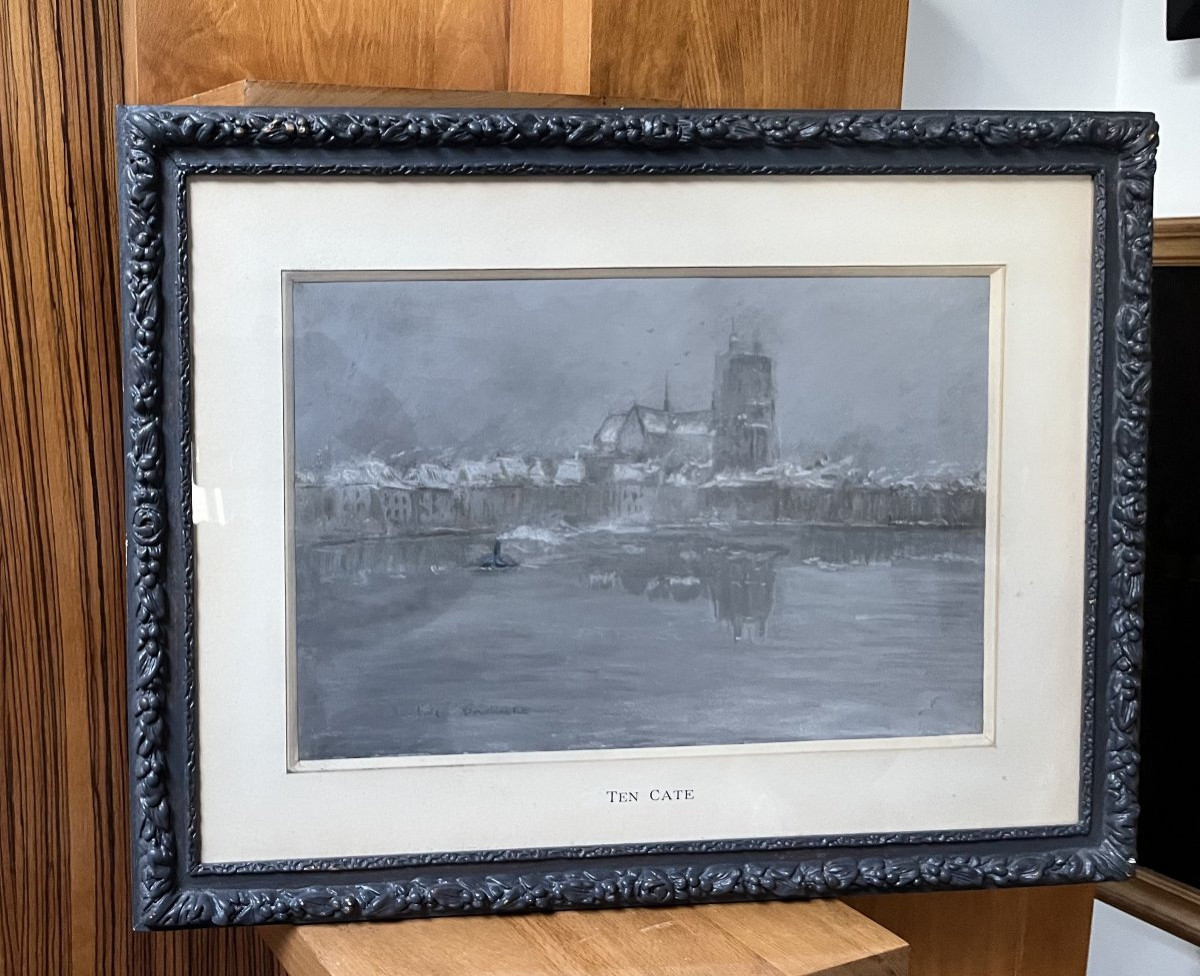


Siebe Johannes Ten Cate (1858-1908) Dordrecht Under The Snow, Signed Pastel
Artist: Siebe Johannes Ten Cate (1858-1908)
Siebe Johannes Ten Cate (1858-1908)
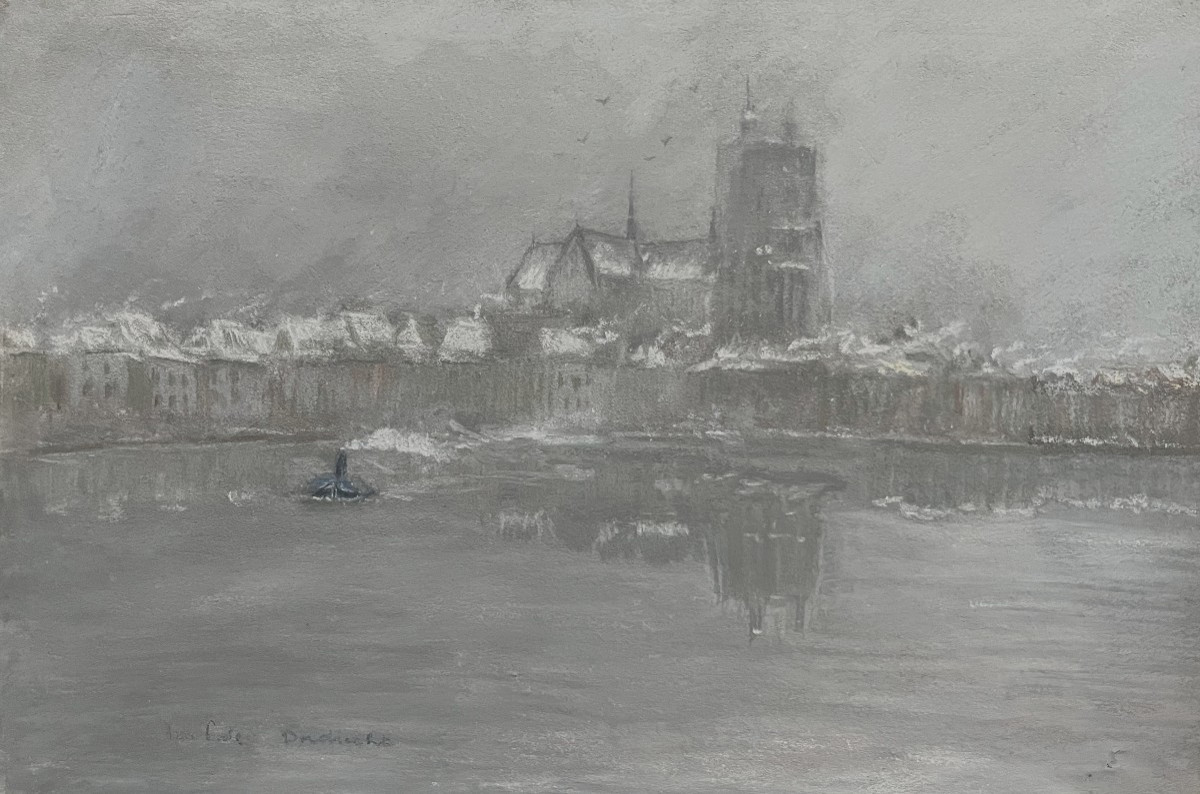
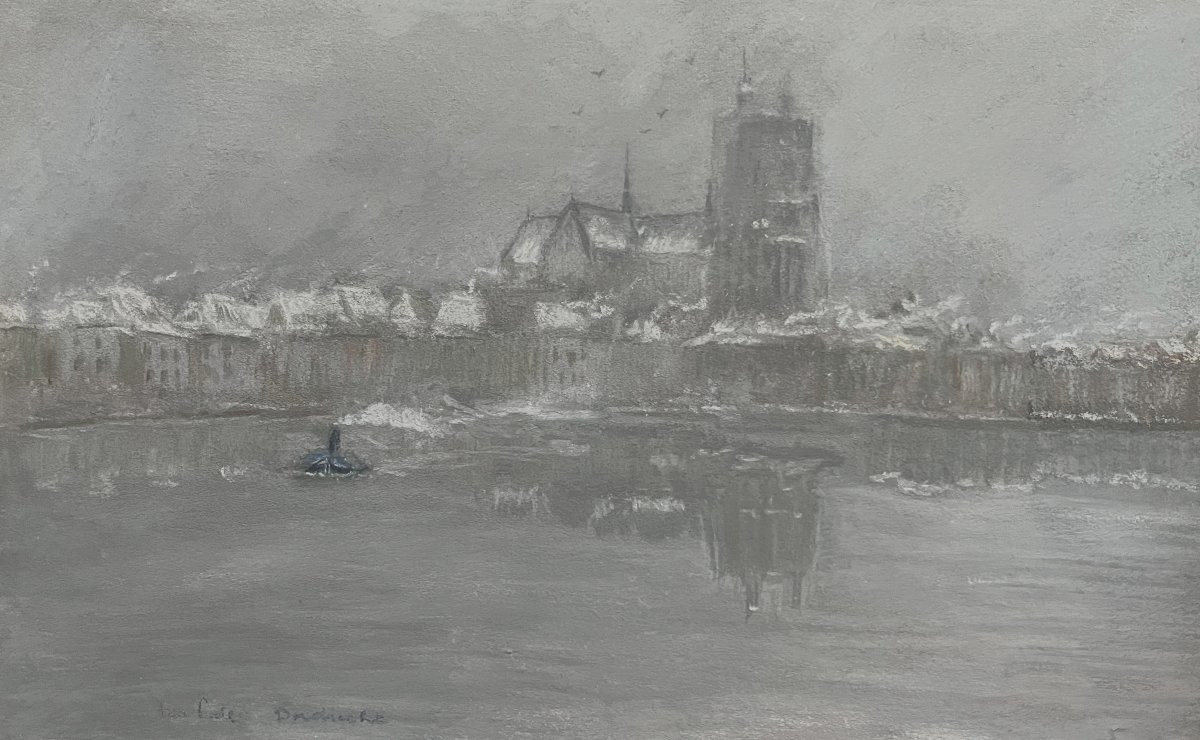
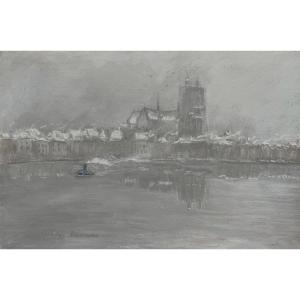
Dordrecht under the snow
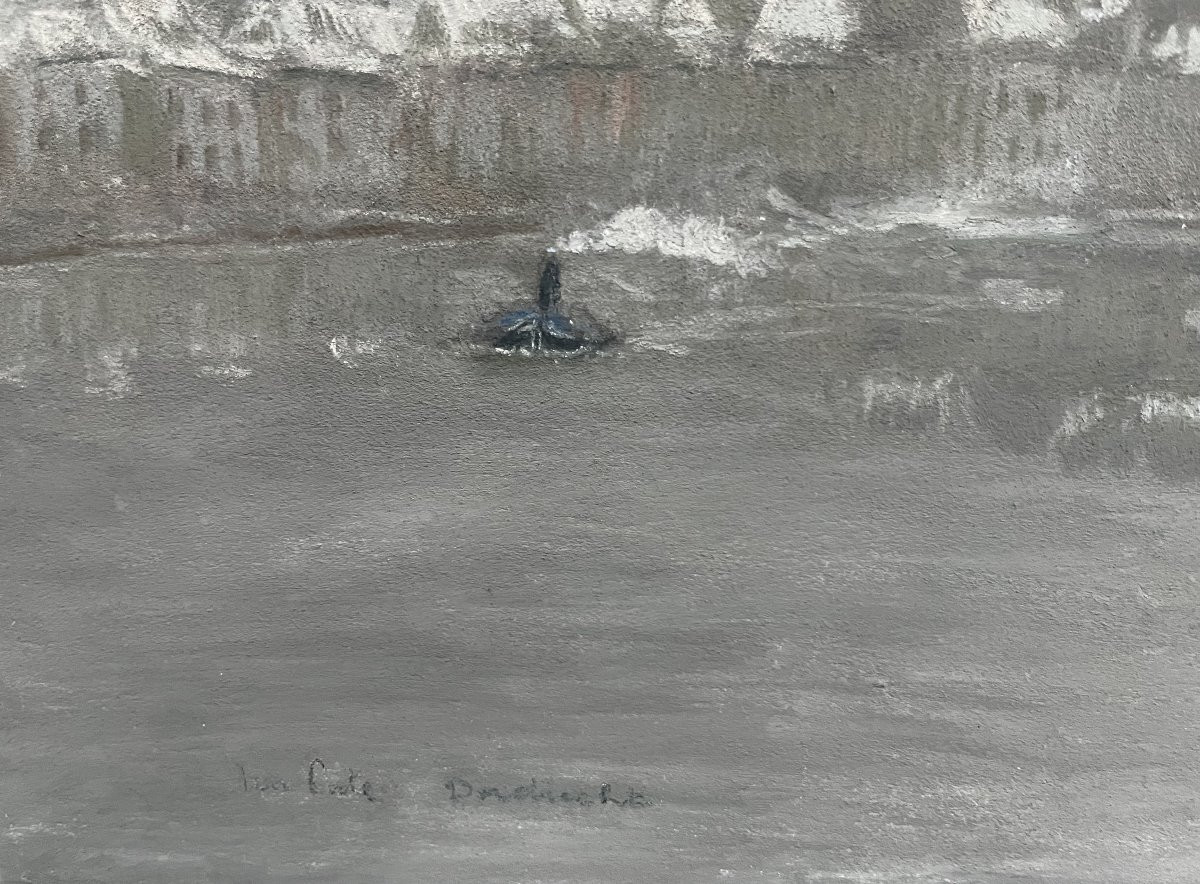
Signed and located lower left
Pastel on paper
26 x 39.5 cm
In good condition, however, pastel is a fragile material and some traces of pigment can be seen between the mat and the glass
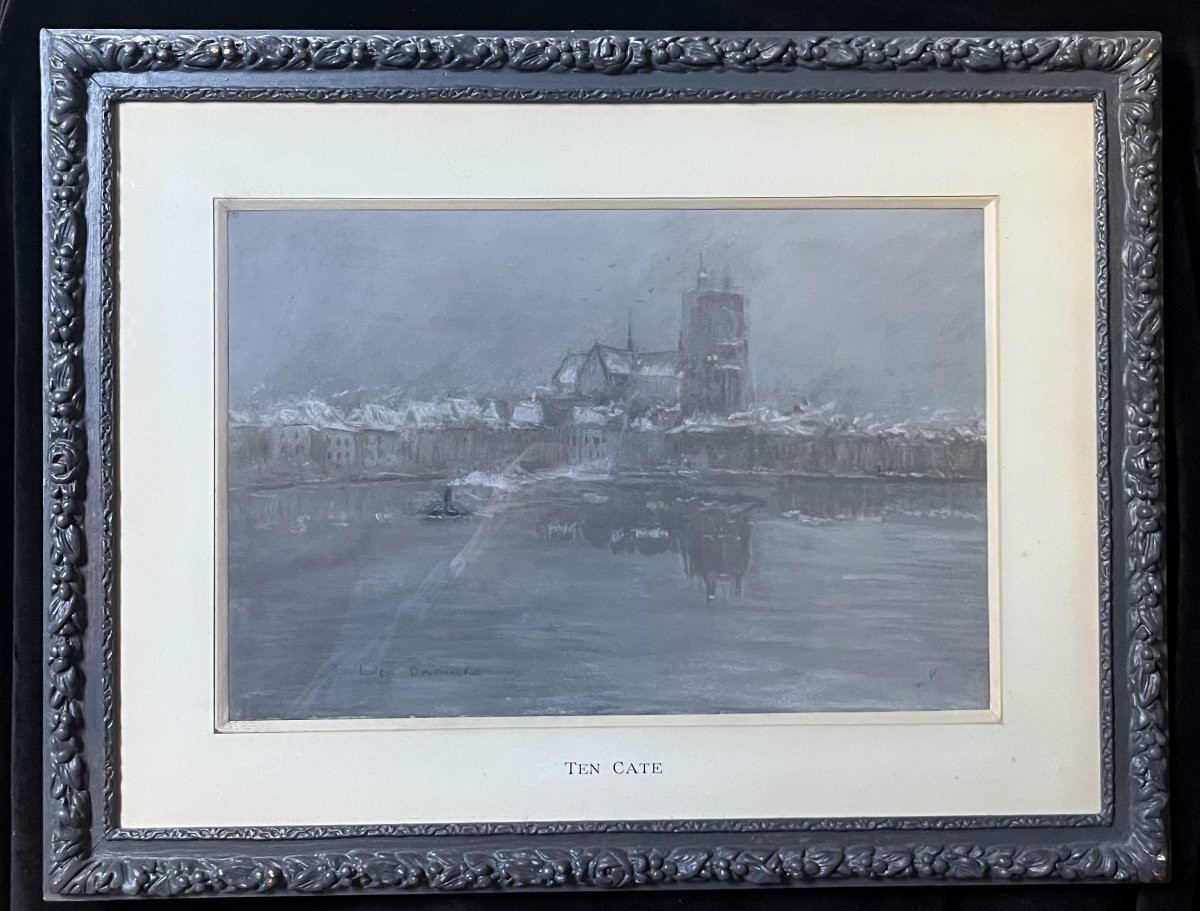
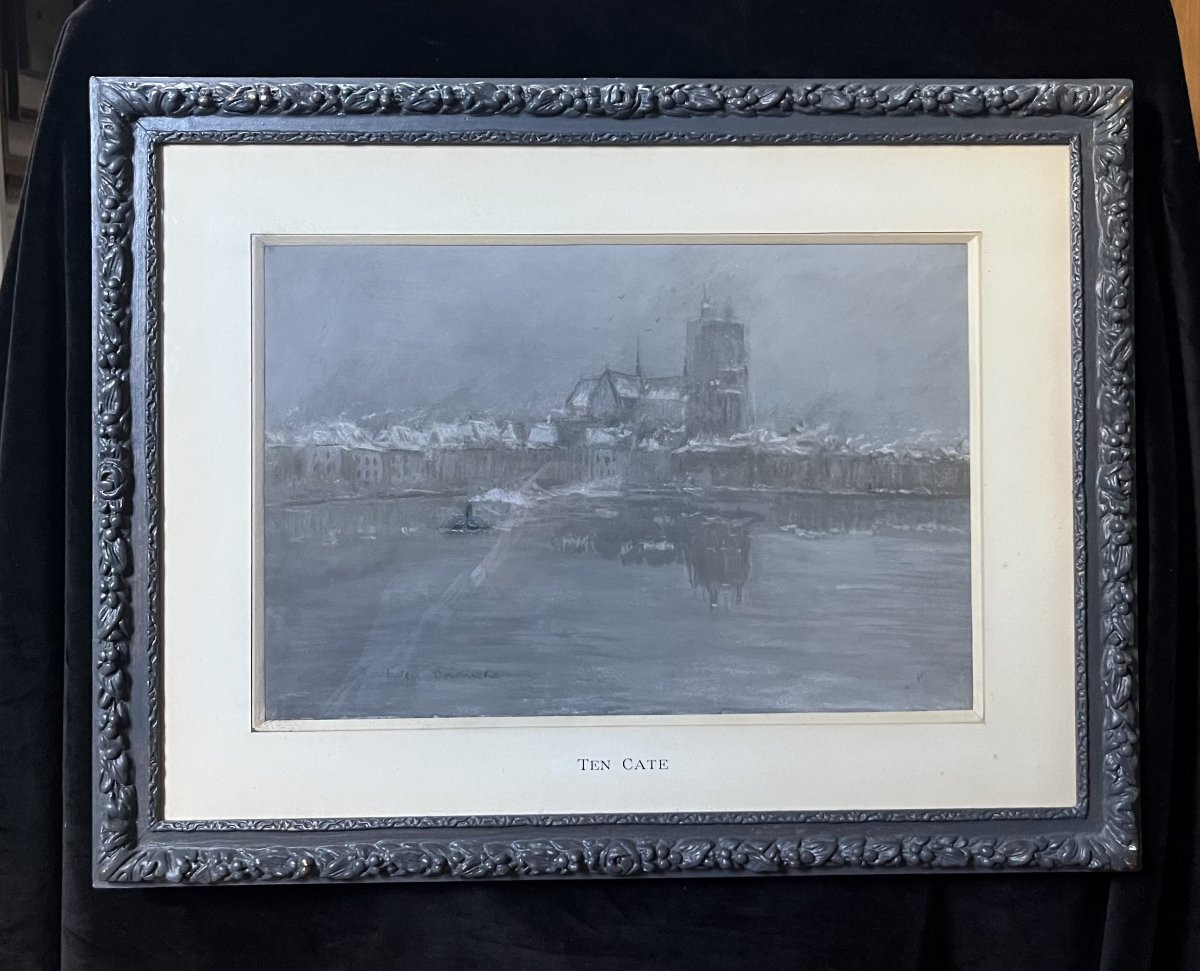
Framed under glass: 44.5 x 58 cm
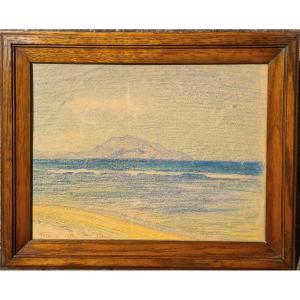
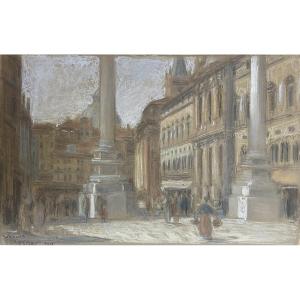
Curiously, although the work itself is composed of shades of gray when viewed outside its frame, as can be clearly seen in the photos, it takes on a bluish tint once reinstalled in its frame. This explains the difference in color that can be seen in the photos.
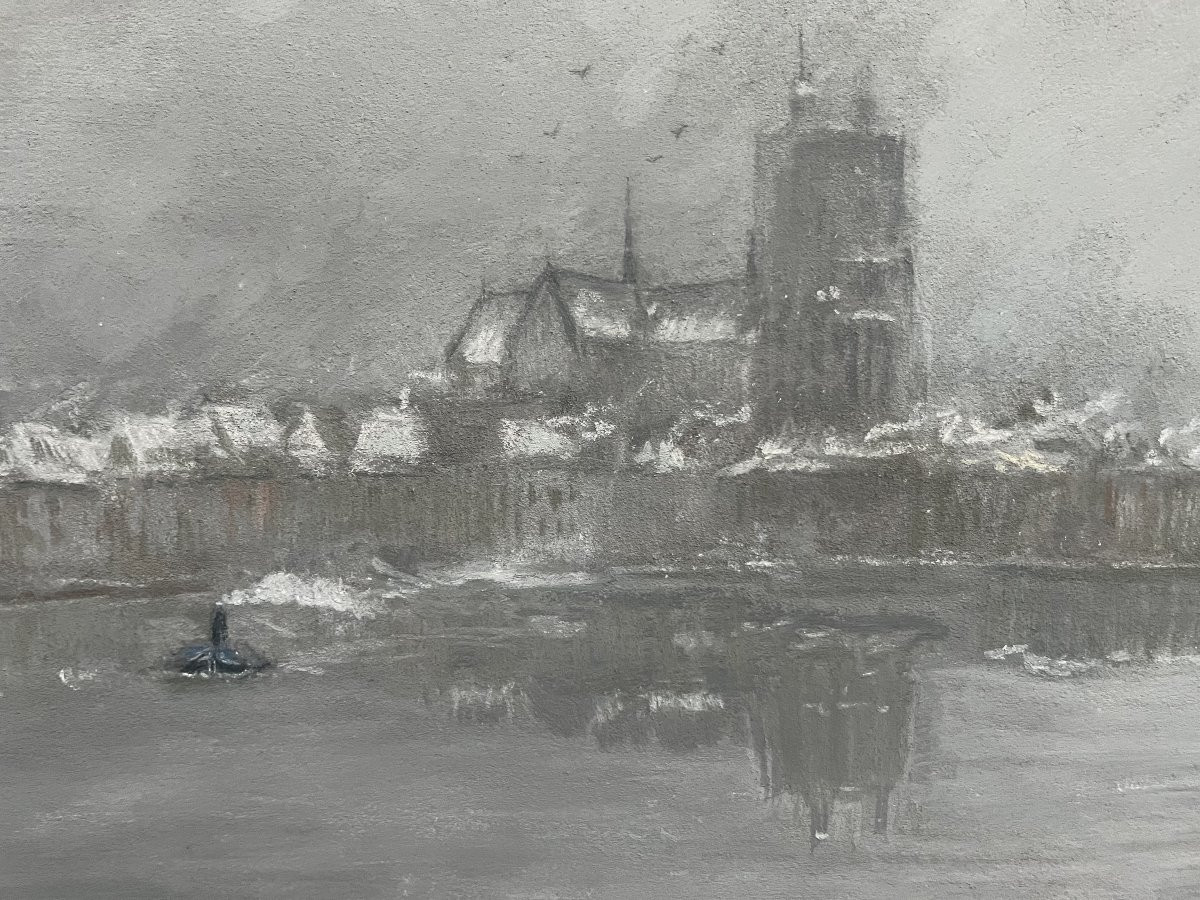
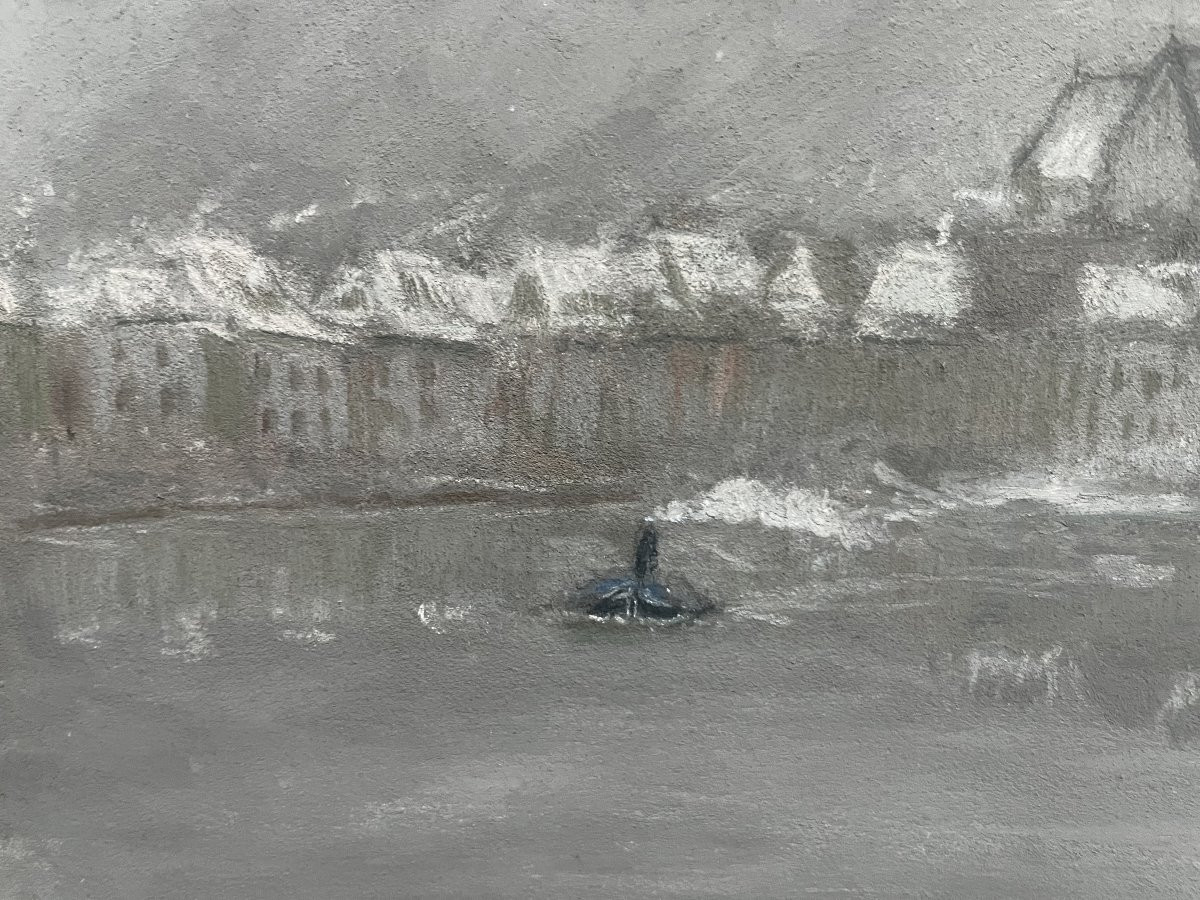
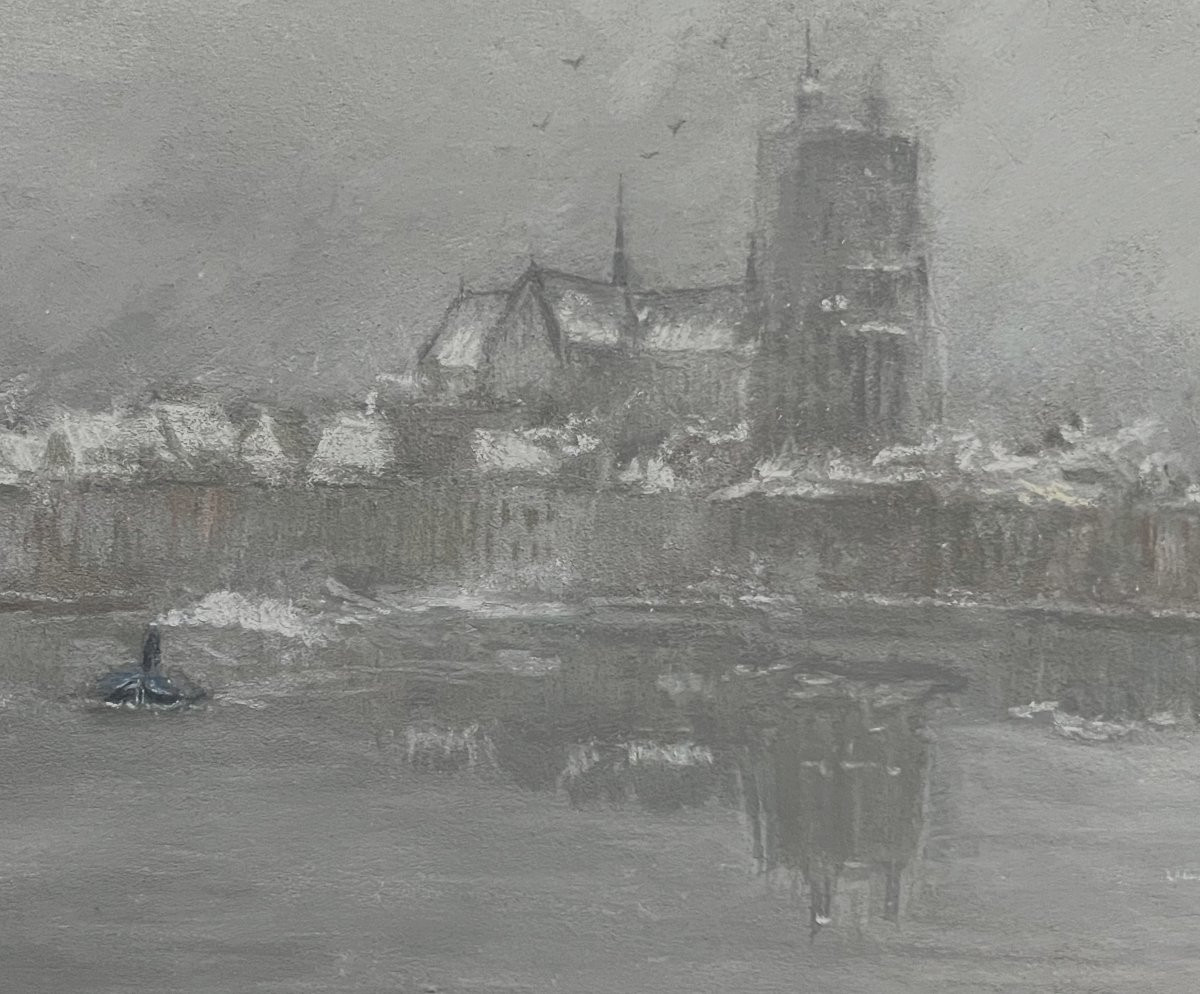
Ten Cate painted Dordrecht and its surroundings in winter on different occasions. In this work, he combines his affection for the Dutch city with his appreciation of rivers and waterways, allowing him to depict elements that accentuate the qualities of pastel. This is particularly evident in his representation of snow, which enhances the shades of gray.
Another typical feature of Ten Cate's art is the presence of the small steamboat, which adds a touch of life to the landscape. The smoke escaping from the boat's chimney echoes the snow on the city's rooftops.
These characteristics clearly demonstrate how Ten Cate forged a highly original and personal path within the Impressionist movement.
It should be noted that a catalogue raisonné of Ten Cate's work is currently being compiled by the RKD and can be found in digital form on the dedicated website. Although written in Dutch, it provides an overview of the artist's work and its richness.
It also traces the painter's life and career. It also traces the painter's life and career.
"A realist, Ten Cate pays scrupulous attention to detail, to impressions, to the hustle and bustle of crowds and the solitude of deserted places. We have spoken of variations in tone linked to the time of day and the seasons. Rainy and snowy weather, water and ice are generally chosen by the painter, who uses pastels for this purpose."
Véronique Prest in "Catalogue des pastels du Musée Carnavalet"
Siebe Johannes Ten Cate was born in Sneek (Netherlands) on 27 February 1858. His father was mayor of the town
In 1876 Siebe decided to go to the Academy of Fine Arts in The Hague and, after graduating, continued his studies in Antwerp and Brussels. At the age of twenty-two, he settled in Paris and opened his own studio.
Soon, he found himself influenced by impressionism.
He made frequent trips for inspiration, visiting England, Scandinavia, Switzerland, North Africa and North America. However, his home remained 65 rue de Malte in Paris, where he lived with his cats and dog. Ten Cate led a secluded life and devoted himself to an impressive body of work in which landscapes and cityscapes are most often immersed in an atmosphere of rain and snow.
He exhibited frequently, notably at the Salon d'Automne, but his works were not as well appreciated in the Netherlands as in France so, although he made numerous visits, he never returned there.
The French press was unstinting in its praise for Ten Cate. He was called, for example, ‘the new Jongkind’. After his death, an English newspaper ran the headline ‘Sad End of a Genius’.
Museums and galleries in France began to take an interest in Siebe ten Cate's work in the 1890s.
The Louvre bought no fewer than four paintings from him, and the Musée Carnavalet even bought a good twenty. Art dealers such as Durand-Ruel and Ambroise Vollard exhibited ten Cate in their galleries alongside famous Impressionists.As a result, Ten Cate became friends with Alfred Sisley, Camille Pissaro and Vincent van Gogh. Van Gogh described Ten Cate as "a very neat man, completely dressed in black cloth".
His paintings and pastels were exhibited at the Salon d'Automne alongside those of Jean-Baptiste Corot.
His favorite subjects were landscapes, city and harbor views, often populated with figures. Le Havre was one of his favorite locations. He also made some etchings and lithographs.
He died on a Paris street from a sudden attack of "congestion". Later, there would be unsubstantiated rumors that he died of starvation, or was shot by a rival artist. For many years, his work was neglected in the Netherlands. A major retrospective was held at the Fries Scheepvaart Museum in 2012.
Unjustly forgotten for a time, he has fortunately regained the favour of art lovers, who now see him in his rightful place. His artworks are in different museums : Amsterdam (Rijksmuseum), Paris (Musée Carnavalet, Musée d'Orsay, Fondation Custodia) and Geneva (Petit Palais), Cleveland (Cleveland Museum of Art)
Dordrecht under the snow
Signed and located lower left
Pastel on paper
26 x 39.5 cm
In good condition, however, pastel is a fragile material and some traces of pigment can be seen between the mat and the glass
Framed under glass: 44.5 x 58 cm
Curiously, although the work itself is composed of shades of gray when viewed outside its frame, as can be clearly seen in the photos, it takes on a bluish tint once reinstalled in its frame. This explains the difference in color that can be seen in the photos.
Ten Cate painted Dordrecht and its surroundings in winter on different occasions. In this work, he combines his affection for the Dutch city with his appreciation of rivers and waterways, allowing him to depict elements that accentuate the qualities of pastel. This is particularly evident in his representation of snow, which enhances the shades of gray.
Another typical feature of Ten Cate's art is the presence of the small steamboat, which adds a touch of life to the landscape. The smoke escaping from the boat's chimney echoes the snow on the city's rooftops.
These characteristics clearly demonstrate how Ten Cate forged a highly original and personal path within the Impressionist movement.
It should be noted that a catalogue raisonné of Ten Cate's work is currently being compiled by the RKD and can be found in digital form on the dedicated website. Although written in Dutch, it provides an overview of the artist's work and its richness.
It also traces the painter's life and career. It also traces the painter's life and career.
"A realist, Ten Cate pays scrupulous attention to detail, to impressions, to the hustle and bustle of crowds and the solitude of deserted places. We have spoken of variations in tone linked to the time of day and the seasons. Rainy and snowy weather, water and ice are generally chosen by the painter, who uses pastels for this purpose."
Véronique Prest in "Catalogue des pastels du Musée Carnavalet"
Siebe Johannes Ten Cate was born in Sneek (Netherlands) on 27 February 1858. His father was mayor of the town
In 1876 Siebe decided to go to the Academy of Fine Arts in The Hague and, after graduating, continued his studies in Antwerp and Brussels. At the age of twenty-two, he settled in Paris and opened his own studio.
Soon, he found himself influenced by impressionism.
He made frequent trips for inspiration, visiting England, Scandinavia, Switzerland, North Africa and North America. However, his home remained 65 rue de Malte in Paris, where he lived with his cats and dog. Ten Cate led a secluded life and devoted himself to an impressive body of work in which landscapes and cityscapes are most often immersed in an atmosphere of rain and snow.
He exhibited frequently, notably at the Salon d'Automne, but his works were not as well appreciated in the Netherlands as in France so, although he made numerous visits, he never returned there.
The French press was unstinting in its praise for Ten Cate. He was called, for example, ‘the new Jongkind’. After his death, an English newspaper ran the headline ‘Sad End of a Genius’.
Museums and galleries in France began to take an interest in Siebe ten Cate's work in the 1890s.
The Louvre bought no fewer than four paintings from him, and the Musée Carnavalet even bought a good twenty. Art dealers such as Durand-Ruel and Ambroise Vollard exhibited ten Cate in their galleries alongside famous Impressionists.As a result, Ten Cate became friends with Alfred Sisley, Camille Pissaro and Vincent van Gogh. Van Gogh described Ten Cate as "a very neat man, completely dressed in black cloth".
His paintings and pastels were exhibited at the Salon d'Automne alongside those of Jean-Baptiste Corot.
His favorite subjects were landscapes, city and harbor views, often populated with figures. Le Havre was one of his favorite locations. He also made some etchings and lithographs.
He died on a Paris street from a sudden attack of "congestion". Later, there would be unsubstantiated rumors that he died of starvation, or was shot by a rival artist. For many years, his work was neglected in the Netherlands. A major retrospective was held at the Fries Scheepvaart Museum in 2012.
Unjustly forgotten for a time, he has fortunately regained the favour of art lovers, who now see him in his rightful place. His artworks are in different museums : Amsterdam (Rijksmuseum), Paris (Musée Carnavalet, Musée d'Orsay, Fondation Custodia) and Geneva (Petit Palais), Cleveland (Cleveland Museum of Art)
1 350 €
Period: 19th century
Style: Art Nouveau
Condition: Good condition
Material: Pastel
Width: 39.5
Height: 26
Reference (ID): 1720817
Availability: In stock
Print