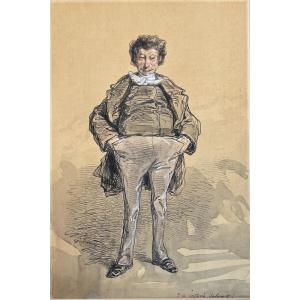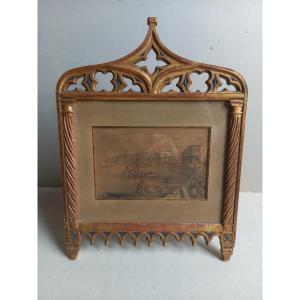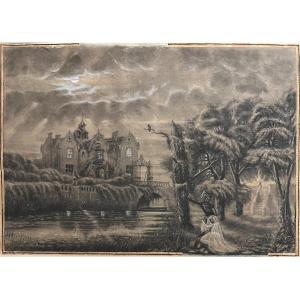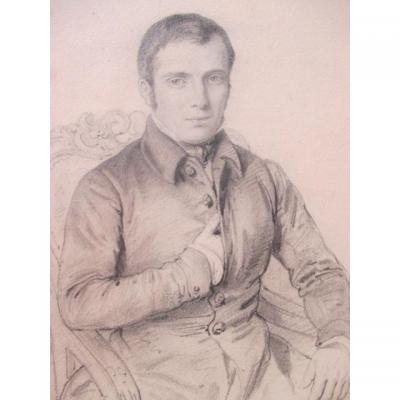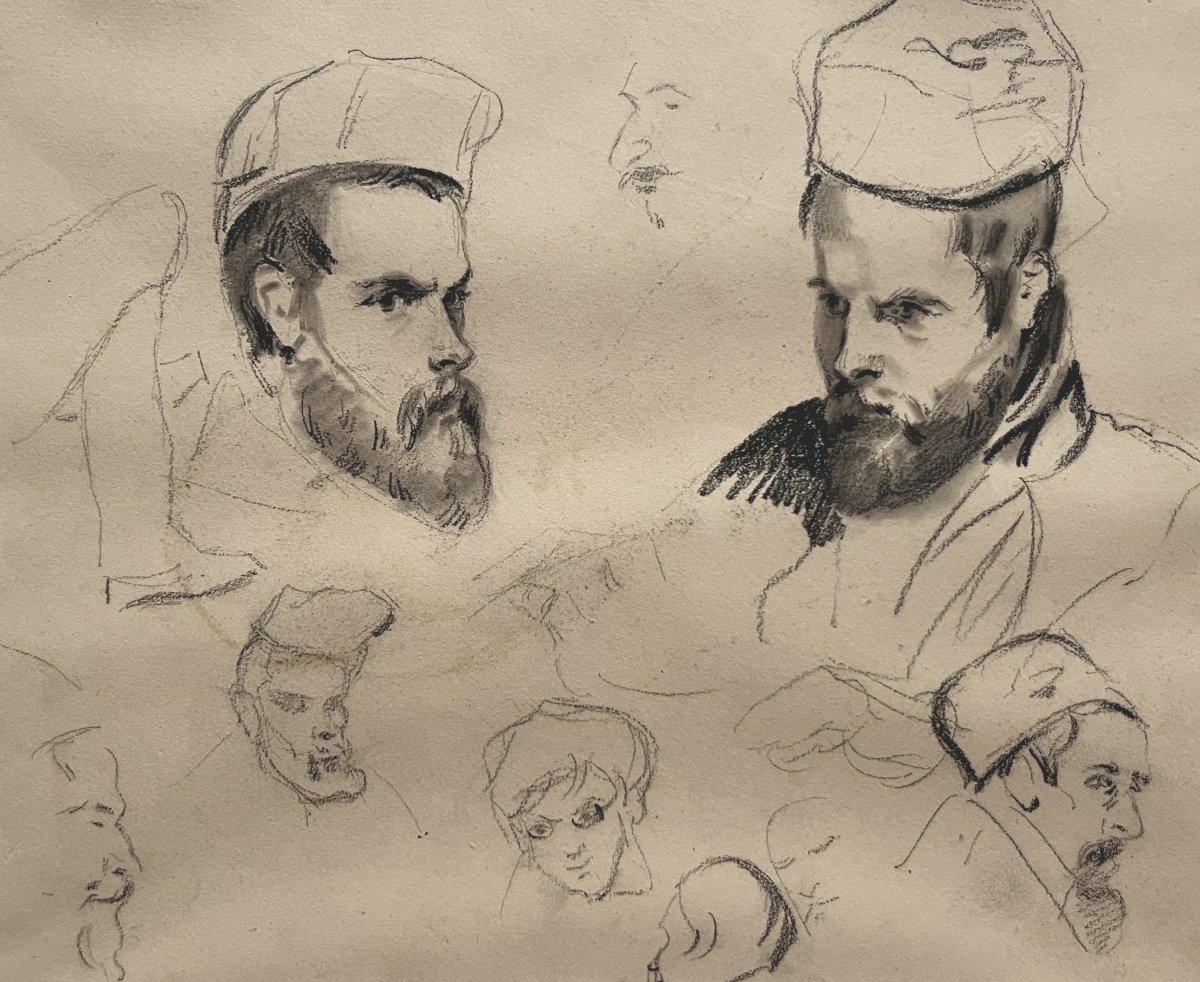
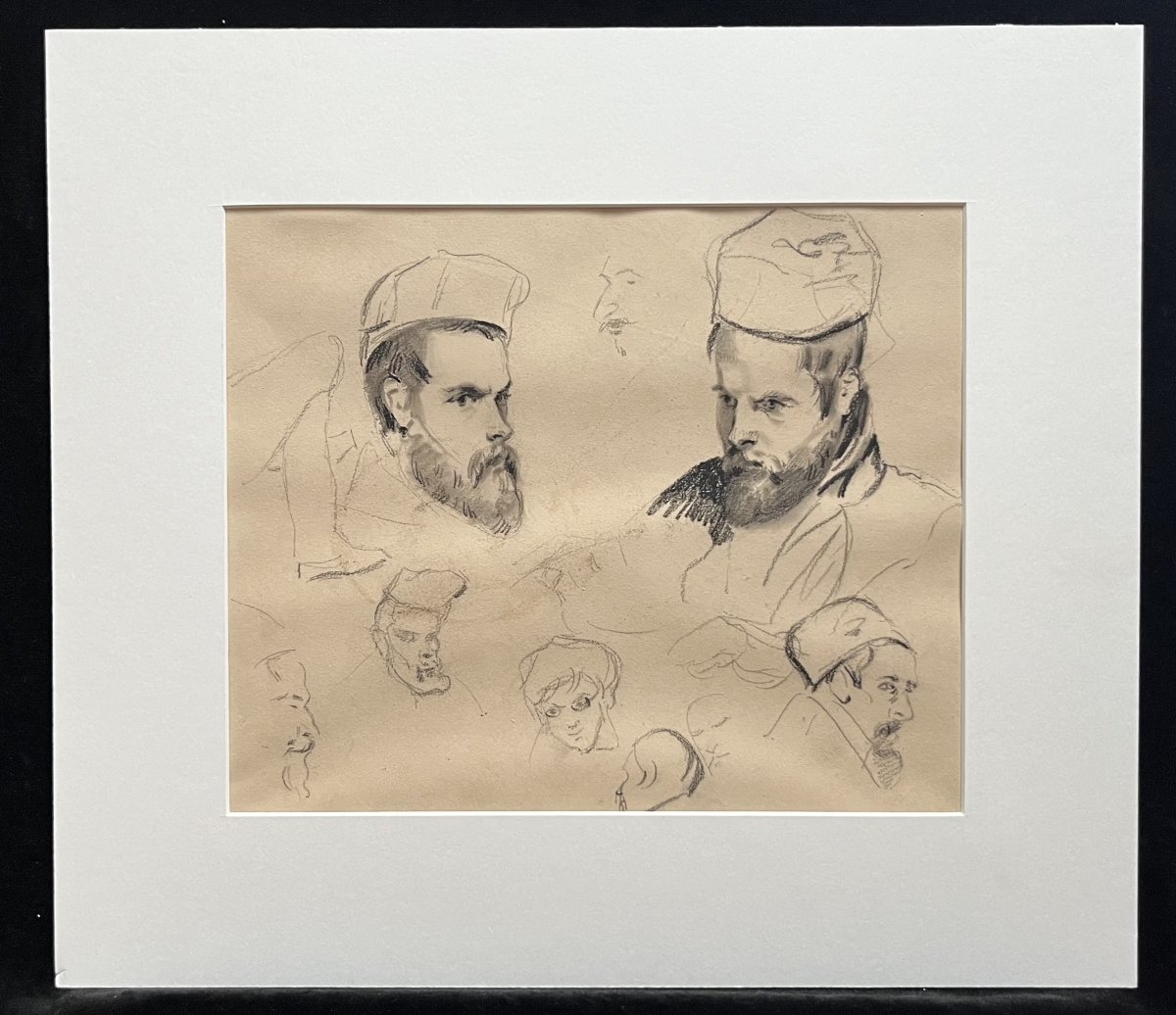
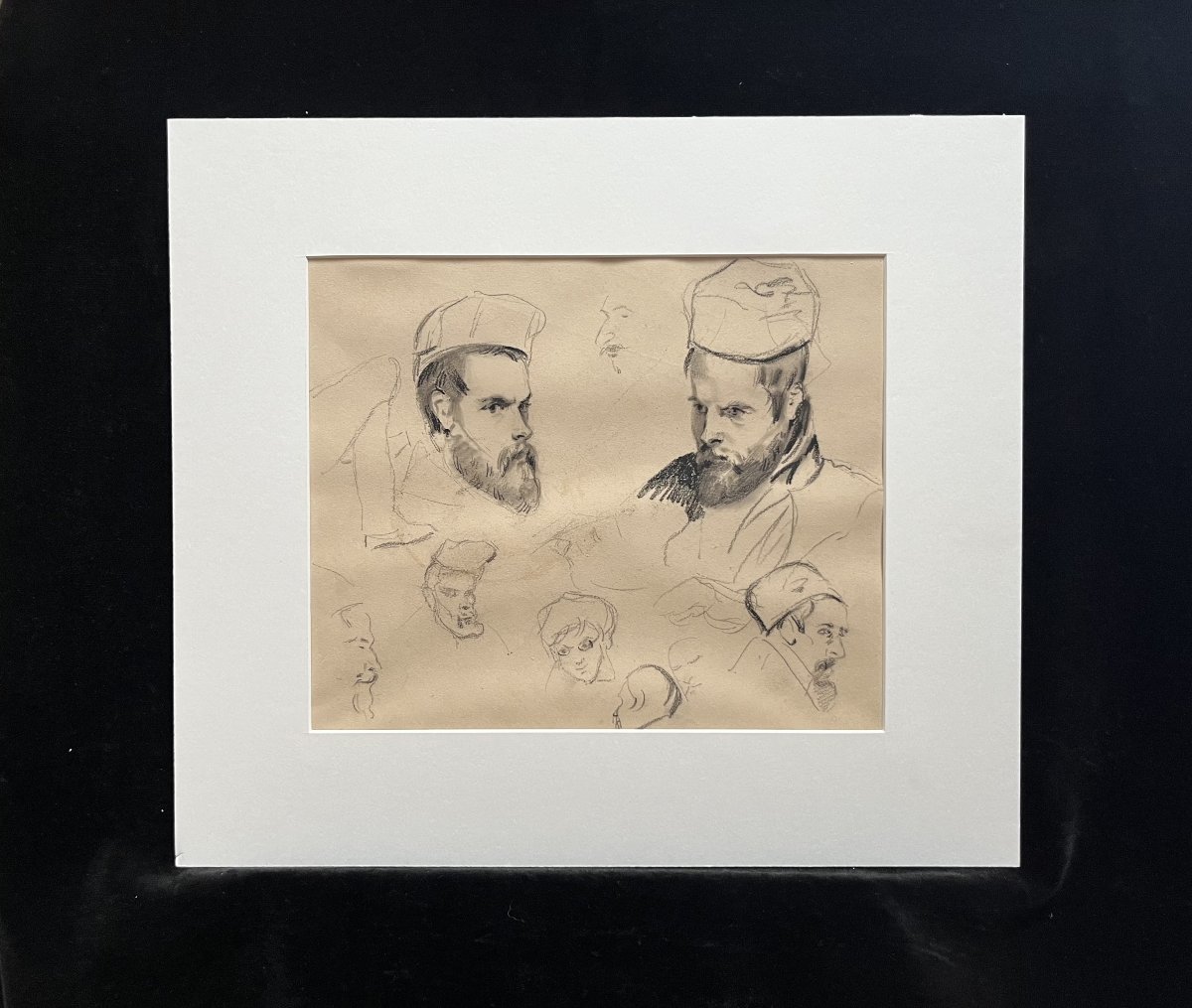
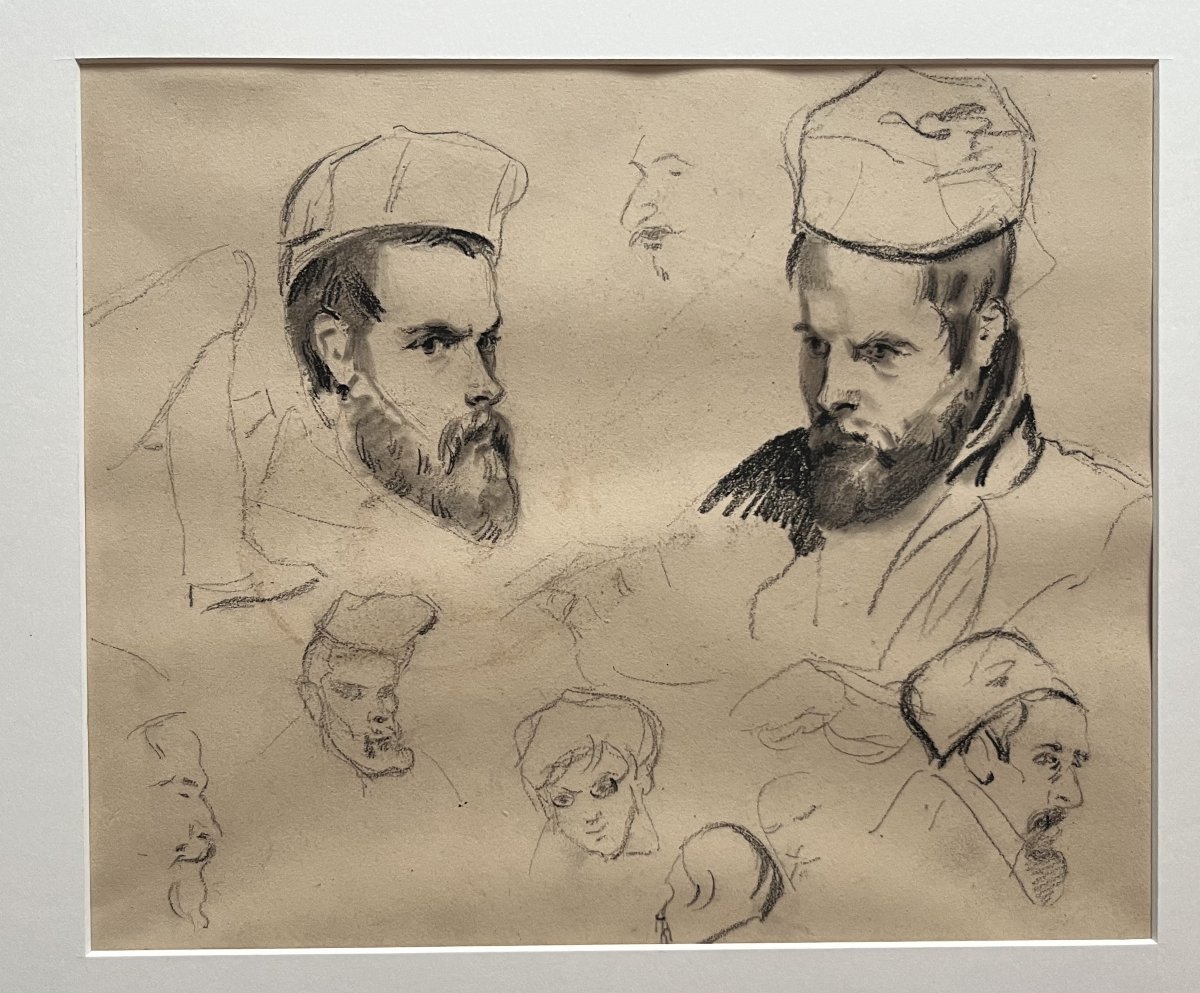
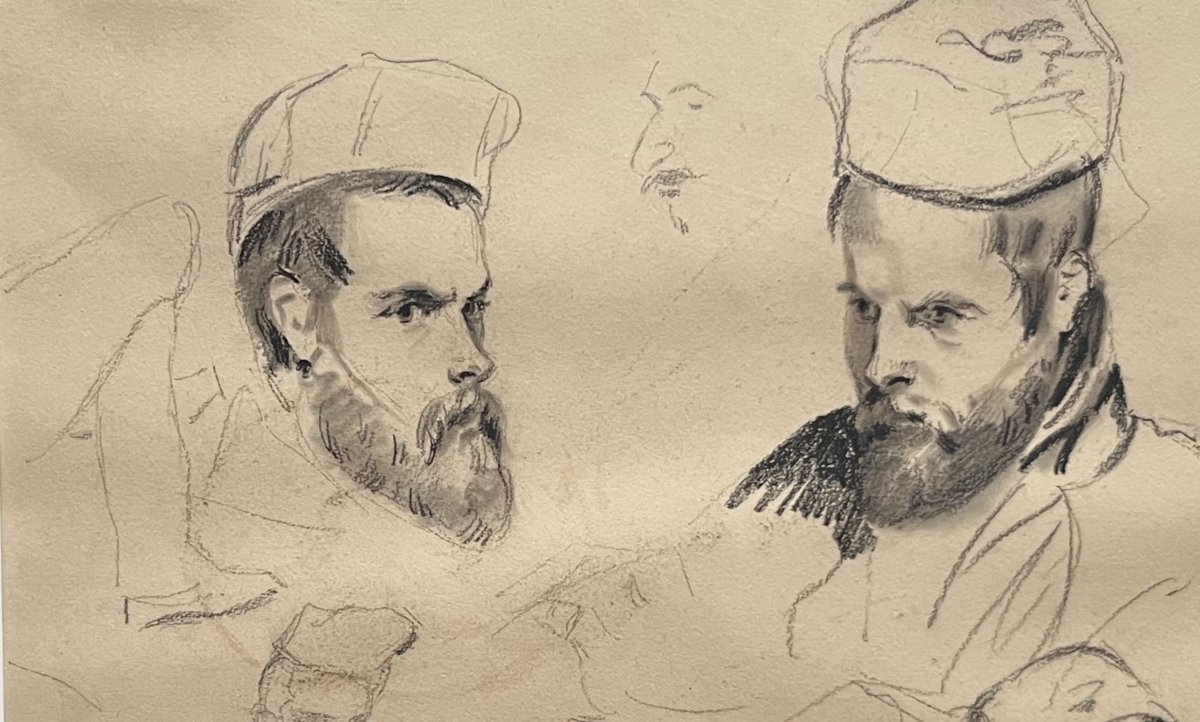
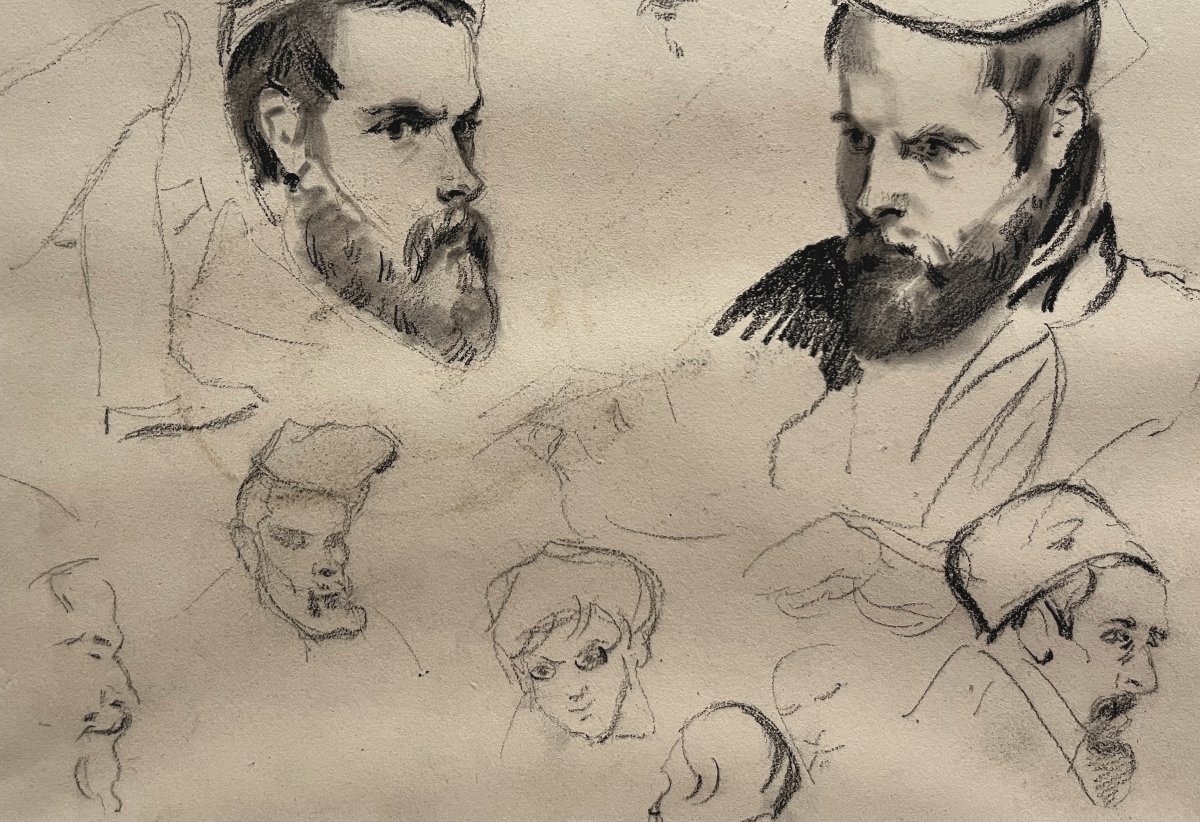
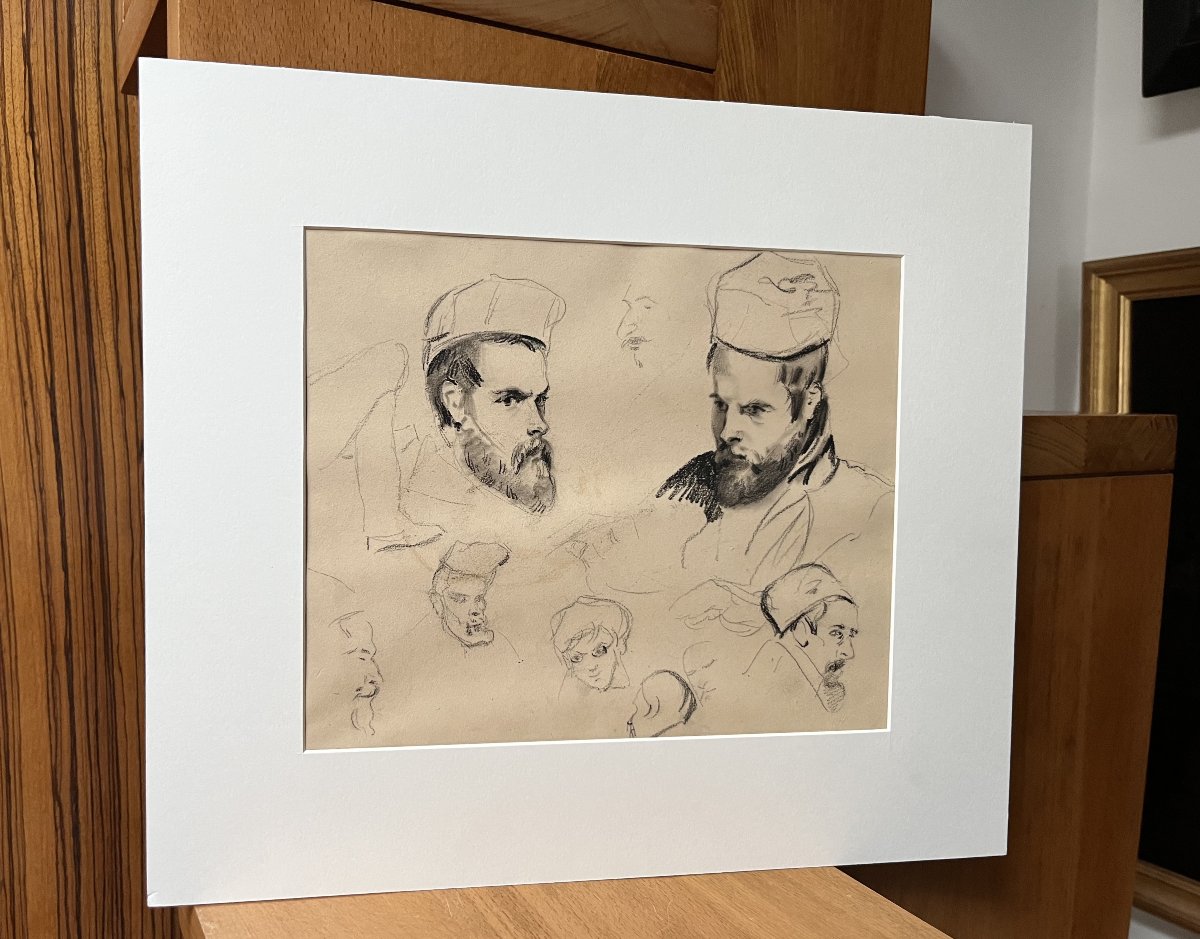
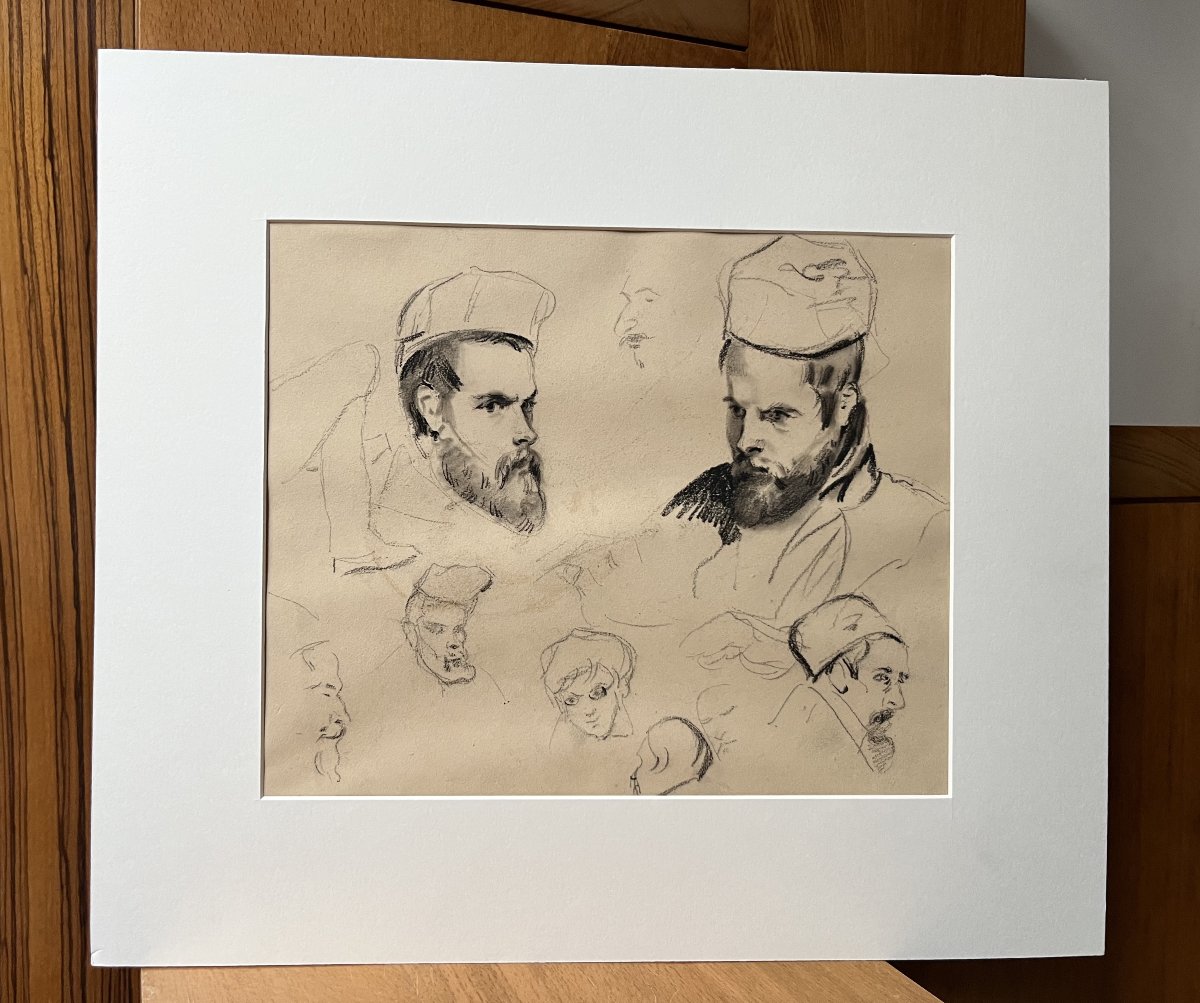


French Romantic School, Portraits Of Young Men And Other Studies, Drawing
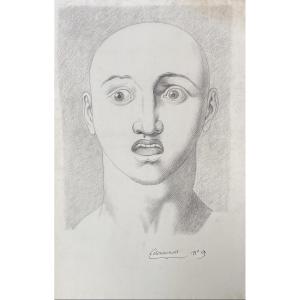
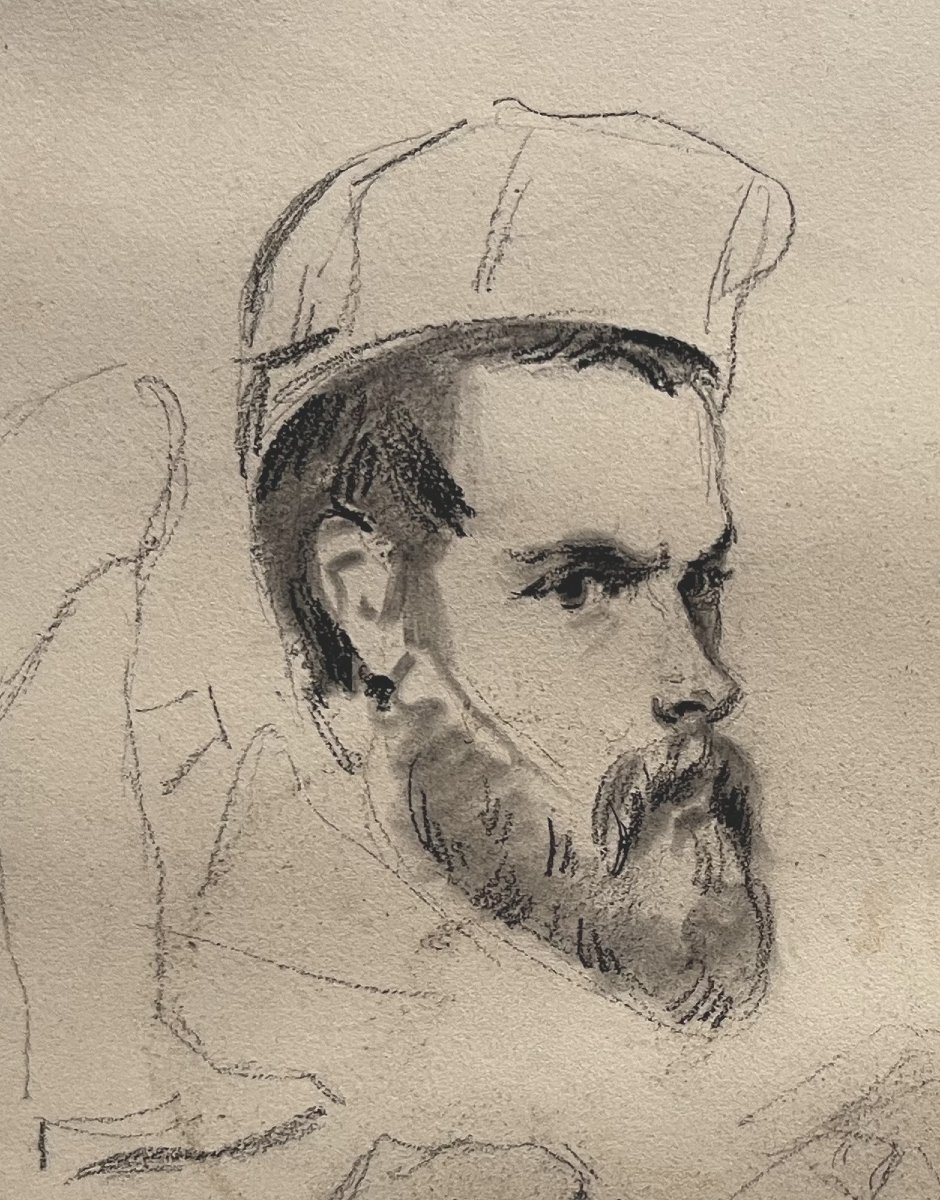
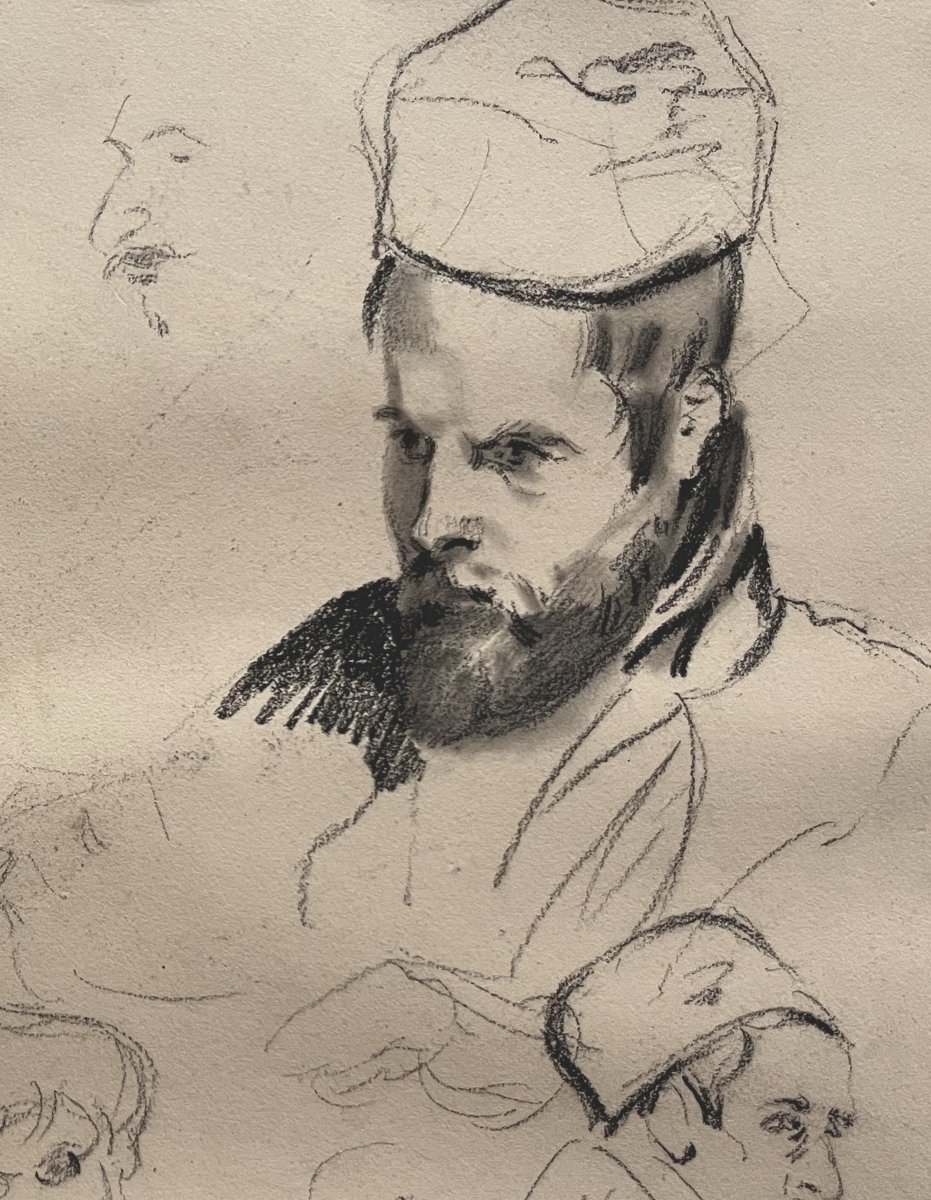
Portraits of young men, studies
black chalk on paper
24 x 28.5 cm
Presented in a passe-partout
The work is executed in black chalk on paper, the preferred medium of academic and Romantic draughtsmen of the 19th century. Black chalk (or pierre noire) allows great flexibility of line — from firm contours to soft blending — and is ideally suited to studies of physiognomy, where the quick capture of expression takes precedence. The sheet brings together several studies on a single support, a common practice in sketchbooks and studio sheets of the period.
The French Romantic movement flourished between the 1820s and 1850s, as a reaction against the neoclassical formalism of David and his school. Géricault, Delacroix, Prud’hon, and Louis-Léopold Boilly embody this new sensibility, which favours inner expression, movement, and the individuality of the sitter over idealised beauty. The portrait holds a central place: the aim is no longer to record social status, but to capture a presence, a psychology, sometimes a melancholy.
Studies of heads — têtes d’expression in academic parlance — constituted a genre in their own right, taught at the École des Beaux-Arts and prized by collectors. They served both as exercises in anatomical mastery and as an expressive repertoire for large-scale compositions.
The grouping of several portraits on a single sheet is typical of the ad hoc work of the studio: the draughtsman sketches his models across sessions, exploring angles,expressions, and poses. The youth of the subjects depicted is not incidental — the melancholic young man, with fine features and a distant gaze, is an emblematic figure of the Romantic aesthetic, from Musset to Lamartine, from Goethe’s Werther to the Méditationspoétiques.
The style and execution reveal a confident artistic personality, suggesting an experienced draughtsman— possibly an accomplished painter whose identity has yet to be established — rather than a mere student copyist.
The work is currently anonymous. The attribution to the French Romantic School is a conventional designation that places the work geographically and chronologically without identifying the author. Stylistic comparisons might beconsidered with the circle of Boilly, Cogniet, or lesser-documented portraitists of the period. A thorough graphic analysis — comparing line work, treatment of light, and rendering of hair — could help narrow the attribution.
This mystery, far from diminishing the work, is part of its appeal and represents a worthwhile challenge for the collector or researcher.
Period: 19th century
Style: Louis Philippe, Charles 10th
Condition: Good condition
Width: 28.5
Height: 24
Reference (ID): 1771525
Availability: In stock