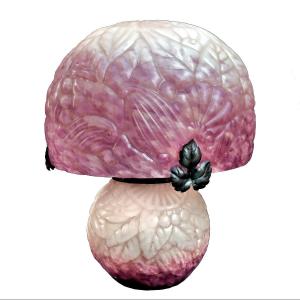


Camille Fauré (1874-1956) Large Art Deco Cloisonné Enamel Lamp
Artist: Camille Fauré
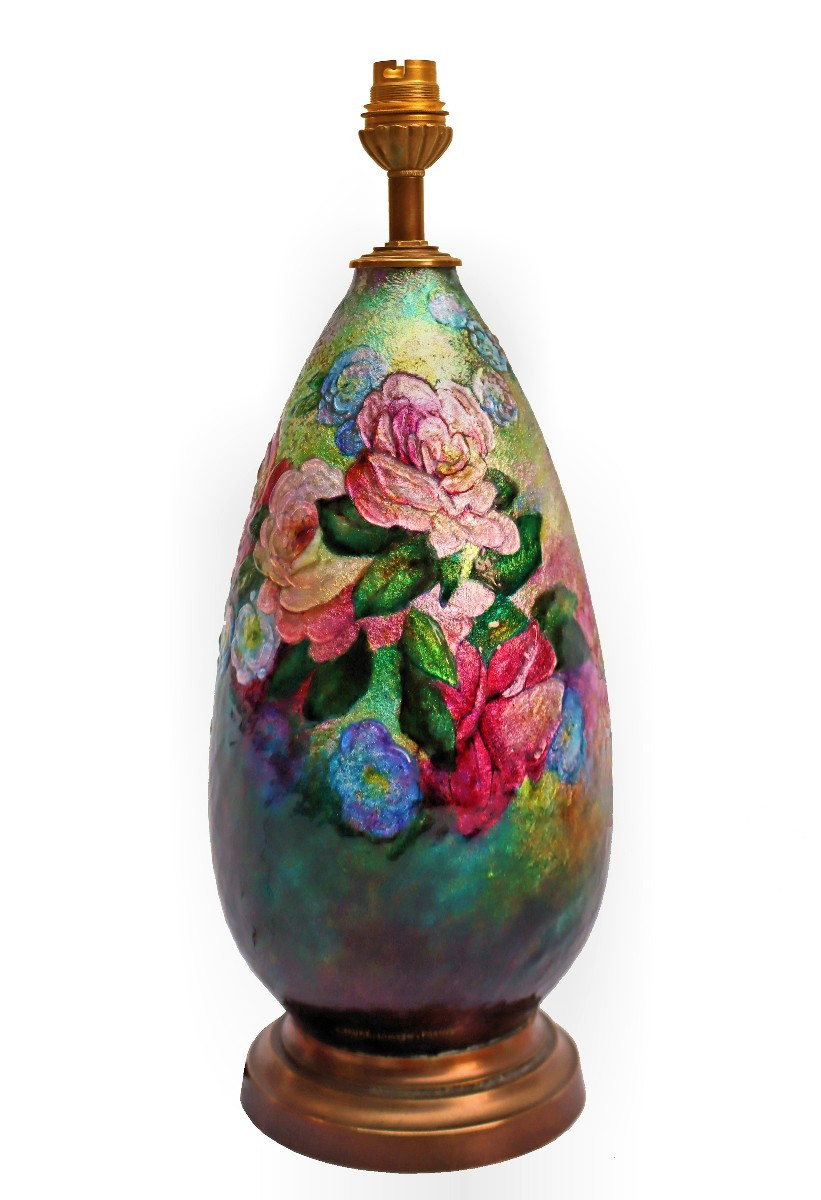
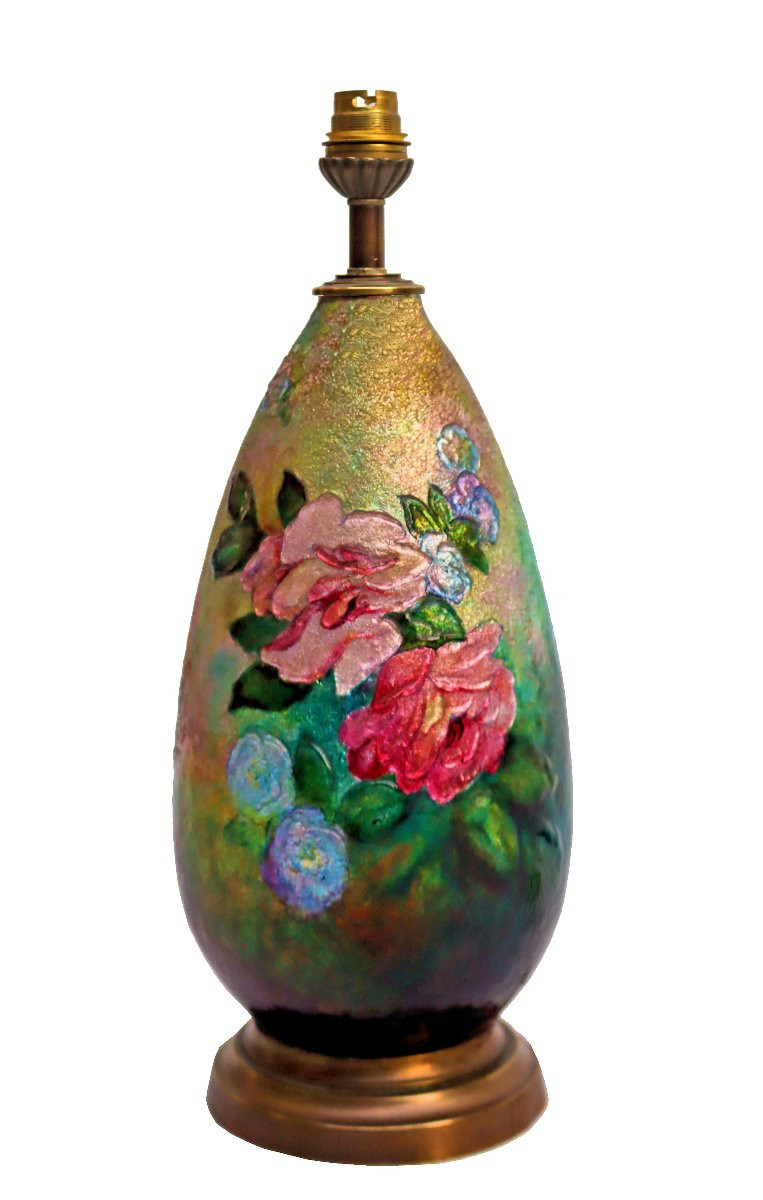
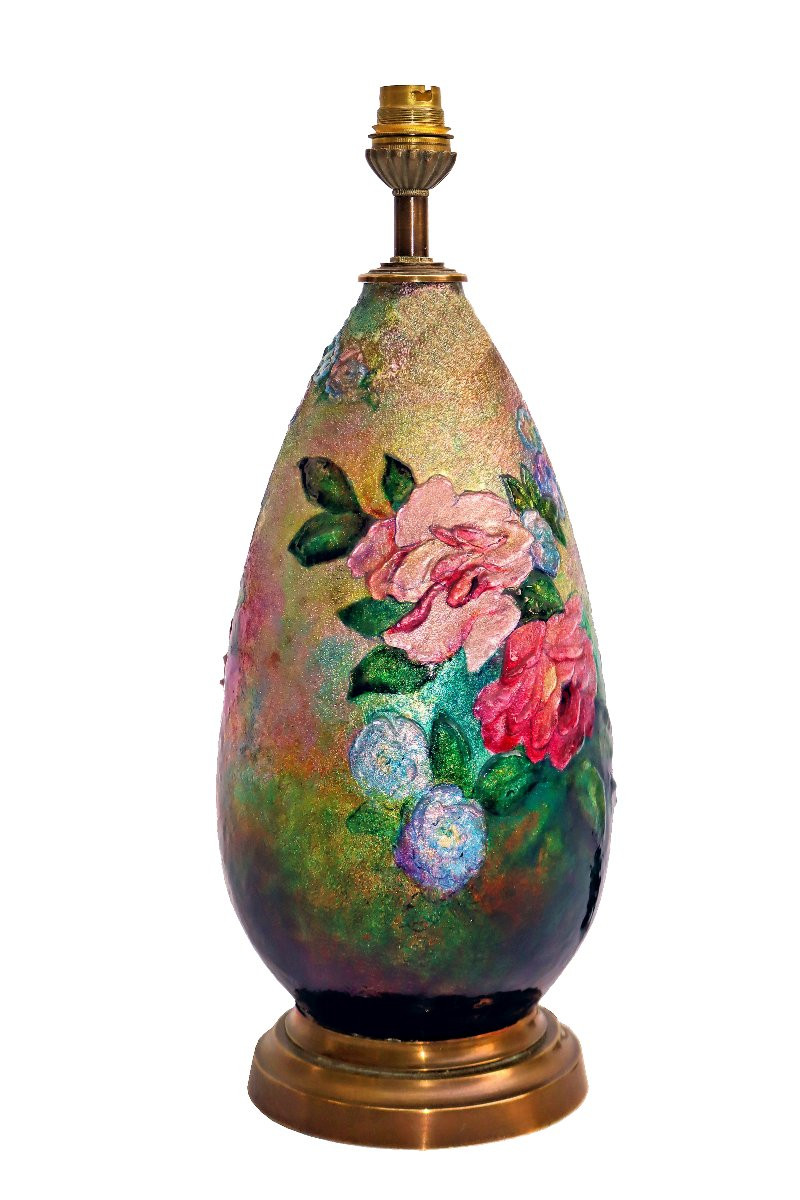
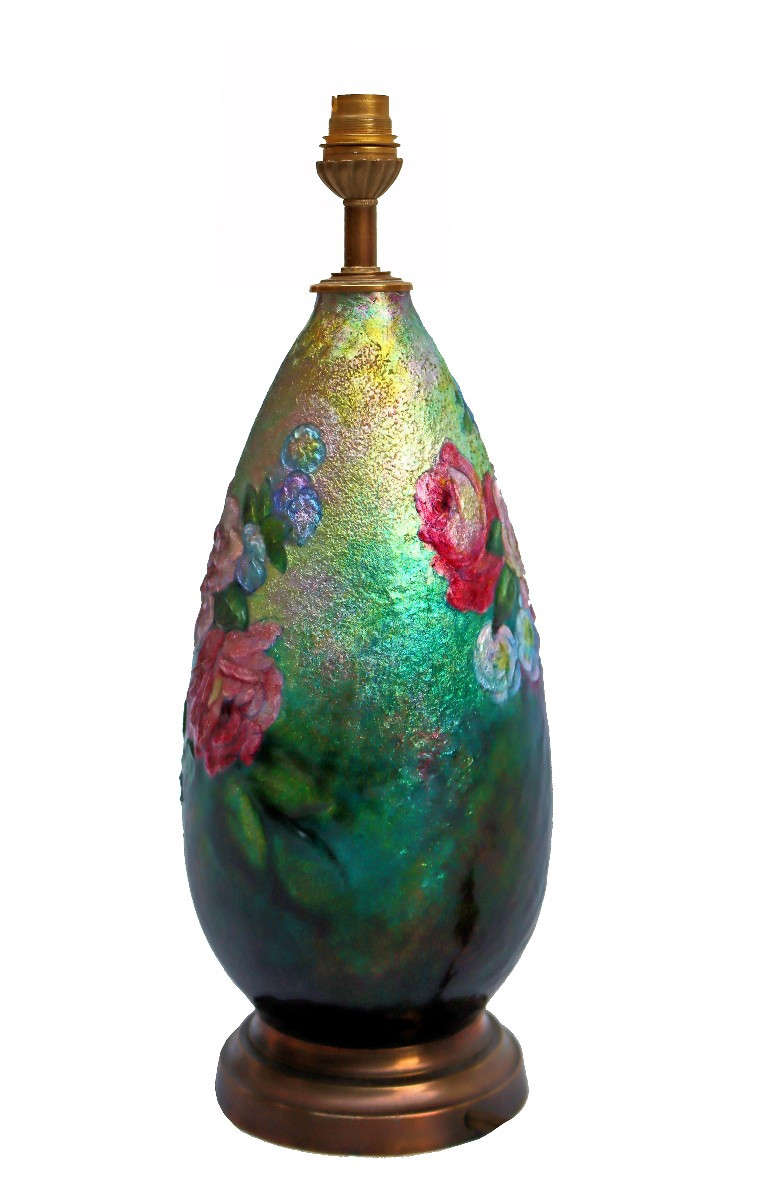
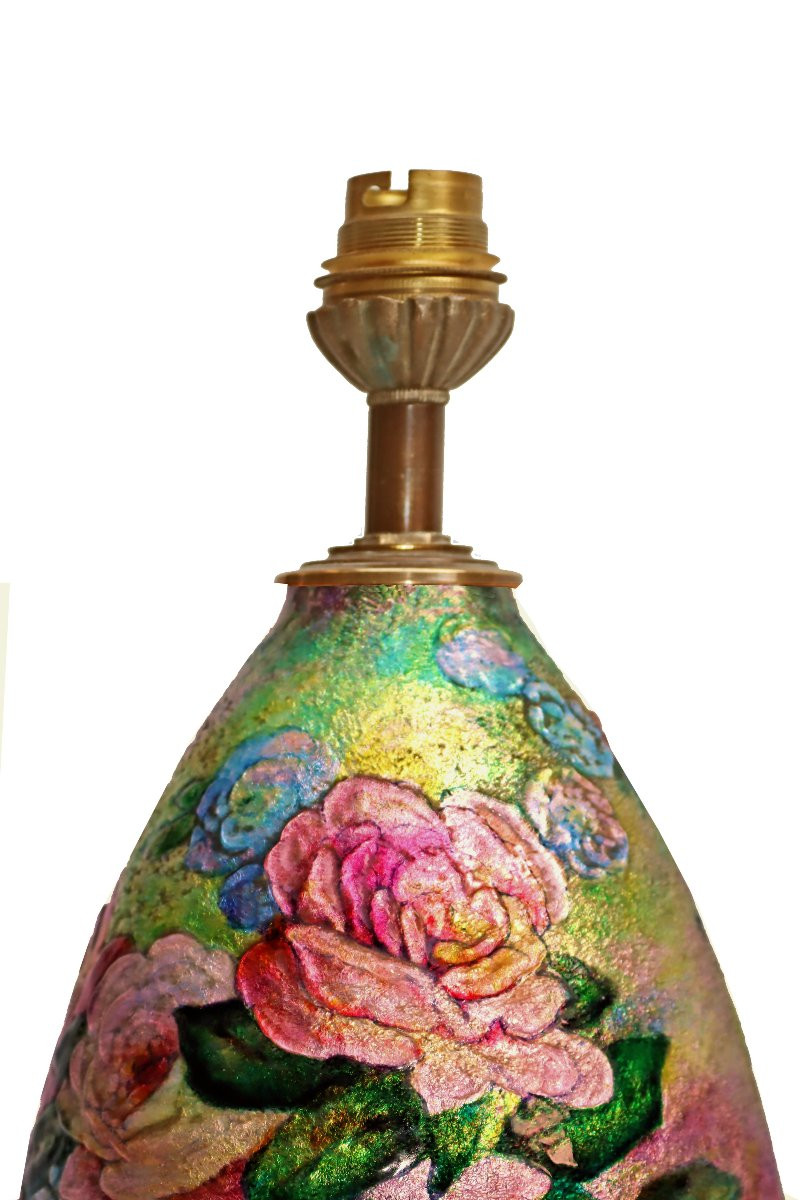
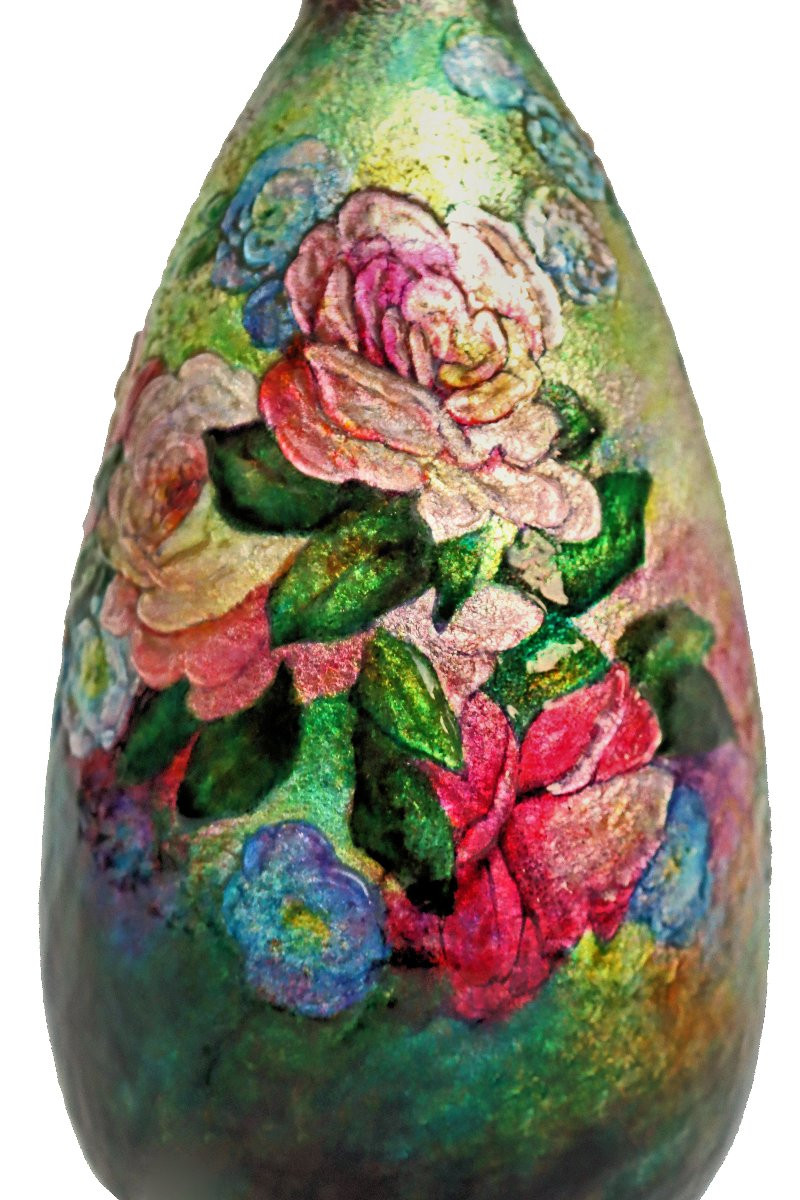
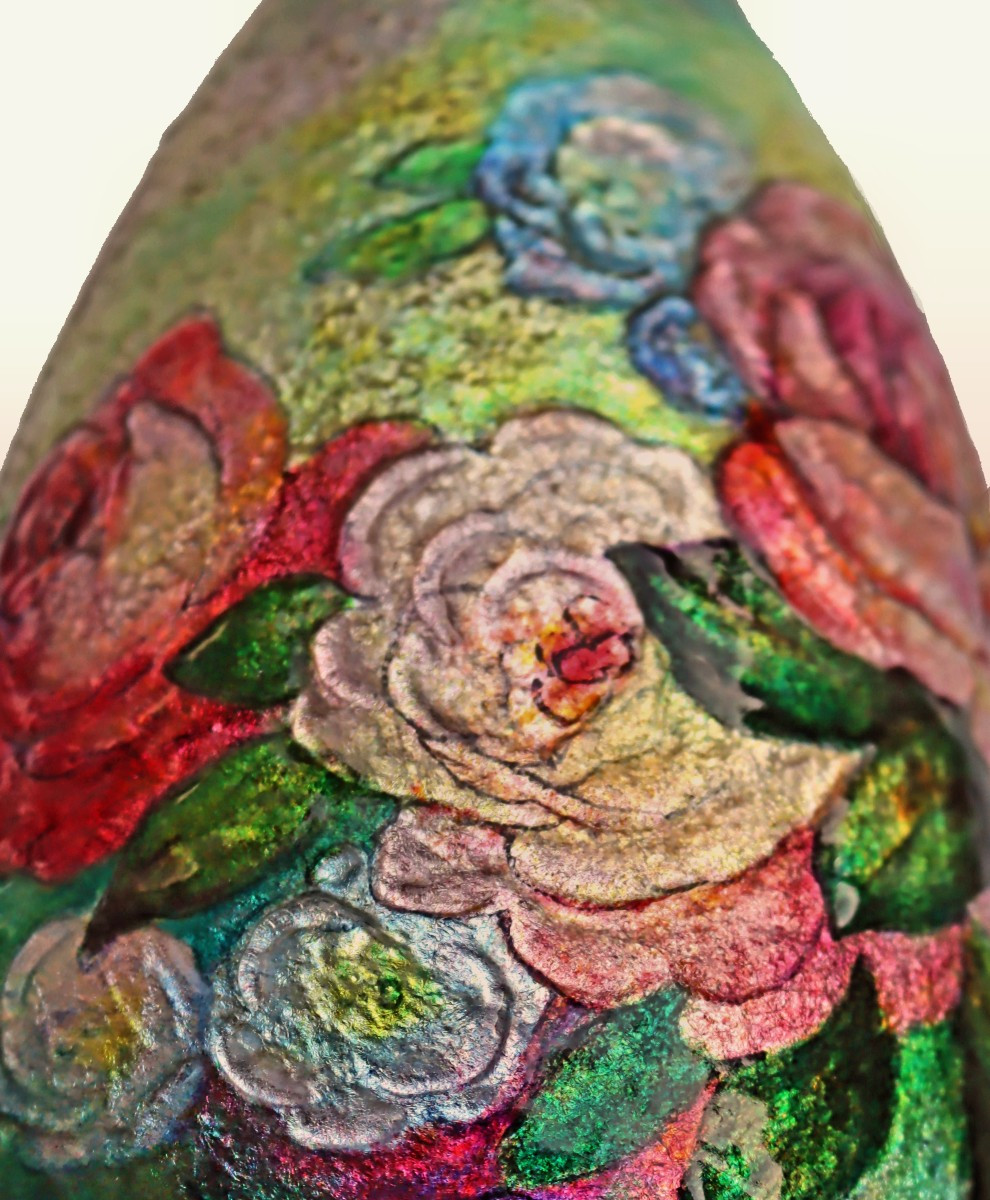
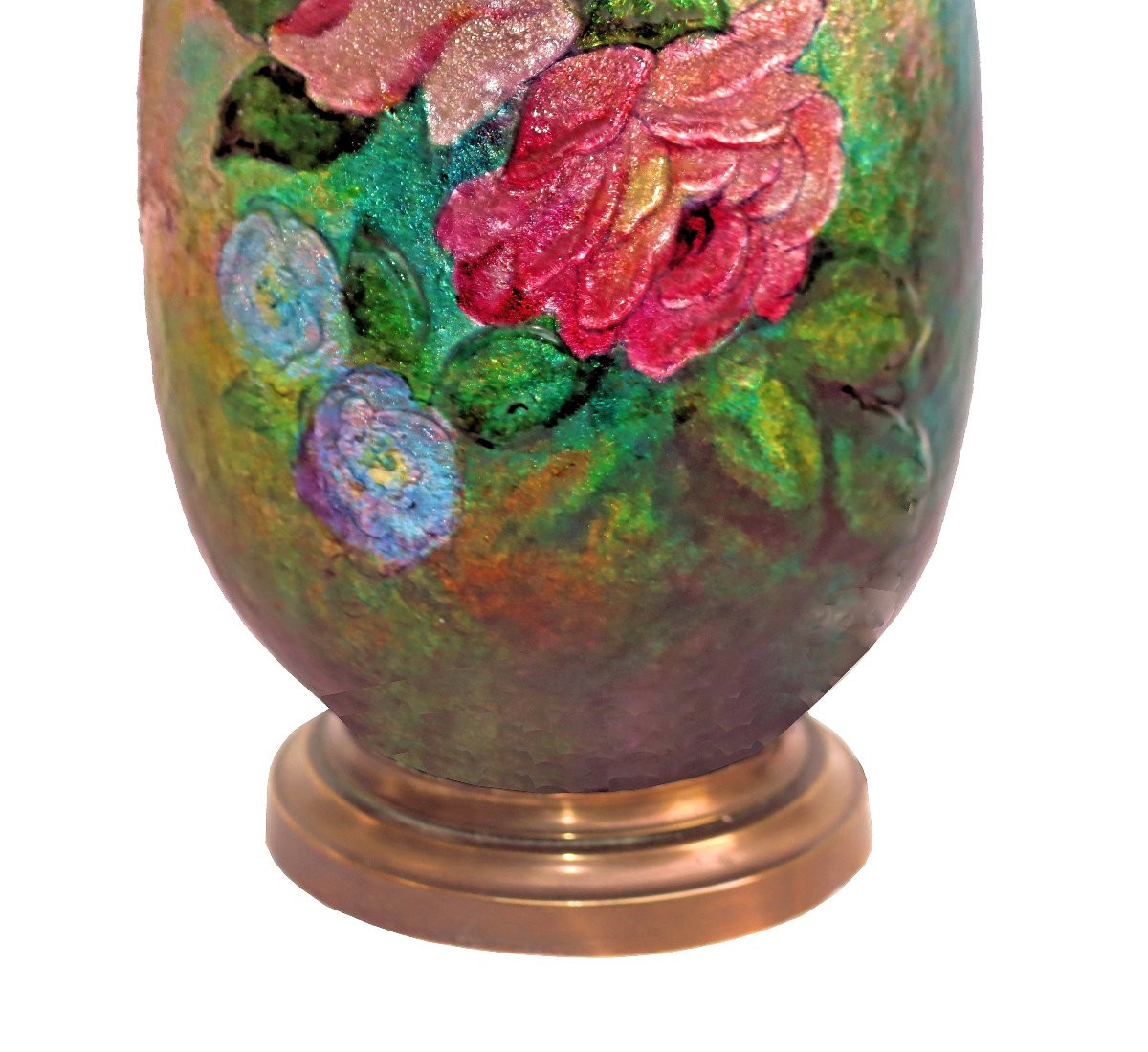
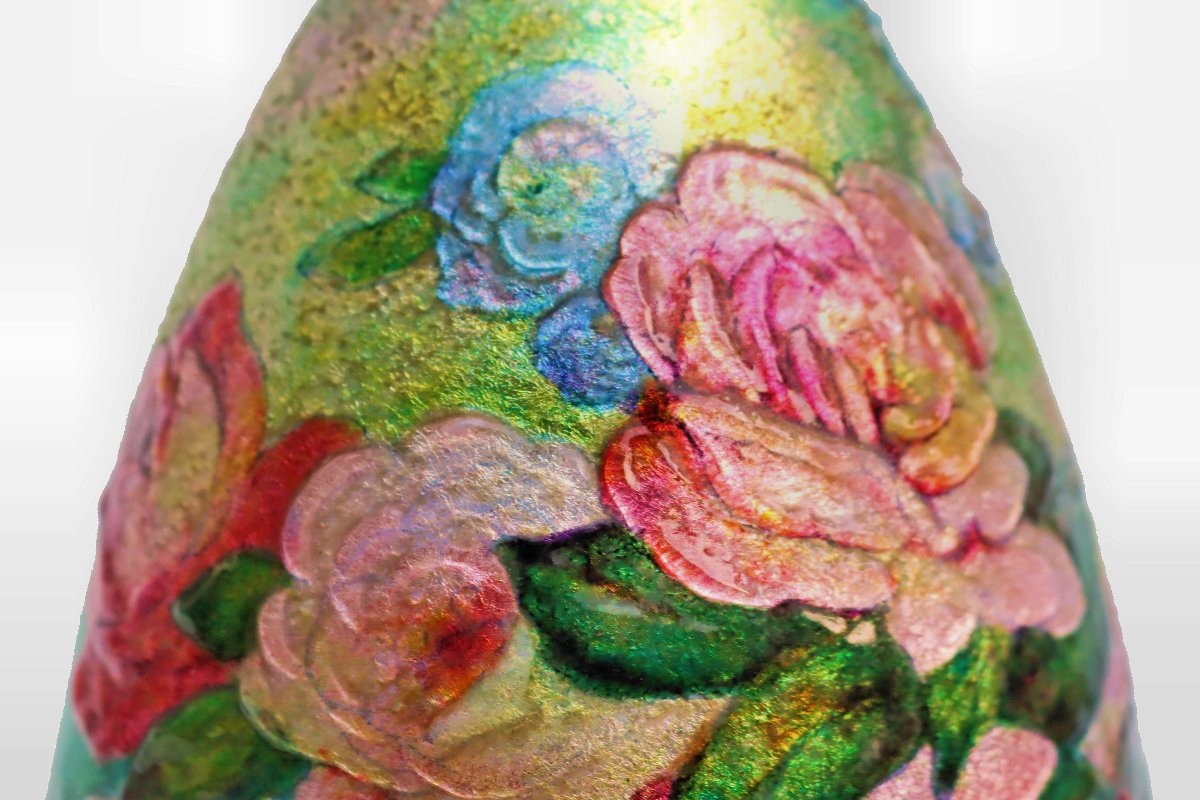
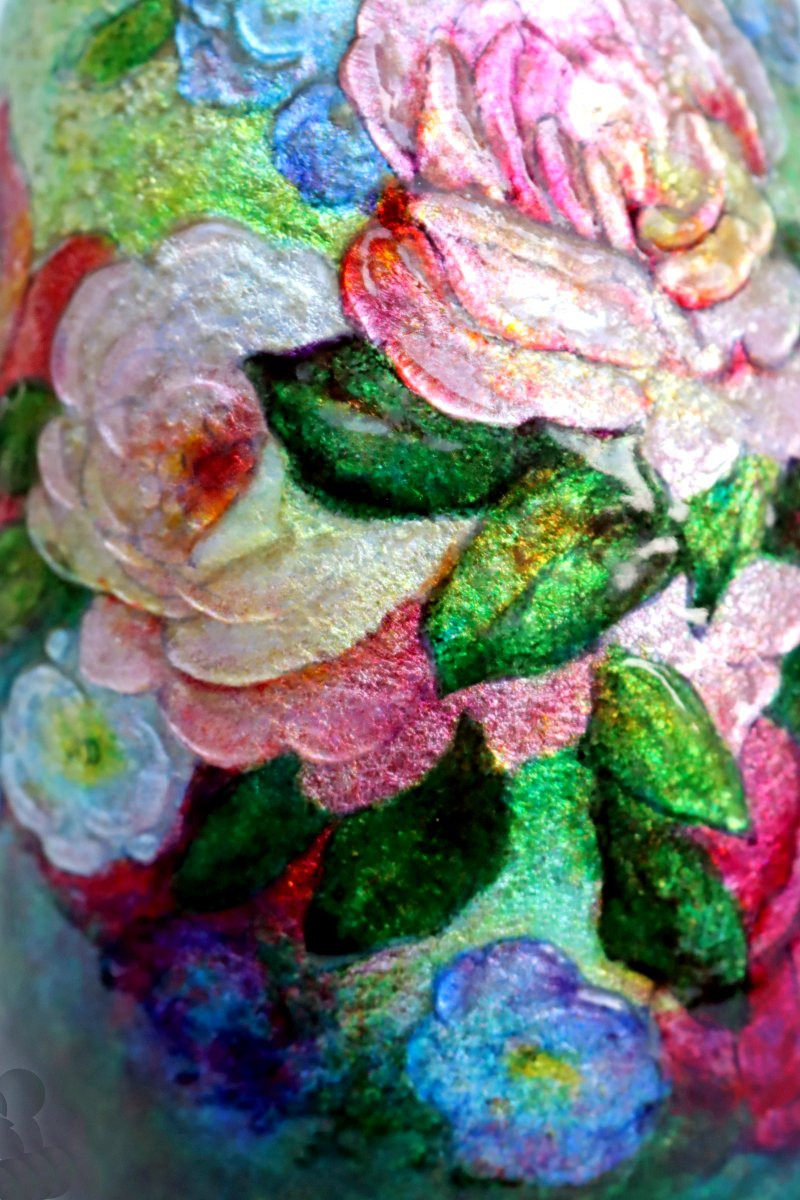
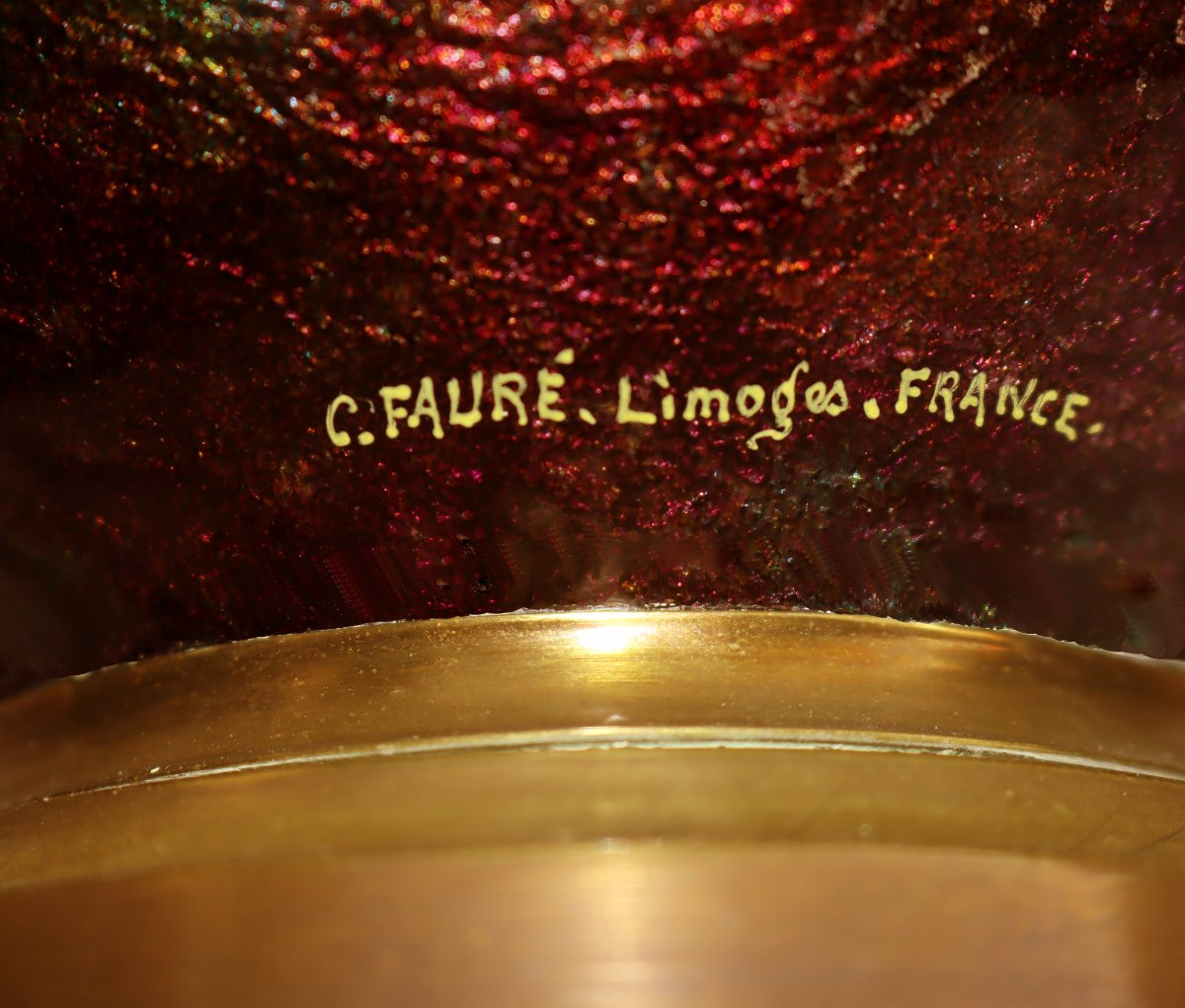
Large Art Deco cloisonné enamel lamp base, signed in gold by Camille Fauré and located in Limoges. It features a baluster-shaped structure in enameled brass with a rich Impressionist relief decoration depicting flowers in bloom and bud. In very good overall and electrical condition. Total height 34 cm / 27 cm excluding the socket. Born on November 16, 1874, in Périgueux, Camille Fauré settled in Limoges in the 1880s, where he took over the family painting workshop as a sign painter. He then developed a business decorating shop windows and religious furniture. In the first decade of the 20th century, he turned to enameling, a traditional Limoges specialty, and began producing decorative objects (vases, boxes, bowls) that enjoyed great success. From 1919, he partnered with the designer Alexandre Marty to refine complex enameling techniques. Together, they developed, in particular, "frosted" effects and deep colors through layering. Their work marked the beginnings of a unique Art Deco style in enamel in Limoges. In 1925, Camille Fauré exhibited at the International Exhibition of Modern Decorative and Industrial Arts in Paris, which cemented his style. In the 1930s, he founded his own workshop, employing numerous artisans and enamelers, including his daughter Andrée Fauré, who continued the business after his death in 1956. The decision was pragmatic: enamels were fashionable at the time, and Limoges was the center of this expertise. To assist him in this venture, Camille Fauré hired the enameler Alexandre Marty to create vases whose floral designs still reflected the Art Nouveau legacy. The entrepreneur was clear: he sought to produce exceptional pieces, with the sole requirement being perfect workmanship. The artisans of the Fauré workshop were thus able to freely play with the codes of the modern movement—Cubism, geometry, bold colors—transfiguring them through a subtle interplay of materials, sometimes opaque and sometimes translucent. This Art Deco production, geometric and in relief, was given new signatures for its marketing: "Fauré, Limoges, France" or "C Fauré Limoges France".
2 200 €
Period: 20th century
Style: Art Deco
Condition: Excellent condition
Material: Brass
Height: 34 cm
Reference (ID): 1719789
Availability: In stock
Print