THIS OBJECT WAS SOLD
Austrian School, Portrait Of A Young Boy


AUSTRIAN SCHOOL circa 1920
PORTRAIT OF A BOY
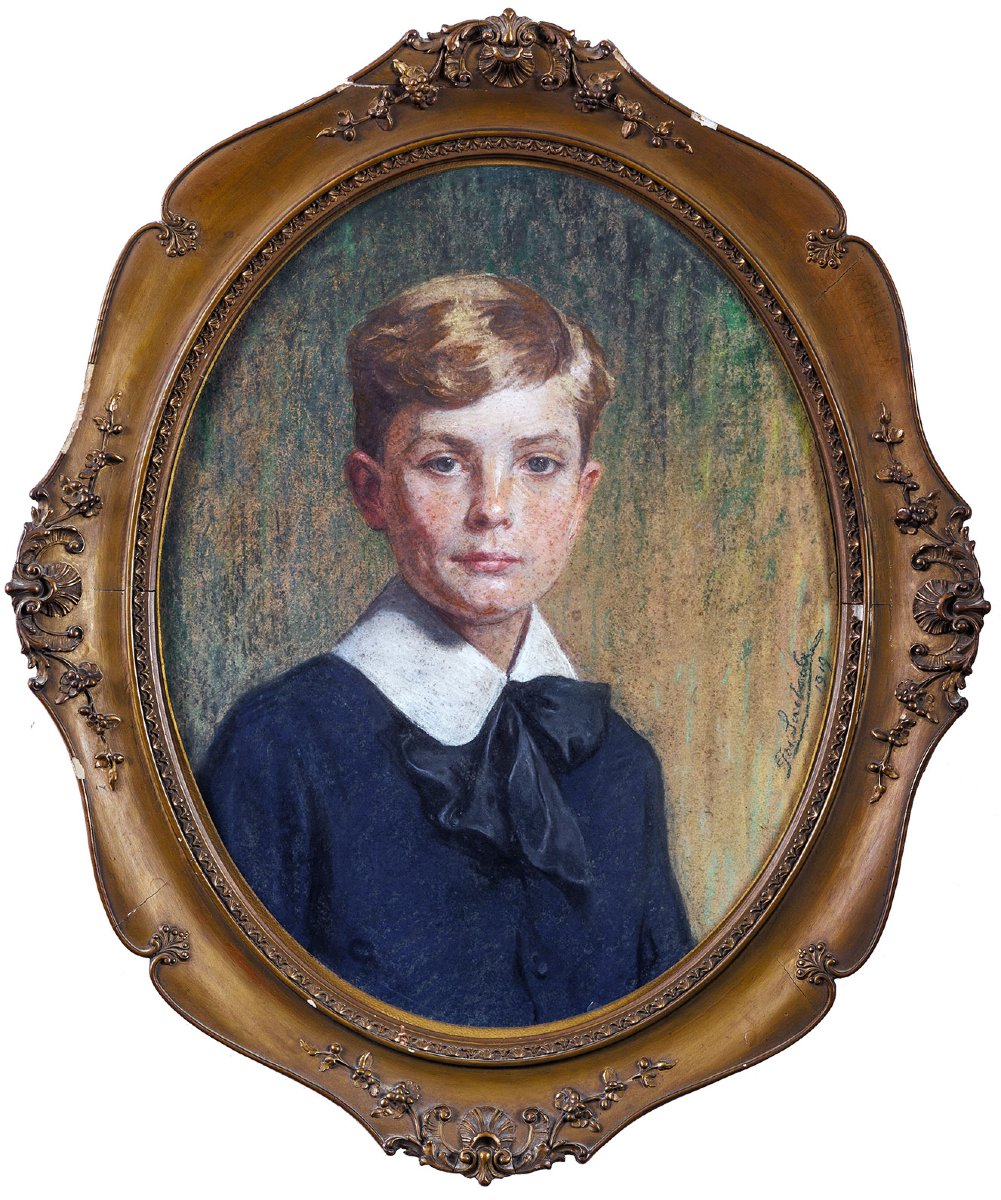
Pastel on board
Signed (illegible) and dated 1919
54 × 42 cm / 21.3 × 16.5 in
With frame: 71 × 60 cm / 28 × 23.6 in
The First World War marked a profound rupture in the cultural life of Central Europe. In Austria, the glittering world of the Secession — the era of Klimt’s gold and the confident artistic language of the fin-de-siècle — suddenly belonged to a vanished past. The collapse of the Habsburg Empire and the economic and social crisis that followed left society disoriented and exhausted.
Art inevitably reflected this transformation. While some artists turned toward the radical experiments of the avant-garde, others sought stability in a quieter return to traditional subjects. Portraiture, in particular, became a means of reconnecting with a sense of continuity and human presence in a fragmented world.
This shift was also visible in materials and scale. Monumental decorative painting gave way to more intimate works on paper and board — drawings, pastels and small-format compositions that were not only more economical but also more suited to a new, introspective artistic language. Forms became simpler, the palette more restrained, and the emphasis moved toward psychological presence rather than decorative effect.
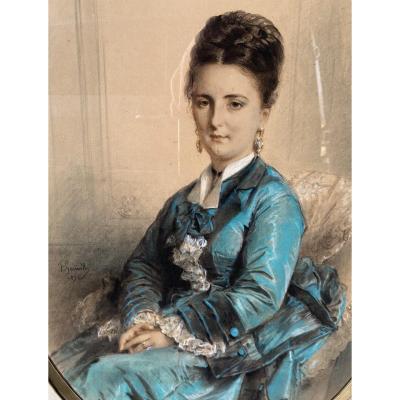
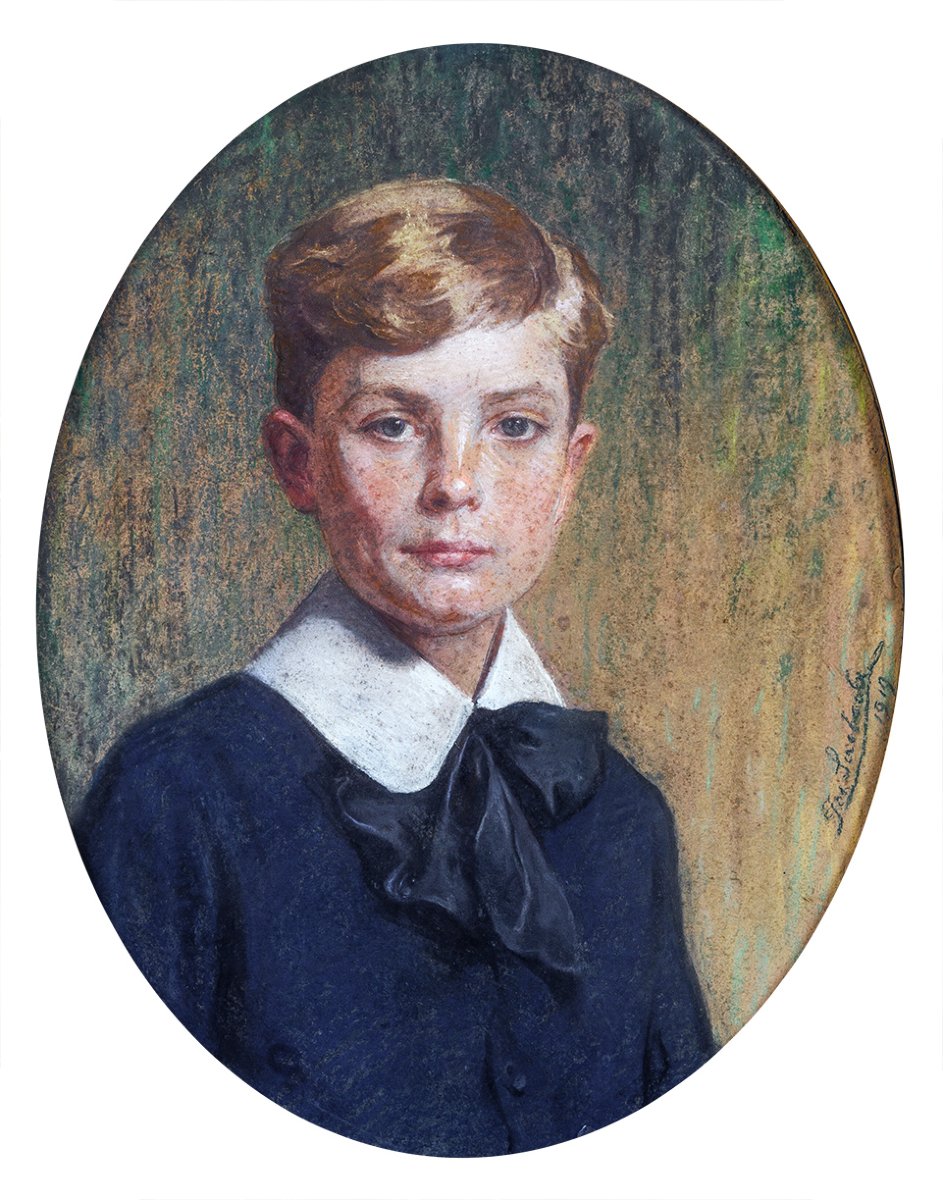
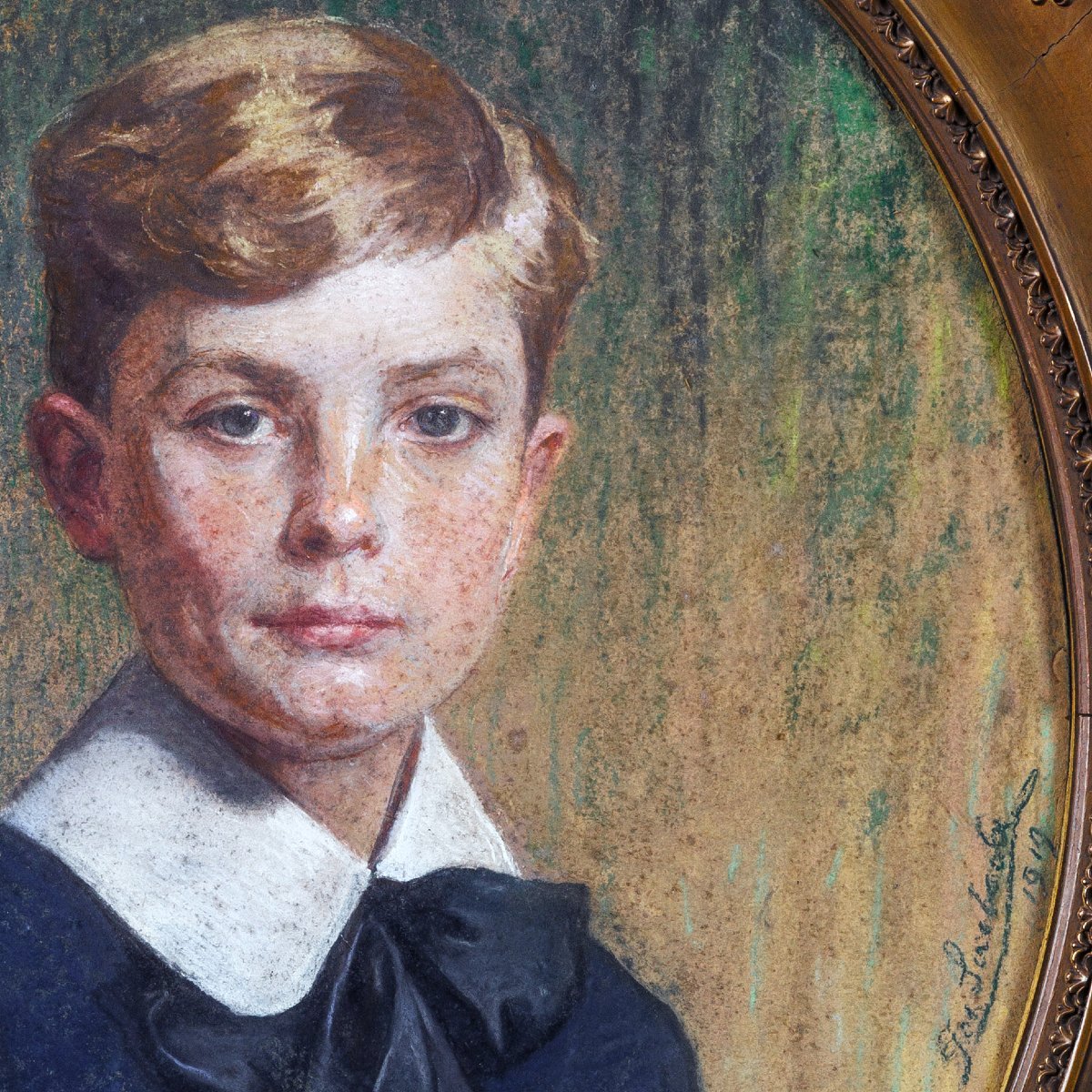
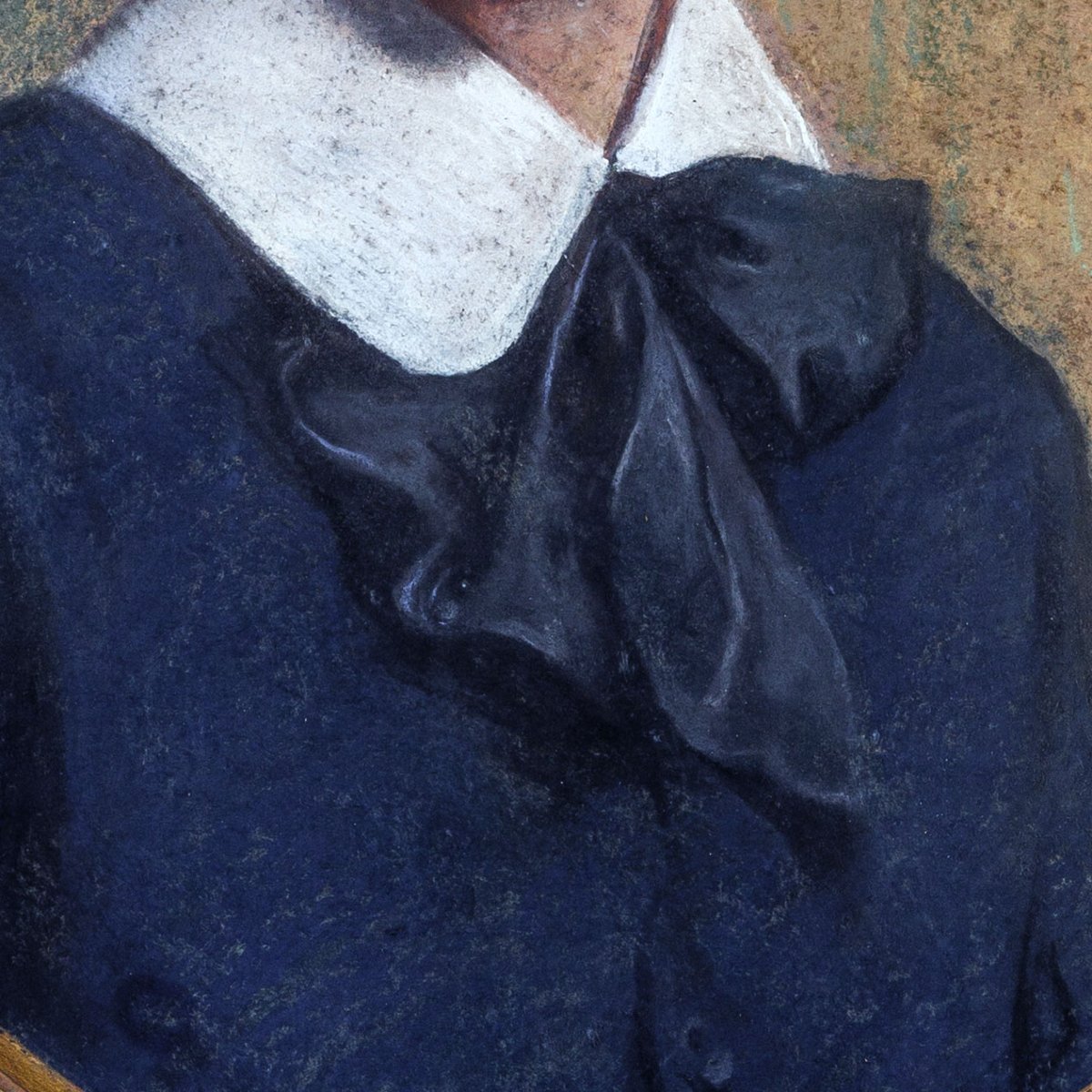
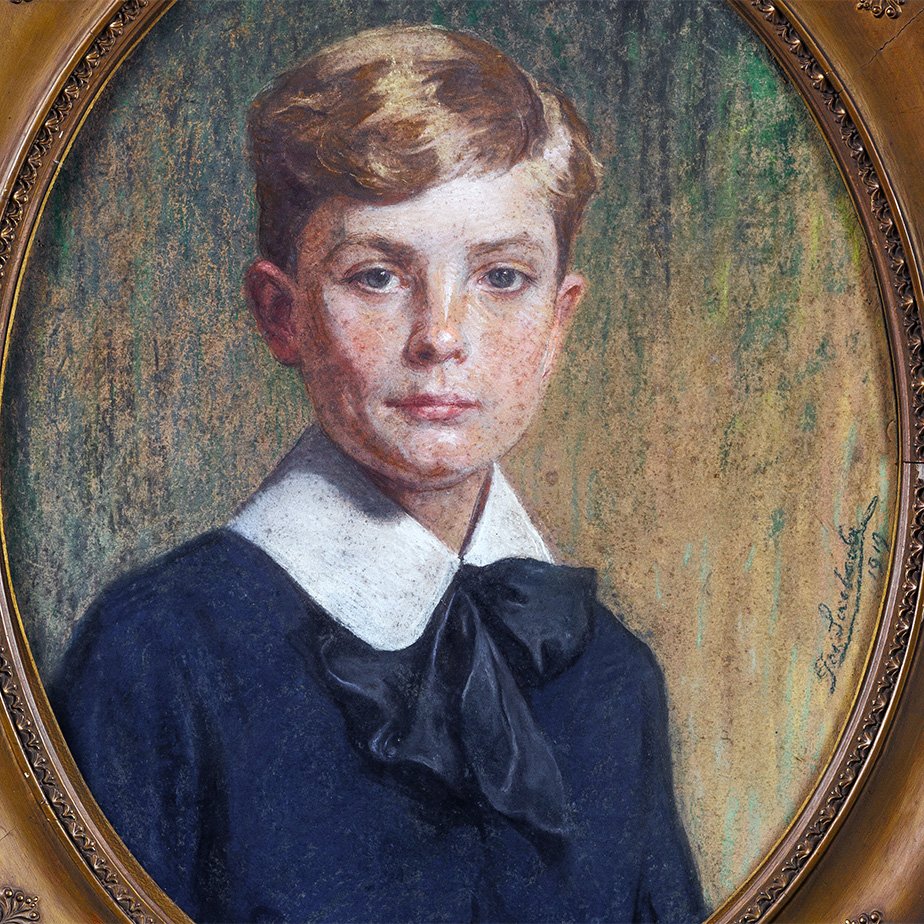
The present Portrait of a Boy, executed in pastel and dated 1919, belongs to this moment of transition. The young sitter is depicted with quiet dignity, the soft modeling of the face contrasting with the restrained treatment of costume and background. The oval composition and sober tonal harmony evoke the tradition of earlier portraiture, while the simplicity of the execution reflects the more austere sensibility of the postwar years.
In this sense, the portrait can be seen as a silent witness to its time — an image suspended between the lost elegance of the imperial world and the uncertain modernity that followed.
PORTRAIT OF A BOY
Pastel on board
Signed (illegible) and dated 1919
54 × 42 cm / 21.3 × 16.5 in
With frame: 71 × 60 cm / 28 × 23.6 in
The First World War marked a profound rupture in the cultural life of Central Europe. In Austria, the glittering world of the Secession — the era of Klimt’s gold and the confident artistic language of the fin-de-siècle — suddenly belonged to a vanished past. The collapse of the Habsburg Empire and the economic and social crisis that followed left society disoriented and exhausted.
Art inevitably reflected this transformation. While some artists turned toward the radical experiments of the avant-garde, others sought stability in a quieter return to traditional subjects. Portraiture, in particular, became a means of reconnecting with a sense of continuity and human presence in a fragmented world.
This shift was also visible in materials and scale. Monumental decorative painting gave way to more intimate works on paper and board — drawings, pastels and small-format compositions that were not only more economical but also more suited to a new, introspective artistic language. Forms became simpler, the palette more restrained, and the emphasis moved toward psychological presence rather than decorative effect.
The present Portrait of a Boy, executed in pastel and dated 1919, belongs to this moment of transition. The young sitter is depicted with quiet dignity, the soft modeling of the face contrasting with the restrained treatment of costume and background. The oval composition and sober tonal harmony evoke the tradition of earlier portraiture, while the simplicity of the execution reflects the more austere sensibility of the postwar years.
In this sense, the portrait can be seen as a silent witness to its time — an image suspended between the lost elegance of the imperial world and the uncertain modernity that followed.
Explore similar pieces and discover your ideal find:
Pastel Art