THIS OBJECT WAS SOLD
Dragon And Mount Fuji, Tani Bunchō?, Kakemono, Japan, 19th Century.
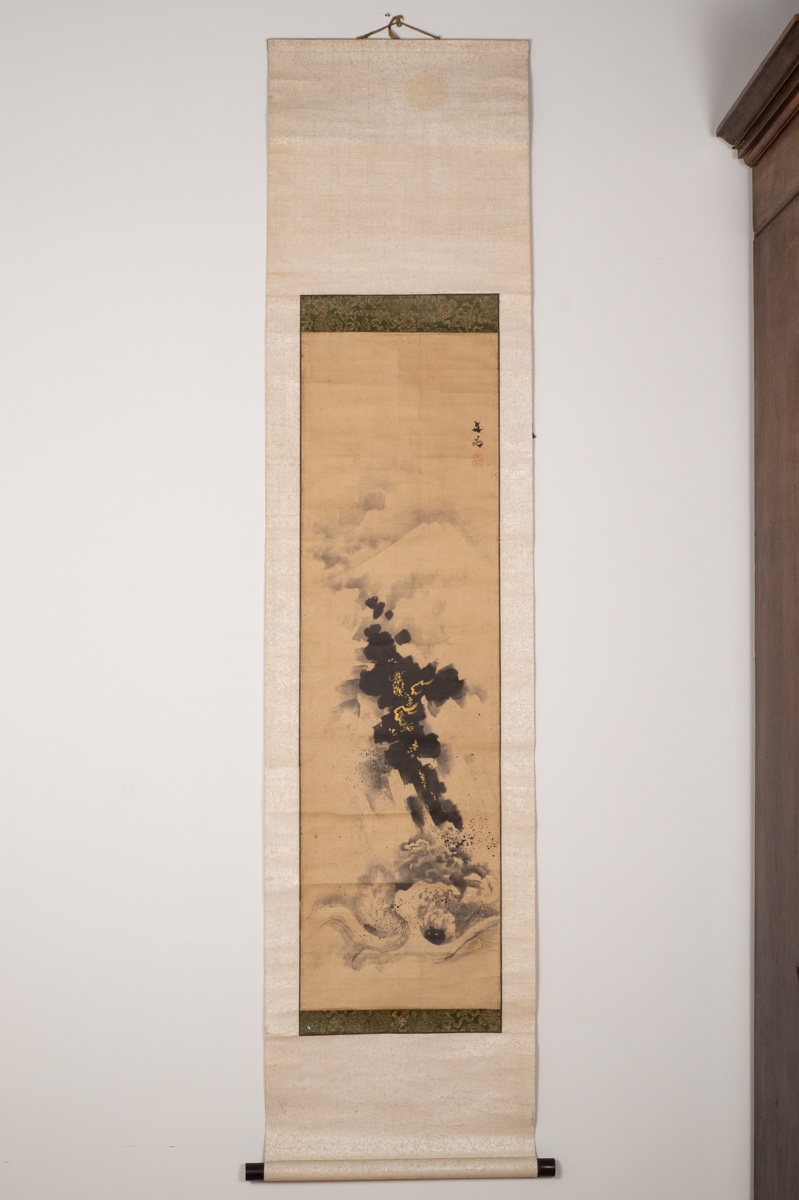
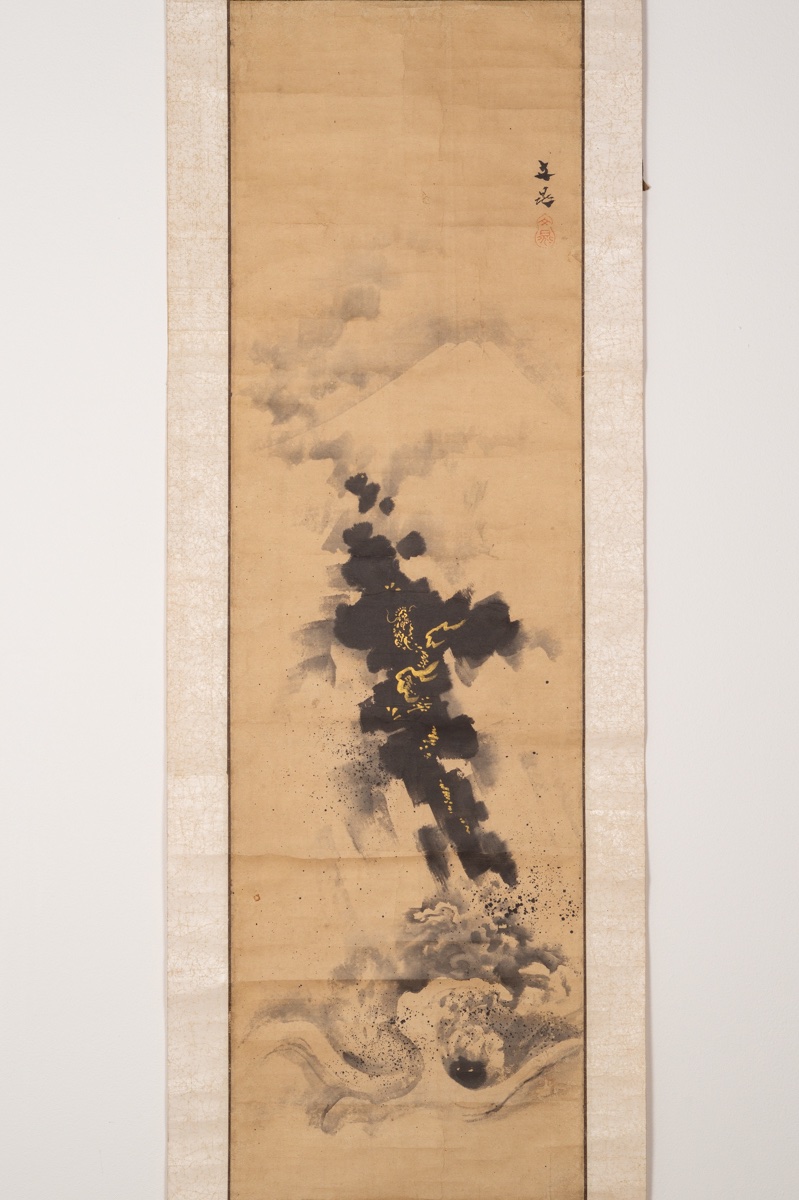
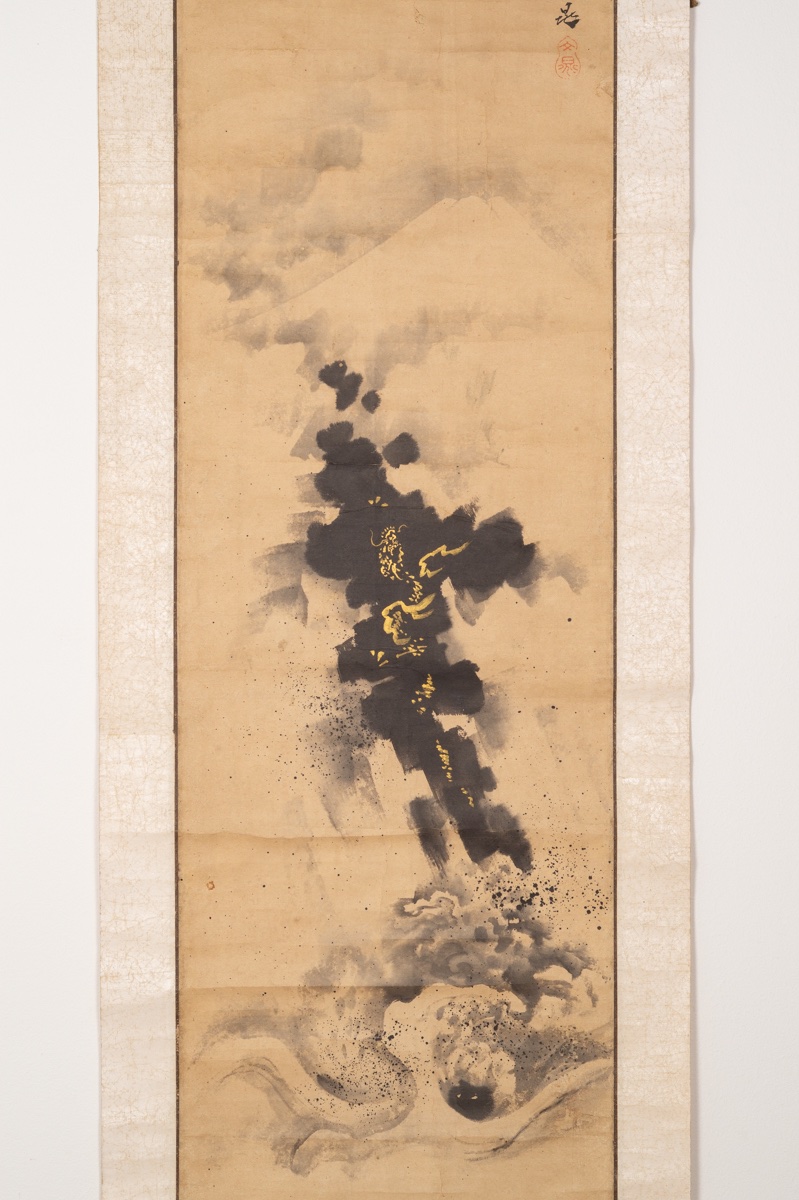
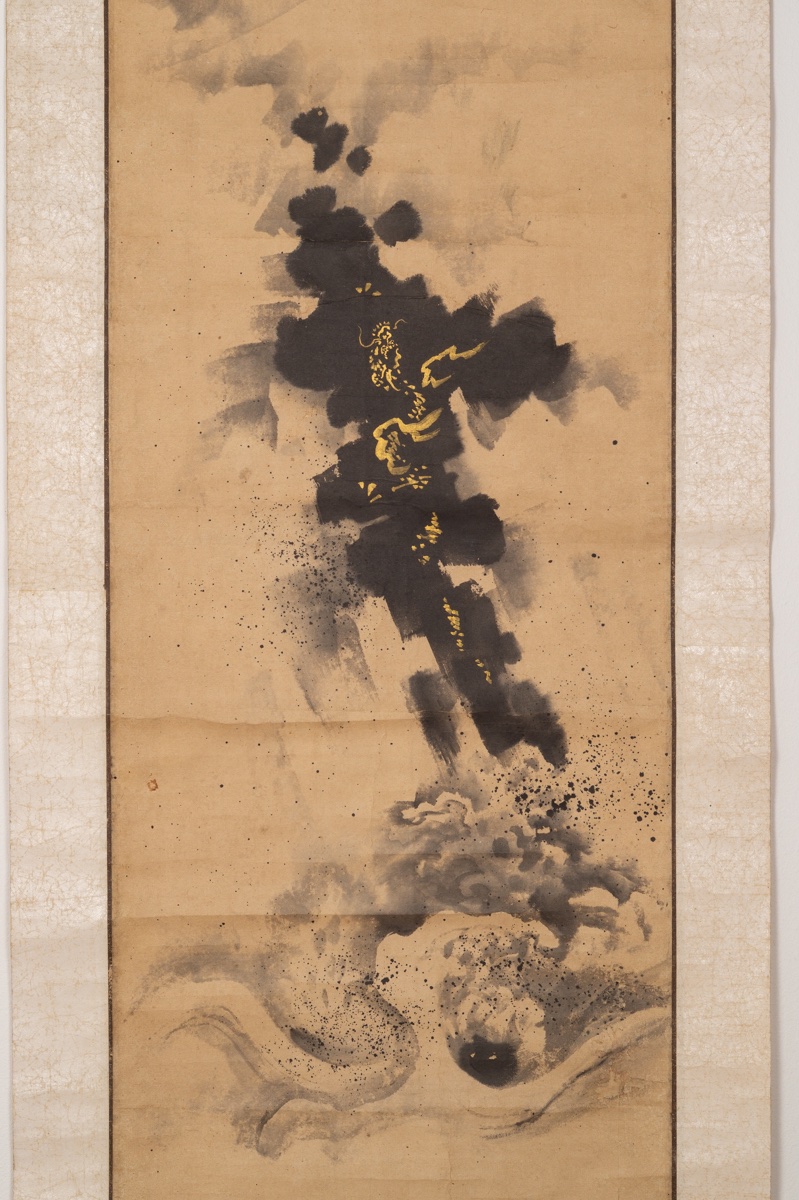
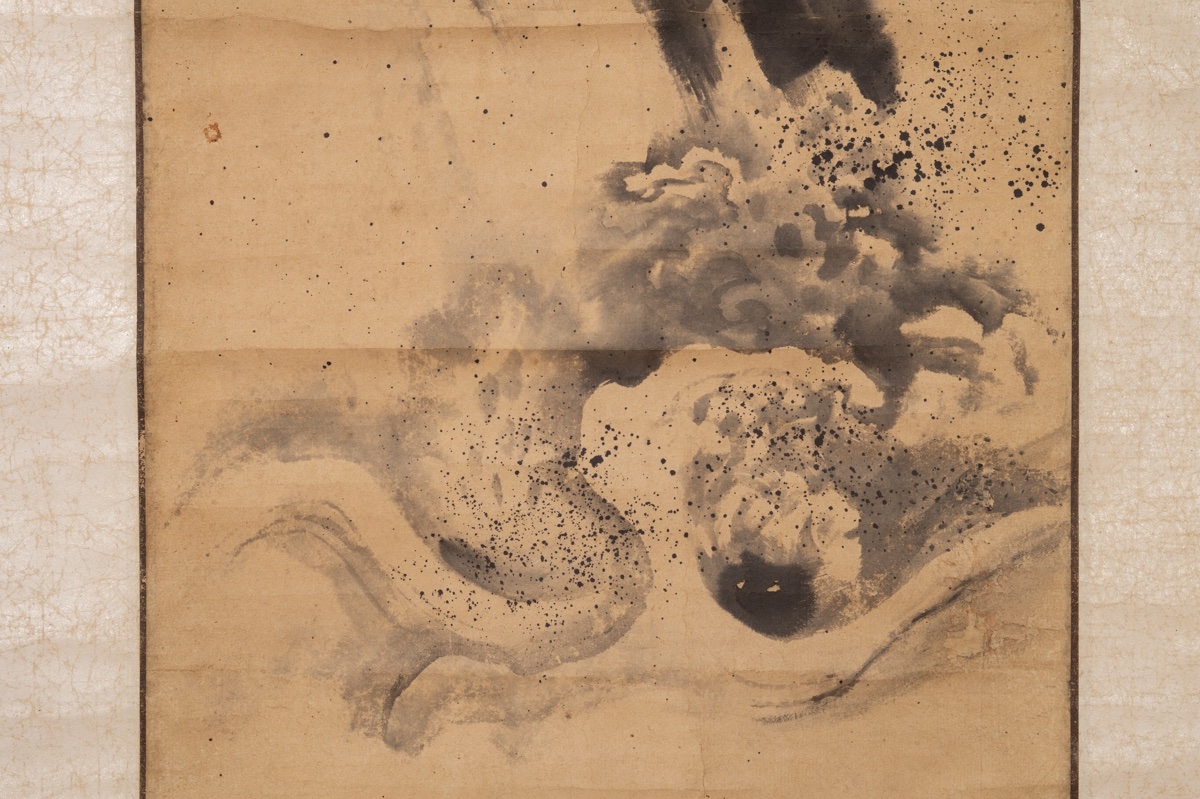
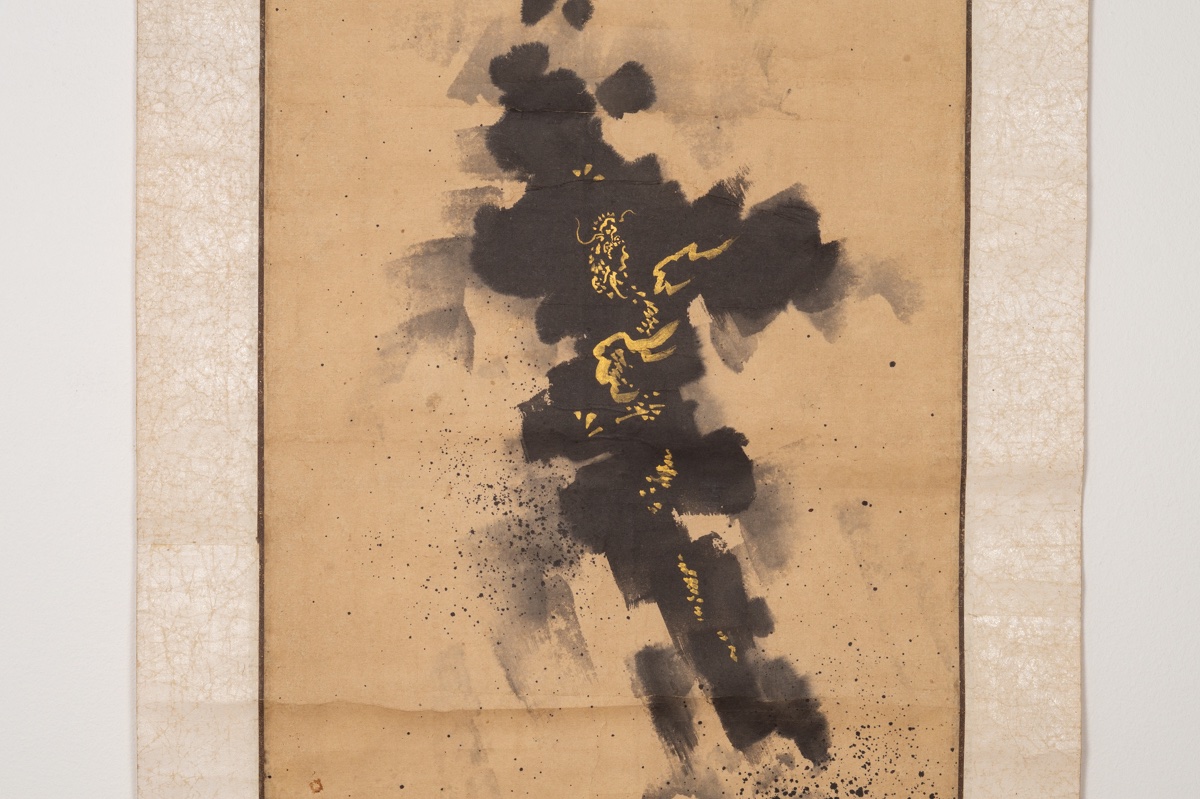
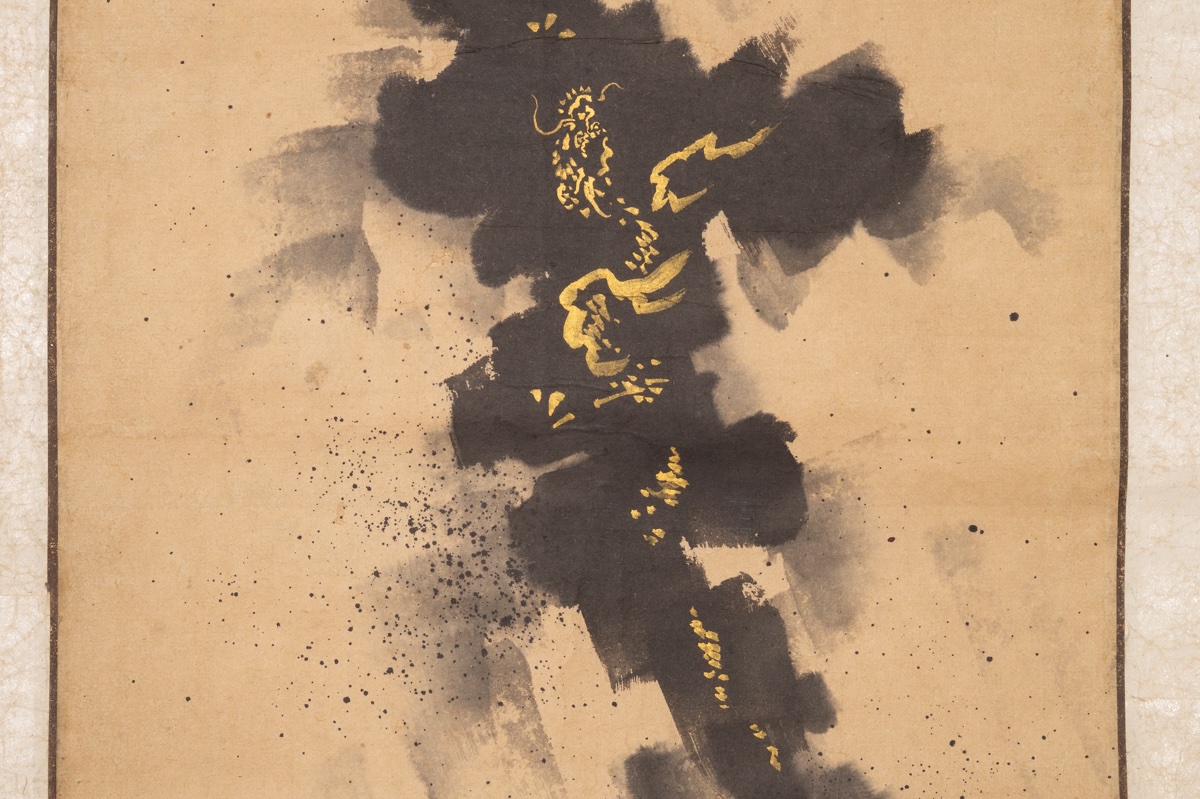
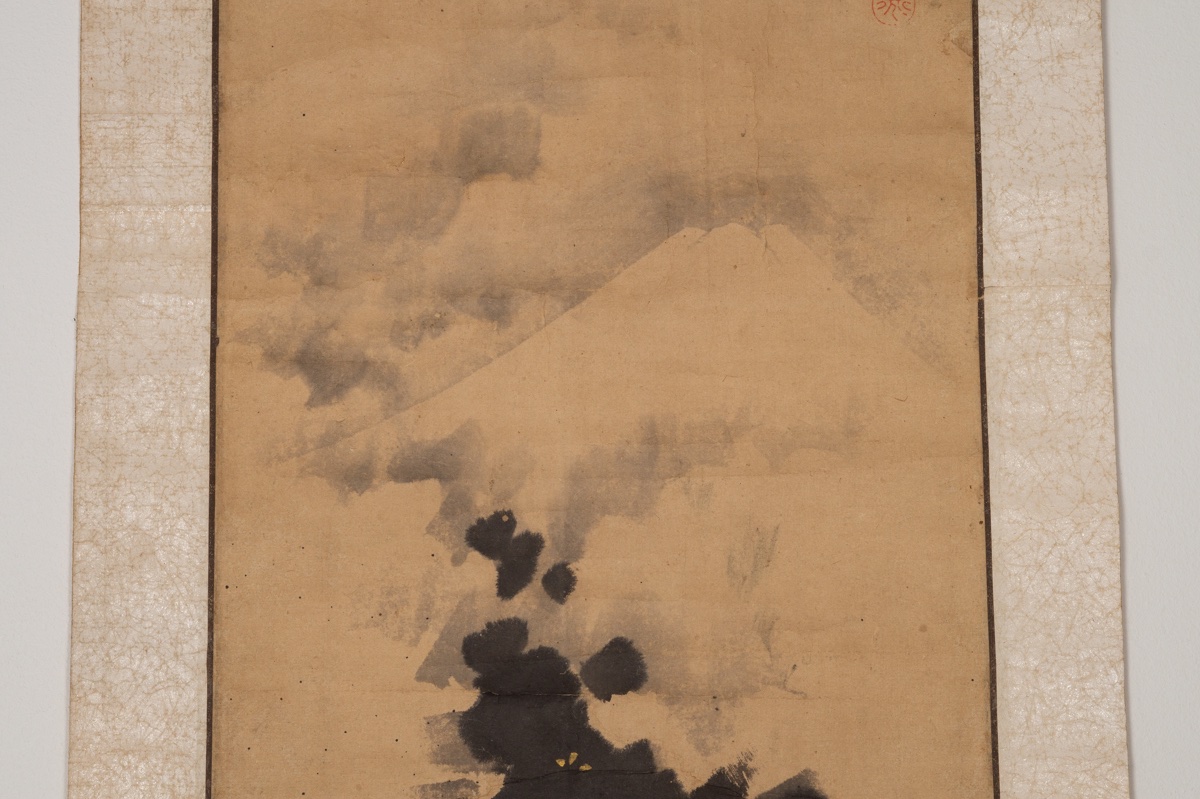
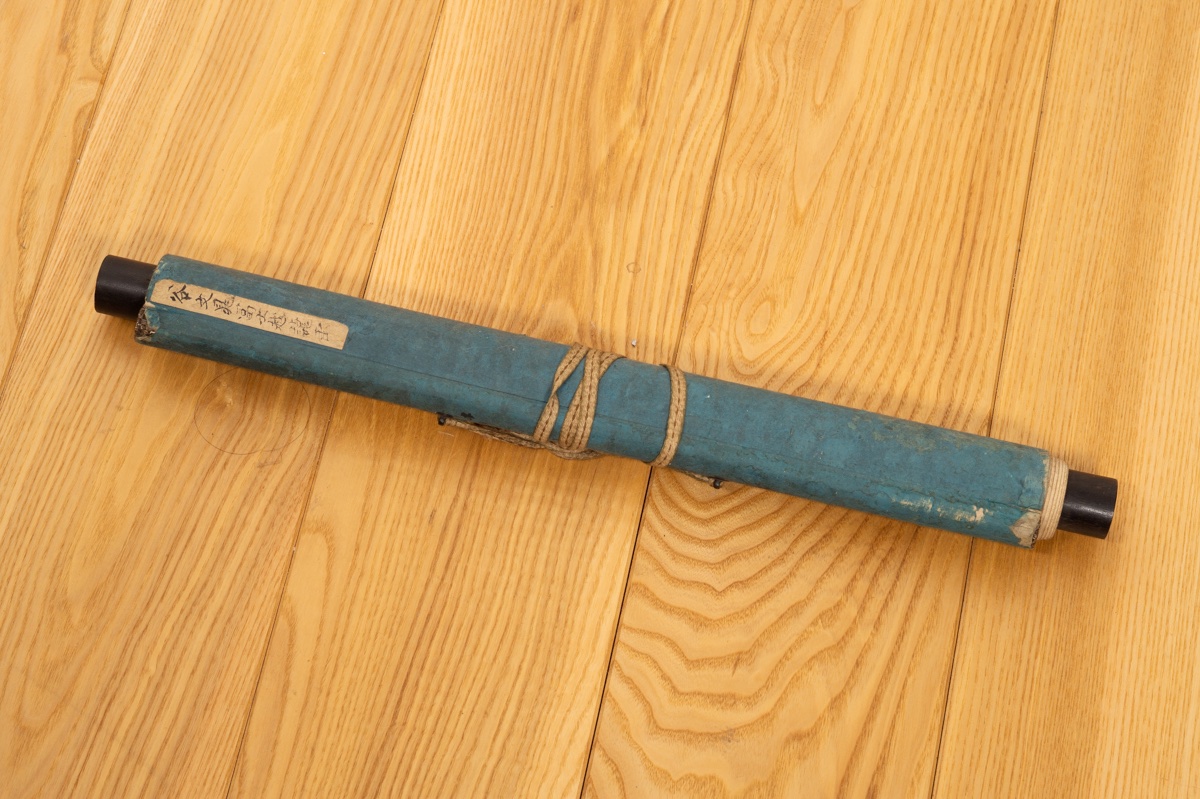
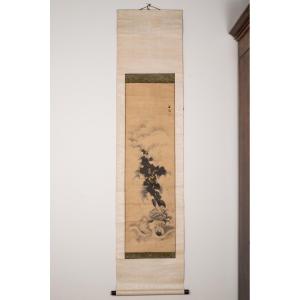


Scroll with a hand-painted ink on paper. The image depicts "The Dragon Ascending Mount Fuji" (Fuji Shōryū). Mount Fuji is visible in the background, painted with delicate, hazy lines. The dragon emerges from the dark clouds and turbulent waters below. It is painted in thick, expressive ink (suibokuga), with details highlighted in gold, giving it a divine quality. In Japanese culture, the dragon ascending Mount Fuji is a powerful symbol of success, ambition, and prosperity.
Ink and gold leaf on paper.
Japan, 19th century. Tani Bunchō (1763-1841) or his school.
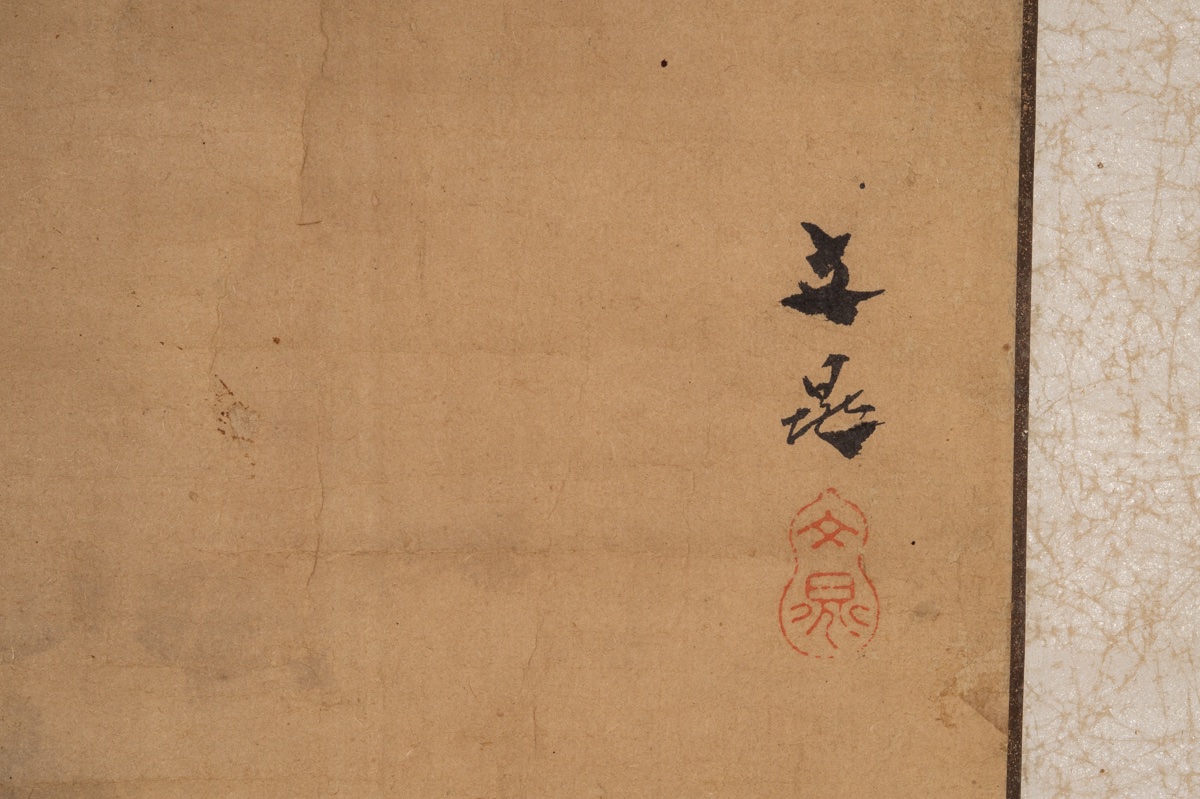
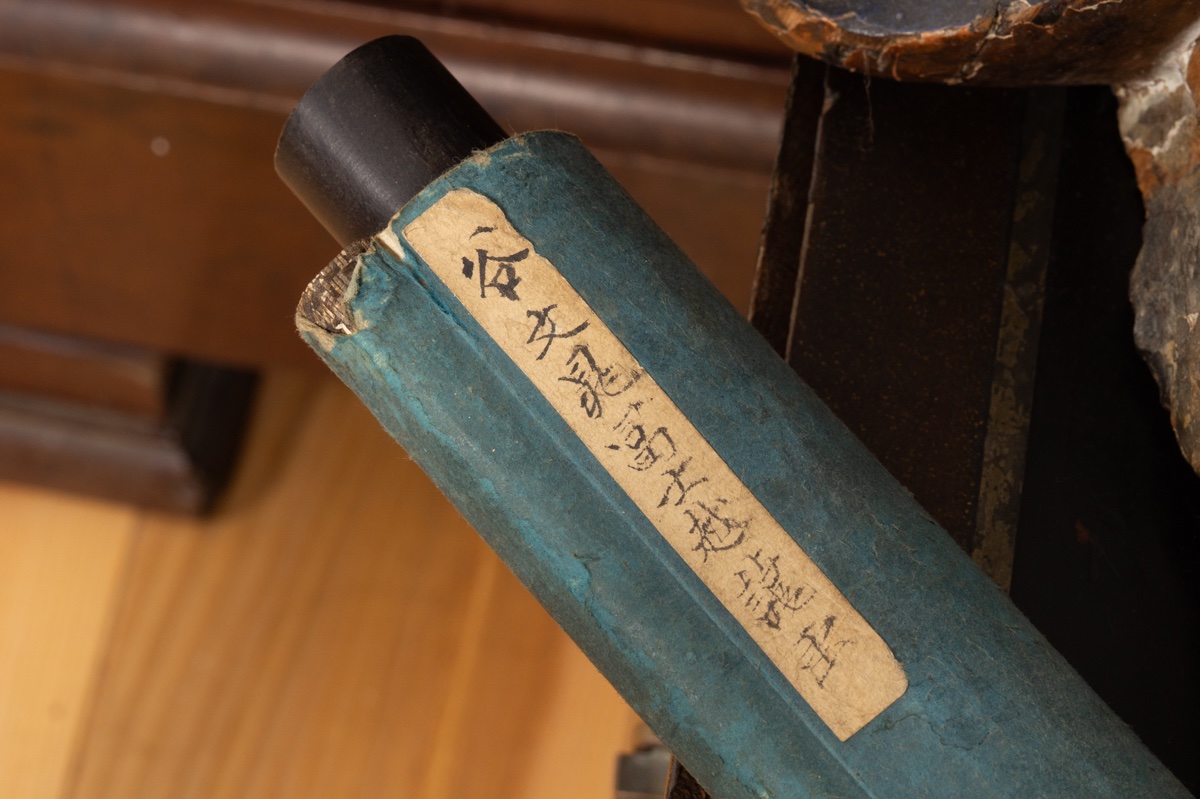
Translation of the inscription: Main signature: 文晁 (Bunchō), Seal: 文晁 (Bunchō), Label on the rolled scroll: 谷文晁 高越富士 (Tani Bunchō, Mount Fuji Above the Clouds/Heights).
Dimensions: 168 x 39 cm, Image: 29 x 98 cm. Width with handles: 44 cm. Relatively good condition, visible creases and discoloration.
Tani Bunchō (1763-1841) was one of the most important and versatile Japanese painters of the Edo period. He became known as an artist capable of combining several different painting traditions in a unique and eclectic style. He was born in Edo (present-day Tokyo) into a samurai family. His father, Tani Rokkoku, was a renowned poet, which allowed Bunchō to be in contact with the intellectual elite from a young age. He was an extremely diligent student. He studied almost every style available at the time: from the traditional Japanese Kanō and Tosa schools, through Chinese literati painting (Nanga), to European techniques (Yōga), including perspective and chiaroscuro. He was an art historian and collector. He compiled the Shūko Jisshu, a monumental inventory of Japanese artworks and monuments.
Kakemono (Japanese: 掛け物 kake-mono – “hanging object”; also: 掛軸 kakejiku – “hanging scroll”) – a Japanese painting on paper or silk, usually glued to a silk backing, intended to be hung on the wall. The top and bottom edges of the kakemono are attached to wooden bars to facilitate rolling, with the bottom bar (Japanese: ikugi 軸木) also equipped with projecting handles (Japanese: jiku). Kakemono scrolls first appeared in Japan during the Nara period (710-794). In traditional Japanese homes, they are hung in a niche called a tokonoma.
Examples of works by Tani Bunchō:
https://www.christies.com/en/lot/lot-4068954
https://www.christies.com/en/lot/lot-4068957
https://www.christies.com/en/lot/lot-5416338
Free shipping within the European Union! I send packages via insured courier (DPD or DHL). All items are very carefully packaged. Payment by international bank transfer. I will provide a certificate of authenticity upon request.
Ink and gold leaf on paper.
Japan, 19th century. Tani Bunchō (1763-1841) or his school.
Translation of the inscription: Main signature: 文晁 (Bunchō), Seal: 文晁 (Bunchō), Label on the rolled scroll: 谷文晁 高越富士 (Tani Bunchō, Mount Fuji Above the Clouds/Heights).
Dimensions: 168 x 39 cm, Image: 29 x 98 cm. Width with handles: 44 cm. Relatively good condition, visible creases and discoloration.
Tani Bunchō (1763-1841) was one of the most important and versatile Japanese painters of the Edo period. He became known as an artist capable of combining several different painting traditions in a unique and eclectic style. He was born in Edo (present-day Tokyo) into a samurai family. His father, Tani Rokkoku, was a renowned poet, which allowed Bunchō to be in contact with the intellectual elite from a young age. He was an extremely diligent student. He studied almost every style available at the time: from the traditional Japanese Kanō and Tosa schools, through Chinese literati painting (Nanga), to European techniques (Yōga), including perspective and chiaroscuro. He was an art historian and collector. He compiled the Shūko Jisshu, a monumental inventory of Japanese artworks and monuments.
Kakemono (Japanese: 掛け物 kake-mono – “hanging object”; also: 掛軸 kakejiku – “hanging scroll”) – a Japanese painting on paper or silk, usually glued to a silk backing, intended to be hung on the wall. The top and bottom edges of the kakemono are attached to wooden bars to facilitate rolling, with the bottom bar (Japanese: ikugi 軸木) also equipped with projecting handles (Japanese: jiku). Kakemono scrolls first appeared in Japan during the Nara period (710-794). In traditional Japanese homes, they are hung in a niche called a tokonoma.
Examples of works by Tani Bunchō:
https://www.christies.com/en/lot/lot-4068954
https://www.christies.com/en/lot/lot-4068957
https://www.christies.com/en/lot/lot-5416338
Free shipping within the European Union! I send packages via insured courier (DPD or DHL). All items are very carefully packaged. Payment by international bank transfer. I will provide a certificate of authenticity upon request.
Explore similar pieces and discover your ideal find:
drawings