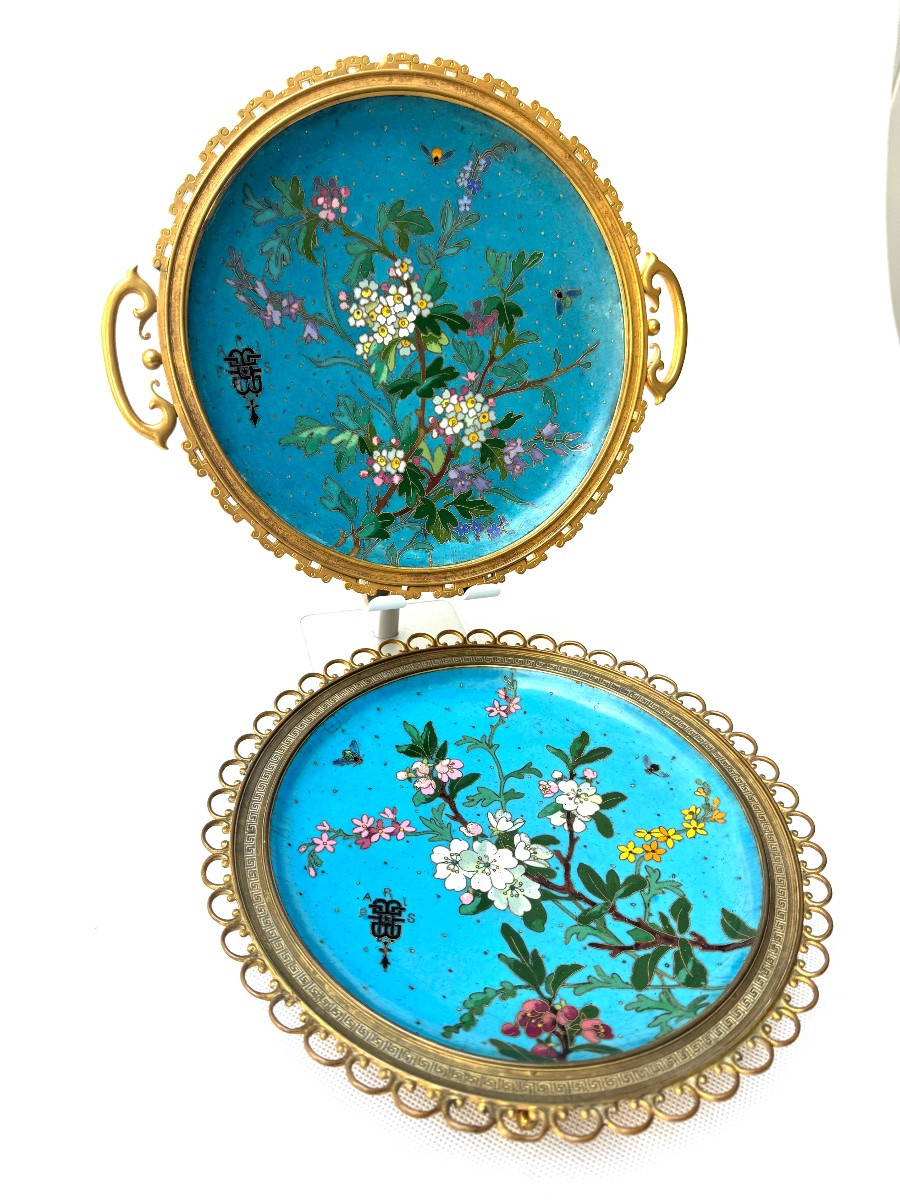


Andre-fernand Thesmar And Barbedienne, Two Gilt Bronze And Cloisonné Enamel Dishes, Circa 1880
Artist: Andre-fernand Thesmar (1843-1912) Et Ferdinand Barbedienne (1810-1892)
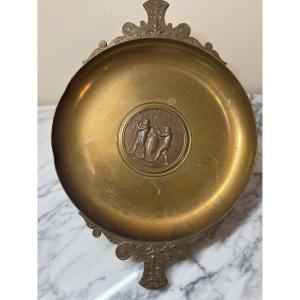
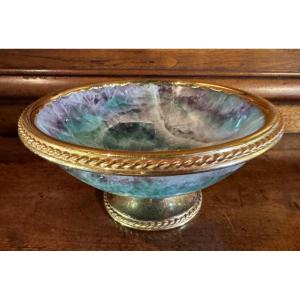
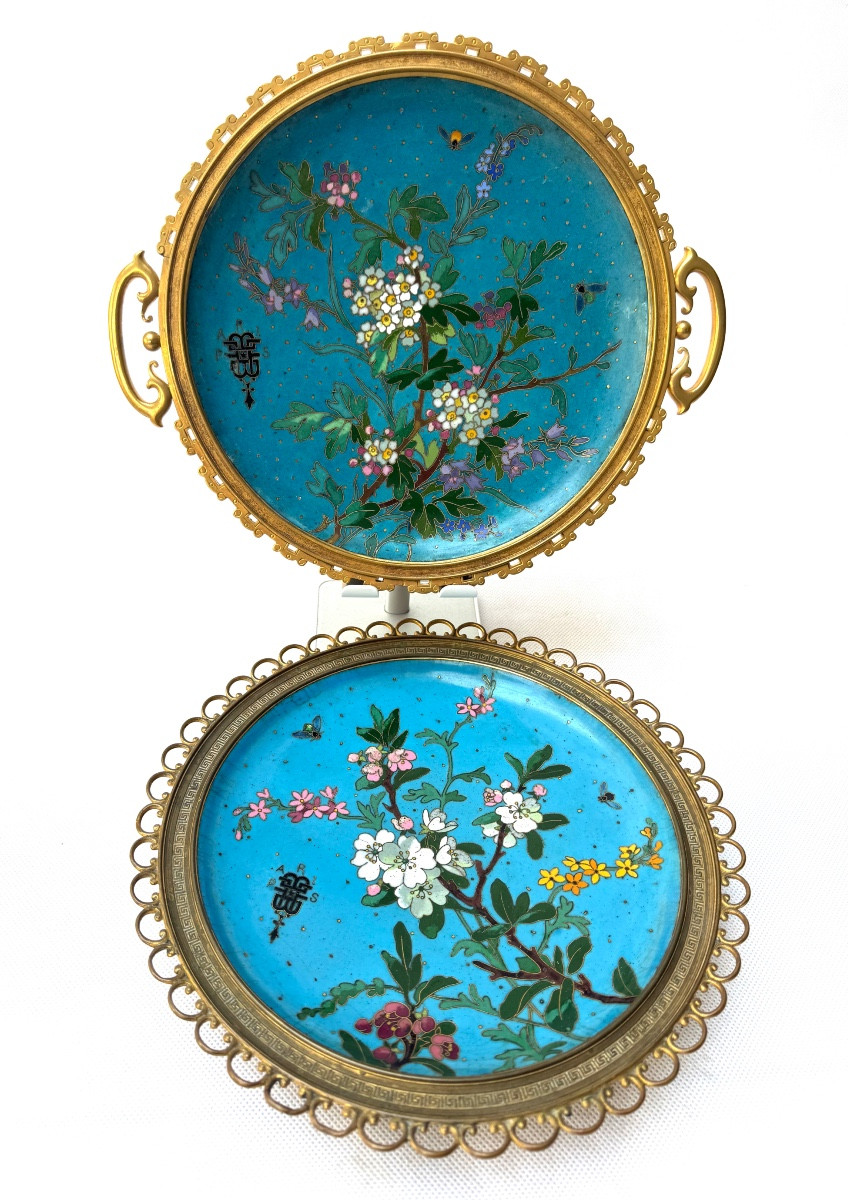
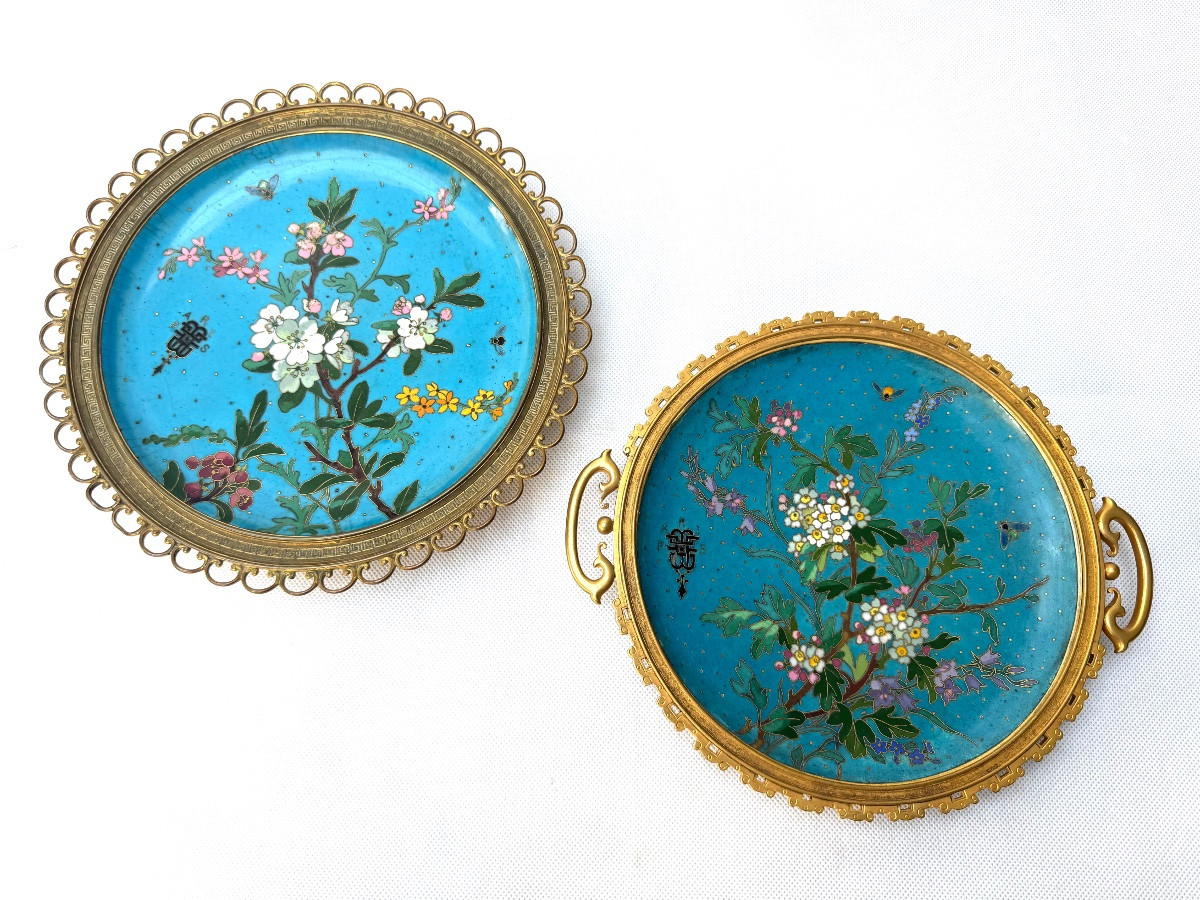
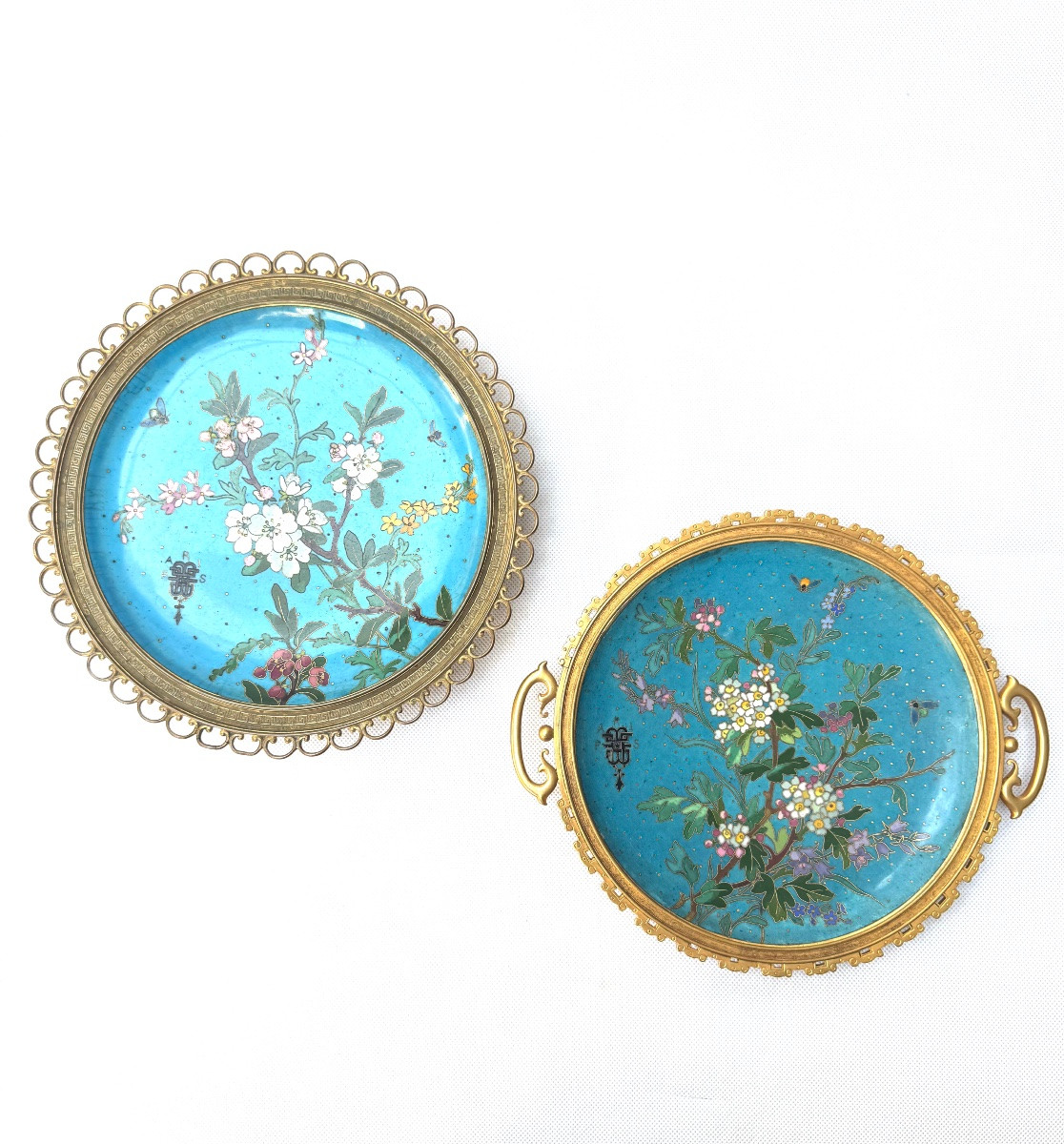
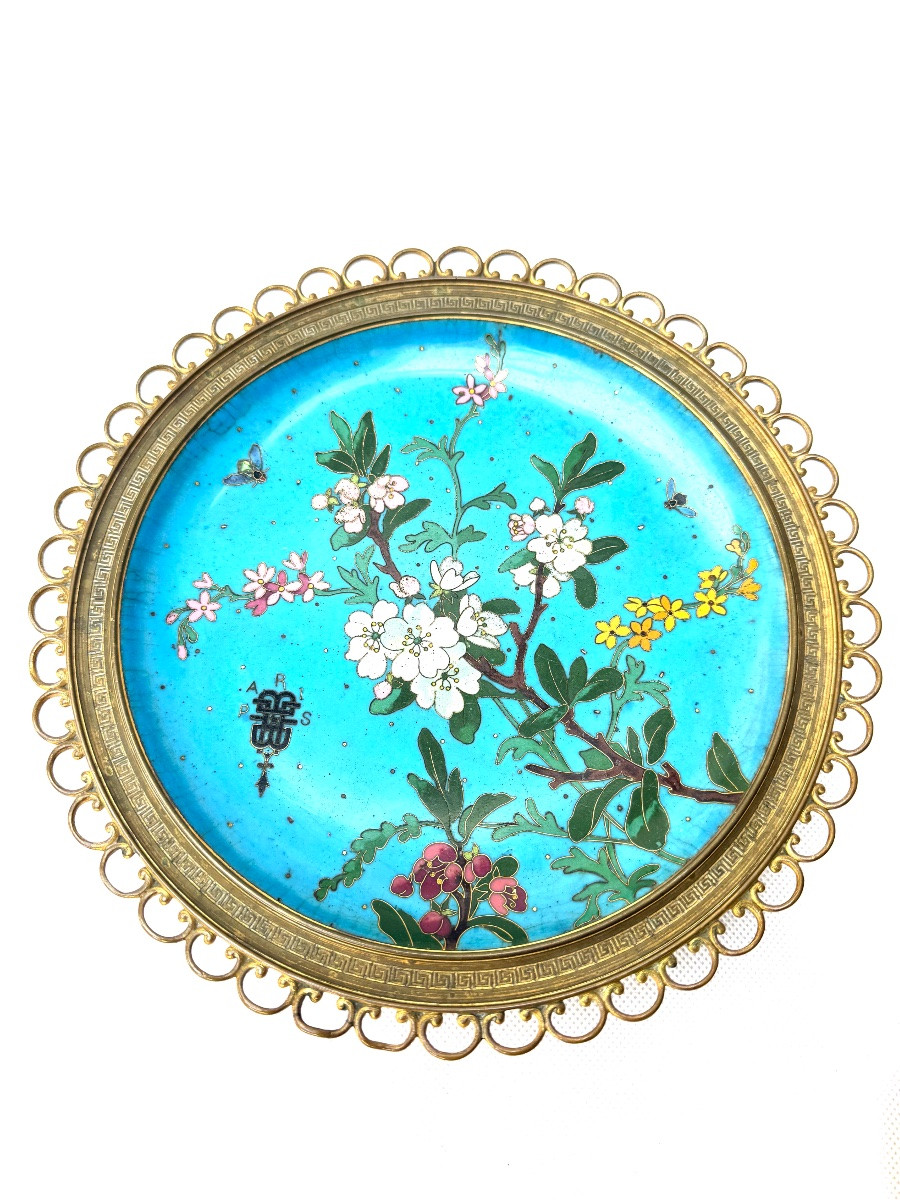
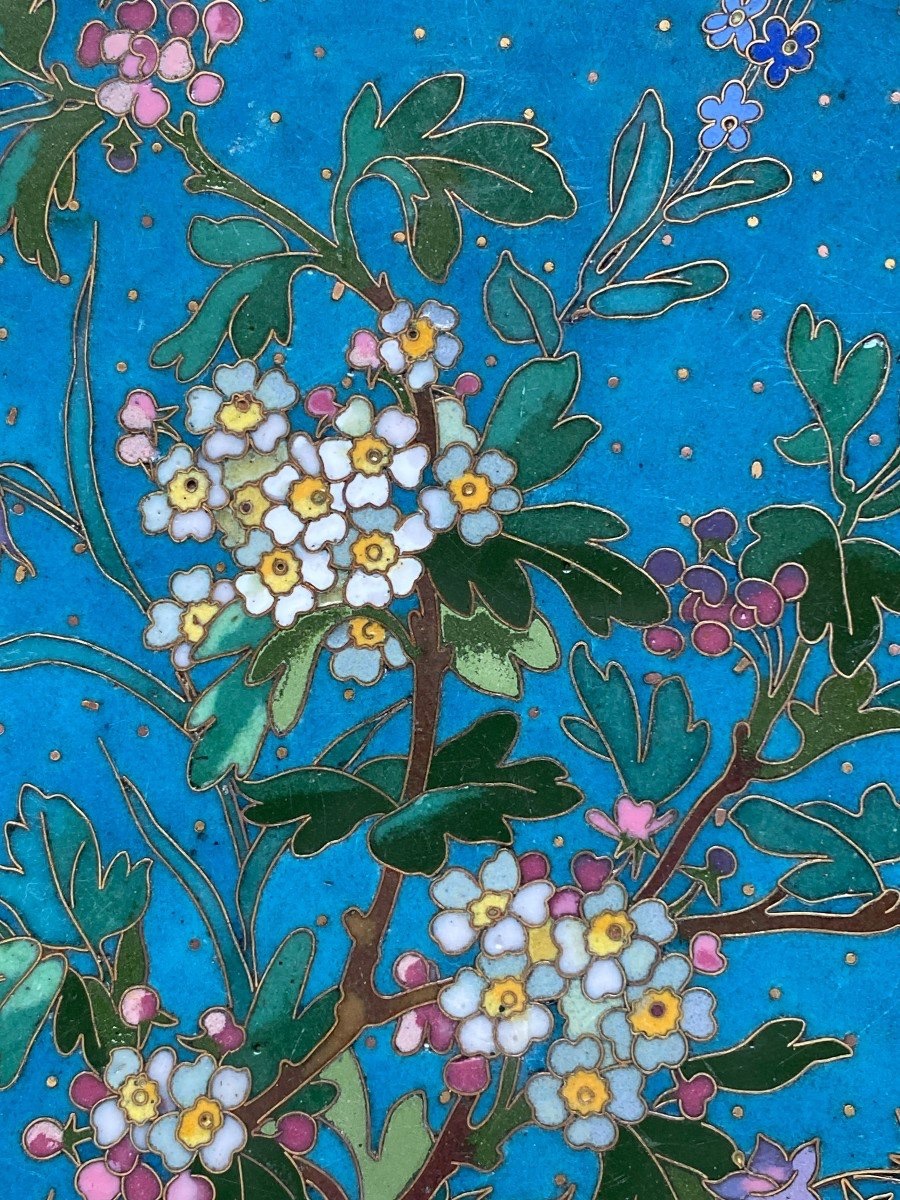
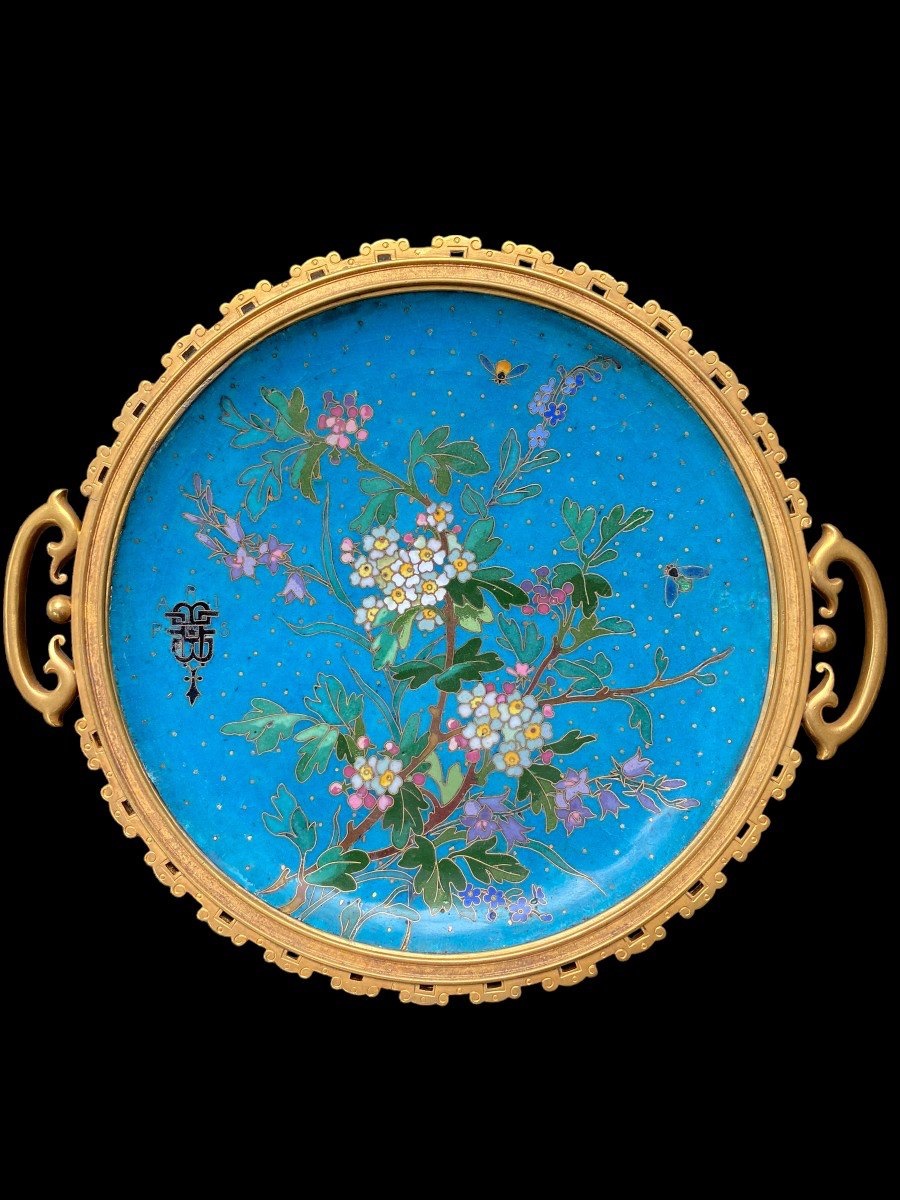
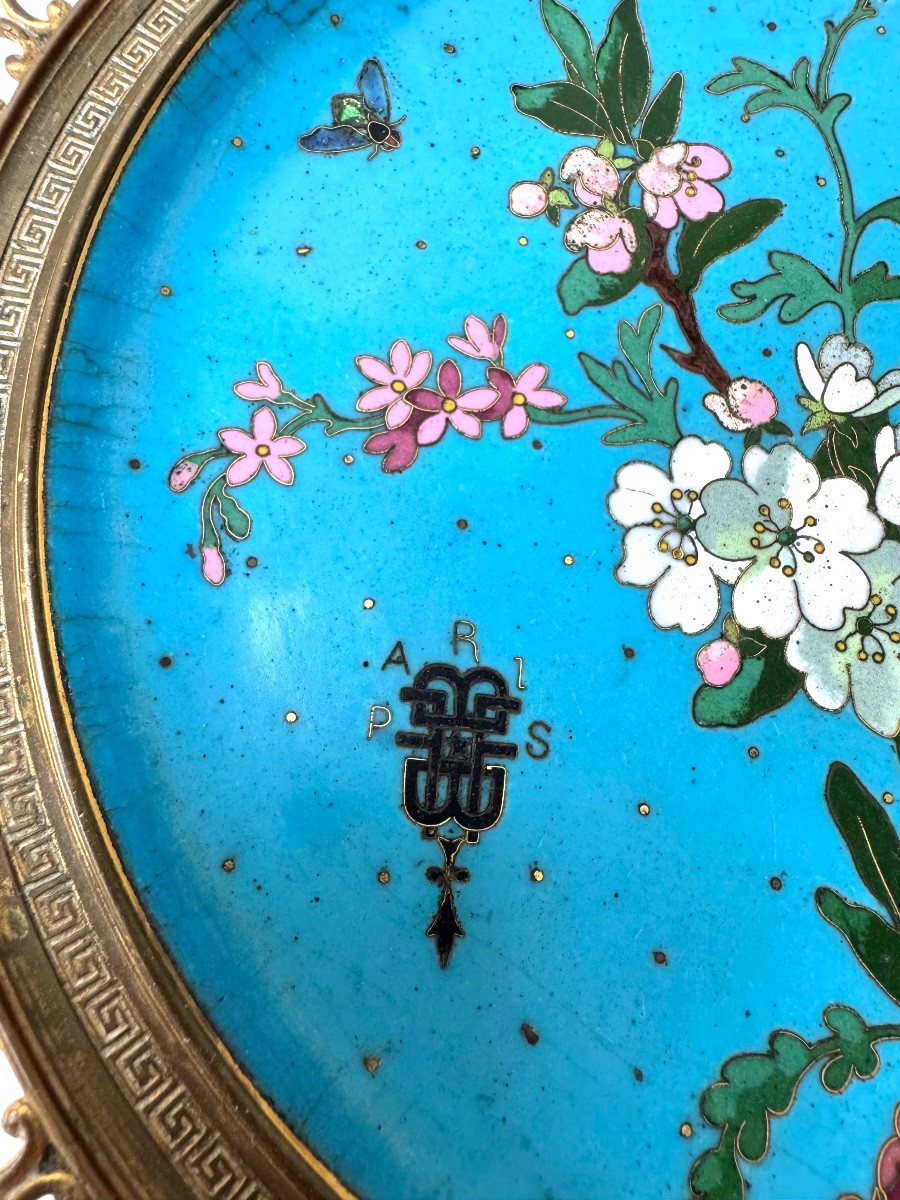
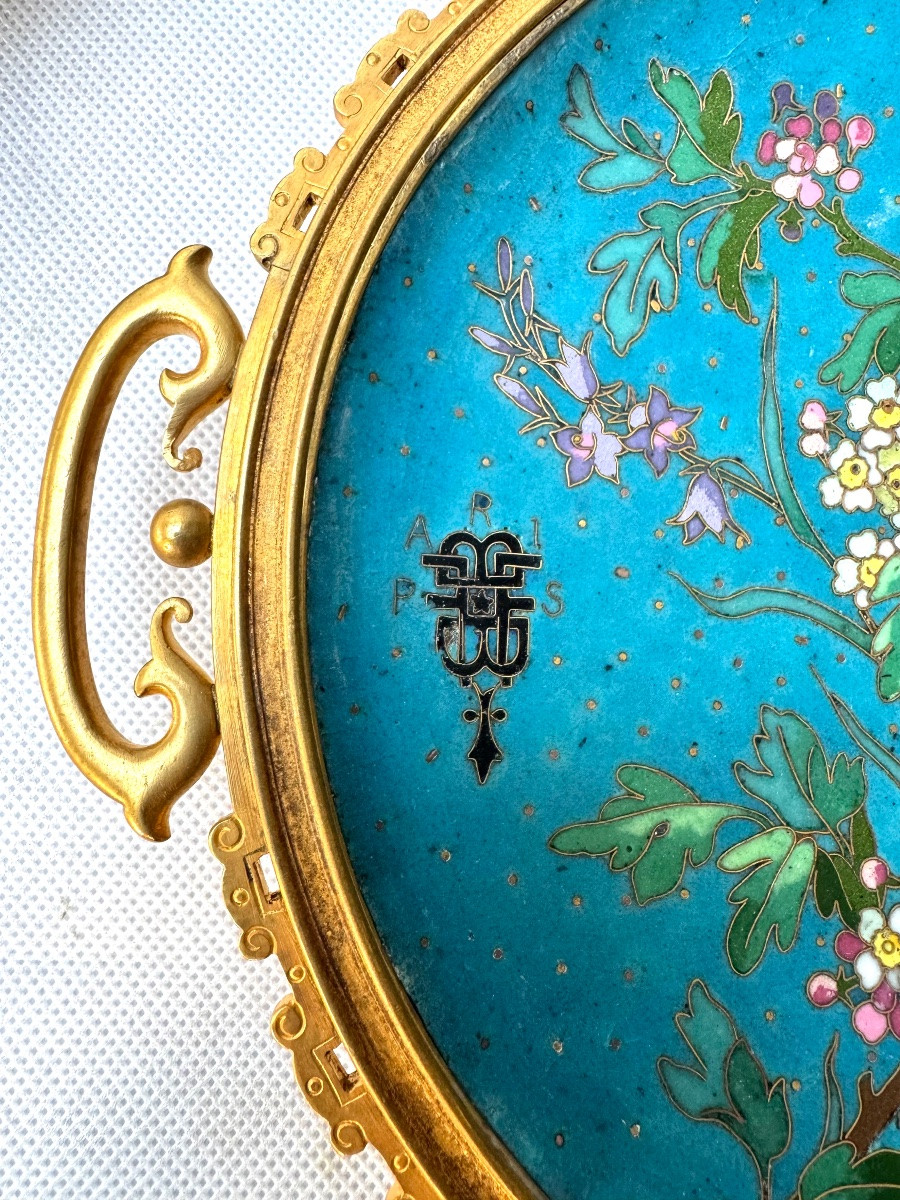
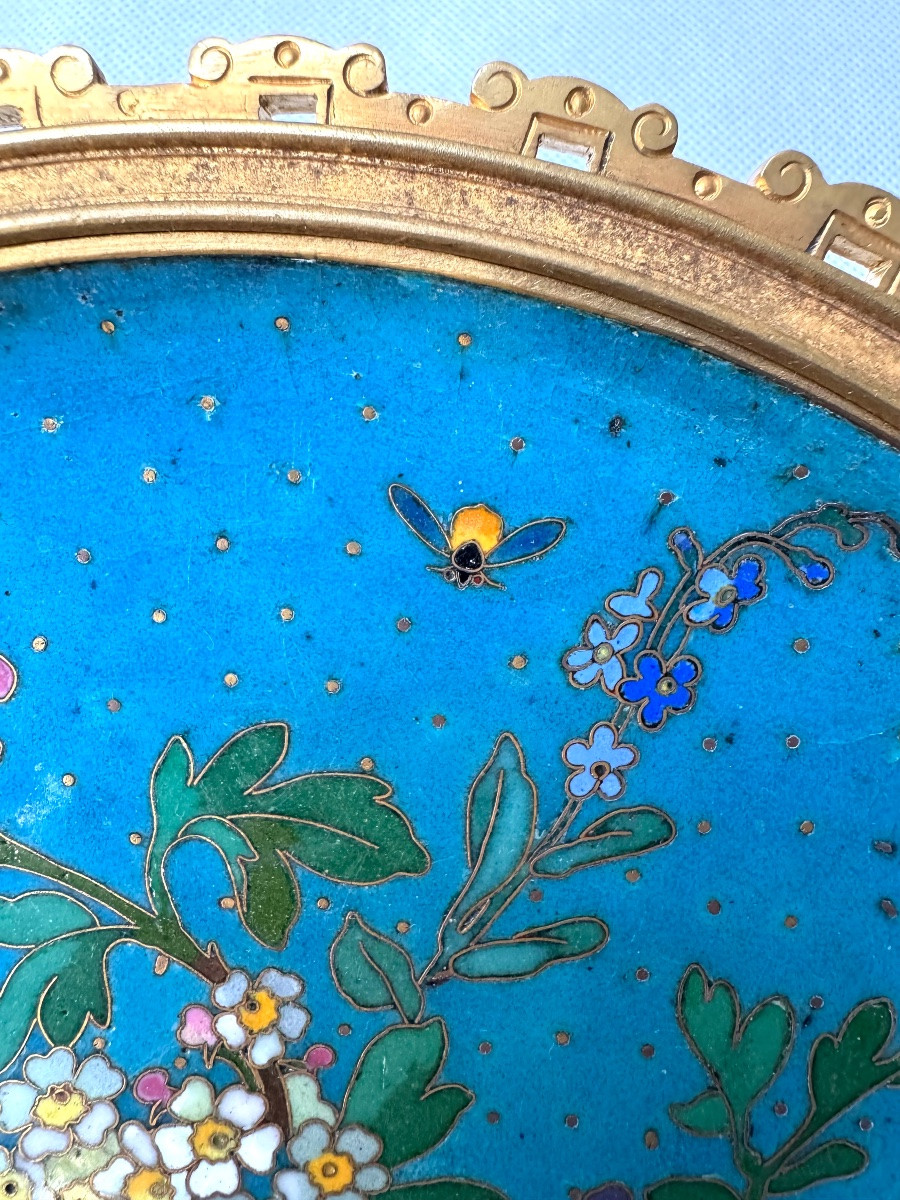
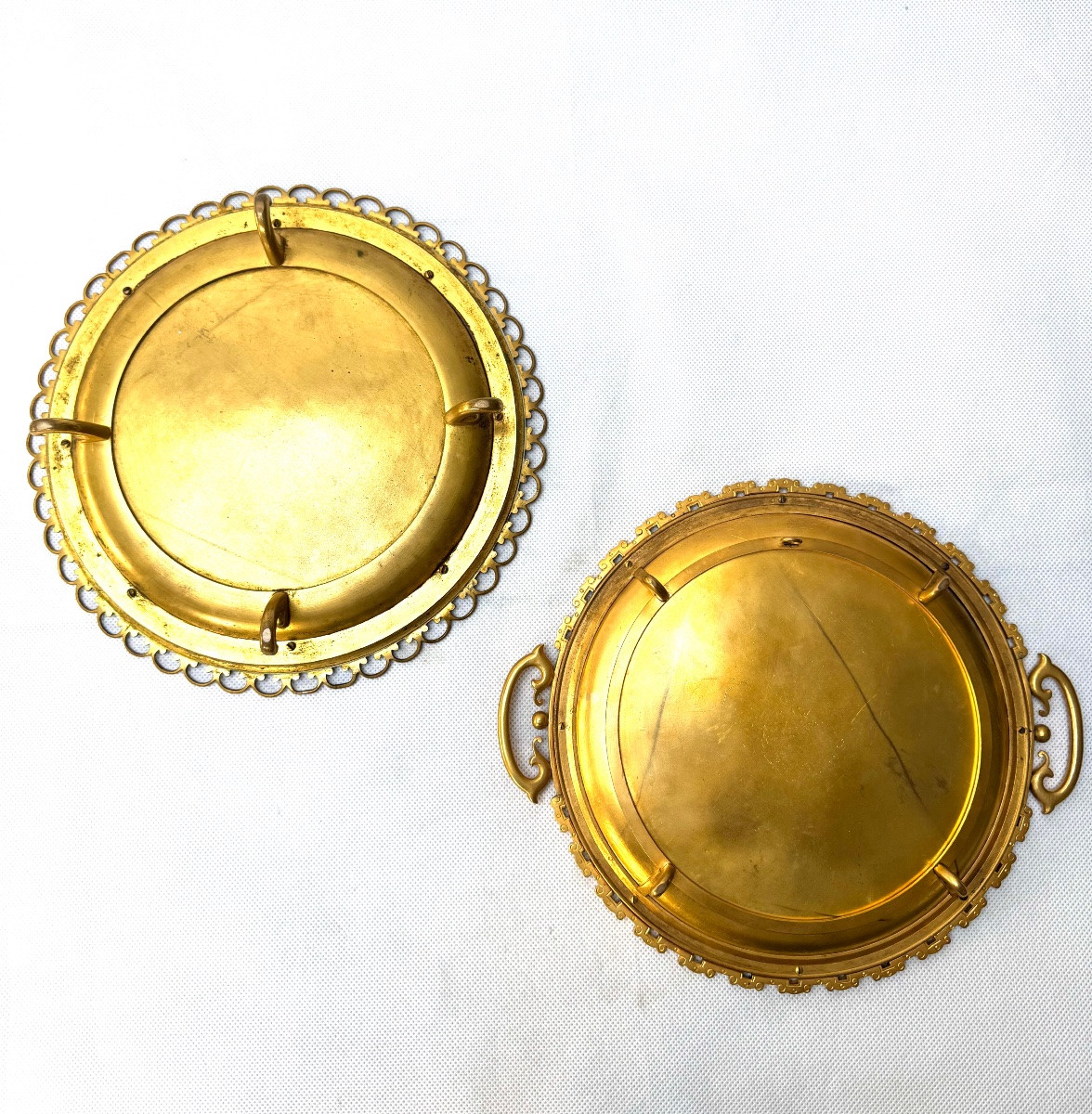
ANDRE-FERNAND THESMAR (1843-1912) AND FERDINAND BARBEDIENNE (1810-1892) two ornamental dishes in gilt bronze and cloisonné enamel, decorated with flowering branches with a bee and a butterfly, on a turquoise blue ground, with a beautiful rim and handles in gilt bronze in the Orientalist style. Both are monogrammed in the enamel with two intertwined Fs and two Bs and marked PARIS.
Diameter: 27cm and 25.5cm.
Ferdinand BARBEDIENNE (1810-1892) successfully introduced the enameling technique in the late 1850s. After some experimentation with independent enamelers, he collaborated with Alfred Serre for painted enamel and Fernand Thesmar for cloisonné enamel. Our plates are fine examples of the extensive production Barbedienne developed in the 1870s and 1880s, a time when luxury enameling on precious metals was experiencing a real boom. The floral and insect motifs appear on a series of similar pieces, combining classical forms with decorations inspired by Oriental taste, notably on a bowl in the Musée d'Orsay in Paris and another in the Walters Art Gallery in Baltimore.
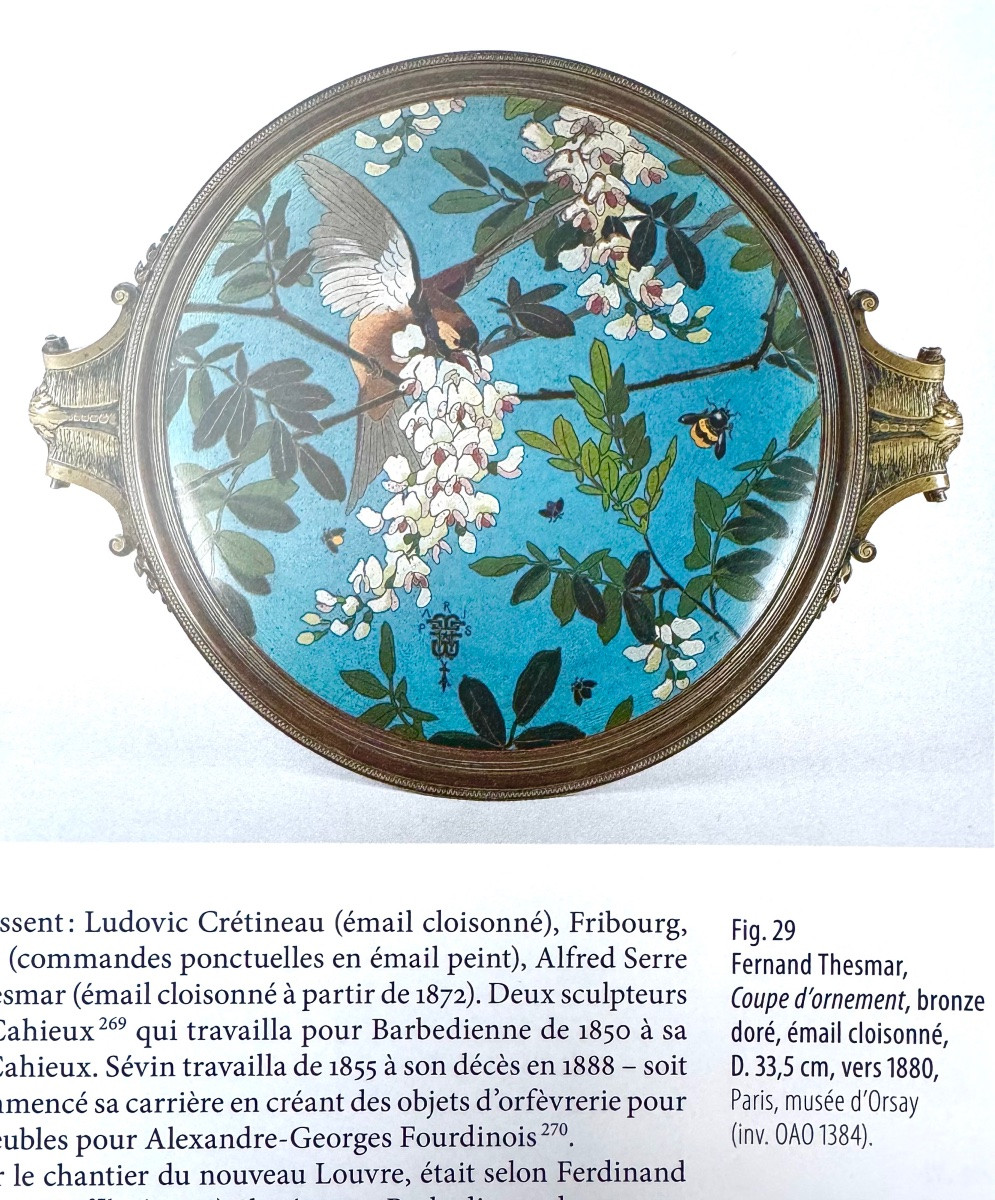
André-Fernand Thesmar (1843-1912) began his career as a flower painter, meticulously copying nature's realities, after training in industrial design at a textile printing factory in Mulhouse. His naturalist talent brought him to the attention of Ferdinand Barbedienne in 1872. He then succeeded Tard as head of enamel production at Barbedienne. The works of Thesmar and Barbedienne reflect their interest in the techniques and decorative compositions of Japanese enamel. At the Salon of 1875, Thesmar exhibited two large enamel-on-copper compositions, one of which depicted a wading bird with water lilies and bright yellow irises. See F. Rionnet "Les Bronzes Barbedienne, l'Oeuvre d'une dynastie de fondeurs (1834-1954)" page 39, fig 29 for a very similar ornamental dish in gilt bronze and cloisonné enamel in the Musée d'Orsay, Paris (Inv. OAO 1384).
Diameter: 27cm and 25.5cm.
Ferdinand BARBEDIENNE (1810-1892) successfully introduced the enameling technique in the late 1850s. After some experimentation with independent enamelers, he collaborated with Alfred Serre for painted enamel and Fernand Thesmar for cloisonné enamel. Our plates are fine examples of the extensive production Barbedienne developed in the 1870s and 1880s, a time when luxury enameling on precious metals was experiencing a real boom. The floral and insect motifs appear on a series of similar pieces, combining classical forms with decorations inspired by Oriental taste, notably on a bowl in the Musée d'Orsay in Paris and another in the Walters Art Gallery in Baltimore.
André-Fernand Thesmar (1843-1912) began his career as a flower painter, meticulously copying nature's realities, after training in industrial design at a textile printing factory in Mulhouse. His naturalist talent brought him to the attention of Ferdinand Barbedienne in 1872. He then succeeded Tard as head of enamel production at Barbedienne. The works of Thesmar and Barbedienne reflect their interest in the techniques and decorative compositions of Japanese enamel. At the Salon of 1875, Thesmar exhibited two large enamel-on-copper compositions, one of which depicted a wading bird with water lilies and bright yellow irises. See F. Rionnet "Les Bronzes Barbedienne, l'Oeuvre d'une dynastie de fondeurs (1834-1954)" page 39, fig 29 for a very similar ornamental dish in gilt bronze and cloisonné enamel in the Musée d'Orsay, Paris (Inv. OAO 1384).
6 000 €
Period: 19th century
Style: Other Style
Condition: Excellent condition
Material: Bronze
Diameter: 27 et 25.5cm
Reference (ID): 1718283
Availability: In stock
Print