THIS OBJECT WAS SOLD
Allegory Of The Four Elements (?), Small Enhanced Engraving, Under Antique Glass, 18th Century
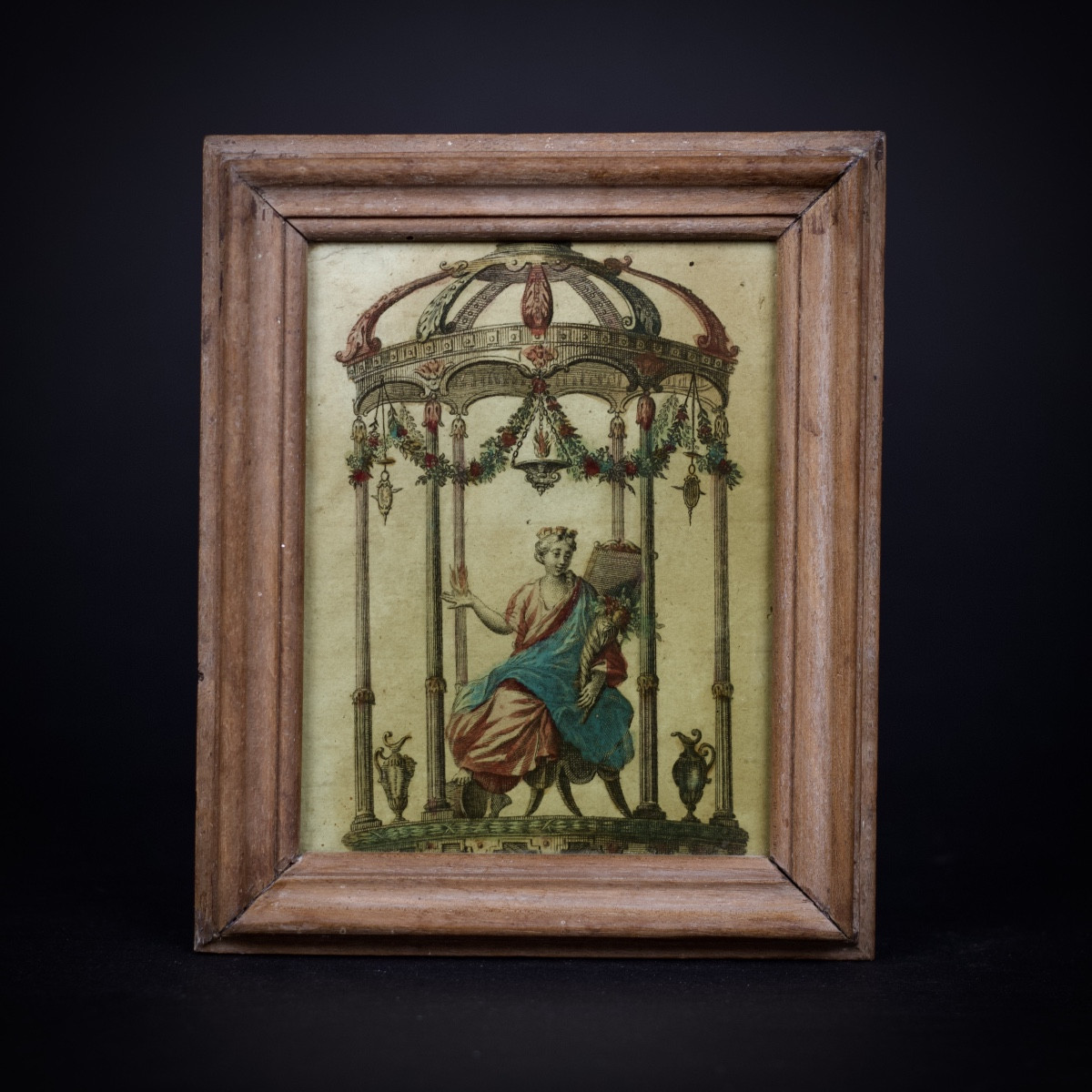


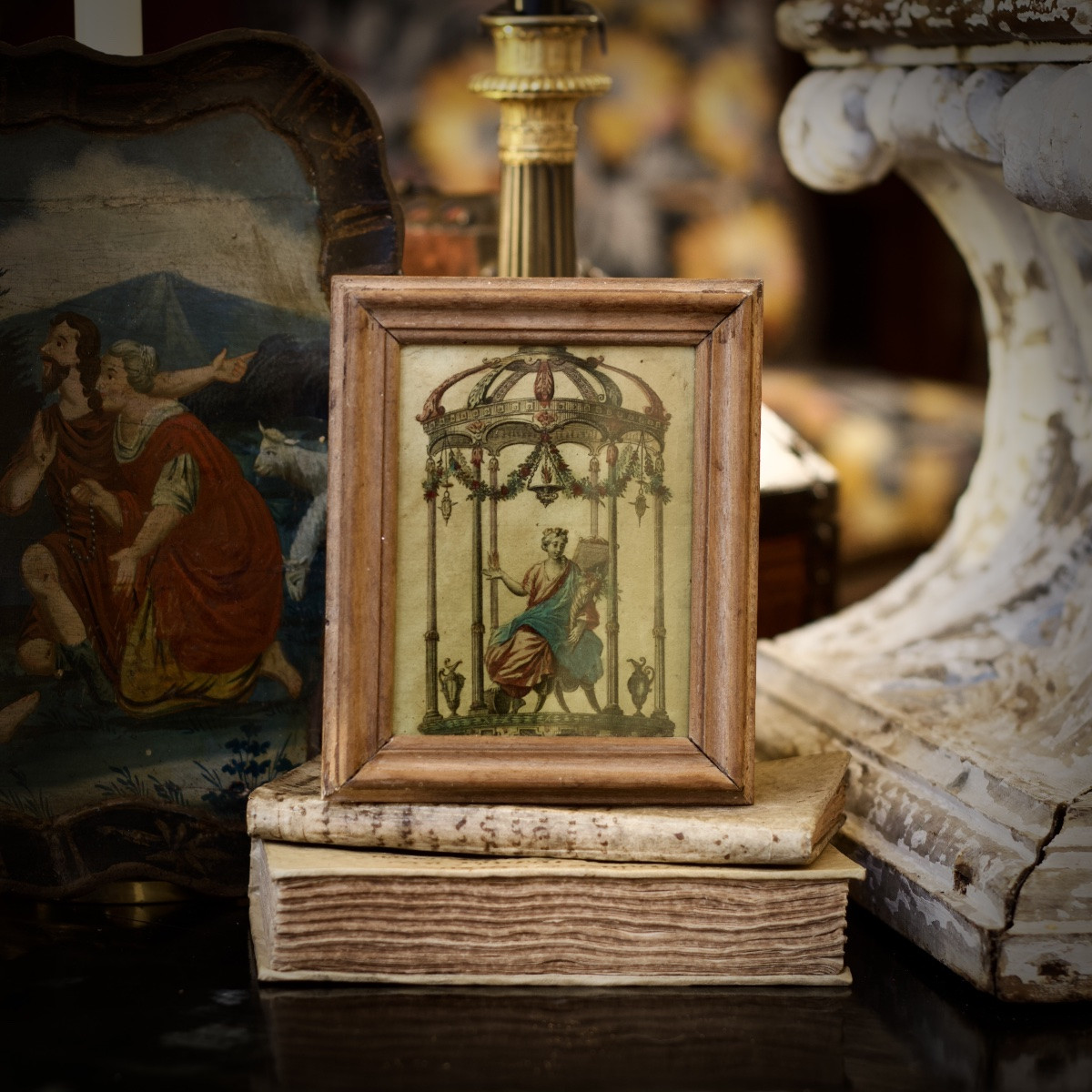
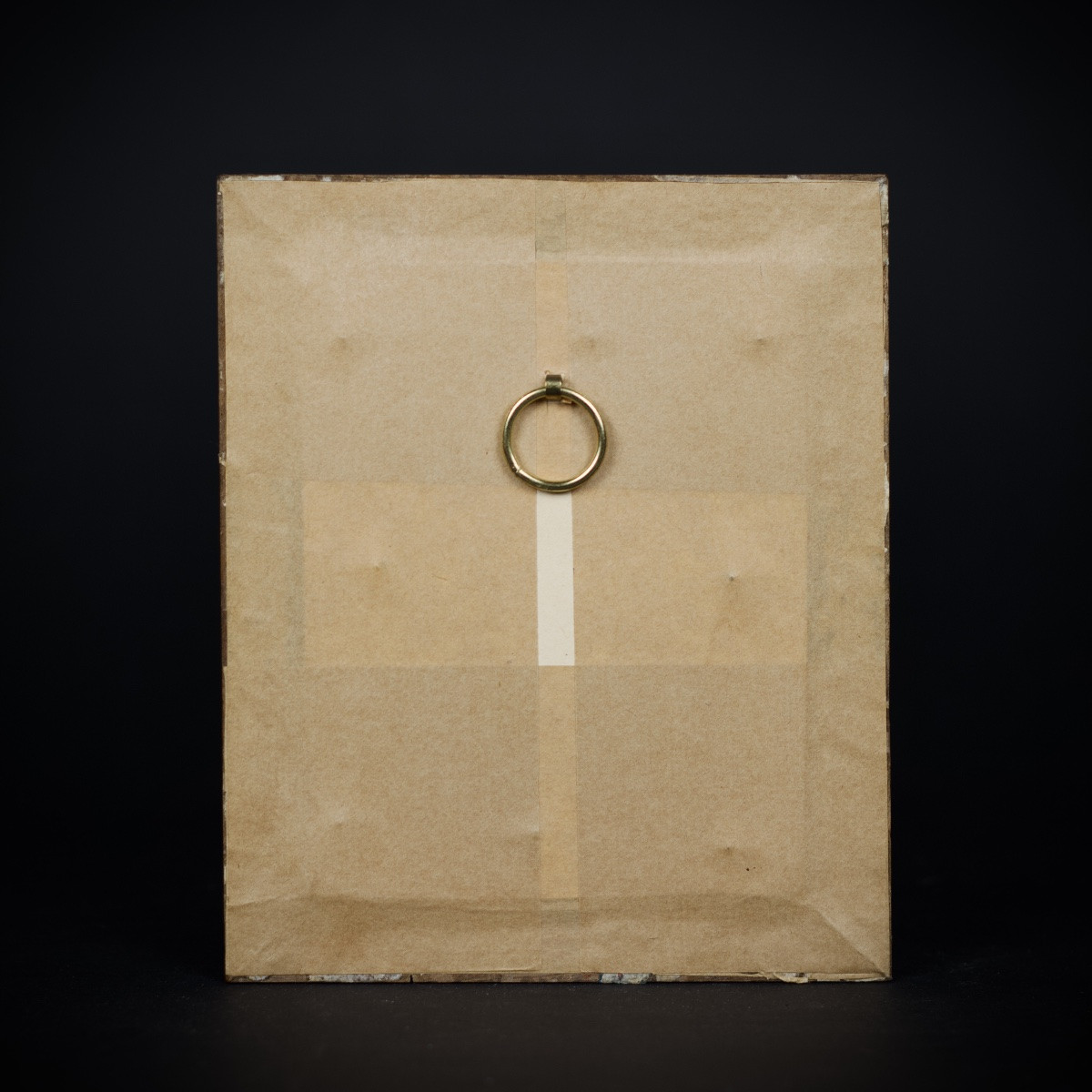

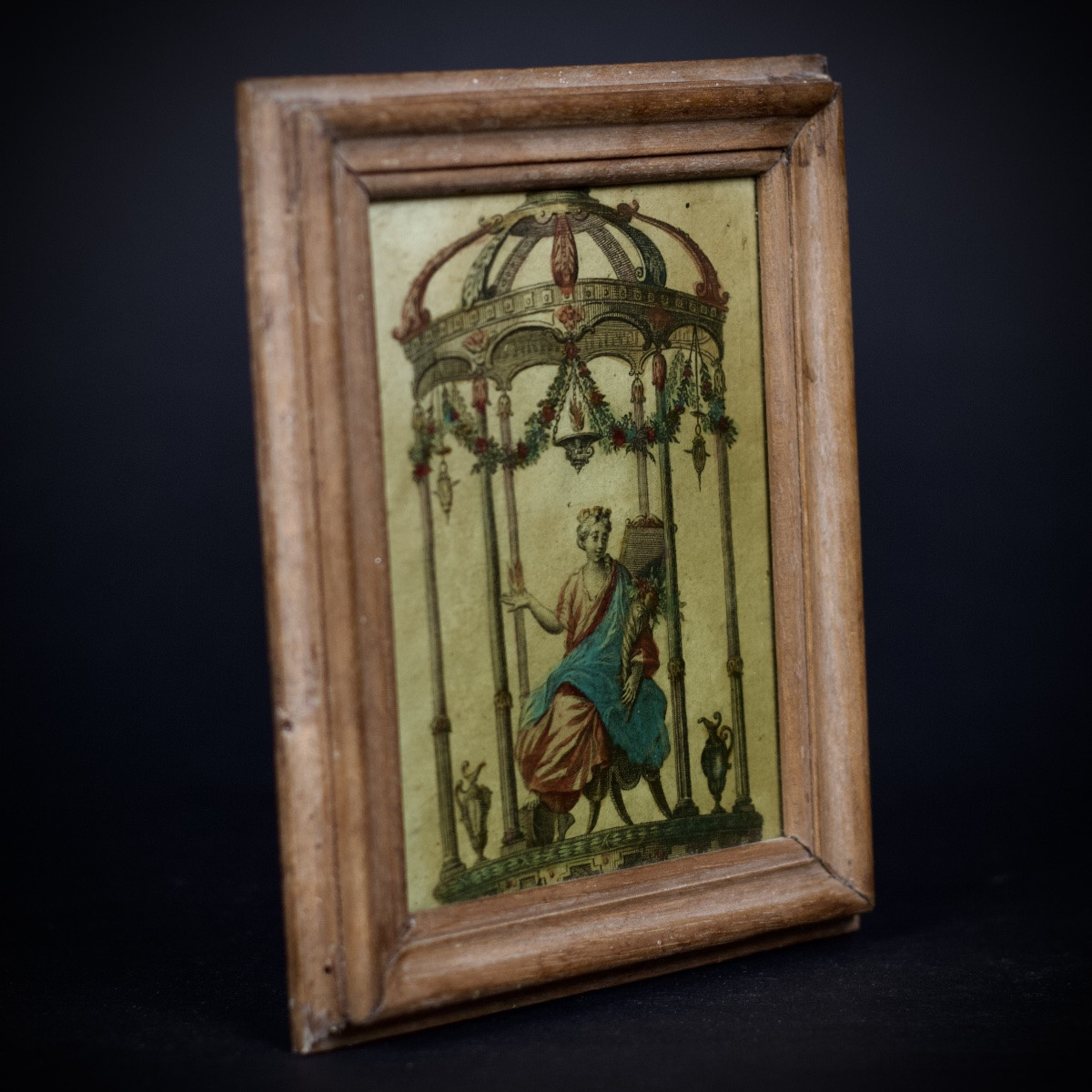


A small, hand-colored engraving depicts a female allegory at the center of a domed kiosk with slender columns, reminiscent of grotesque decorations. Identifying the subject is quite difficult, and consulting ancient iconographic treatises (such as Cesare Ripa's Iconologia and Alciati's Emblems!) has not been conclusive. What can be said is that the female allegory holds a cornucopia in her left hand, an element traditionally associated since antiquity with harvests and the fruits of the earth. She wears a crown of walls, a traditional attribute of communal personifications—and, beyond a precise identification, with urbanity as a civilizational phenomenon and with rootedness in the land. These initial clues thus suggest an identification with both the Urbs (the city of Rome) and the element of Earth. The hand-held fire, present in the suspended braziers, and the water in the ewers on either side of the figure, complete this "elemental" allegory. As for the air, always more subtle in its representation, it could be depicted "in negative" by the presence of the garlands and small pendants, constantly on the verge of flickering, and by the highly openwork kiosk allowing its circulation. It is also possible, and this hypothesis is not mutually exclusive, that this is an allegory linked to civilization and urbanity, both flourishing with the help of these favorable elements: healthy air, nourishing water, fertile earth, and constructive fire. A very charming object in the purest 18th-century style, in a natural molded wood frame, under an old, irregular, and bubbly pane of glass. The paper is in good condition, and the colors are fresh.
Explore similar pieces and discover your ideal find:
Prints (Relief, Intaglio)