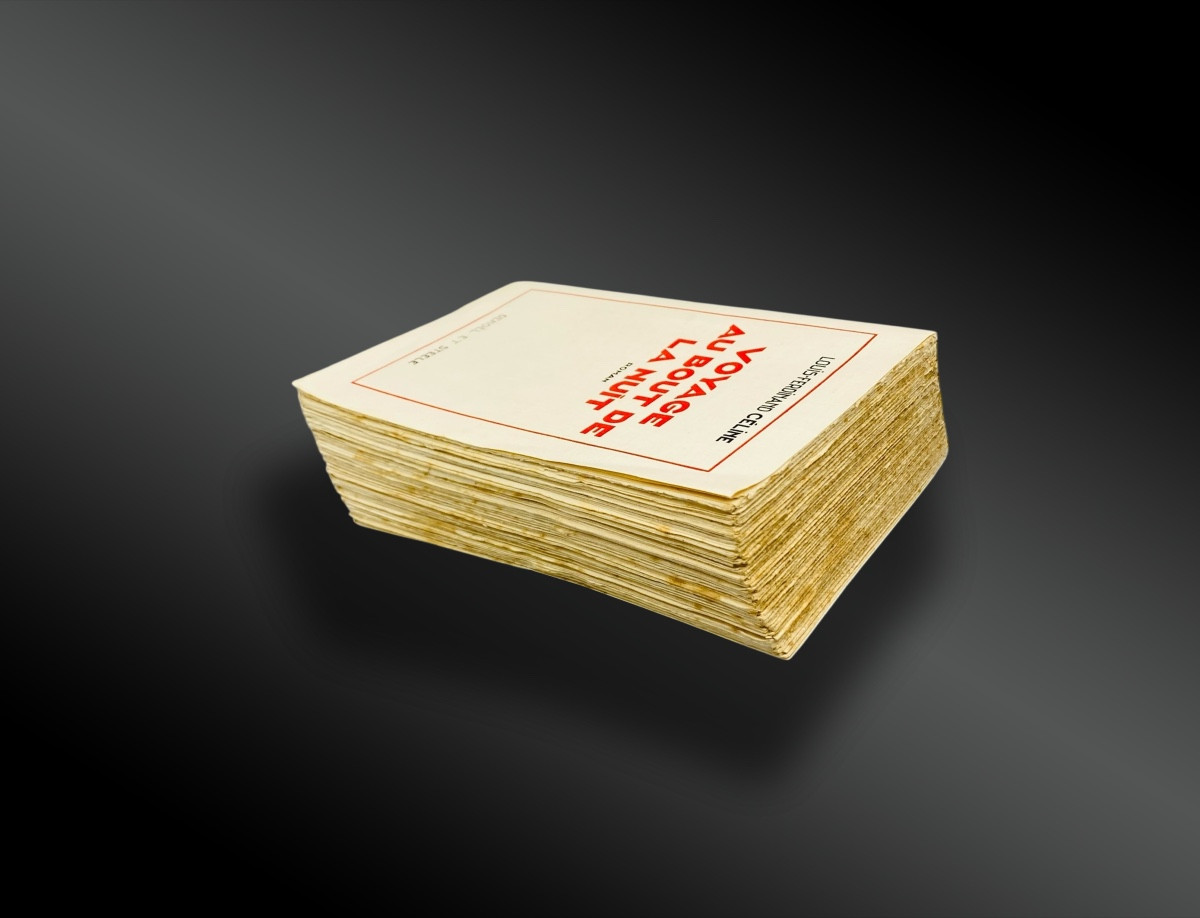


Céline Louis-ferdinand Journey To The End Of The Night. Original Edition On Alfa Paper.
CÉLINE Louis-Ferdinand
Journey to the End of the Night. Novel.
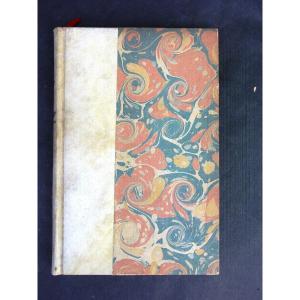
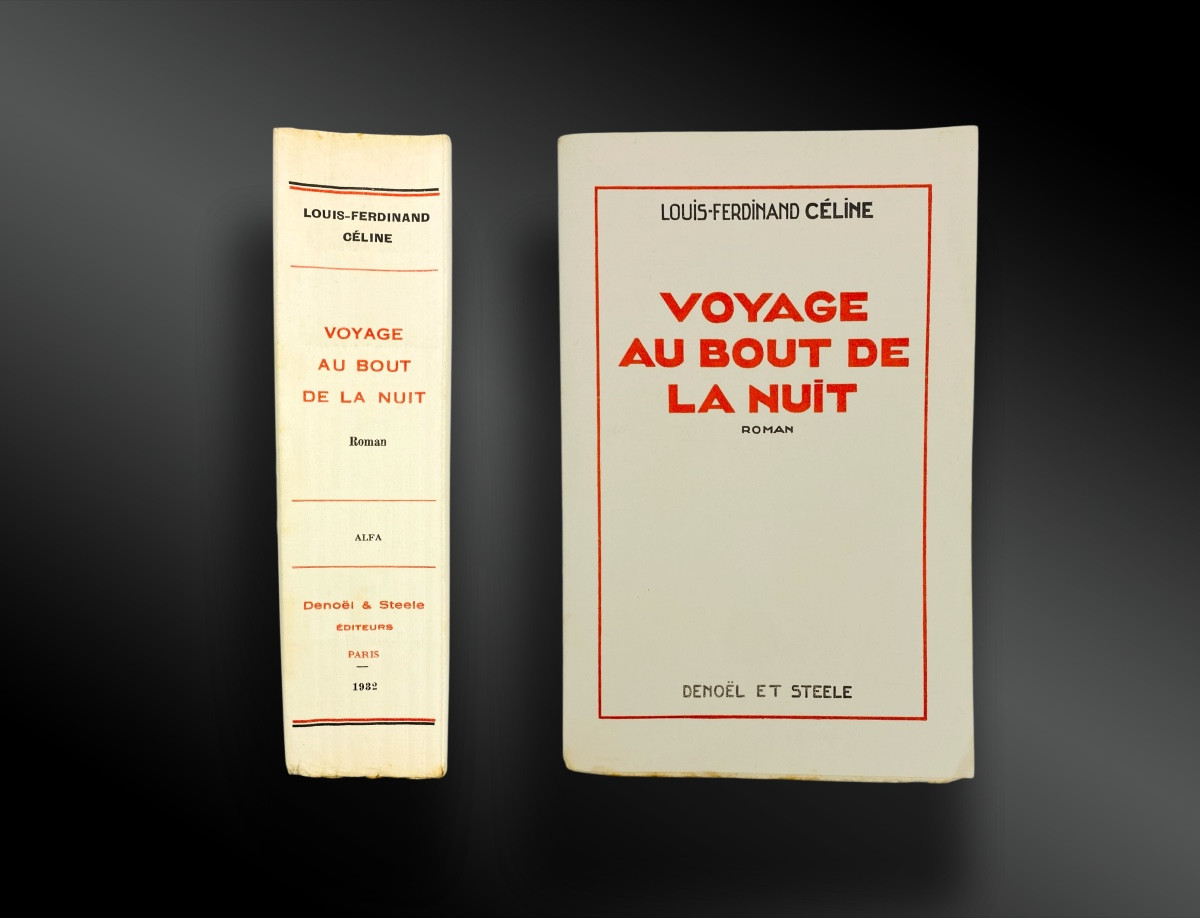
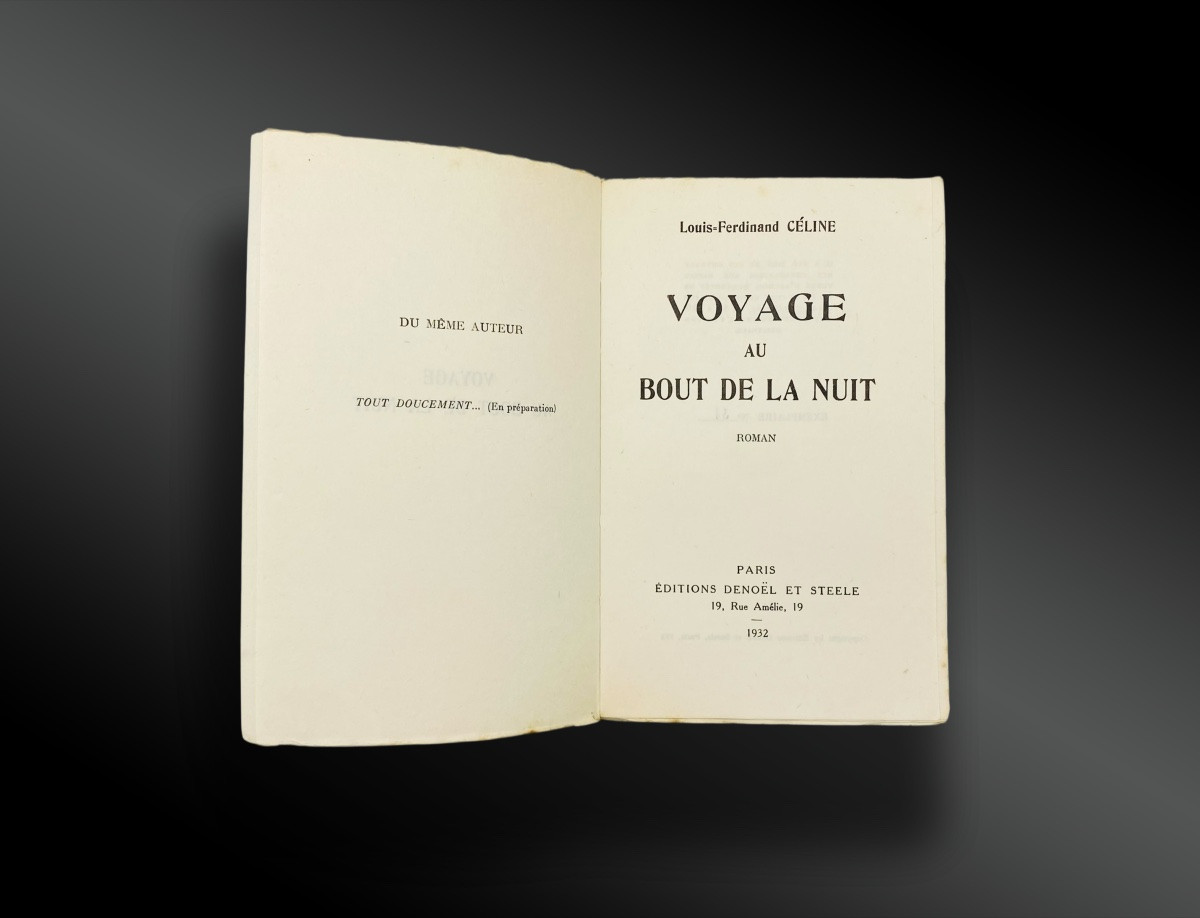
Paris, Denoël et Steele, 1932. In-8° paperback, printed cover.
FIRST EDITION.
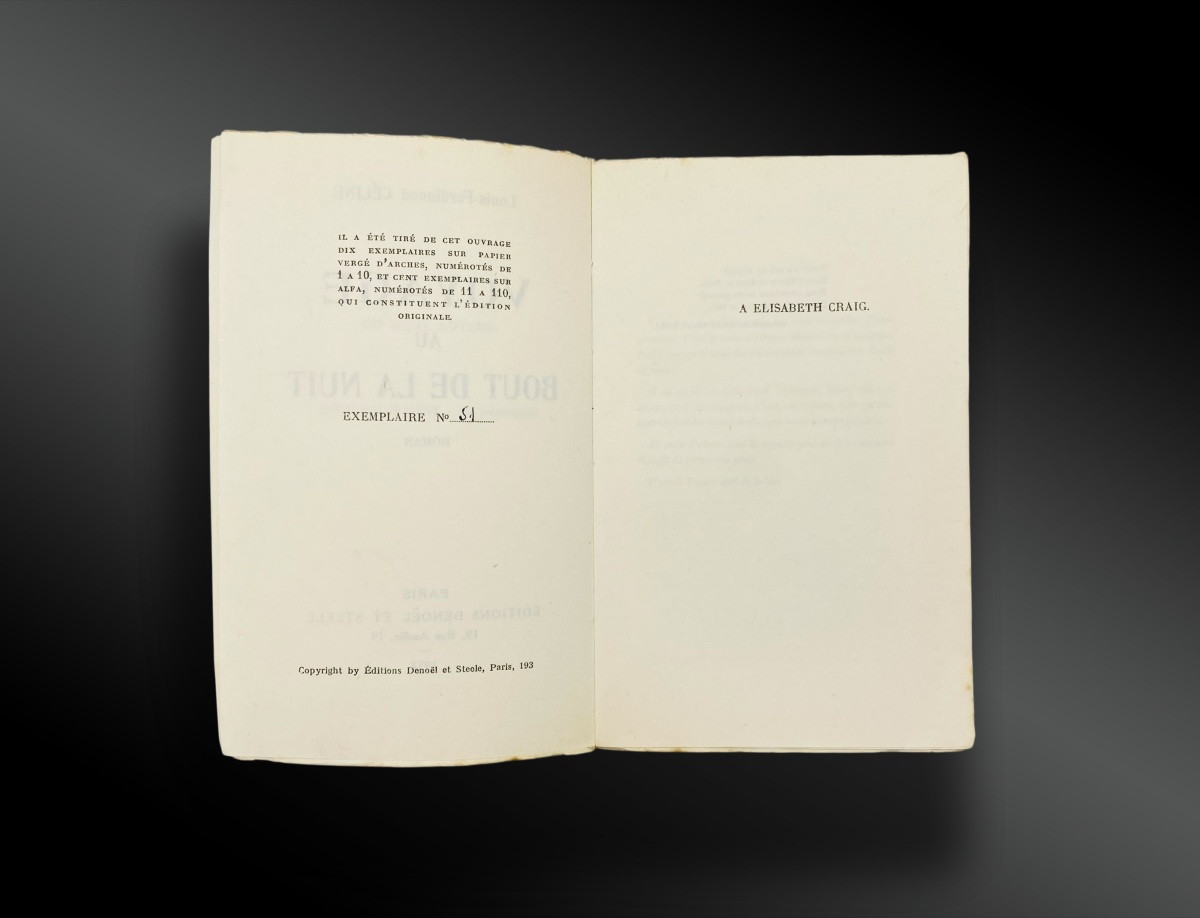
Print run of 110 numbered copies, this one being number 51 of 100 on Alfa paper (after 10 on Arches laid paper).
Journey to the End of the Night, Louis-Ferdinand Céline's best-known novel, caused a sensation when it was published, praised by critics on both the right and the left. In this novel, Céline made striking use of popular language and slang.
A pessimistic work in the picaresque tradition, it expresses both the alienation of the narrator and “anti-hero” Bardamu, as well as his indignation at the social and economic barriers that imprison him. The novel explores with increasing darkness the divisions between the “haves” and the “have-nots,” whether they be officers and soldiers during World War I, colonists and natives in Africa, or the rich and poor in the New World.
This book narrowly missed out on the Prix Goncourt but won the Prix Renaudot in 1932.
References: Dauphin & Fouché, 32A1 – En français dans le texte, no. 366.
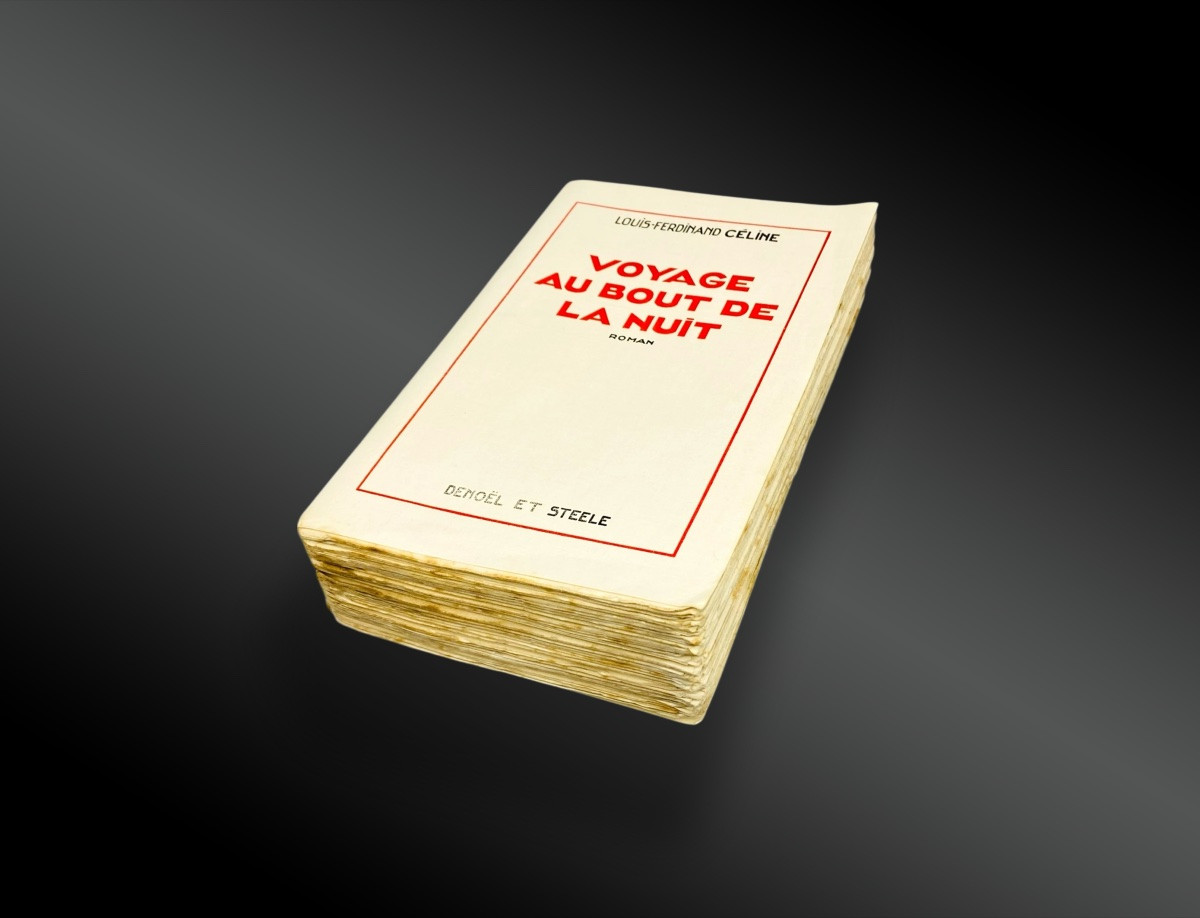
Rare paperback copy on Alfa. In very good condition, despite some foxing on the edges.
Ref.: 6889
Text and photos © FCP CORIDON
Journey to the End of the Night. Novel.
Paris, Denoël et Steele, 1932. In-8° paperback, printed cover.
FIRST EDITION.
Print run of 110 numbered copies, this one being number 51 of 100 on Alfa paper (after 10 on Arches laid paper).
Journey to the End of the Night, Louis-Ferdinand Céline's best-known novel, caused a sensation when it was published, praised by critics on both the right and the left. In this novel, Céline made striking use of popular language and slang.
A pessimistic work in the picaresque tradition, it expresses both the alienation of the narrator and “anti-hero” Bardamu, as well as his indignation at the social and economic barriers that imprison him. The novel explores with increasing darkness the divisions between the “haves” and the “have-nots,” whether they be officers and soldiers during World War I, colonists and natives in Africa, or the rich and poor in the New World.
This book narrowly missed out on the Prix Goncourt but won the Prix Renaudot in 1932.
References: Dauphin & Fouché, 32A1 – En français dans le texte, no. 366.
Rare paperback copy on Alfa. In very good condition, despite some foxing on the edges.
Ref.: 6889
Text and photos © FCP CORIDON
19 600 €
Period: 20th century
Style: Other Style
Condition: Good condition
Material: Other
Reference (ID): 1717263
Availability: In stock
Print