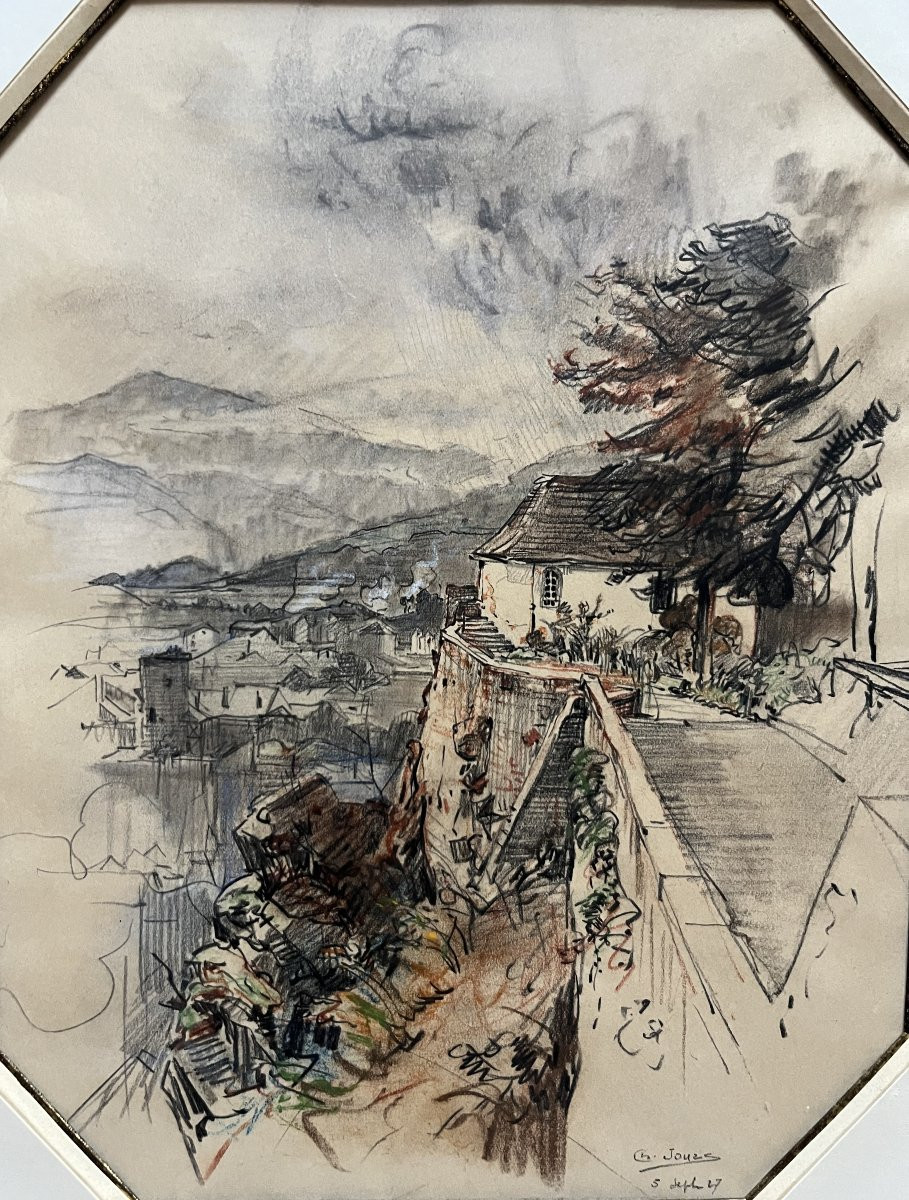


Charles Jouas (1866-1942) View Of A City From The Heights, 1927, Signed And Dated
Artist: Charles Jouas (1866-1942)
Charles Jouas (1866-1942)
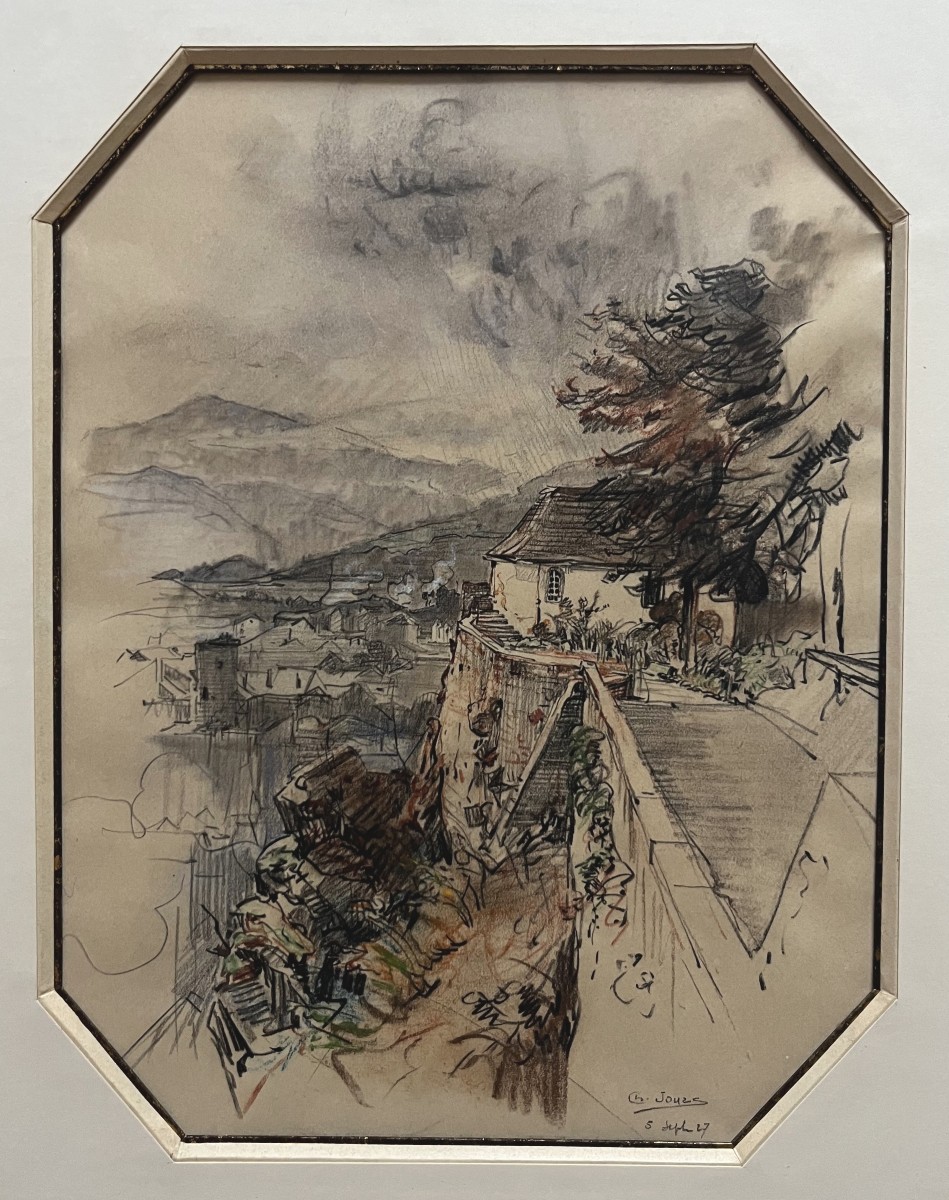
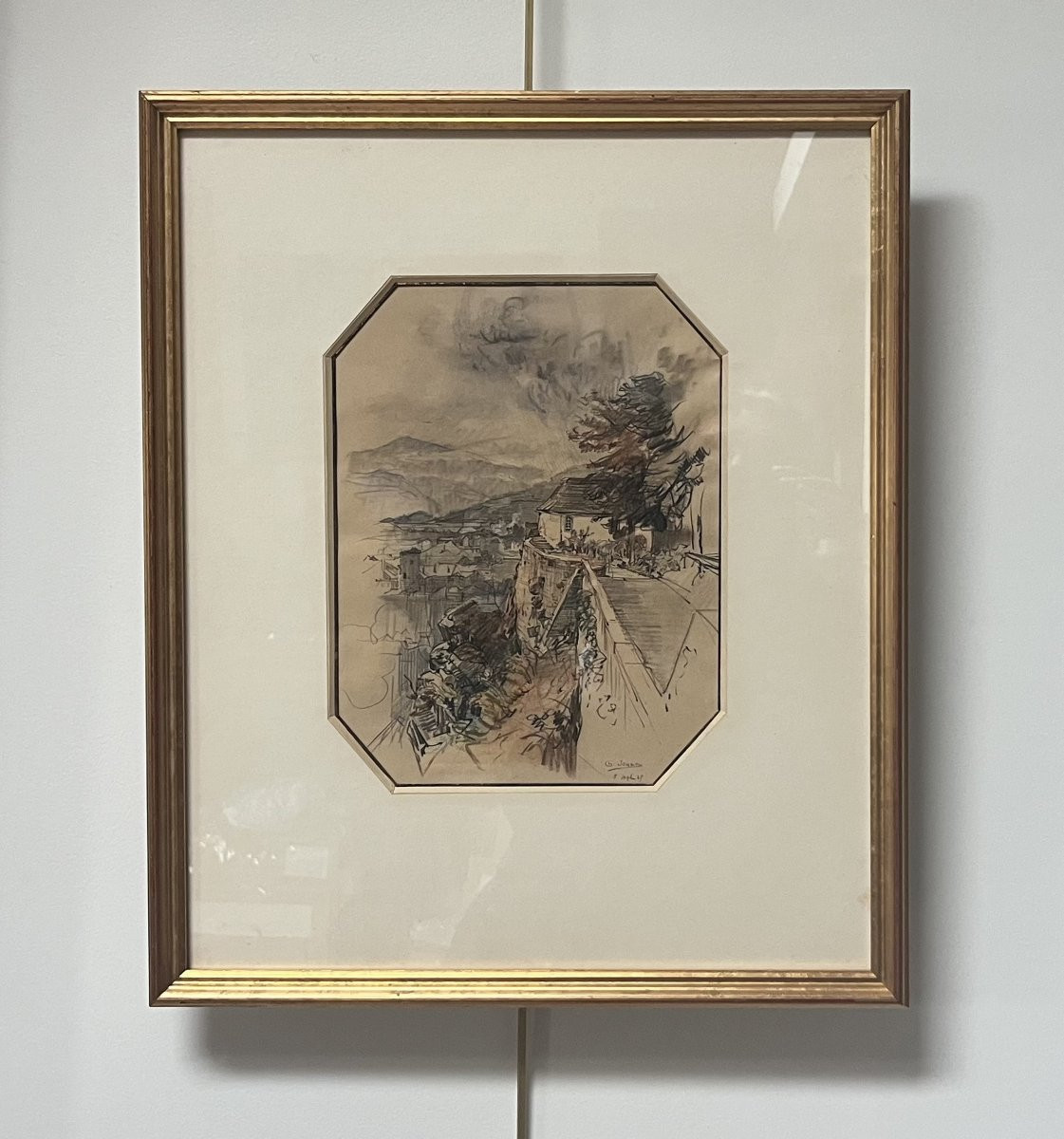
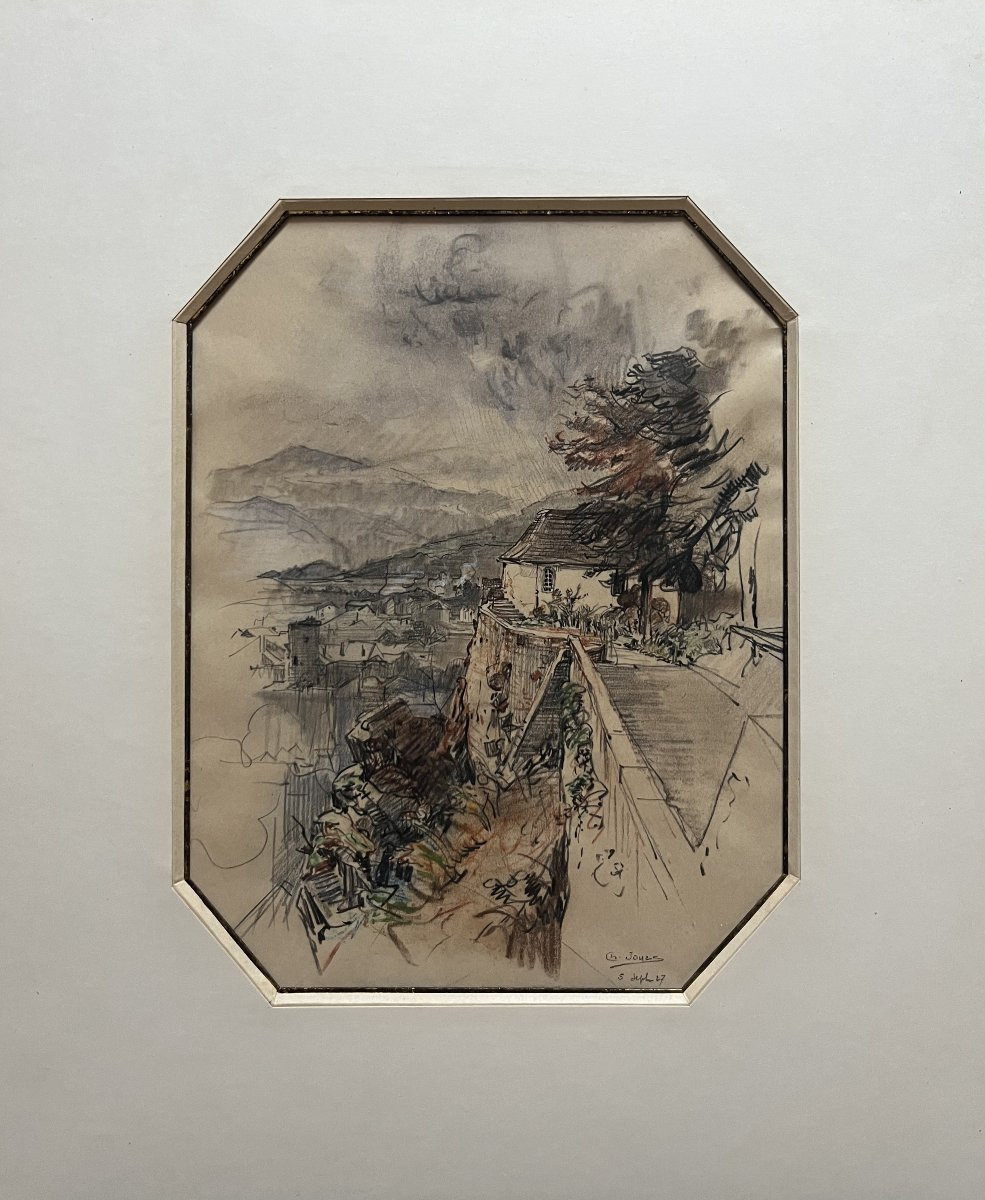
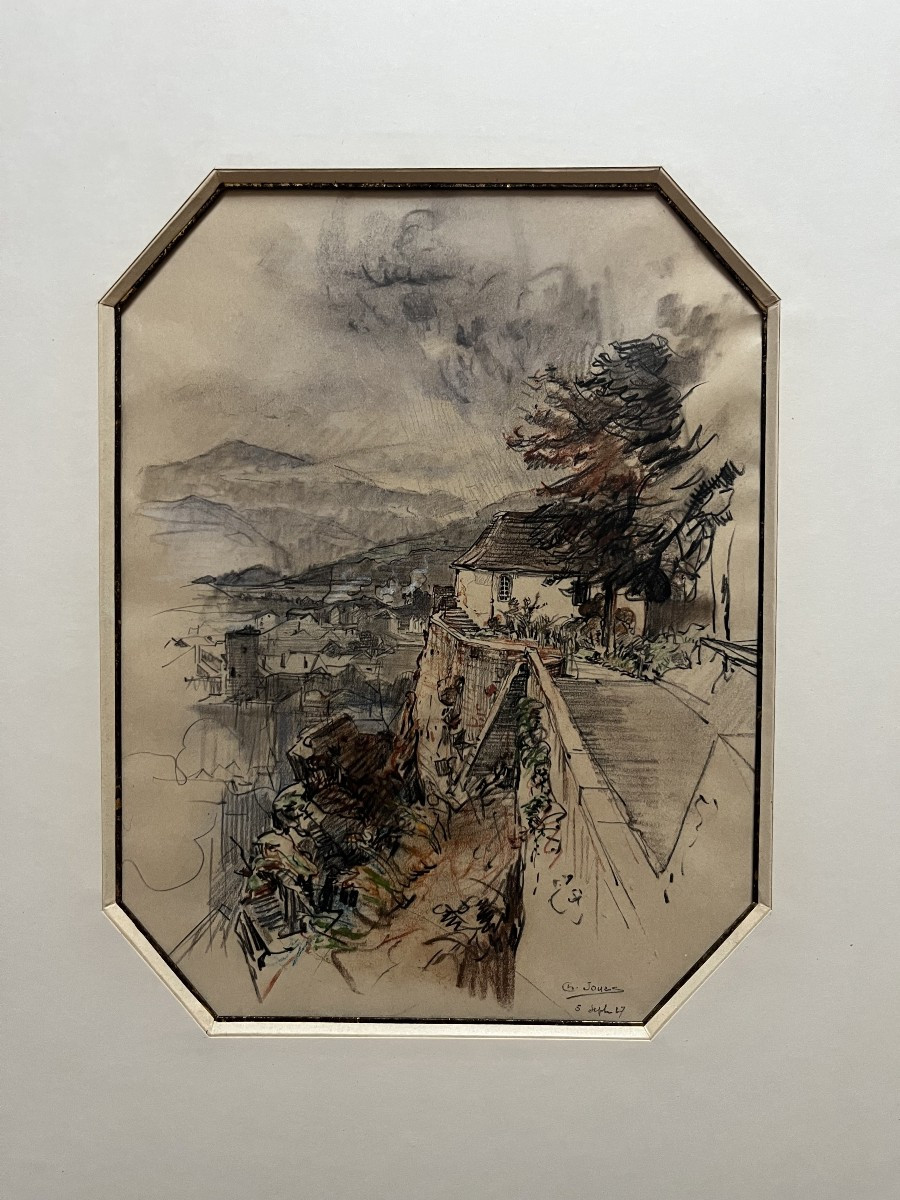
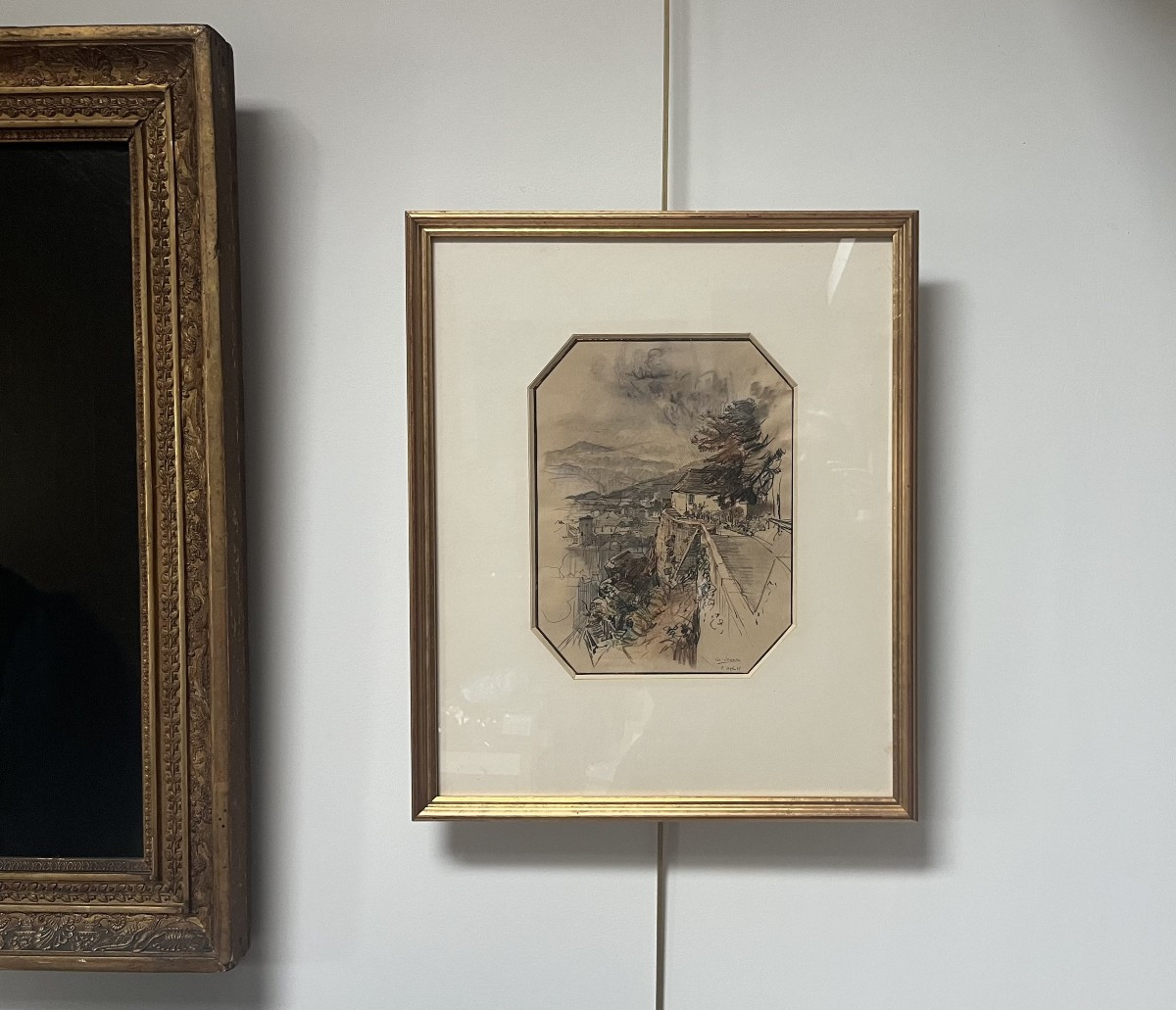
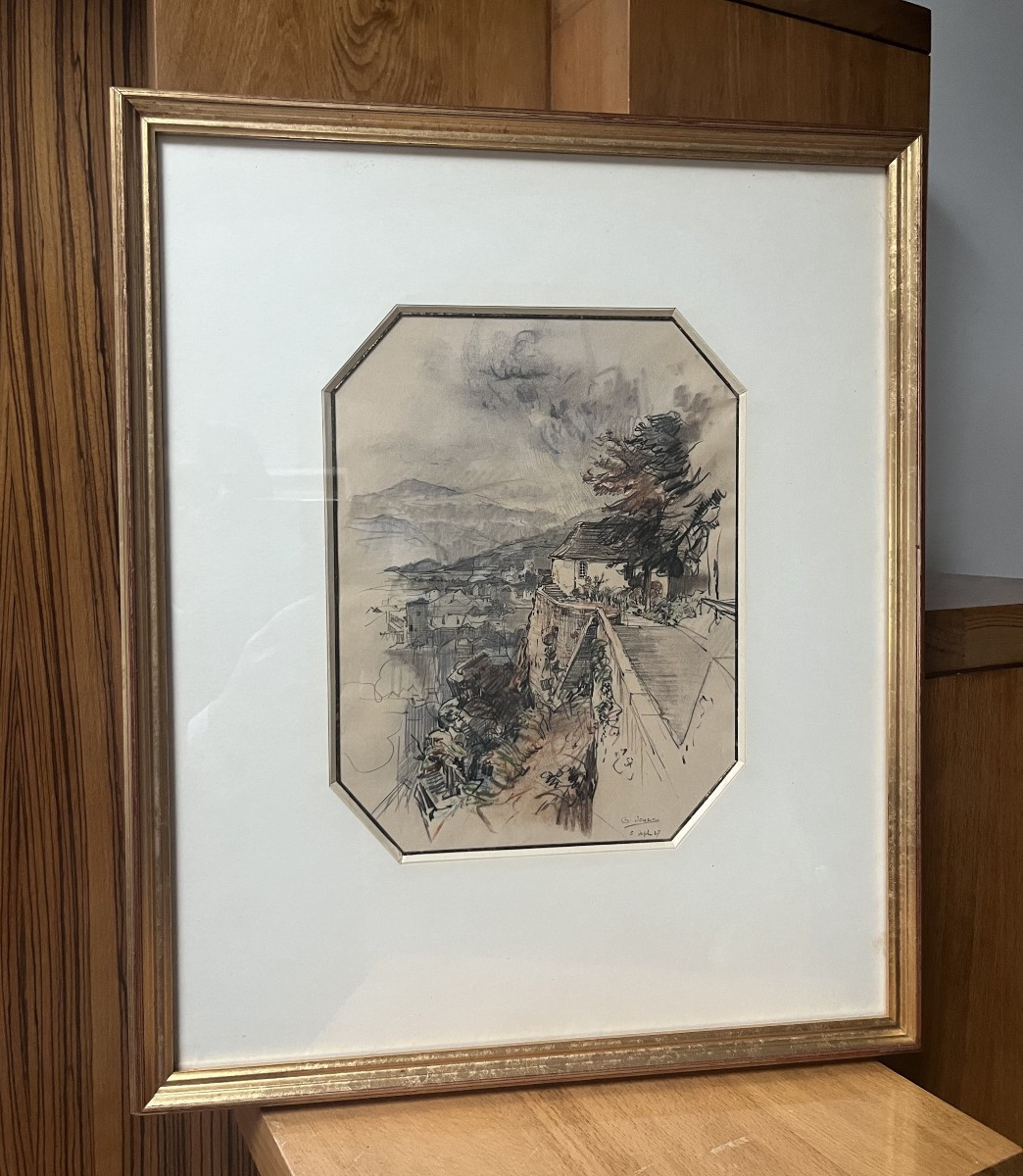
View of a city from above, 1927,
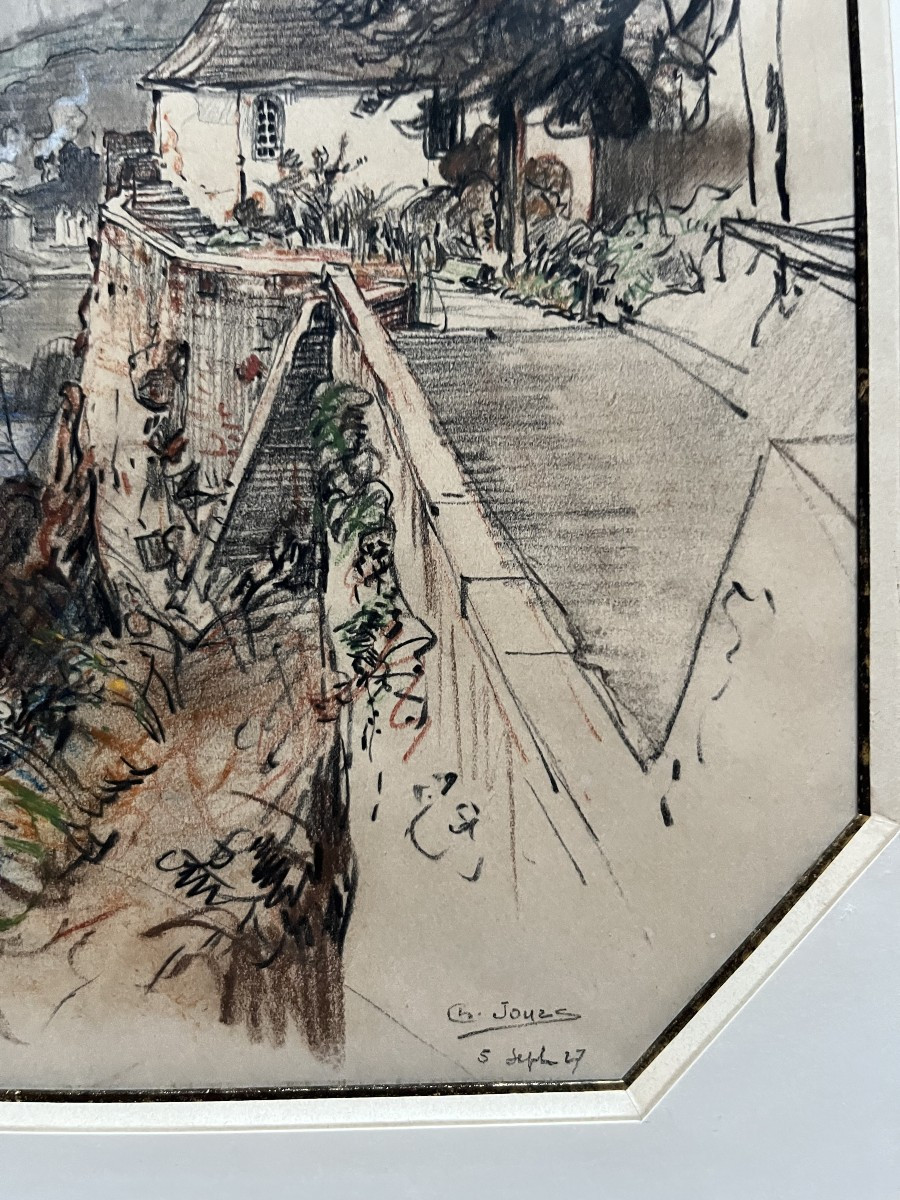
Signed and dated "5 sepbre 27" on the lower right
Color pencils and heightenings of white gouache on paper
26.5 x 20 cm (irregular shape)
Framed : 47 x 40.5 cm
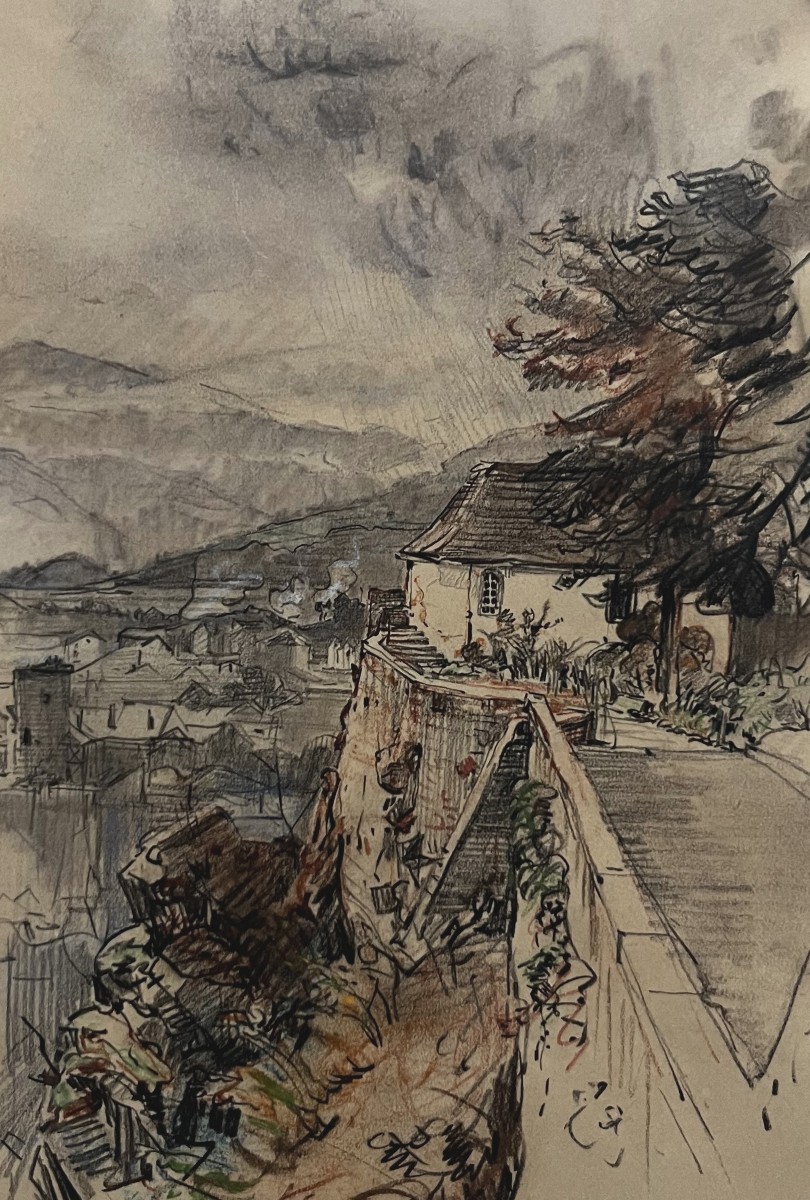
This is probably a view of the town of Lourdes in the Pyrenees from the heights above it. Charles Jouas worked there and maintained close ties with the town.
What is remarkable here is the charm of Jouas's unique style, particularly his interest in architecture. As was often the case, he used coloured pencils — a technique he favoured and which suited his dry, energetic style best.
Charles Jouas was born in the Faubourg Saint-Antoine district of Paris and was drawn to drawing from an early age. After his father's death when he was still very young, he had to decide for himself what direction to take in life. After teaching himself, he attended several studios, including those of Georges Clairin, a pupil of Isidore Pils, and Henri Regnault, where he learnt to paint. He then worked on opera sets with Auguste Rubé and Chaperon. He participated in decorating the theatre in Tours. He quickly realised that superficial virtuosity, or 'flashiness', could hinder progress towards quality. He turned increasingly to drawing, seeking ever greater rigour. In the 1890s, he befriended the Symbolist painter Louise Desbordes (also known as Louise-Alexandra Desbordes-Jouas), whom he married in 1906. From 1894 onwards, they had a studio at 3 bis Cour de Rohan in the 6th arrondissement of Paris.
In 1896, he had just finished illustrating Pierre Loti's Le Maroc with watercolours when he encountered the most important person in his life: Henri Beraldi, a bibliophile and publisher. Beraldi immediately recognised the young man's talent and his potential. First, he commissioned him to produce a series of drawings of Paris, and then to illustrate Émile Goudeau's Poèmes parisiens. A long collaboration then began between them, with the engraver Henri Paillard engraving Jouas's drawings.
Jouas also illustrated works for bibliophiles, including La Cathédrale by Joris-Karl Huysmans, La Cité des Eaux by Henri de Régnier, and Le Vauban by Daniel Halévy. He took up engraving and became president of the engraving section of the Société Nationale des Beaux-Arts. Between 1915 and 1920, he exhibited at the Chaîne et Simonson gallery on Rue Caumartin.
A large number of Charles Jouas's works are kept at the Musée Pyrénéen in Lourdes. The Charles Jouas collection comprises 127 drawings and watercolours, as the artist corresponded with and had a relationship with the museum's founder and first curator, Louis Le Bondidier. The Carnavalet Museum in Paris holds views of Paris dating from 1905 and 1906, including scenes of metro construction sites.
View of a city from above, 1927,
Signed and dated "5 sepbre 27" on the lower right
Color pencils and heightenings of white gouache on paper
26.5 x 20 cm (irregular shape)
Framed : 47 x 40.5 cm
This is probably a view of the town of Lourdes in the Pyrenees from the heights above it. Charles Jouas worked there and maintained close ties with the town.
What is remarkable here is the charm of Jouas's unique style, particularly his interest in architecture. As was often the case, he used coloured pencils — a technique he favoured and which suited his dry, energetic style best.
Charles Jouas was born in the Faubourg Saint-Antoine district of Paris and was drawn to drawing from an early age. After his father's death when he was still very young, he had to decide for himself what direction to take in life. After teaching himself, he attended several studios, including those of Georges Clairin, a pupil of Isidore Pils, and Henri Regnault, where he learnt to paint. He then worked on opera sets with Auguste Rubé and Chaperon. He participated in decorating the theatre in Tours. He quickly realised that superficial virtuosity, or 'flashiness', could hinder progress towards quality. He turned increasingly to drawing, seeking ever greater rigour. In the 1890s, he befriended the Symbolist painter Louise Desbordes (also known as Louise-Alexandra Desbordes-Jouas), whom he married in 1906. From 1894 onwards, they had a studio at 3 bis Cour de Rohan in the 6th arrondissement of Paris.
In 1896, he had just finished illustrating Pierre Loti's Le Maroc with watercolours when he encountered the most important person in his life: Henri Beraldi, a bibliophile and publisher. Beraldi immediately recognised the young man's talent and his potential. First, he commissioned him to produce a series of drawings of Paris, and then to illustrate Émile Goudeau's Poèmes parisiens. A long collaboration then began between them, with the engraver Henri Paillard engraving Jouas's drawings.
Jouas also illustrated works for bibliophiles, including La Cathédrale by Joris-Karl Huysmans, La Cité des Eaux by Henri de Régnier, and Le Vauban by Daniel Halévy. He took up engraving and became president of the engraving section of the Société Nationale des Beaux-Arts. Between 1915 and 1920, he exhibited at the Chaîne et Simonson gallery on Rue Caumartin.
A large number of Charles Jouas's works are kept at the Musée Pyrénéen in Lourdes. The Charles Jouas collection comprises 127 drawings and watercolours, as the artist corresponded with and had a relationship with the museum's founder and first curator, Louis Le Bondidier. The Carnavalet Museum in Paris holds views of Paris dating from 1905 and 1906, including scenes of metro construction sites.
620 €
Period: 20th century
Style: Art Nouveau
Condition: Good condition
Material: Paper
Width: 20
Height: 26.5
Reference (ID): 1715293
Availability: In stock
Print