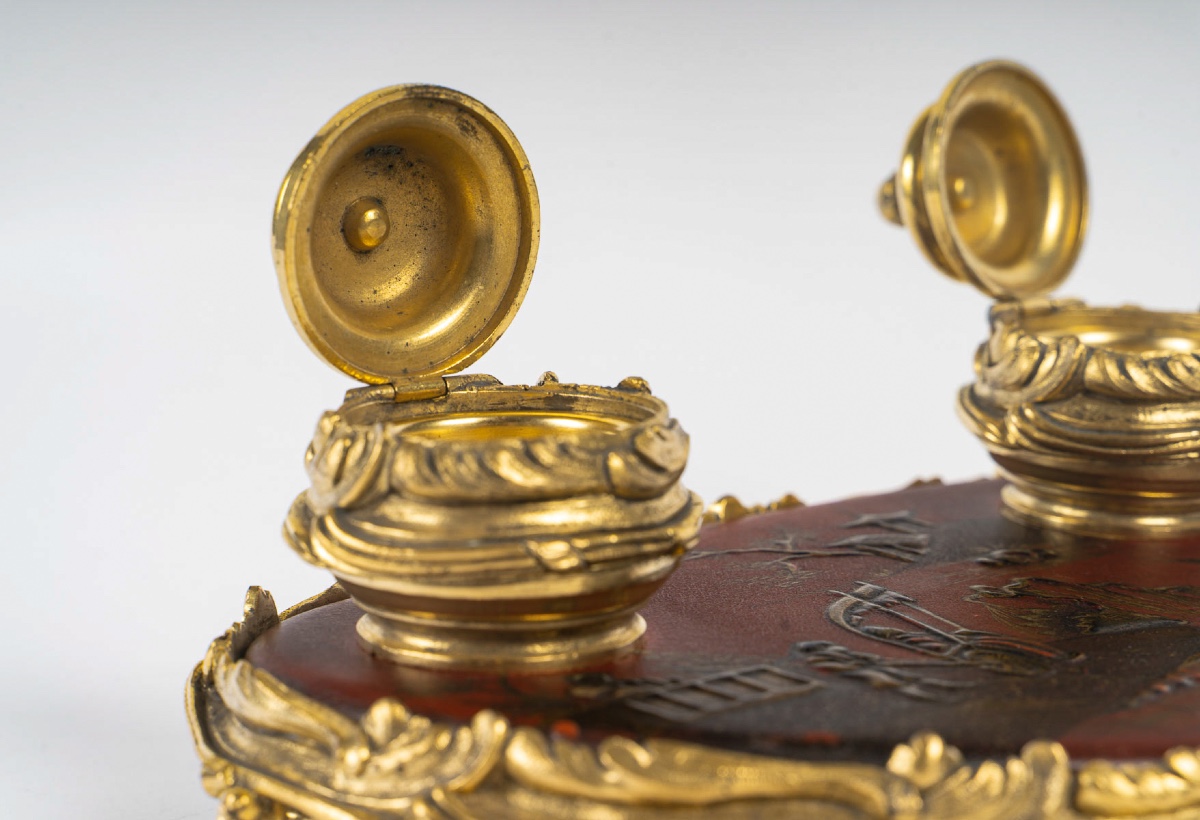
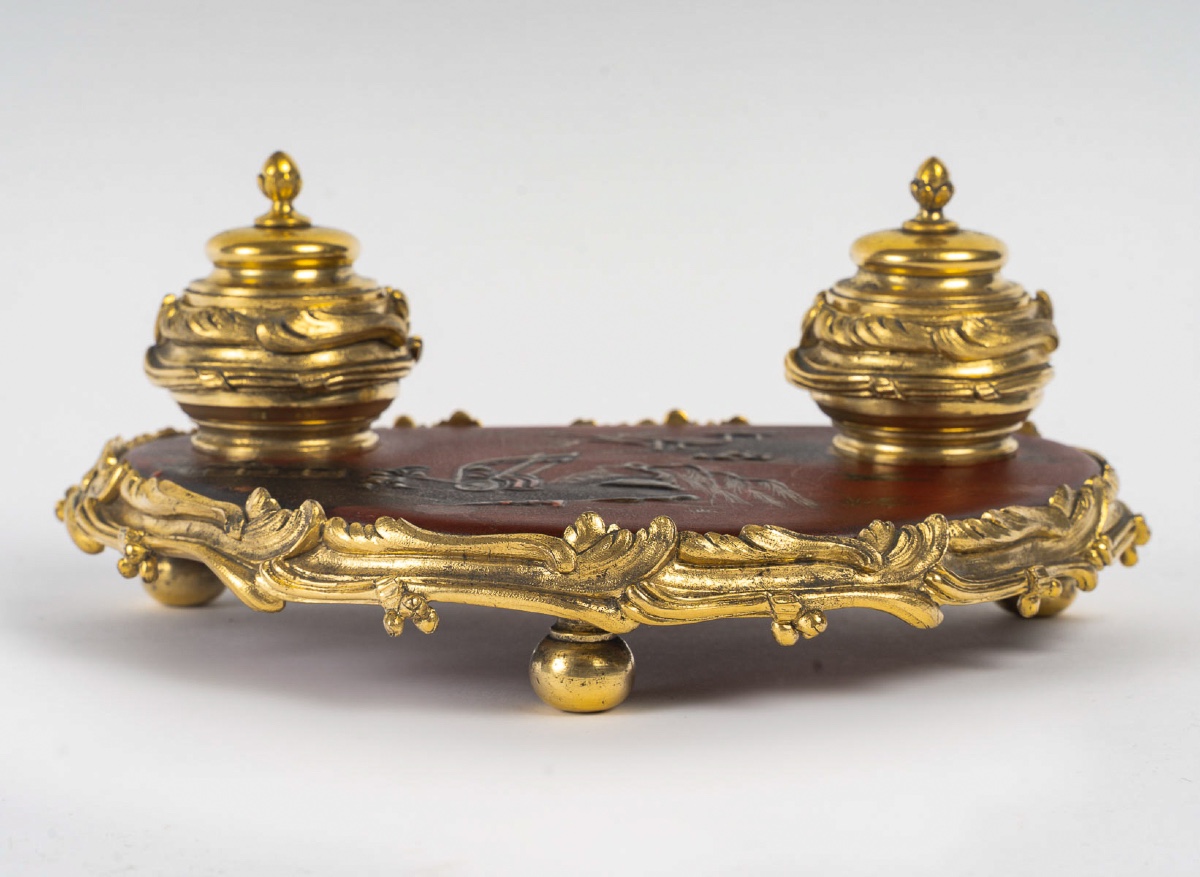
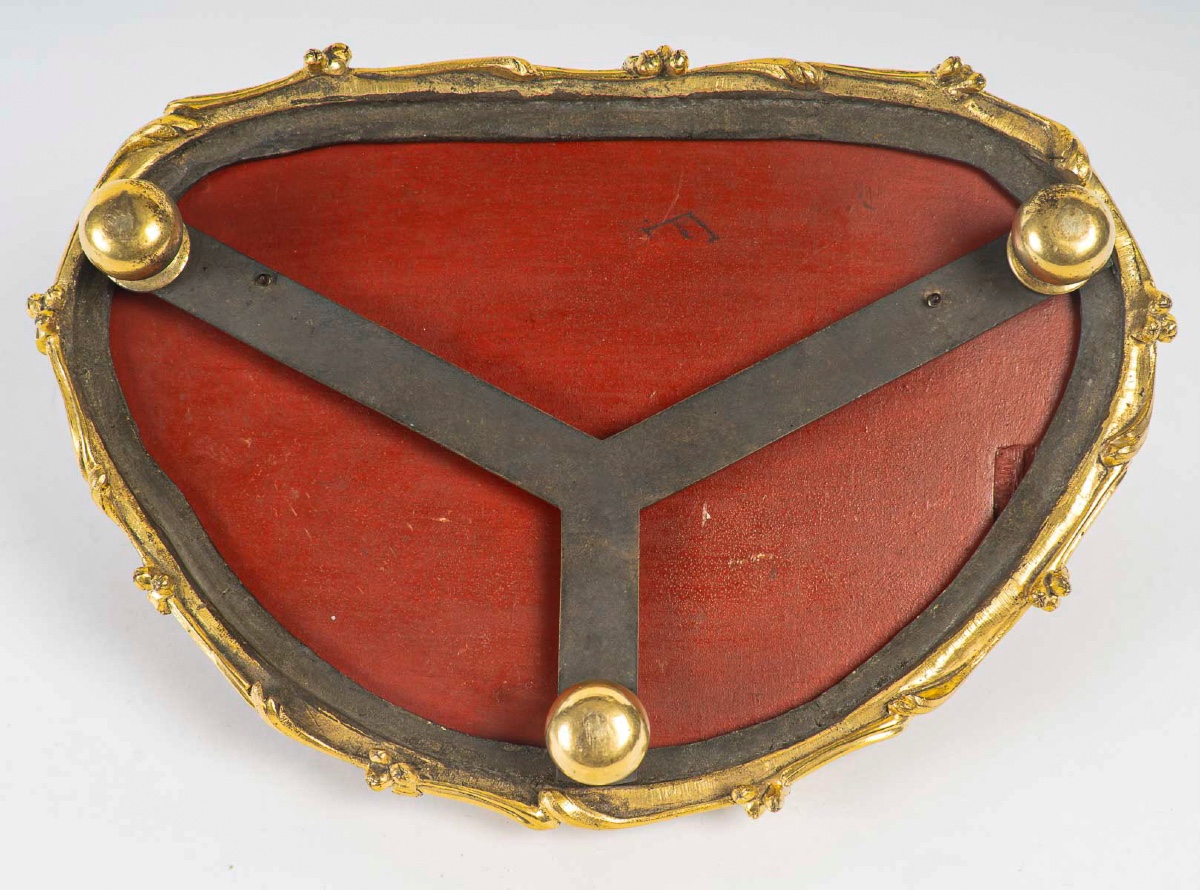
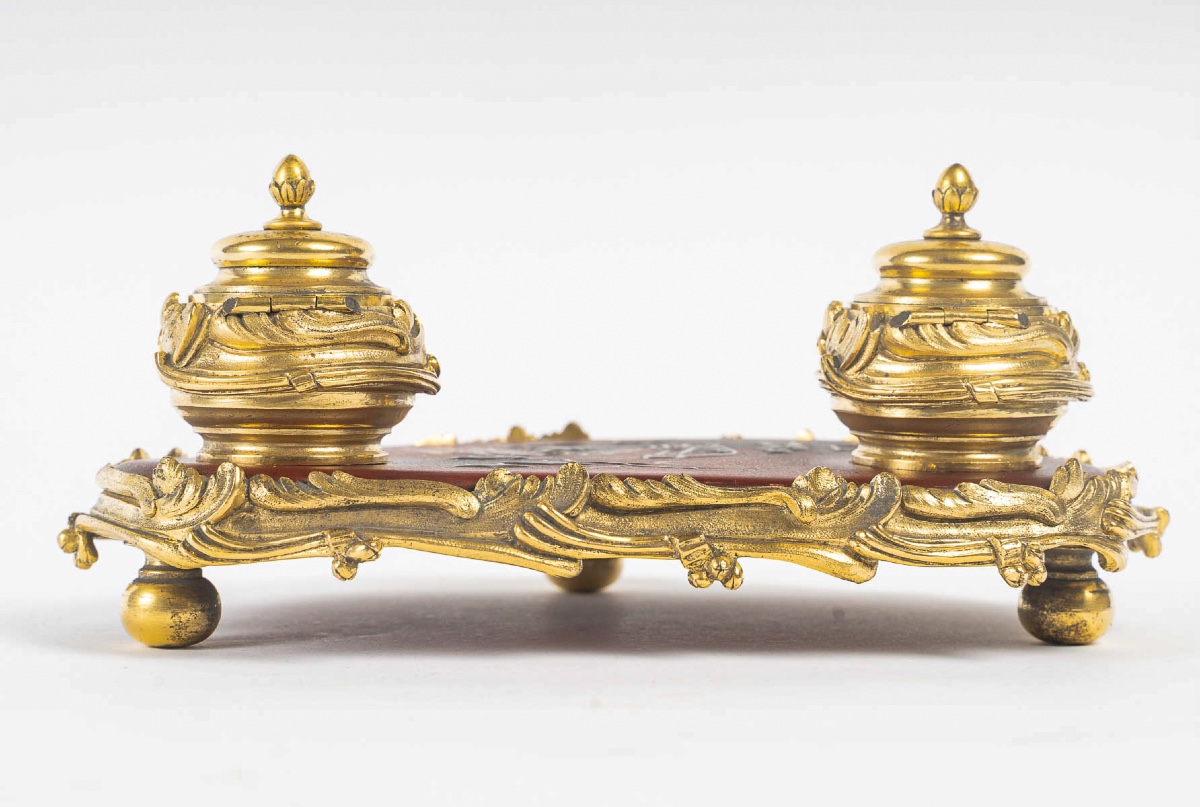
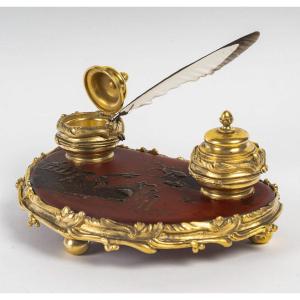


Napoleon III Period Bronze-mounted Inkwell With Vernis Martin Plaque, C. 1850–1870
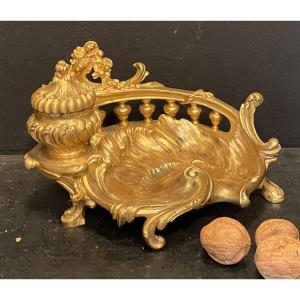
Napoleon III Period Bronze-Mounted Inkwell with Vernis Martin Plaque, c. 1850–1870
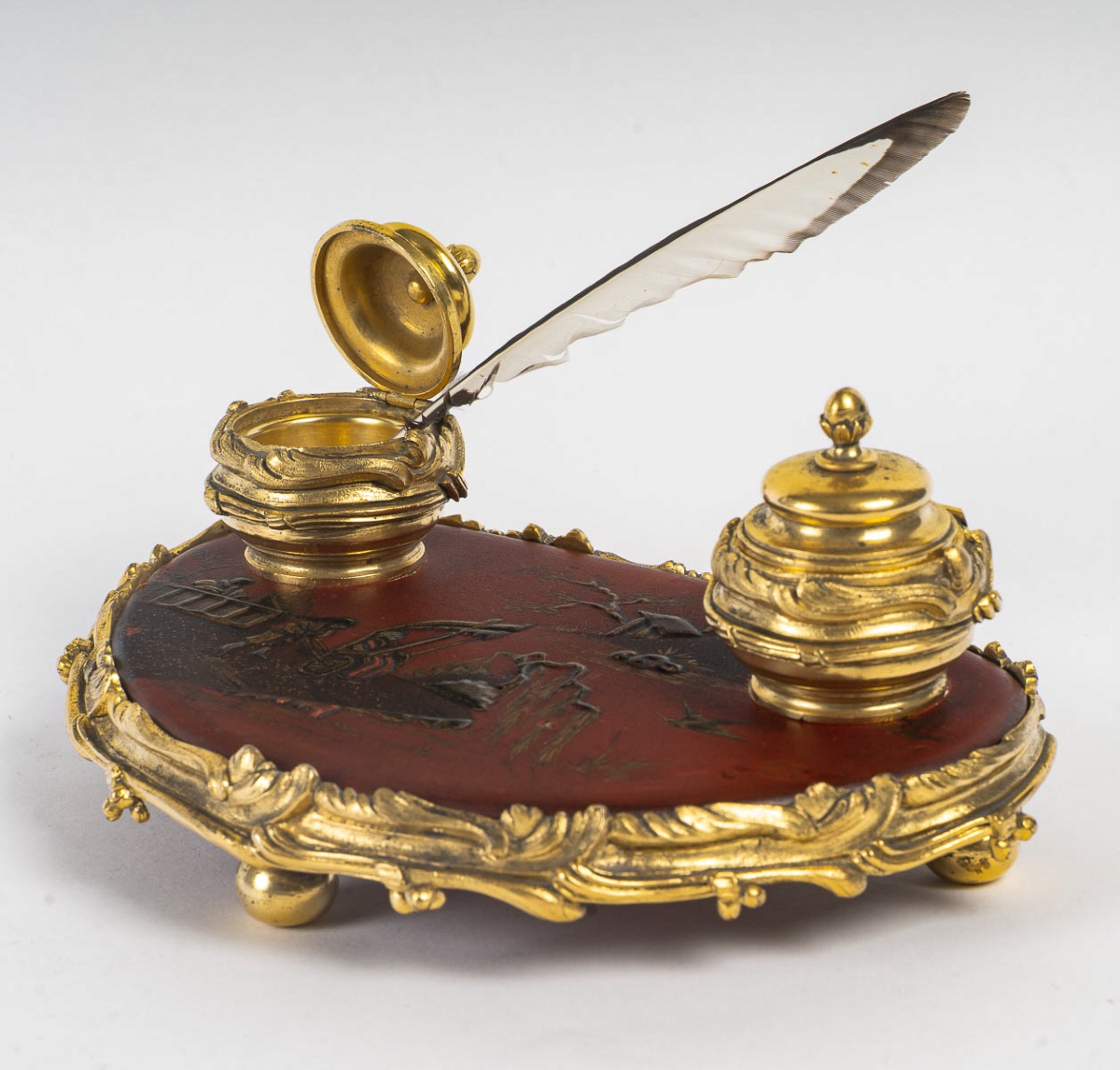
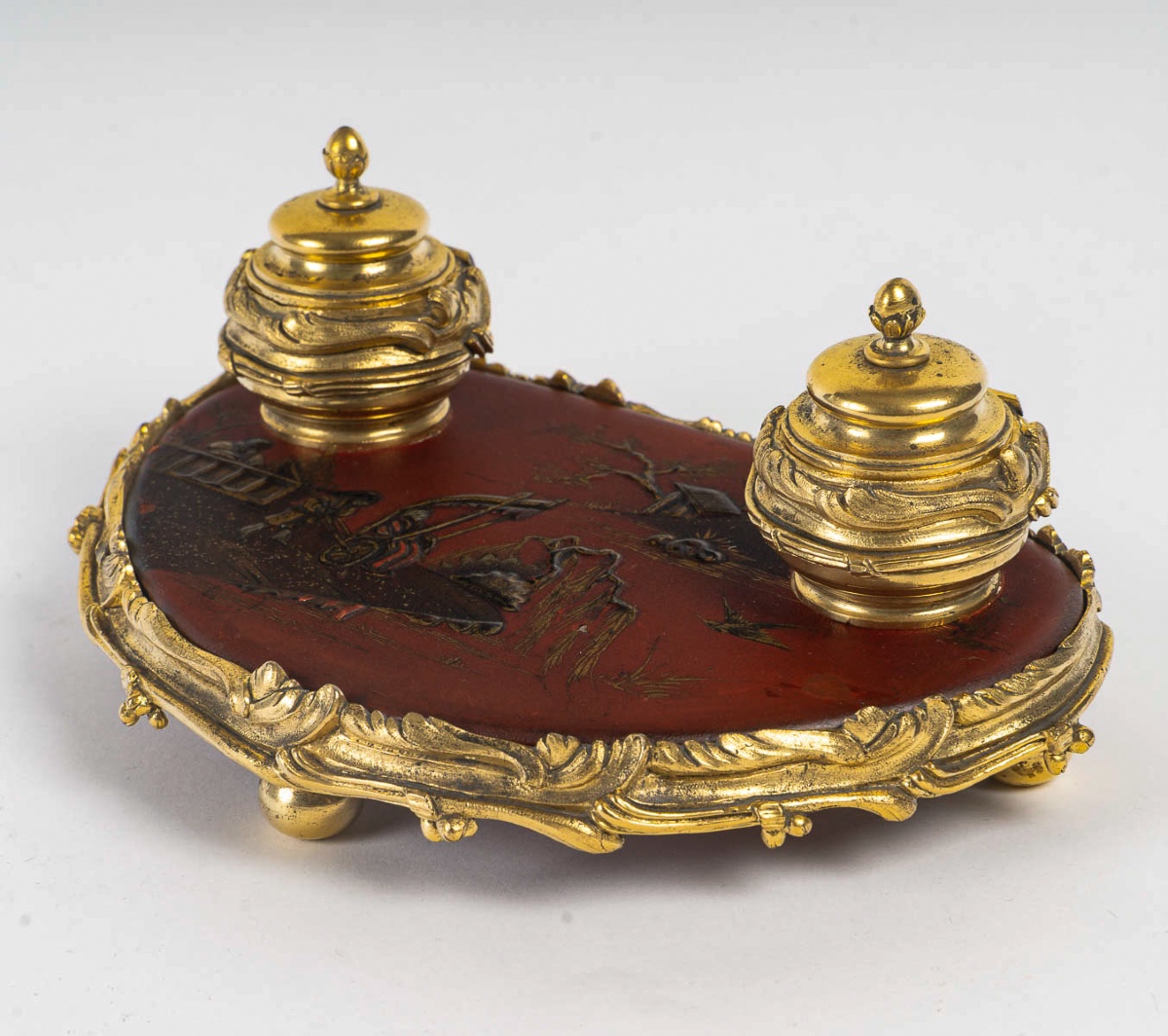
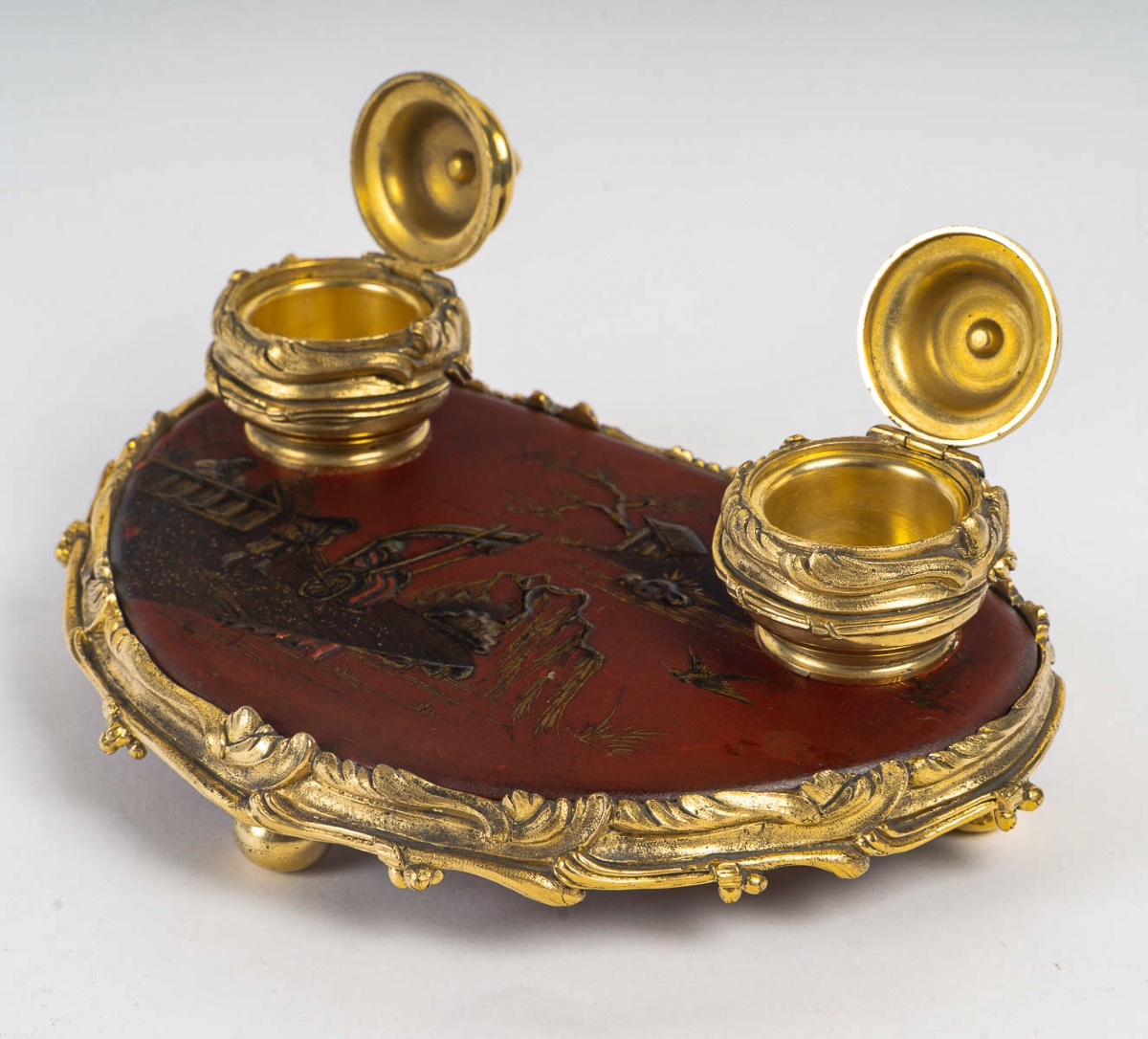
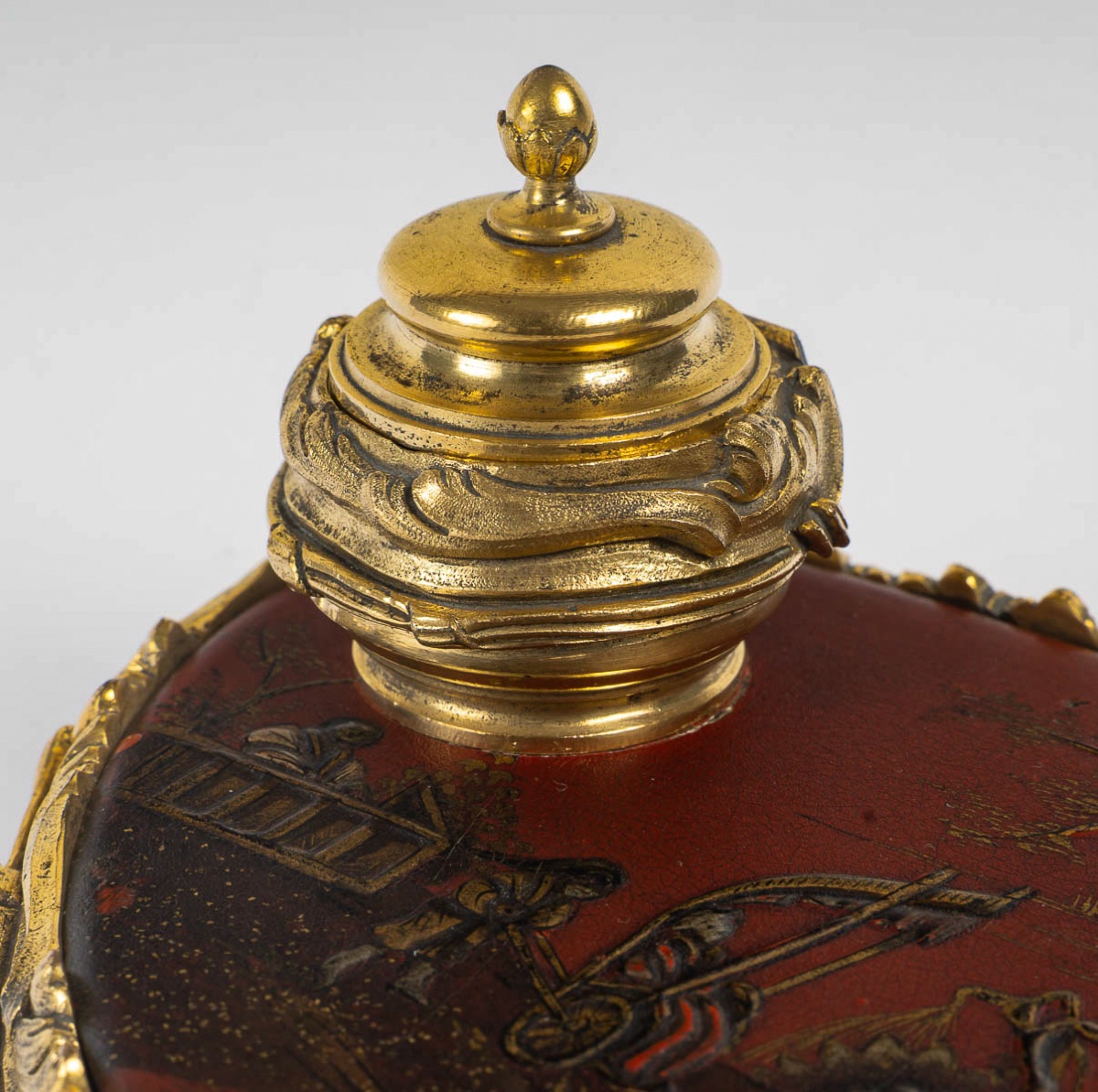
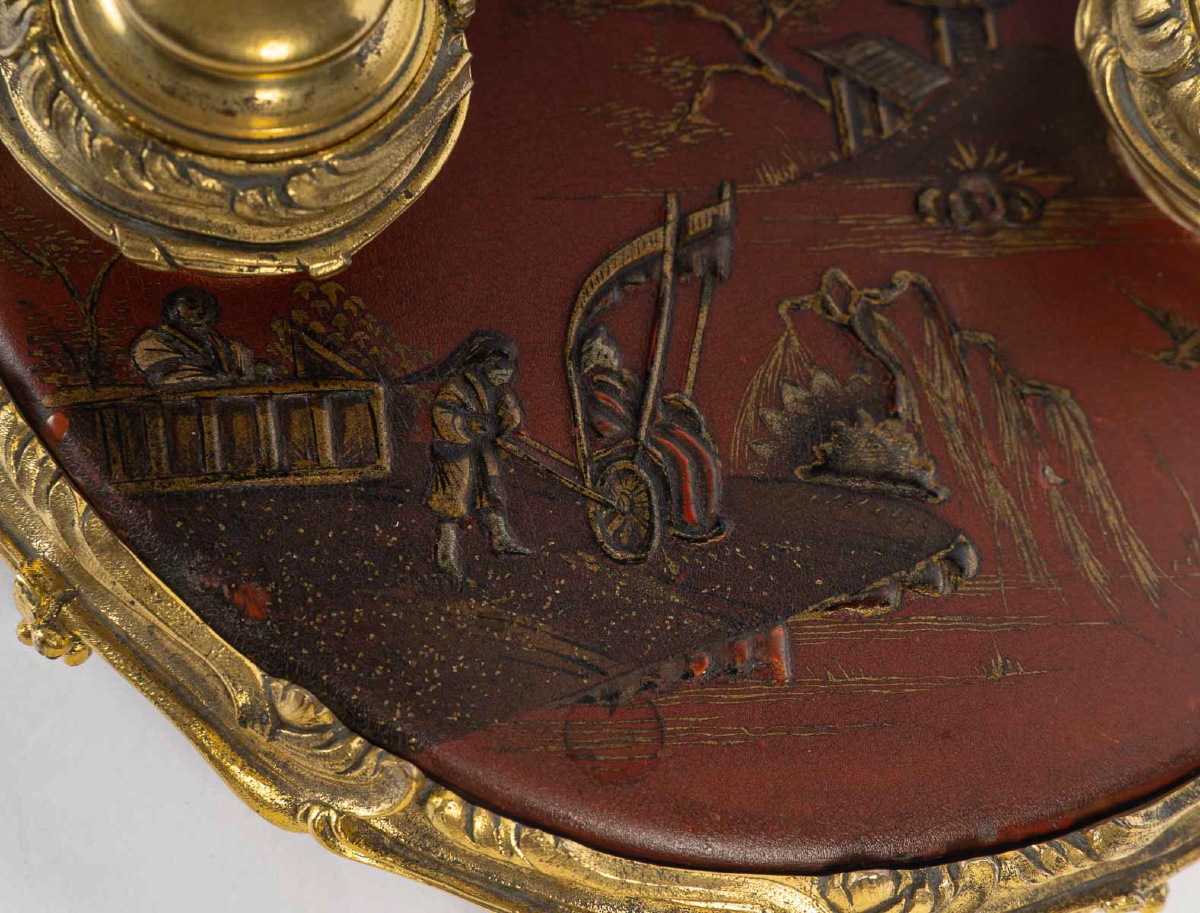
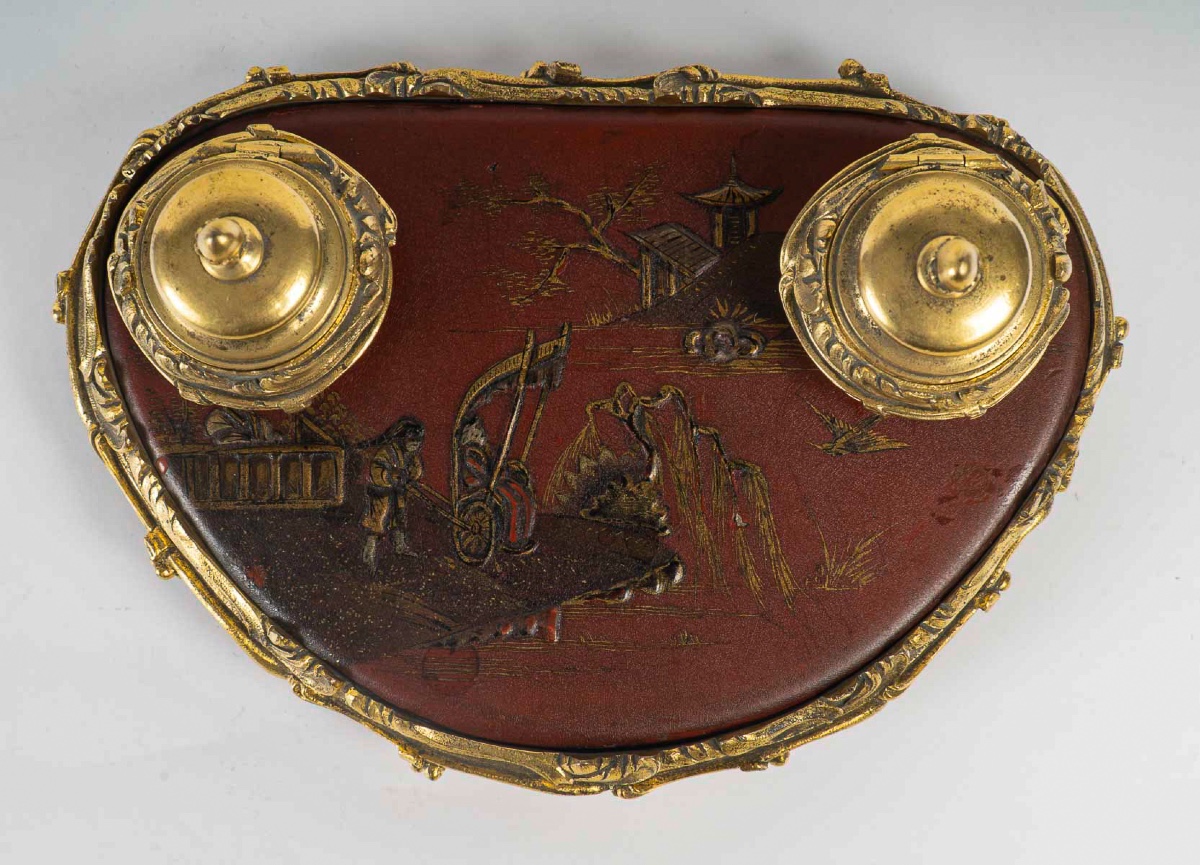
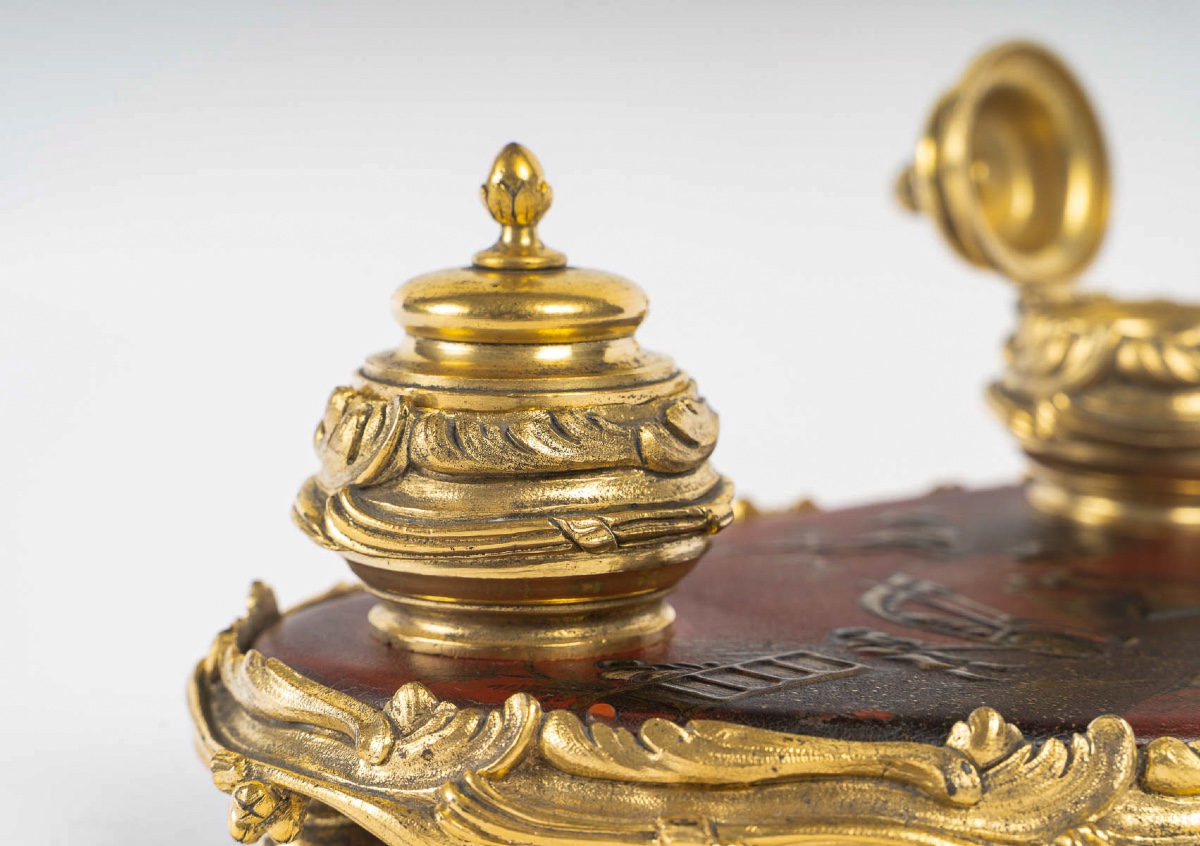
An elegant and decorative bronze inkwell, finely chased with gilded foliate scrollwork and resting on ball feet, adorned with a red Vernis Martin plaque featuring a Chinese landscape.
A refined example of French craftsmanship from the Napoleon III period, circa 1850–1870.
Dimensions:
Height: 3.3 in (8.5 cm).
Width: 8.3 in (21 cm).
Depth: 5.9 in (15 cm).
Condition:
Presented in its original used condition.
Historical and Technical Context:
Vernis Martin, a copal-based varnish, was developed to rival Asian lacquer. It offered an economical and flexible alternative, perfectly suited to the curves of French furniture. Beyond its practical role, it became a medium for artistic expression, reproducing contemporary works on furniture. Note: In the late 19th century, the term "vernis Martin" was misappropriated to describe folding fans, which had no connection to the original 18th-century technique.
Biography:
The Martin Brothers, Pioneers of Vernis Martin in the 18th Century
In Enlightenment-era France, two Parisian artisans, Guillaume and Étienne-Simon Martin, revolutionized furniture art by perfecting an innovative technique: Vernis Martin. In 1728, they patented this ingenious substitute for Oriental lacquer, composed of copal, pigments, and resins. Their process replicated the luster of Chinese and Japanese lacquer at a lower cost, while adapting to the curves of French furniture—unlike rigid and expensive lacquer panels.
Based in the artisan quarter of Faubourg-Saint-Antoine, the Martin brothers met the growing demand for exotic décor. Their workshop produced pieces adorned with landscapes, flowers, and chinoiserie motifs, captivating the elite of the time. Though less resistant to humidity than authentic lacquer, their varnish enjoyed lasting popularity, even influencing 19th-century styles.
Their contribution to the history of decorative arts is significant: They made luxury accessible to a broader audience. Today, their creations are studied and exhibited, as evidenced by the 2014 retrospective at the Musée des Arts Décoratifs in Paris, which highlighted their unique craftsmanship.
Notable Works:
In 1742, Mathieu Criaerd (1689–1776, master craftsman since 1738) created a commode, a corner cupboard, and a writing table in blue and white for Madame de Mailly, commissioned by the merchant Hébert. Only the commode and the base of the corner cupboard survive today, preserved in the Louvre.
Exhibition:
2014: "The Secrets of French Lacquer: Vernis Martin," Musée des Arts Décoratifs, Paris (February 13–June 8).
Bibliography:
Thibaut Wolvesperges, Le Meuble Français en Laque au XVIIIe Siècle, Éditions de l’Amateur.
Anne Forray-Carlier and Monika Kopplin (eds.), The Secrets of French Lacquer: Vernis Martin, Paris, Les Arts Décoratifs, 2014.
Period: 19th century
Style: Louis 15th - Transition
Condition: Excellent condition
Material: Bronze
Length: 21
Height: 8,5
Depth: 15
Reference (ID): 1712143
Availability: In stock