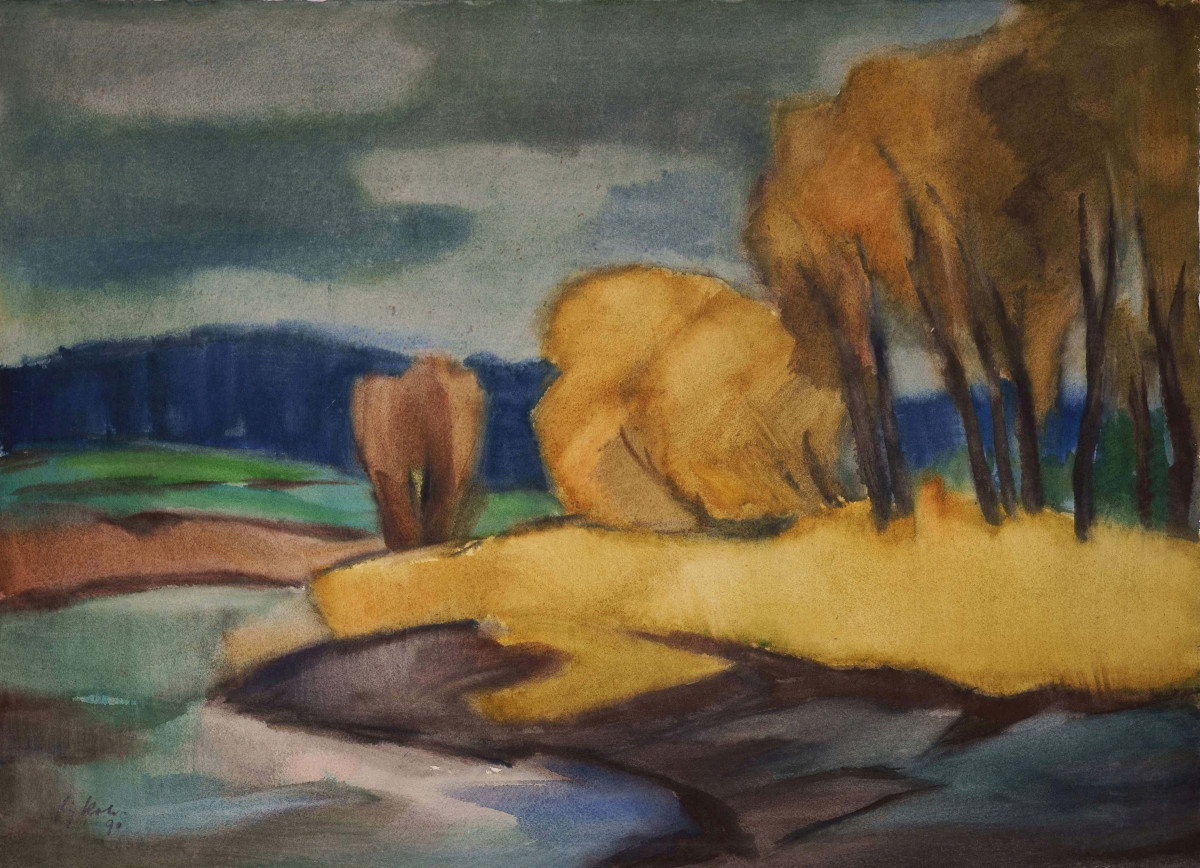
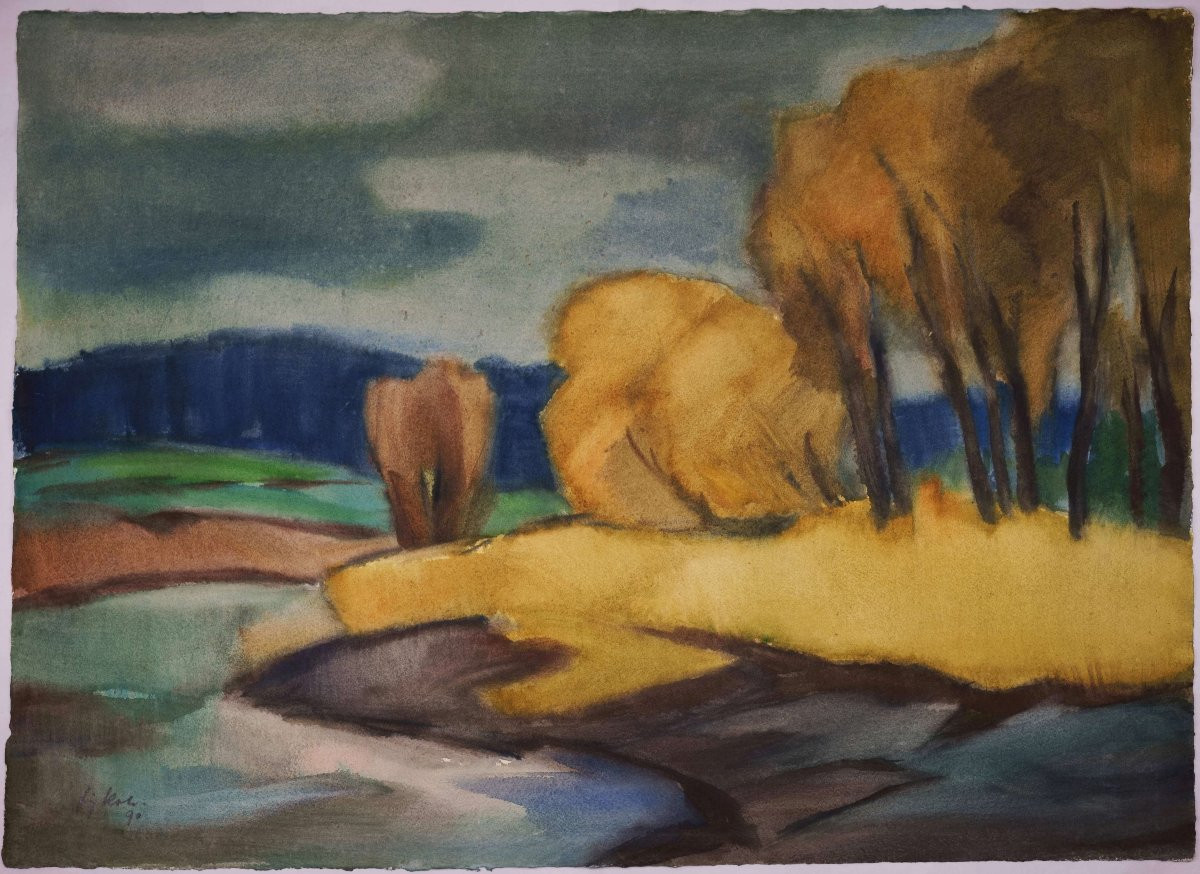


´fritz Kohlstädt (1921-2000), On The Hunte River Near Oldenburg, 1990
Artist: Fritz Kohlstaedt
Fritz
Kohlstädt (1921 Stuttgart - 2000 Pforzheim), An der Hunte bei Oldenburg, 1990. Watercolor on heavy paper,
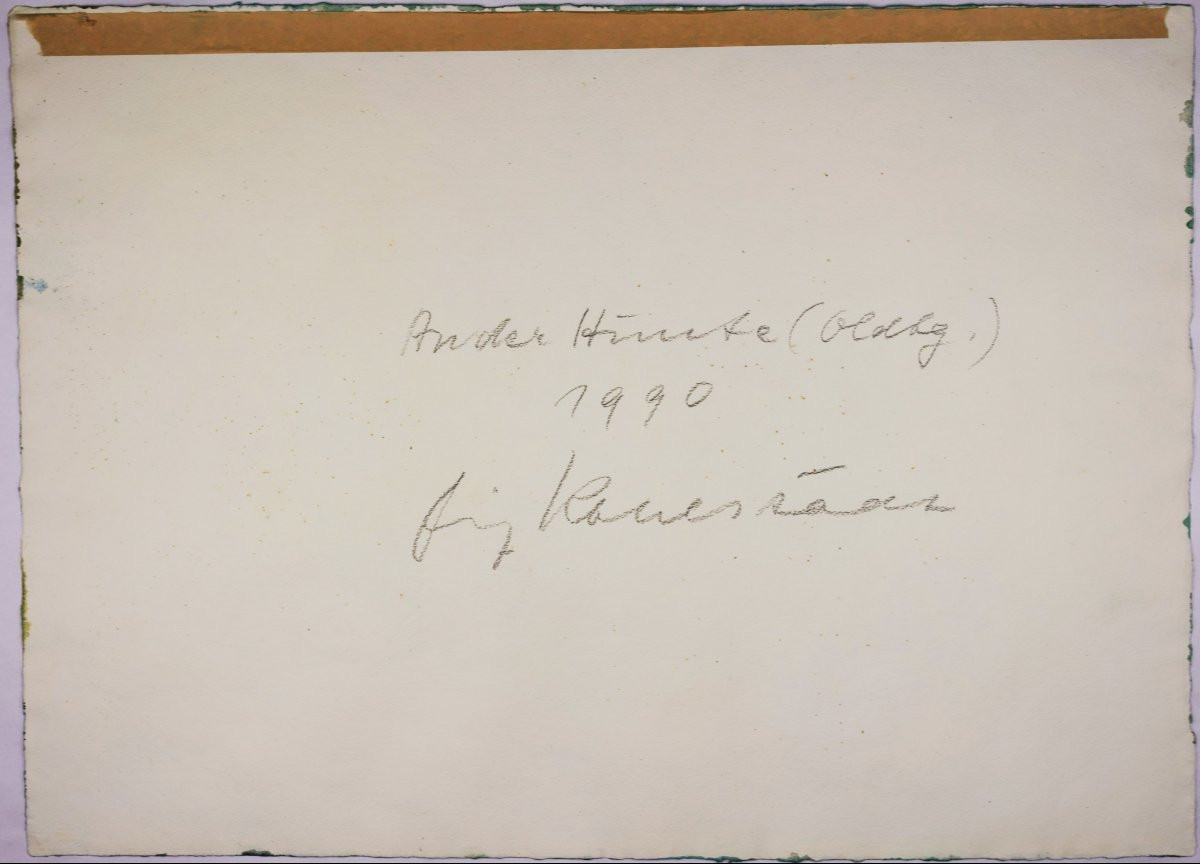
56 cm (height) x 78 cm (width), signed and dated lower left, signed, dated, and
inscribed on the reverse.
- In very good condition with colors fast.
- The tension of the landscape -
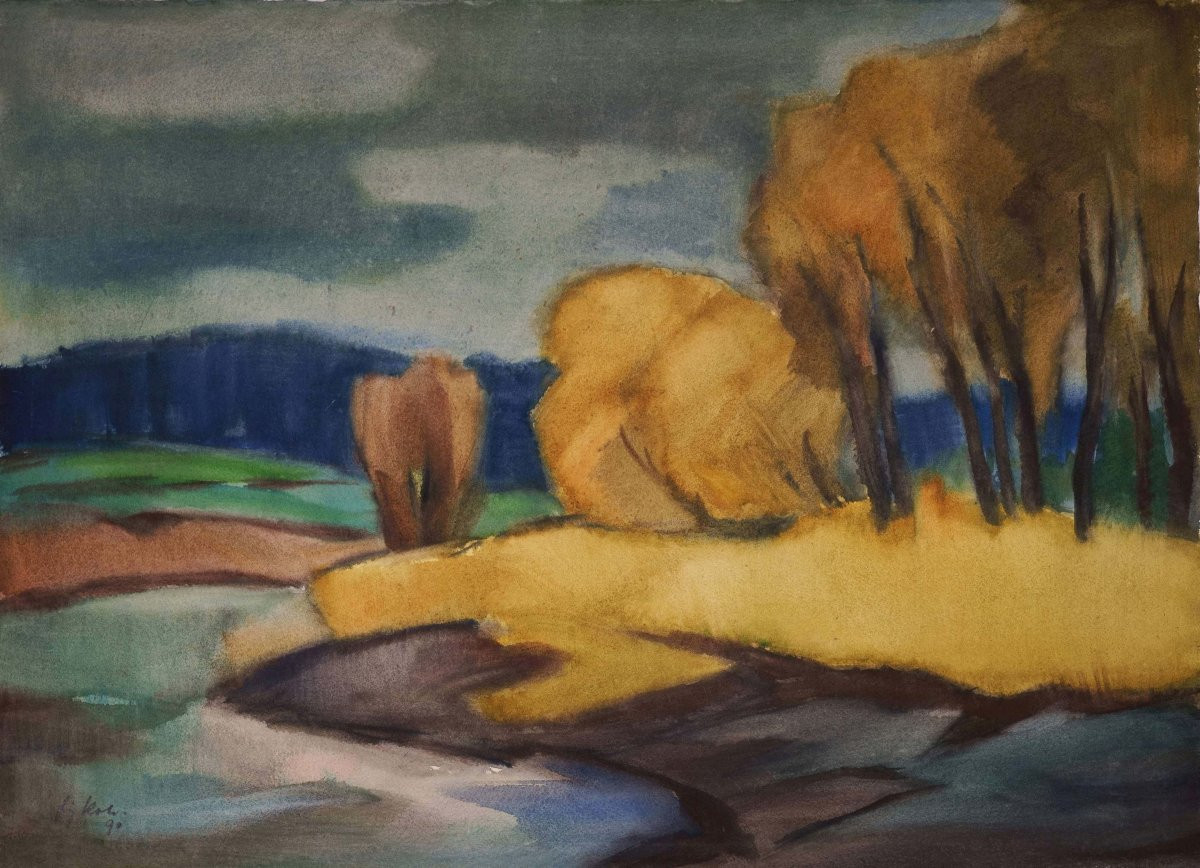
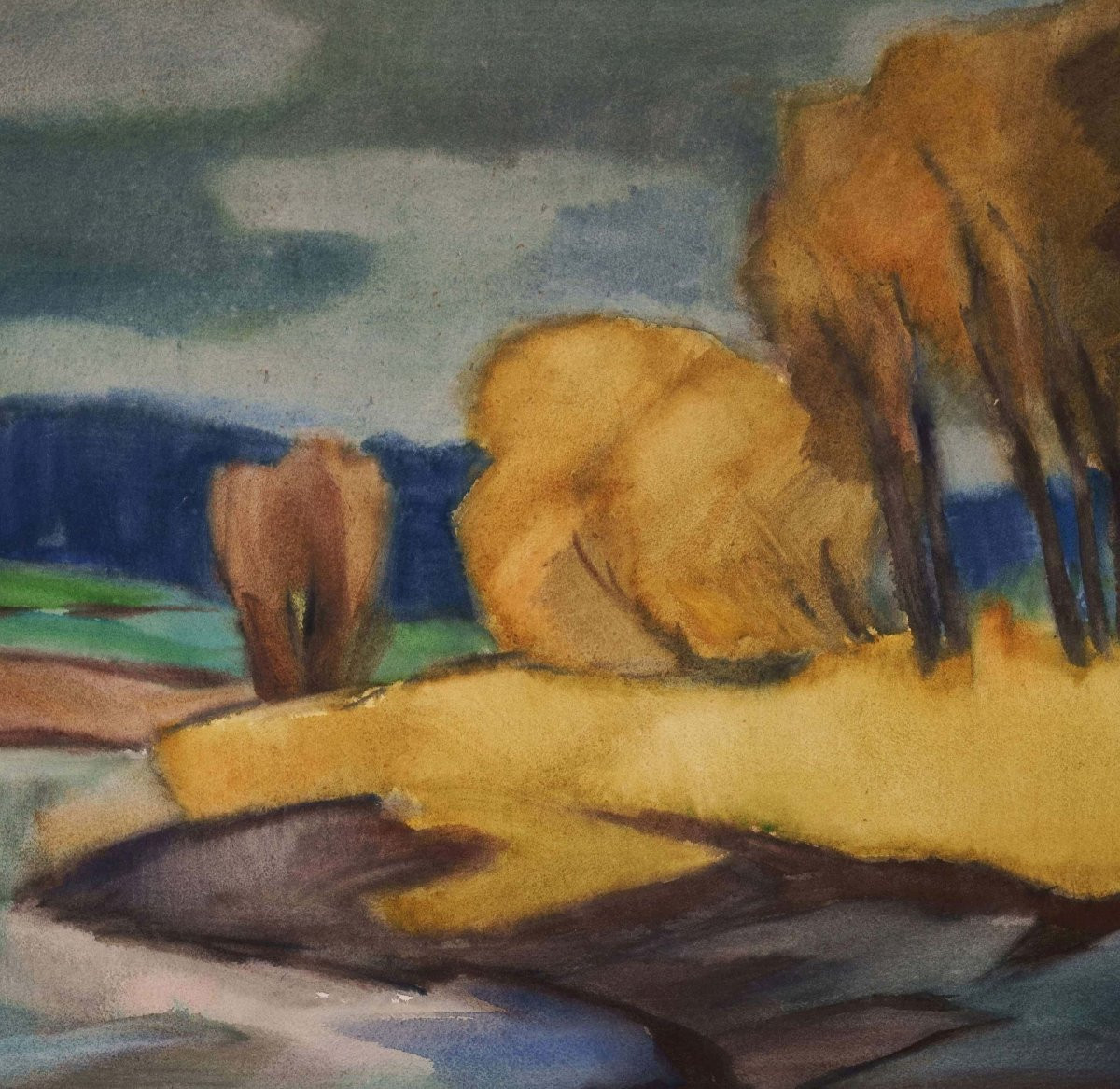
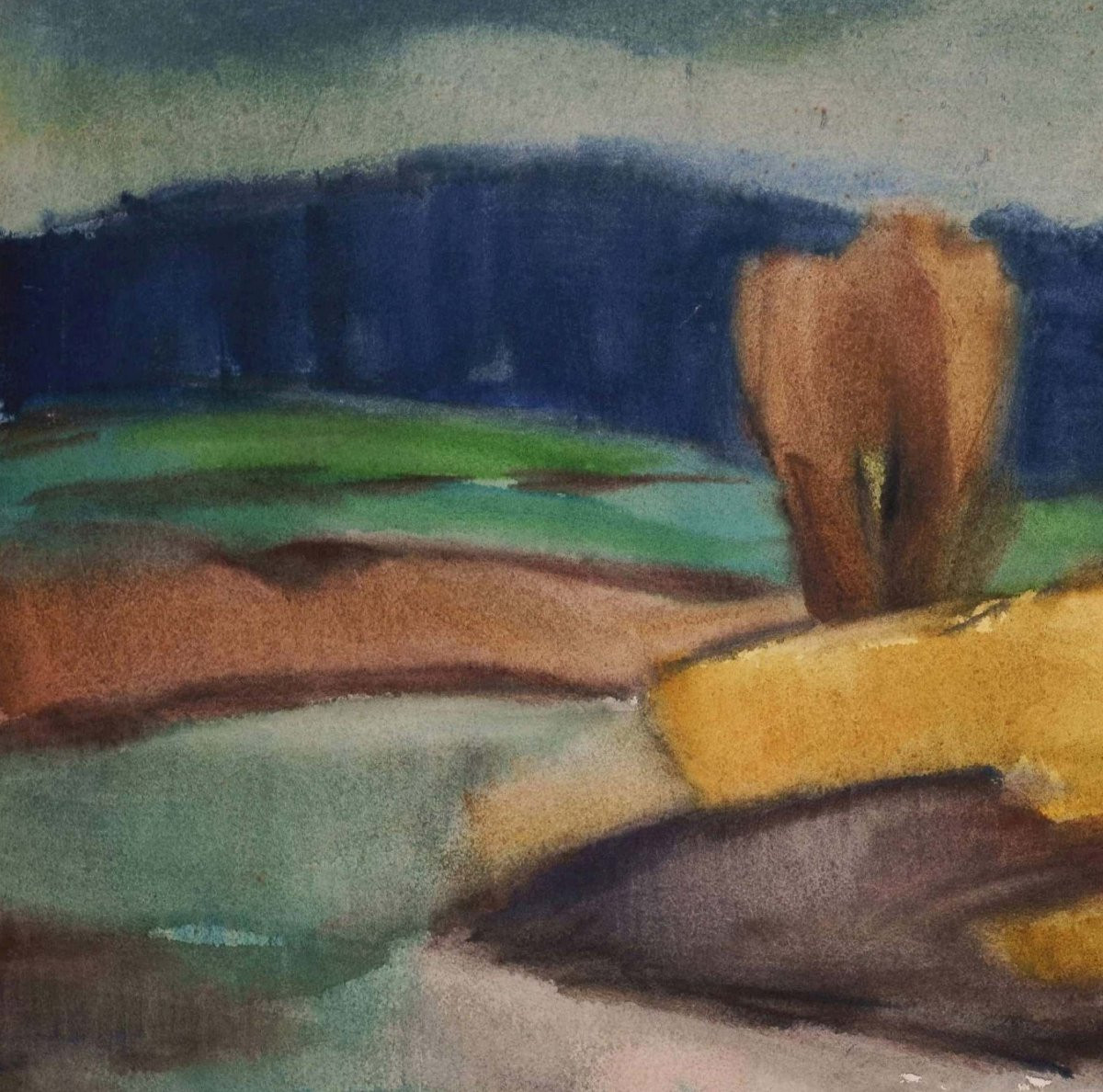
Our gaze is drawn to the left into the landscape by the wedge-shaped bank pushing its way into the picture, while the course of the river leads in the opposite direction. The edge of the forest visible in the background, on the other hand, picks up the diagonal line of the front bank area, which runs to the left of the picture. This creates a line of sight that opens up the landscape, following the classic principles of landscape painting. But the diagonal line of the landscape, which pushes beyond the picture, is already a dynamization that goes beyond the classic representation of landscape, which is further enhanced by the color scheme. By painting the trees and bushes in the foreground yellow and the forest edge in the background blue, a complementary contrast is created that opens up a space of tension into which the entire landscape—including the sky, which matches the color of the water—is inserted. This gives the landscape an expressiveness that is the expression of itself.
About the artist
From 1946 to 1948, Fritz Kohlstädt took drawing lessons from Walter Romberg in Stuttgart, but was otherwise self-taught. His artistic work was influenced by the Expressionist works that became accessible again after the Second World War, whose ideas, fabric and form effects he further developed in his oeuvre. In addition to oil and chalk painting, watercolor was Kohlstädt's preferred artistic medium for his expressive landscape paintings, which were inspired by Maurice de Vlaminck, Edvard Munch, and Emil Nolde. In 1958, Fritz Kohlstädt and other artists founded the “Sindelfinger Sezession” (“The Twelve”), a splinter group of the Stuttgart Artists' Association. He was awarded the Federal Cross of Merit in 1981 for his artistic work. His works can be found in numerous public collections.
- In very good condition with colors fast.
- The tension of the landscape -
Our gaze is drawn to the left into the landscape by the wedge-shaped bank pushing its way into the picture, while the course of the river leads in the opposite direction. The edge of the forest visible in the background, on the other hand, picks up the diagonal line of the front bank area, which runs to the left of the picture. This creates a line of sight that opens up the landscape, following the classic principles of landscape painting. But the diagonal line of the landscape, which pushes beyond the picture, is already a dynamization that goes beyond the classic representation of landscape, which is further enhanced by the color scheme. By painting the trees and bushes in the foreground yellow and the forest edge in the background blue, a complementary contrast is created that opens up a space of tension into which the entire landscape—including the sky, which matches the color of the water—is inserted. This gives the landscape an expressiveness that is the expression of itself.
About the artist
From 1946 to 1948, Fritz Kohlstädt took drawing lessons from Walter Romberg in Stuttgart, but was otherwise self-taught. His artistic work was influenced by the Expressionist works that became accessible again after the Second World War, whose ideas, fabric and form effects he further developed in his oeuvre. In addition to oil and chalk painting, watercolor was Kohlstädt's preferred artistic medium for his expressive landscape paintings, which were inspired by Maurice de Vlaminck, Edvard Munch, and Emil Nolde. In 1958, Fritz Kohlstädt and other artists founded the “Sindelfinger Sezession” (“The Twelve”), a splinter group of the Stuttgart Artists' Association. He was awarded the Federal Cross of Merit in 1981 for his artistic work. His works can be found in numerous public collections.
900 €
Period: 20th century
Style: Other Style
Condition: Excellent condition
Material: Paper
Length: 56 cm
Height: 78 cm
Reference (ID): 1710825
Availability: In stock
Print