THIS OBJECT WAS SOLD
2.803 Soviet Painter Active In The Mid-20th Century, Lenin With Soldiers Of The Revolution


Soviet painter active in the mid-20th century
Lenin with Soldiers of the Revolution
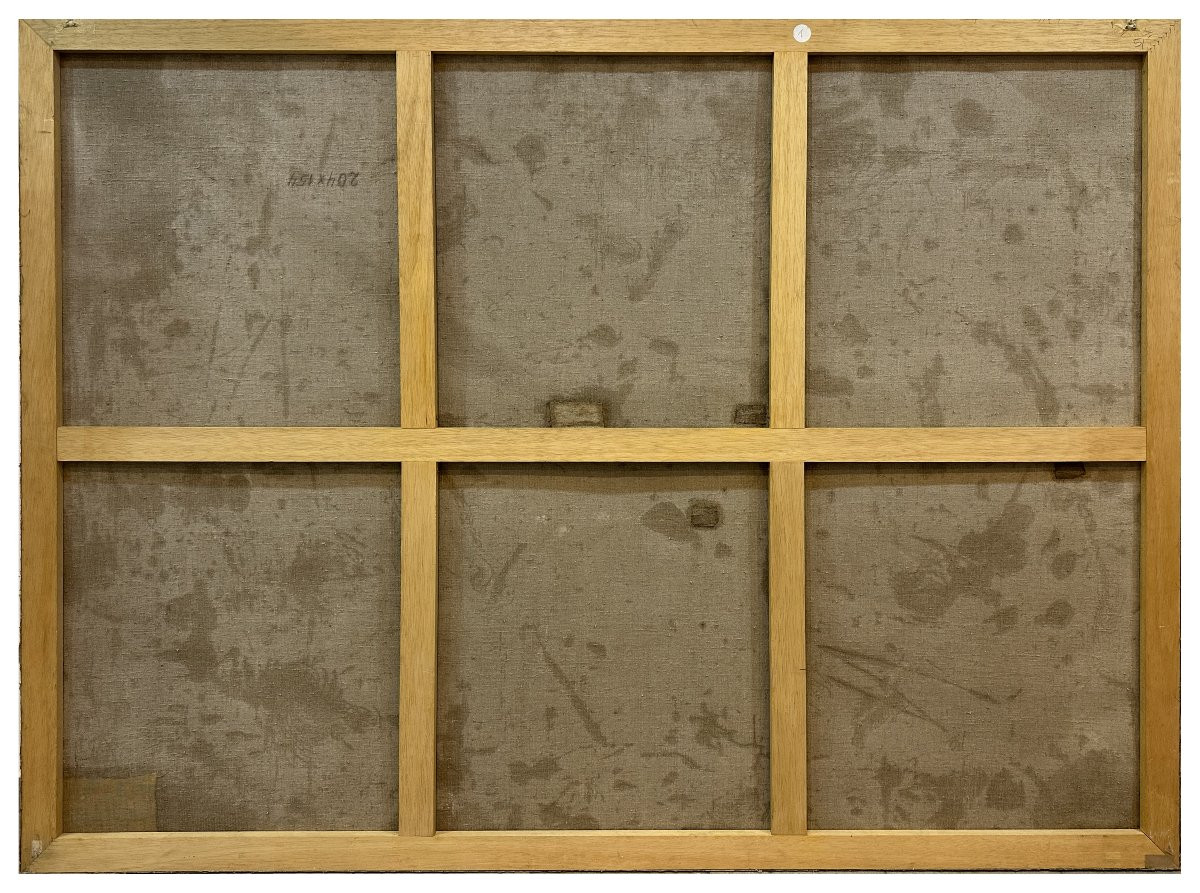
Oil on canvas, 154 × 204 cm
The painting fits perfectly into the golden age of Socialist Realism (Sotsrealism), the official artistic movement of the Soviet Union, codified from the First Congress of Soviet Writers in 1934 and dominant until the 1960s. In this aesthetic system, art had the explicit task of celebrating the Revolution, the Party, and its heroes, first and foremost Vladimir Ilyich Lenin, a mythologized figure ubiquitous in Soviet painting, sculpture, and graphic art.
The depiction of Lenin in direct contact with soldiers, sailors, and armed workers is one of the most recurring and codified subjects in official Soviet iconography: the revolutionary leader is not seen as a distant leader, but as a participating guide close to the armed people.
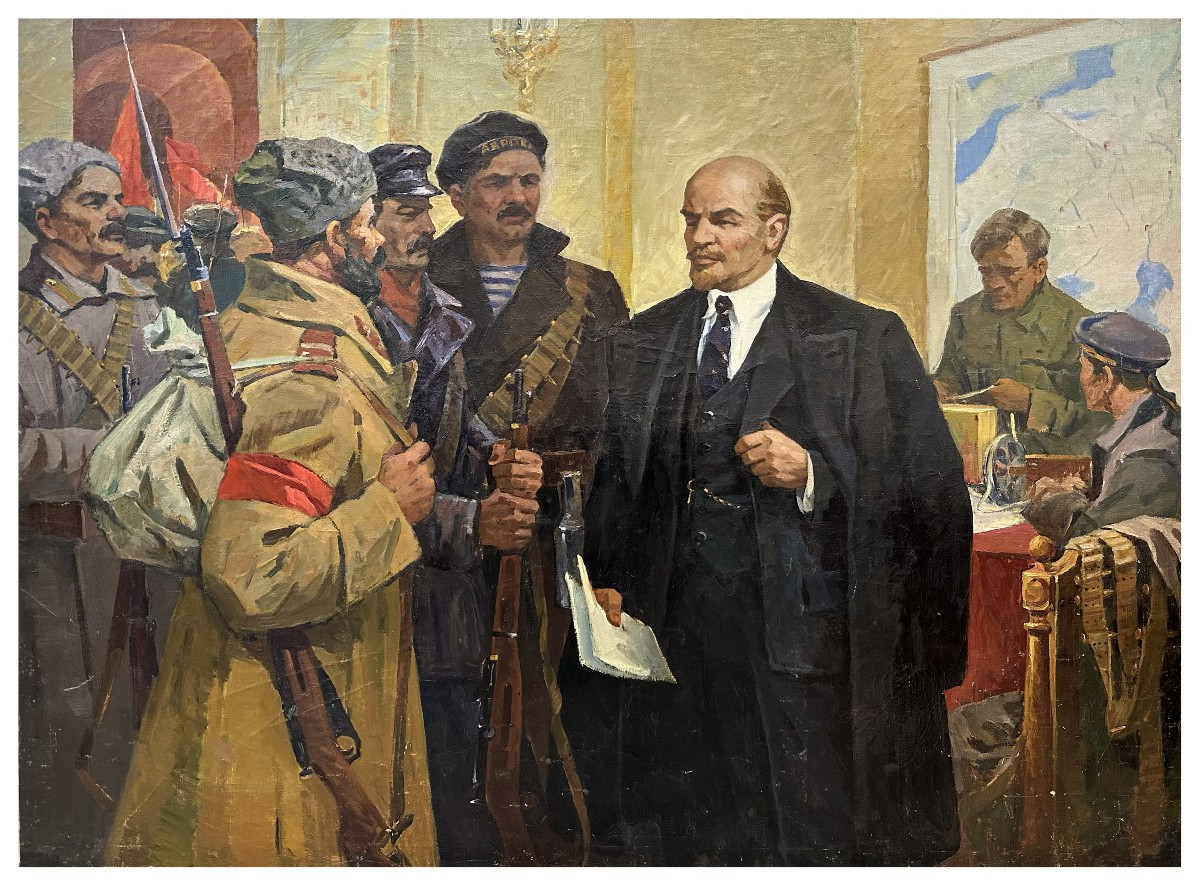
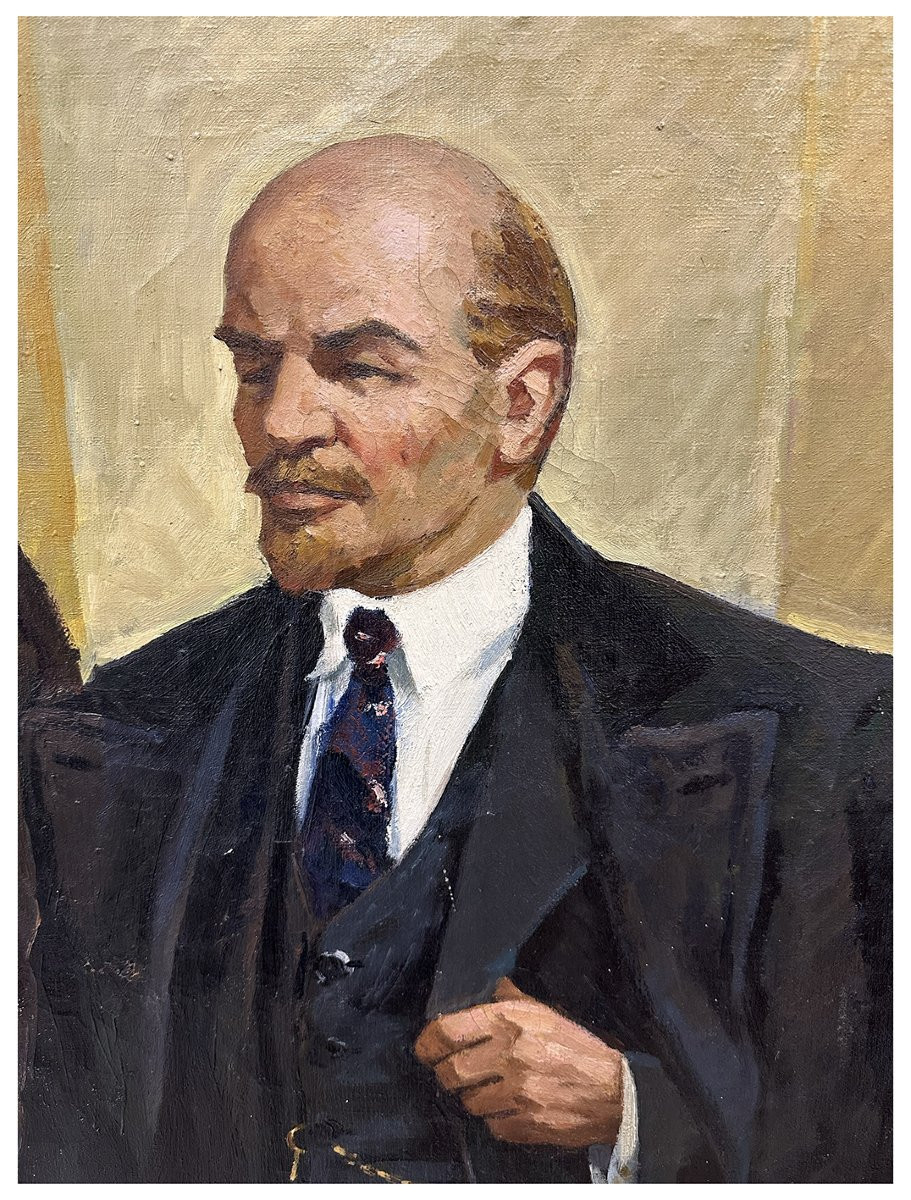
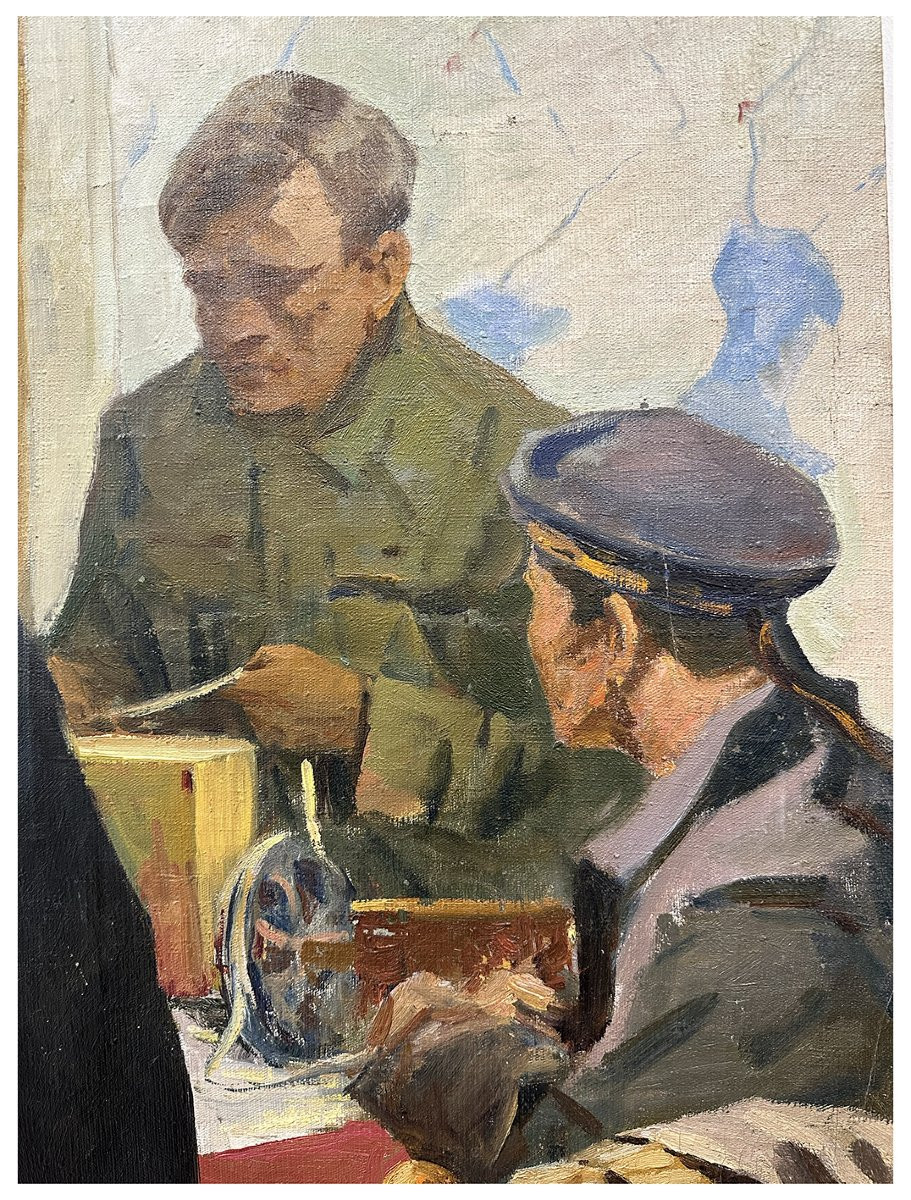
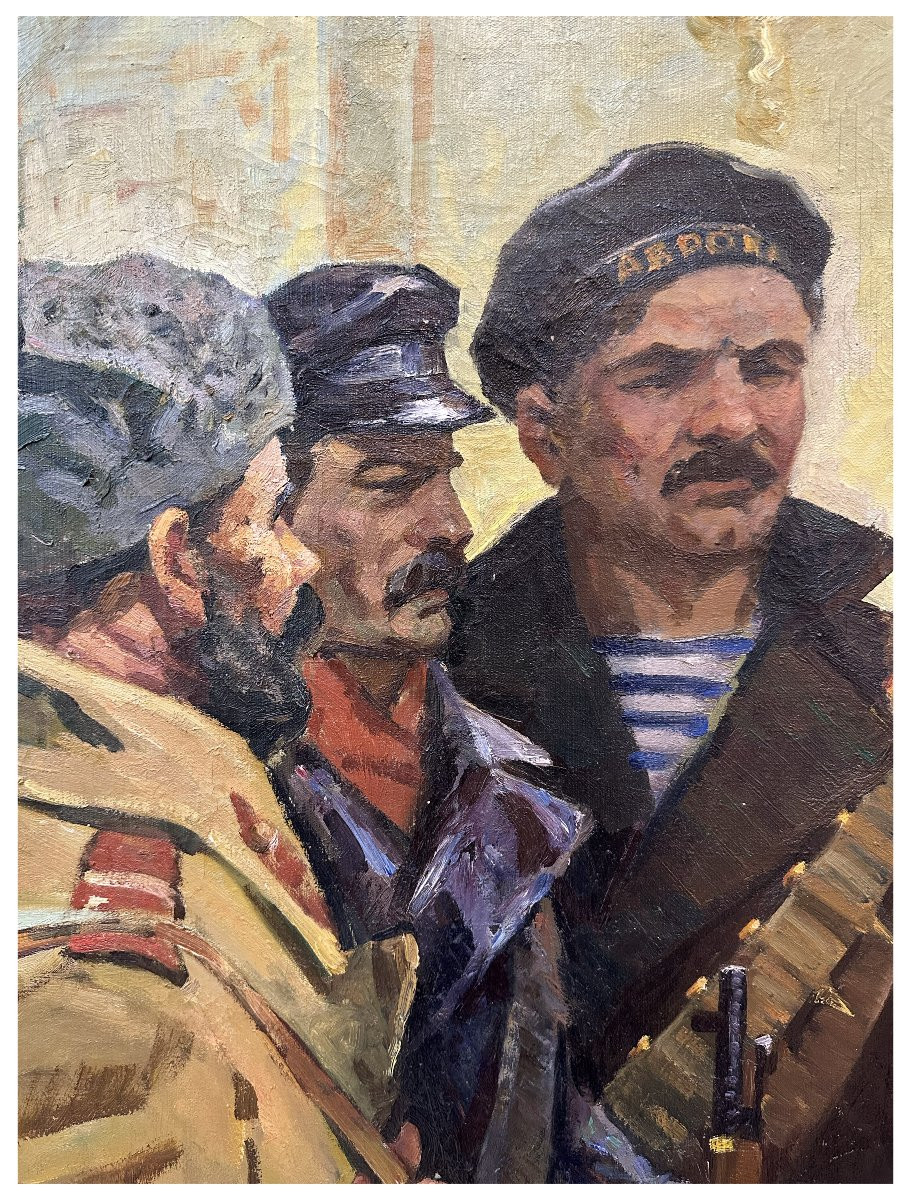
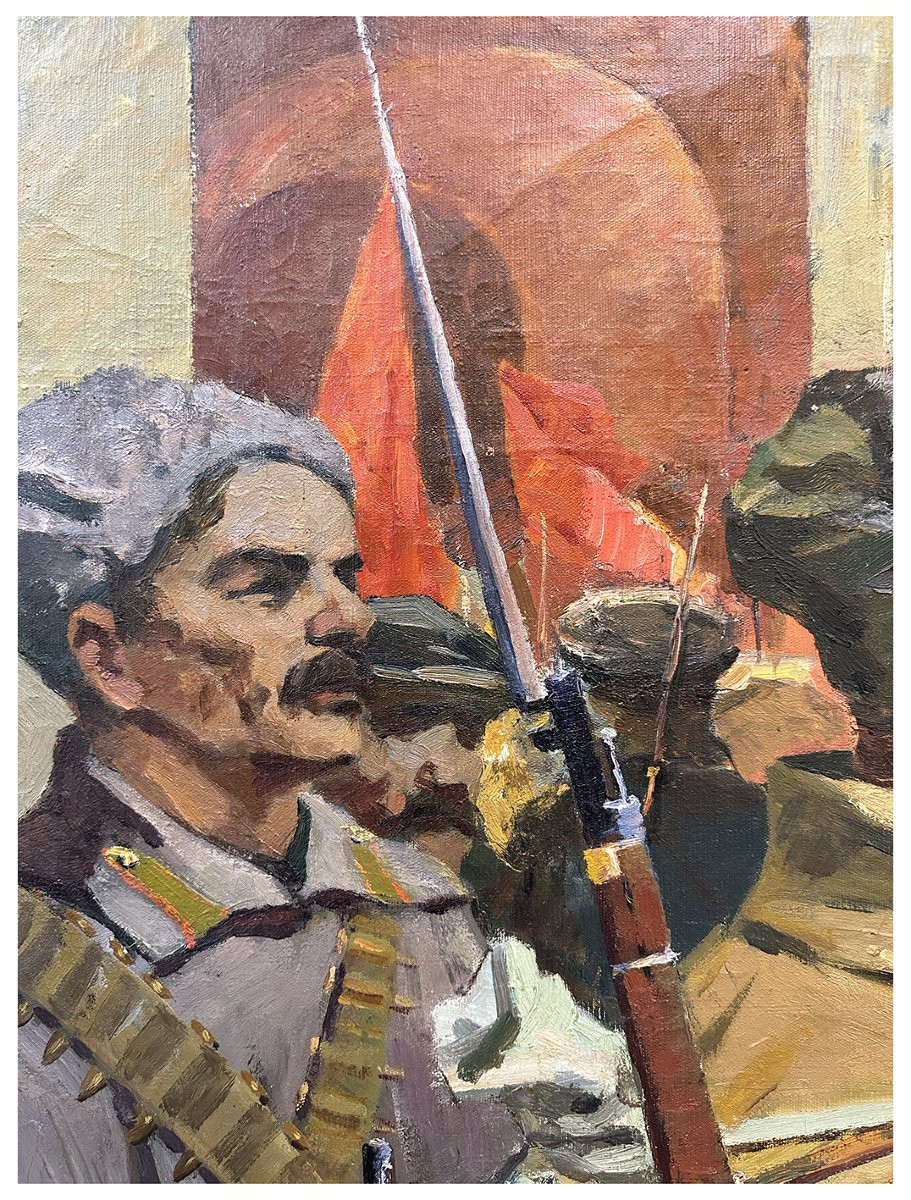
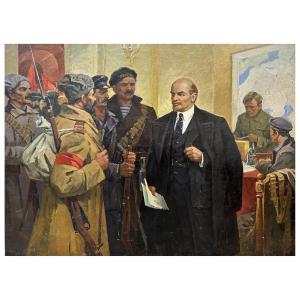
The scene depicts Lenin at the center of the composition, wearing dark civilian clothing—a deliberate element that visually distinguishes him from the mass of fighters—clutching a document and addressing a group of revolutionary soldiers and sailors with an authoritative gaze. The fighters are recognizable by their carefully painted details: rifles with fixed bayonets, cartridge belts slung over their shoulders, caps with cockades, red armbands, and the characteristic telnyashka (striped vest) of the Bolshevik sailor. In the background, on the right, a geographical map suggests a context of military command; on the left, a red flag completes the revolutionary symbolism. The scene is set in a sumptuous interior—likely the Smolny Palace in Petrograd or the Kremlin—recognizable by its chandelier and gilded walls, evoking the proletariat's conquest of power.
Technically, the painting reveals the hand of a painter with a solid Soviet academic background. The brushstrokes are loose and vigorous, with textured impastos evident especially in the drapery and uniforms, in keeping with the tradition of Russian realist painting dating back to Ilya Repin and the Peredvizhniki. The composition is expertly constructed: Lenin occupies the geometric and psychological center of the canvas, with the figures of the soldiers framing him on the left, creating a narrative rhythm from left to right. The diffused, warm light enhances the leader's face and underscores his determined expression. The palette—dominated by ochre, military green, black, and touches of red from the flag and sashes—is typical of Soviet painting from the 1950s and 1960s.
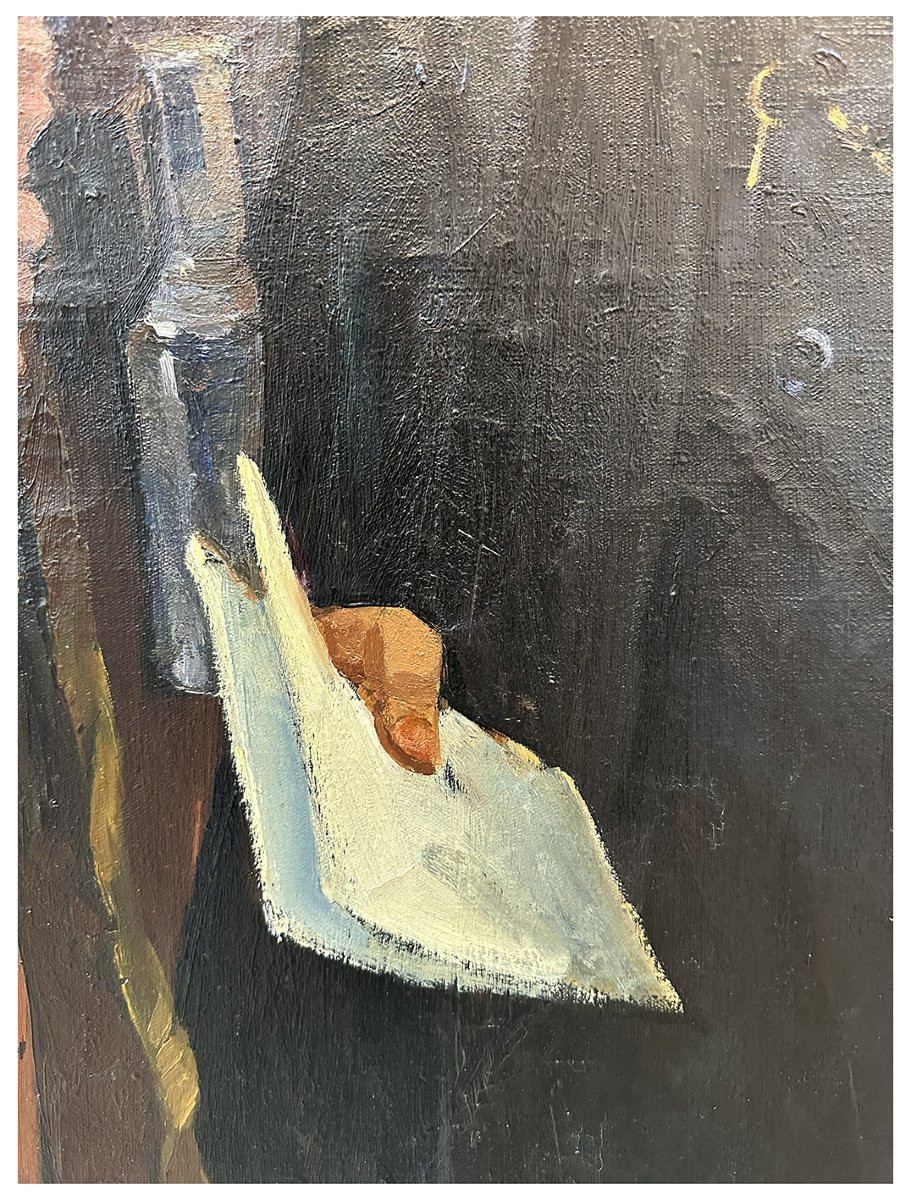
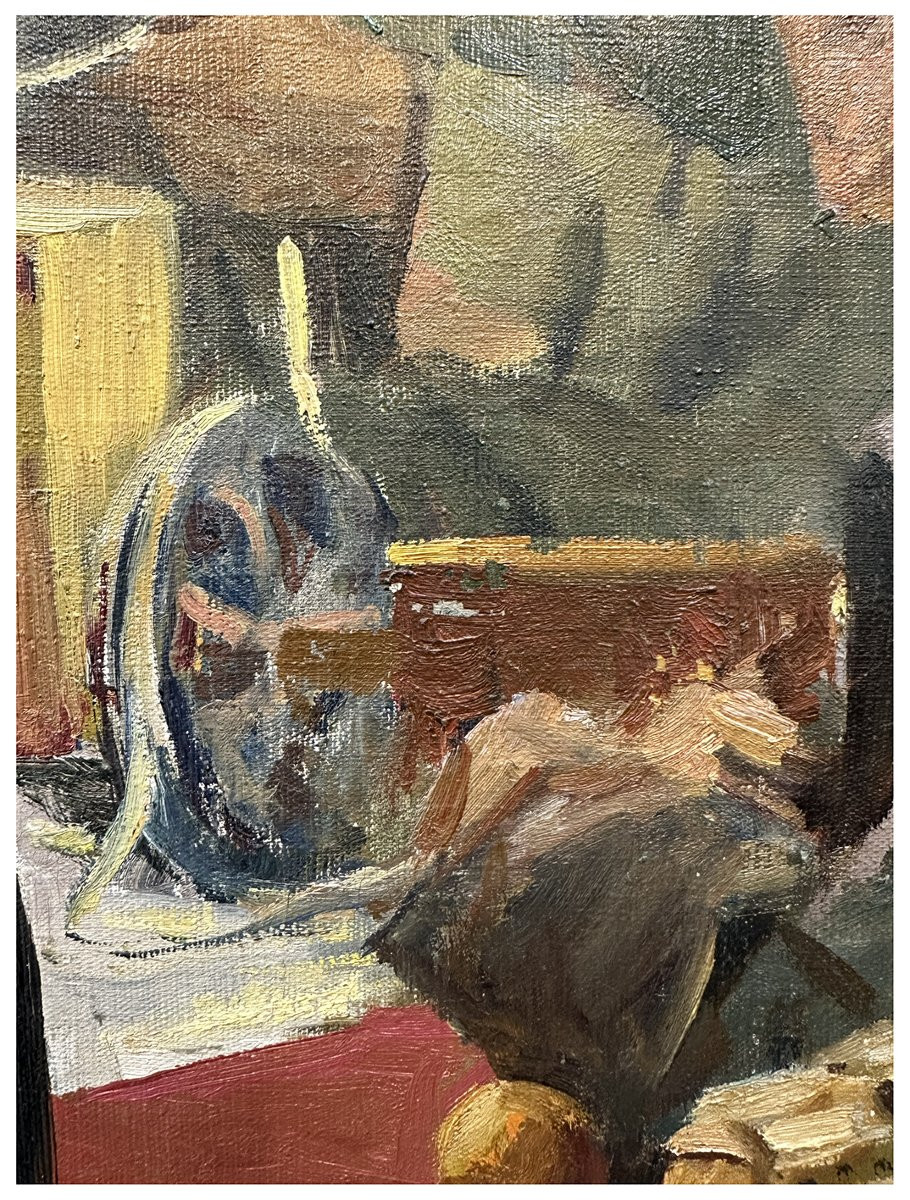
The canvas is in fair condition. The canvas has some superficial abrasions and small gaps in the lower section, consistent with the work's age and history.
Lenin with Soldiers of the Revolution
Oil on canvas, 154 × 204 cm
The painting fits perfectly into the golden age of Socialist Realism (Sotsrealism), the official artistic movement of the Soviet Union, codified from the First Congress of Soviet Writers in 1934 and dominant until the 1960s. In this aesthetic system, art had the explicit task of celebrating the Revolution, the Party, and its heroes, first and foremost Vladimir Ilyich Lenin, a mythologized figure ubiquitous in Soviet painting, sculpture, and graphic art.
The depiction of Lenin in direct contact with soldiers, sailors, and armed workers is one of the most recurring and codified subjects in official Soviet iconography: the revolutionary leader is not seen as a distant leader, but as a participating guide close to the armed people.
The scene depicts Lenin at the center of the composition, wearing dark civilian clothing—a deliberate element that visually distinguishes him from the mass of fighters—clutching a document and addressing a group of revolutionary soldiers and sailors with an authoritative gaze. The fighters are recognizable by their carefully painted details: rifles with fixed bayonets, cartridge belts slung over their shoulders, caps with cockades, red armbands, and the characteristic telnyashka (striped vest) of the Bolshevik sailor. In the background, on the right, a geographical map suggests a context of military command; on the left, a red flag completes the revolutionary symbolism. The scene is set in a sumptuous interior—likely the Smolny Palace in Petrograd or the Kremlin—recognizable by its chandelier and gilded walls, evoking the proletariat's conquest of power.
Technically, the painting reveals the hand of a painter with a solid Soviet academic background. The brushstrokes are loose and vigorous, with textured impastos evident especially in the drapery and uniforms, in keeping with the tradition of Russian realist painting dating back to Ilya Repin and the Peredvizhniki. The composition is expertly constructed: Lenin occupies the geometric and psychological center of the canvas, with the figures of the soldiers framing him on the left, creating a narrative rhythm from left to right. The diffused, warm light enhances the leader's face and underscores his determined expression. The palette—dominated by ochre, military green, black, and touches of red from the flag and sashes—is typical of Soviet painting from the 1950s and 1960s.
The canvas is in fair condition. The canvas has some superficial abrasions and small gaps in the lower section, consistent with the work's age and history.
Explore similar pieces and discover your ideal find:
Genre Scenes, Nudes