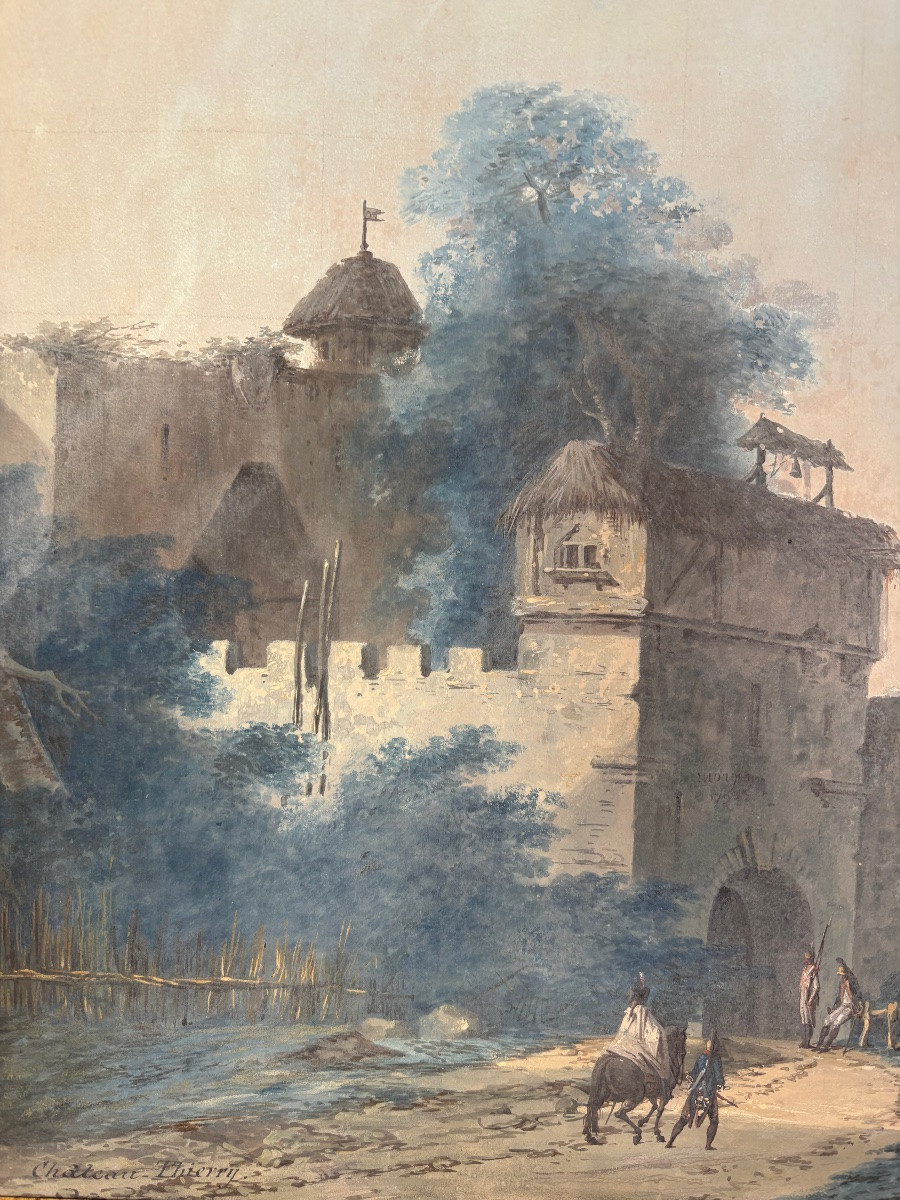
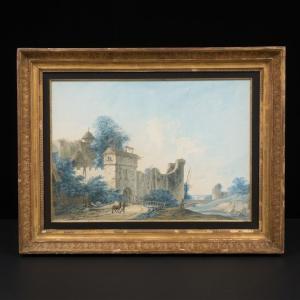


Pierre-antoine Mongin (1761-1827) Château Thierry Gouache Late 18th Century Aisne Period
Artist: Pierre-antoine Mongin (1761 - 1827)
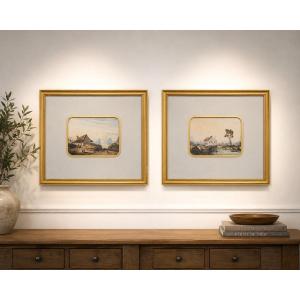
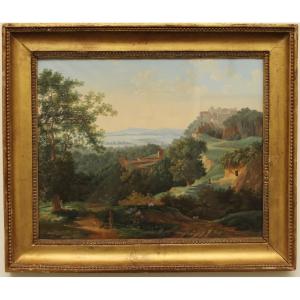
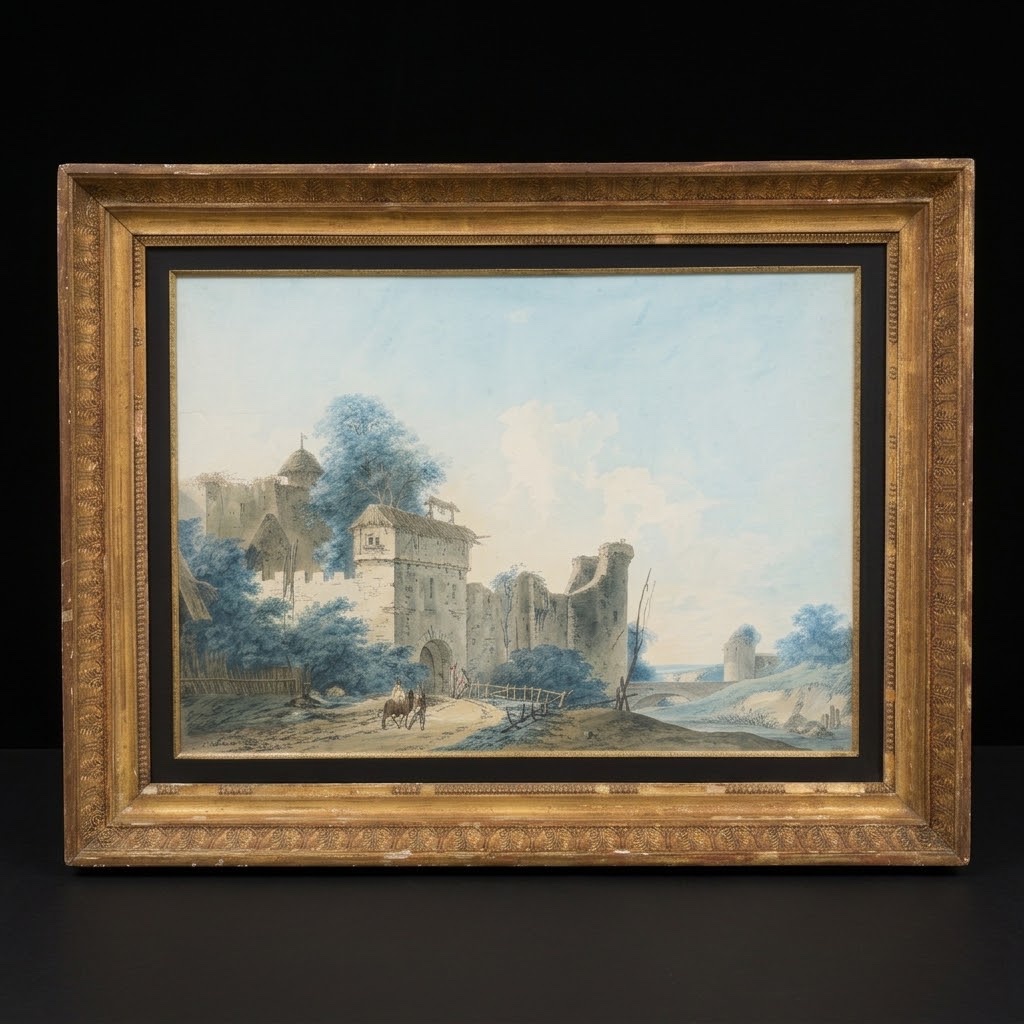
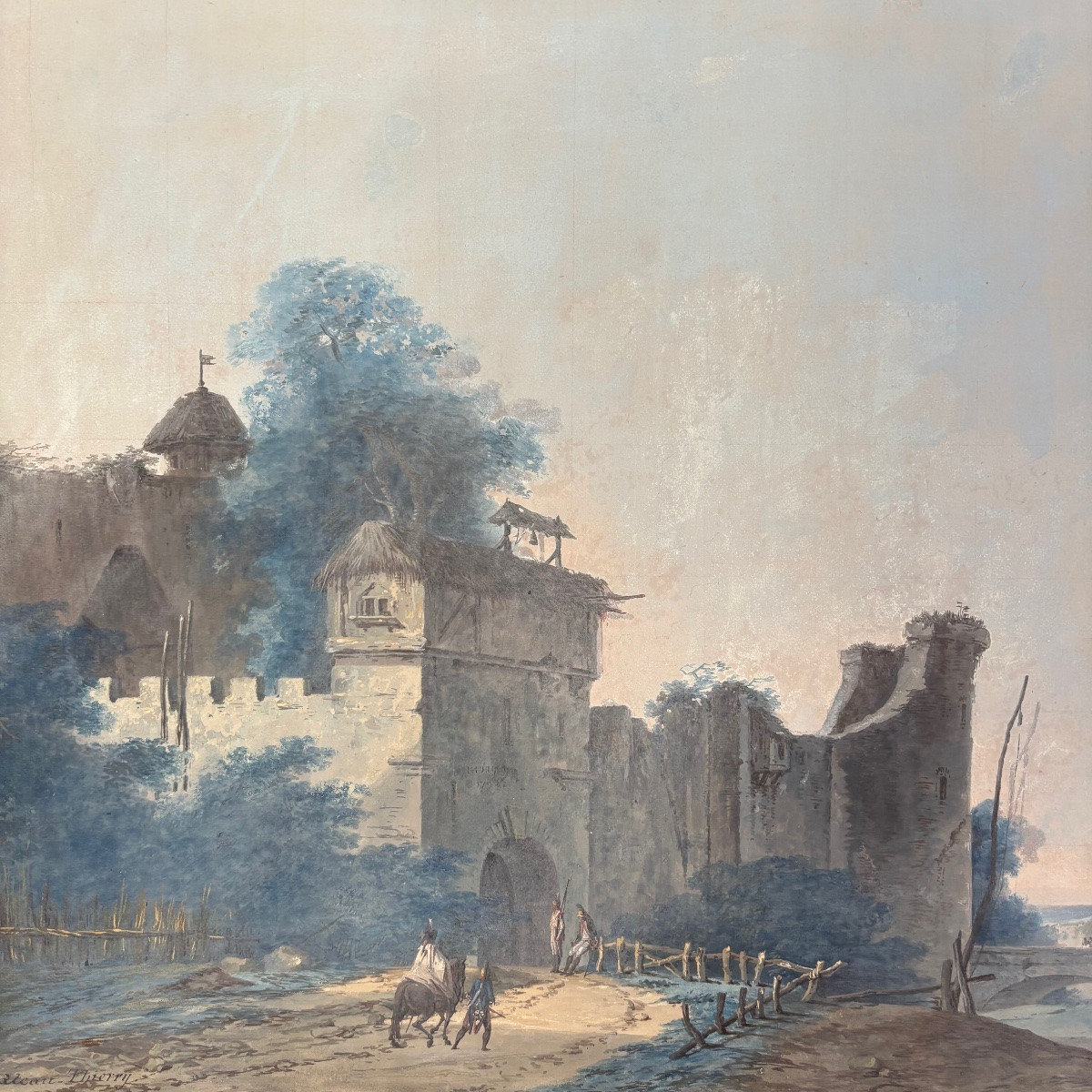
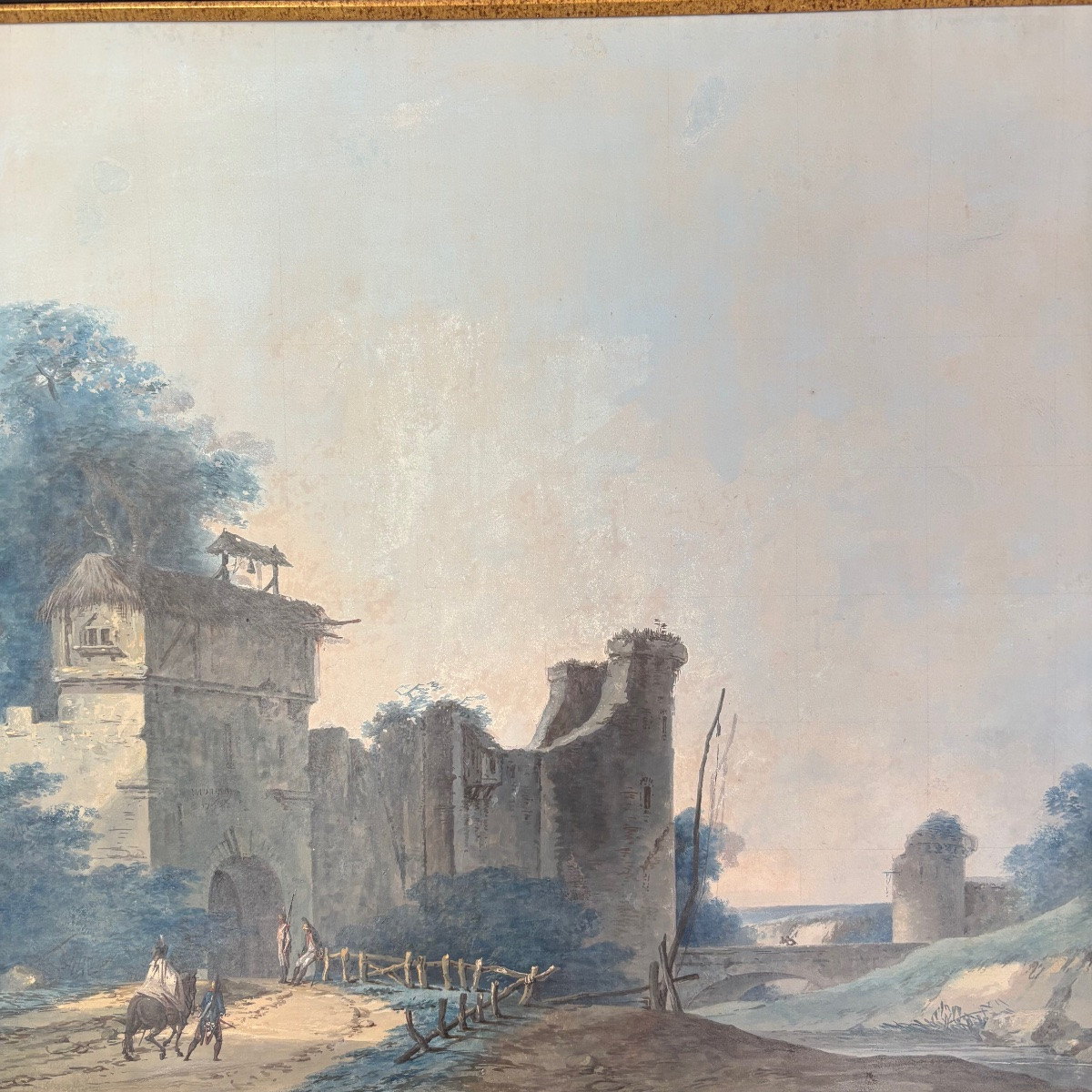
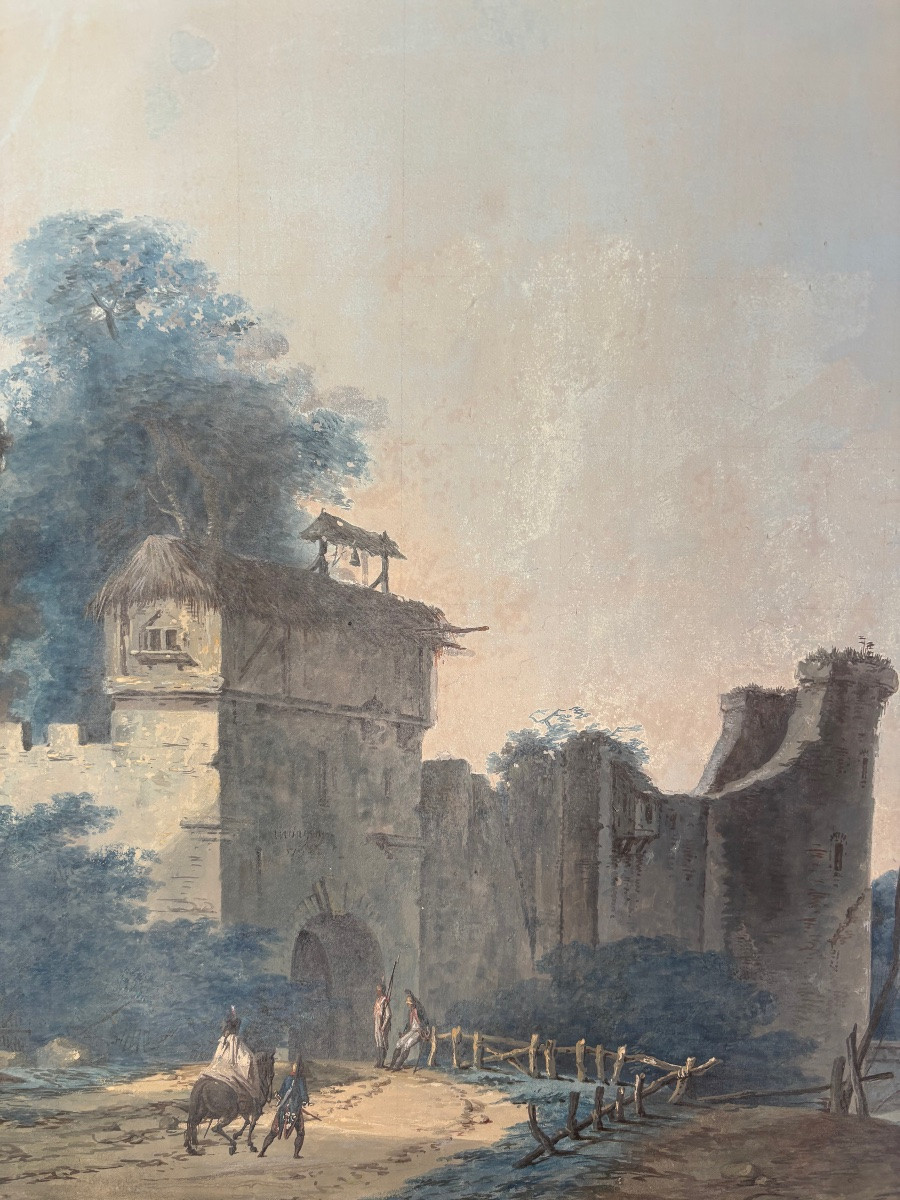
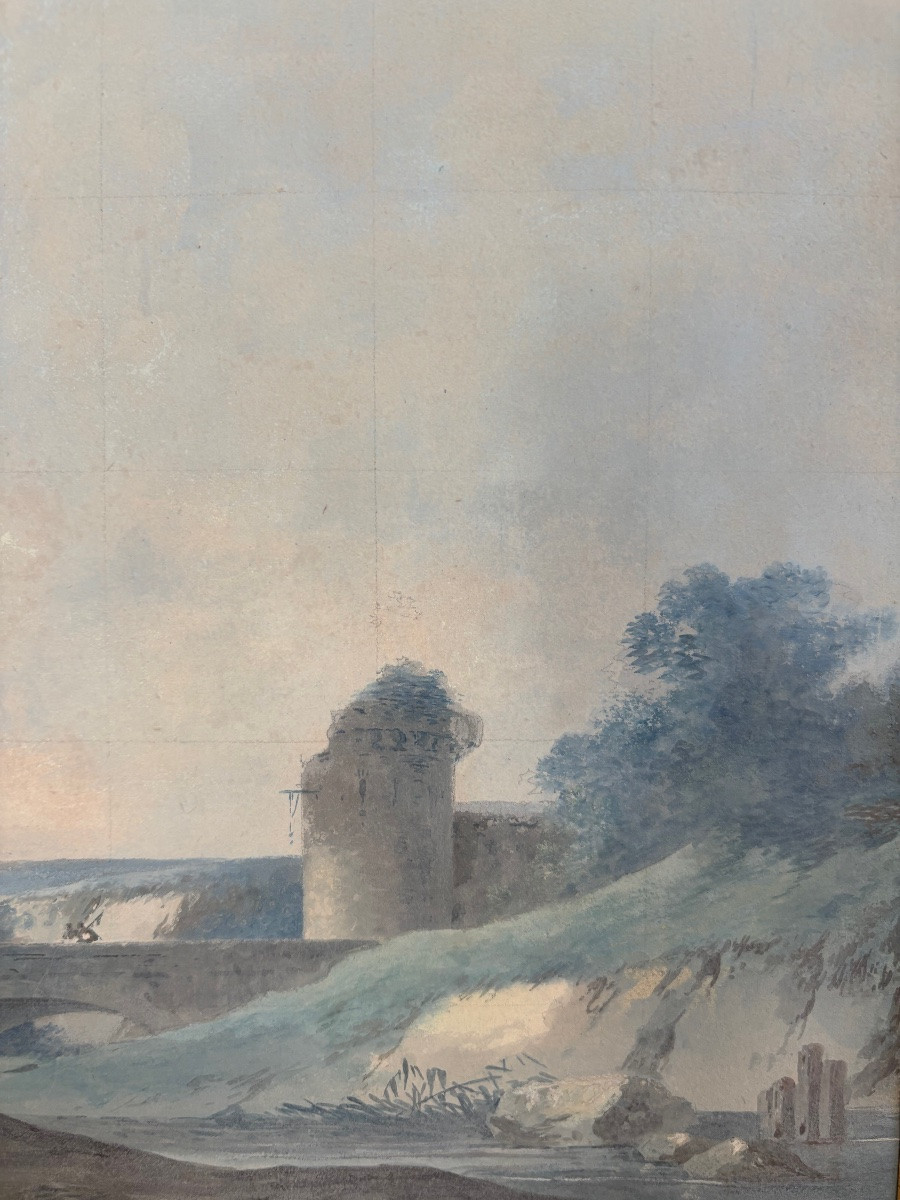
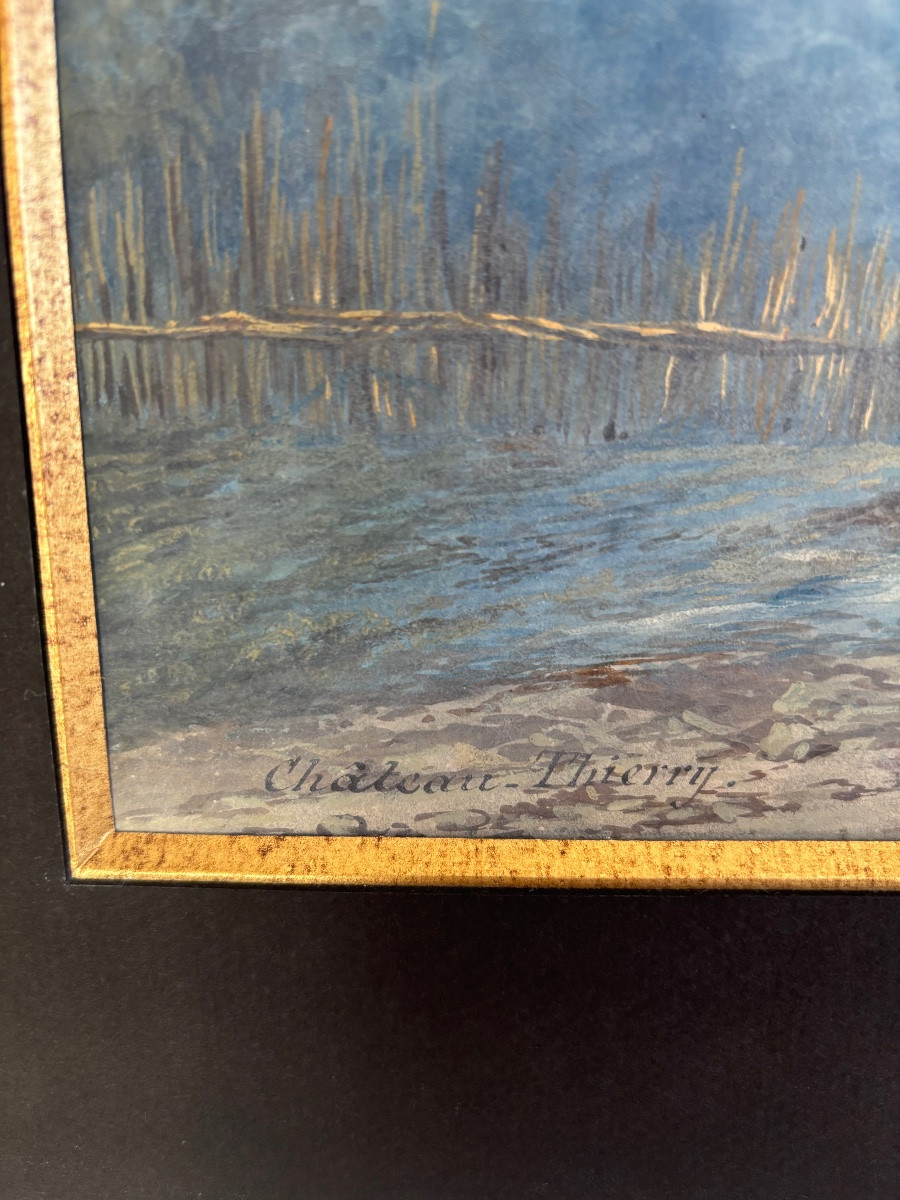
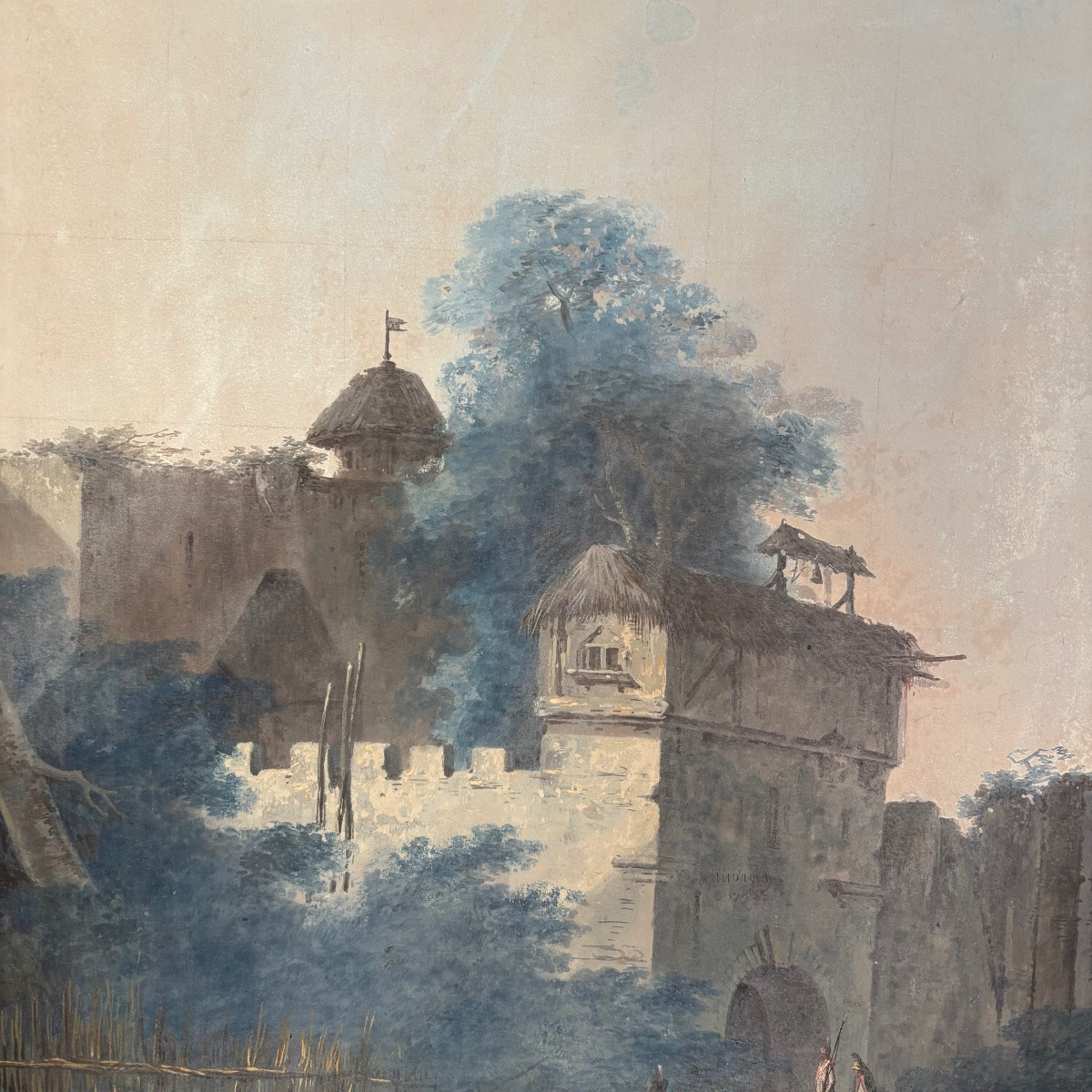
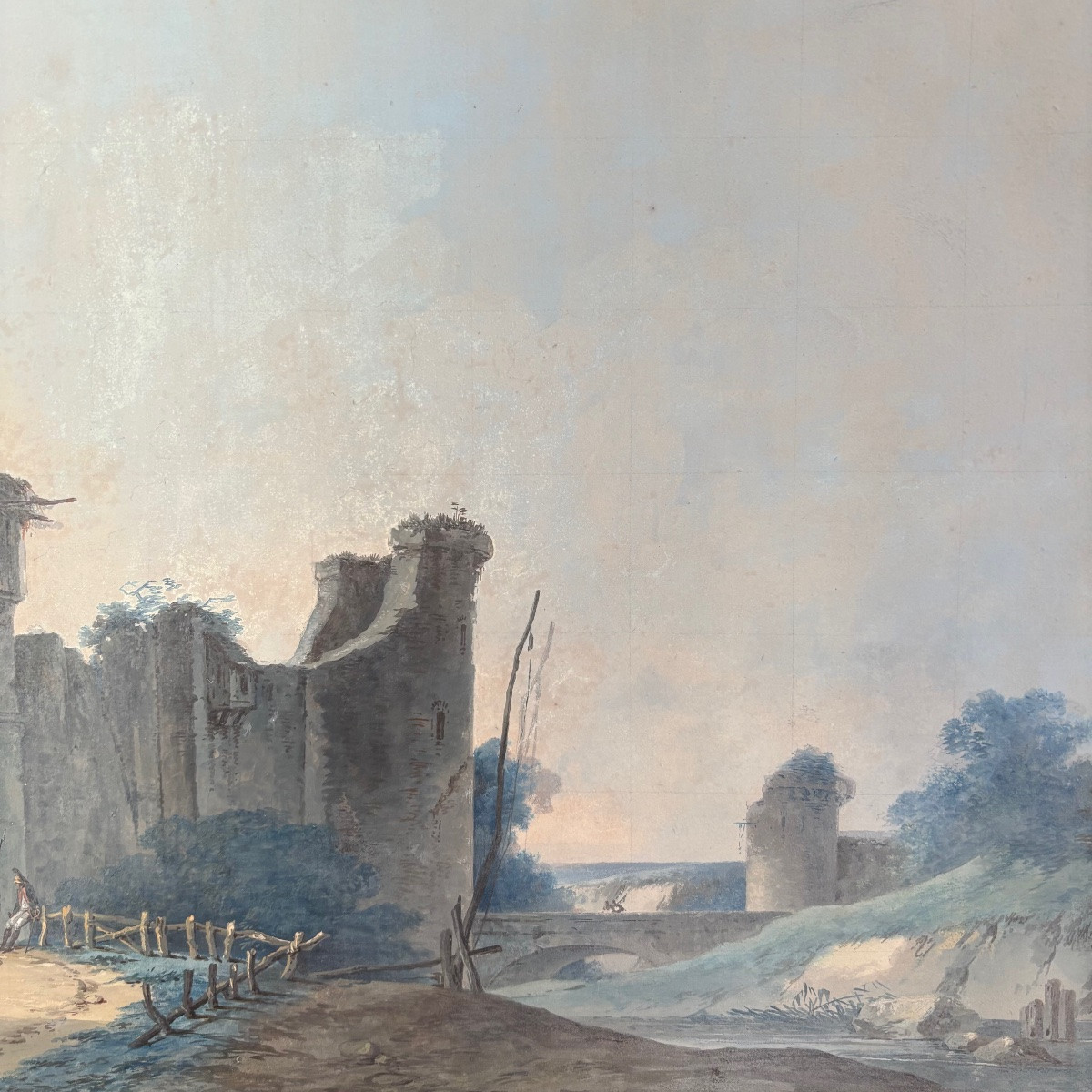
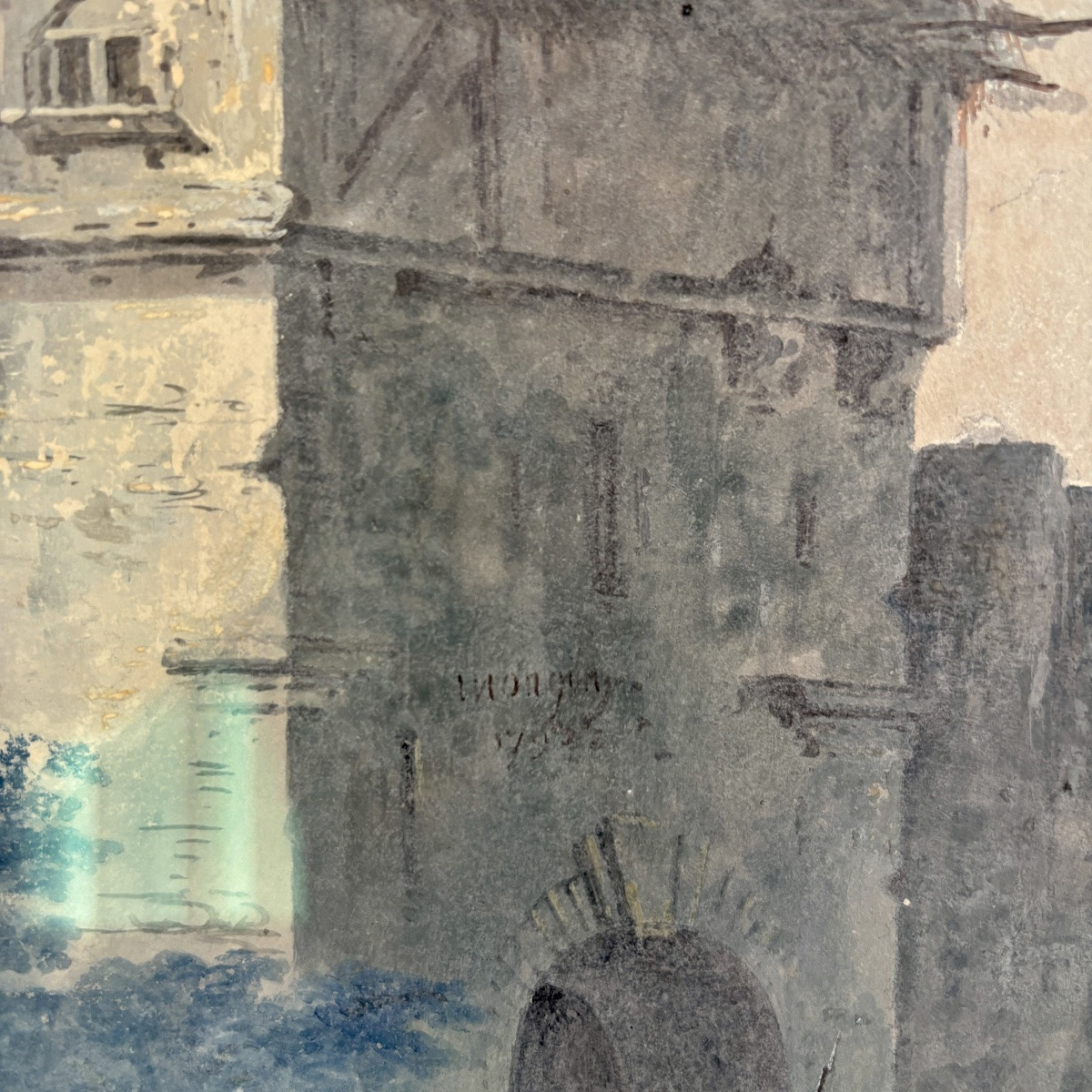
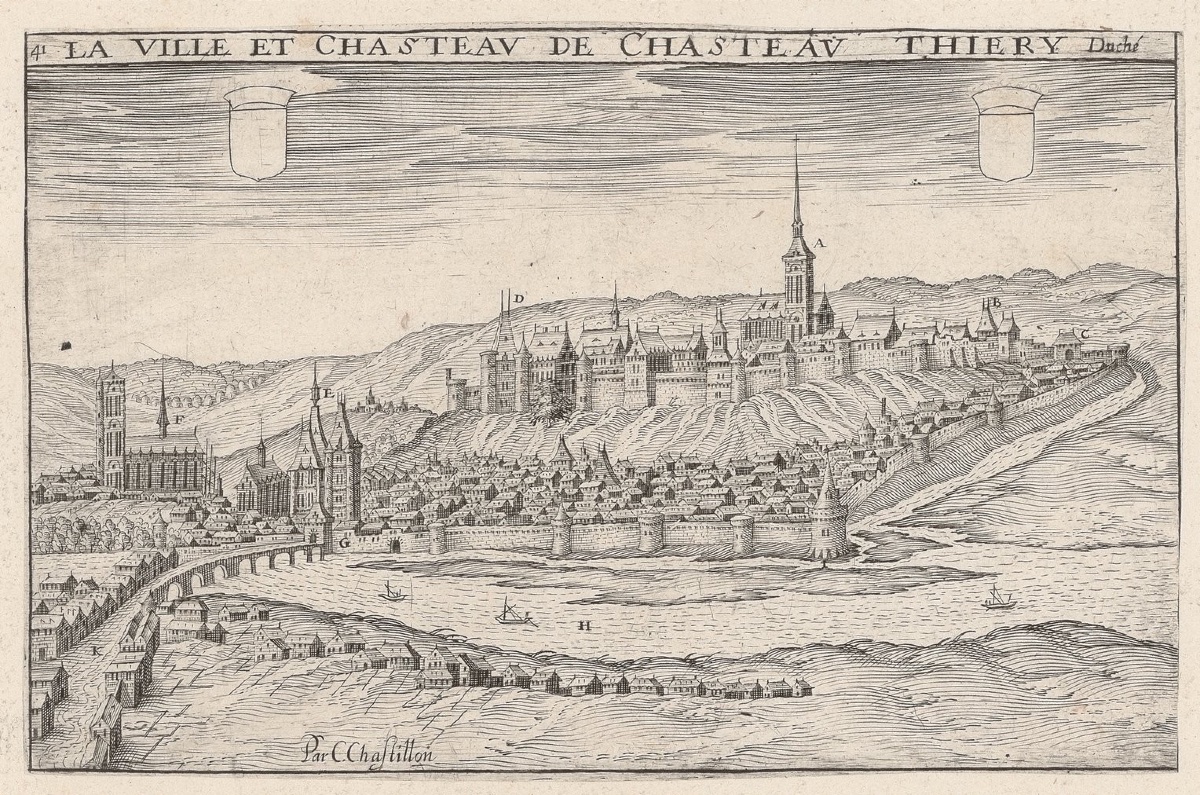
Pierre-Antoine Mongin (1761-1827) The Old Ramparts of Château-Thierry (Aisne) After the Revolution Gouache on paper Drawing signed and dated on the door "Mongin 1795" and located lower left "Château-Thierry" Late 18th century Empire period gilt wood and stucco frame Anti-reflective glass, conservation frame H. 38 x 55 cm Dimensions with frame: 55 x 70 cm A view of Château-Thierry A town known worldwide thanks to Jean de La Fontaine, it is a former stronghold. The town suffered significant damage during the French Revolution and the lower ramparts were demolished to expand the town. Our gouache, created by Pierre Antoine Mongin in 1795, depicts a genre scene at the foot of the ramparts, showing soldiers standing guard before the ruins. The drawing was gridded, so it is a finished work intended to be reproduced and painted on a larger scale by the artist. To date, no painting is known, and the city possesses nothing comparable. Pierre Antoine Mongin (1761-1827) A student at the Royal Academy of Painting and Sculpture from 1782 to 1785, Pierre-Antoine Mongin studied under Noël Hallé, Gabriel-François Doyen, and François-André Vincent. A landscape painter, genre painter, and history painter specializing in scenes of the Napoleonic Wars, he exhibited regularly at the Salon from 1791 to 1824. His studio, located at 29 rue de Sèvres in Paris, included students such as Hippolyte Lecomte and Alexis-Victor Joly. Practicing gouache as well as oil painting, Mongin was also an engraver and expanded his repertoire to include original works. He supplied drawings to the presses of the lithographer Godefroy Engelmann. Around 1804, he designed a large panoramic painting entitled "The English Gardens" for the wallpaper manufacturer Dufour. For this, he drew inspiration from the follies built in the landscaped gardens of the period. He subsequently designed patterns for new wallpapers printed by the enterprising Mulhouse manufacturer Jean Zuber. These are vast panoramic views with diverse themes: Hindustan (1807), Greater Helvetia (1814), Lesser Helvetia (1818), French Gardens (1821), Distant Lands (1825)
1 550 €
Period: 18th century
Style: Consulat, Empire
Condition: Excellent condition
Material: Gouache
Width: 55 cm
Height: 38 cm
Reference (ID): 1710038
Availability: In stock
Print