

Study Of A Tree And Nature, Pre-romantic Drawing, 18th Century, Ink And Wash On Paper
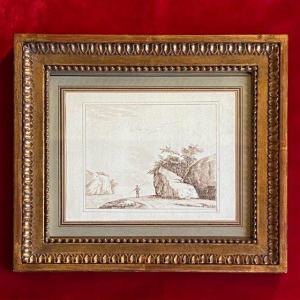
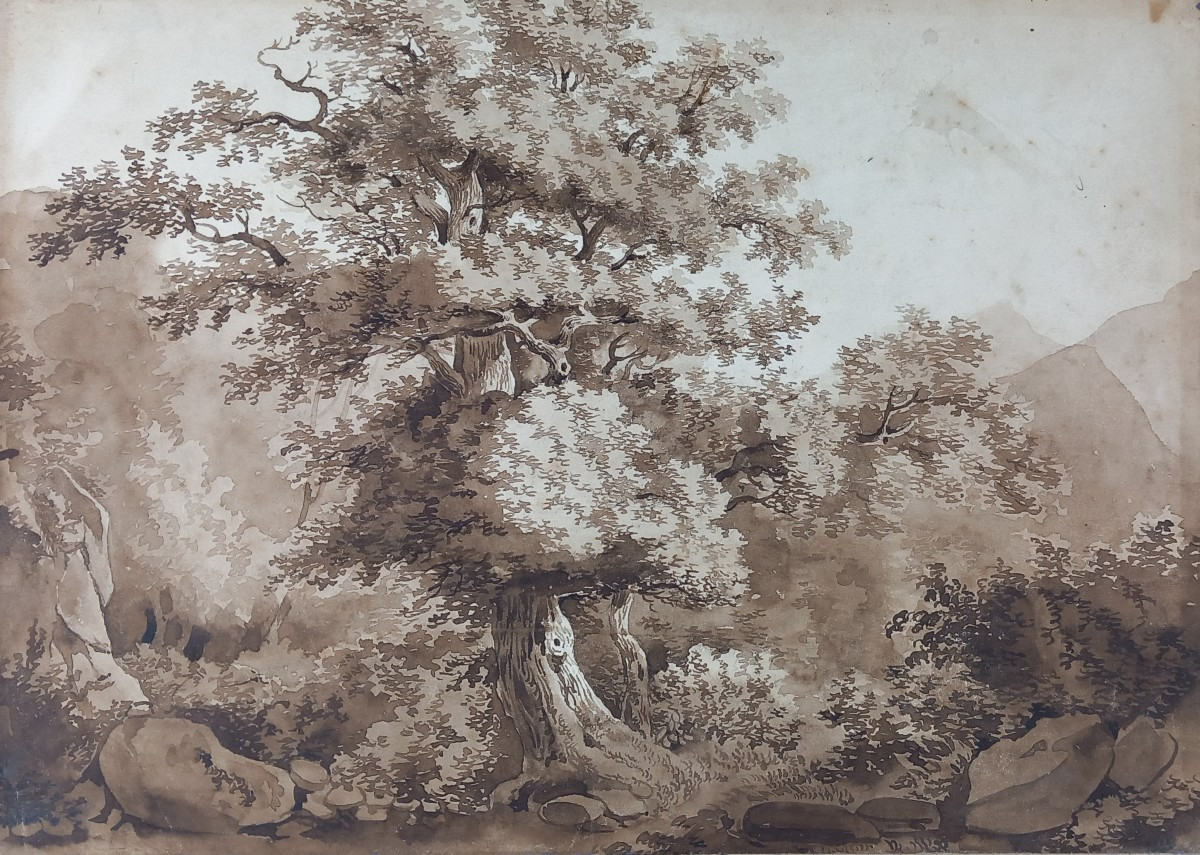
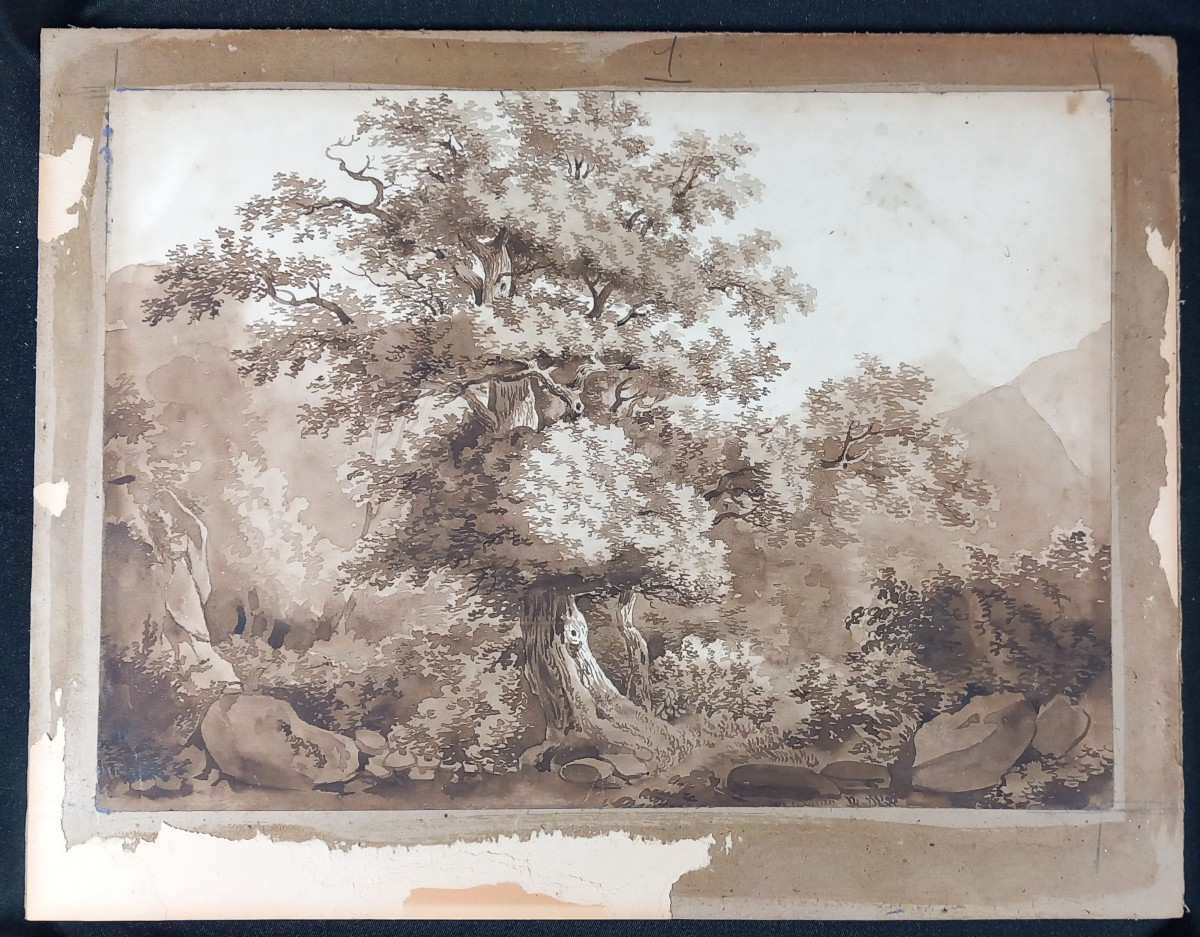
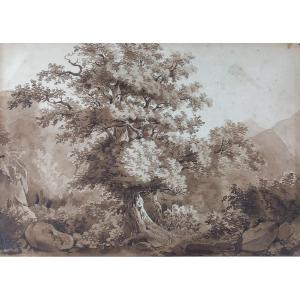
This 18th-century drawing is a masterful landscape study that perfectly illustrates the period's taste for wild and picturesque nature. We are immersed in an almost total vegetal scene, typical of pre-Romanticism.
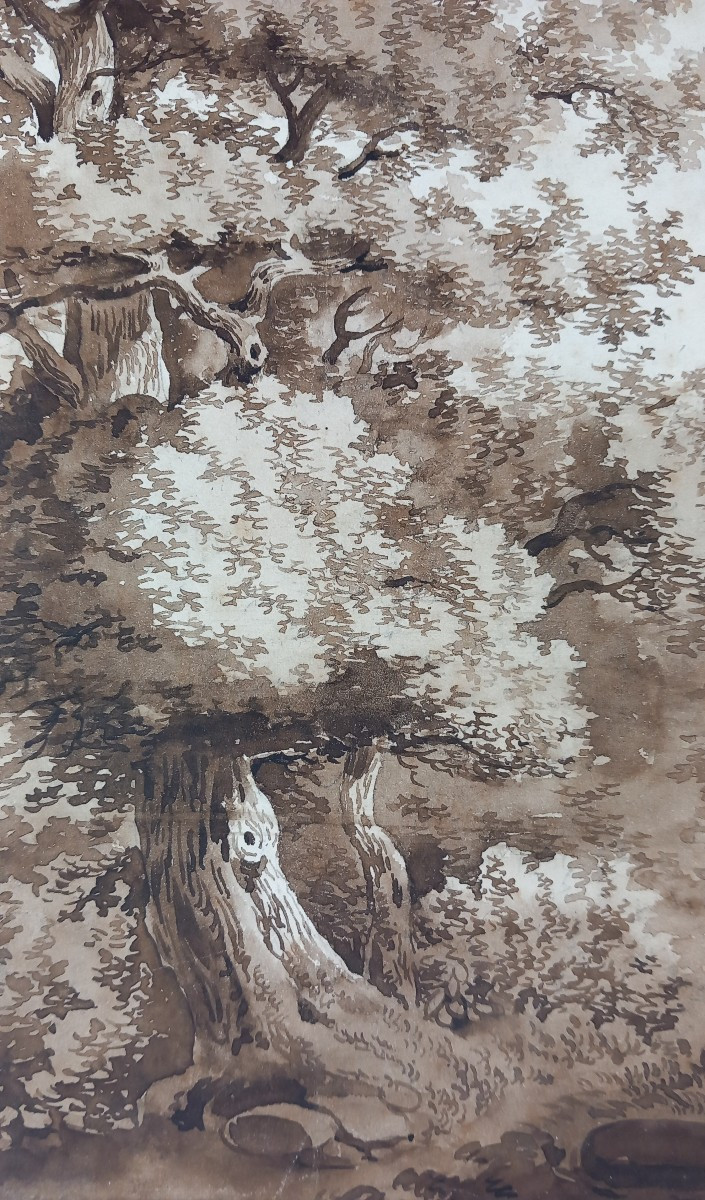
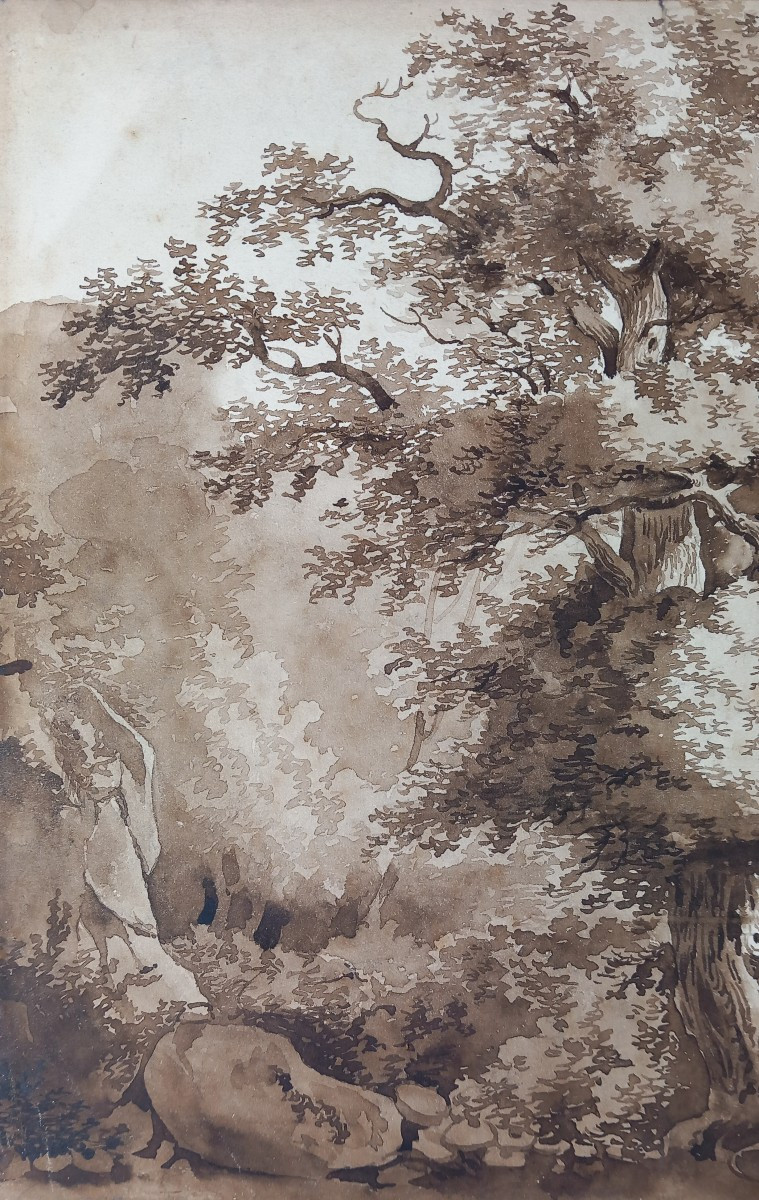
The work is dominated by a majestic old tree, probably an oak, whose gnarled trunk and twisted branches occupy the center of the page.
The trunk seems almost alive, with cavities and roots anchored in rocky soil.
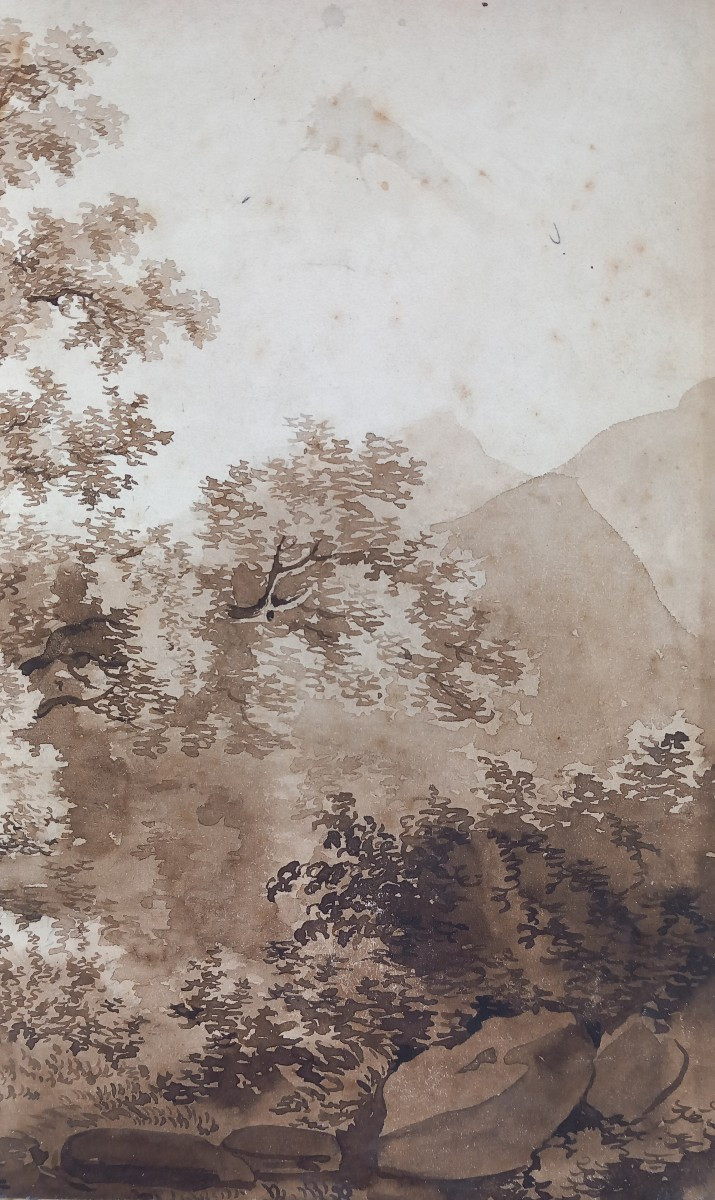
The tree stands out against a background of dense undergrowth. To the right, mountainous reliefs are suggested by lighter washes, creating a sense of depth.
The absence of any human figure, contrasting with the immensity of the tree, further accentuates the grandeur of nature.
The drawing demonstrates great technical virtuosity, executed in pen and bistre (or brown ink) wash.
The artist uses varying intensities of brown to
model the volumes. The deep shadows in the foliage and under the
rocks in the foreground provide a solid foundation for the composition.
Light seems to filter through the leaves; the artist
leaves the paper blank or uses highlights to simulate the glare
of light on the foliage and rocks.
There is great precision in the rendering of the bark and
leaves, treated with a nervous energy that lends movement to the whole.
This type of drawing falls within the tradition of the "aesthetics of the sublime" and the picturesque. At this time, people no longer sought
only the formal French garden, but admired the beauty of
natural disorder, ancient trees, and rugged landscapes. This is the
kind of view that artists like Fragonard or Hubert Robert
particularly favored.
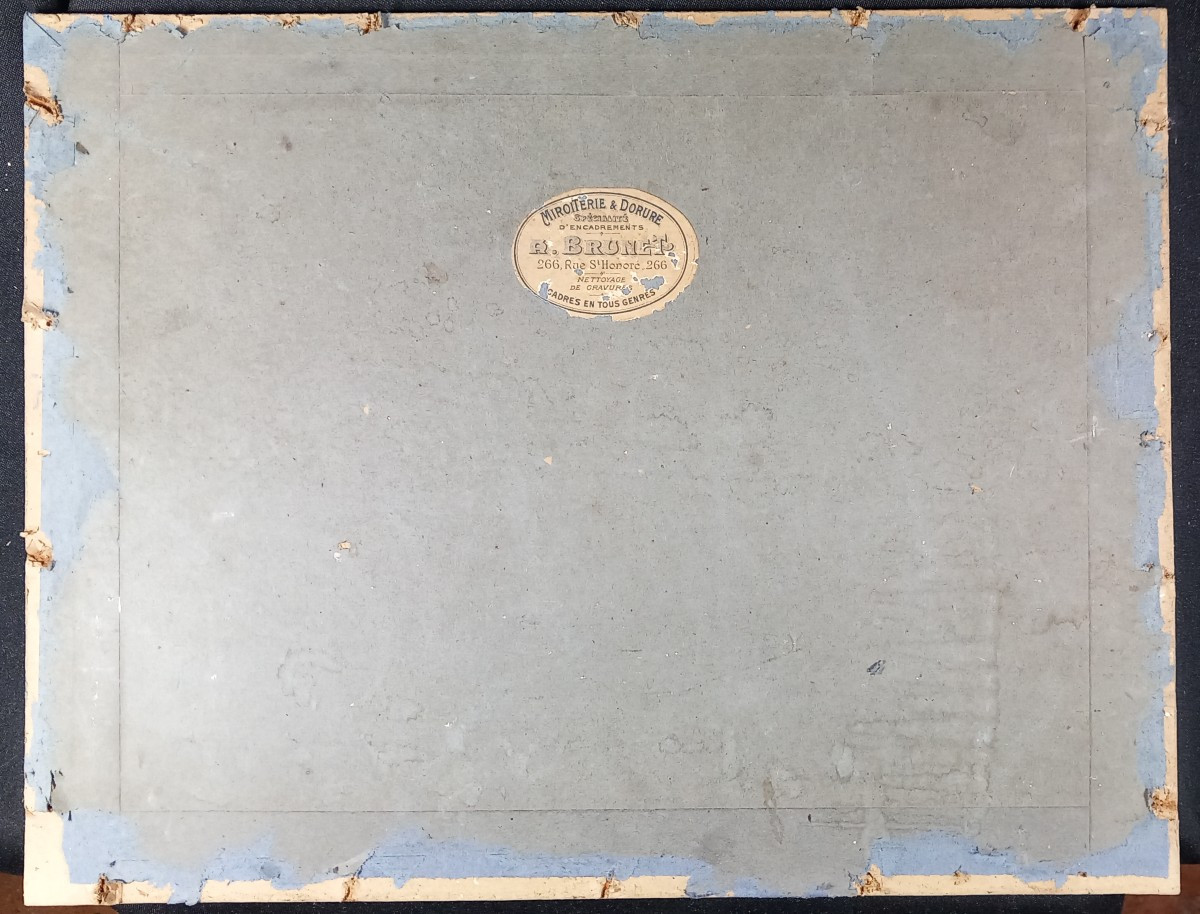
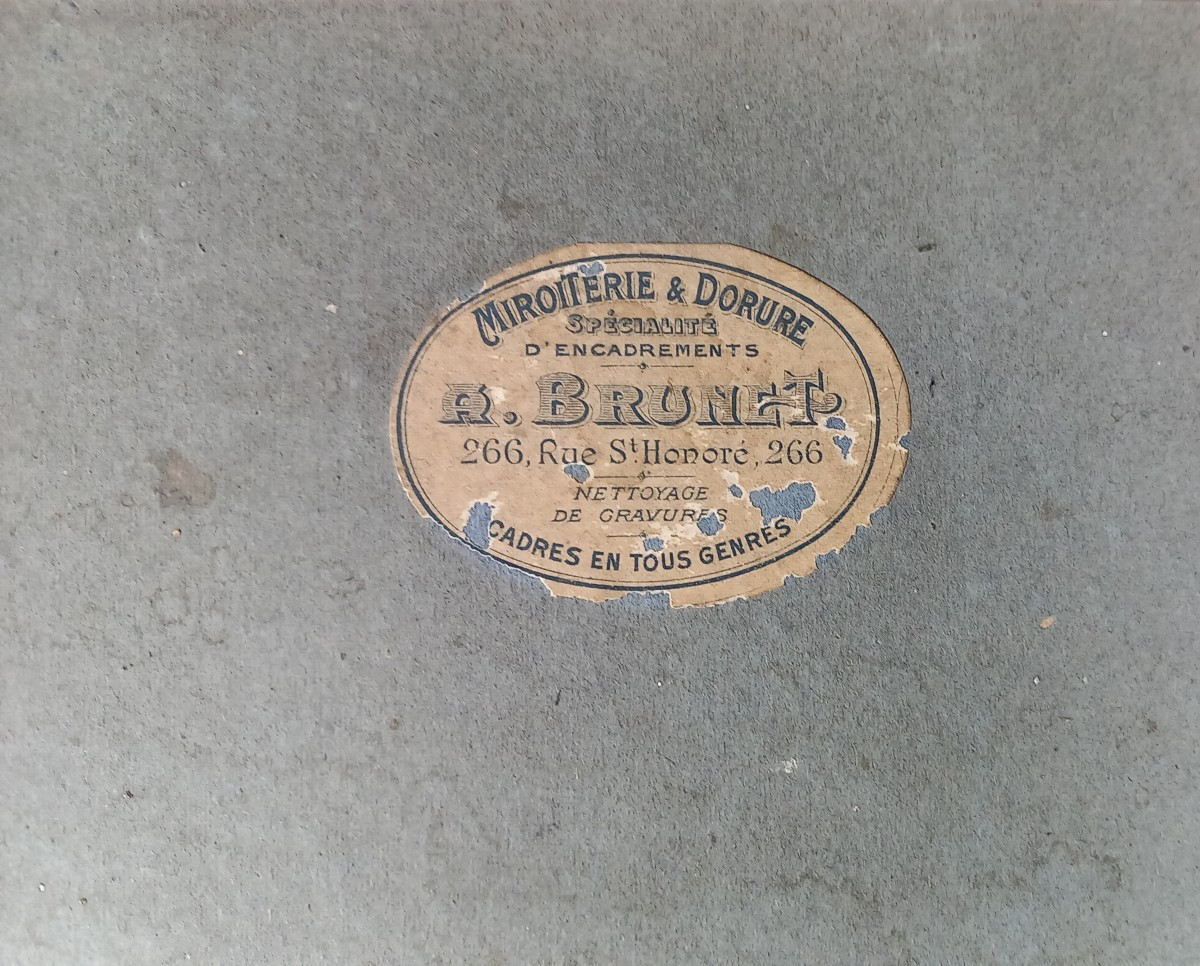
Drawing mounted on an old framing board (label on the back). Board dimensions: 41.2 x 32 cm. Visible drawing dimensions: 36.2 x 25.7 cm.
The work is dominated by a majestic old tree, probably an oak, whose gnarled trunk and twisted branches occupy the center of the page.
The trunk seems almost alive, with cavities and roots anchored in rocky soil.
The tree stands out against a background of dense undergrowth. To the right, mountainous reliefs are suggested by lighter washes, creating a sense of depth.
The absence of any human figure, contrasting with the immensity of the tree, further accentuates the grandeur of nature.
The drawing demonstrates great technical virtuosity, executed in pen and bistre (or brown ink) wash.
The artist uses varying intensities of brown to
model the volumes. The deep shadows in the foliage and under the
rocks in the foreground provide a solid foundation for the composition.
Light seems to filter through the leaves; the artist
leaves the paper blank or uses highlights to simulate the glare
of light on the foliage and rocks.
There is great precision in the rendering of the bark and
leaves, treated with a nervous energy that lends movement to the whole.
This type of drawing falls within the tradition of the "aesthetics of the sublime" and the picturesque. At this time, people no longer sought
only the formal French garden, but admired the beauty of
natural disorder, ancient trees, and rugged landscapes. This is the
kind of view that artists like Fragonard or Hubert Robert
particularly favored.
Drawing mounted on an old framing board (label on the back). Board dimensions: 41.2 x 32 cm. Visible drawing dimensions: 36.2 x 25.7 cm.
480 €
Period: 18th century
Style: Louis 16th, Directory
Condition: En l'etat
Material: Paper
Reference (ID): 1708965
Availability: In stock
Print