

François-eugène Rousseau (1827-1890) Sinisant Vase, Circa. 1889
Artist: François-eugène Rousseau (1827-1890)
François-Eugène Rousseau (1827-1890)
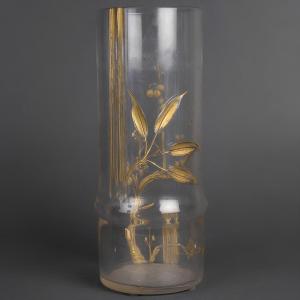
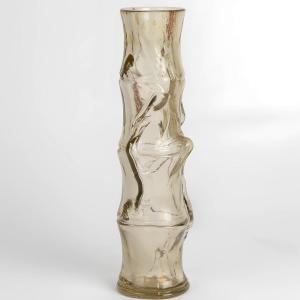
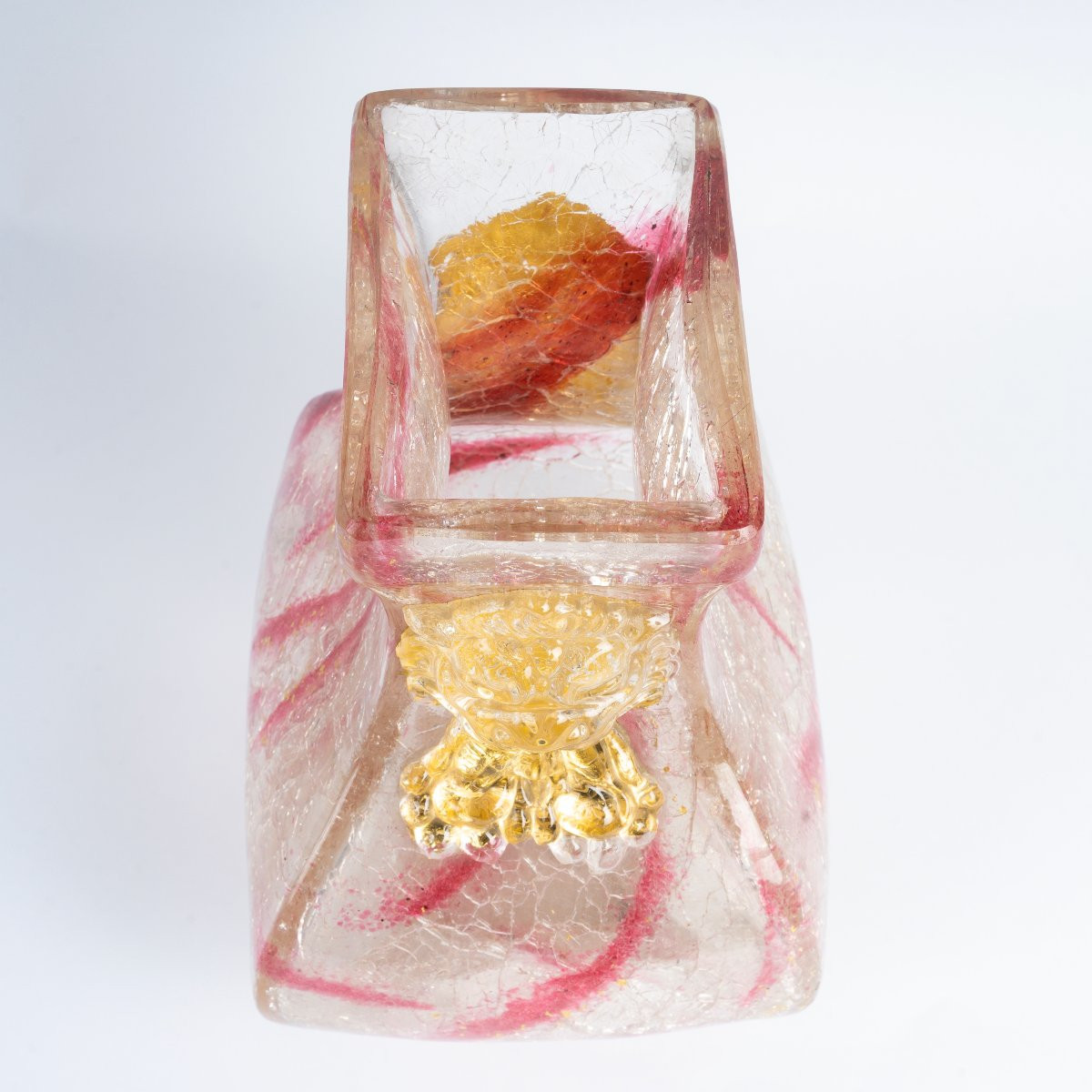
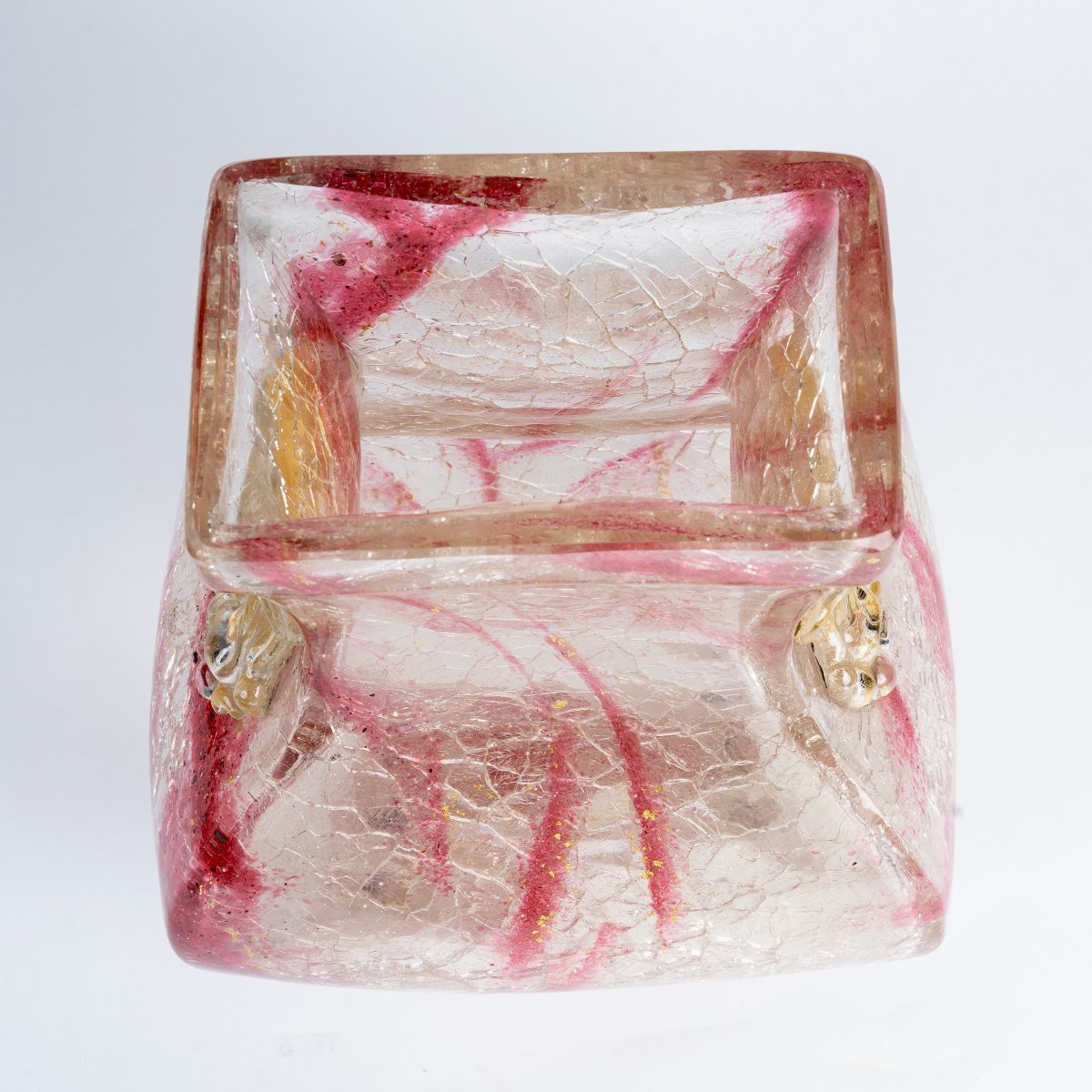
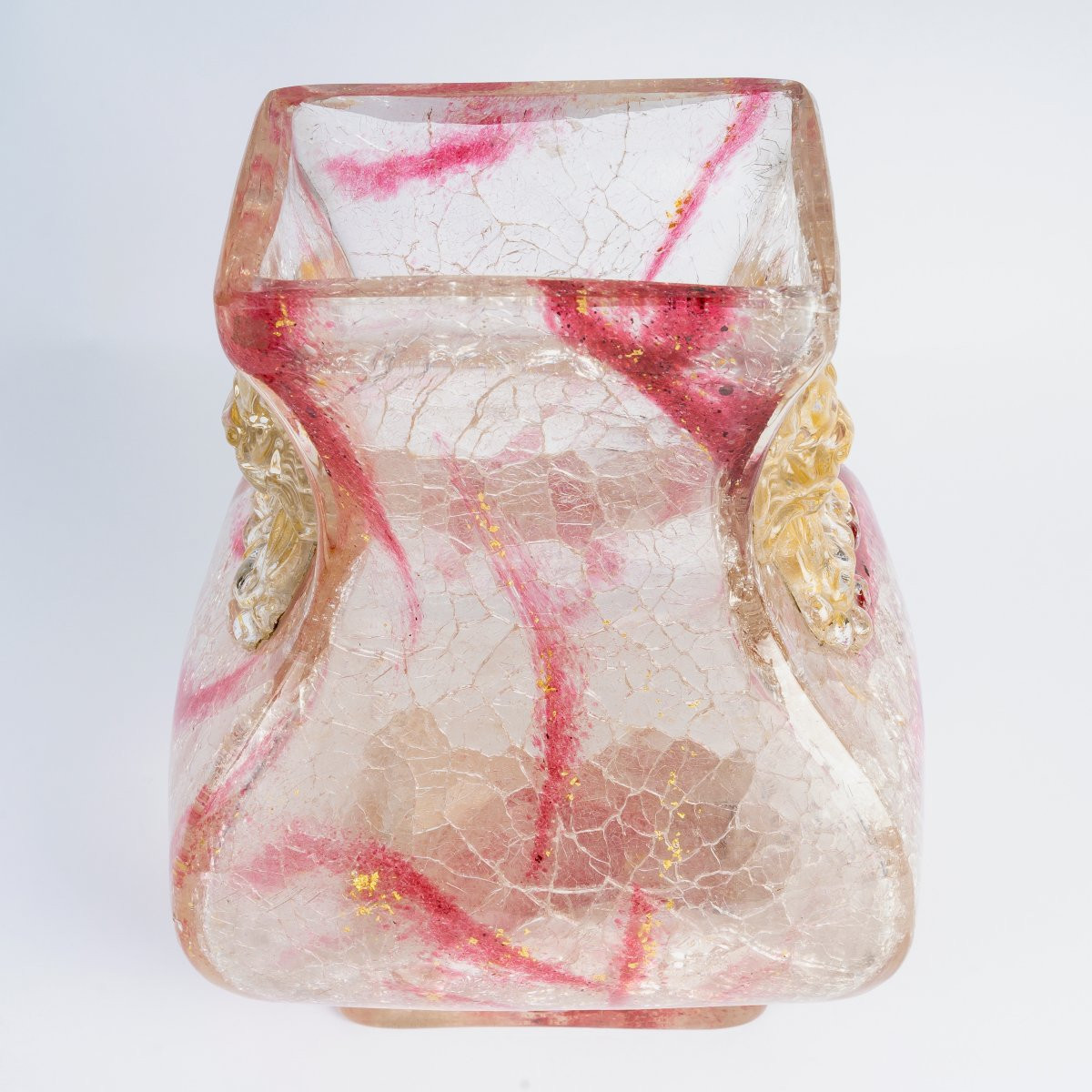
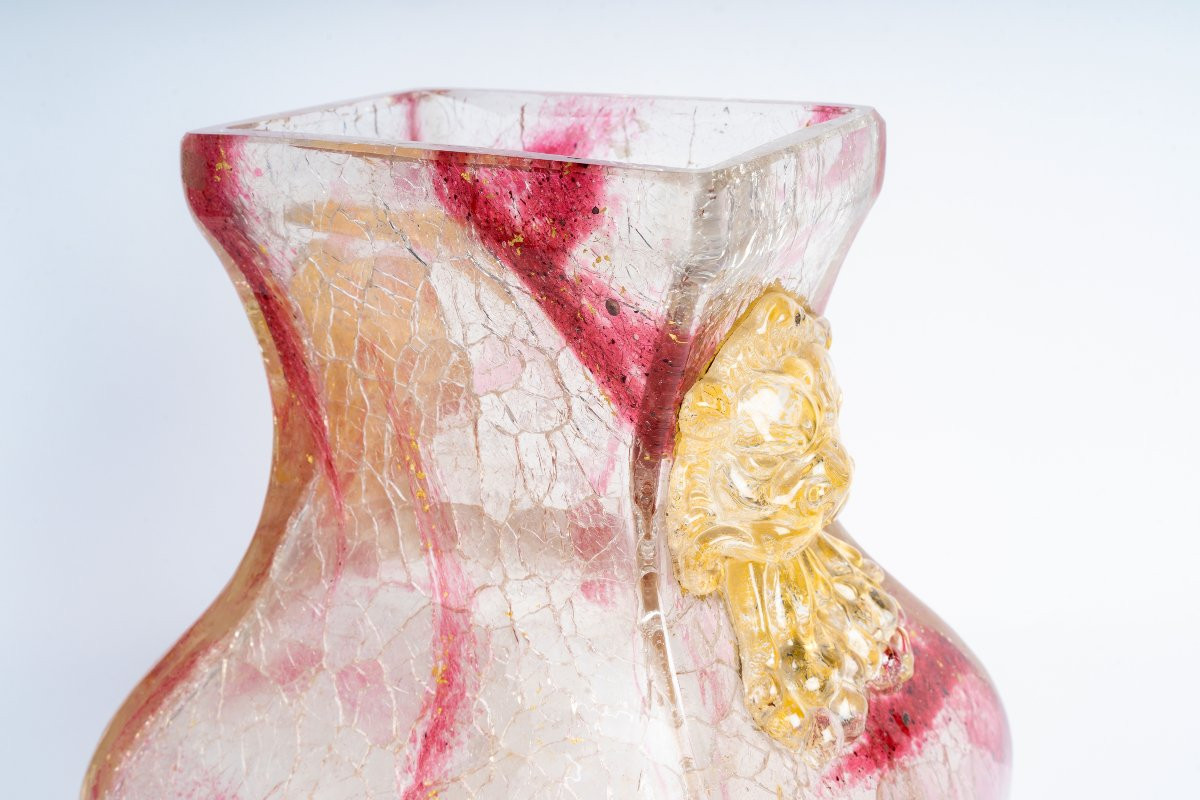
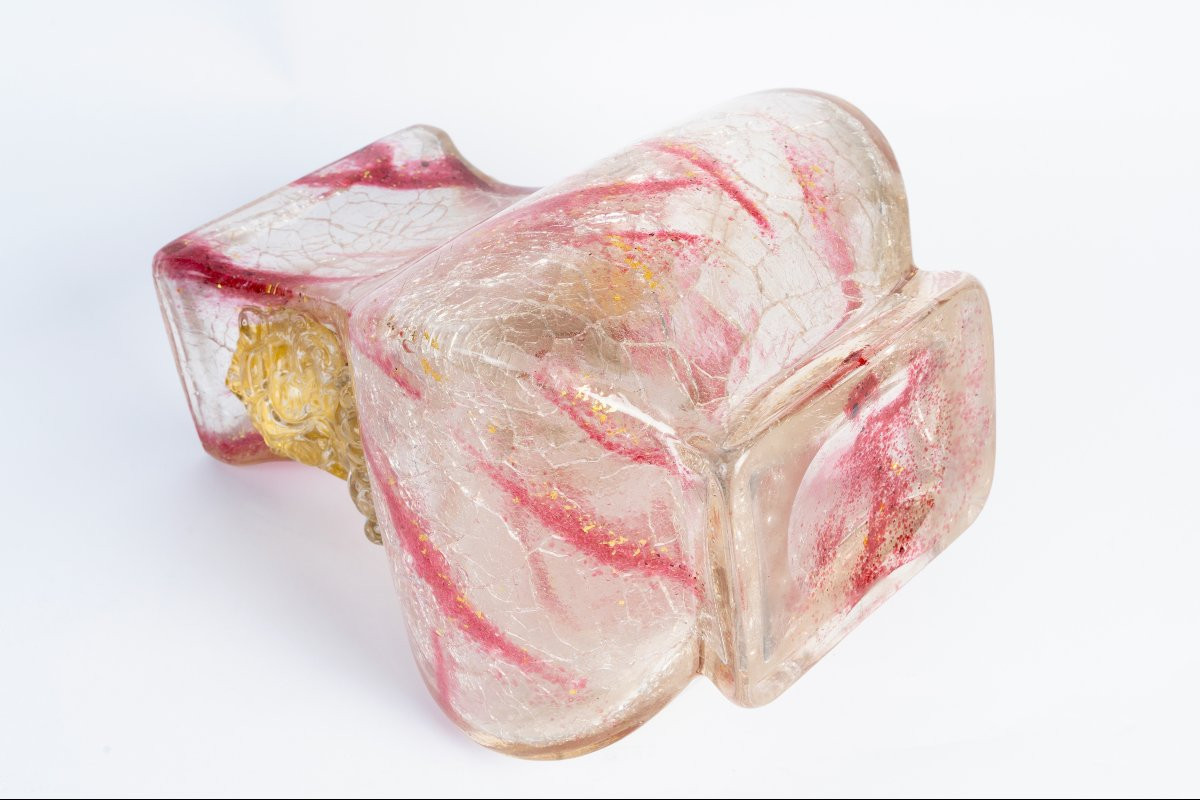
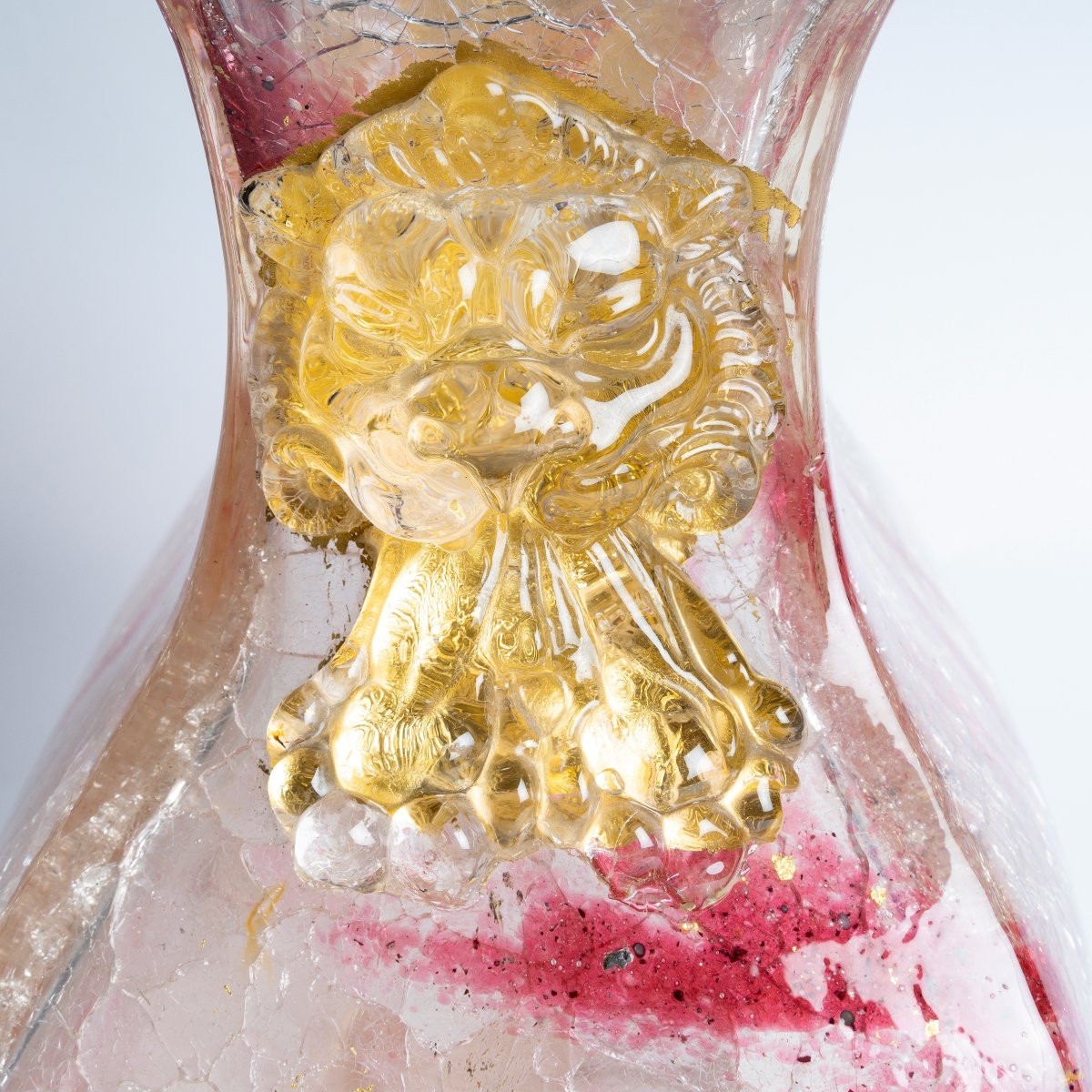
Chinoiserie Glass Vase
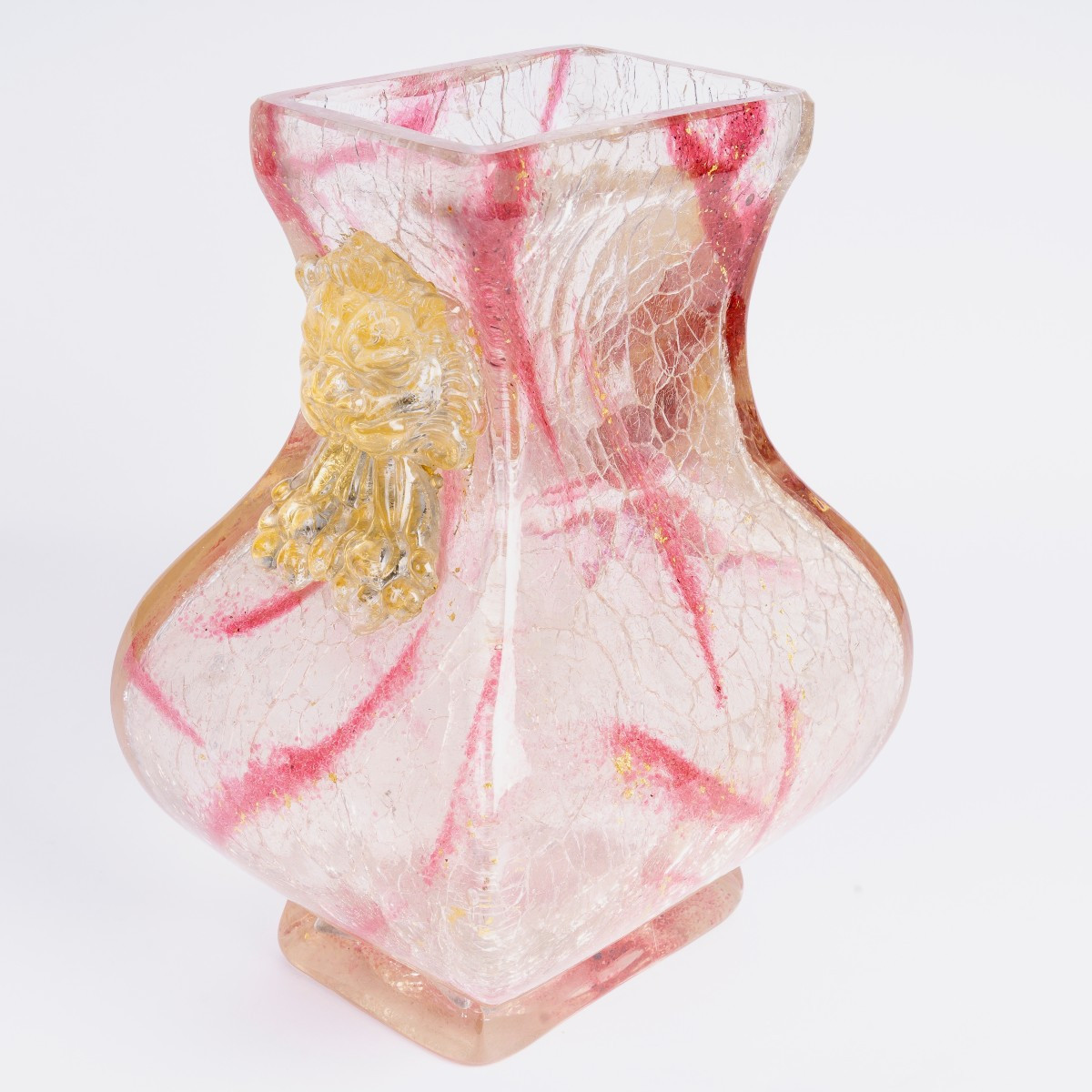
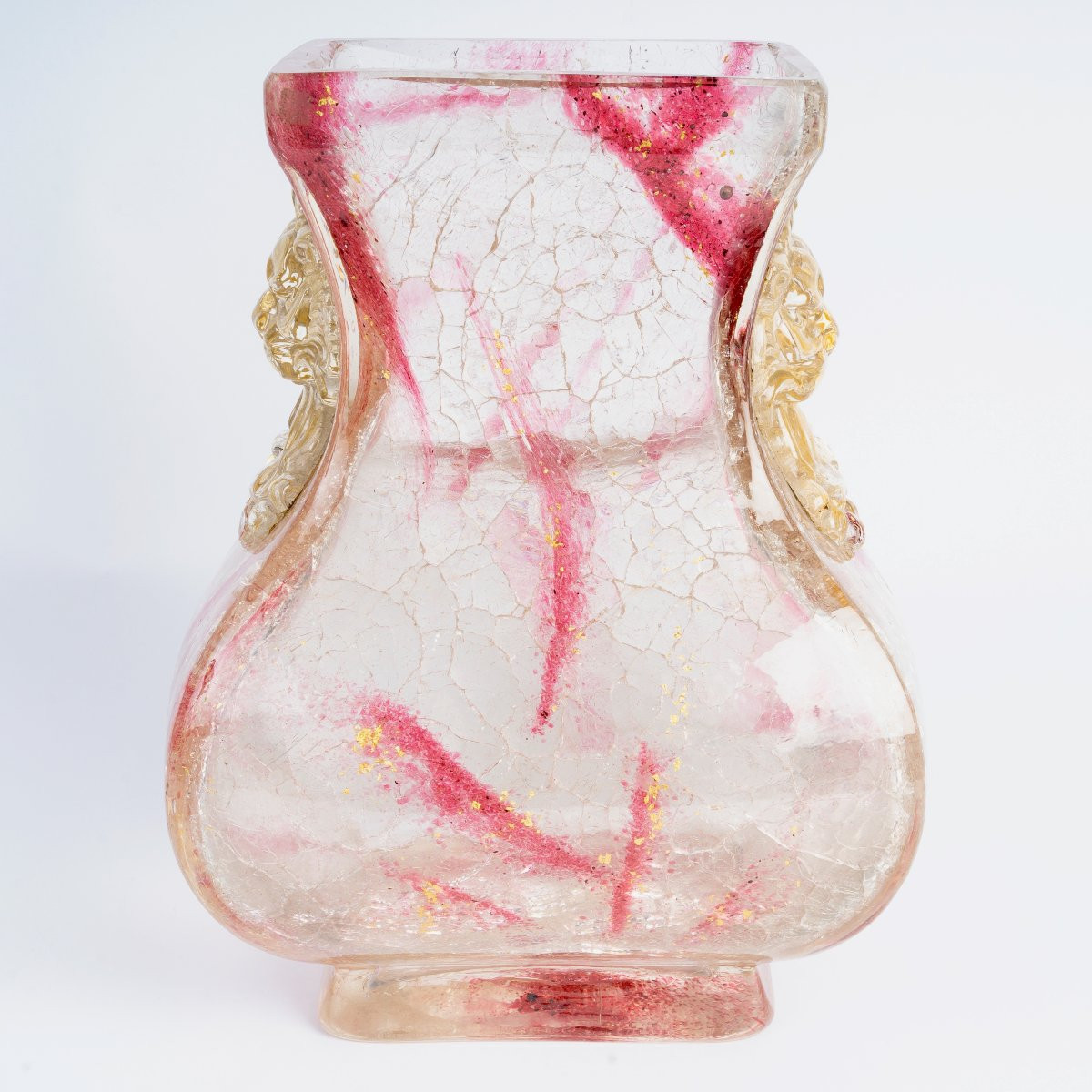
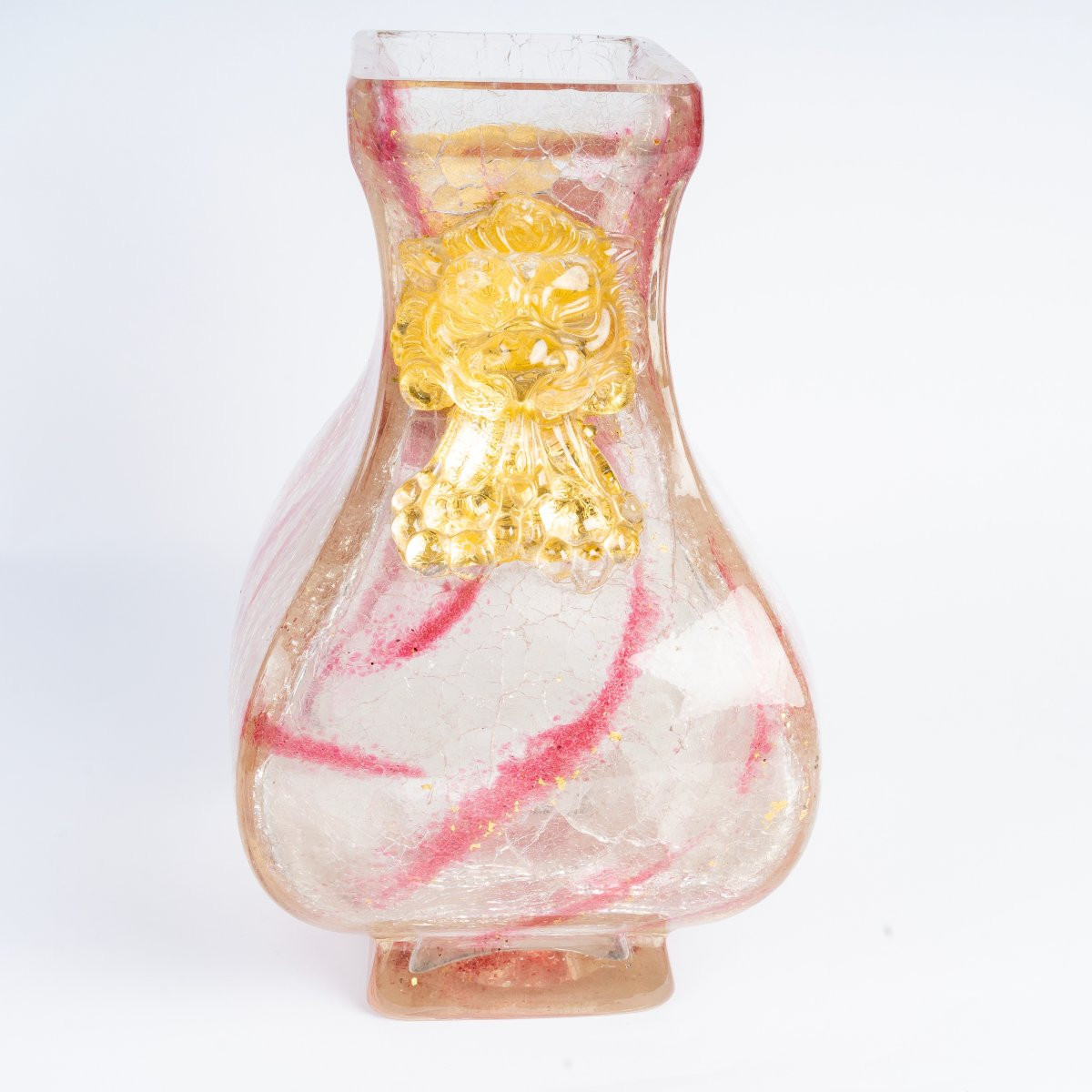
Multilayers Craquelure Glass Vase.
Decorated with polychrom stains in the glass, inclusions and « paillons d’or »
Adorned in relief with chimera masks simulating handles
Circa 1885-1890
Similar shape vase in the collections of the Orsay Museum in Paris
A similar model is reproduced in "L'art du verre en France, 1860-1914", J. Bloch-Dermant, Edita Denoël, Suisse, 1974, p.35. and in "Glas des Art Nouveau, Die Sammlung Gerda Koepff", Prestel, Munich, 1998, p.80.
François-Eugène Rousseau was born in Paris on March 17, 1827 and took over the direc-tion of his father’s porcelain and faience business in 1855. Quickly, the young man shows his desire to break with the industrial habits of the family business by seeking to create a more original and artistic production. Artist before being a merchant, Eugène Rousseau’s love of the beautiful also guided great generosity.
It is in this sense that he joined the first founders of the Central Union of Decorative Arts in 1862, accepting with good grace the financial risks of the 1863 Exhibition to support the patriotic efforts of this society.
Ambitionnant to propose an inspired and innovative production, Rousseau was interested in the research of ceramists of his time and will be, from 1866, one of the first to be inspired by French art by having engraver Félix Bracquemond draw a - now famous - faience service take up the animal figures of Hokusai’s ukiyo-e.
Presented at the 1867 Universelle Exhibition in Paris, the "Rousseau service" met with great success.
Following this first success, Rousseau chose to turn his creative verve towards another material, glass.
And indeed, the artist and entrepreneur will find in glass a unique field of experimentation and creation. Inspired by chemistry but endowed with intuitions demanding discoveries, Rousseau entrusts the Appert brothers (in Clichy) with the task of manufacturing the pieces of glass whose shapes and decorations he imagines. For the realization of these decorations, precisely, he collaborates with the glass artists Alphonse-Georges Reyen and Eugène Michel to realize the deep engravings of his pieces. From this collaboration will come two remarkable vases with deep relief decorations imitating hard stone and evoking Japanese landscapes, "Mount Fuji" and "Japanese Waterfall", which will be presented at the Exhibition of the Central Union of Decorative Arts in 1884. On this same occasion, Eugène Rousseau will be the first to exhibit crackled glass filled with different colors, inspired by a 16th century Venetian technique.
As a result, Rousseau will not stop continuing his research. He will notably be one of the first French artists to experiment with double-layer glass, obtaining unexpected and innova-tive decorations by the superposition of differently nuanced pastes, by cracking or even by inserting metal sheets between two layers of glass, at the time of the merger.
Thanks to the artistic achievements and commitments of the artist and entrepreneur, he was awarded the Knight’s Cross of the Legion of Honor in 1885.
The same year, he sold his company to Ernest-Baptiste Léveillé, who was his assistant and who continued to execute the drawings of his friend and supporter until 1890 under the name "Maison Rousseau et Léveillé réunis" (the works were then signed "E. Léveillé and E. Rousseau").
Eugène Rousseau died in 1890 after a lifetime of creation dedicated to the promotion of a new art and patriotic emulation among artists. He is today considered as the great reformer of French glassware. One can for example read about him:
"as for the glassware, one can without error attribute to Eugène Rousseau the merit of ha-ving shaken the torfear of this art, dormant since the year 1670. Of him in date the rebirth.
Chinoiserie Glass Vase
Multilayers Craquelure Glass Vase.
Decorated with polychrom stains in the glass, inclusions and « paillons d’or »
Adorned in relief with chimera masks simulating handles
Circa 1885-1890
Similar shape vase in the collections of the Orsay Museum in Paris
A similar model is reproduced in "L'art du verre en France, 1860-1914", J. Bloch-Dermant, Edita Denoël, Suisse, 1974, p.35. and in "Glas des Art Nouveau, Die Sammlung Gerda Koepff", Prestel, Munich, 1998, p.80.
François-Eugène Rousseau was born in Paris on March 17, 1827 and took over the direc-tion of his father’s porcelain and faience business in 1855. Quickly, the young man shows his desire to break with the industrial habits of the family business by seeking to create a more original and artistic production. Artist before being a merchant, Eugène Rousseau’s love of the beautiful also guided great generosity.
It is in this sense that he joined the first founders of the Central Union of Decorative Arts in 1862, accepting with good grace the financial risks of the 1863 Exhibition to support the patriotic efforts of this society.
Ambitionnant to propose an inspired and innovative production, Rousseau was interested in the research of ceramists of his time and will be, from 1866, one of the first to be inspired by French art by having engraver Félix Bracquemond draw a - now famous - faience service take up the animal figures of Hokusai’s ukiyo-e.
Presented at the 1867 Universelle Exhibition in Paris, the "Rousseau service" met with great success.
Following this first success, Rousseau chose to turn his creative verve towards another material, glass.
And indeed, the artist and entrepreneur will find in glass a unique field of experimentation and creation. Inspired by chemistry but endowed with intuitions demanding discoveries, Rousseau entrusts the Appert brothers (in Clichy) with the task of manufacturing the pieces of glass whose shapes and decorations he imagines. For the realization of these decorations, precisely, he collaborates with the glass artists Alphonse-Georges Reyen and Eugène Michel to realize the deep engravings of his pieces. From this collaboration will come two remarkable vases with deep relief decorations imitating hard stone and evoking Japanese landscapes, "Mount Fuji" and "Japanese Waterfall", which will be presented at the Exhibition of the Central Union of Decorative Arts in 1884. On this same occasion, Eugène Rousseau will be the first to exhibit crackled glass filled with different colors, inspired by a 16th century Venetian technique.
As a result, Rousseau will not stop continuing his research. He will notably be one of the first French artists to experiment with double-layer glass, obtaining unexpected and innova-tive decorations by the superposition of differently nuanced pastes, by cracking or even by inserting metal sheets between two layers of glass, at the time of the merger.
Thanks to the artistic achievements and commitments of the artist and entrepreneur, he was awarded the Knight’s Cross of the Legion of Honor in 1885.
The same year, he sold his company to Ernest-Baptiste Léveillé, who was his assistant and who continued to execute the drawings of his friend and supporter until 1890 under the name "Maison Rousseau et Léveillé réunis" (the works were then signed "E. Léveillé and E. Rousseau").
Eugène Rousseau died in 1890 after a lifetime of creation dedicated to the promotion of a new art and patriotic emulation among artists. He is today considered as the great reformer of French glassware. One can for example read about him:
"as for the glassware, one can without error attribute to Eugène Rousseau the merit of ha-ving shaken the torfear of this art, dormant since the year 1670. Of him in date the rebirth.
5 800 €
Period: 19th century
Style: Napoleon 3rd
Condition: Excellent condition
Material: Crystal
Width: 20 cm
Height: 27 cm
Depth: 15. cm
Reference (ID): 1707488
Availability: In stock
Print