
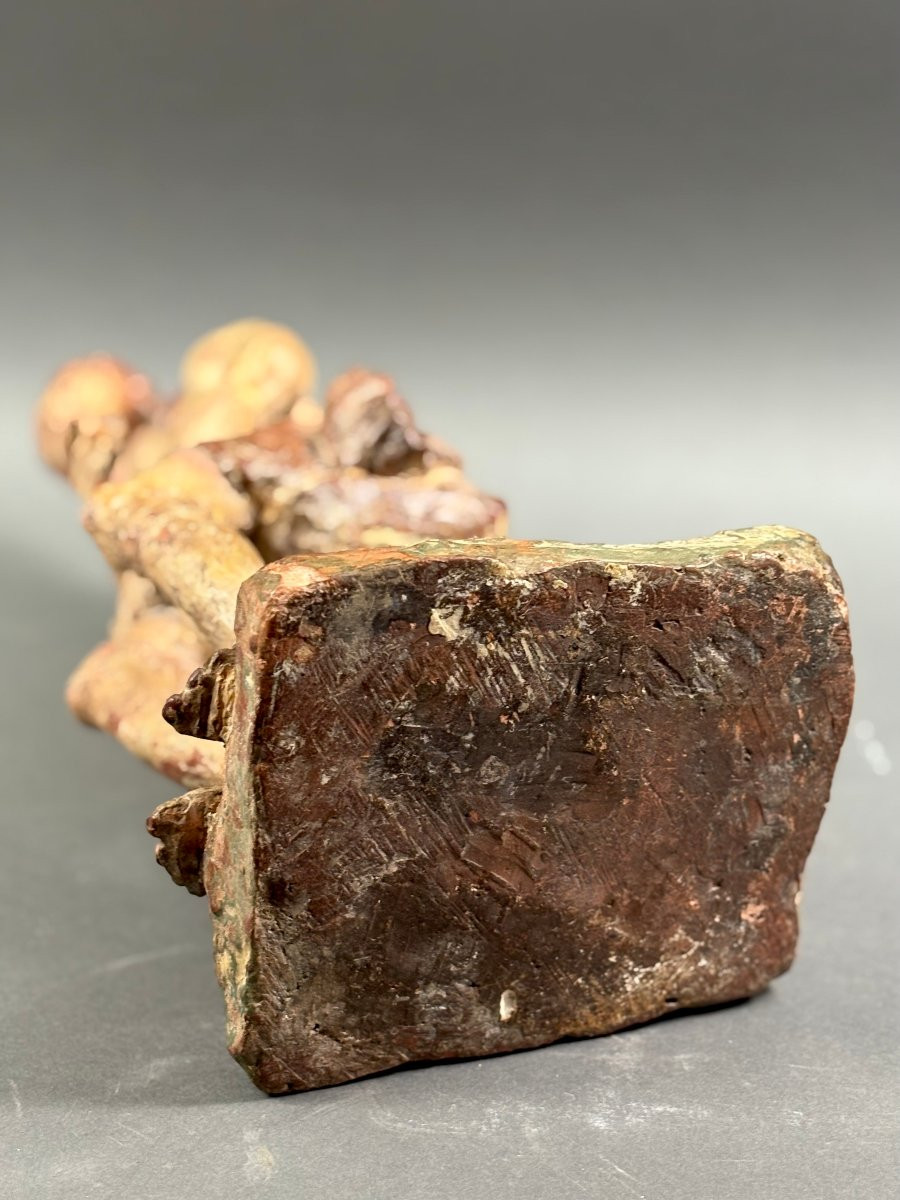
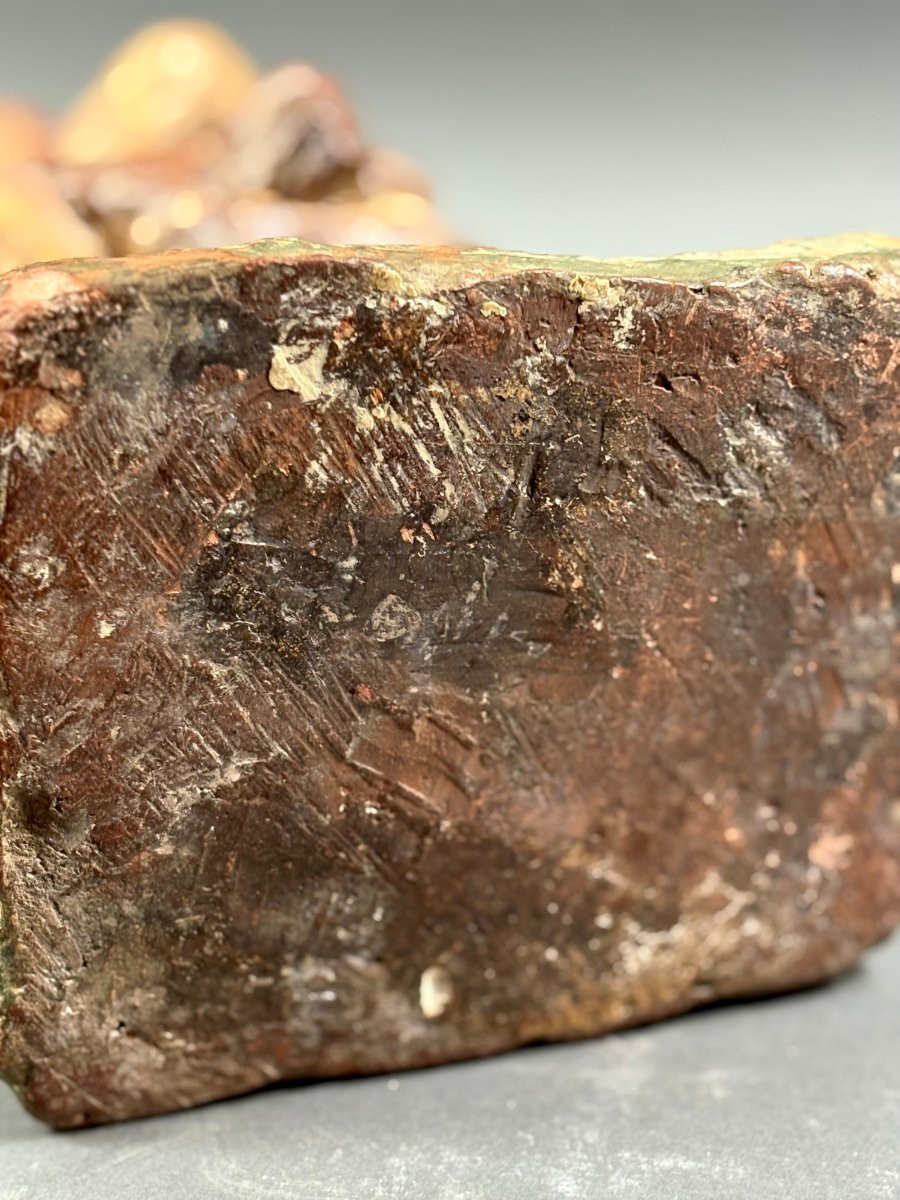

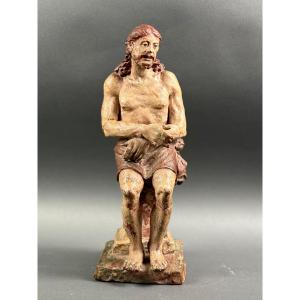


"17th Ecce Homo Polychrome Terracotta Sculpture "
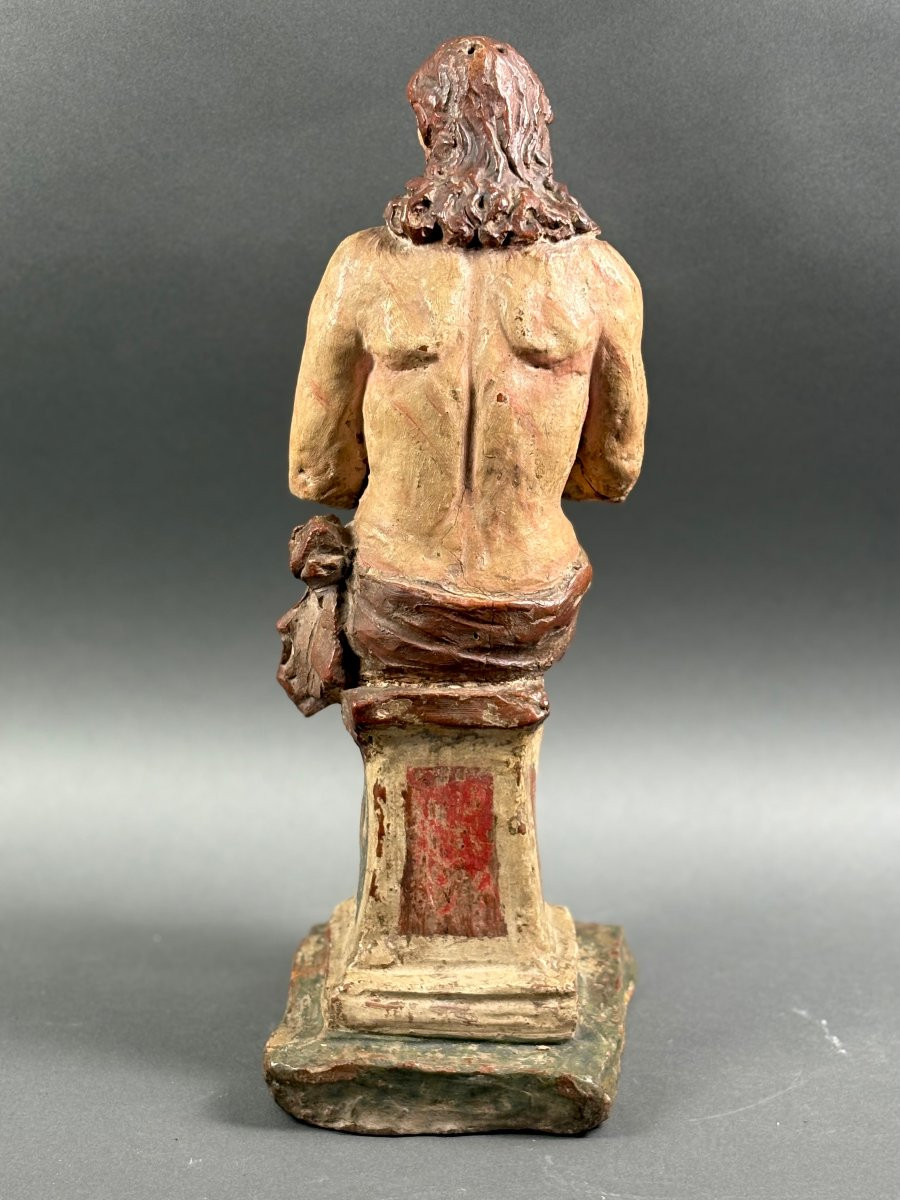
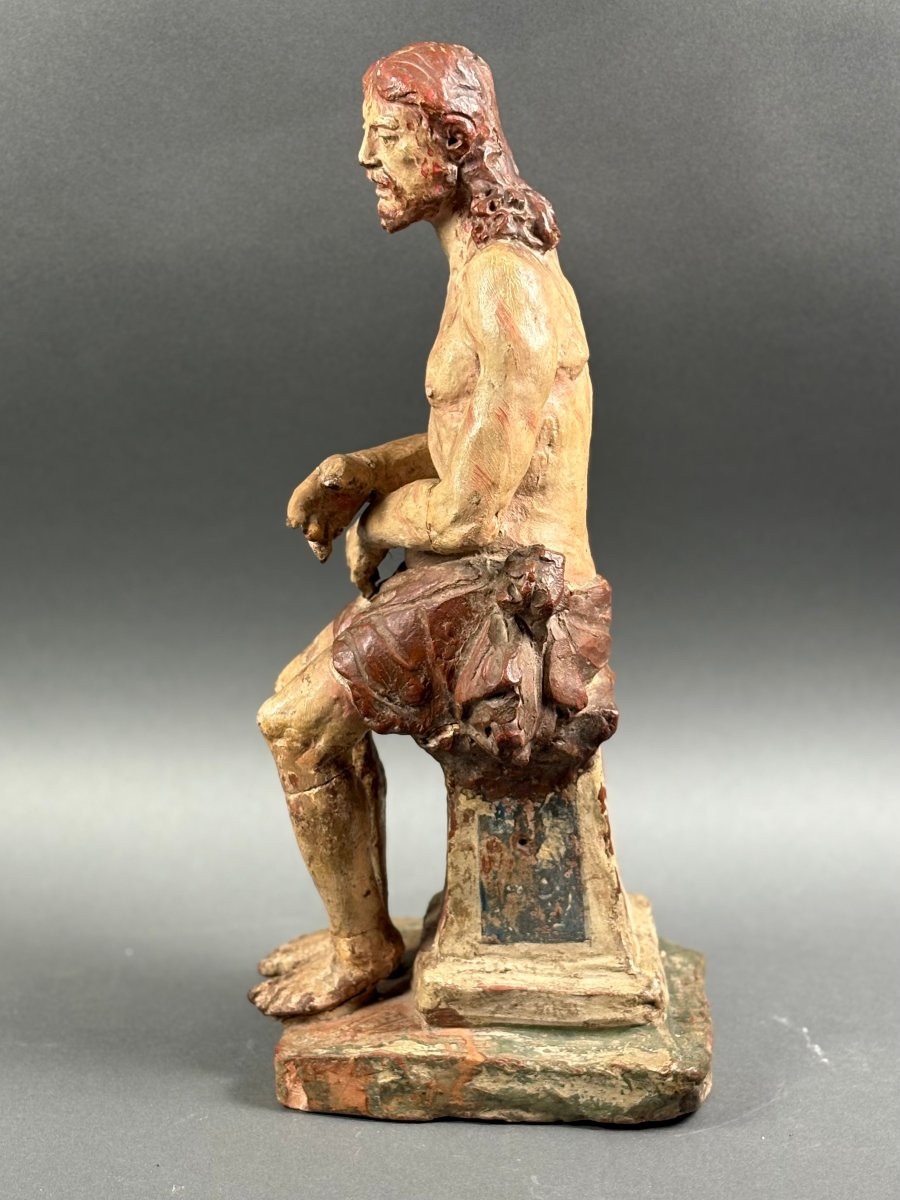
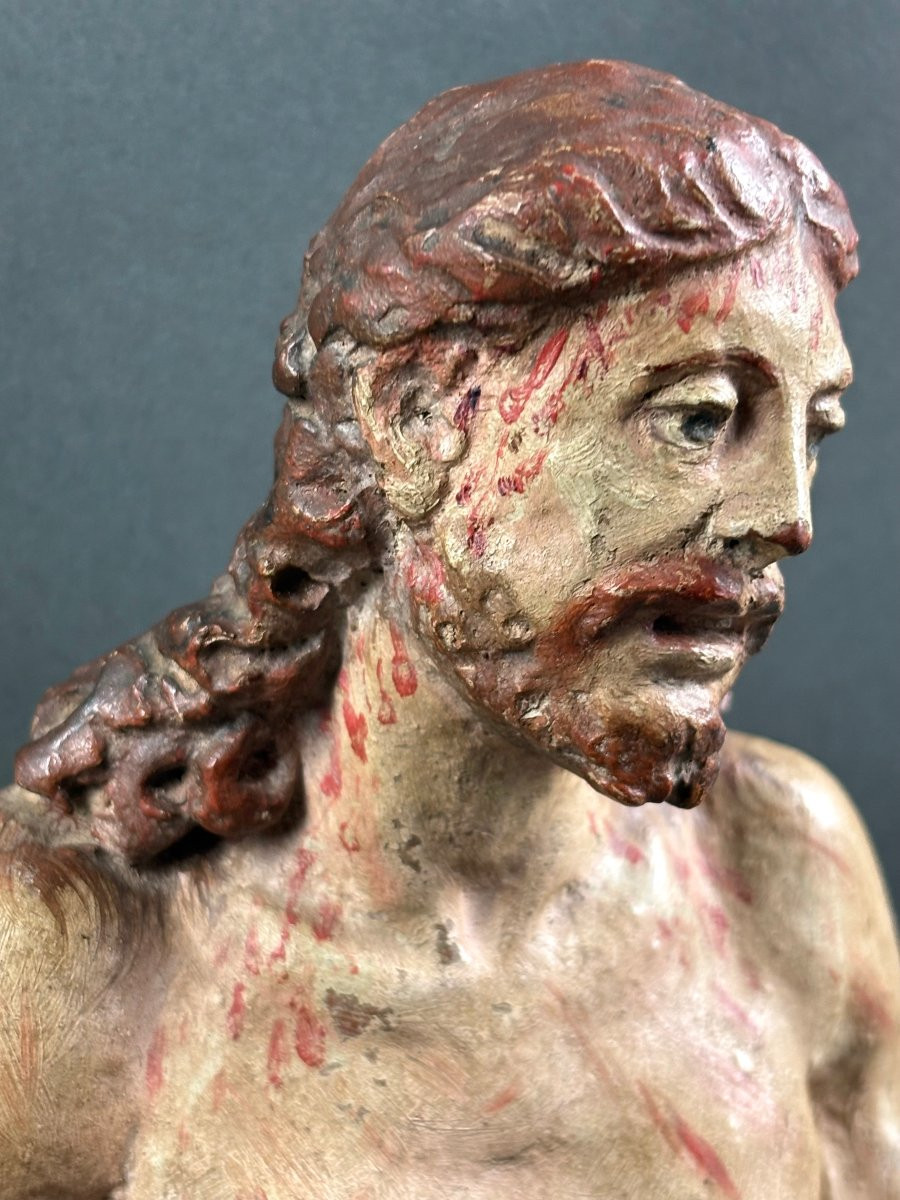
Polychrome terracotta sculpture depicting Christ bound in chains, Italy, second half of the 17th century.The iconography of the seated Ecce Homo, typical of the post-Counter-Reformation and Renaissance periods, depicts Christ scourged and crowned with thorns, often seated on a throne or irregular seat, with his arms bound, his head bowed, and his body half-naked. This dramatic composition highlights physical and emotional suffering, but also the suffering royalty, emphasizing the viewer's pathos and compassion. Popular since the late 15th century, this iconography enjoyed widespread popularity throughout the 17th century.
According to the Gospels, Jesus was deemed innocent by Governor Pilate upon his arrest. To appease the mob, who wanted to see Jesus executed anyway, Pilate ultimately had him scourged, believing this would satisfy the public's thirst for blood.
After the flagellation, Pilate showed the crowd Christ covered in wounds and bleeding wounds, with a crown of thorns on his head, a royal purple robe over his shoulders, and a reed scepter in his hands. He uttered the phrase "Ecce Homo," as if to say, "Look at the man! Do you see that I have punished him?" This, however, was not deemed sufficient, and the high priests urged the prisoner to be crucified.
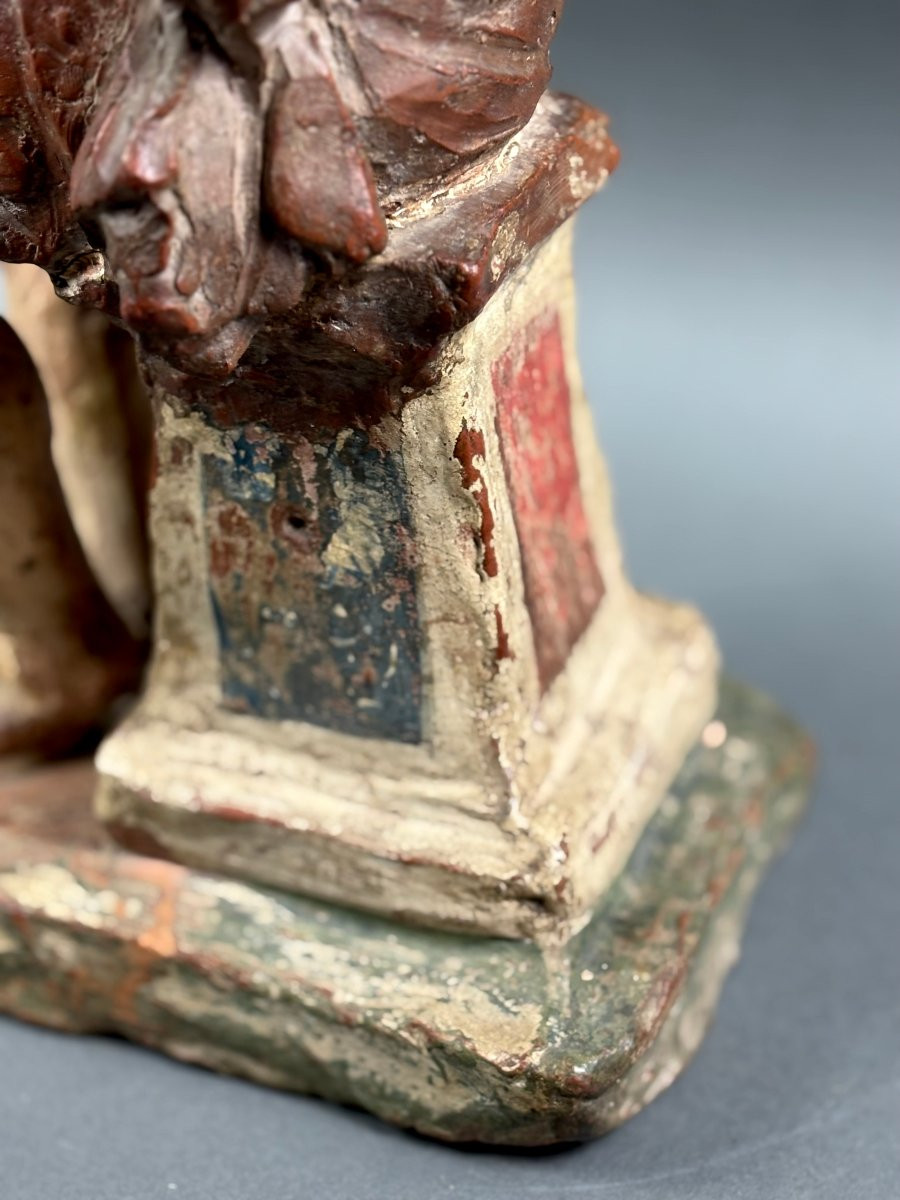
Good overall condition, original polychrome; small signs of aging and missing parts, including a finger and cracks in the terracotta at the elbows, do not affect the sculpture's robustness.
Measurements
H 37 cm
W 13 cm
D 16 cm
++++++++++++++++++++++++++++++++++++DELIVERY AND PAYMENT++++++++++++++++++++++++++++++++++++++++ SHIPPING VIA MBE with UPS - TNT - FEDEX - DHL couriers
Payment methods: Bank transfer - Online credit card (also AMEX) - PayPal (+3.7%) - NO checks
+++++++++++++++++++++++++++++++++++++++++++++++++++++++++++++++++++++++++++++++++++++++++++++++++









 Le Magazine de PROANTIC
 TRÉSORS Magazine
 Rivista Artiquariato