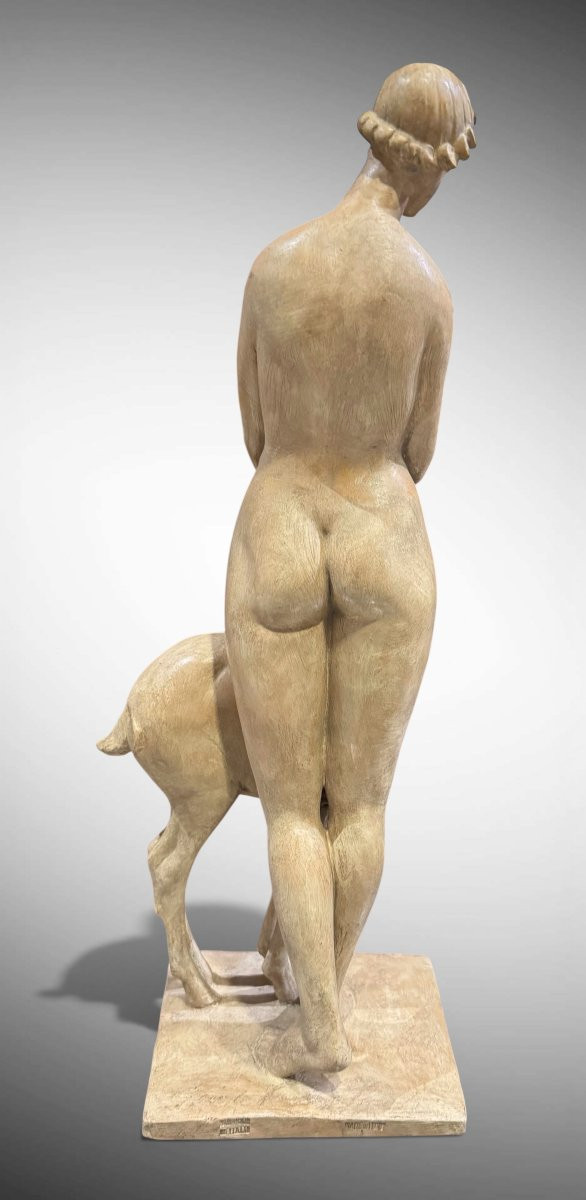
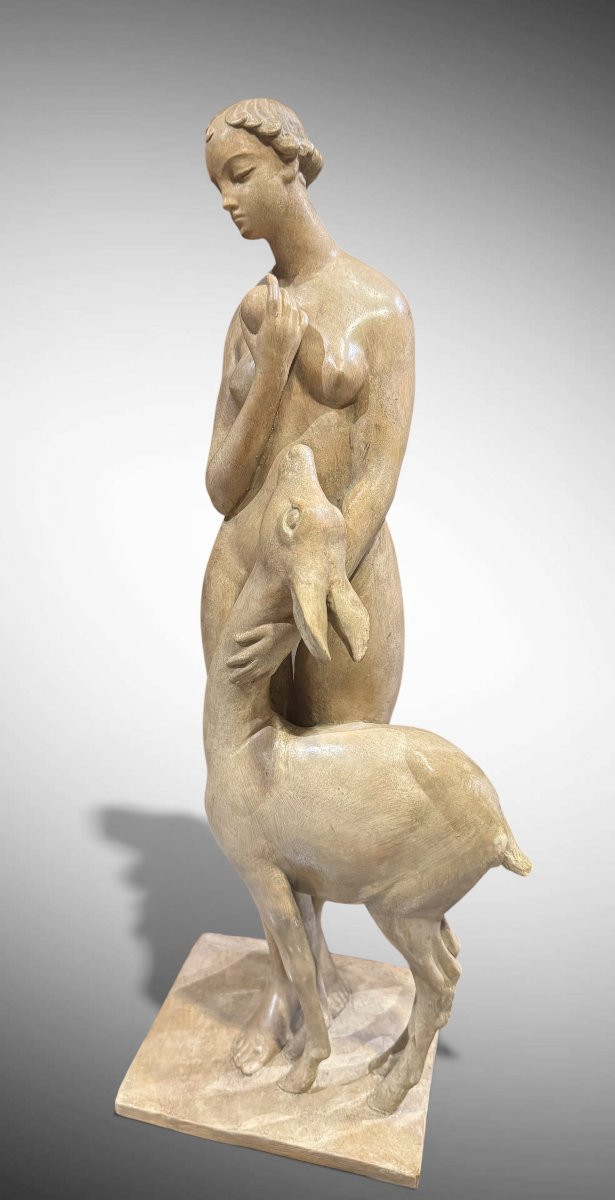
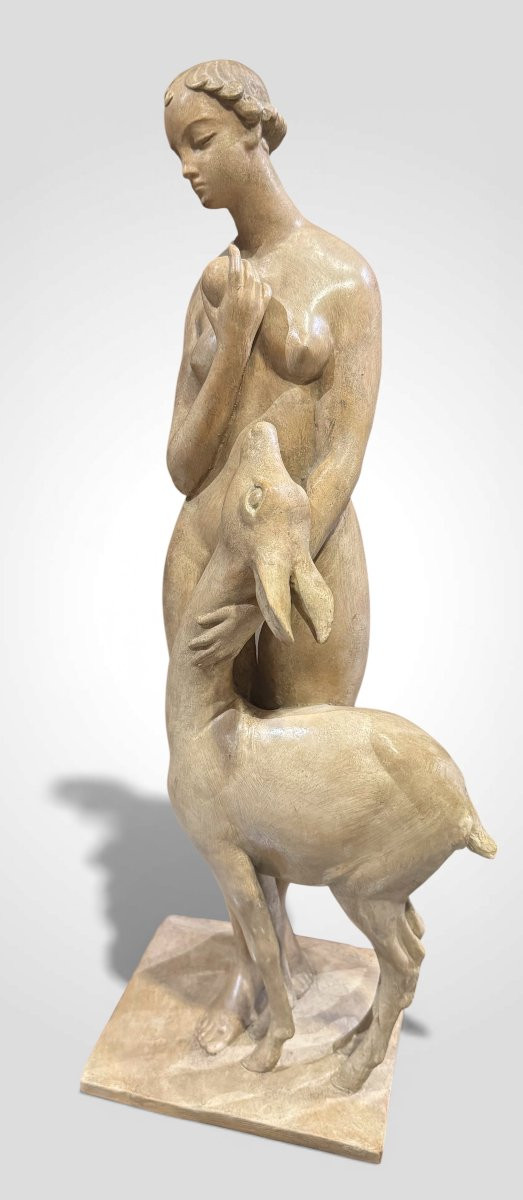
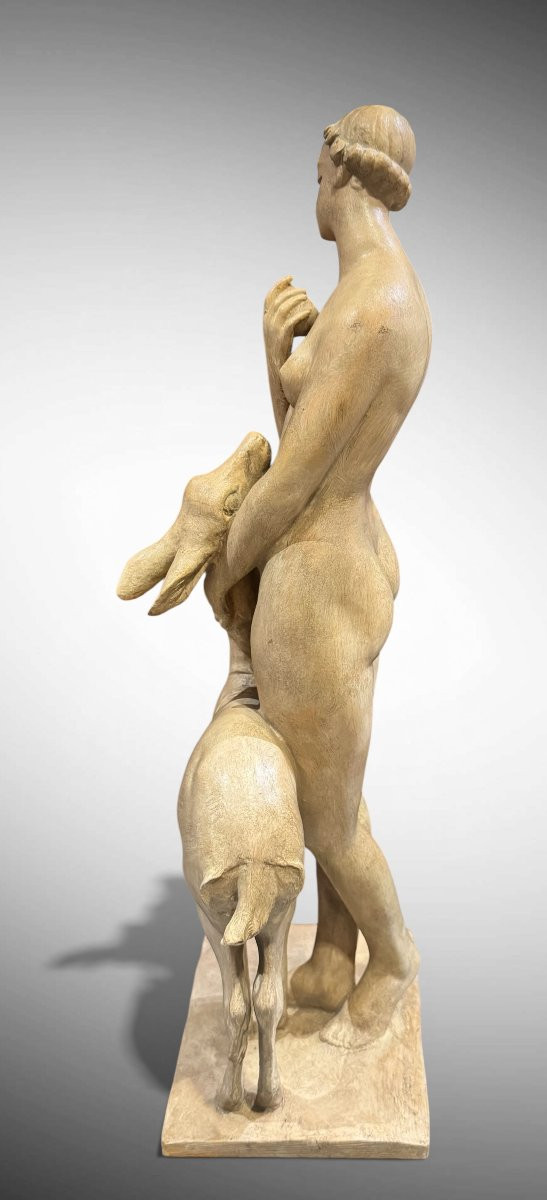
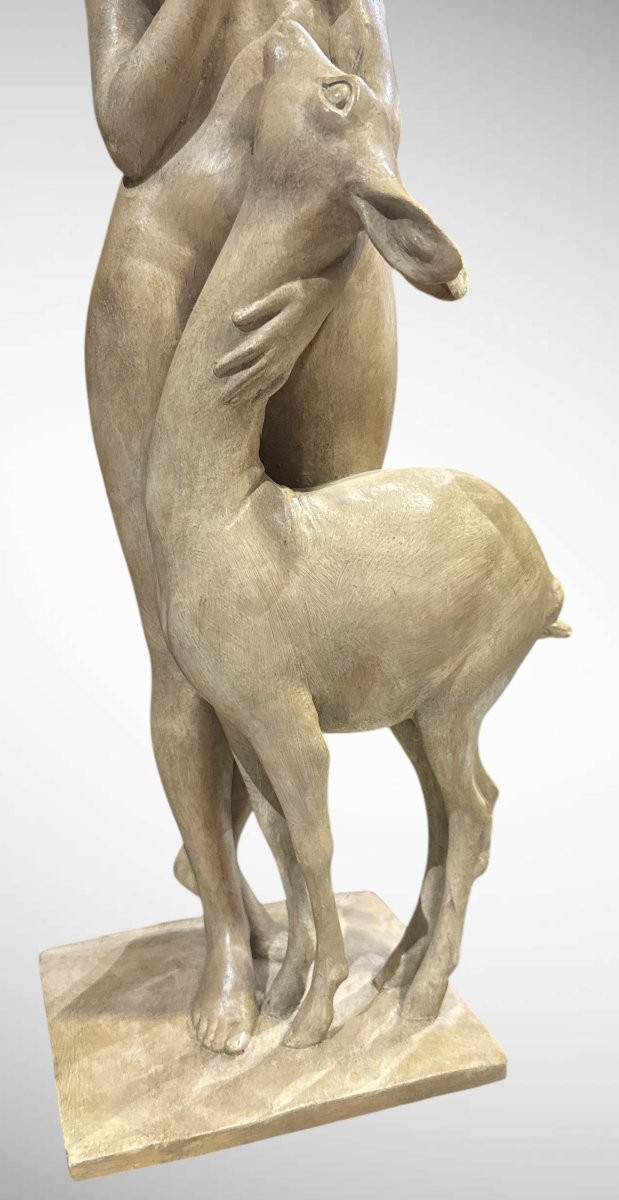
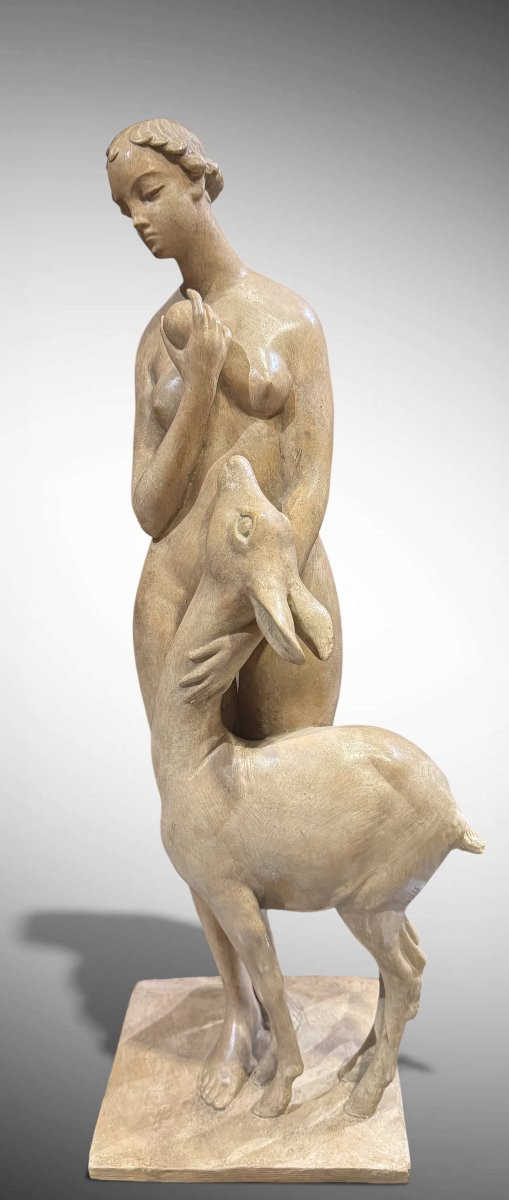


"Guido Cacciapuoti - "faunessa With Roe Deer""
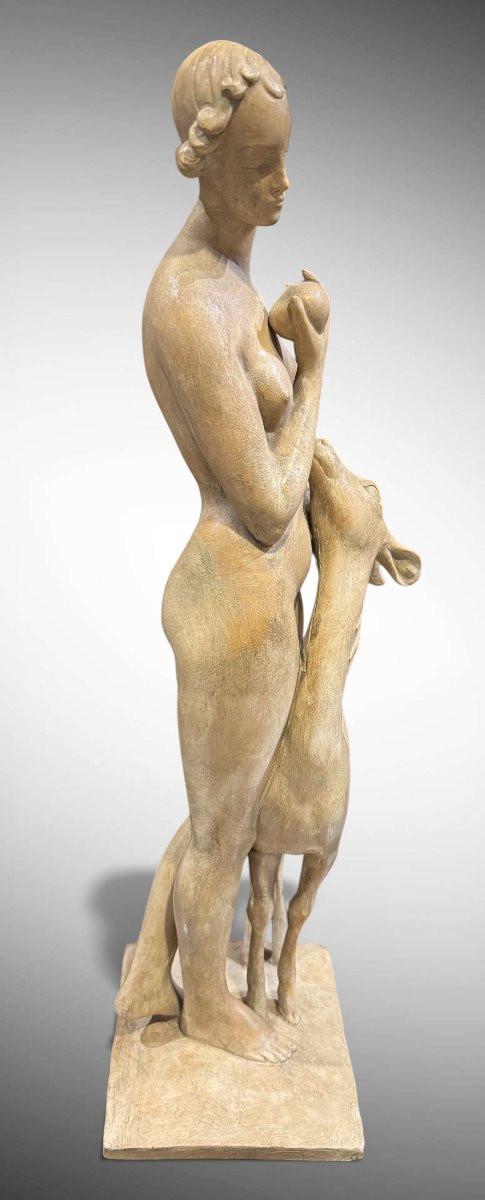
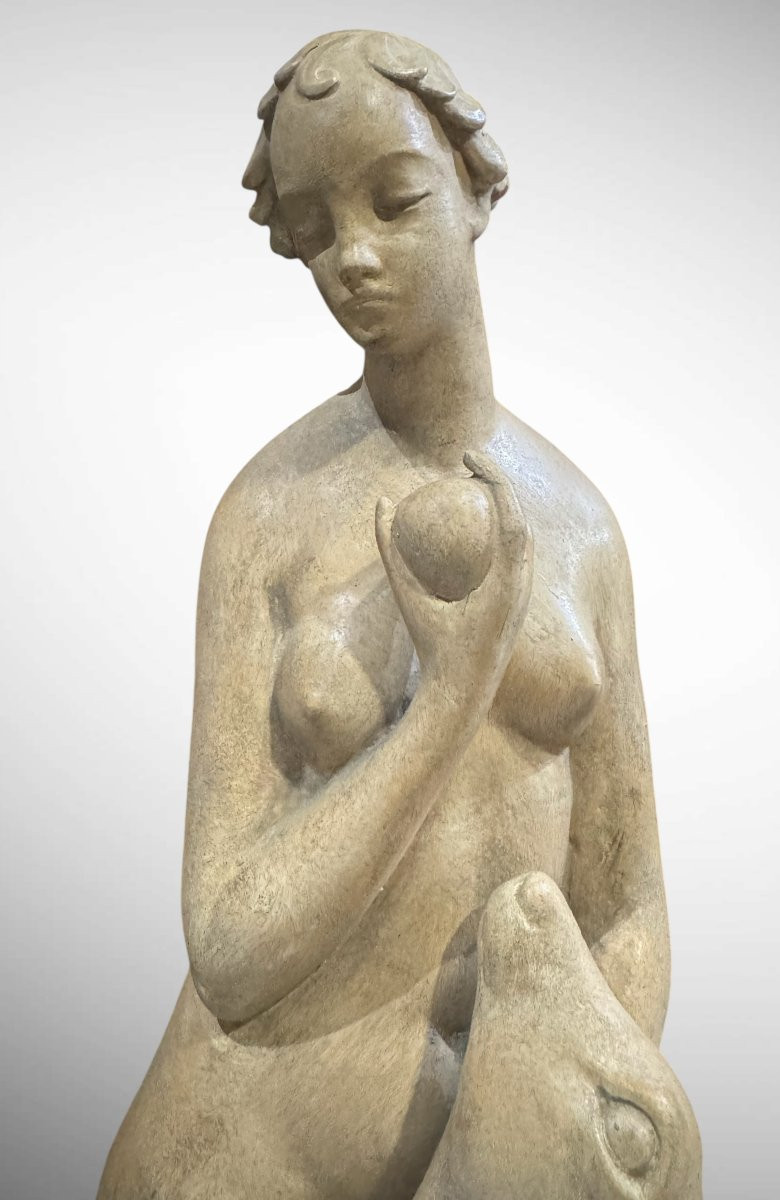
The elegant sculpture we present is "Faunessa" by Guido Cacciapuoti.It features a nude female figure standing next to a roe deer (or fallow deer) resting its head on her hip. Called "Faunessa," and created in the 1930s in ivory-glazed terracotta by Guido Cacciapuoti, it perfectly embodies the Art Deco style typical of the Neapolitan artist's work.
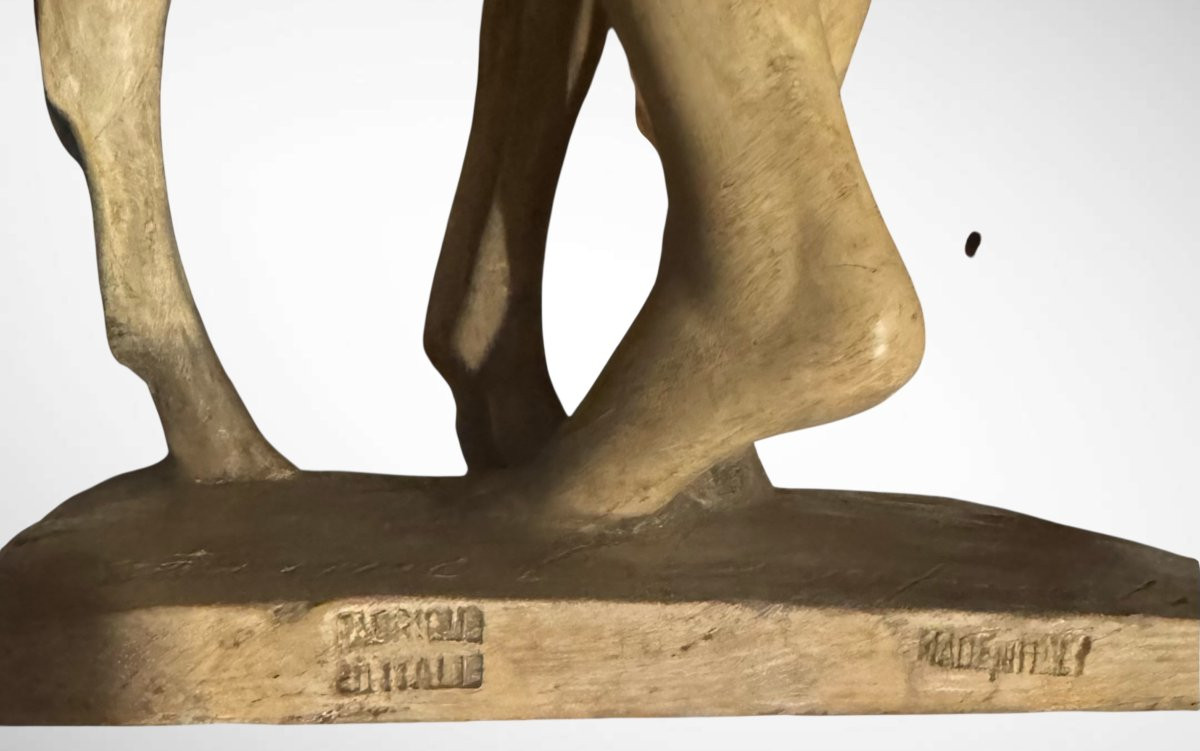
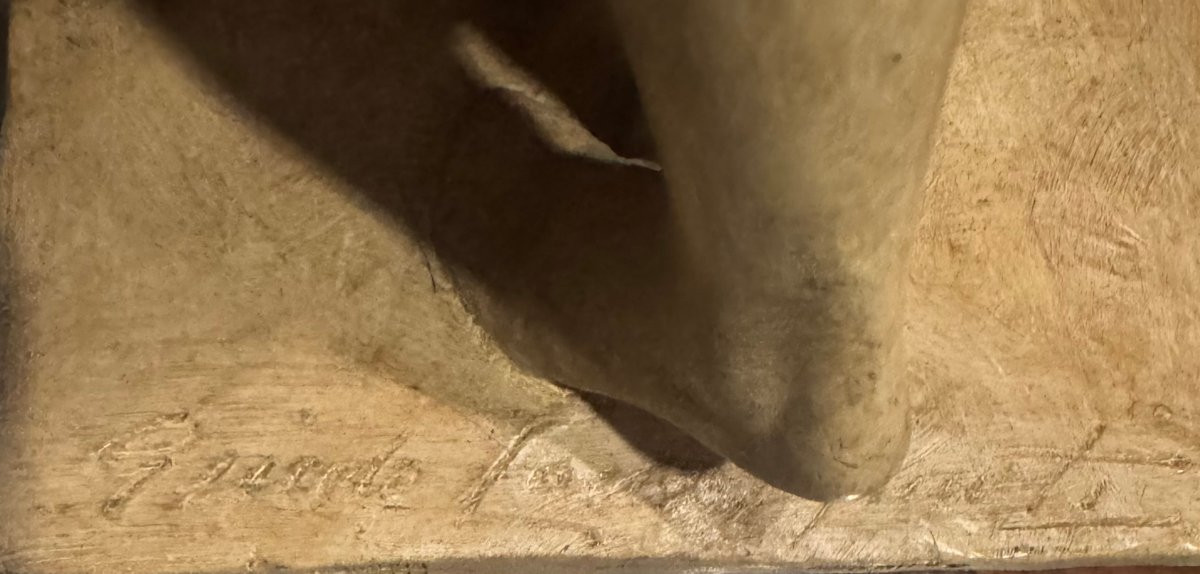
The work bears the engraved signature "Guido Cacciapuoti" on the base and the incised stamps "FABRIQUE EN ITALIE" and "Made in Italy."
Height 47 cm
Base 15 x 12.5 cm
Guido Cacciapuoti (Naples 1892 – 1953). The son of a family of majolica makers, in 1927 Cacciapuoti founded the "Gres d’Arte Cacciapuoti Bignami & C." factory in Milan with his brother Mario. Guido Cacciapuoti's repertoire encompasses a wide range of themes and styles, resulting in a vast production. Alongside animals, the repertoire includes a substantial series of female figures. The subjects are also diversified by the use of different materials—stoneware, terracotta, earthenware—and "covers"—transparent varnishes or enamel pigments. In other cases, Guido's production is in line with the Art Deco movement, which was very fashionable at the time. Some of his works were purchased by the King of Italy, Mussolini, Starace, and Prince George of England. During the war, the activity of "Grés d'Arte Cacciapuoti" inevitably slowed, and in 1943 the factory was forced to close, but quickly resumed full production. A period of great expansion followed, during which foreign sales became massive. The company's history continued unchanged until 1953, the year of Guido Cacciapuoti's death.









 Le Magazine de PROANTIC
 TRÉSORS Magazine
 Rivista Artiquariato