THIS OBJECT WAS SOLD
Basin, Called "setla" Of Hammam, 18th, Early 19th Century, Ottoman Art, Collection Status


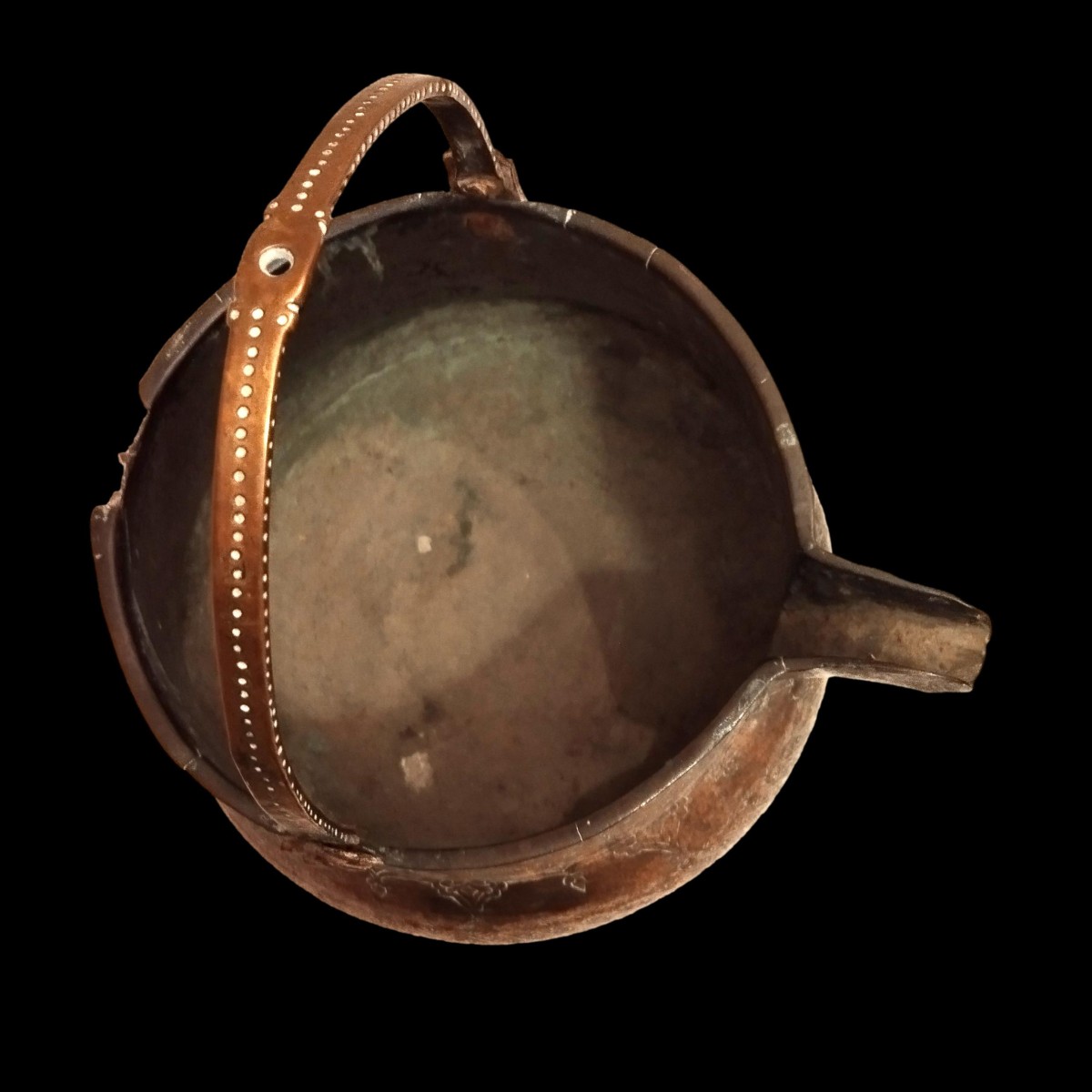
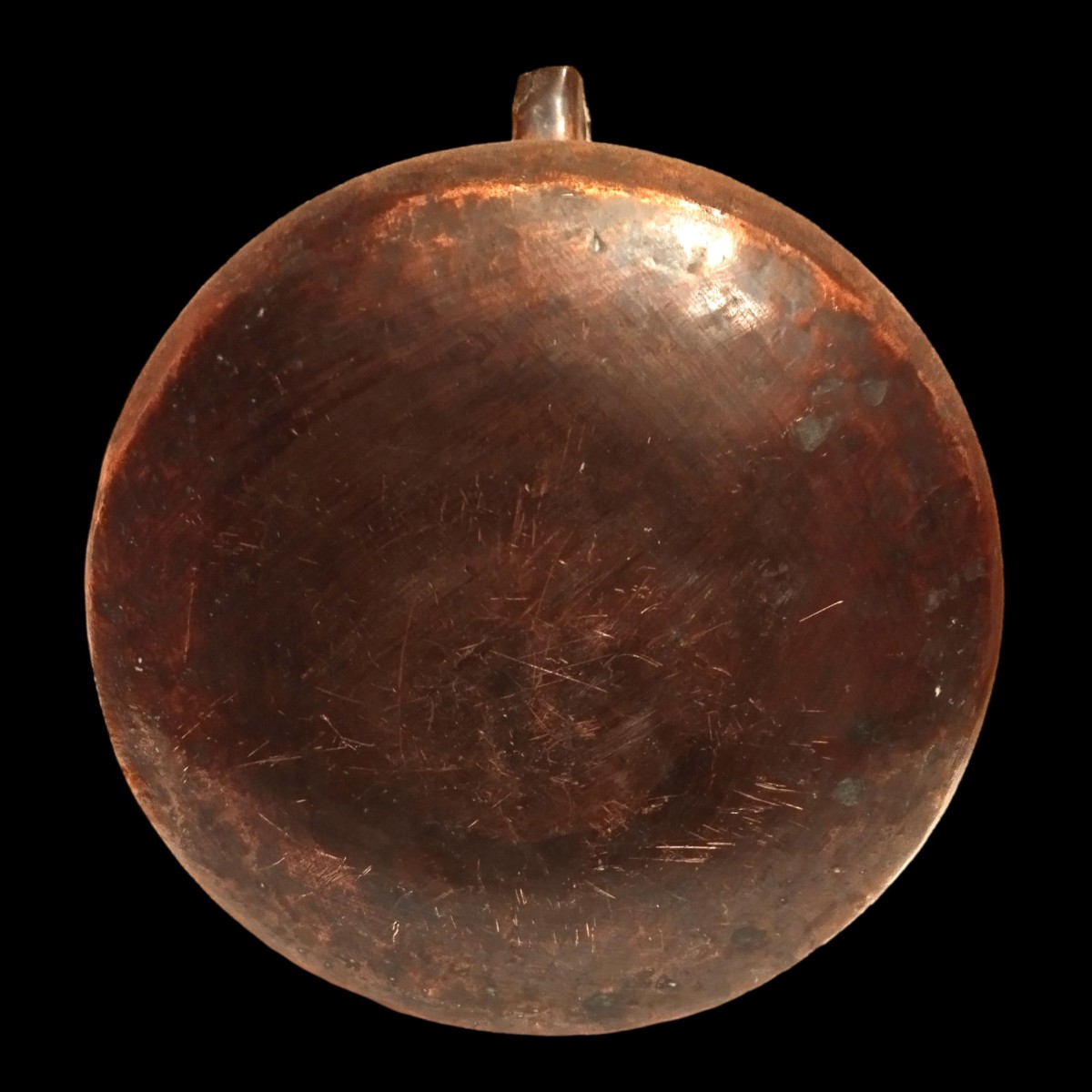

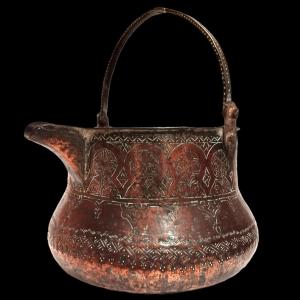


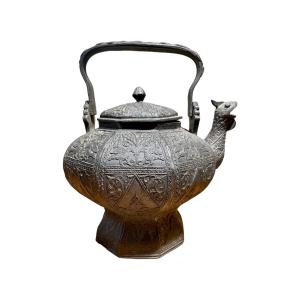
A copper hammam basin, "Setla," decorated with niches adorned with foliage around the rim and friezes of stylized sticks and flowers.
Ottoman art.
A pretty handle delicately perforated along its entire curve.
Of Ottoman origin, this rare everyday object was used for washing and rinsing the body in Turkish baths.
In very good condition, a collector's item par excellence, this copper model is magnificently crafted.
Dating from the late 18th to early 19th century.
Anatolia or the nearby Caucasus, Georgia.
Dimensions:
Diameter: 23 cm (9.5") - Height: 28 cm (11") - Weight: 1140 g.
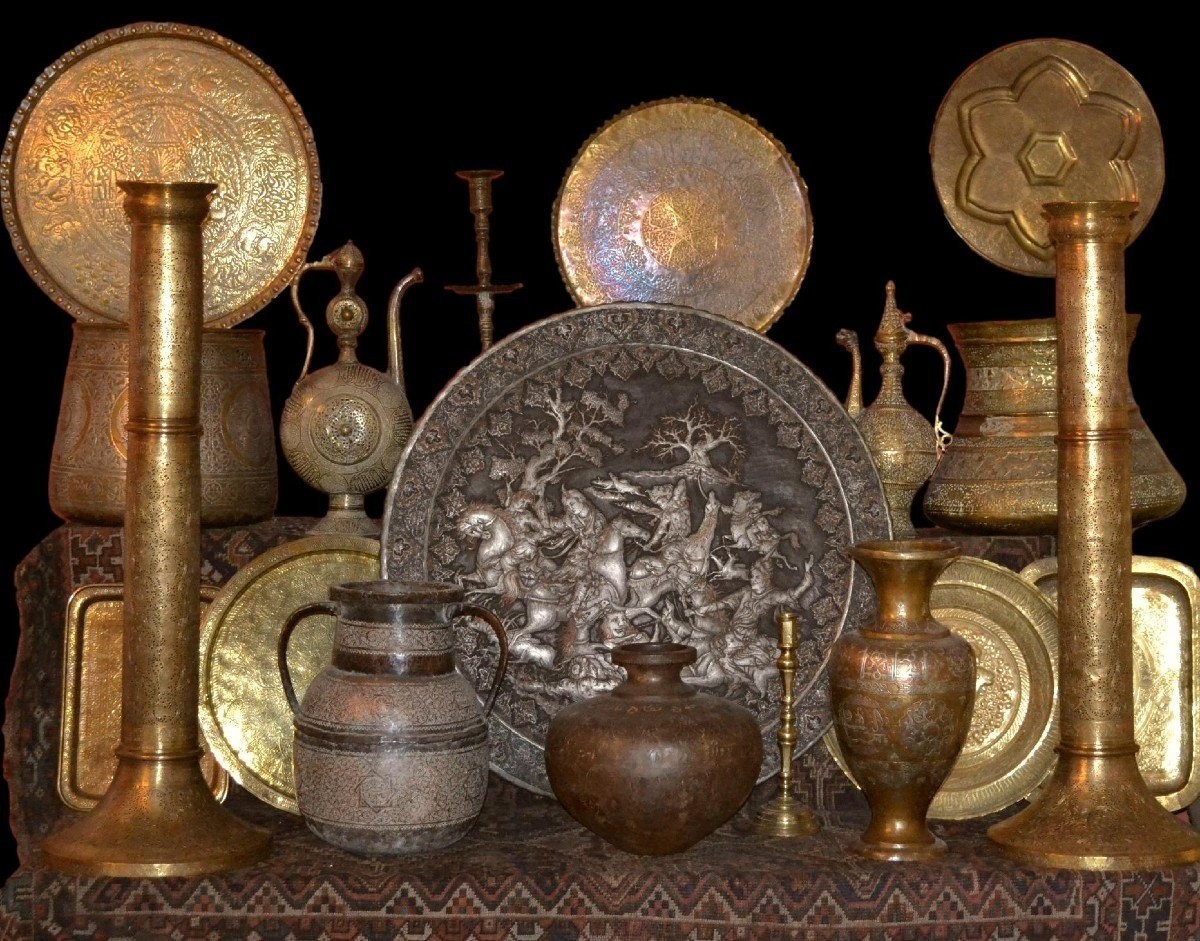
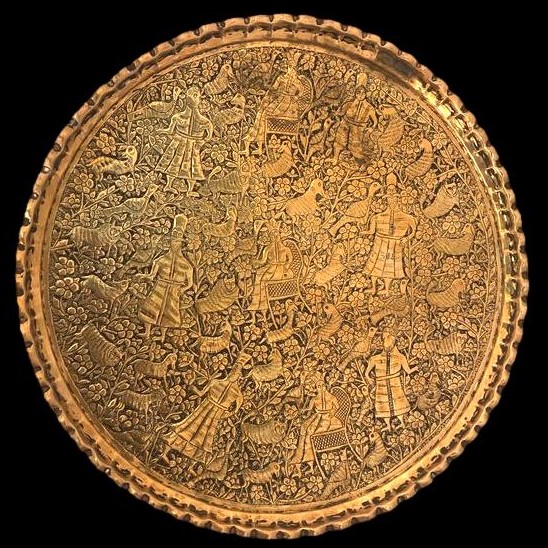
The last photos show items from our collection.
FREE SHIPPING WITHIN FRANCE via Colissimo €0 / EUR €15 / WORLDWIDE €25.
For more information, please contact me at +33 6 13 36 09 30 or on
winsteinprovence@gmail
www.winsteinprovence.com
Texts and photos WINSTEIN, all rights reserved
REF WINSTEIN 1546
The hammam (in Arabic: حمّام, ḥammām, meaning "hot water bath"), called a Turkish bath in France or a Moorish bath (in reference to Muslim Spain of Al-Andalus), is a humid steam bath originating from Roman baths.
It was subsequently adapted to the customs and traditions of the different territories in which it was integrated. In its current form, the hammam developed in the Ottoman Empire, from North Africa to the Middle East (such as Syria) thanks to the expansion of Islam.
The hammam also refers to the establishment, the building in which this bath takes place. The architecture of hammams varies according to the geographical area and the era.
Ottoman art.
A pretty handle delicately perforated along its entire curve.
Of Ottoman origin, this rare everyday object was used for washing and rinsing the body in Turkish baths.
In very good condition, a collector's item par excellence, this copper model is magnificently crafted.
Dating from the late 18th to early 19th century.
Anatolia or the nearby Caucasus, Georgia.
Dimensions:
Diameter: 23 cm (9.5") - Height: 28 cm (11") - Weight: 1140 g.
The last photos show items from our collection.
FREE SHIPPING WITHIN FRANCE via Colissimo €0 / EUR €15 / WORLDWIDE €25.
For more information, please contact me at +33 6 13 36 09 30 or on
winsteinprovence@gmail
www.winsteinprovence.com
Texts and photos WINSTEIN, all rights reserved
REF WINSTEIN 1546
The hammam (in Arabic: حمّام, ḥammām, meaning "hot water bath"), called a Turkish bath in France or a Moorish bath (in reference to Muslim Spain of Al-Andalus), is a humid steam bath originating from Roman baths.
It was subsequently adapted to the customs and traditions of the different territories in which it was integrated. In its current form, the hammam developed in the Ottoman Empire, from North Africa to the Middle East (such as Syria) thanks to the expansion of Islam.
The hammam also refers to the establishment, the building in which this bath takes place. The architecture of hammams varies according to the geographical area and the era.
Explore similar pieces and discover your ideal find:
Folk Art