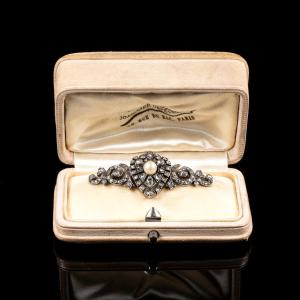
THIS OBJECT WAS SOLD
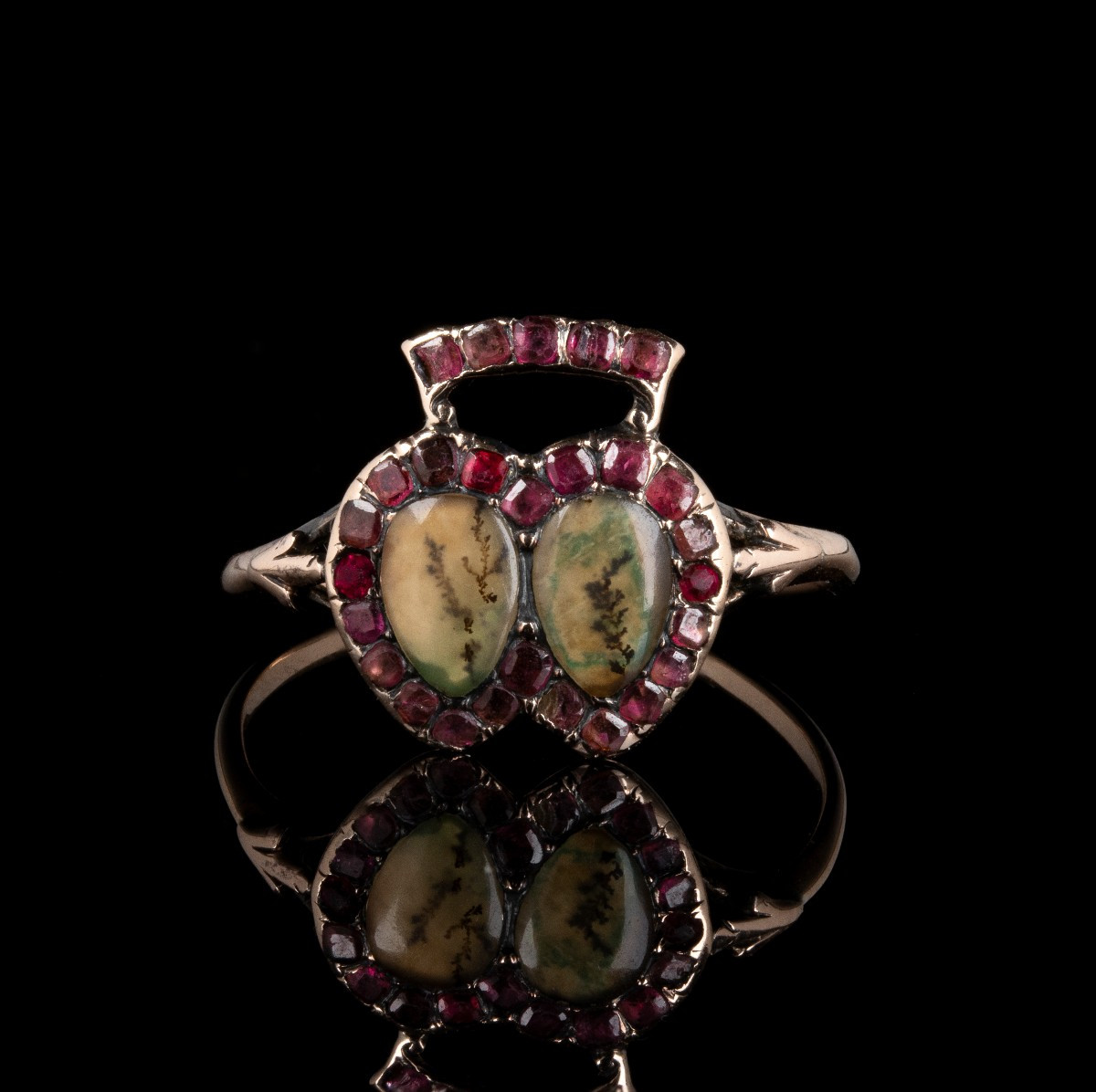
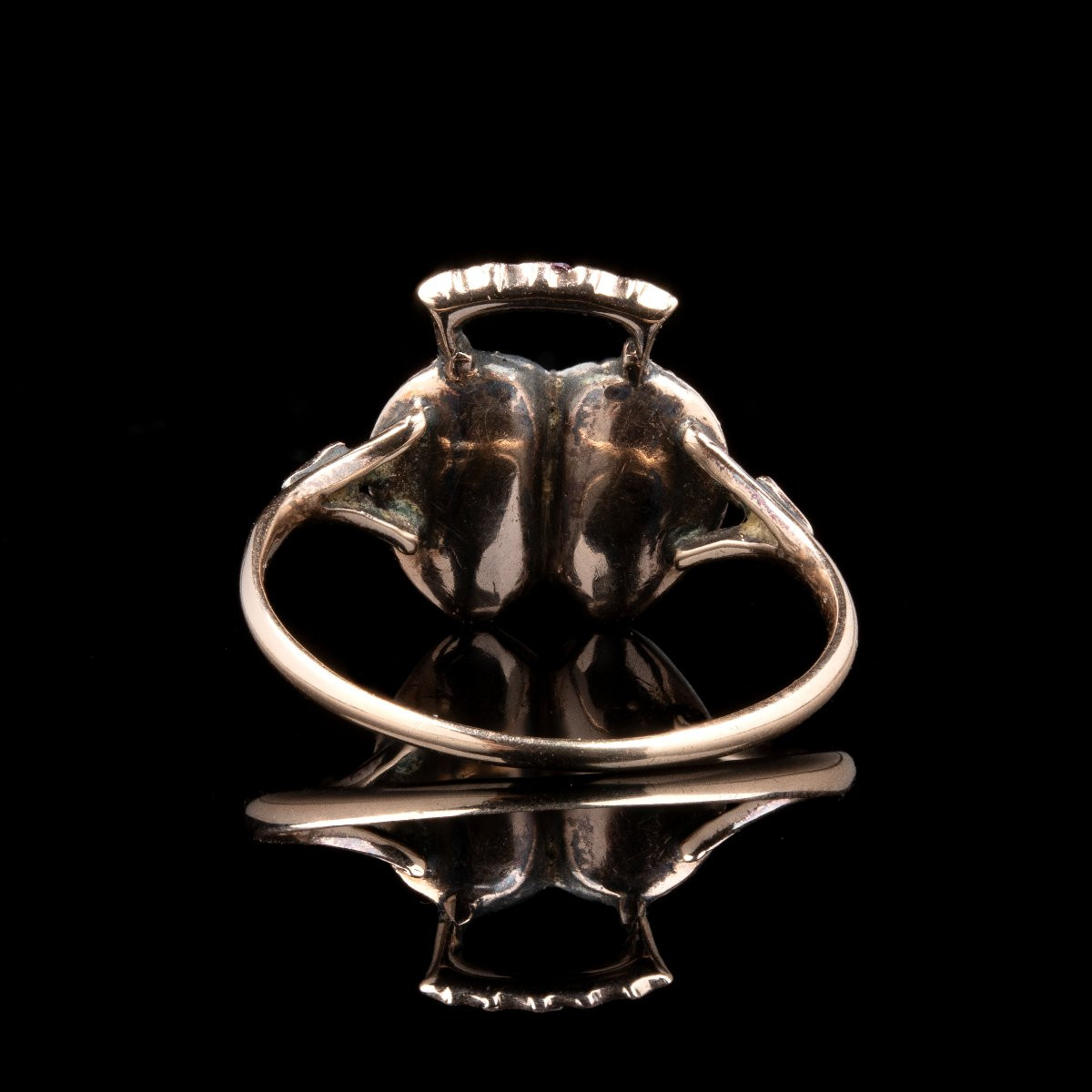
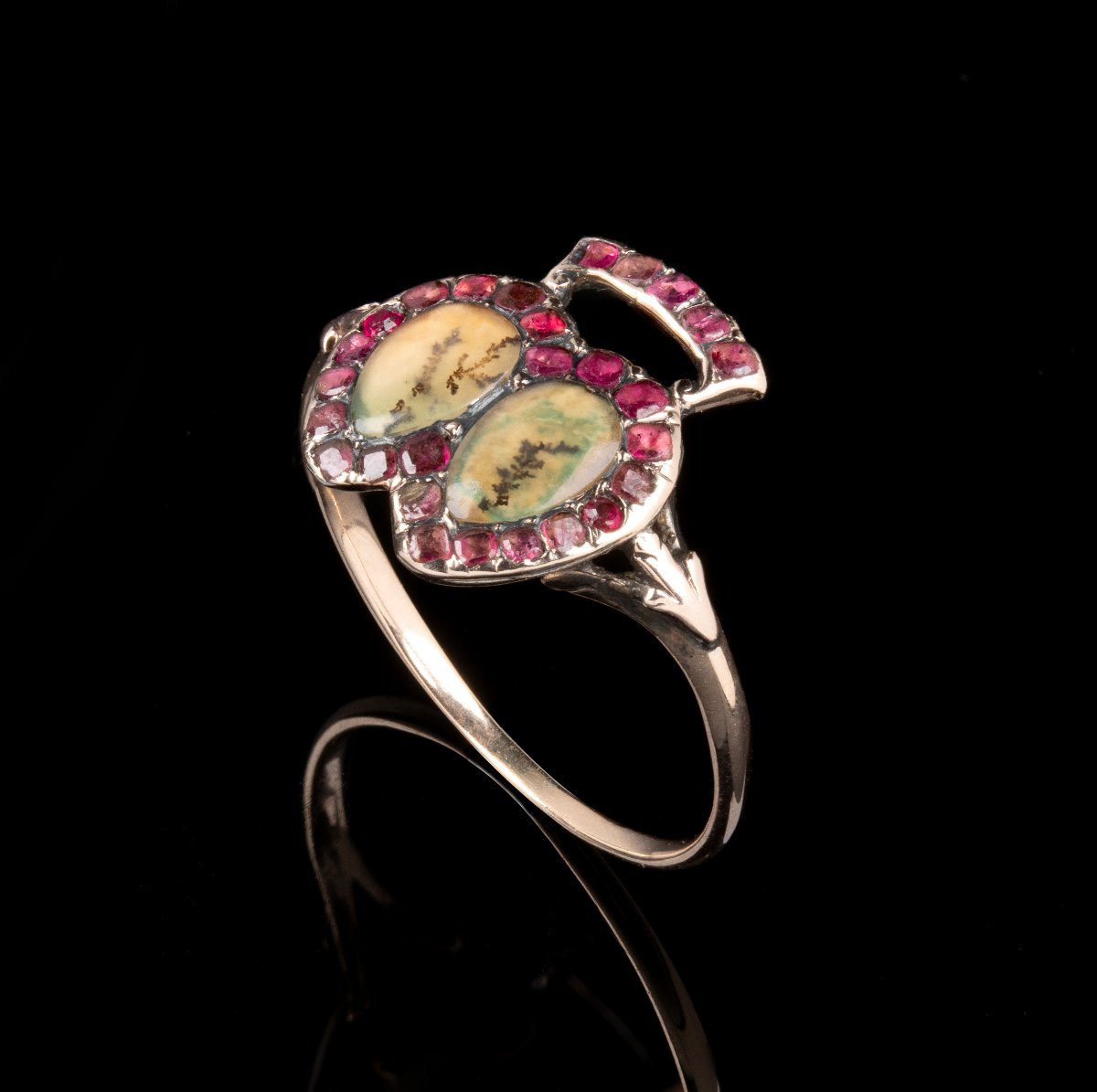
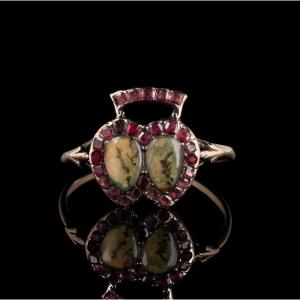
A Georgian/early 19th Century Gold Double Heart Ring — Denditric Agate And Rubies



Gold
Ring size: FR 55 / US 7¼ / UK O
Gross weight: 1.76 g
Central stones: Two heart-shaped dendritic agate
Accent stones: Flat-cut rubies or garnets in closed-back settings
Period: Late Georgian to early 19th century, circa 1780–1820
Type: Sentimental / Lover's ring
The dendritic agates — display the delicate, fern-like natural inclusions that so captivated Georgian collectors. These organic patterns, formed by manganese or iron oxide deposits within the stone, were prized as "nature's painting" and often likened to miniature landscapes or botanical specimens. Each heart is unique, bearing its own internal garden of frozen foliage.
The surrounding border of rubies or garnets, set in the characteristically close-backed collets of the period, creates a warm, glowing halo around the twin hearts. The stones appear to be flat-cut (table-cut), a technique prevalent in 18th-century gem setting before the rise of brilliant cuts.
The shoulders of the ring are decorated with incised foliate motifs, adding to the naturalistic charm of the piece.
The double heart motif was one of the most beloved symbols in Georgian sentimental jewellery, representing the union of two souls, fidelity, and enduring love. Such rings were exchanged as tokens of betrothal, friendship, or devotion, and often held deep personal significance.
While catalogued as 19th century, several features of this ring — particularly the flat-cut stones, closed-back settings, and the use of moss agate hearts — suggest it may date from the late Georgian period (circa 1780–1820), placing it at the transition between the two centuries.
A rare and touching survivor of the age of sentiment, this ring speaks eloquently of love's enduring language.
Condition: Good antique condition. Some wear consistent with age. Stones secure.
Explore similar pieces and discover your ideal find:
rings