

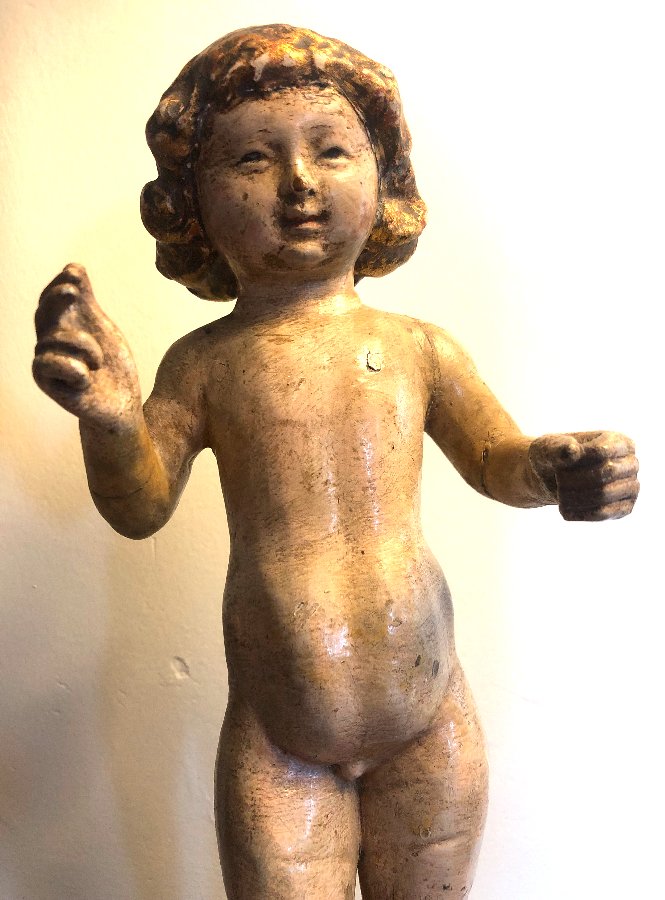
"Infant Jesus Of Mechelen XVII"
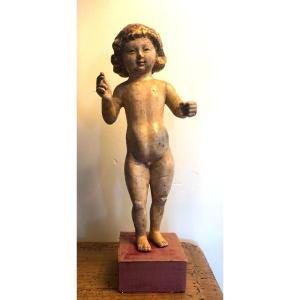
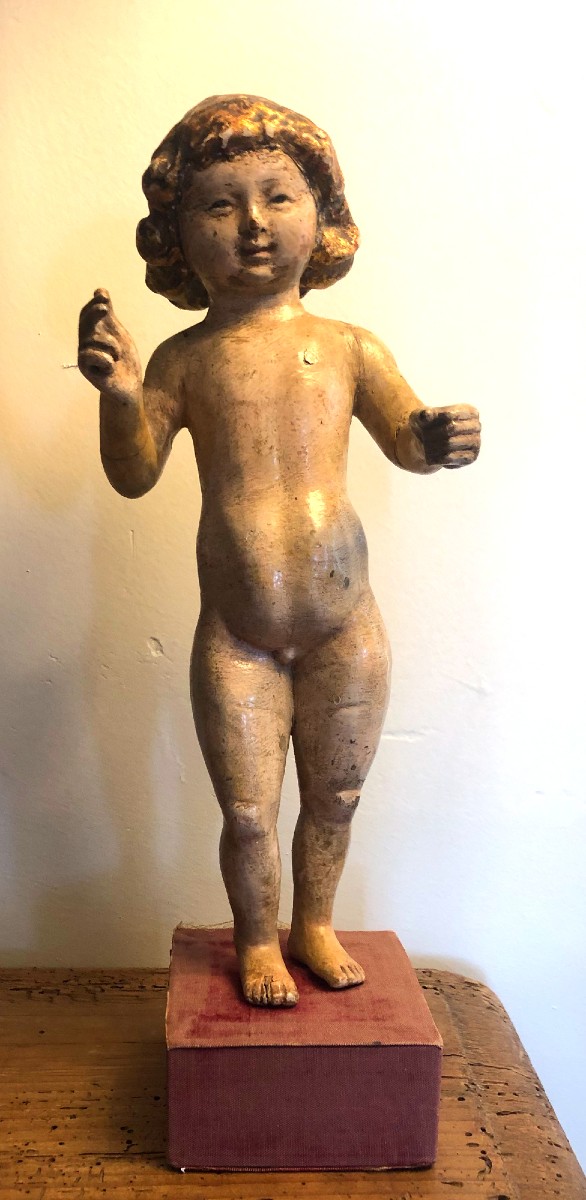
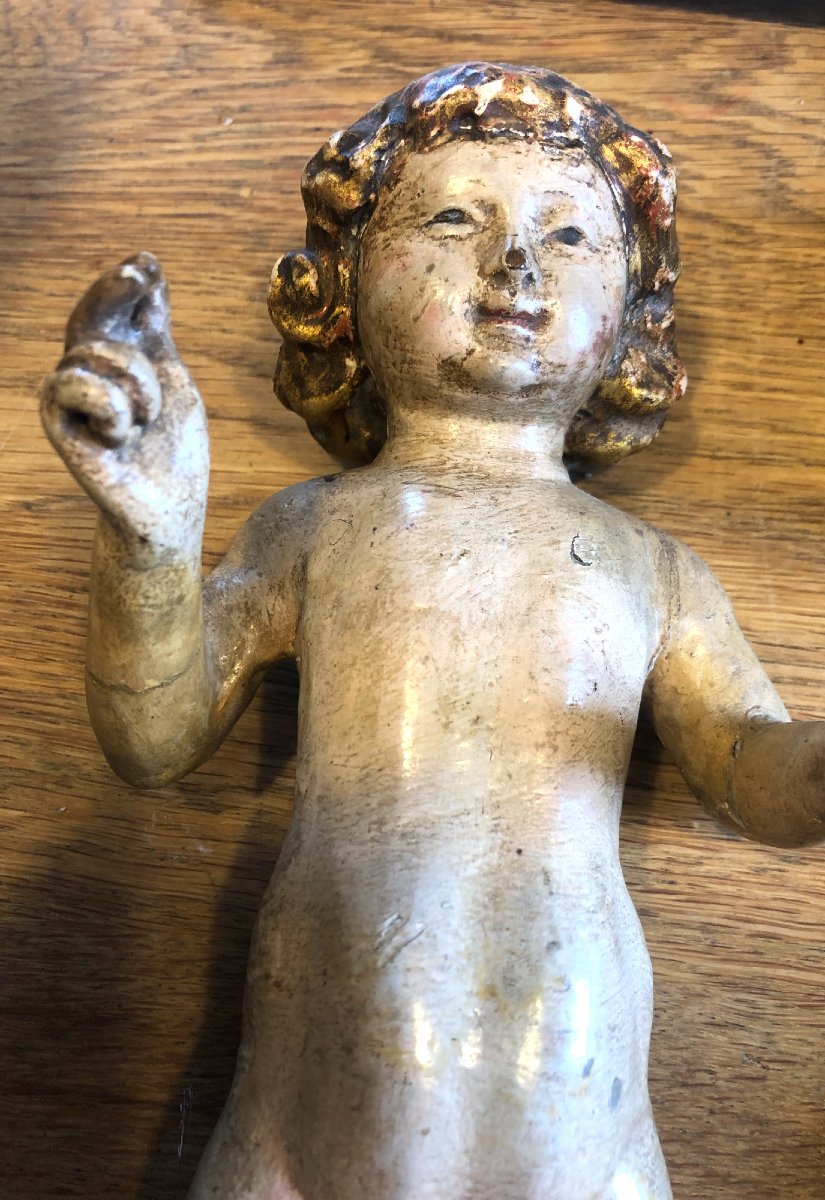
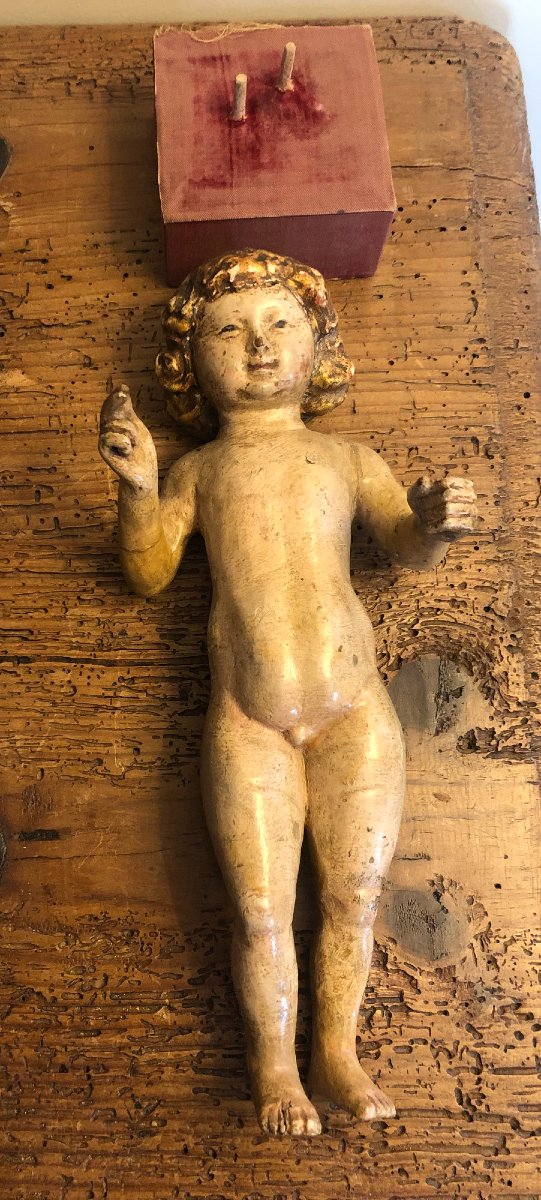
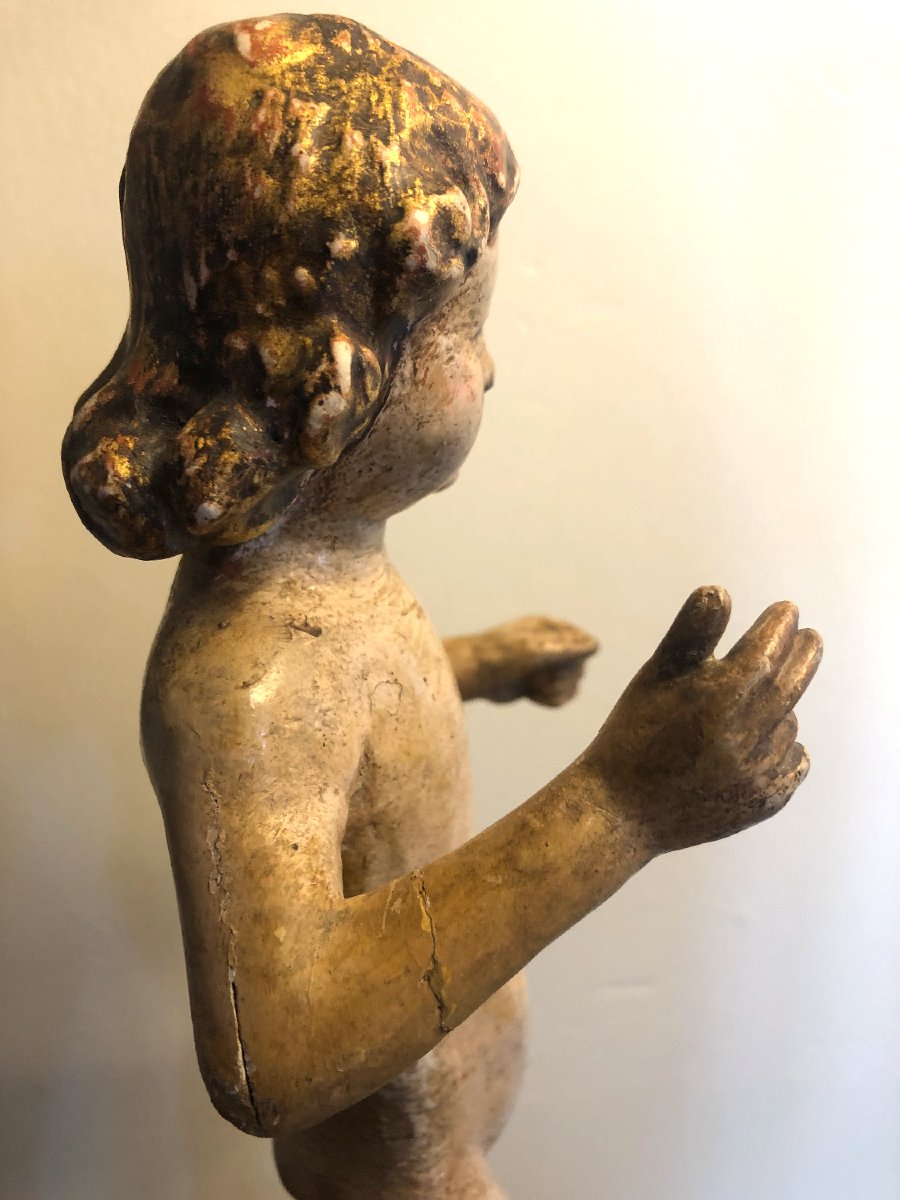
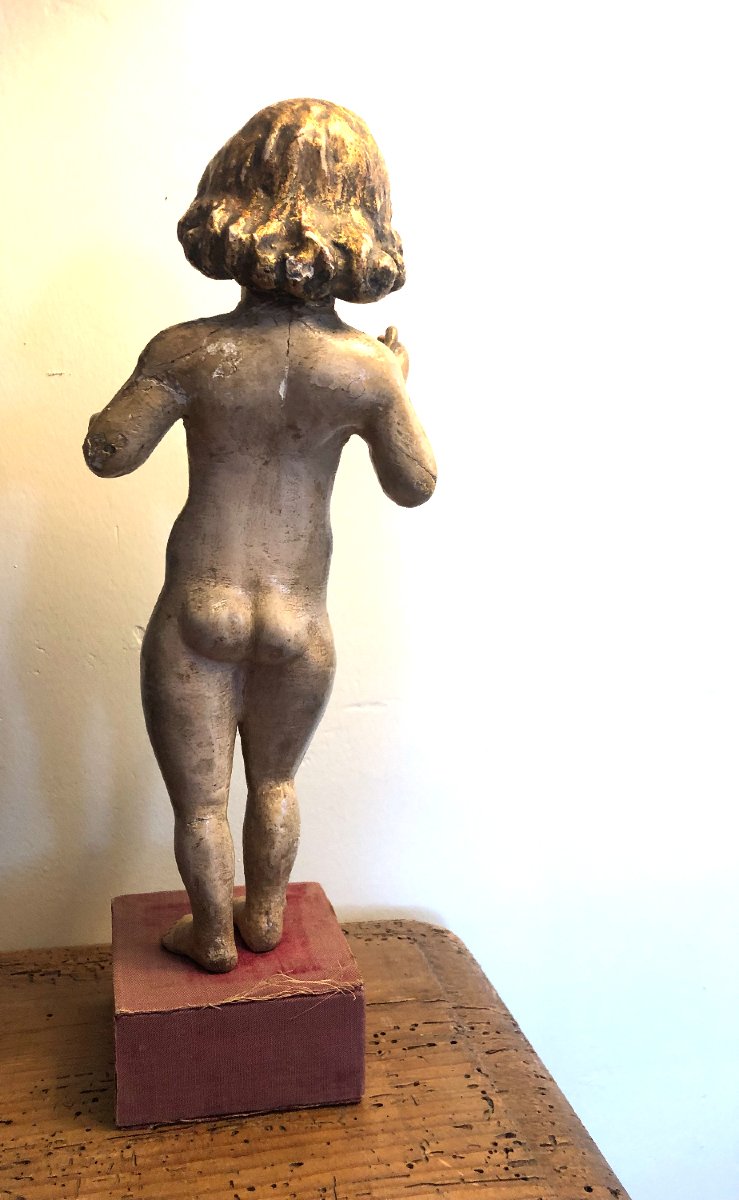
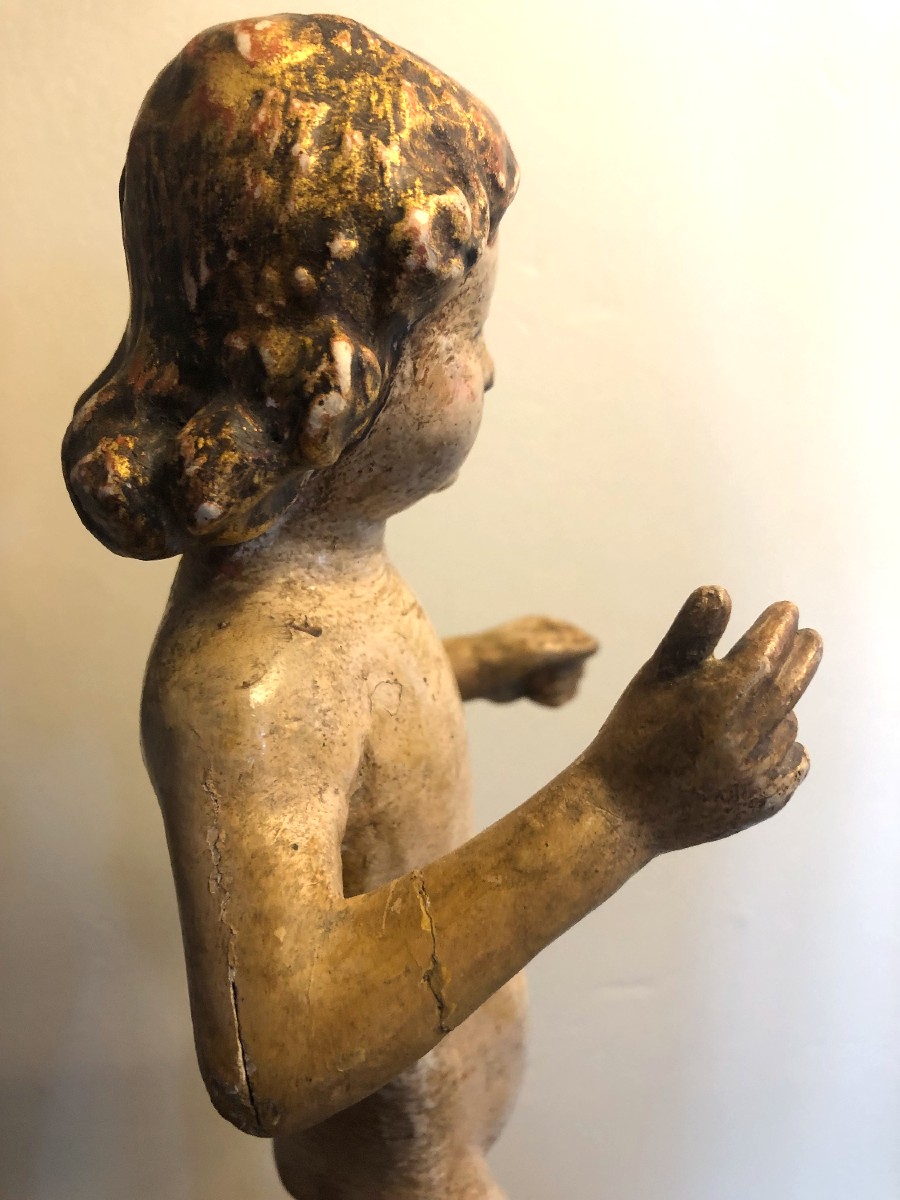
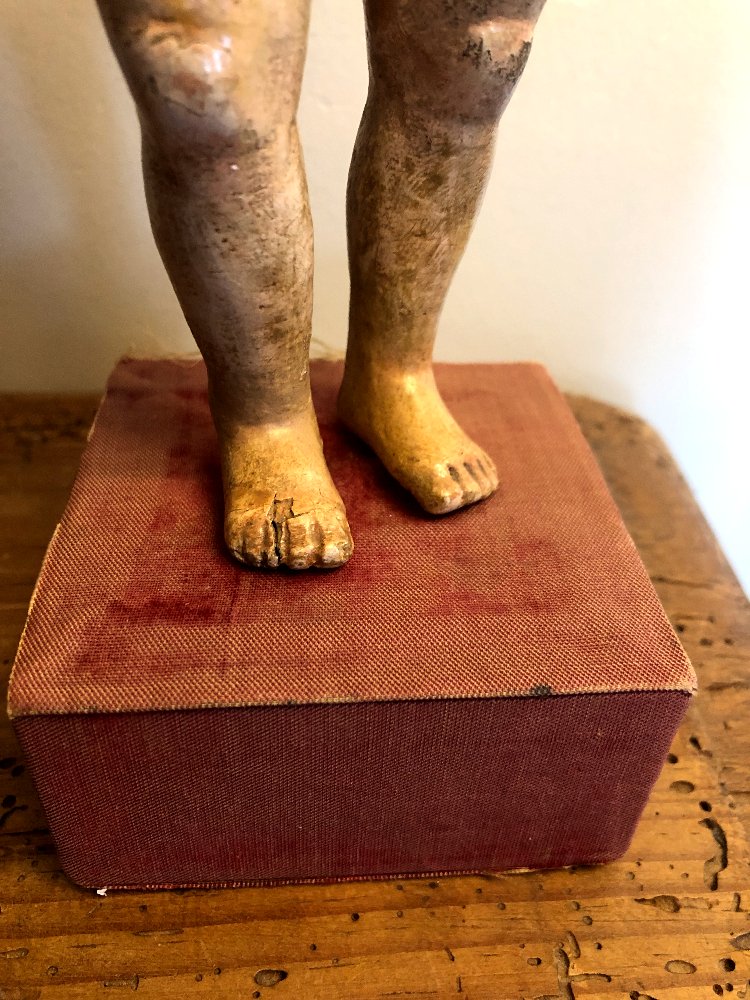
This Christ is depicted as a smiling, chubby-bodied child, standing in an inviting pose. The sculpture represents the dual nature of Christ: human and divine. His complete nudity alludes to the Son's human nature. However, the blessing gesture of his right hand recalls his divine nature as Savior of the World (Salvator Mundi). Images and statuettes of the Infant Jesus as Salvator Mundi were common around 1500. They reflected new, more embodied and intimate forms of devotion. These representations served as aids for meditation and prayer in the private sphere. They were appreciated by both laypeople and monasteries, where devotional practices were developing that favored small formats and manipulable objects. This doll, which could be handled, dressed, or even rocked, fits into these "modern" practices. The greatest sculptors active in the southern part of the Empire produced virtuoso variations on this theme. A less prestigious production developed at the beginning of the 16th century in the Brabant city of Mechelen, following in the footsteps of Brussels sculpture from the end of the 15th century. By its style as well as by the technical aspects of its creation, this Infant Jesus belongs to this Mechelen production. 




 Le Magazine de PROANTIC
 TRÉSORS Magazine
 Rivista Artiquariato