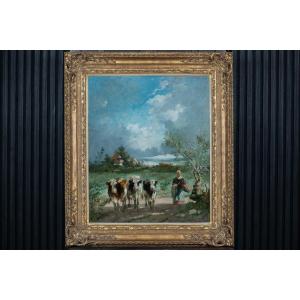


Artist: Willem Maris (1844–1910), attributed
Title: Dutch Pastoral
Medium: Oil on canvas
Dimensions: 64 × 54 cm (framed: 83 × 71 cm)
Style: Hague School, 19th century
Signature: Unsigned
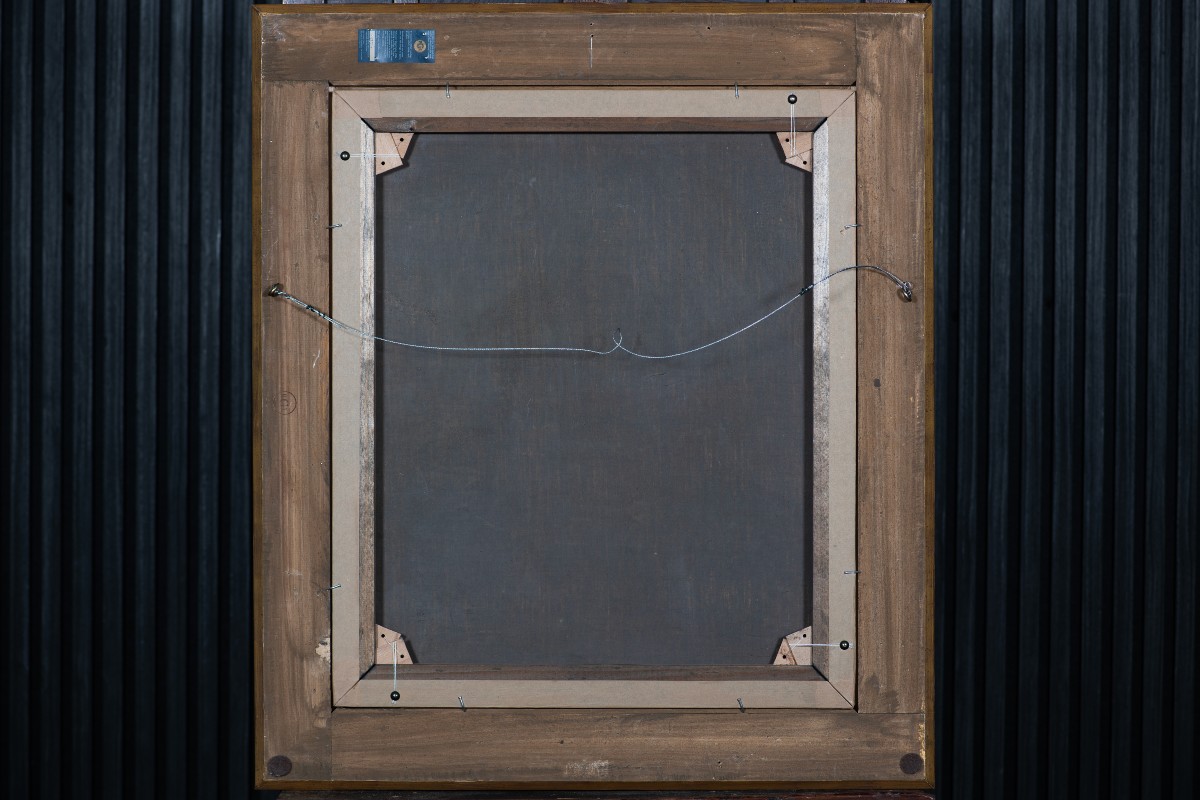
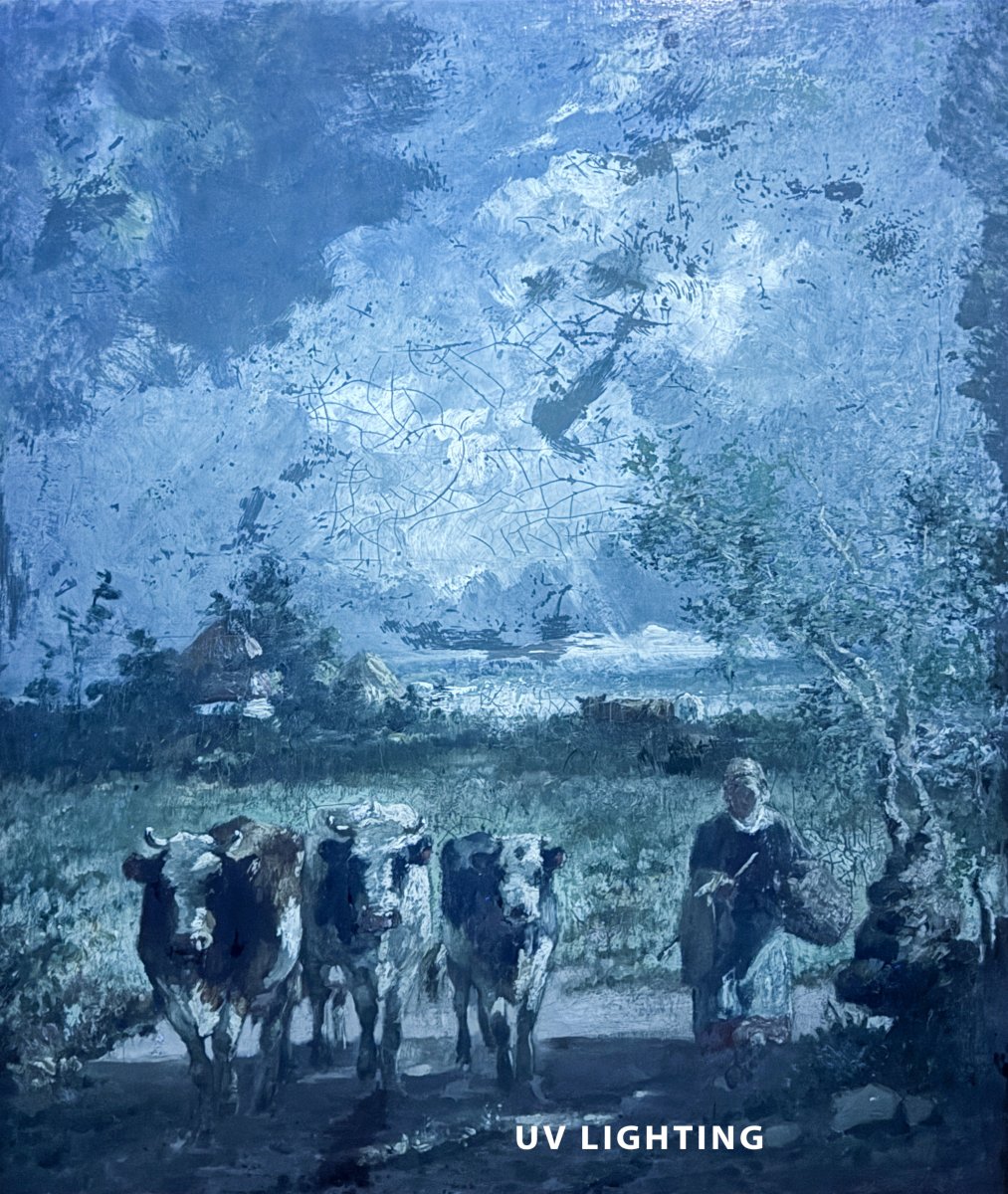
Condition: Relined canvas; retouchings visible under UV light; presented in a richly ornamented, museum-quality monumental gilt frame
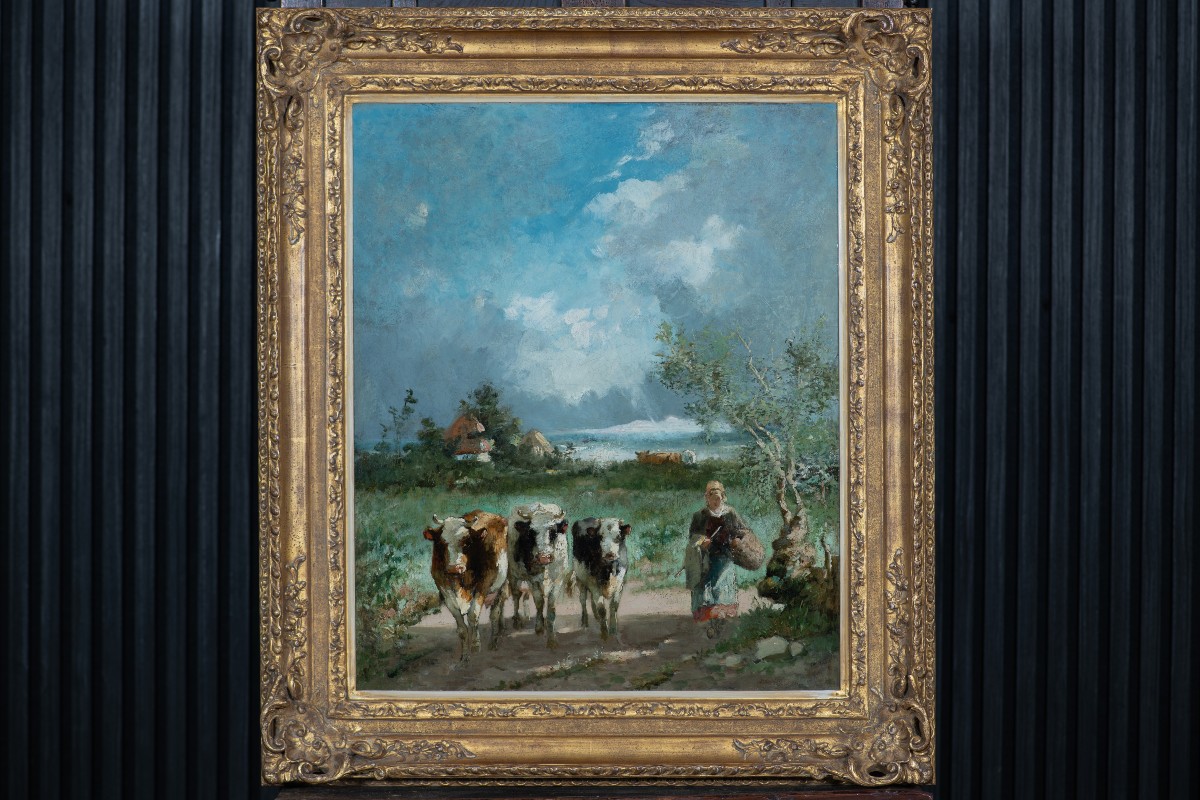
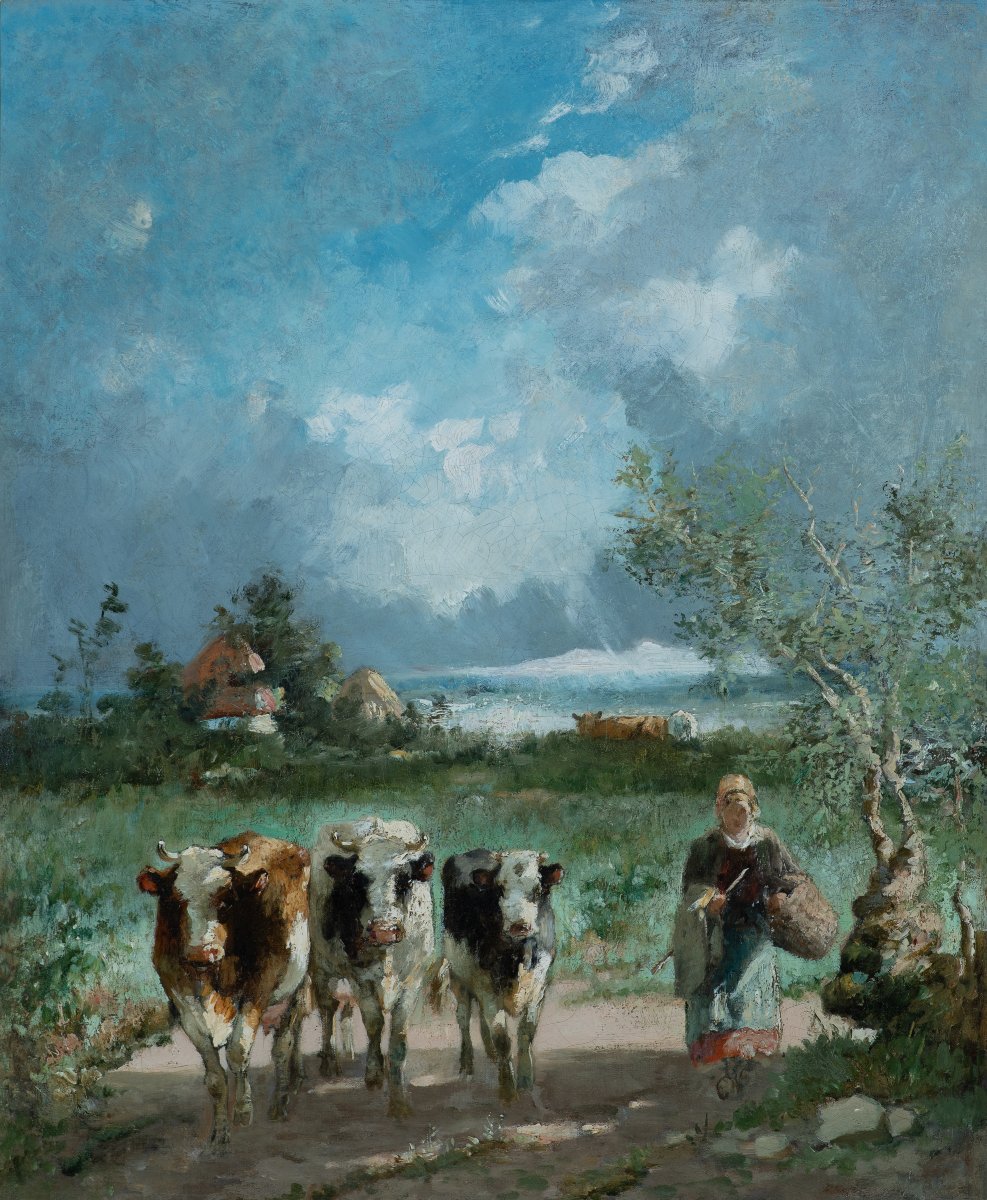
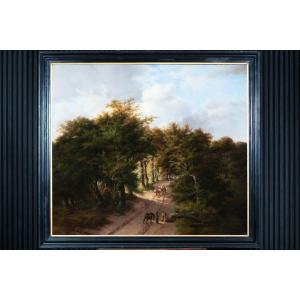
This painting compellingly embodies the poetic, light-filled landscape vision closely associated with Willem Maris and the Hague School: an open meadow, a low horizon, cattle in the foreground, and an atmosphere in which air and light shape the entire image. The attribution to Willem Maris is iconographically and stylistically coherent, given his well-known preference for Dutch pastoral subjects with cows and waterways, and his central position within the Hague School tradition.
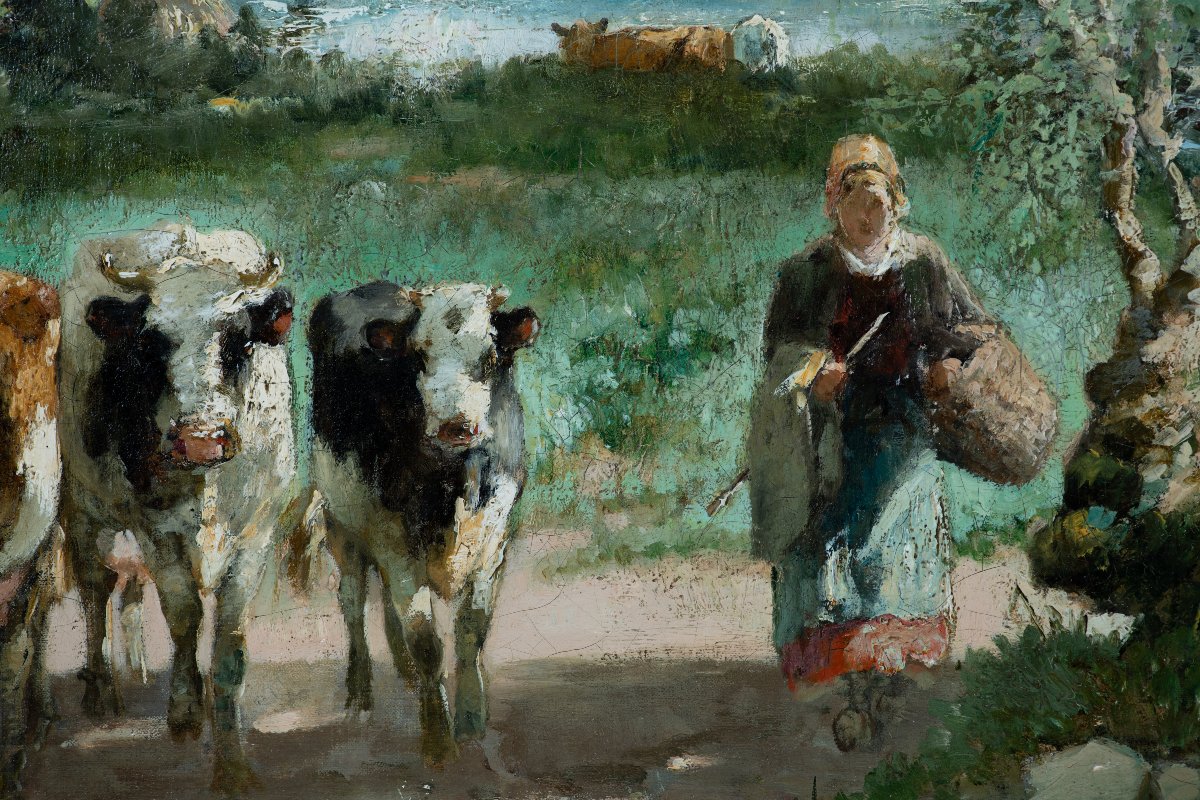
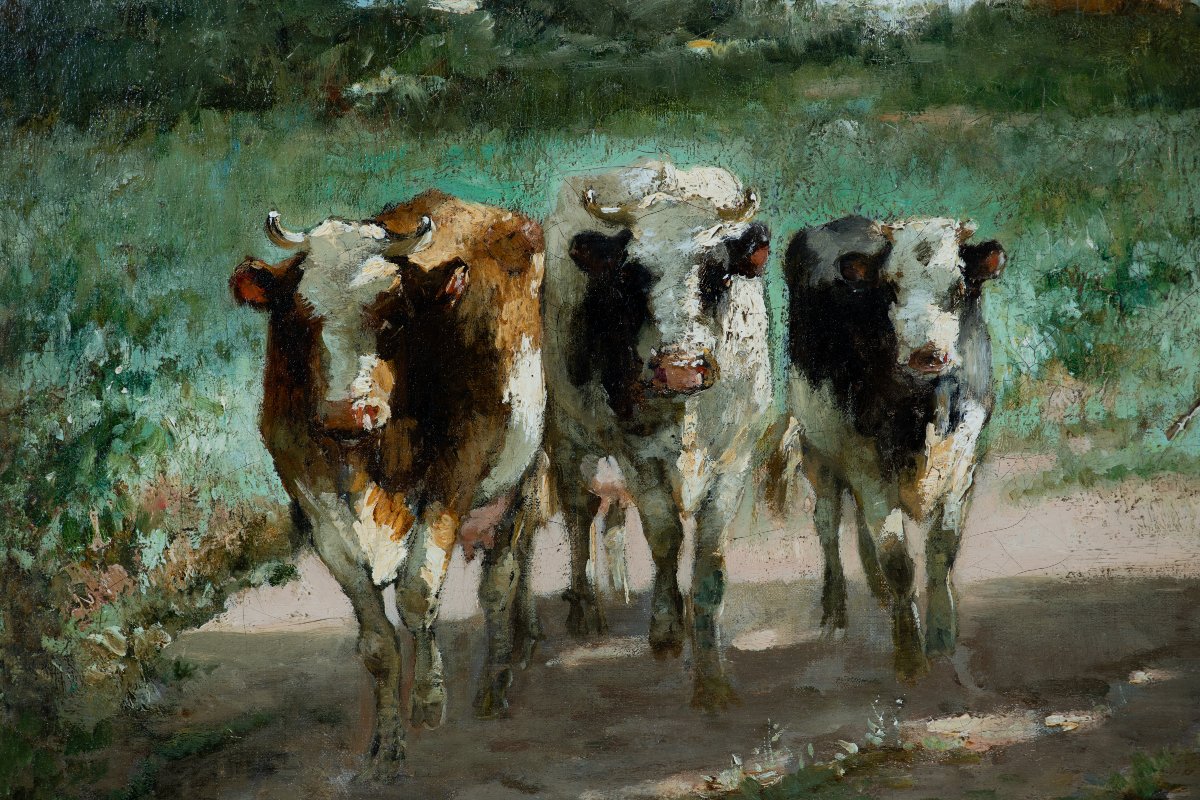
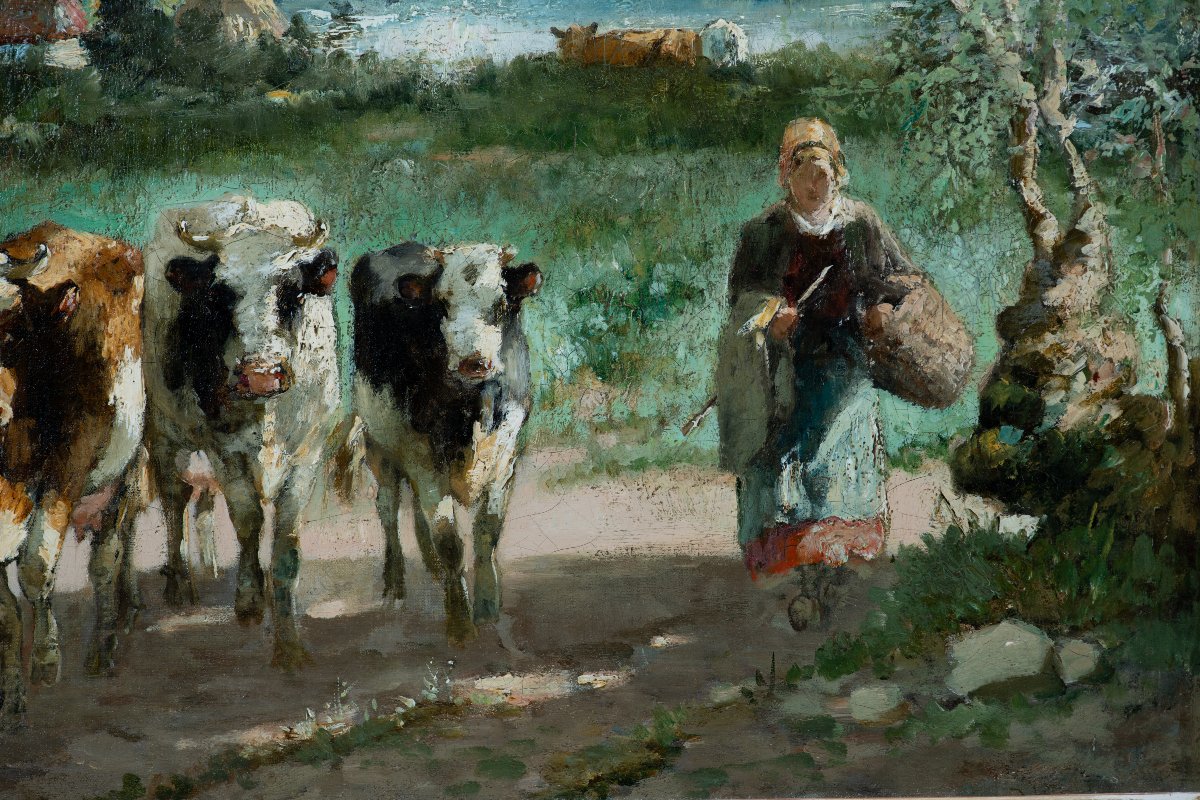
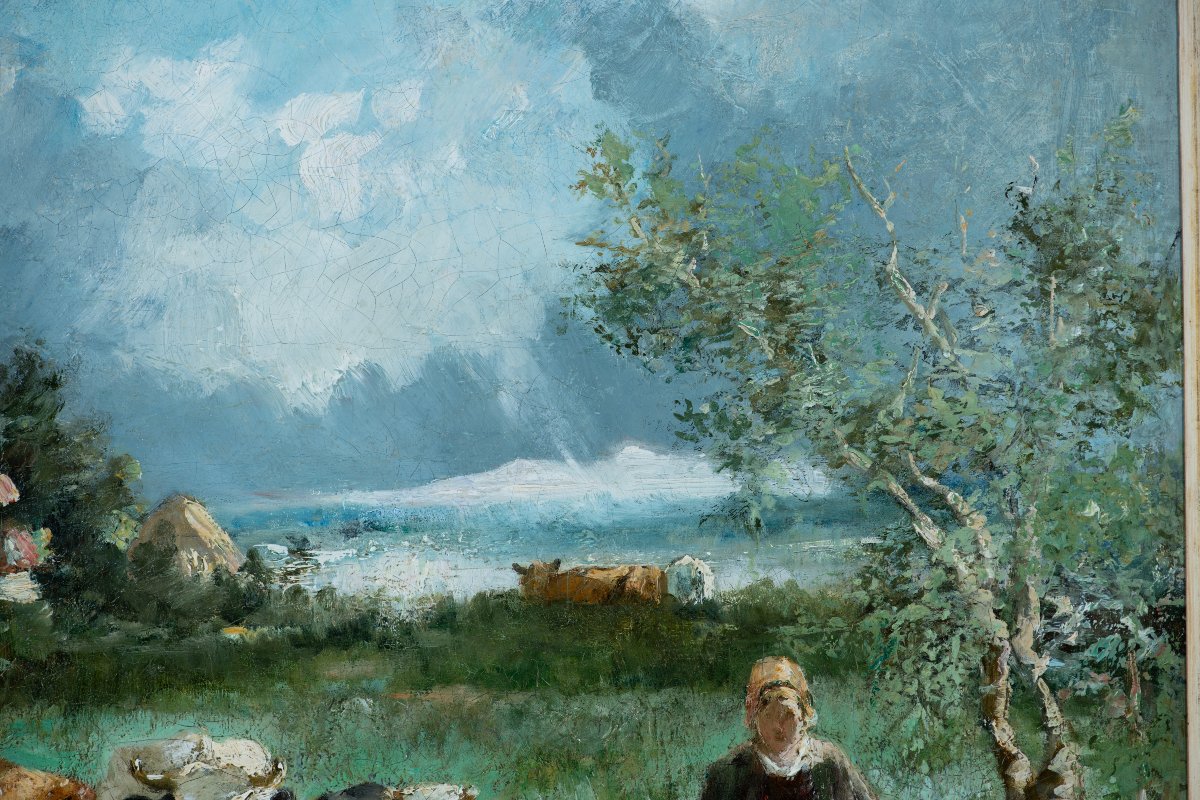
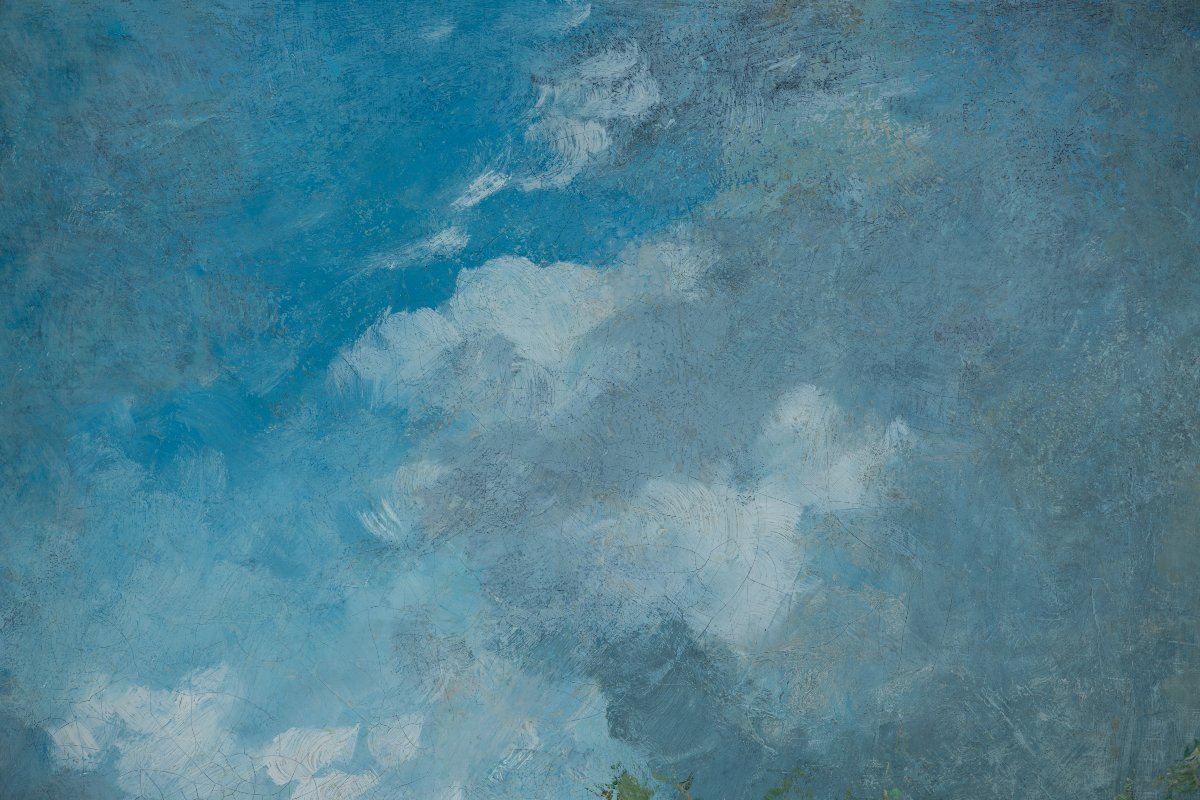
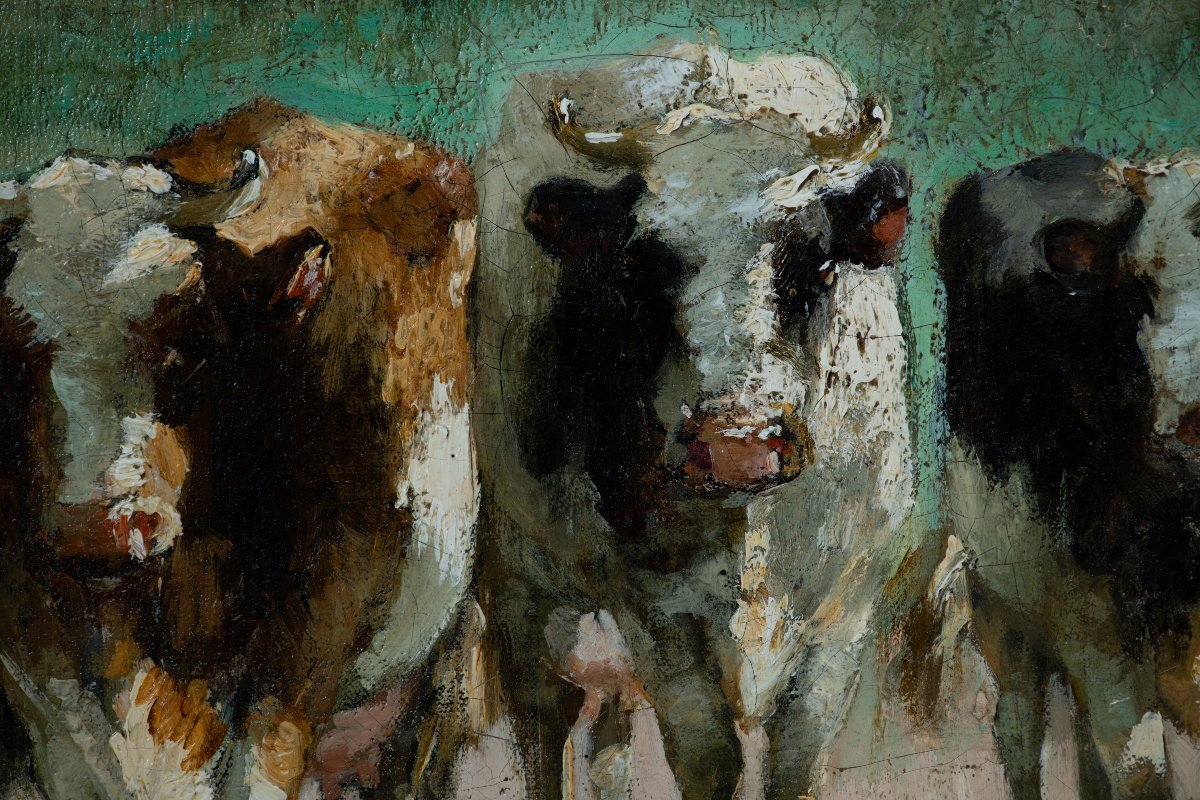
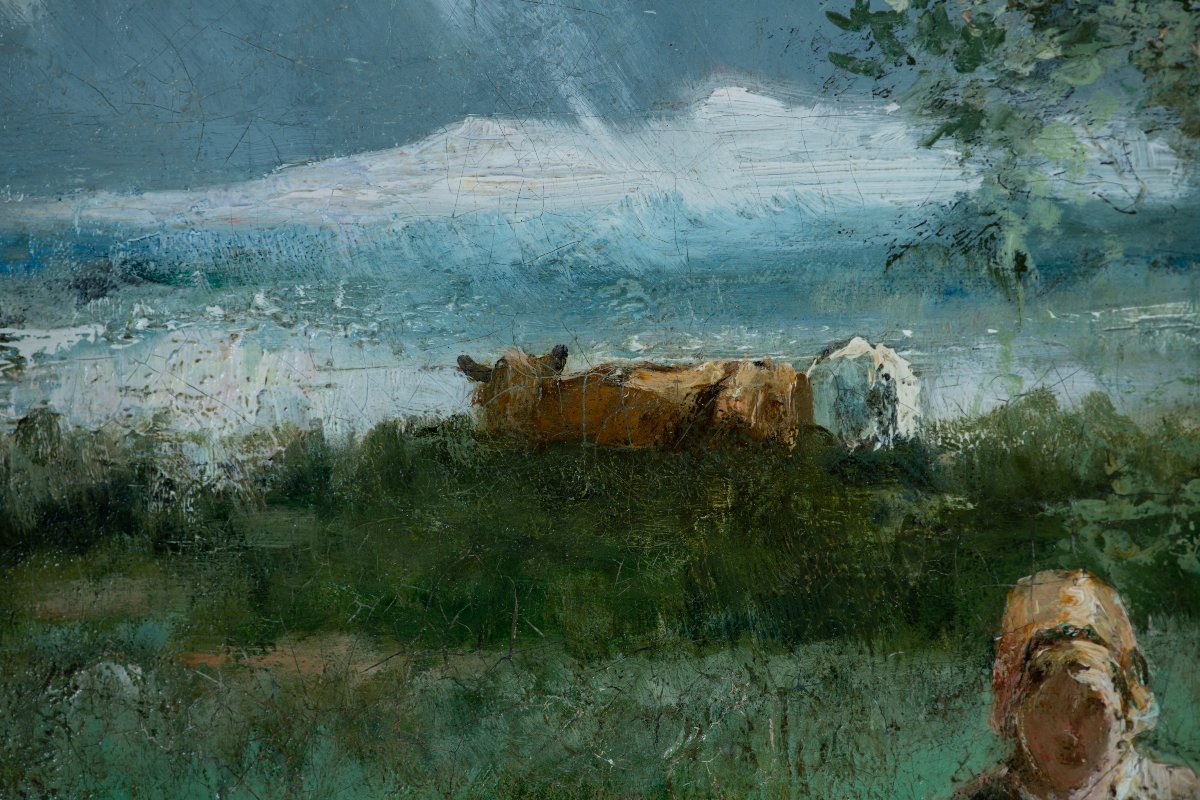
Detailed description of the workThe composition is carefully orchestrated: an expansive sky occupies the greater part of the surface, granting the landscape a broad, breathing spatial rhythm. In the foreground, three cows advance frontally toward the viewer; to the right, a female figure guides the herd. This fusion of everyday rural life with an almost monumental sense of nature is characteristic of late 19th-century Dutch pastoral imagery.
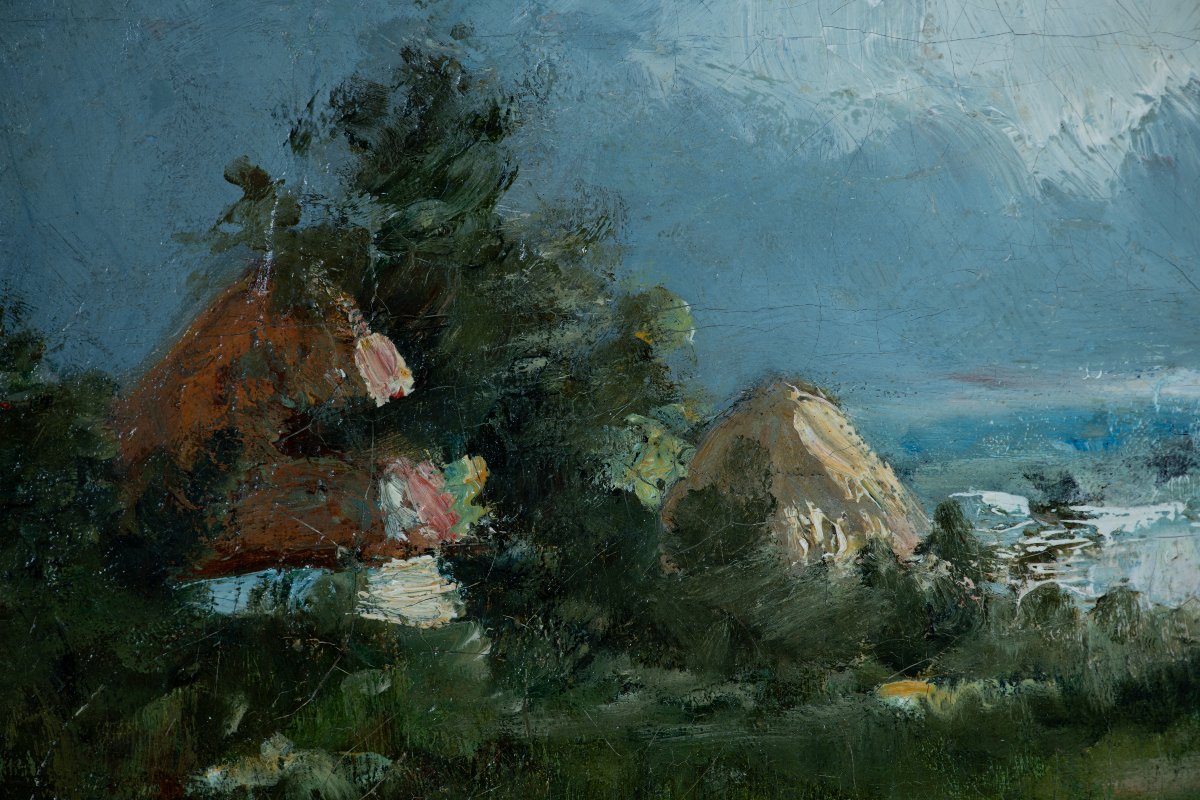
The palette is built on nuanced blues and greens, animated by warmer accents in the cattle, the farm structures to the left, and the figure to the right. The balance between cool atmospheric tones and earthier passages heightens the impression of shifting daylight after rain. Here, the sky is not merely a backdrop; it is the visual and emotional core of the painting.
Technique and painterly handlingThe surface reveals a lively, confident brushwork, especially in the handling of sky, grassland, and foliage. The paint layer shows age-related features consistent with a historical oil painting; UV examination indicates localized retouching, in keeping with earlier conservation work. The canvas has been relined, a common structural intervention intended to stabilize the support.
From a stylistic standpoint, the emphasis lies on optical effects—light, humidity, and atmospheric vibration—rather than anecdotal narrative detail. This aligns closely with standard characterizations of Willem Maris: pastoral landscapes with cattle, rendered through luminous tonal transitions and a relatively impressionistic touch within the broader Hague School framework.
Art-historical contextWithin the Hague School, Willem Maris occupies a distinct place alongside his brothers Jacob and Matthijs. While the movement is often associated with subdued tonal painting, Willem Maris is frequently noted for a clearer, brighter palette and a more radiant treatment of light. This work stands at the intersection of Dutch realist landscape tradition and an increasingly impressionistic sensibility.
The subject matter further supports the attribution: cows in damp pastureland, a mid-ground water zone, and a dominant, mutable sky are among the most recognizable motifs in Maris’s artistic language.
The artist: background (concise)Born and deceased in The Hague (1844–1910), Willem Maris was the youngest of the three Maris brothers. In addition to oil painting, he also worked as a draughtsman, etcher, and watercolorist. He is regarded as a key representative of the Hague School and was among the co-founders of the Hollandsche Teekenmaatschappij. His artistic development is generally associated with sustained study from nature, complemented by academic drawing instruction in The Hague.
Comparable artistsJozef Israëls, Anton Mauve, Jacob Maris, Charles-François Daubigny, Jean-Baptiste-Camille Corot
Conclusion
Dutch Pastoral is a persuasive and highly appealing example of late 19th-century Dutch landscape painting, uniting atmospheric light, spatial openness, and rural iconography. Taken together, the thematic and stylistic characteristics support the attribution to Willem Maris from an art-historical perspective. The richly carved, museum-quality monumental gilt frame further enhances the work’s visual authority and gallery presence.






 Le Magazine de PROANTIC
 TRÉSORS Magazine
 Rivista Artiquariato