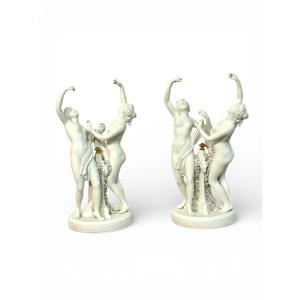


Pair Of Bisque Porcelain Figural Groups, Sèvres Style, Late 19th Century
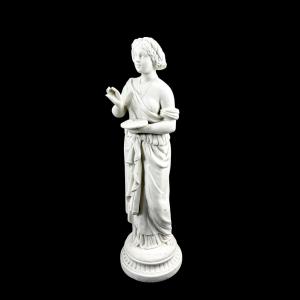
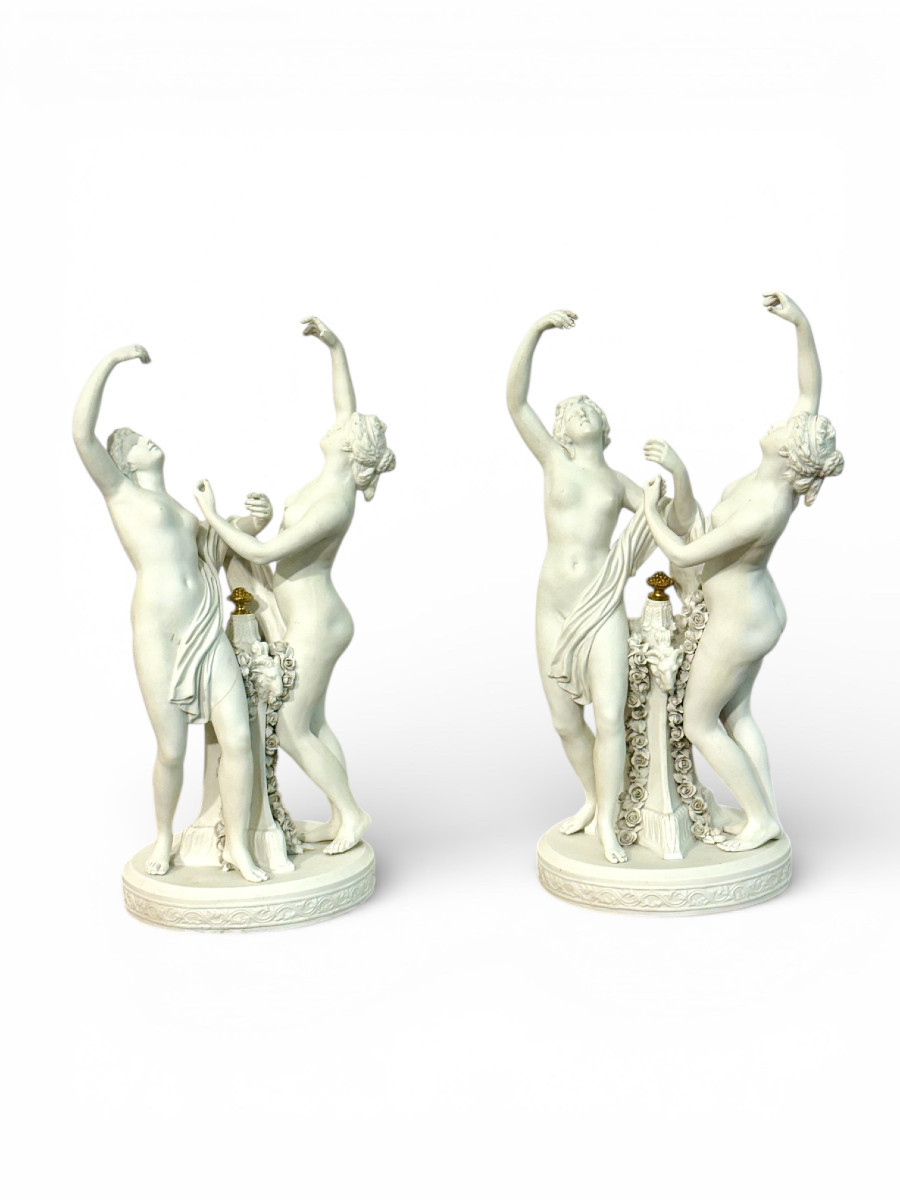
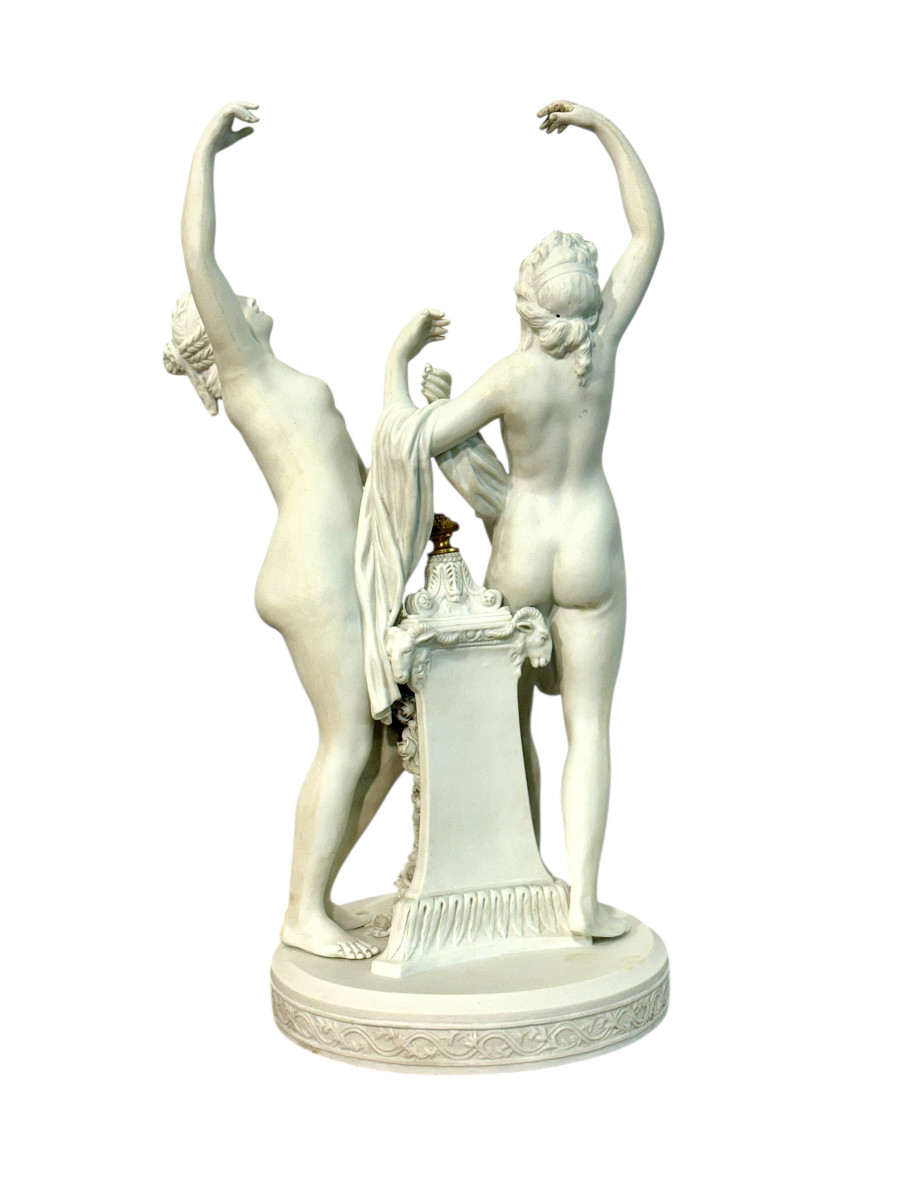
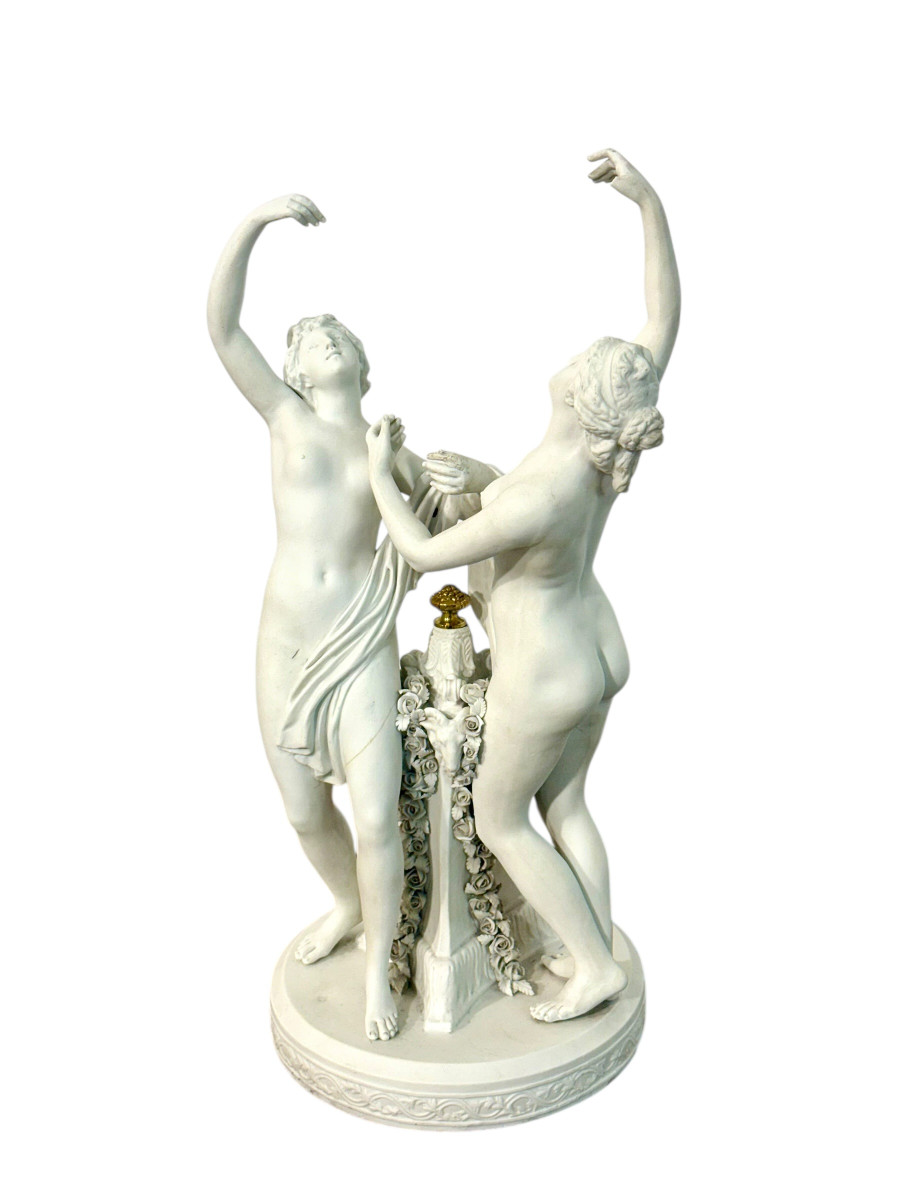
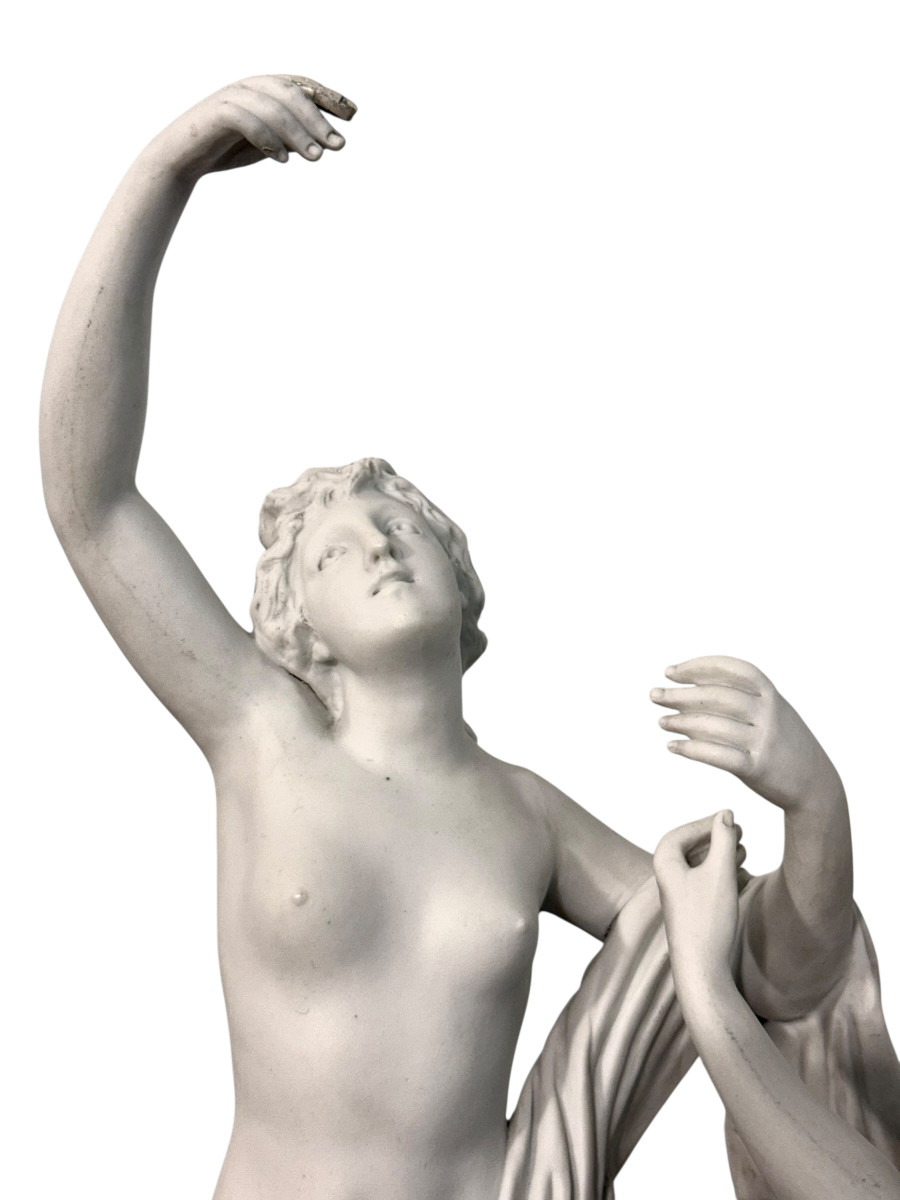
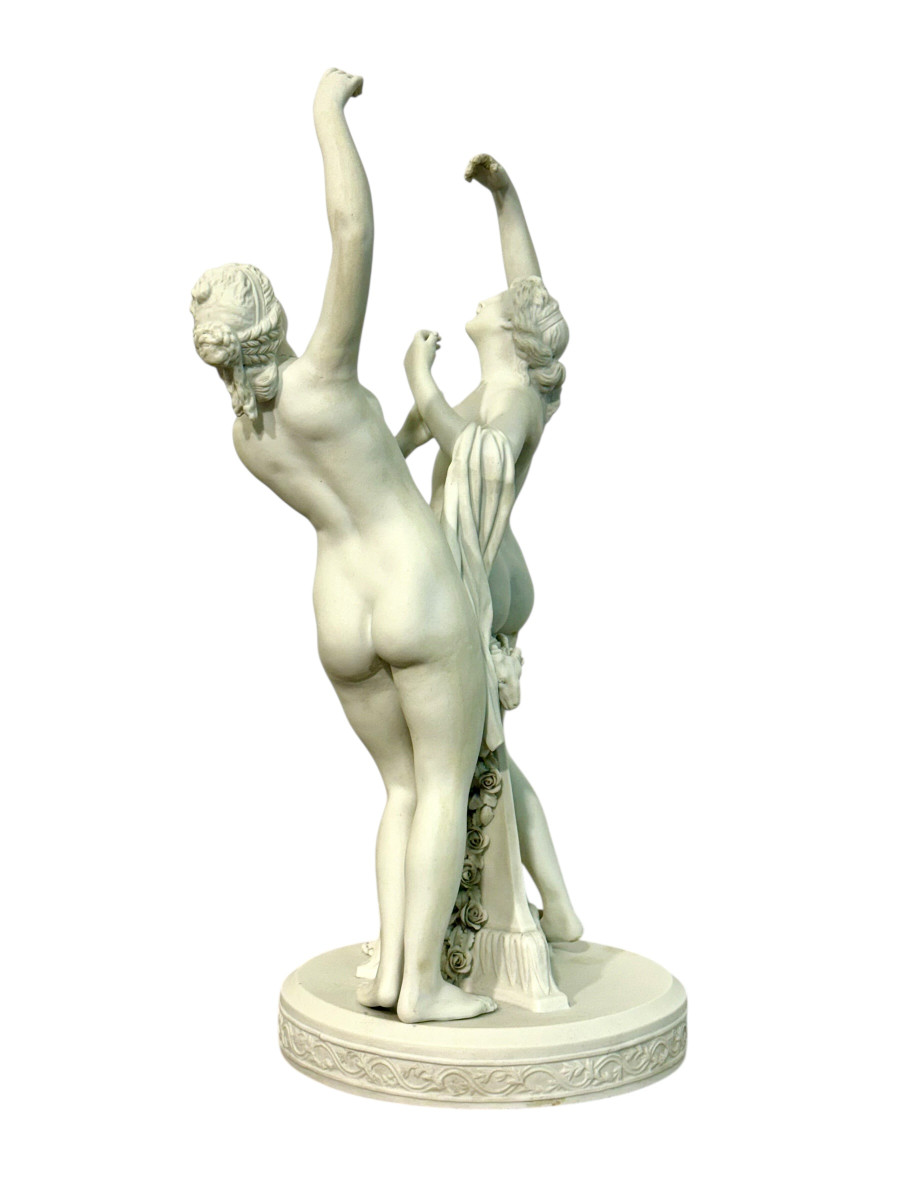
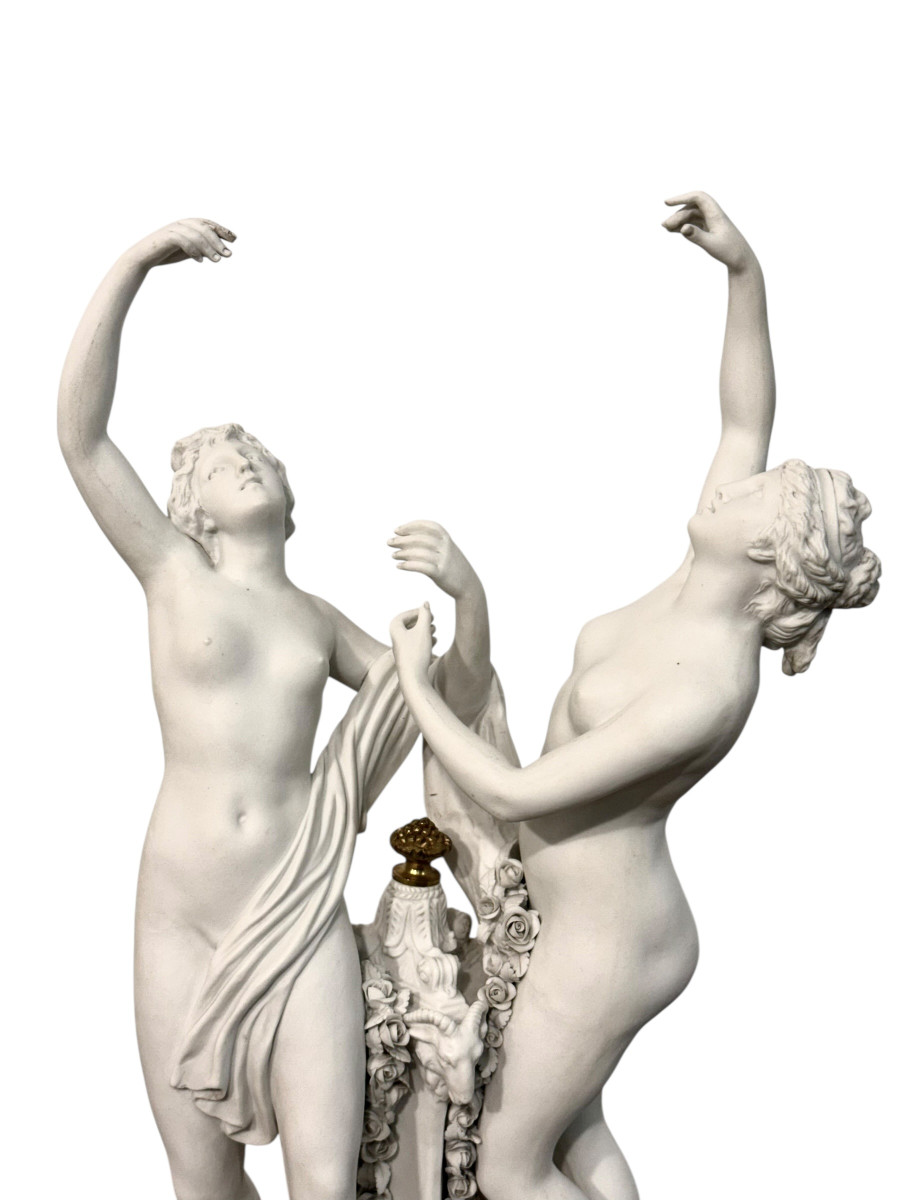
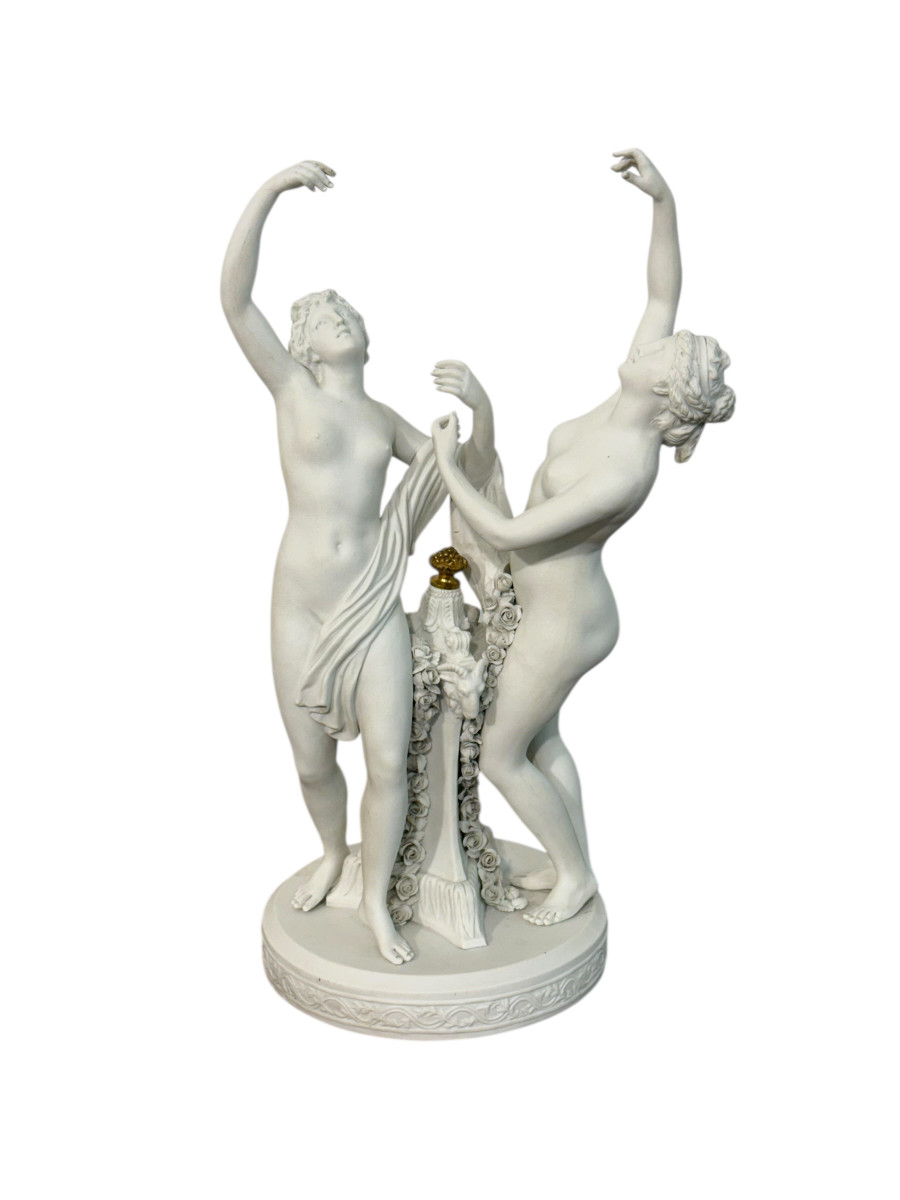
This elegant pair of figural groups is executed in finely modeled white bisque porcelain, depicting two classical female figures in graceful, dance-like poses around a central fluted column. The composition draws directly from Neoclassical ideals inspired by Antiquity, with elongated proportions, fluid movement, and delicately rendered anatomy. One figure is partially draped, while the other is presented nude, enhancing the contrast of textures and the sense of rhythmic balance within the group.
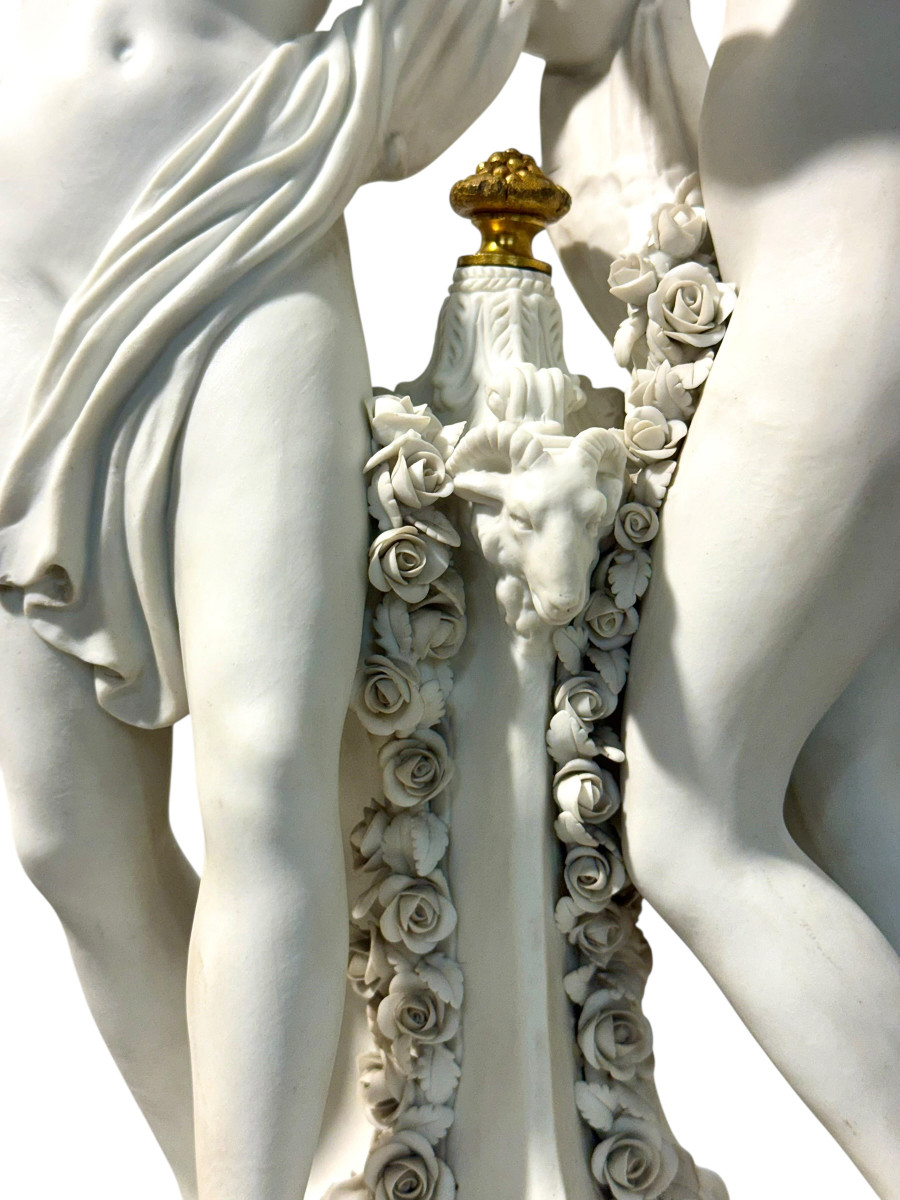
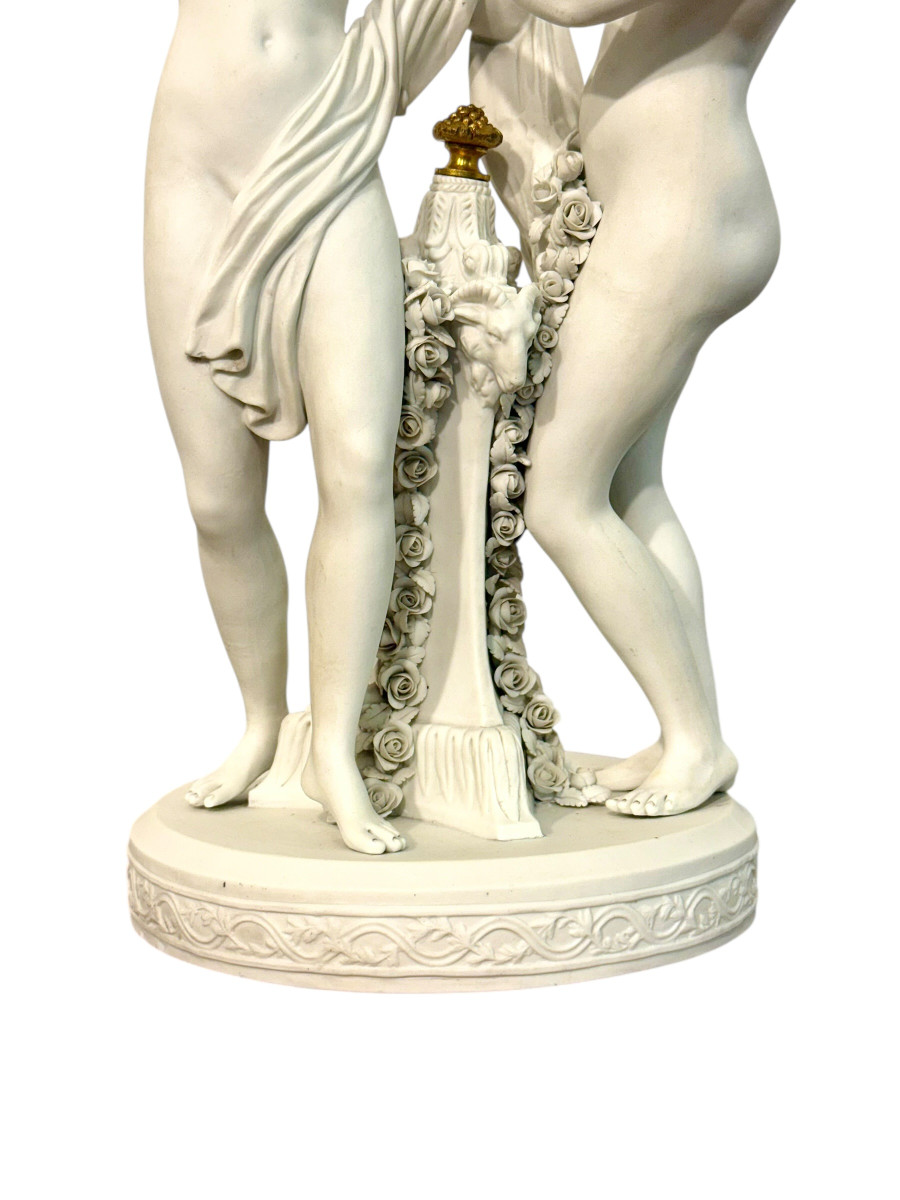
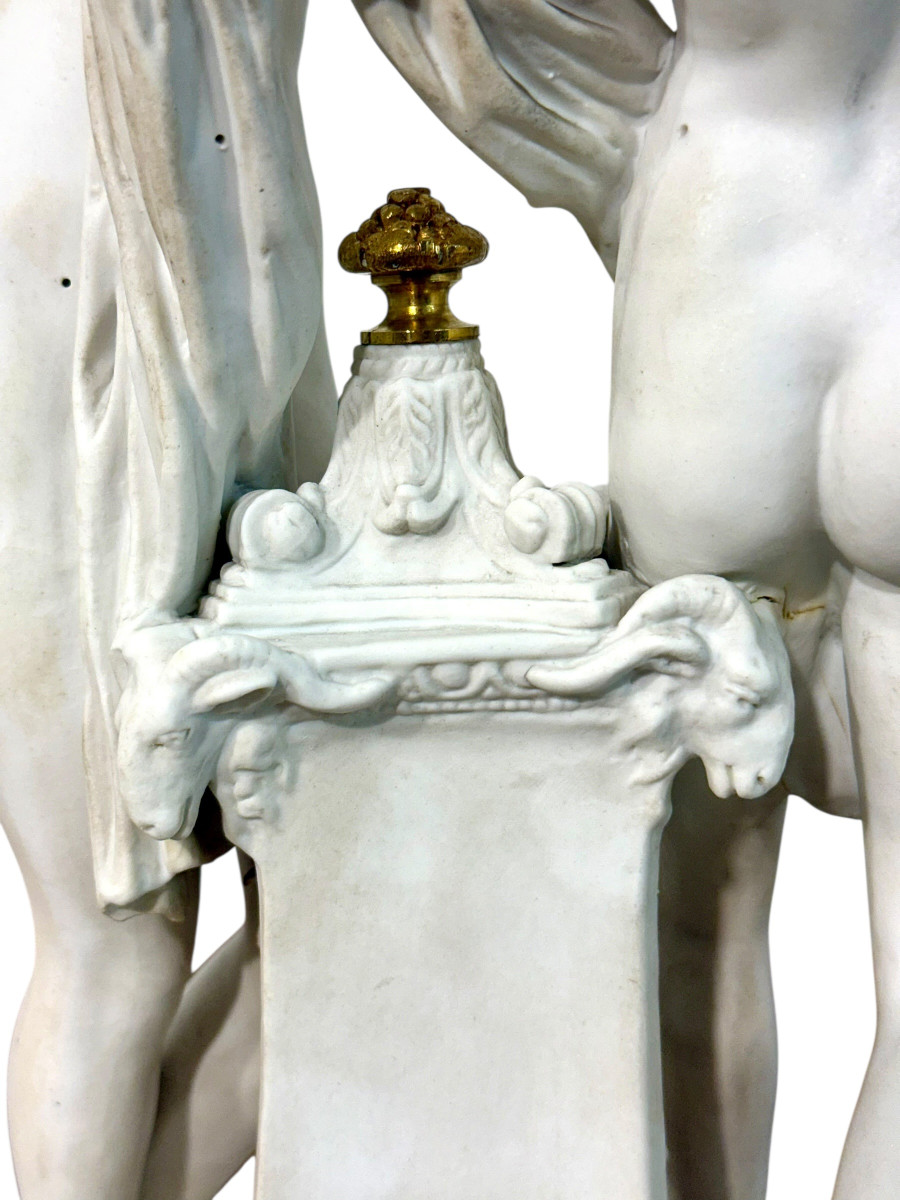
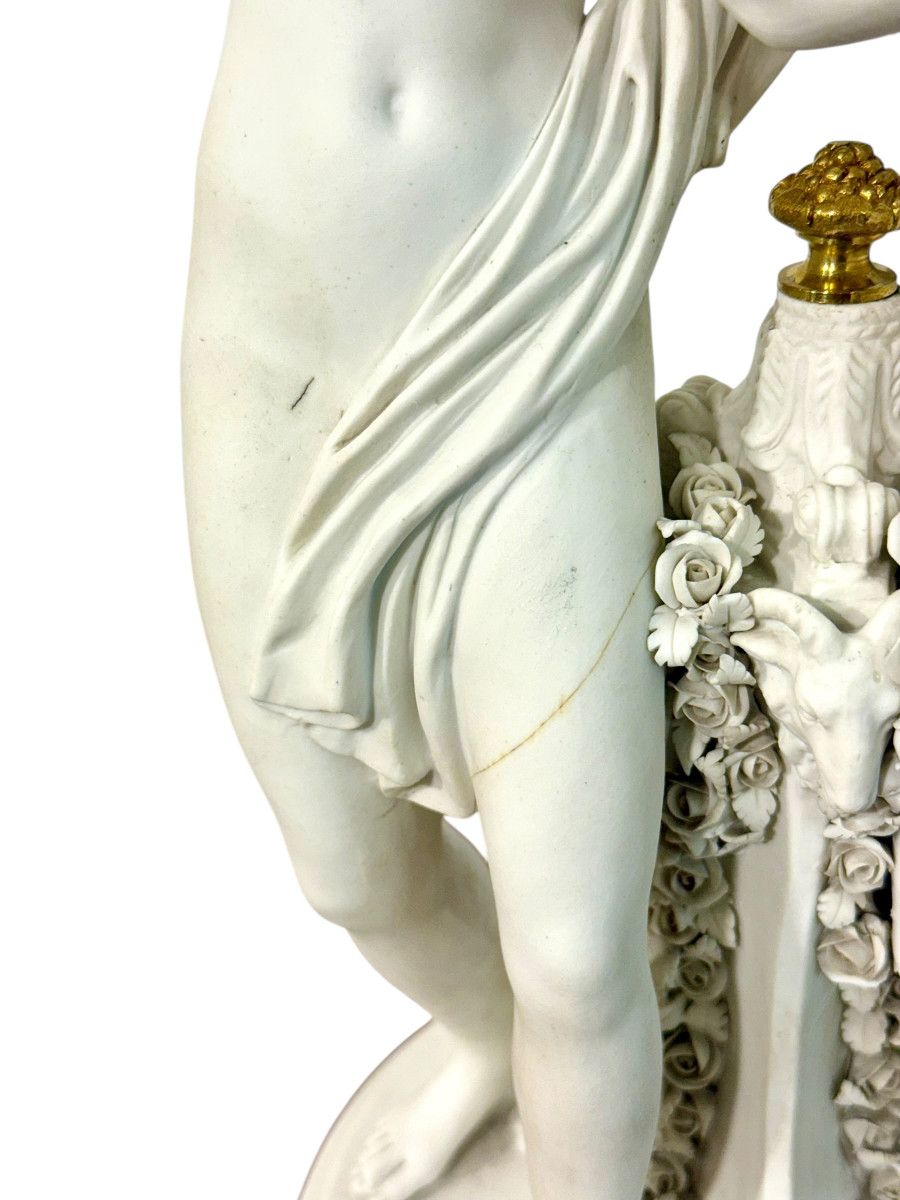
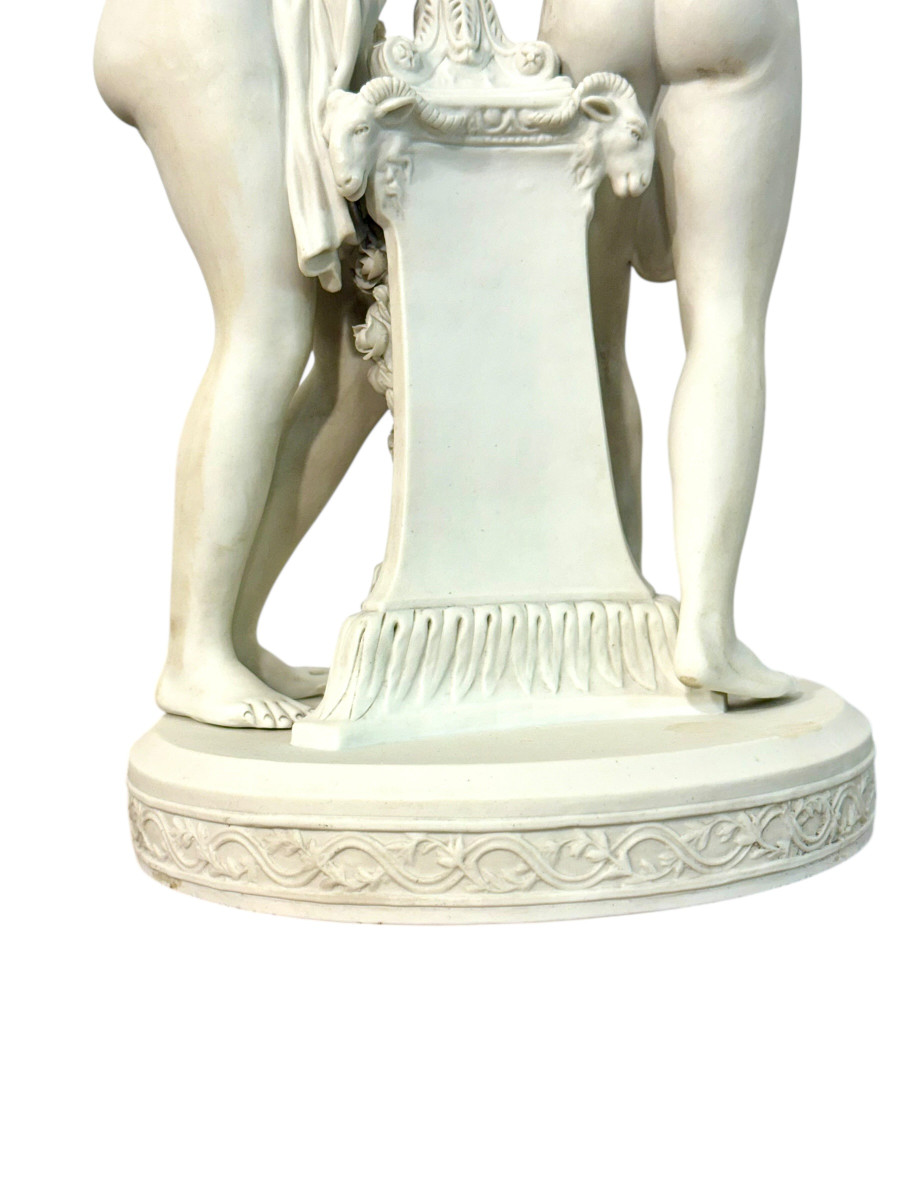
The central support is richly ornamented with sculpted floral garlands and ram’s heads, a motif frequently associated with late 18th-century French decorative arts and widely revived during the 19th century. The gilt finial at the top adds a refined accent and suggests the piece may originally have been conceived as a decorative centerpiece or garniture element.
The quality of the modeling, the matte bisque surface, and the refined Neoclassical vocabulary strongly evoke the production of the Sèvres manufactory and its circle, particularly the revival pieces produced during the second half of the 19th century. Comparable figural groups were often created after models by celebrated sculptors of the Louis XVI period, such as Falconet or Clodion, whose works were extensively reinterpreted during this era.
Condition:
As often encountered with delicate bisque porcelain sculptures of this period, there are minor restorations and losses. One or more fingers show signs of past damage, and one figure presents an earlier restoration, executed in a somewhat visible manner. These imperfections remain discreet and do not detract from the overall aesthetic presence, sculptural quality, or decorative impact of the pair.
Dating to the late 19th century, circa 1870–1900, this pair embodies the enduring fascination with French Neoclassicism and would make a striking decorative statement in both classical and contemporary interiors.
The central support is richly ornamented with sculpted floral garlands and ram’s heads, a motif frequently associated with late 18th-century French decorative arts and widely revived during the 19th century. The gilt finial at the top adds a refined accent and suggests the piece may originally have been conceived as a decorative centerpiece or garniture element.
The quality of the modeling, the matte bisque surface, and the refined Neoclassical vocabulary strongly evoke the production of the Sèvres manufactory and its circle, particularly the revival pieces produced during the second half of the 19th century. Comparable figural groups were often created after models by celebrated sculptors of the Louis XVI period, such as Falconet or Clodion, whose works were extensively reinterpreted during this era.
Condition:
As often encountered with delicate bisque porcelain sculptures of this period, there are minor restorations and losses. One or more fingers show signs of past damage, and one figure presents an earlier restoration, executed in a somewhat visible manner. These imperfections remain discreet and do not detract from the overall aesthetic presence, sculptural quality, or decorative impact of the pair.
Dating to the late 19th century, circa 1870–1900, this pair embodies the enduring fascination with French Neoclassicism and would make a striking decorative statement in both classical and contemporary interiors.
2 600 €
Period: 19th century
Style: Rome and Antic Greece
Condition: Condition of use
Material: Biscuit
Diameter: 24 cm
Height: 43,5 cm
Reference (ID): 1702891
Availability: In stock
Print