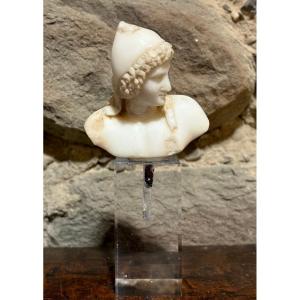


"16th Small Mannerist Marble Bust Of Attis"
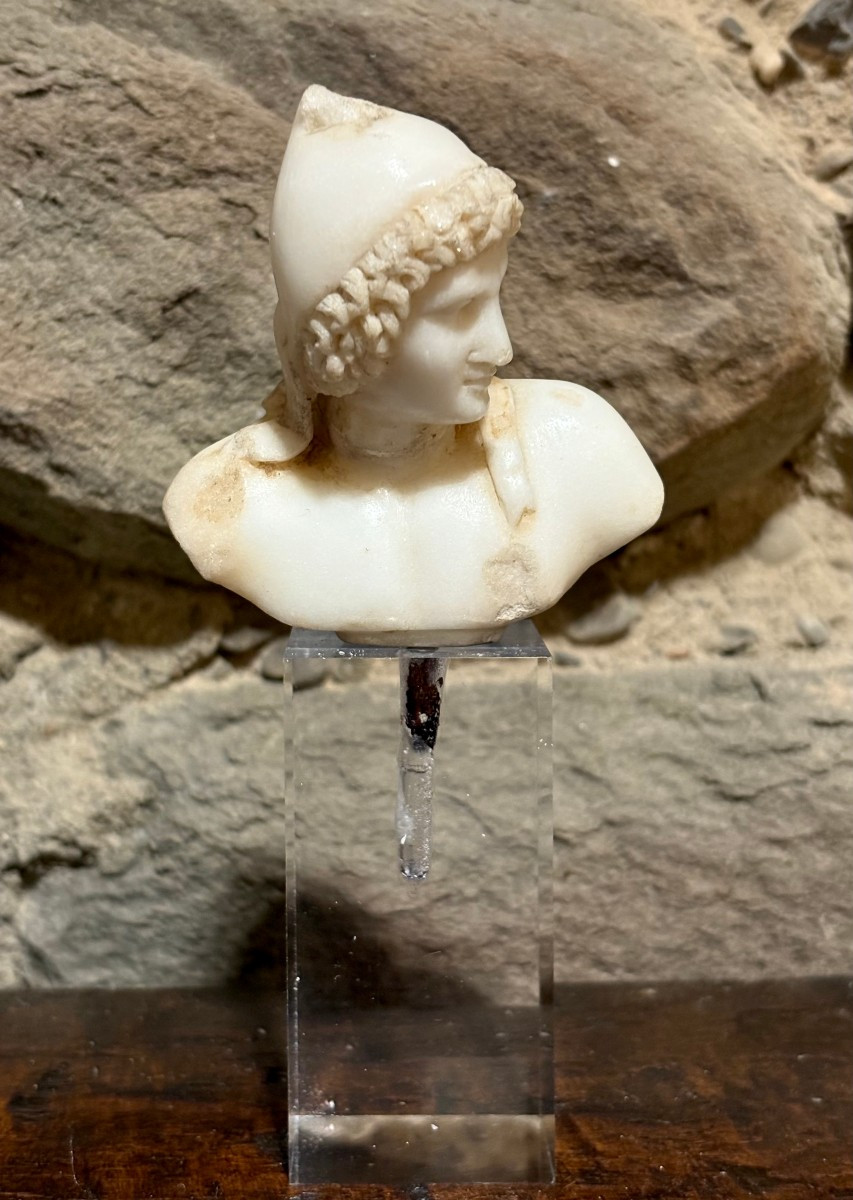
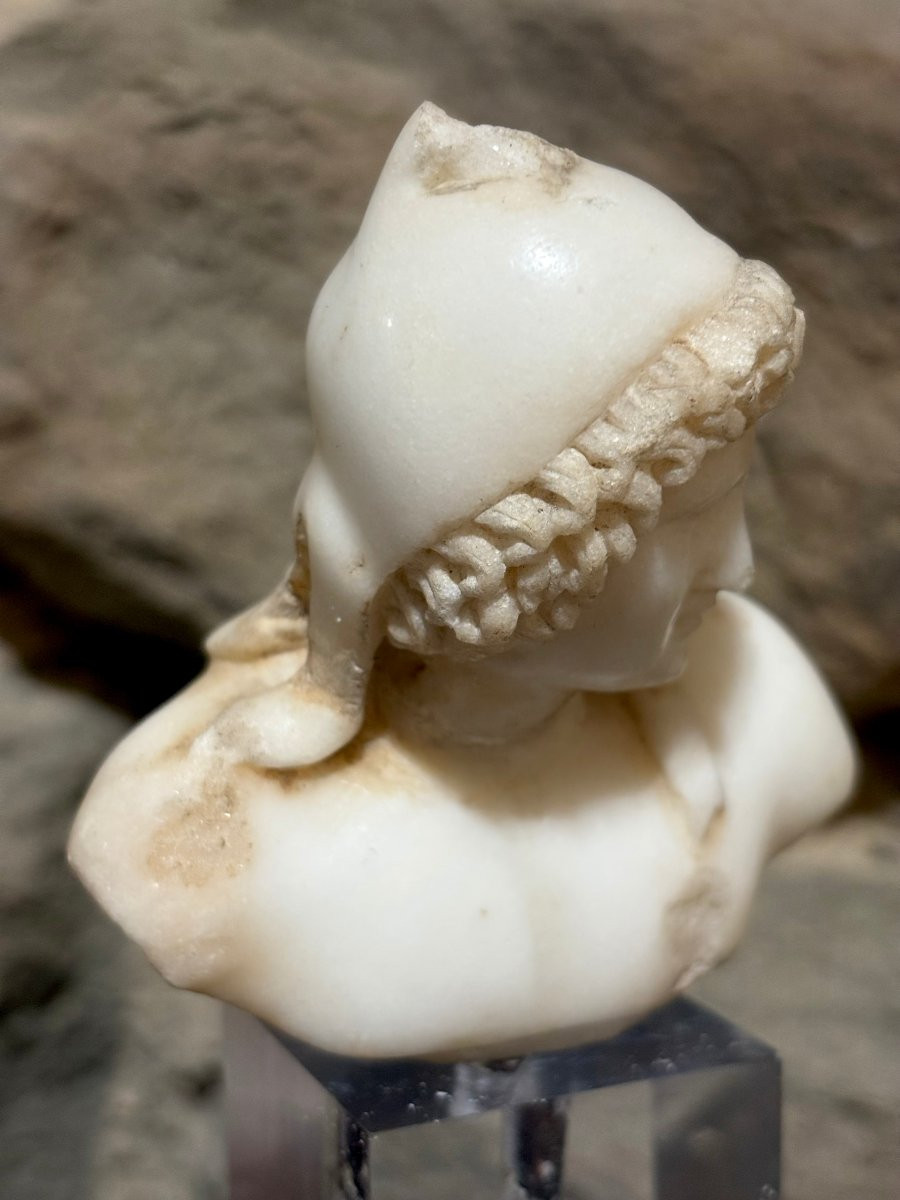
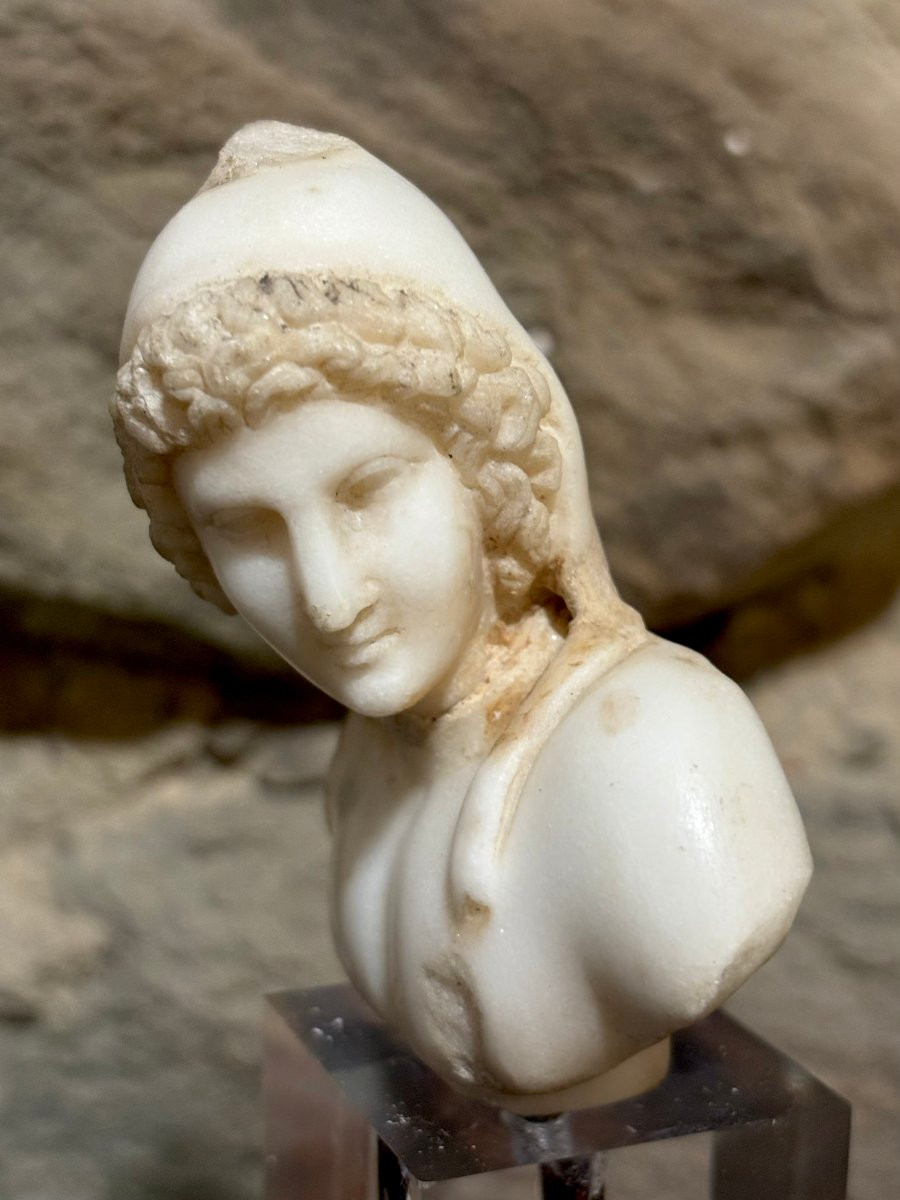
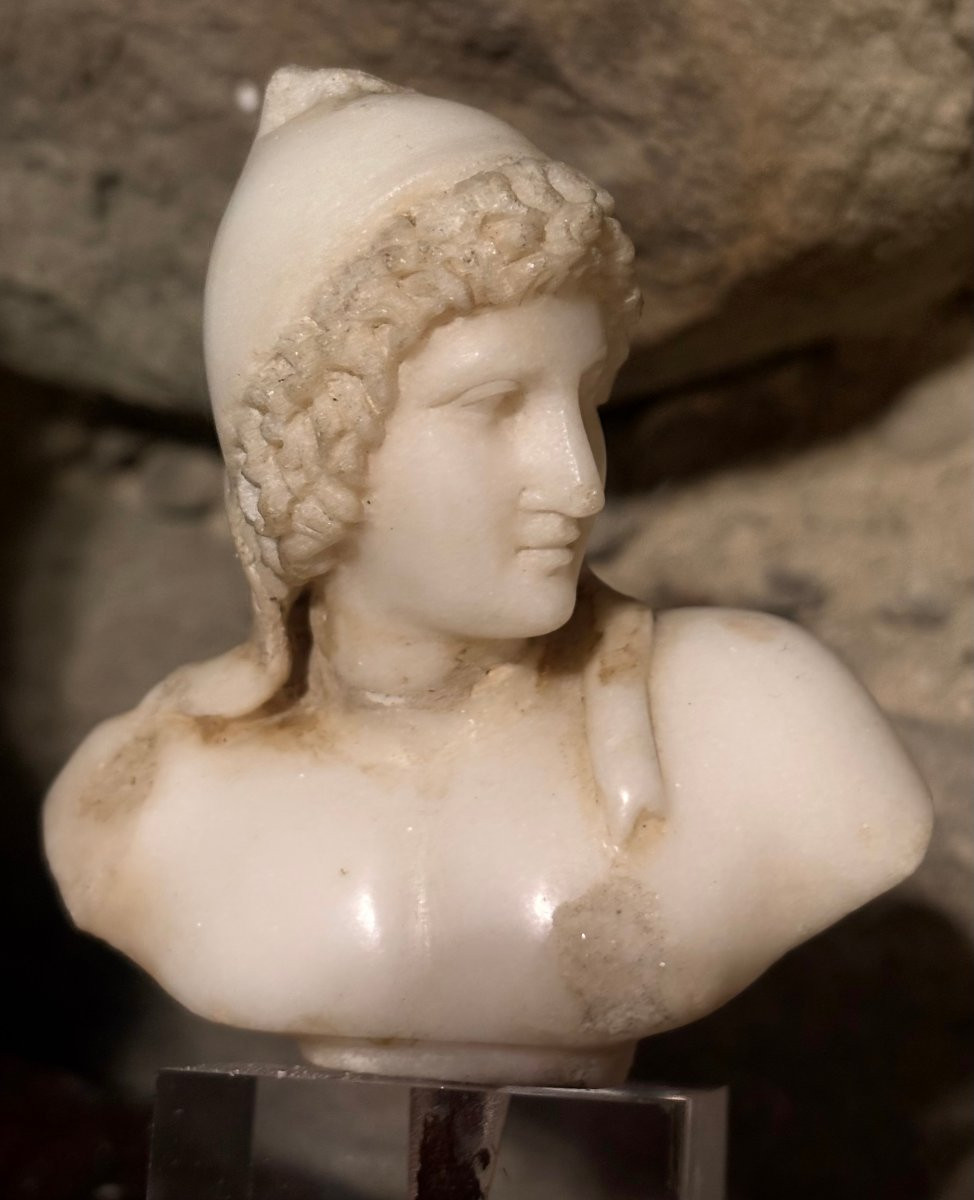
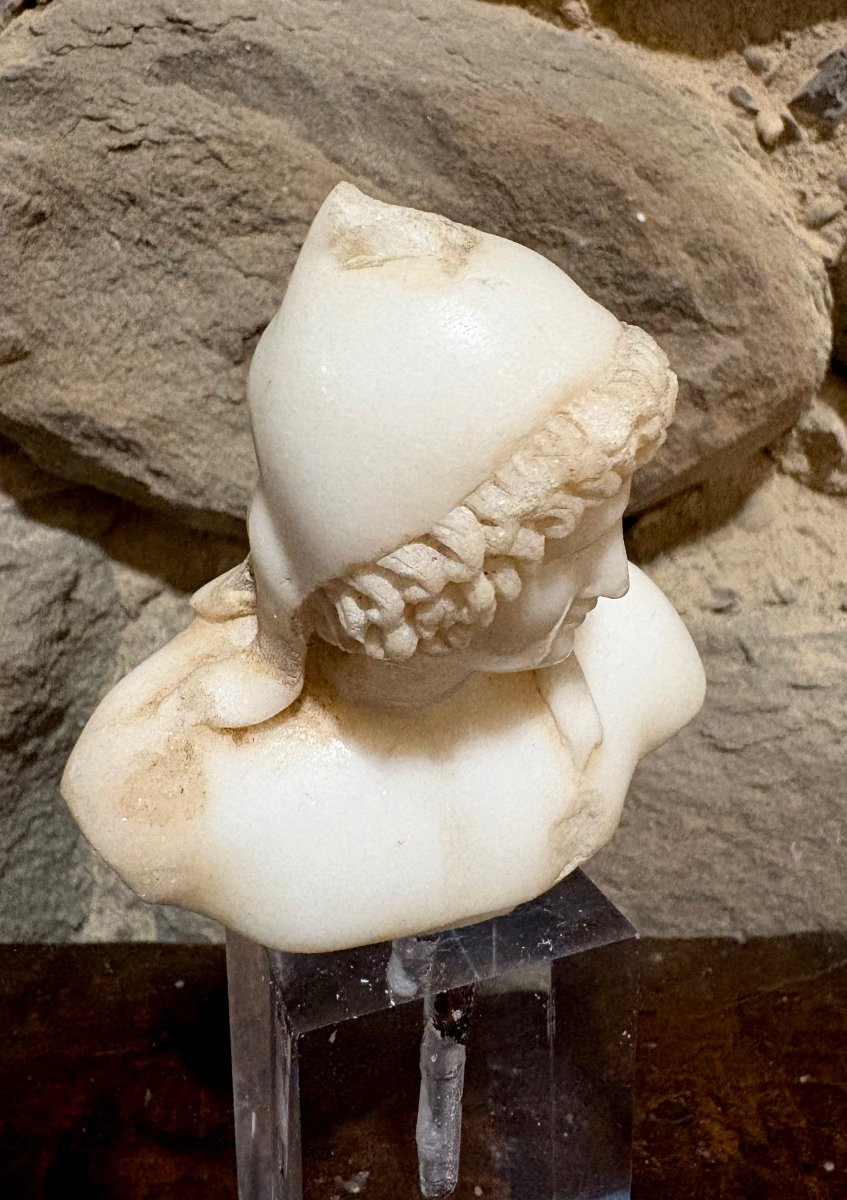
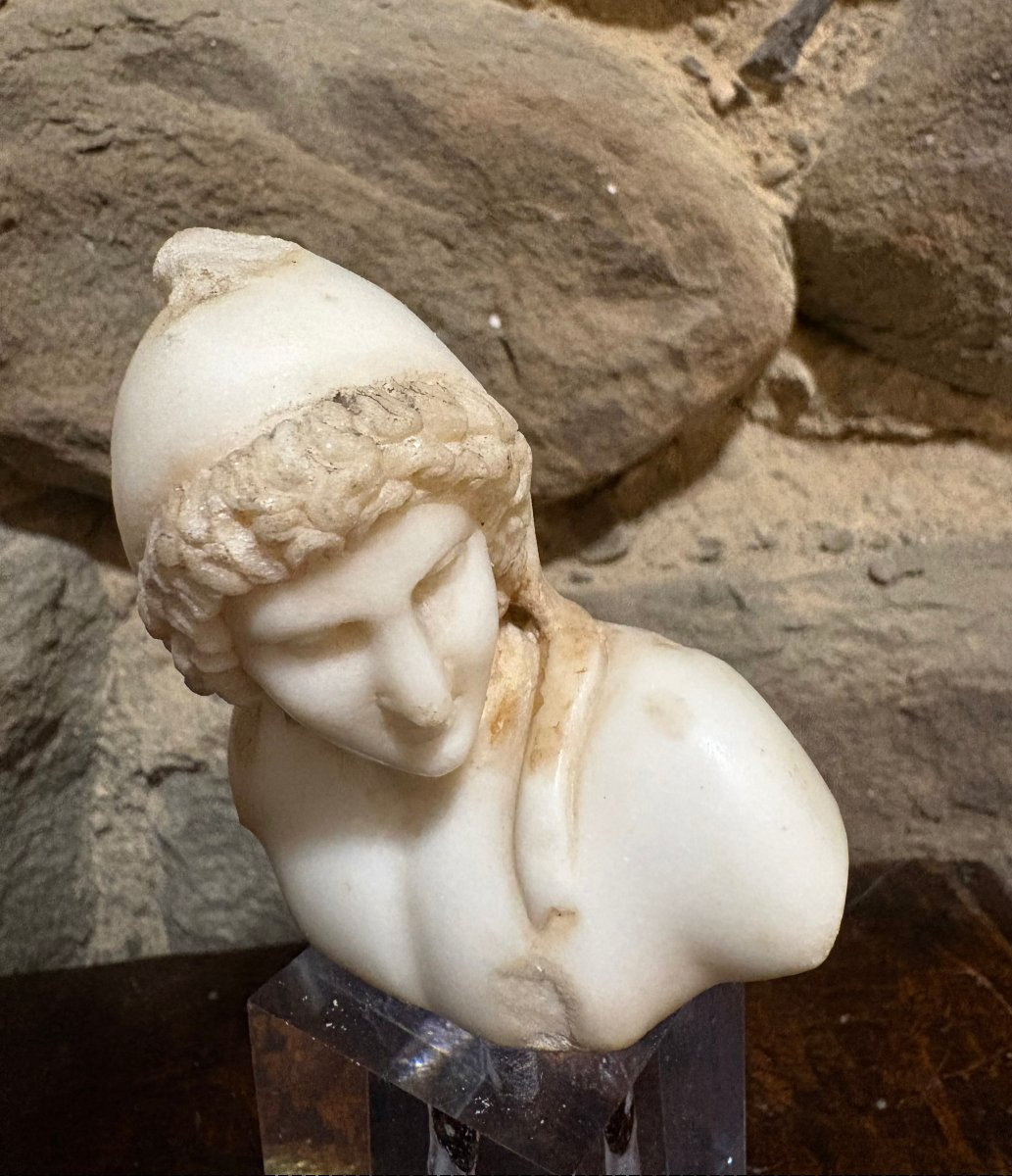
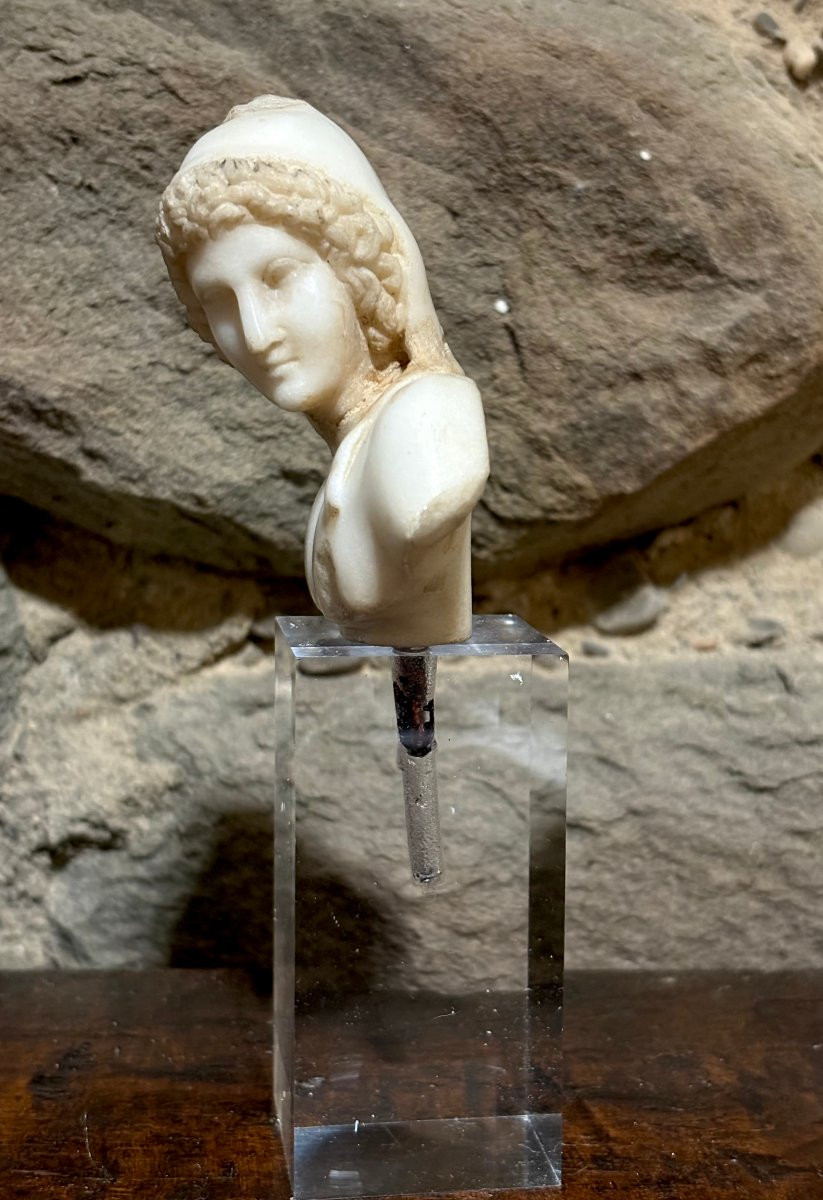
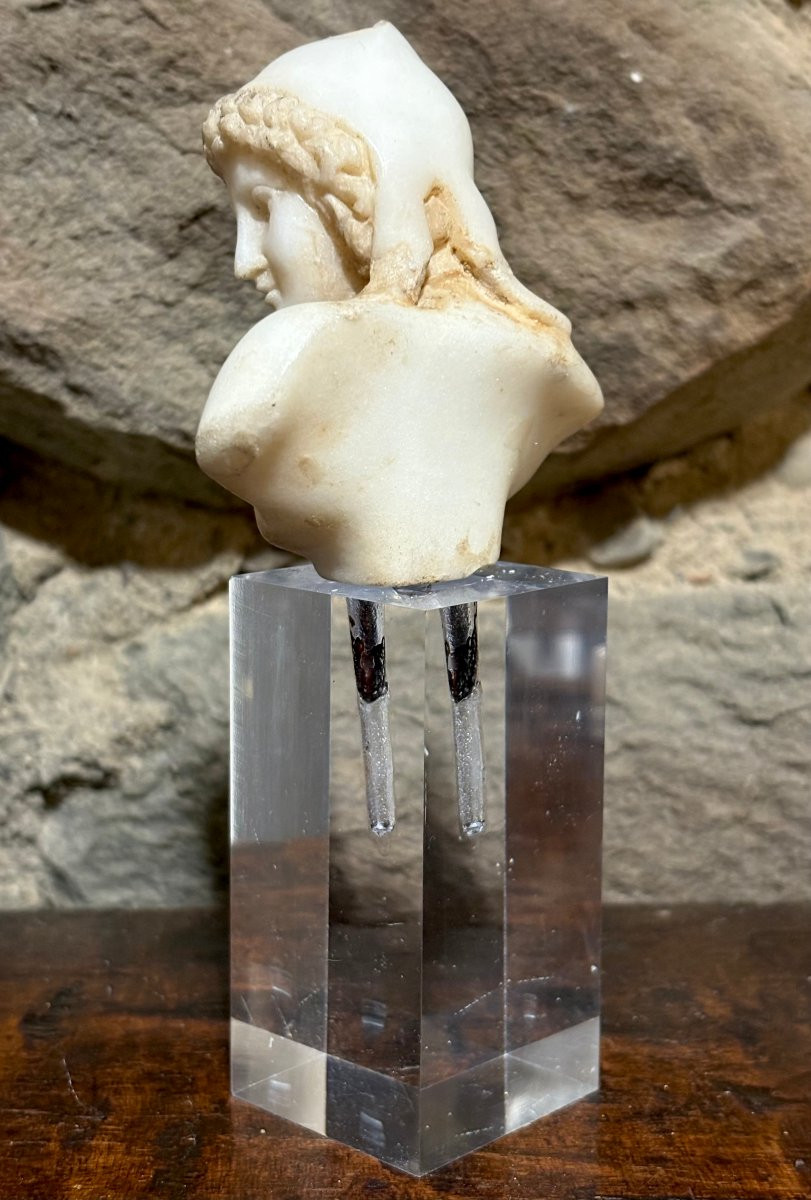
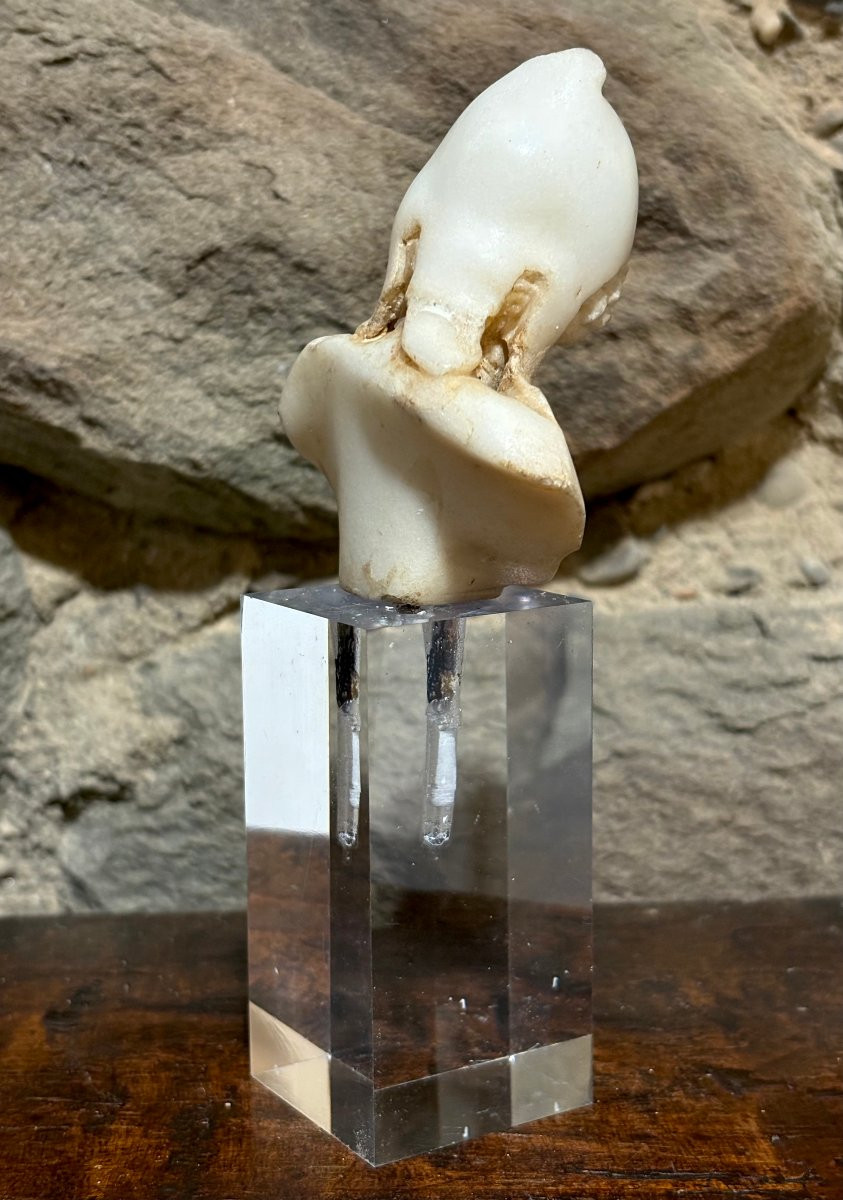
https://internationalantiques.eu/prodotto/16th-small-mannerist-marble-bust-of-attis/Small marble bust depicting Attis, Italian work from the Mannerist period, 16th century.
Provenance: Alain Finard Collection
Small-scale sculpture flourished during Mannerism, especially thanks to masters such as Giambologna, who excelled at creating complex groups and dynamic figures in precious materials such as bronze, marble, silver, or ivory, exploring virtuosity and movement in a small scale, a departure from Renaissance monumentality. Small-scale sculptures became popular among collectors, serving as private art objects, models for anatomical studies, or as display pieces in studios, "studioli," and cabinets of curiosities. The 16th century saw small-scale sculpture move beyond mere prototypes to become a fully-fledged artistic genre, prized for its complexity, virtuosity, and ability to condense artistic ideas into intimate dimensions. Mythological and allegorical themes were favored, often linked to the rediscovery of classical antiquities and the renewed interest in Roman artifacts.
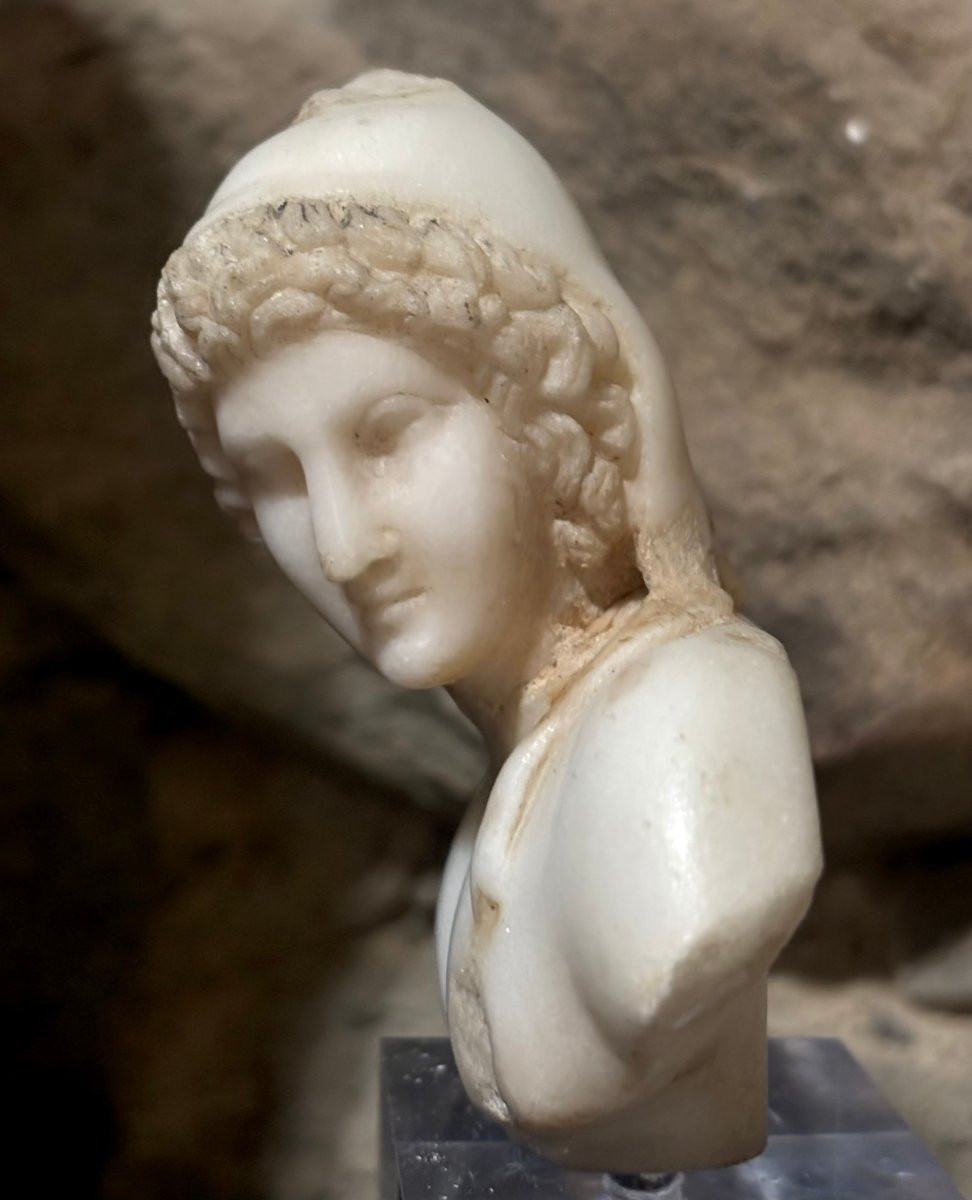
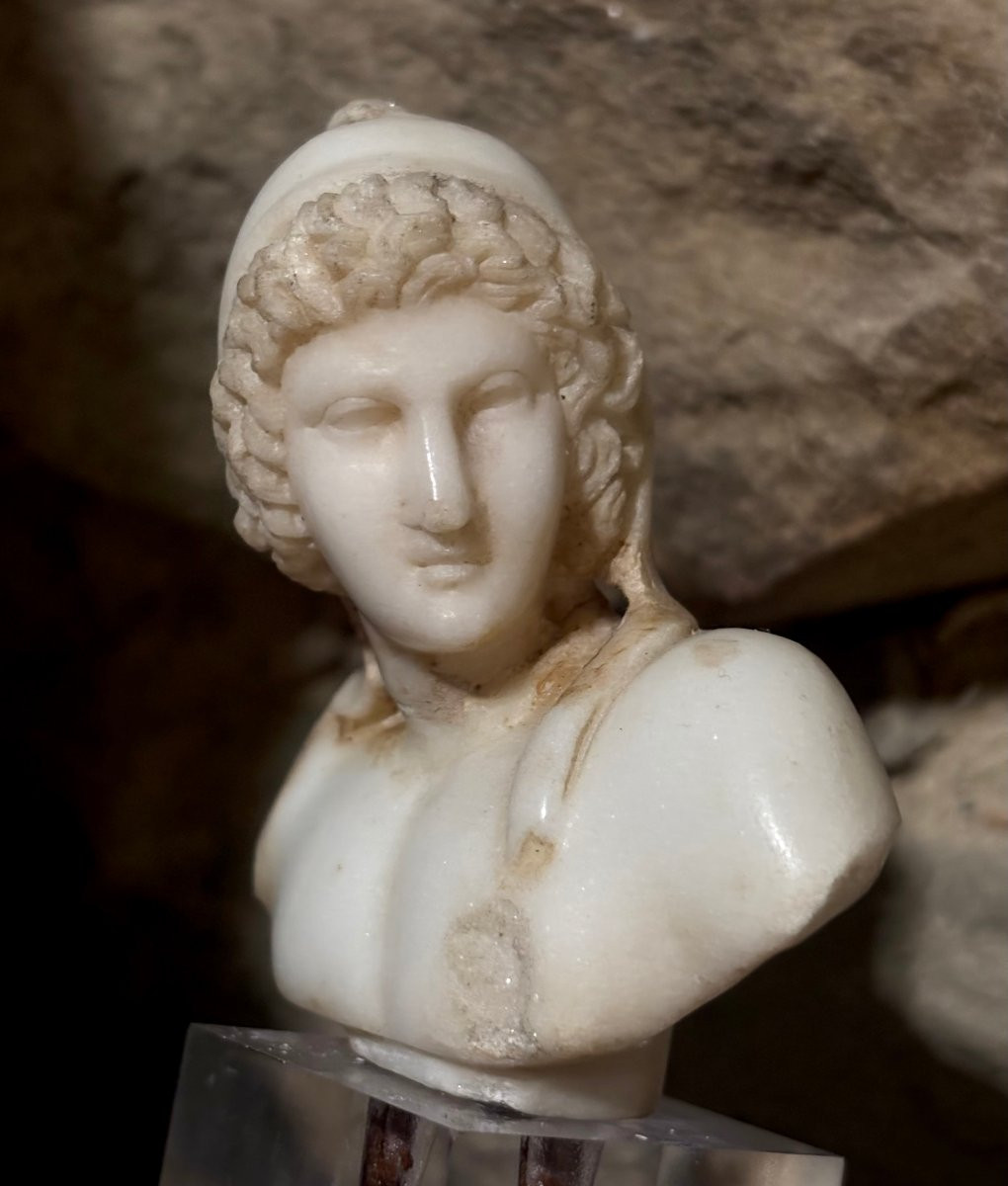
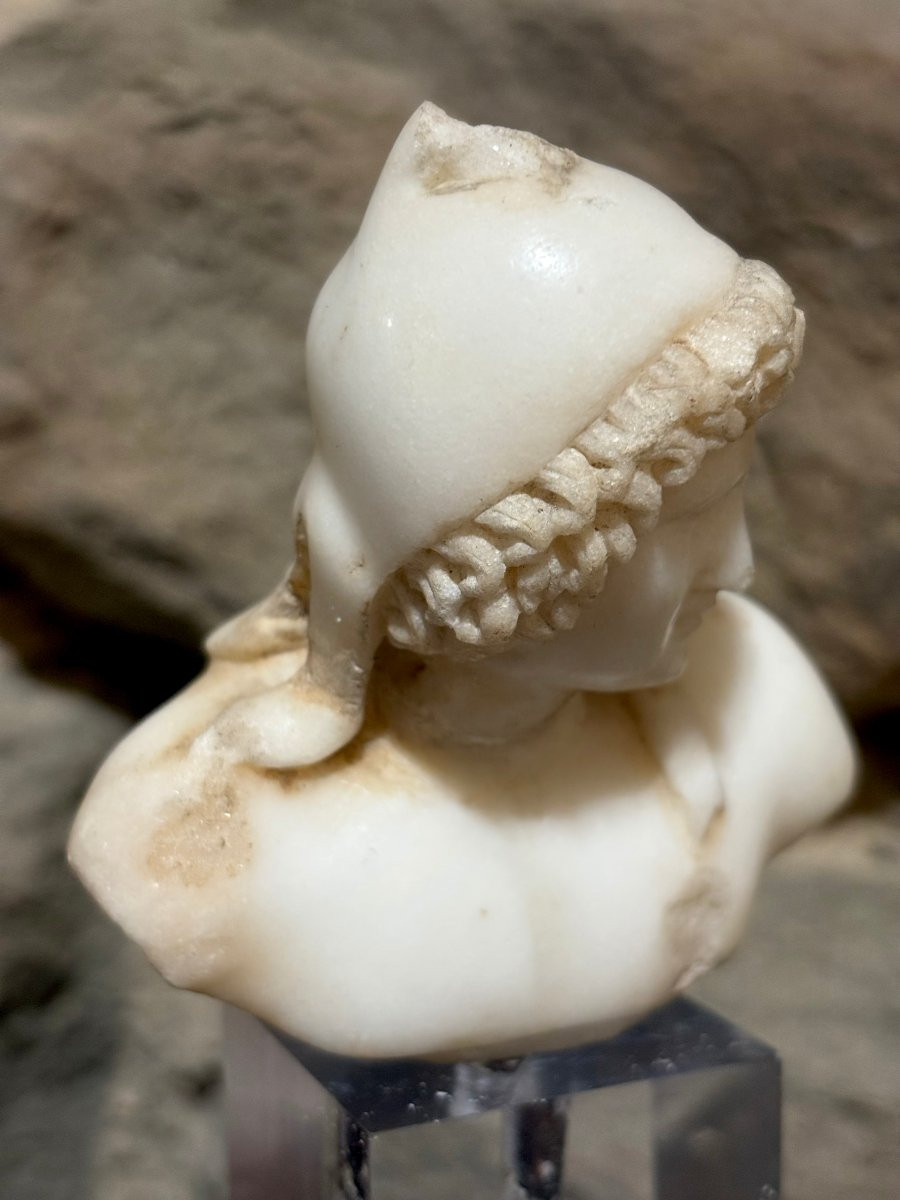
Our small bust depicts an extremely rare subject: the god Attis, an ancient deity whose cult spread during the Roman Imperial era. Born in Phrygia to the hermaphroditic demon Agditis and Nana, the daughter of the river Sakarya, he was driven into the mountains by the latter, suckled by a goat, and raised by shepherds. Attis grew into a beautiful young man, with whom Cybele, the daughter of the king of Phrygia, fell in love. Numerous legends surround their troubled love, with Attis dying and Cybele resurrecting him and hiring him as her charioteer. Scholars associate the god Attis with all the deities associated with the ancient rites of propitiating the earth's fertility, finding a parallel in Adonis, who rivaled him in beauty. He is depicted as a handsome young man wearing a Phrygian cap; his face recalls that of Antinous, the favorite of Emperor Hadrian.
The bust was sculpted with exceptional craftsmanship, even considering its small size: Attis's curls and facial features are meticulously detailed. The finish alternates between glossy and matte to enhance the details.
Depictions of Attis that have survived are few, and finding the original from which our bust was based is not easy: it can be compared to the head preserved in the Louvre or the head of Egnatia, although the oblique position of the head suggests the statue preserved in the Sarsina museum.
A final confirmation of the rare beauty of this object comes from its previous owner, the antiques dealer Alain Finard, whose gallery was an institution on the rue de Beaune in Paris. But Monsieur Finard owned a first-floor apartment directly across from his gallery, where he had amassed his collection of rarest pieces; there, the small bust of Attis was located, where he had hosted collectors and aesthetes such as Yves Saint-Laurent and his partner Pierre Bergé, Hubert de Givenchy, and Rudolf Nureyev.
On a plexiglass base.
Dimensions
Total height 16.5 cm
Bust height 8.5 cm
Bust width 8 cm
Bust depth 5 cm
Plexiglass base 4 x 4 cm
++++++++++++++++++++++++++++++++++++DELIVERY AND PAYMENT++++++++++++++++++++++++++++++++++++++++ SHIPPING VIA MBE with UPS - TNT - FEDEX - DHL couriers
Payment methods: Bank transfer - Online credit card (also AMEX) - PayPal (+3.7%) - NO checks
https://internationalantiques.eu/delivery-and-insurance/
+++++++++++++++++++++++++++++++++++++++++++++++++++++++++++++++++++++++++++++++++++++++++++++++++












 Le Magazine de PROANTIC
 TRÉSORS Magazine
 Rivista Artiquariato