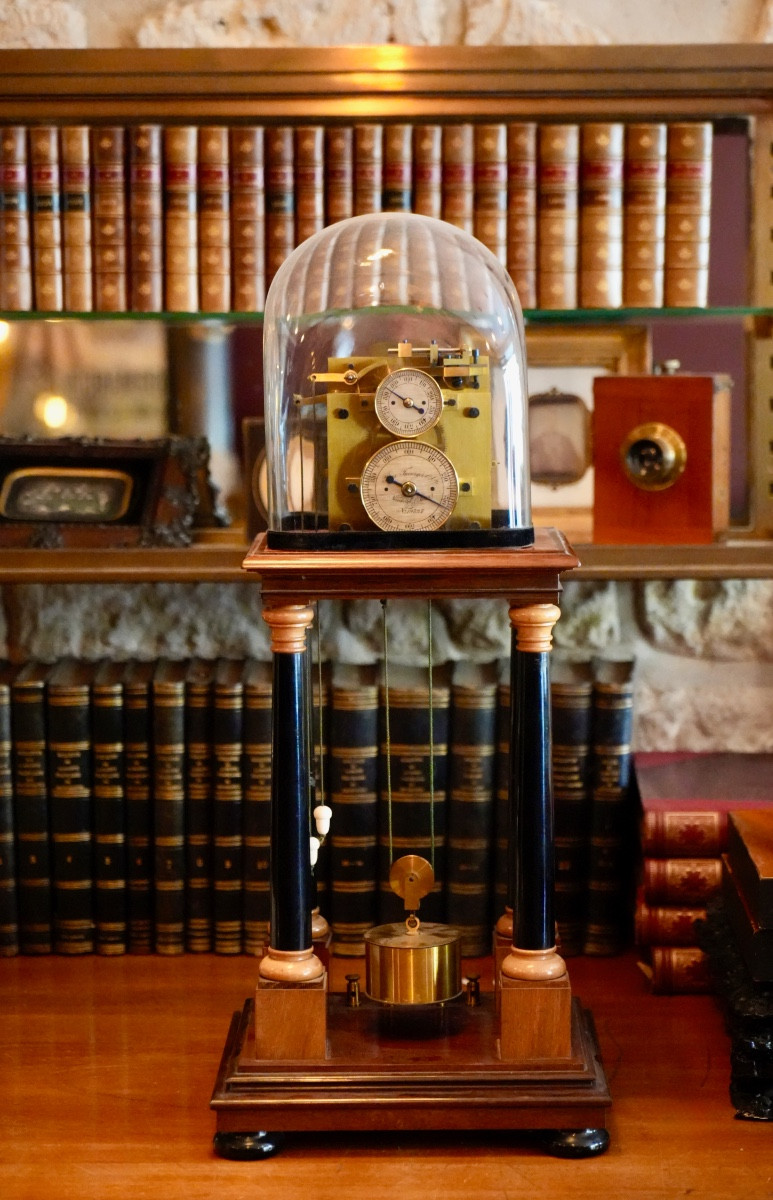
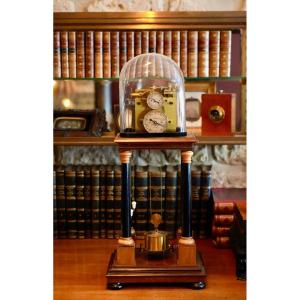


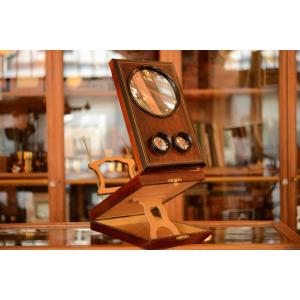
"Superb Hipp Chronoscope"
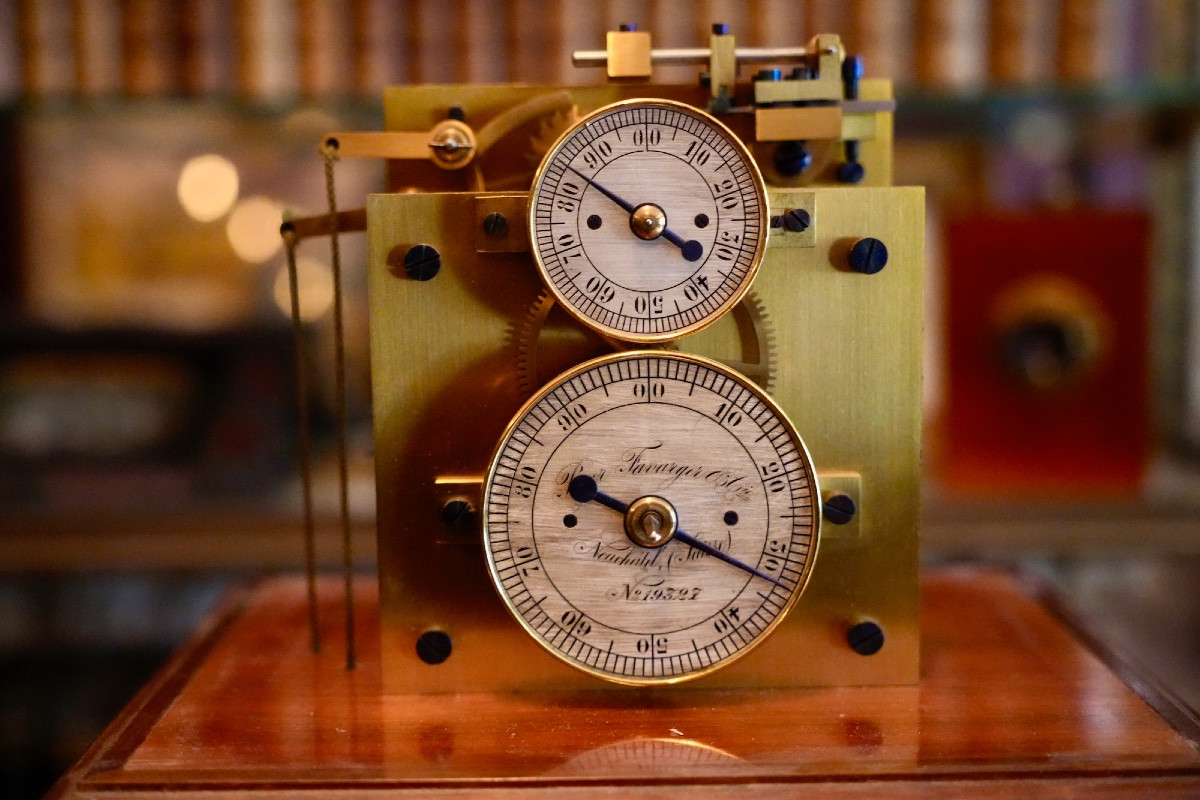
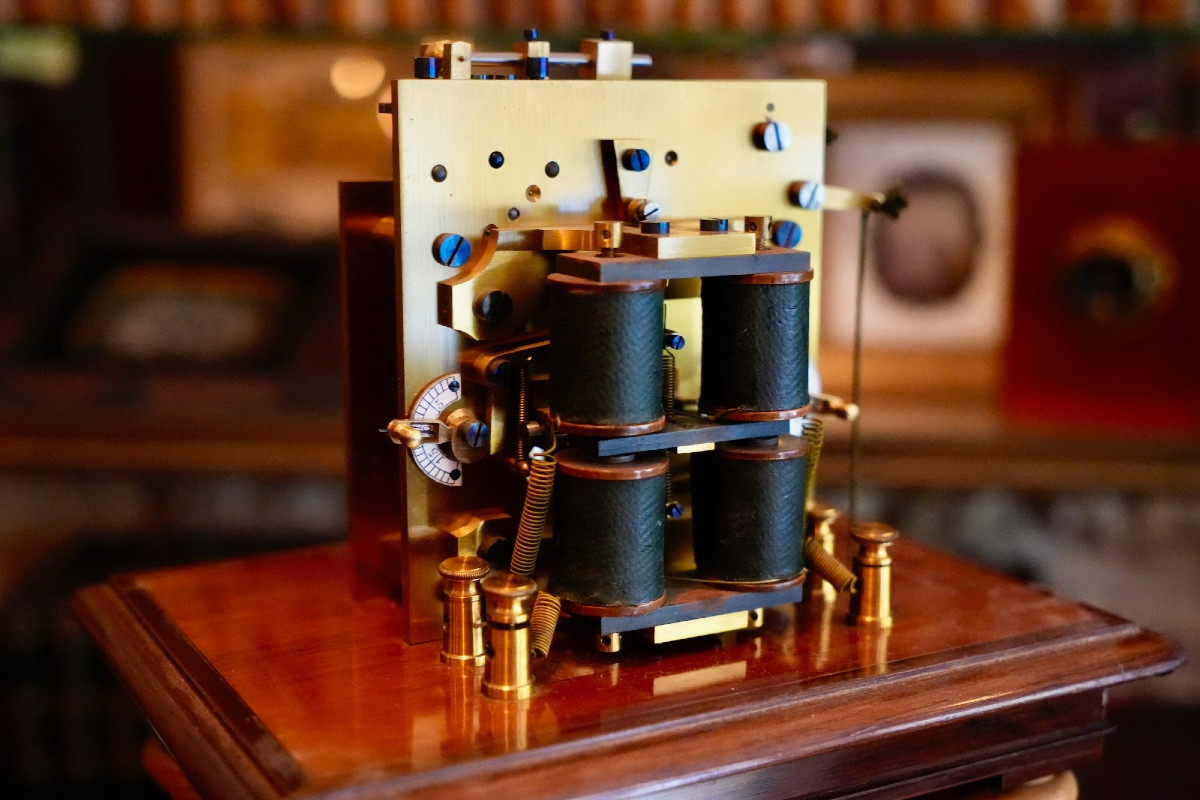
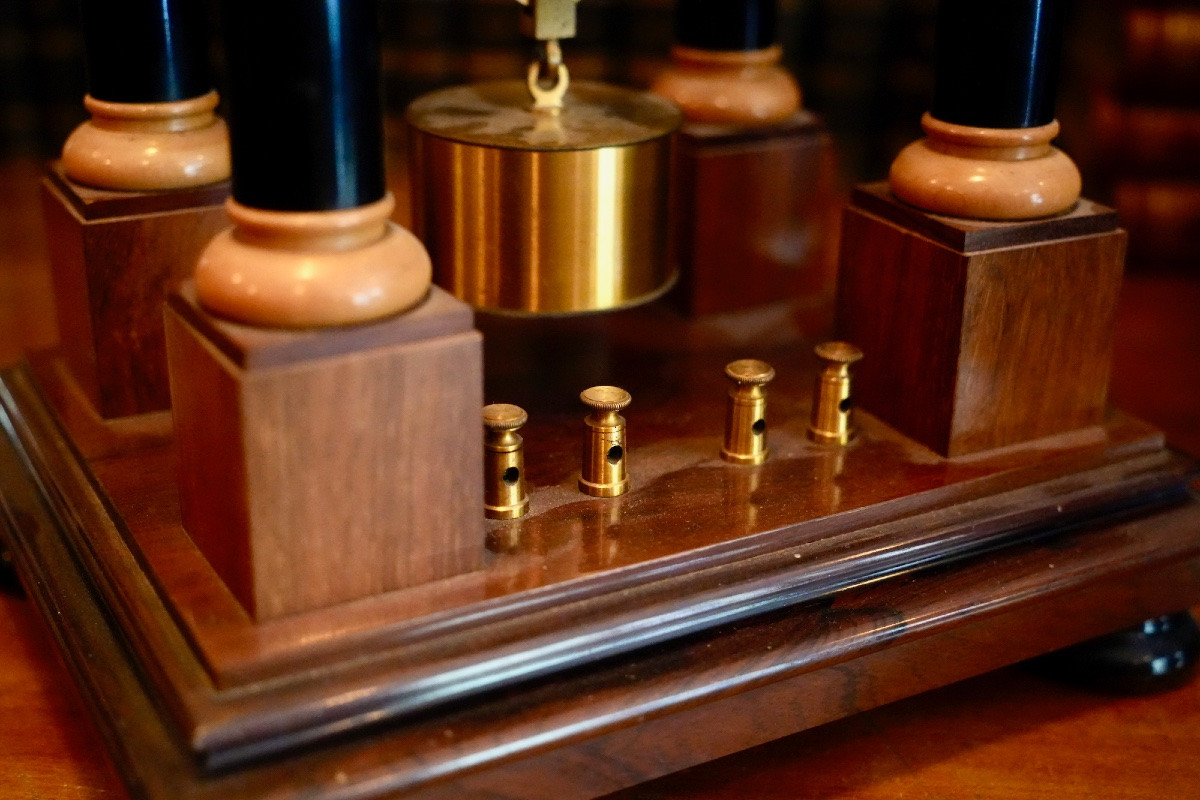
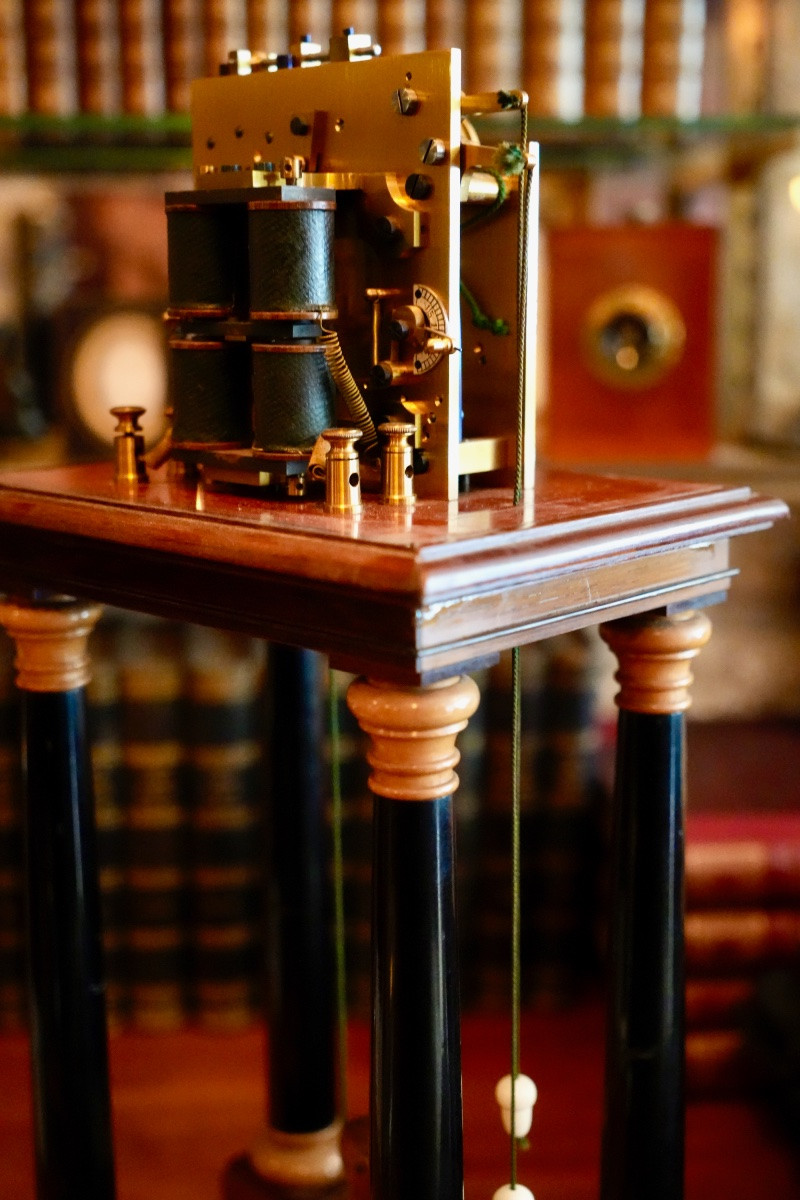
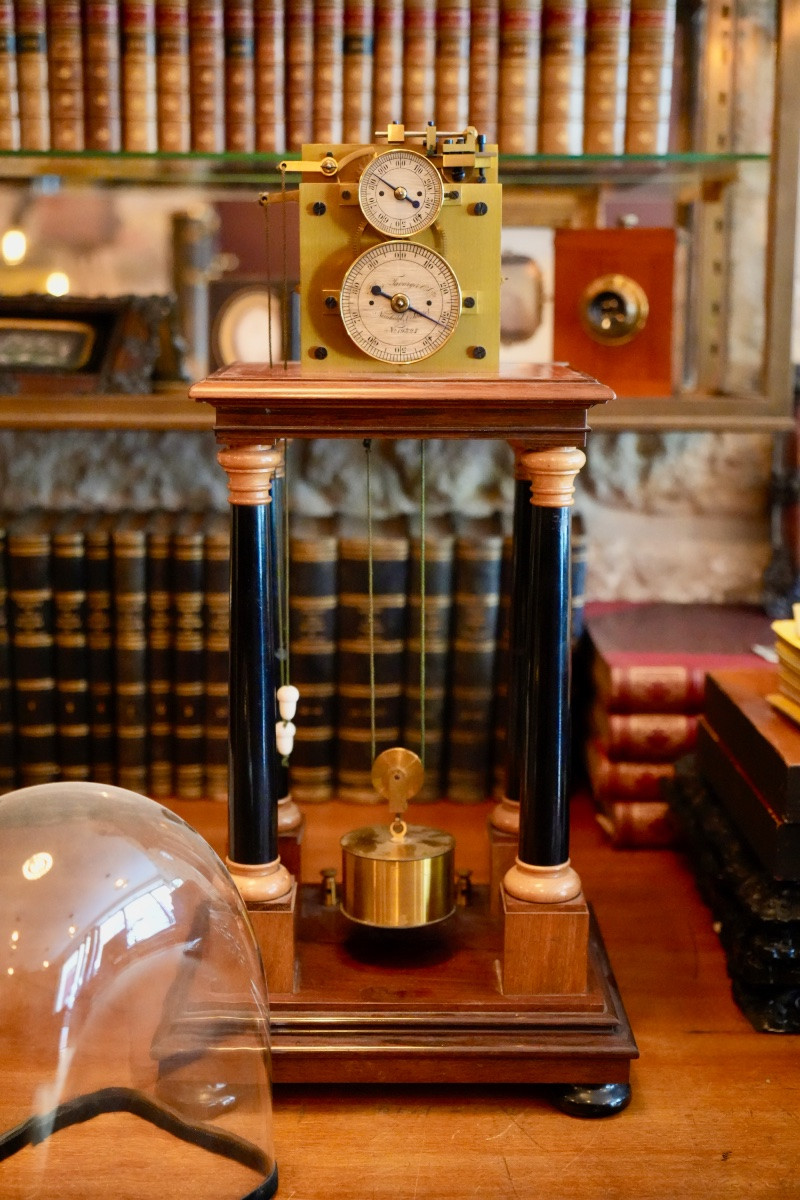
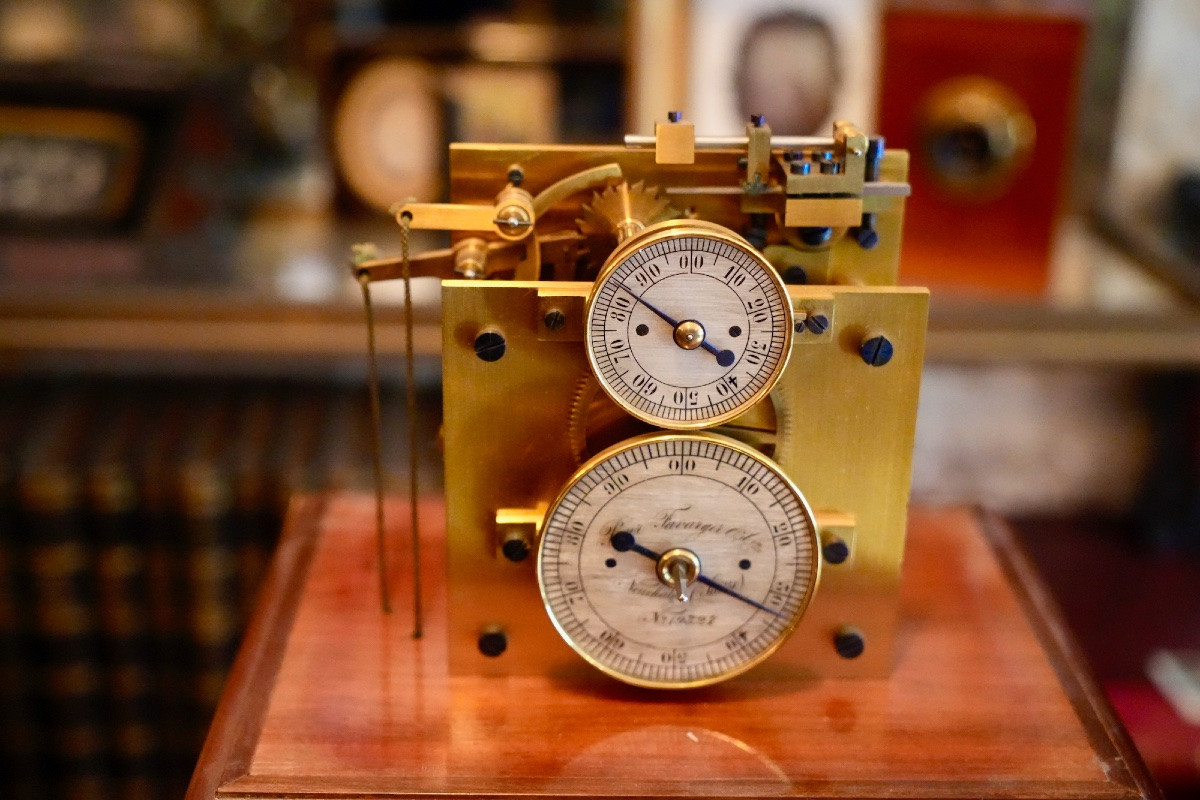
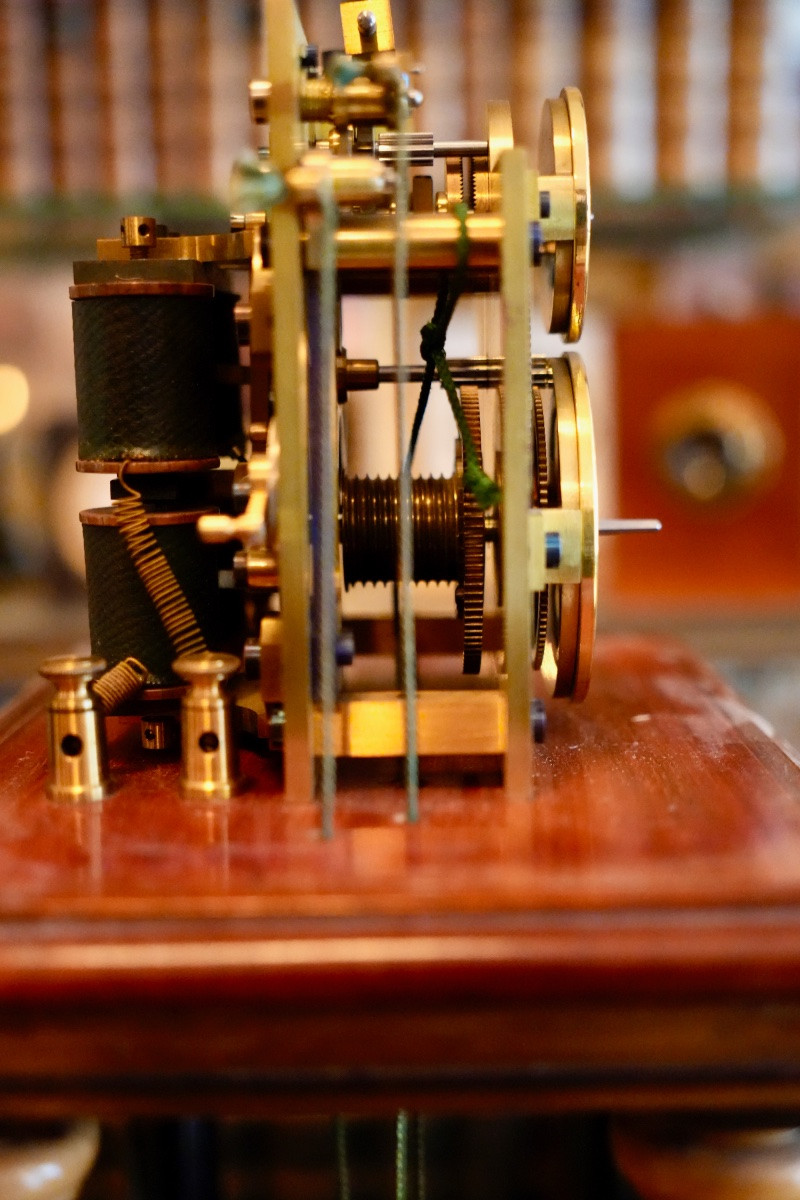
Born in the 19th century to measure the speed of projectiles, the Hipp chronoscope quickly became the instrument of choice for astronomers, and later for pioneers of experimental psychology. Its clockwork mechanism, regulated by a vibrating tab and triggered by electromagnets, allowed time to be measured to the thousandth of a second—a remarkable feat for its time. Used by researchers to study reaction times and differences between individuals, it contributed to the emergence of modern psychology. A scientific object of high precision, sometimes controversial, the Hipp chronoscope embodies the poetic encounter between precision mechanics, the observation of the sky, and the exploration of the human mind. This is reminiscent of the famous phrase by the Count of Lautréamont about the chance encounter of a sewing machine and an umbrella... Made in Neuchâtel, Switzerland, by Peyer and Favarger. Sometimes called the Wheatstone-Hipp chronoscope. The name of the psychologist Wundt, for the extensive and repeated use he made of it, is also often associated with it. The mechanism was not tested but the aparatus is complete. 











 Le Magazine de PROANTIC
 TRÉSORS Magazine
 Rivista Artiquariato