

Allegory Of Earth '700
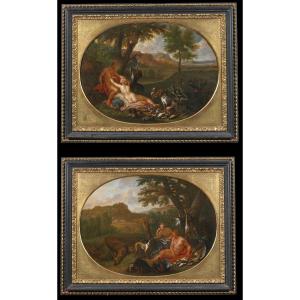
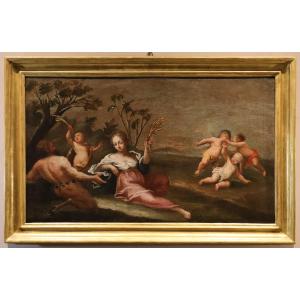
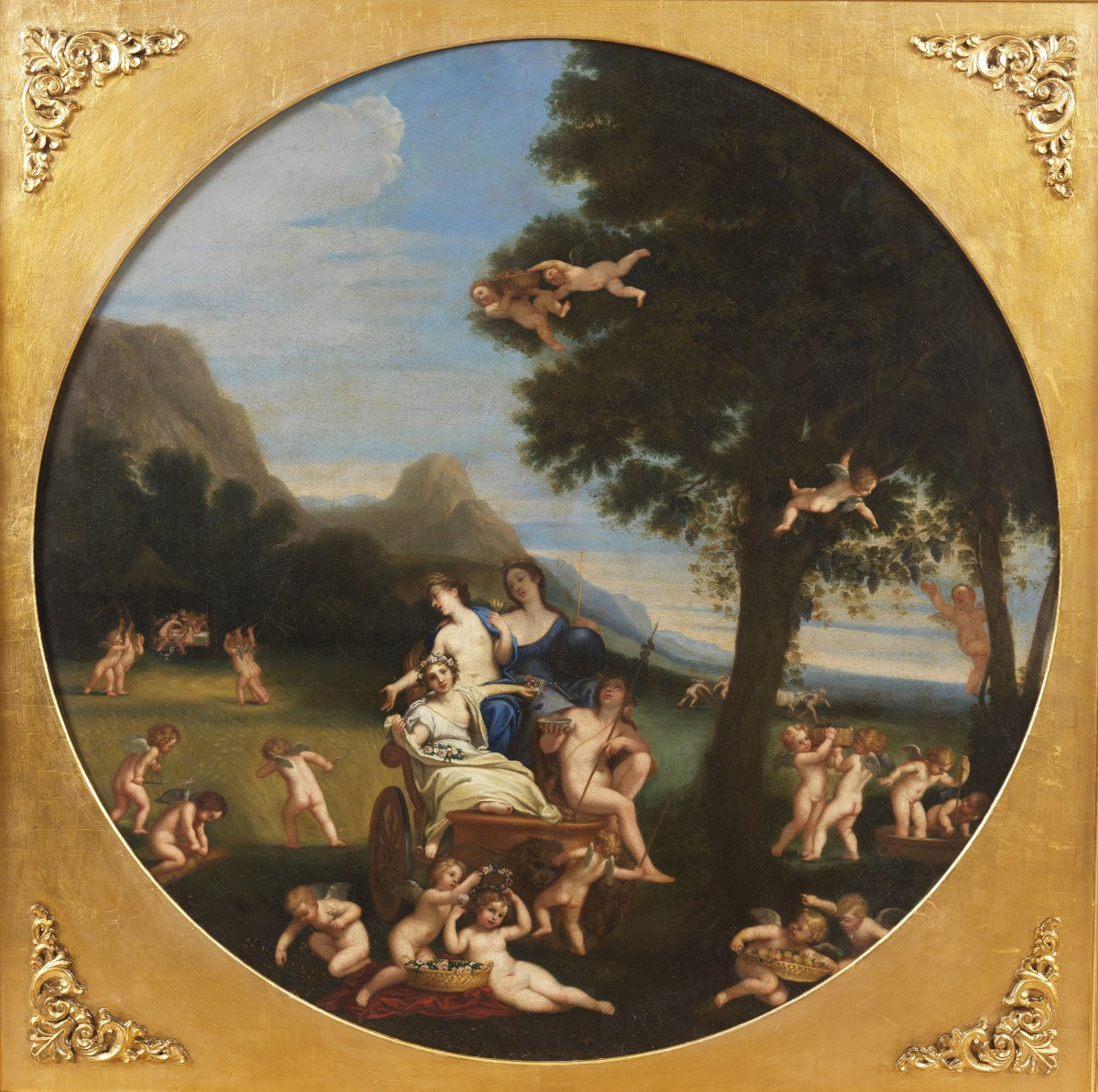
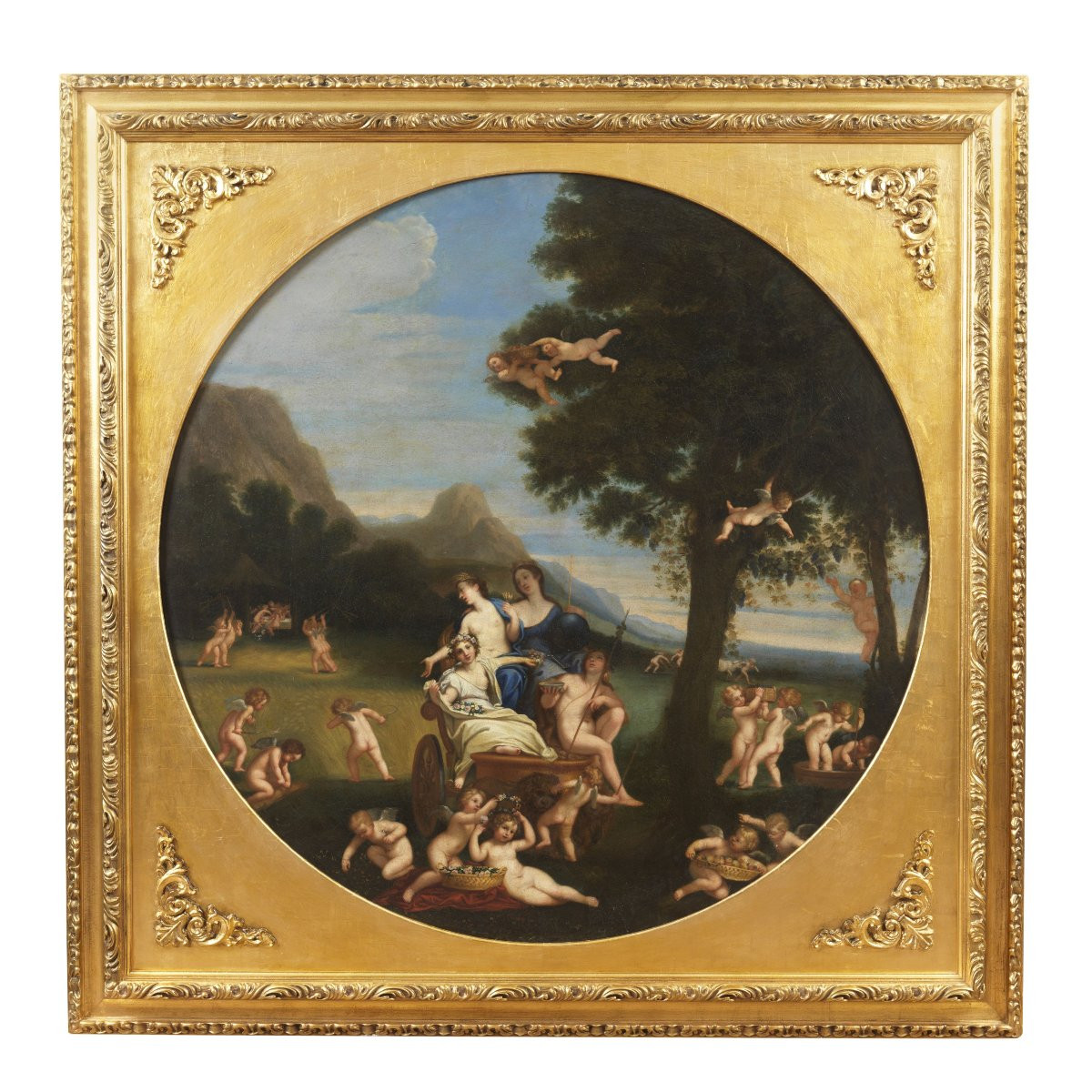
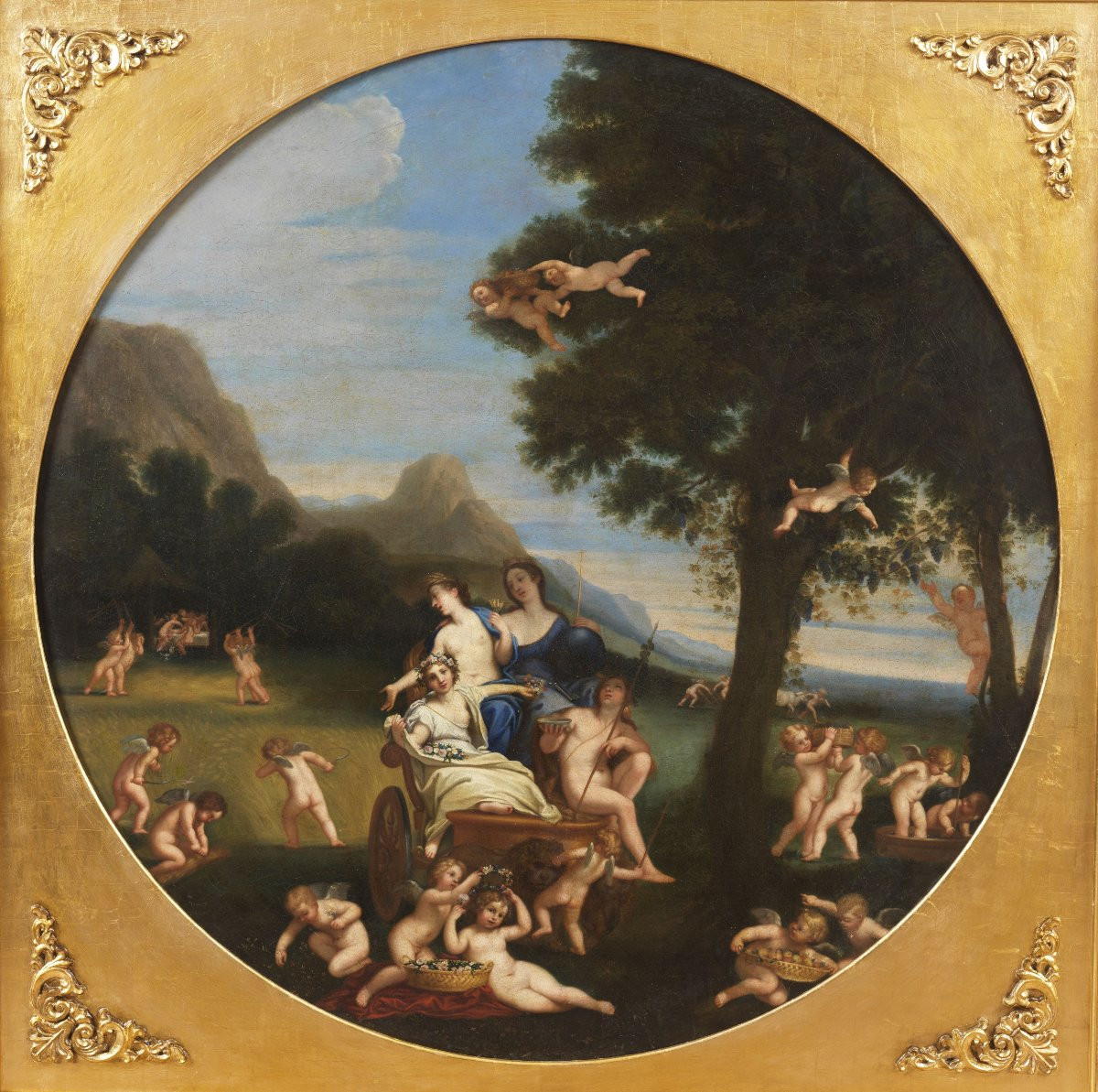
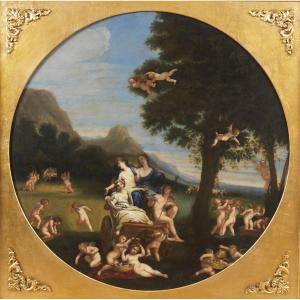
Painting with a diameter of 130 cm and 160 x 160 cm with a marvellous frame depicting an ‘allegory of the Earth’ by the painter FelicevCignani ( Bologna 1660 - 1724 ).
An oil on canvas, Cignani, thepainter who painted it around 400 years ago, did not intend torepresent our planet, but rather the natural element that, togetherwith fire, air and water, makes up the Universe, according to theidea of the world handed down by the ancients.
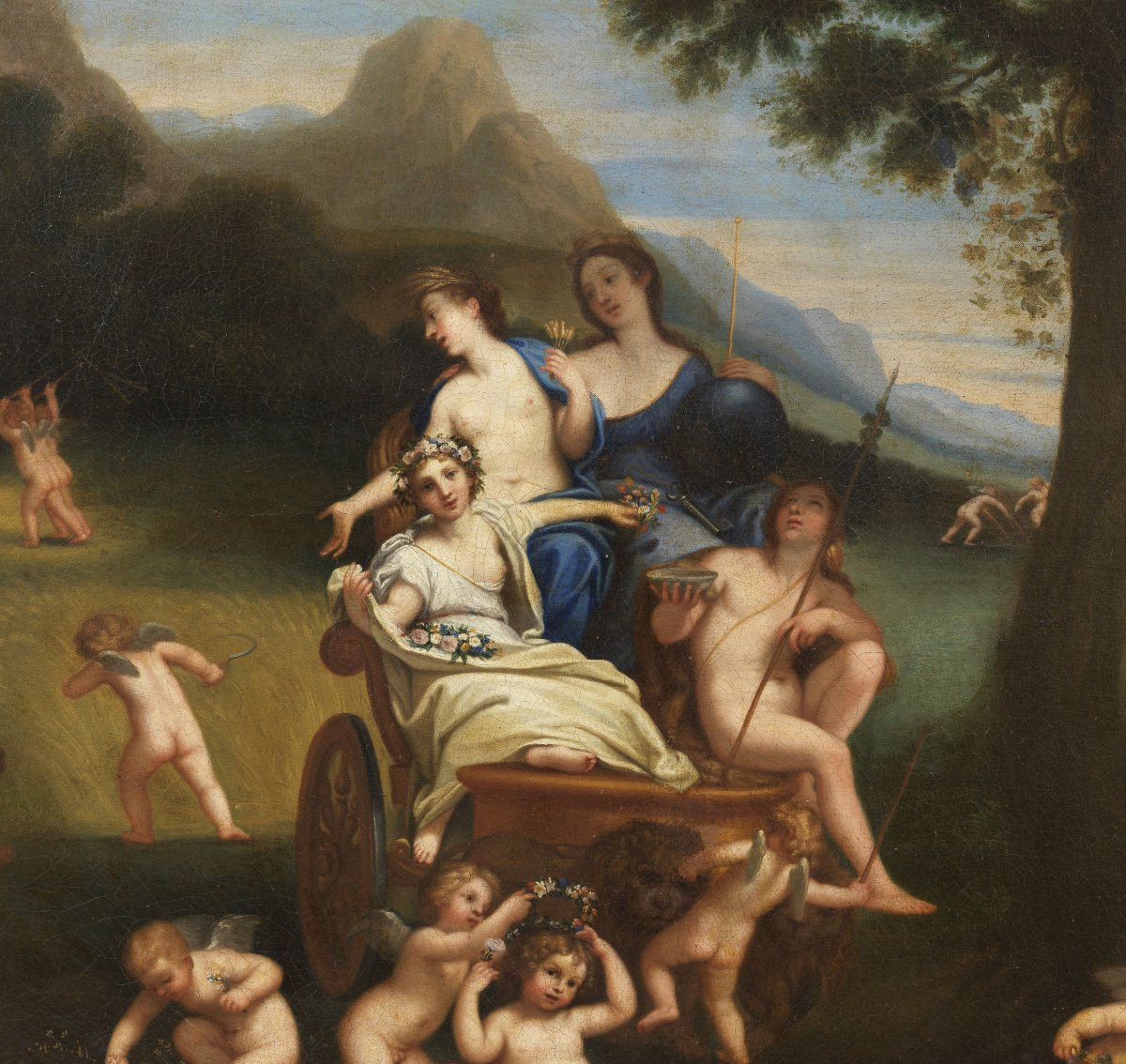
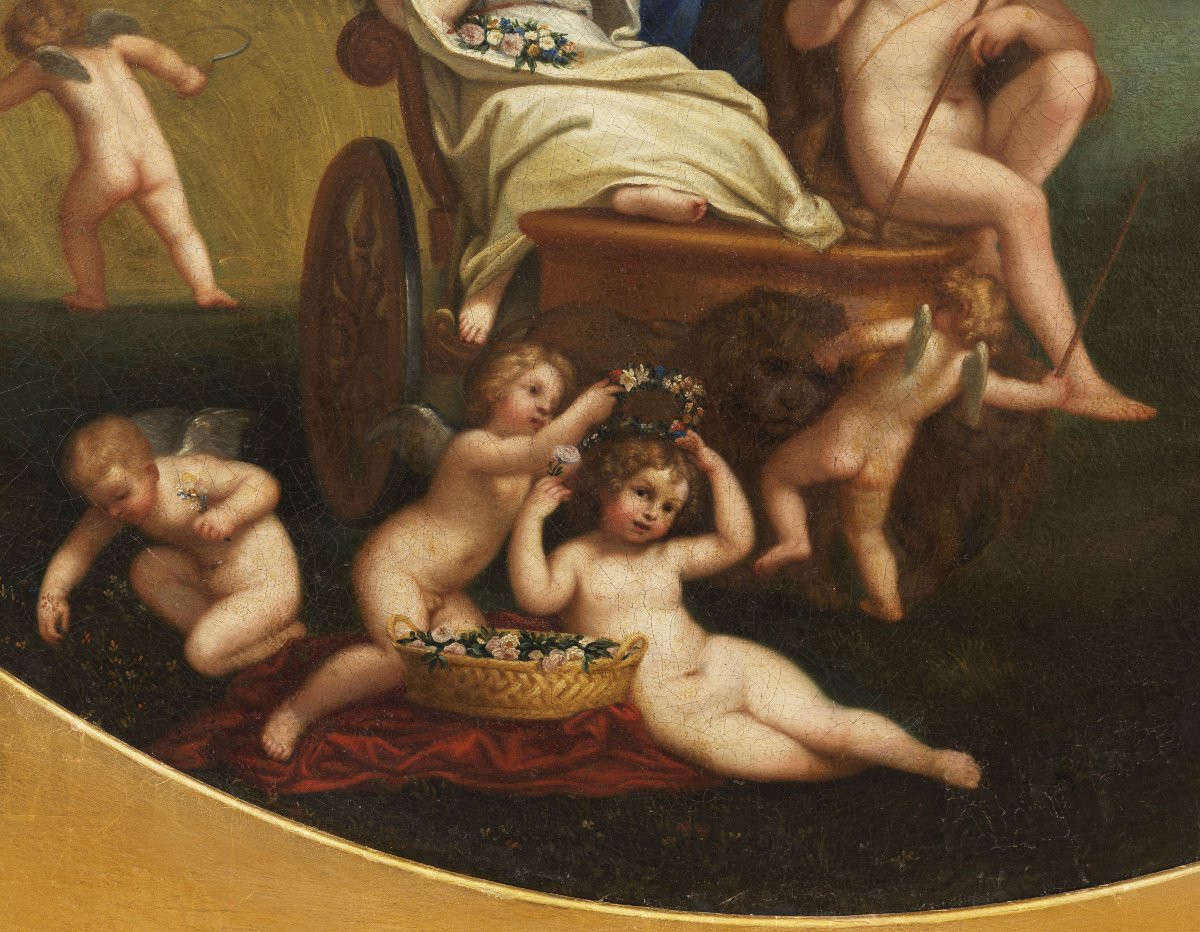
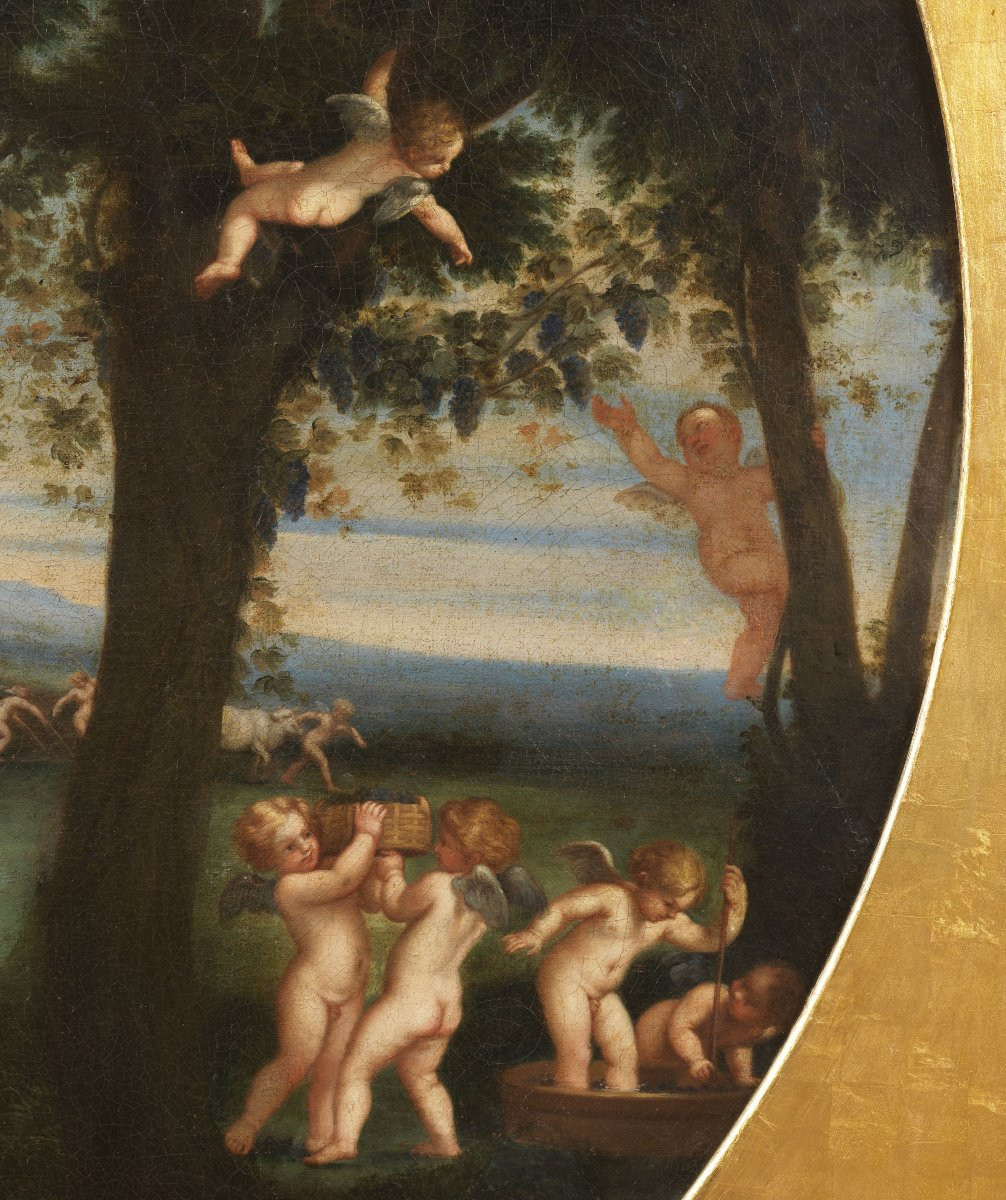
In the painting,the Earth takes the form of a goddess who governs the cycles ofnature and generously offers her fruits to putti who take care ofher, protecting her and working hard.
The chromatic impact is beautiful with these light and warm tones that blend with the peaceand tranquillity of Nature.
The painting has typically Bolognese characteristics; Felice Cignani reached lofty qualitative peaks indescribing the Emilian countryside with grace and sensitivity,exhibiting a clear similarity with the works of Francesco Albani andhis Father Carlo; the canvas under examination is a shining exampleof his art with a real but idealised view of the Bolognesecountryside interpreted with Arcadian sensitivity and classicalconcreteness.
The patches of trees executed with a free and rapid brushstroke, the warm burnished colours, the atmospheric rendering of the rising clouds,the physicality of the putti, all in a well-balanced composition ofhis landscapes with an Arcadian pastoral flavour, constitute the mostsignificant elements of his painting, all of which are also wellrepresented in our canvas.
In the extraordinary pictorial staging,the skilful setting in a primordial and idyllic naturalforeshortening, perfectly organised in relation to the lively andcrowded parade of characters, in which an effective sense of motionand a beautiful effect of depth is imprinted, acquires greatsignificance.
The composition under consideration draws itsinspiration, albeit with variations in artistry and scale, from theAllegory of the Earth in the Galleria Sabauda in Turin, part of acycle of four tondi inspired by the Elements and executed byFrancesco Albani between 1625 and 1628 for the superb collection ofCardinal Maurizio of Savoy (brother of Duke Victor Amadeus I), who had been fascinated by the Stories of Venus and Diana painted by Albani for Scipione Borghese before 1622.
These compositions enjoyed enormous critical acclaim and were extraordinarily praised by European collectors for their aesthetic and decorative value, inwhich myth and nature find full landscape ideality.
The paintings and works of art published here are my exclusive property and therefore are always available to be viewed, by appointment, in my exhibition sites located in Sanremo and Brescia.
This item , like all our objects, is sold accompanied by a photographiccertificate FIMA of authenticity and lawful origin; this documentidentifies the object by adding more value to the article.
We take care and personally organize the packaging and shipping of ouritems with insurance all over the world.
Mr. Riccardo Moneghini
Art Historian
Period: 18th century
Style: Louis 15th - Transition
Condition: Excellent condition
Material: Oil painting
Length: 160
Width: 160
Diameter: 130
Reference (ID): 1702416
Availability: In stock