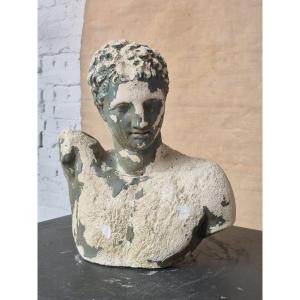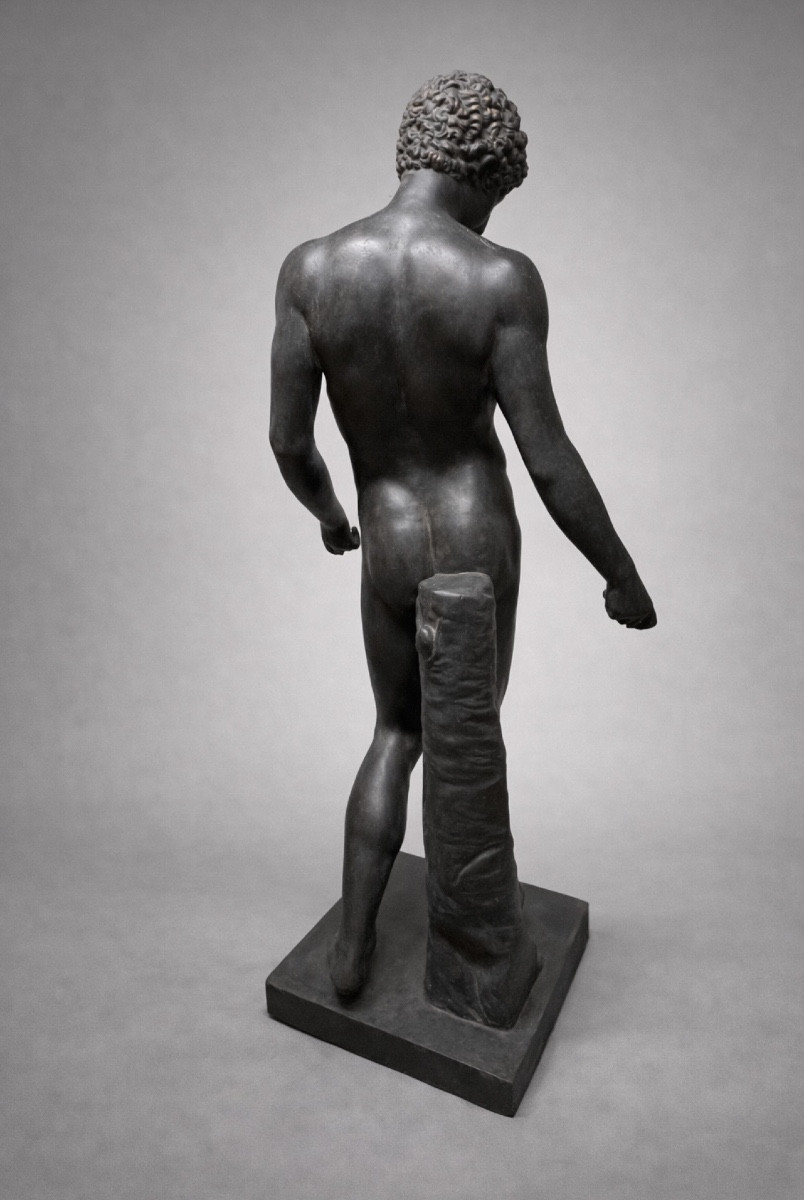
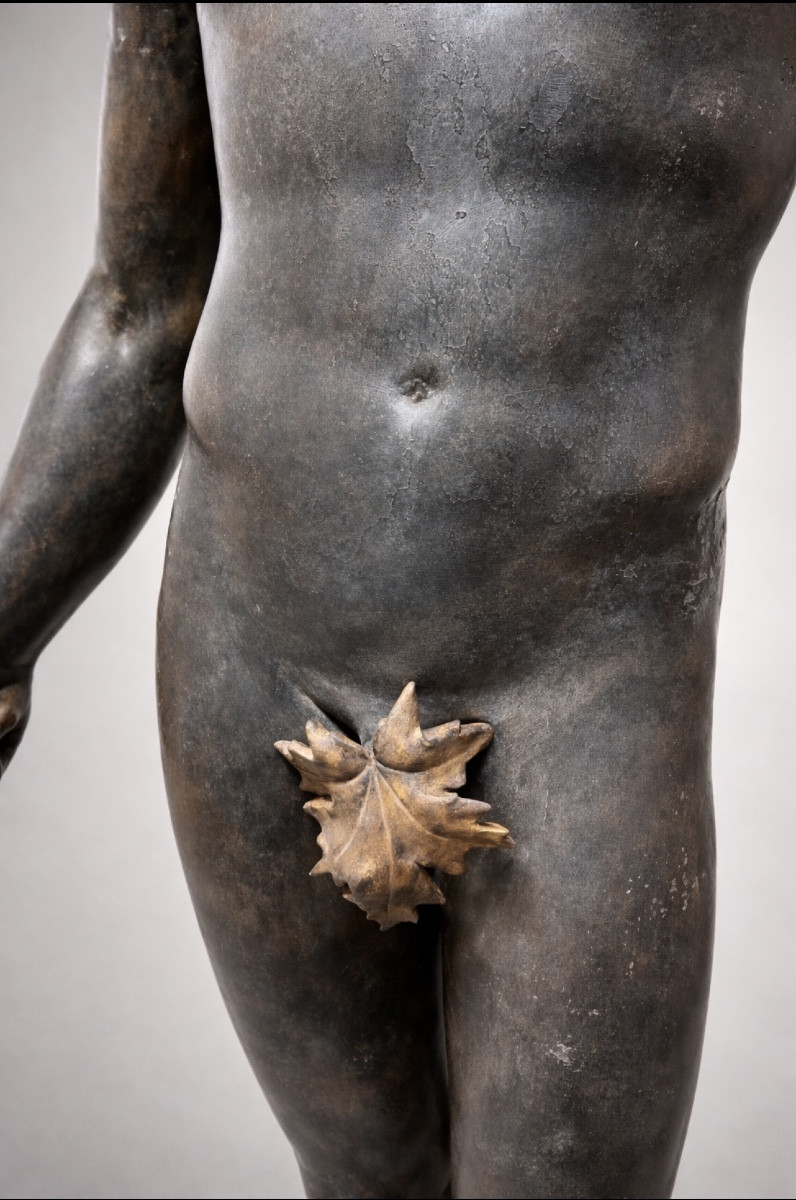
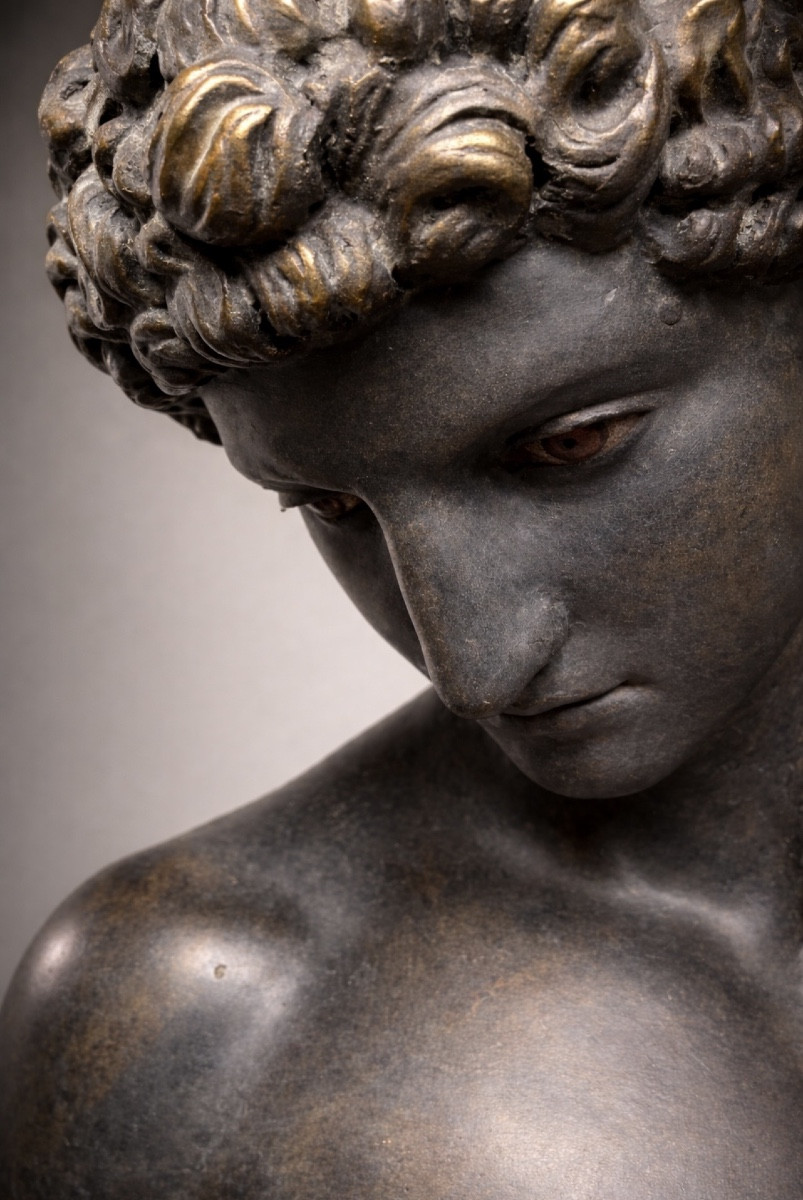
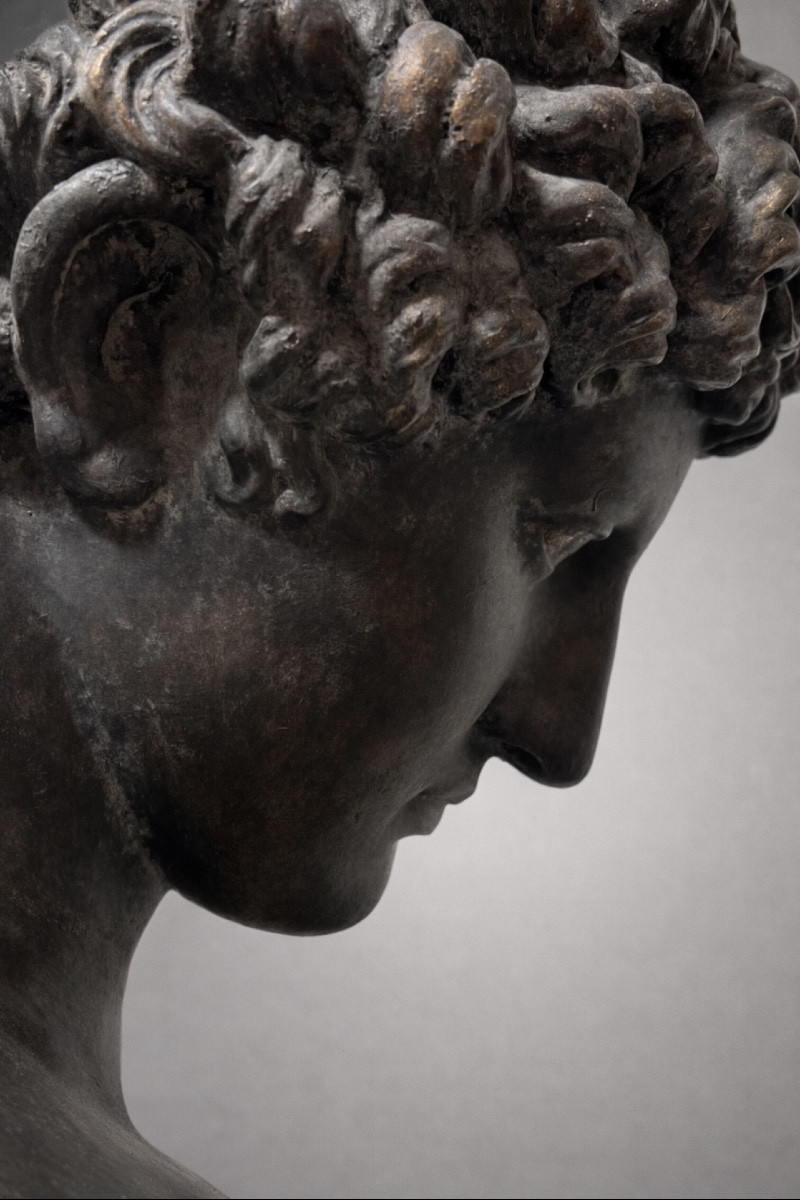
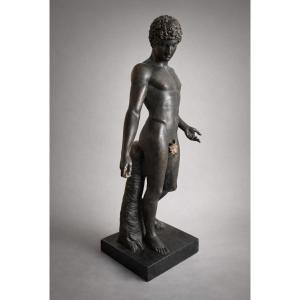


Sculpture After The Albani Hermes-antinous, In Plaster, Early 20th Century.
Patinated plaster sculpture after the Albani Hermes-Antinous, early 20th century.
History of the original:
The Albani Hermes-Antinous is a Roman sculpture dating from the 2nd century AD, inspired by classical Greek models. It combines the god Hermes with the features of Antinous, a favorite of Emperor Hadrian, who was deified after his death. The work was rediscovered in Rome and became part of the famous collection at the Villa Albani in the 18th century, from which it takes its name.
The sculpture was discovered in 1779 near Tivoli, in the area of Hadrian's Villa, and subsequently added to the renowned Albani collection, which gave it its name. The sculpture is now housed in the Capitoline Museums (Musei Capitolini) in Rome.
History of the original:
The Albani Hermes-Antinous is a Roman sculpture dating from the 2nd century AD, inspired by classical Greek models. It combines the god Hermes with the features of Antinous, a favorite of Emperor Hadrian, who was deified after his death. The work was rediscovered in Rome and became part of the famous collection at the Villa Albani in the 18th century, from which it takes its name.
The sculpture was discovered in 1779 near Tivoli, in the area of Hadrian's Villa, and subsequently added to the renowned Albani collection, which gave it its name. The sculpture is now housed in the Capitoline Museums (Musei Capitolini) in Rome.
7 300 €
Period: 20th century
Style: Rome and Antic Greece
Condition: Good condition
Material: Plaster
Diameter: 85 cm
Height: 194 cm
Depth: 55 cm
Reference (ID): 1701964
Availability: In stock
Print