
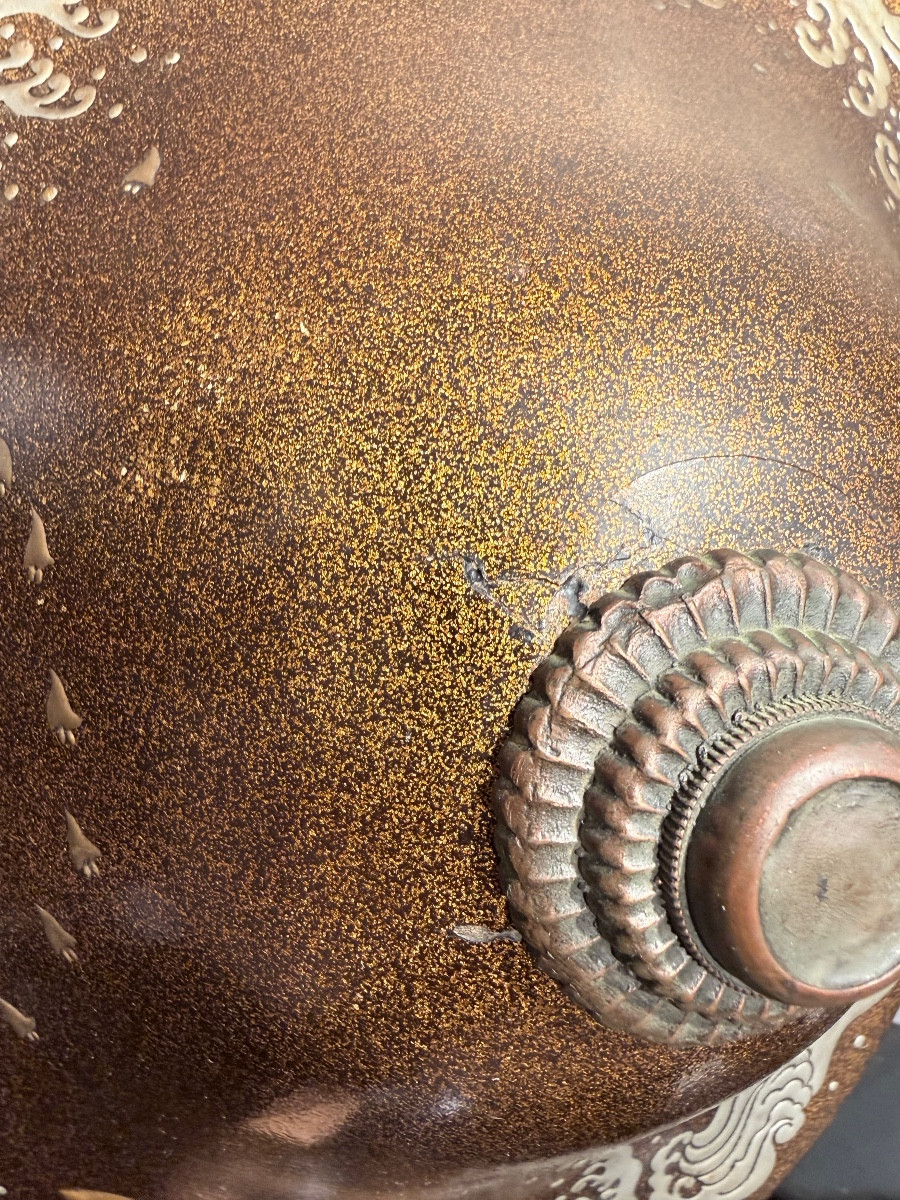


"Jingasa Edo Period Japan "
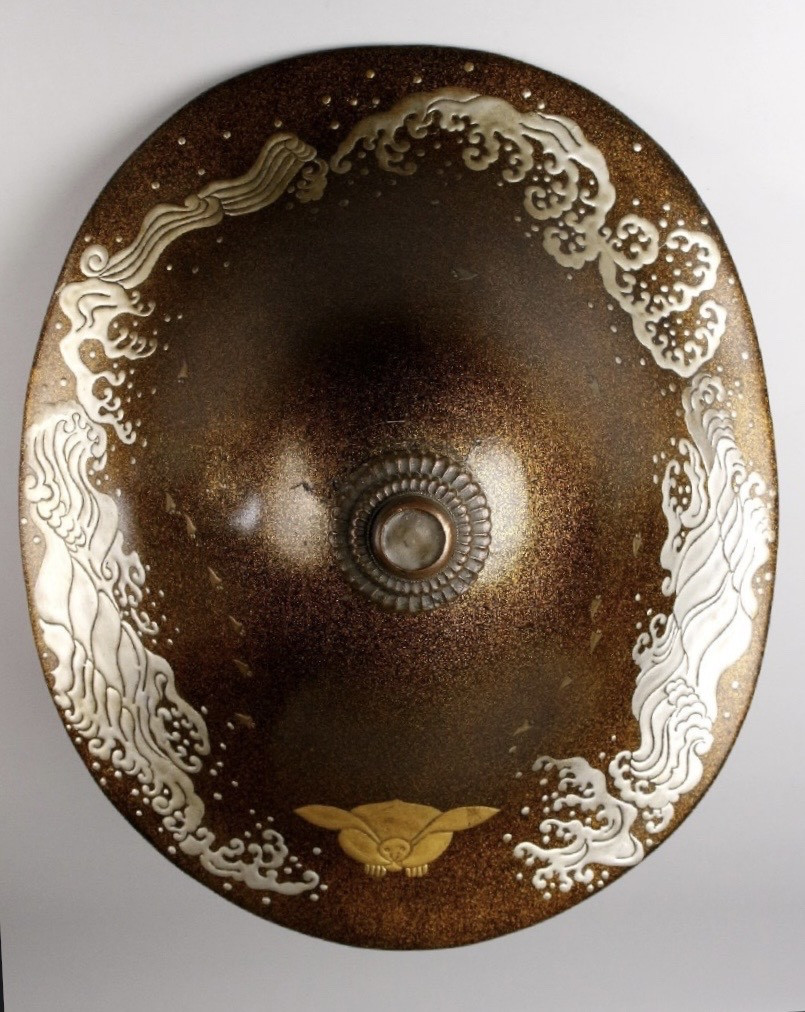
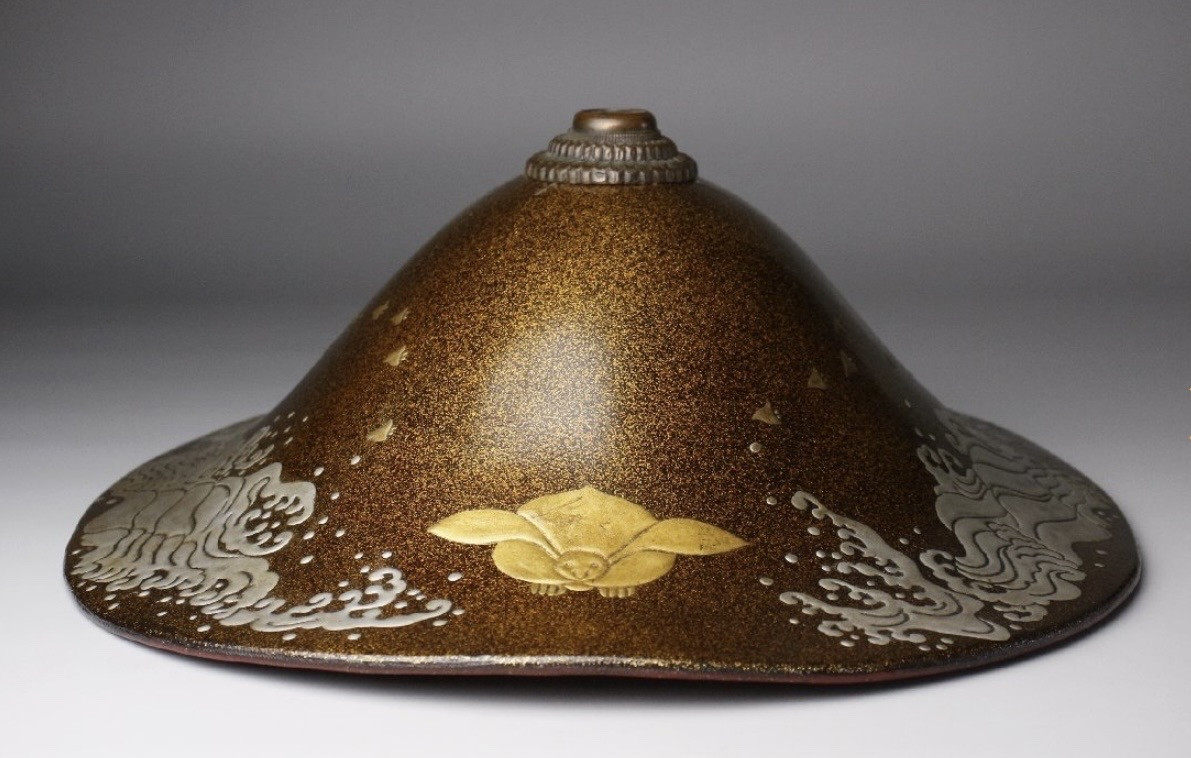
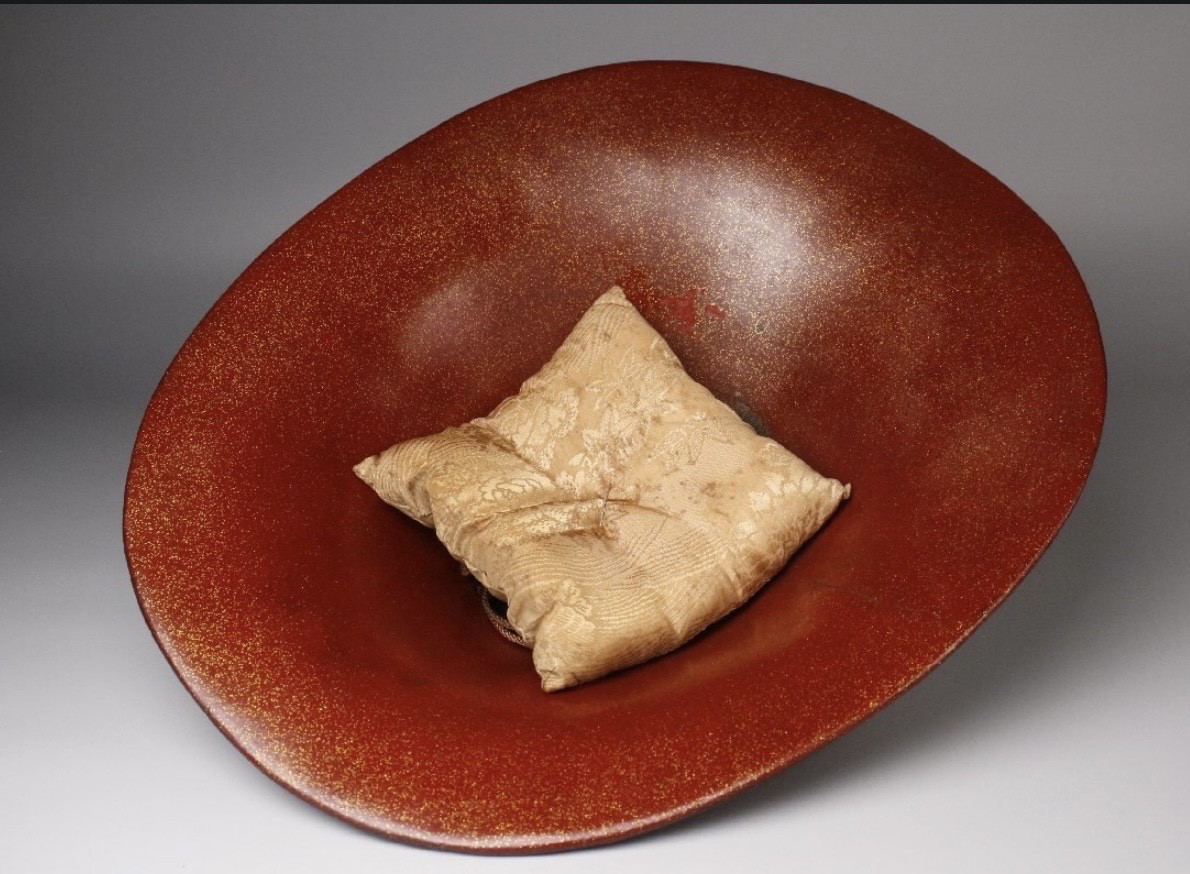
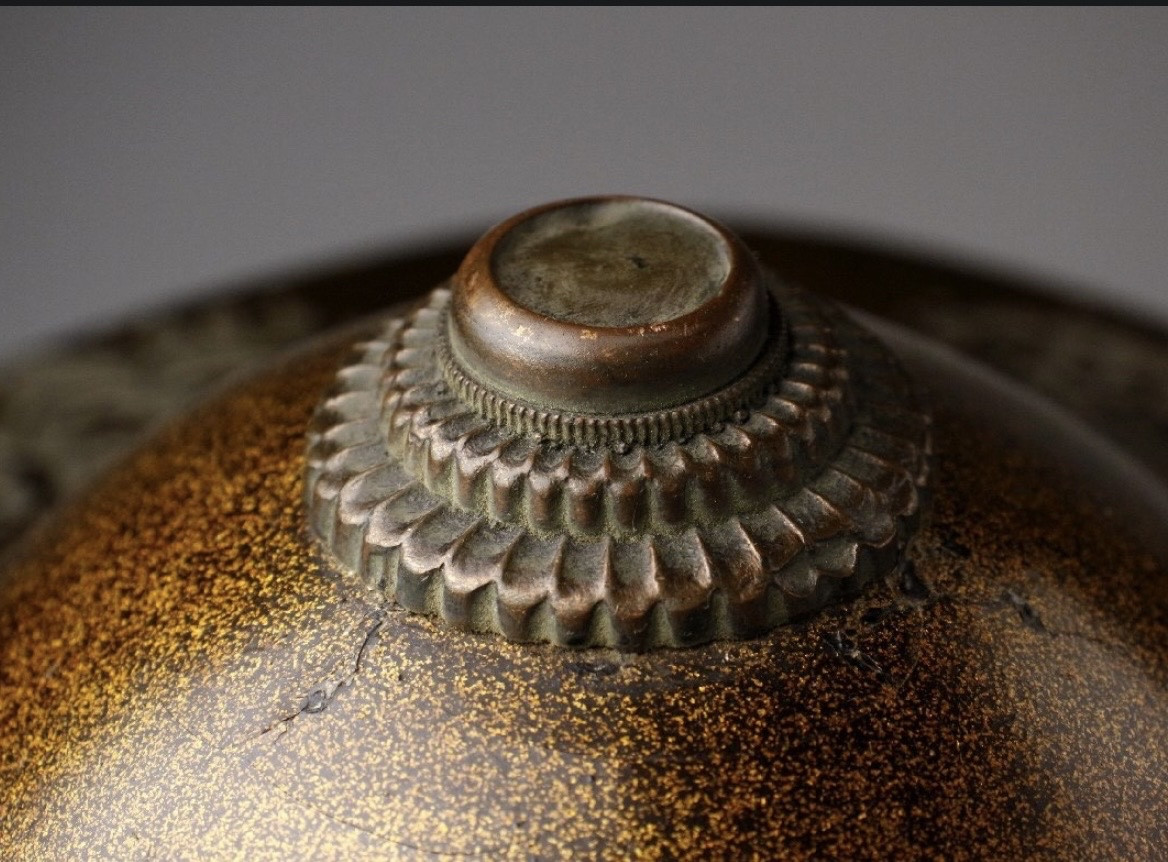
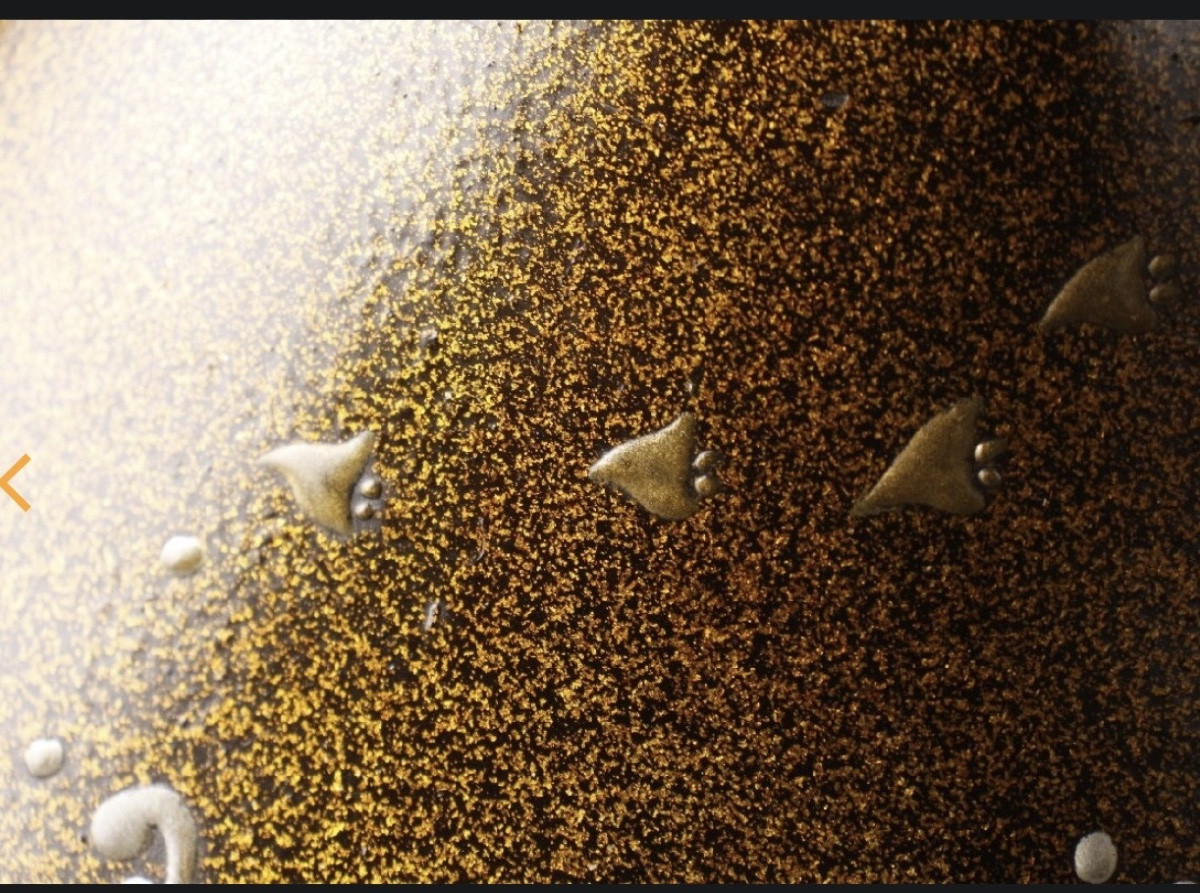
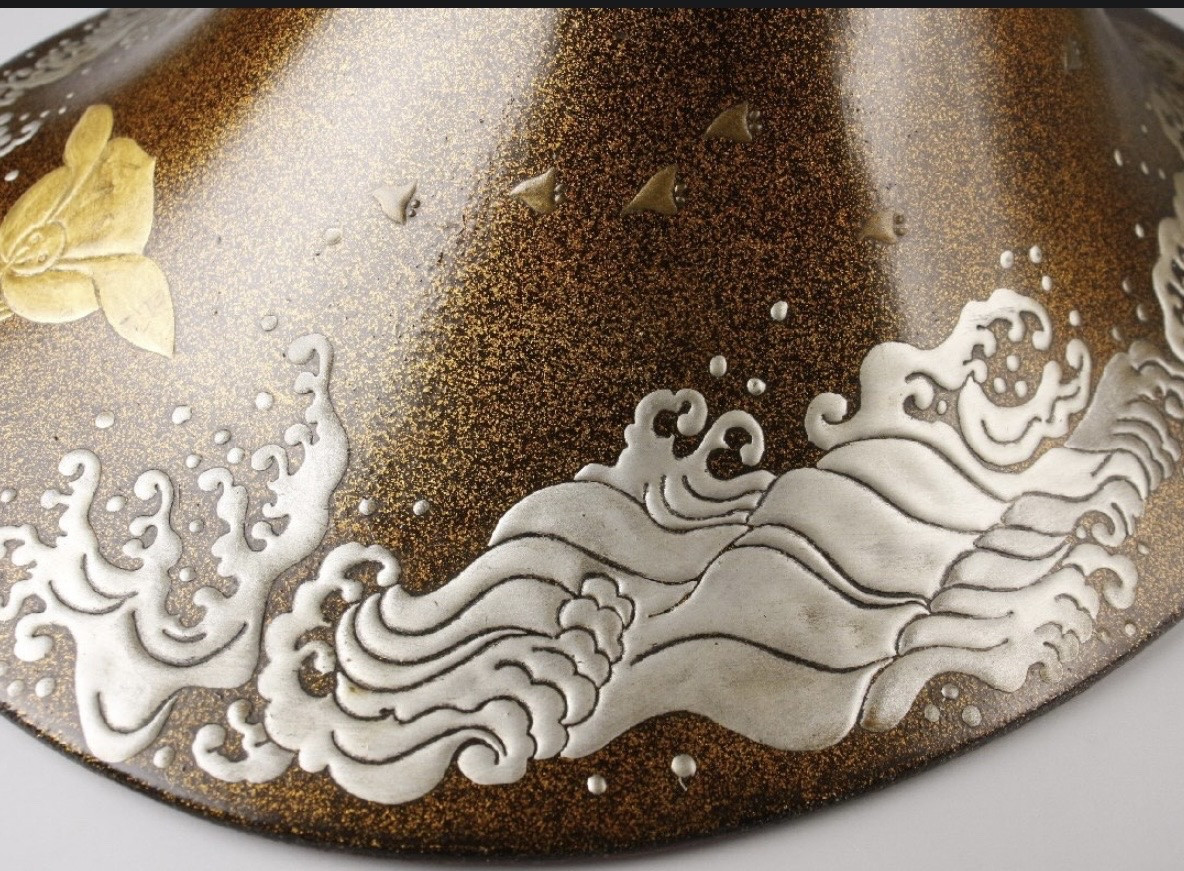
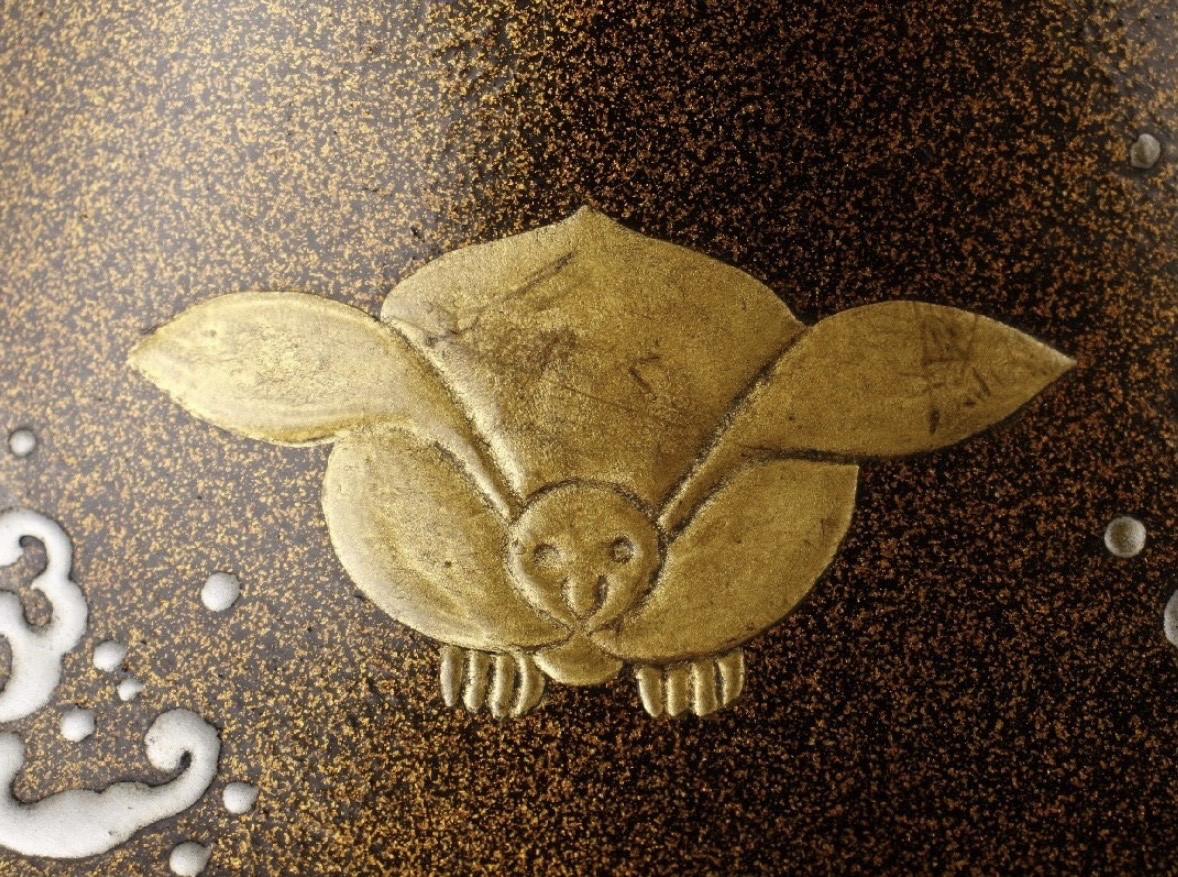
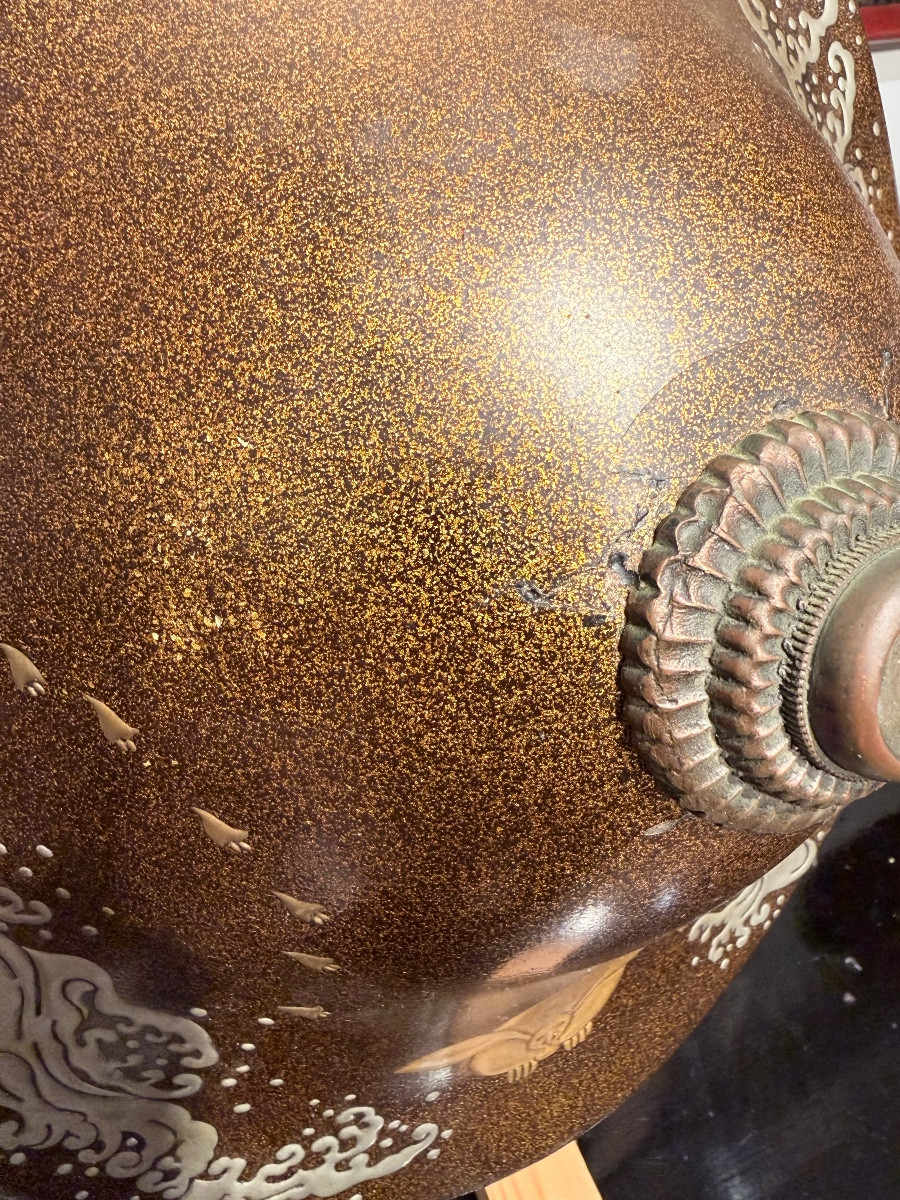
A jingasa with a motif of waves and water droplets, and a central rabbit; stylized plovers fly above the waves. The back is lacquered red with a cushion for the skull; the clouds are made of maki-e; the multi-tiered tehen is made of silvered copper. The background sparkles with gold glitter.around the tehen some cracks seems to have been reglued
The origin of this style of jingasa is attributed to Takeda Shingen (1521-1573), who is said to have particularly appreciated this form. It was used by the samurai class of feudal Japan, as well as their vassals and foot soldiers
They used several types of jingasa made of iron, copper, wood, paper, bamboo, or leather. Jingasa almost always bore crests. These lightweight helmets, worn by infantrymen (ashigaru) under the authority of Japanese warlords, were much more than mere ceremonial objects: they were true combat equipment, offering effective protection, particularly against sword blows from enemy cavalry. They later became objects of status and parade













 Le Magazine de PROANTIC
 TRÉSORS Magazine
 Rivista Artiquariato