THIS OBJECT WAS SOLD
Pair Of Cranes And Tortoise, Kanō, Kakemono, Japan, 19th Century.
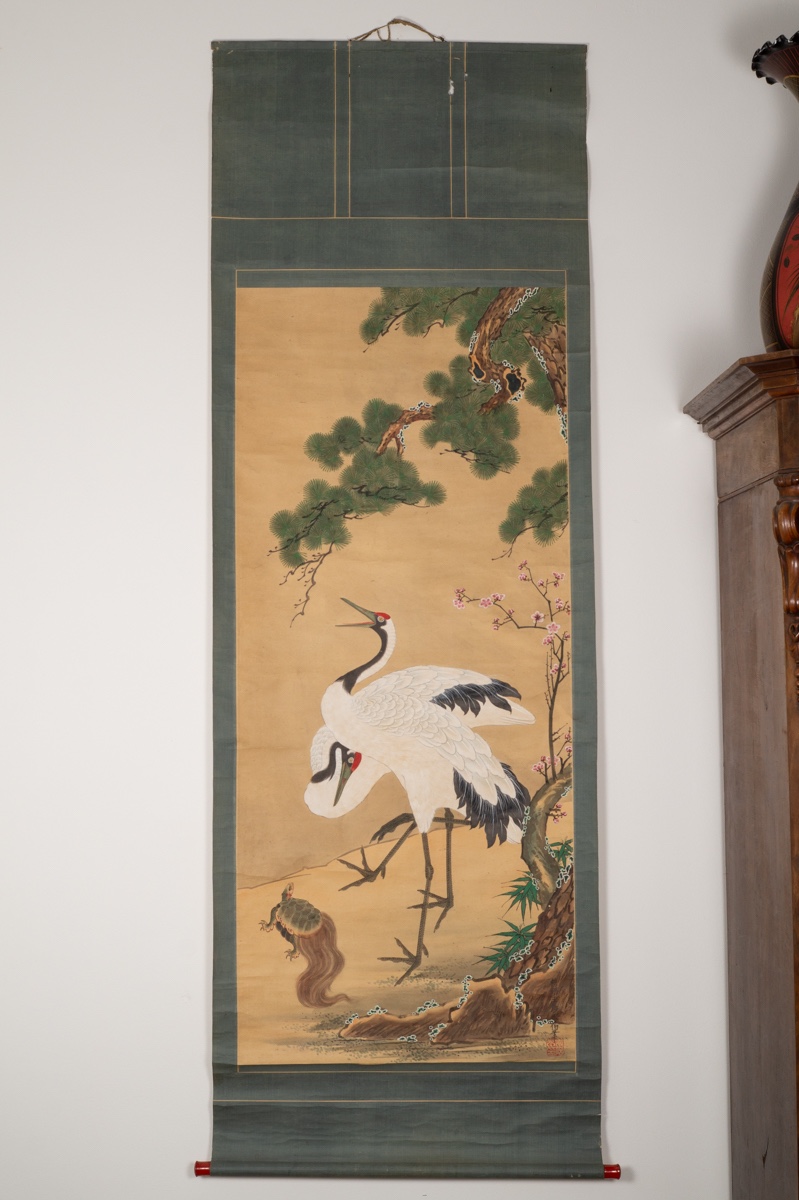
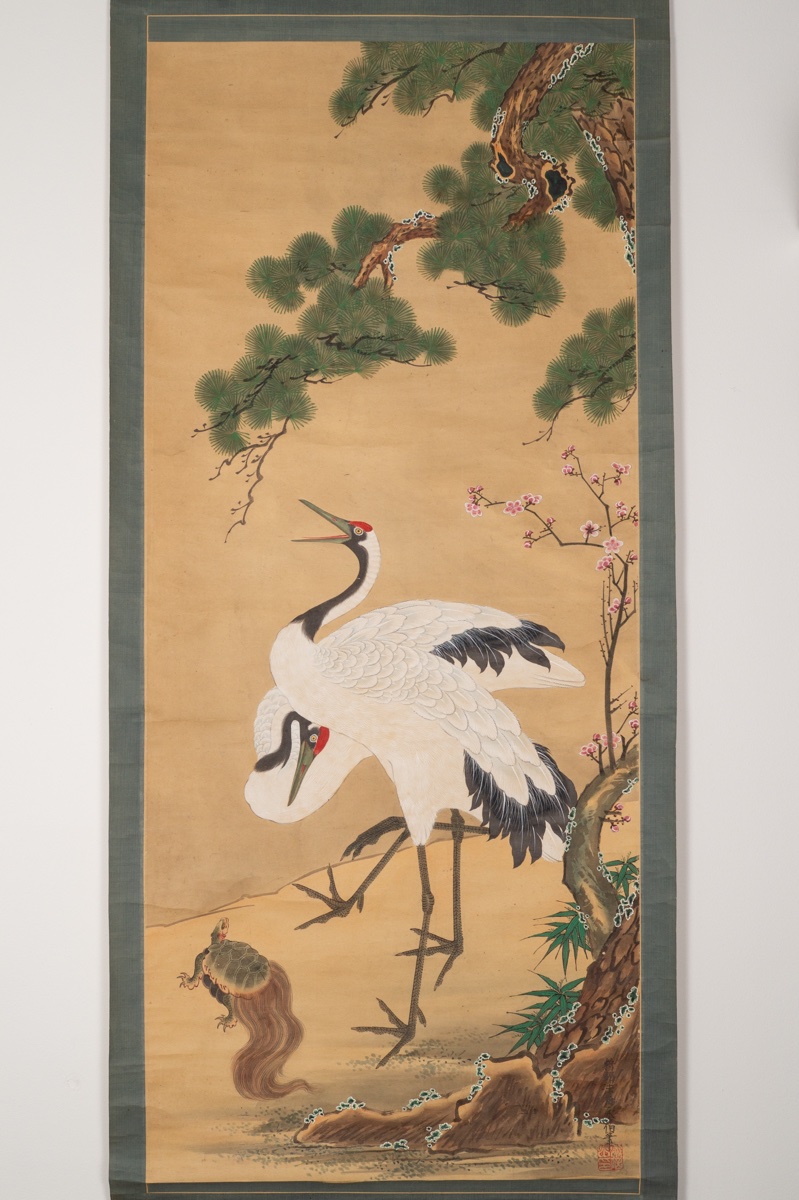
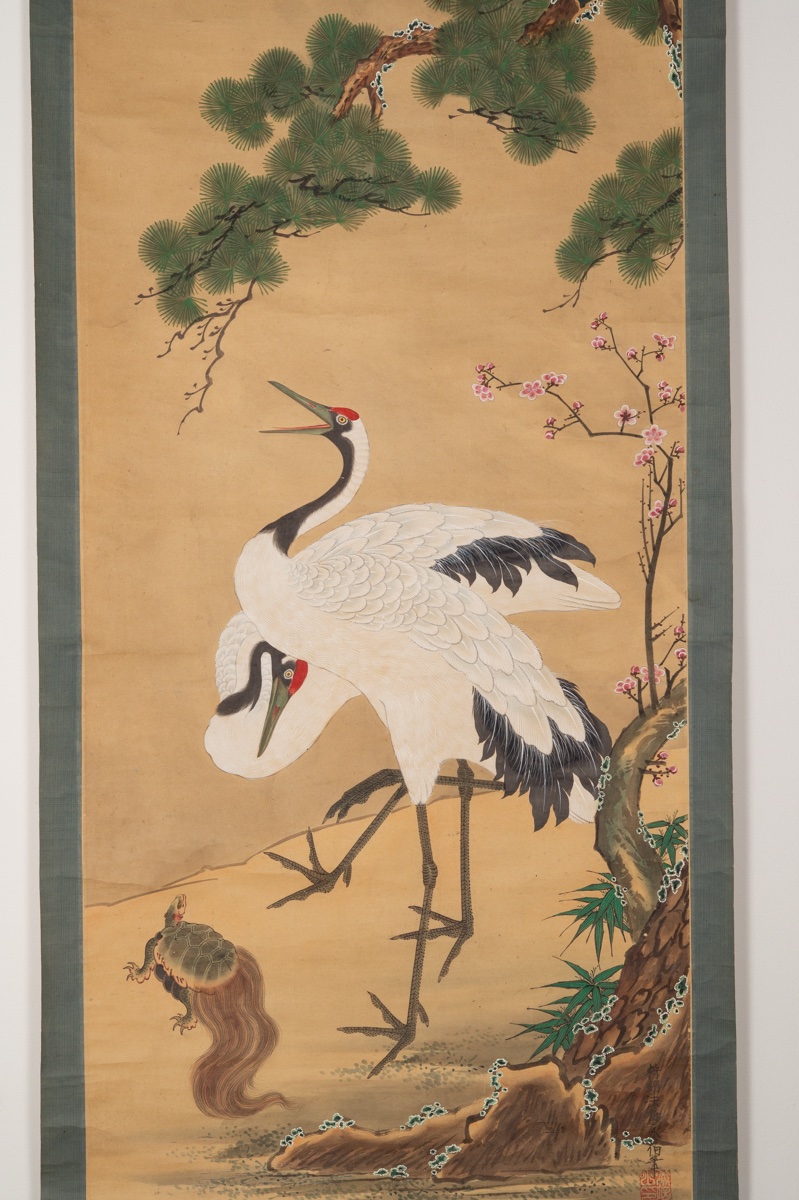
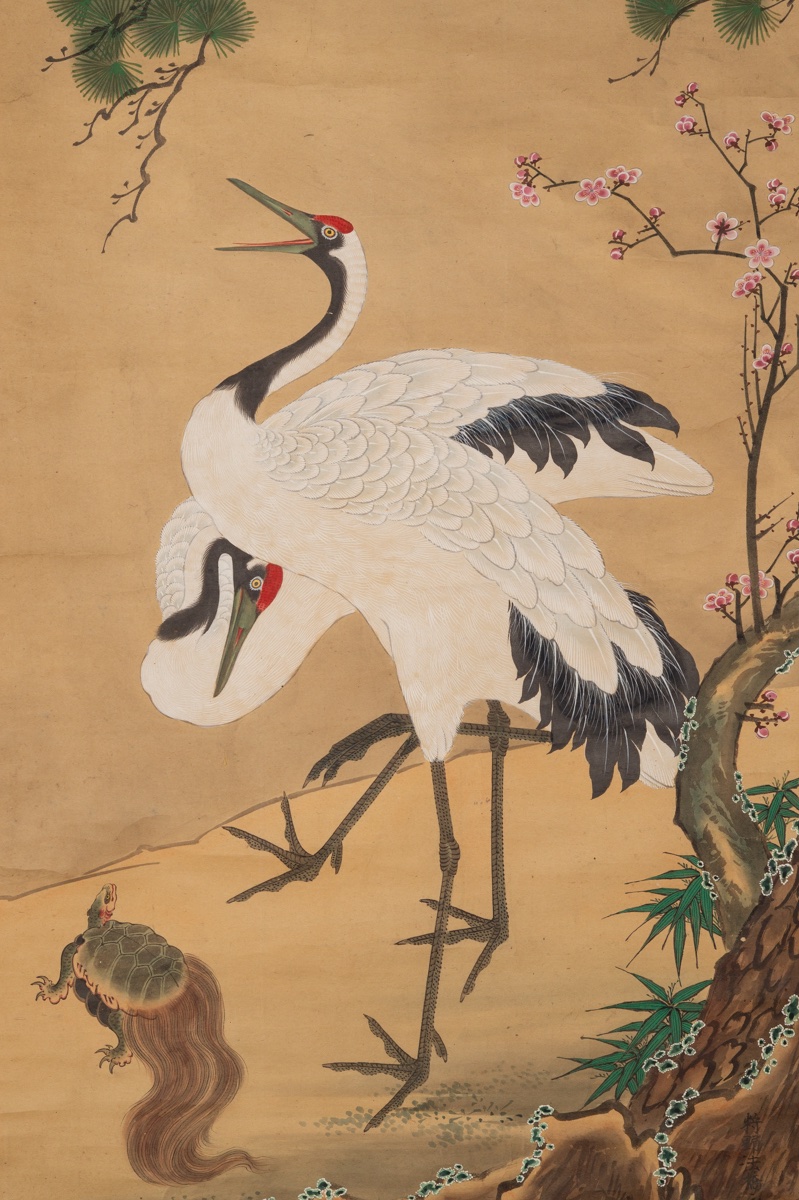
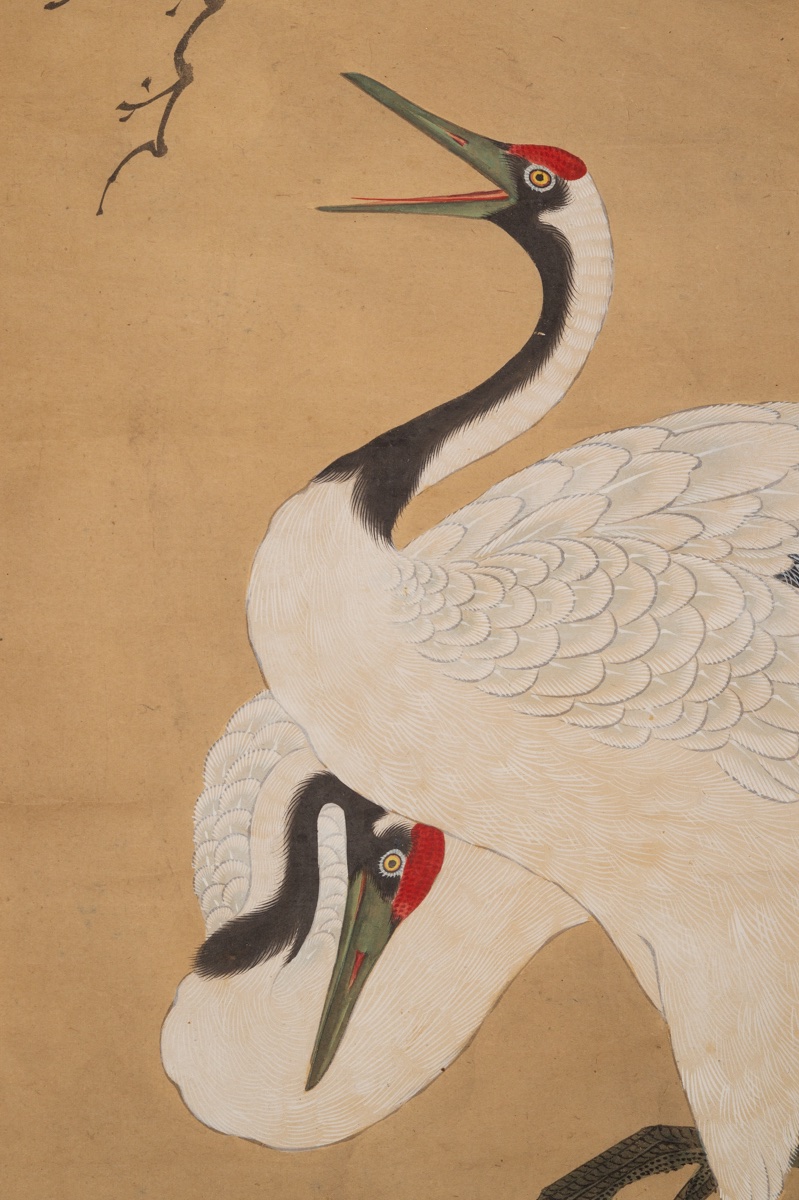
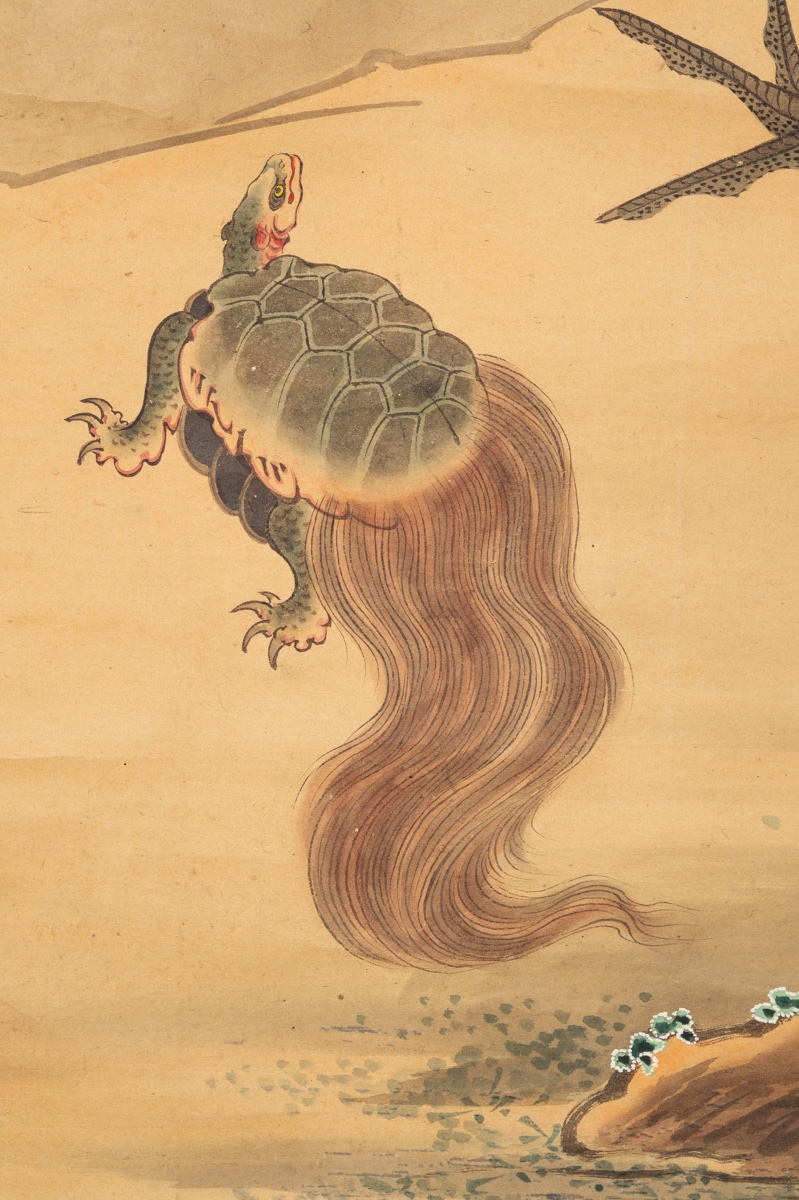
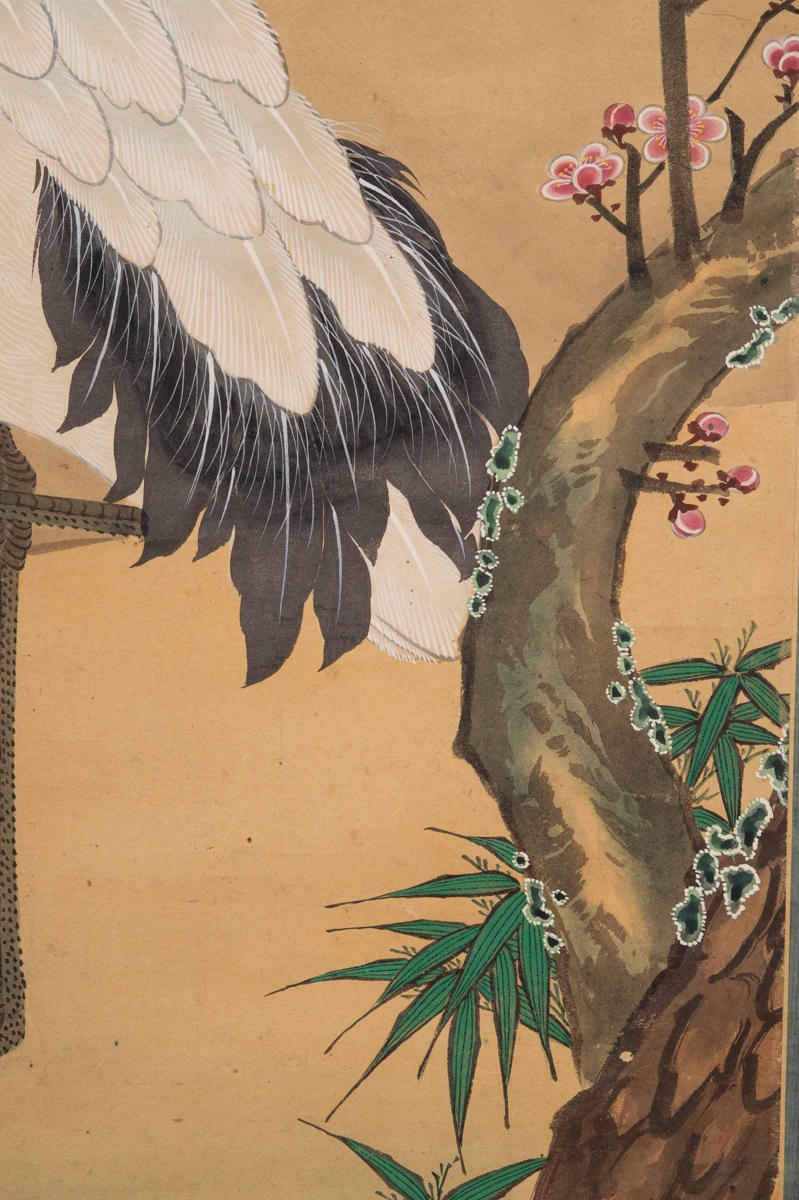
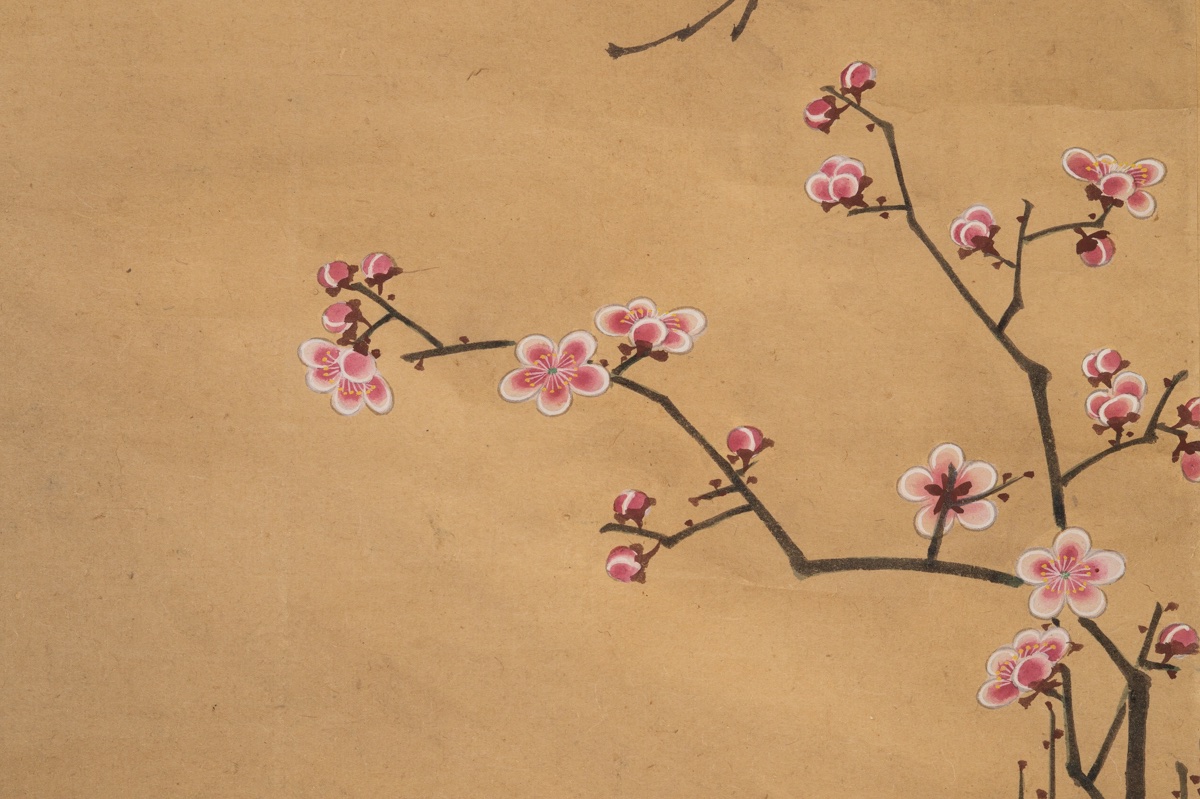
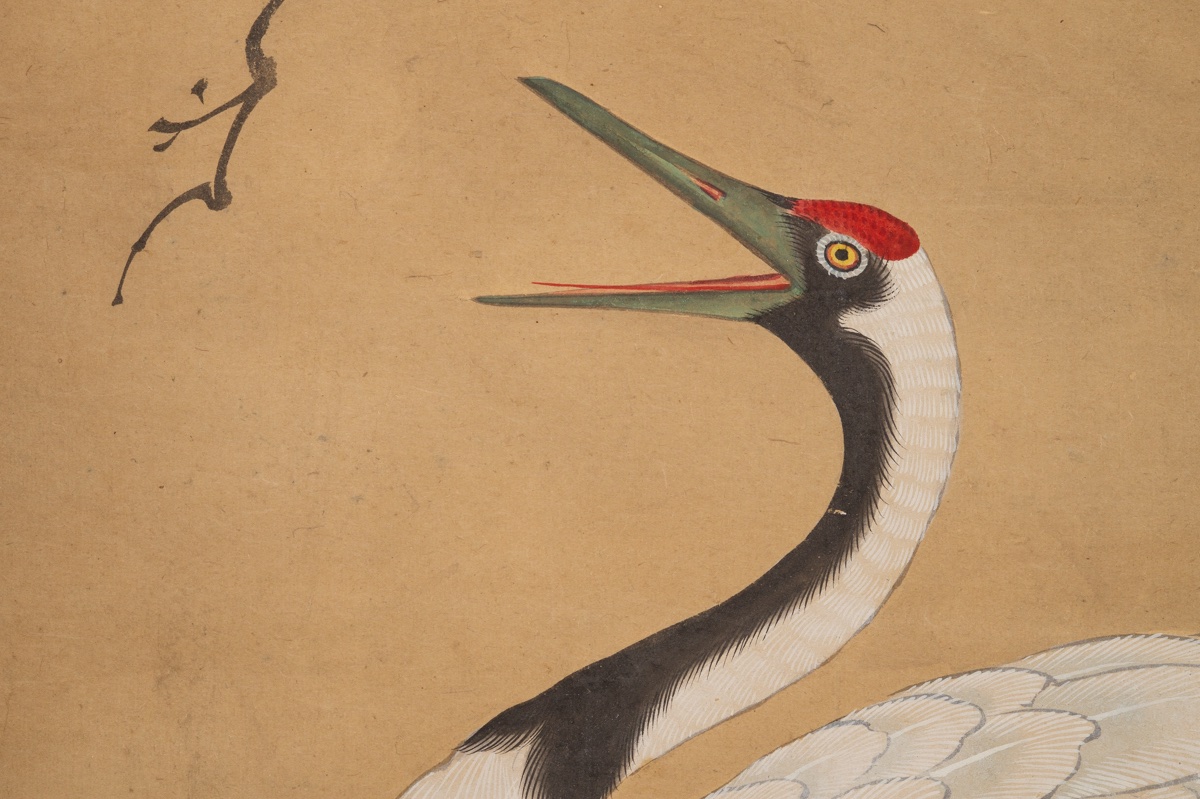
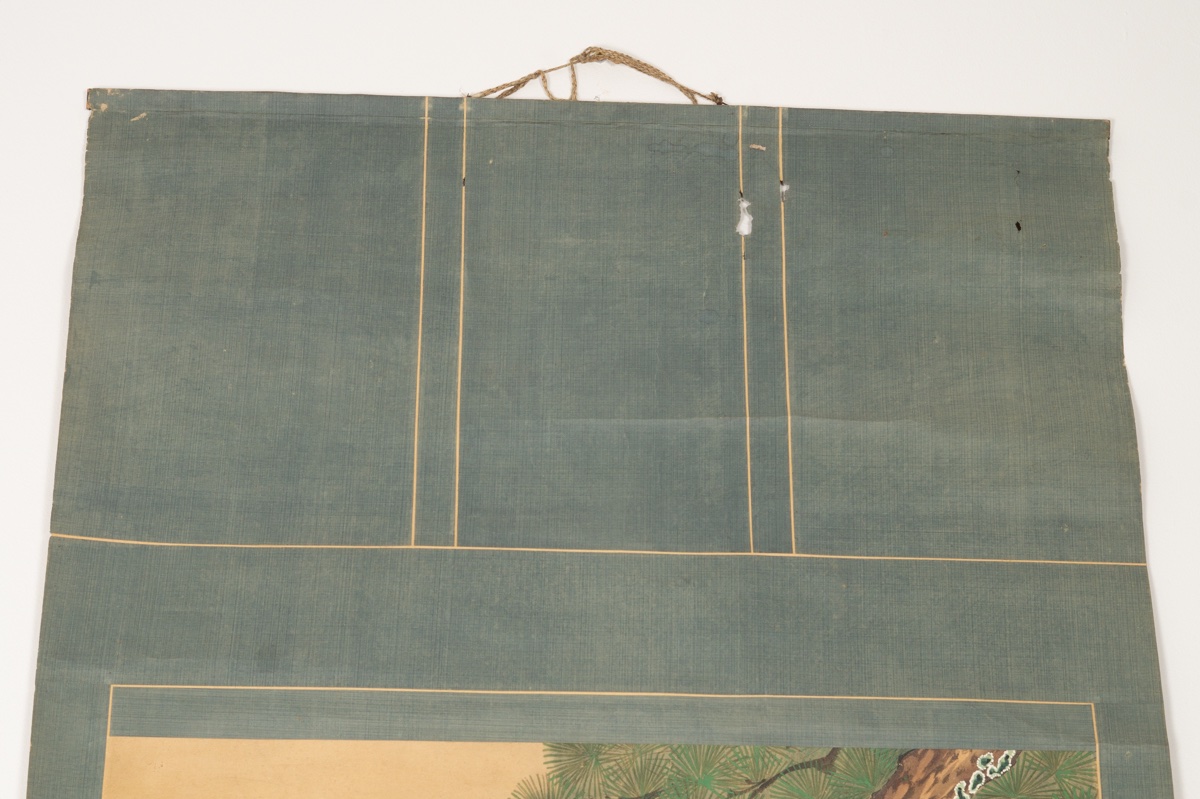
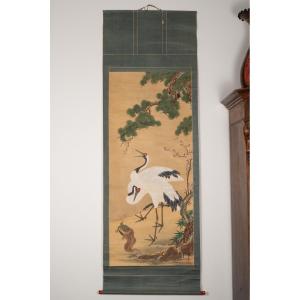


Hand-painted scroll depicting a pair of cranes and a tortoise surrounded by a pine tree and a flowering plum tree. The image is painted with great attention to detail in the Kanō style. The pair of cranes (tsuru) symbolizes happiness, marital fidelity, and longevity, as these birds were believed to live for a thousand years. The pine tree (matsu), an evergreen, symbolizes perseverance, strength, and longevity. The tortoise (kame) at the bottom of the image is another powerful symbol of longevity and stability in both Japanese and Chinese cultures. The pink blossoms suggest plum (ume) or peach (momo) trees, adding symbolism of renewal, the arrival of spring, and happiness.
Ink and color on paper.
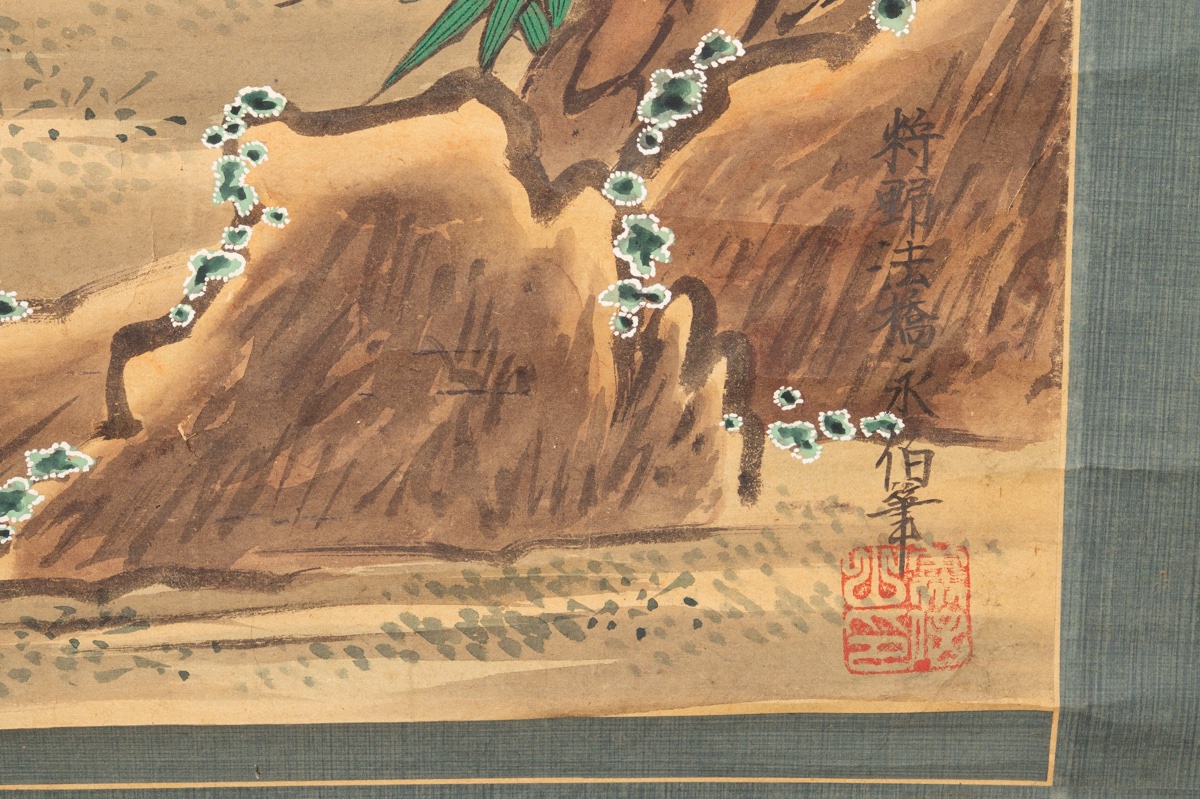
Japan, Edo-Meiji period, 19th century. Signed: 狩野法橋永伯筆 (Kanō Hōkyō Eihaku hitsu). Likely refers to the famous painter Eitoku Kanō, founder of the Kanō school, who lived in the 16th century.
Dimensions: 193 x 65 cm. Image: 131 x 56 cm. Width with handles: 70 cm.
Relatively good condition, minor damage and soiling visible.
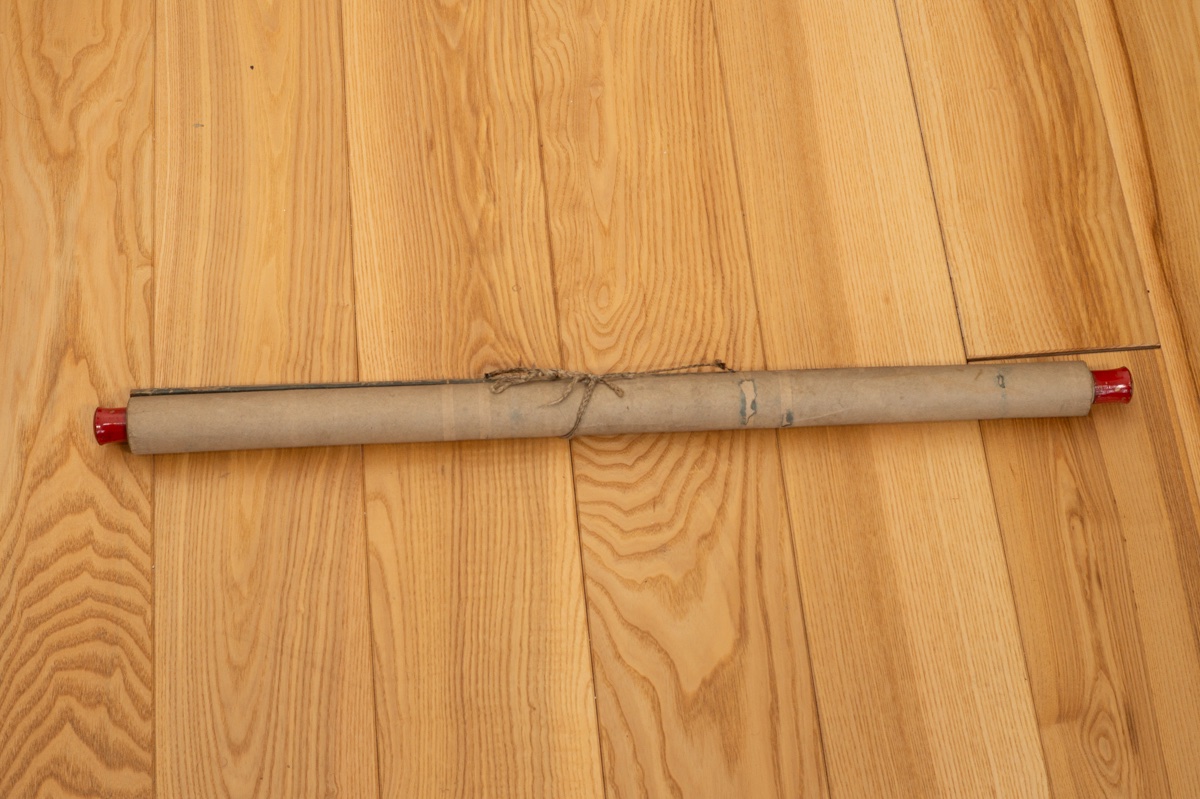
Kakemono (Japanese: 掛け物 kake-mono - "hanging object"; also: 掛軸 kakejiku - "hanging scroll") - a Japanese painting on paper or silk, usually glued to a silk backing, intended to be hung on the wall. The top and bottom edges of the kakemono are attached to wooden bars to facilitate rolling, the bottom bar (Japanese: ikugi 軸木) also being fitted with projecting handles (Japanese: jiku). Kakemono scrolls first appeared in Japan during the Nara period (710-794). In traditional Japanese homes, they are hung in a niche called a tokonoma.
Free shipping within the European Union! I send packages via insured courier (DPD or DHL). All items are very carefully packaged. Payment by international bank transfer. I will provide a certificate of authenticity upon request.
Ink and color on paper.
Japan, Edo-Meiji period, 19th century. Signed: 狩野法橋永伯筆 (Kanō Hōkyō Eihaku hitsu). Likely refers to the famous painter Eitoku Kanō, founder of the Kanō school, who lived in the 16th century.
Dimensions: 193 x 65 cm. Image: 131 x 56 cm. Width with handles: 70 cm.
Relatively good condition, minor damage and soiling visible.
Kakemono (Japanese: 掛け物 kake-mono - "hanging object"; also: 掛軸 kakejiku - "hanging scroll") - a Japanese painting on paper or silk, usually glued to a silk backing, intended to be hung on the wall. The top and bottom edges of the kakemono are attached to wooden bars to facilitate rolling, the bottom bar (Japanese: ikugi 軸木) also being fitted with projecting handles (Japanese: jiku). Kakemono scrolls first appeared in Japan during the Nara period (710-794). In traditional Japanese homes, they are hung in a niche called a tokonoma.
Free shipping within the European Union! I send packages via insured courier (DPD or DHL). All items are very carefully packaged. Payment by international bank transfer. I will provide a certificate of authenticity upon request.
Explore similar pieces and discover your ideal find:
drawings