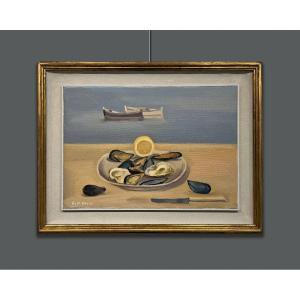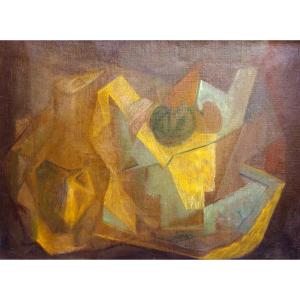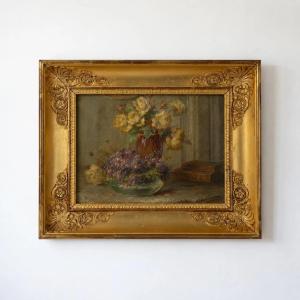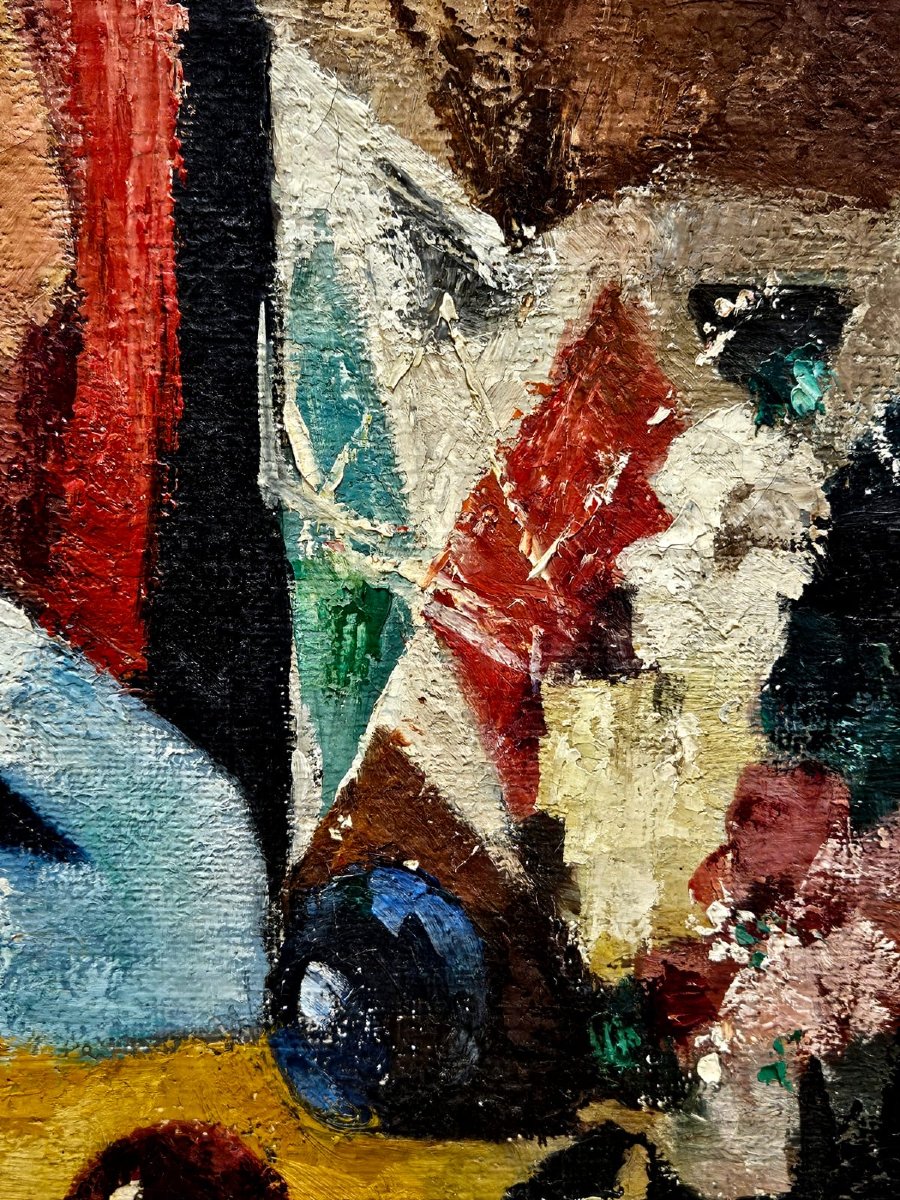

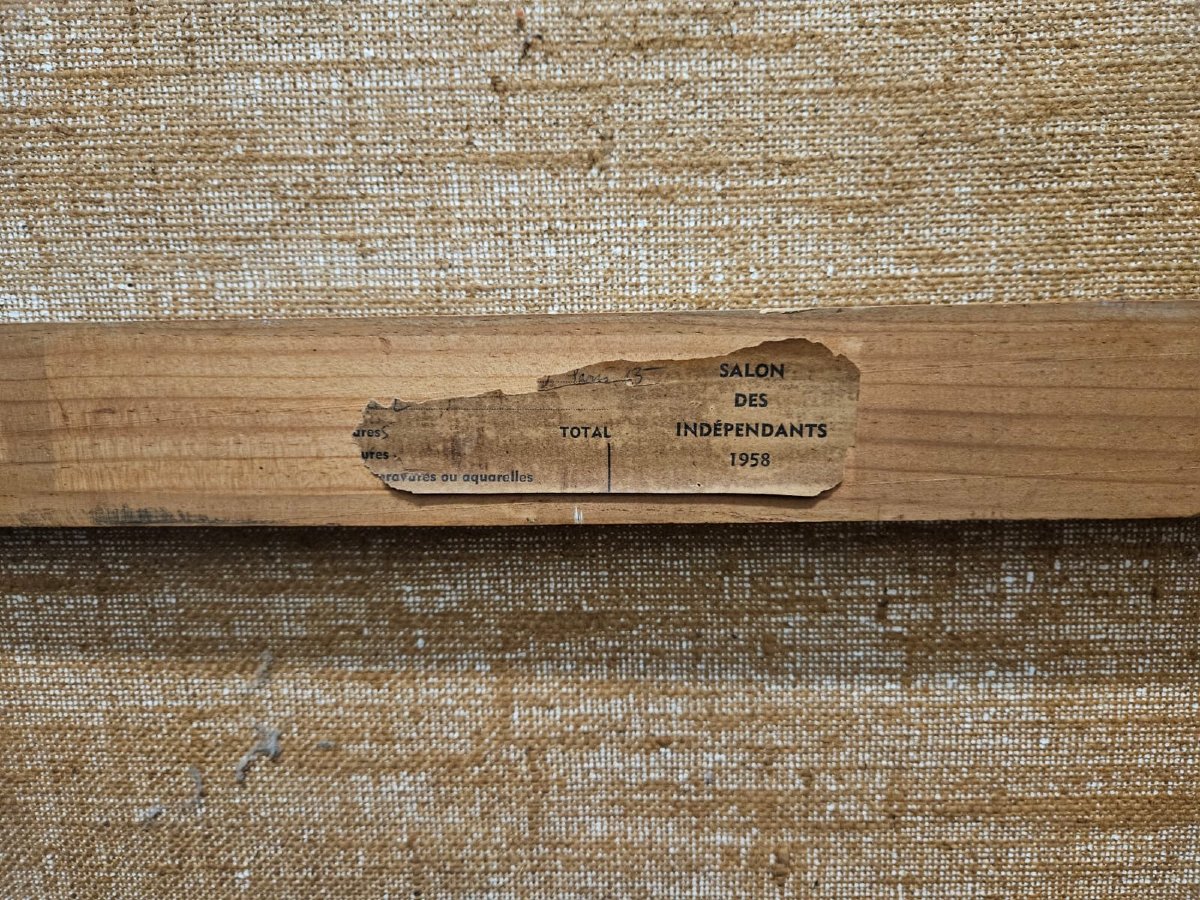





Ophicleide, Oil On Canvas By Paul Charlemagne, Exhibited At The Salon Des Indépendants In 1958.
Artist: Paul Charlemagne, Paris 1892-1972
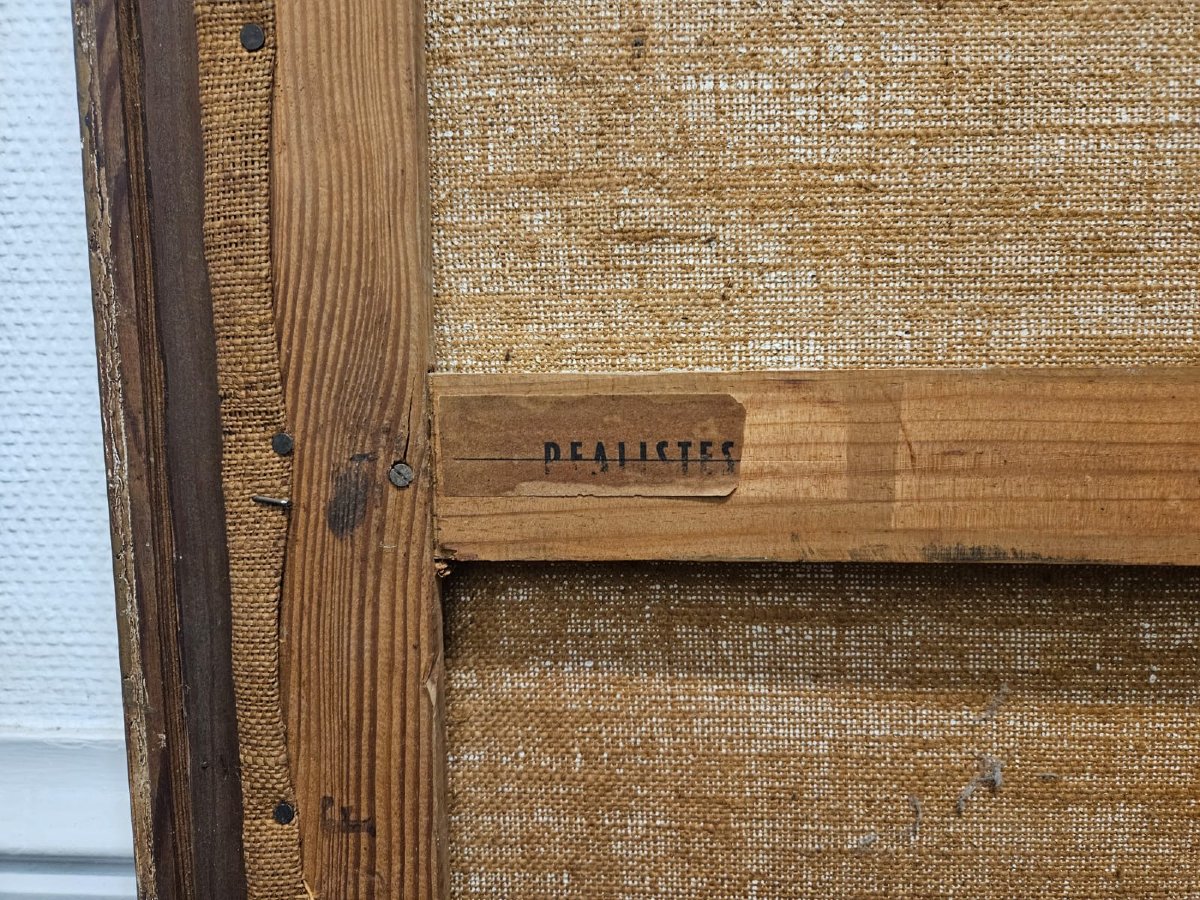
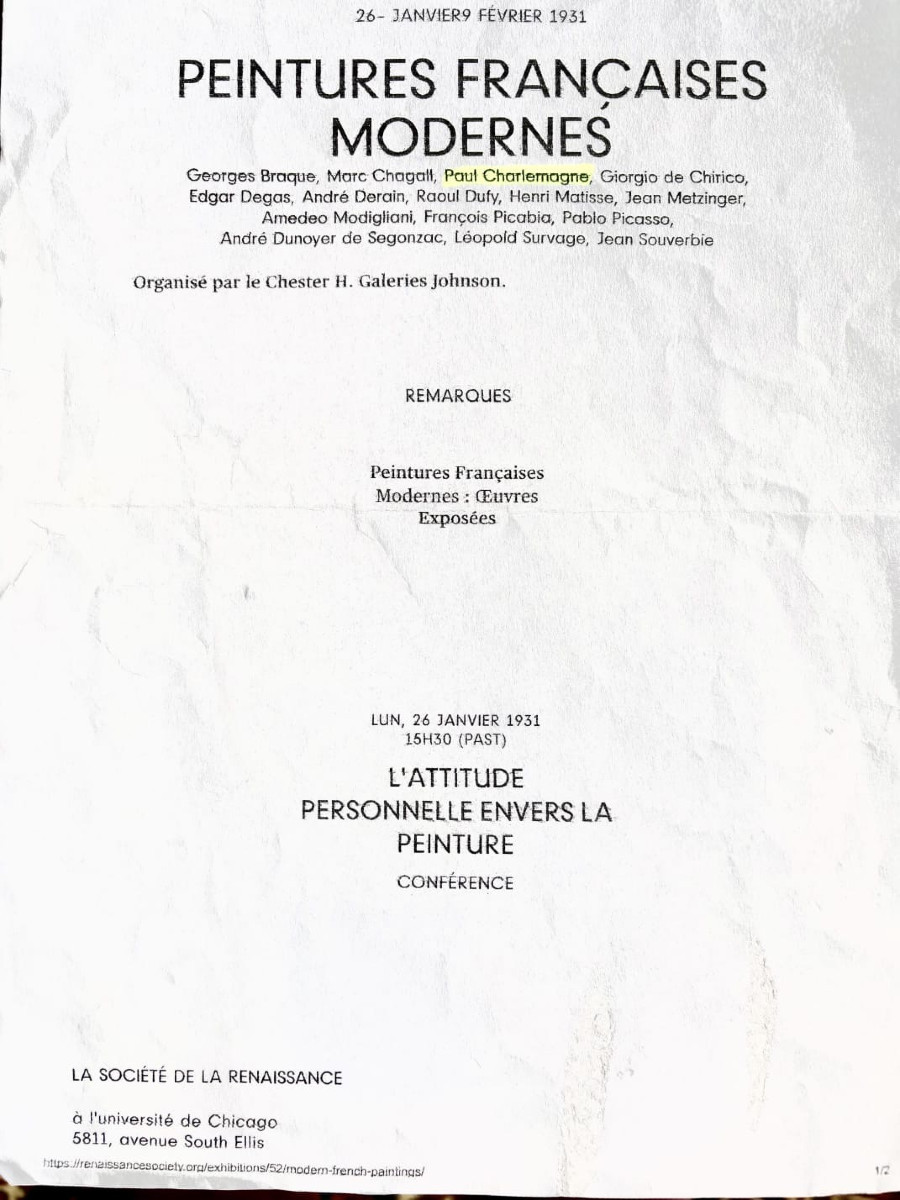
Paul Charlemagne was a French painter and draftsman. He was also a theater set designer, illustrator, poster artist, lithographer, and ceramist. He naturally owed his early artistic training to his father before, out of necessity, after his father's sudden death which plunged the family into financial hardship, he became the apprentice of Marcel Jambon (1848-1908), a decorative painter for the Opéra-Comique, the Comédie-Française, and several other theaters. Painting his first canvases—"still lifes and landscapes marked by the art of André Dunoyer de Segonzac"—Paul Charlemagne, who confessed to "boundless admiration for Eugène Delacroix," would become a regular at the Salon d'Automne and the Salon des Indépendants. Paul Charlemagne created sets and costumes for Parisian stages with, as Georges Turpin observed, "a great sense of theatrical decoration." In 1936, he was also entrusted, along with Raoul Dufy, Othon Friesz, and Henry de Waroquier, with the mural decoration of the bar at the Théâtre National de Chaillot. He worked for the Manufacture Nationale de Sèvres, designing nearly two hundred decorative models between 1934 and 1960. He was a professor at the École Nationale Supérieure des Arts Décoratifs from 1943 to 1962. In 1931, he exhibited alongside the leading artists in Chicago. Our work, signed in the lower right corner, is countersigned and titled on the reverse: Charlemagne the Ophiuche. The ophicleide is a wind instrument that can be seen in the center of the painting. The composition refers to the performing arts (Charlemagne was also a theatre decorator). On the horizontal crossbar in the middle are 2 labels indicating that the painting was exhibited at the Salon des Indépendants in 1958 in the Realists section.
2 400 €
Period: 20th century
Style: Modern Art
Condition: Good condition
Material: Oil painting
Width: 130cm, 137.5 avec baguette
Height: 97cm, 104.5 avec baguette
Reference (ID): 1694761
Availability: In stock
Print