





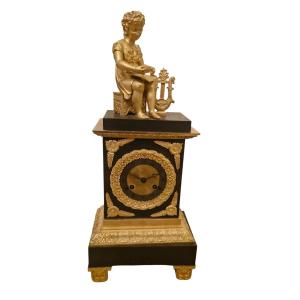
"Empire Vase-shaped Mantel Clock With Roman Soldier Busts"
See our website for more detailed photos: LINK
We send this article worldwide, professionally packaged, with registered and fully insured shipping at a fair price.
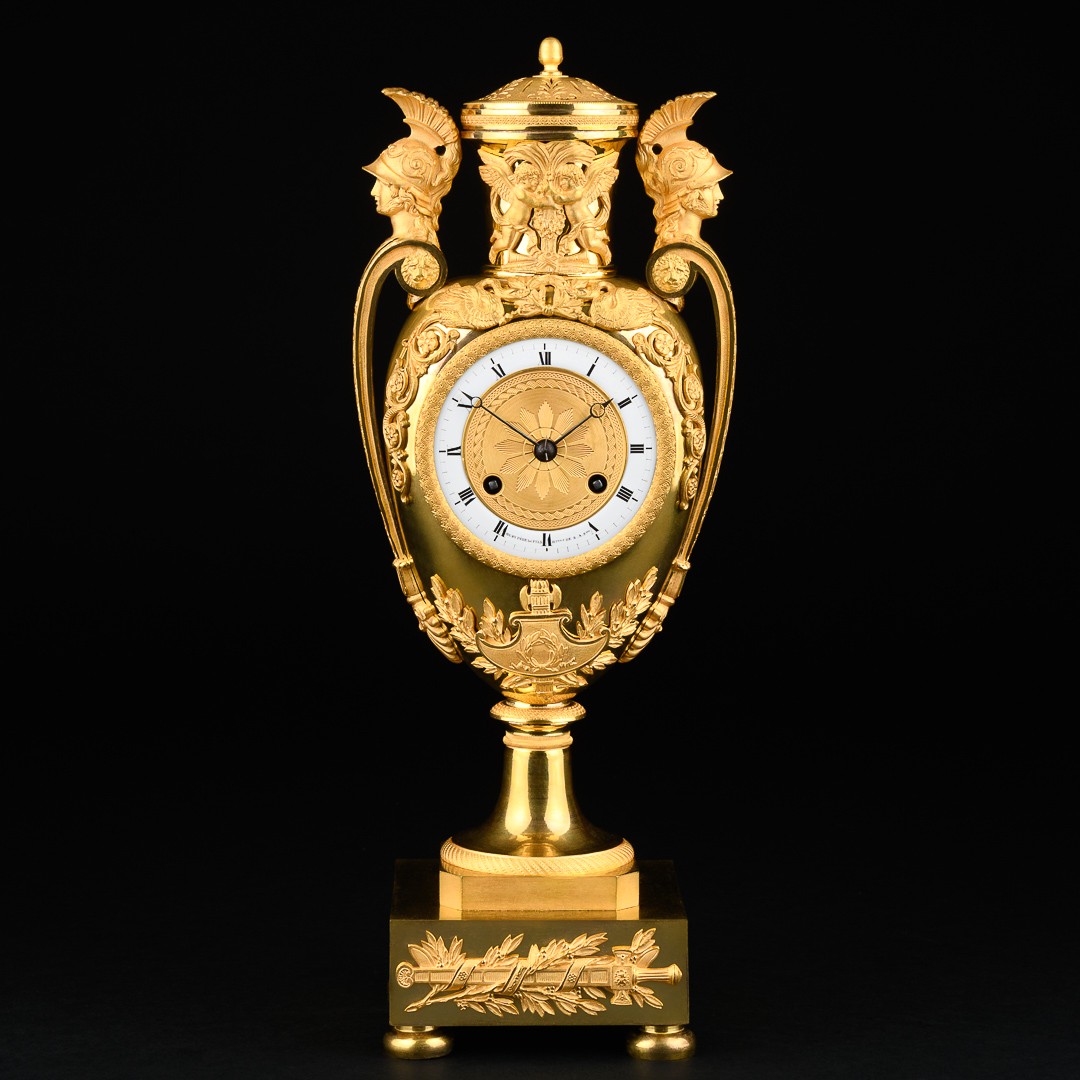
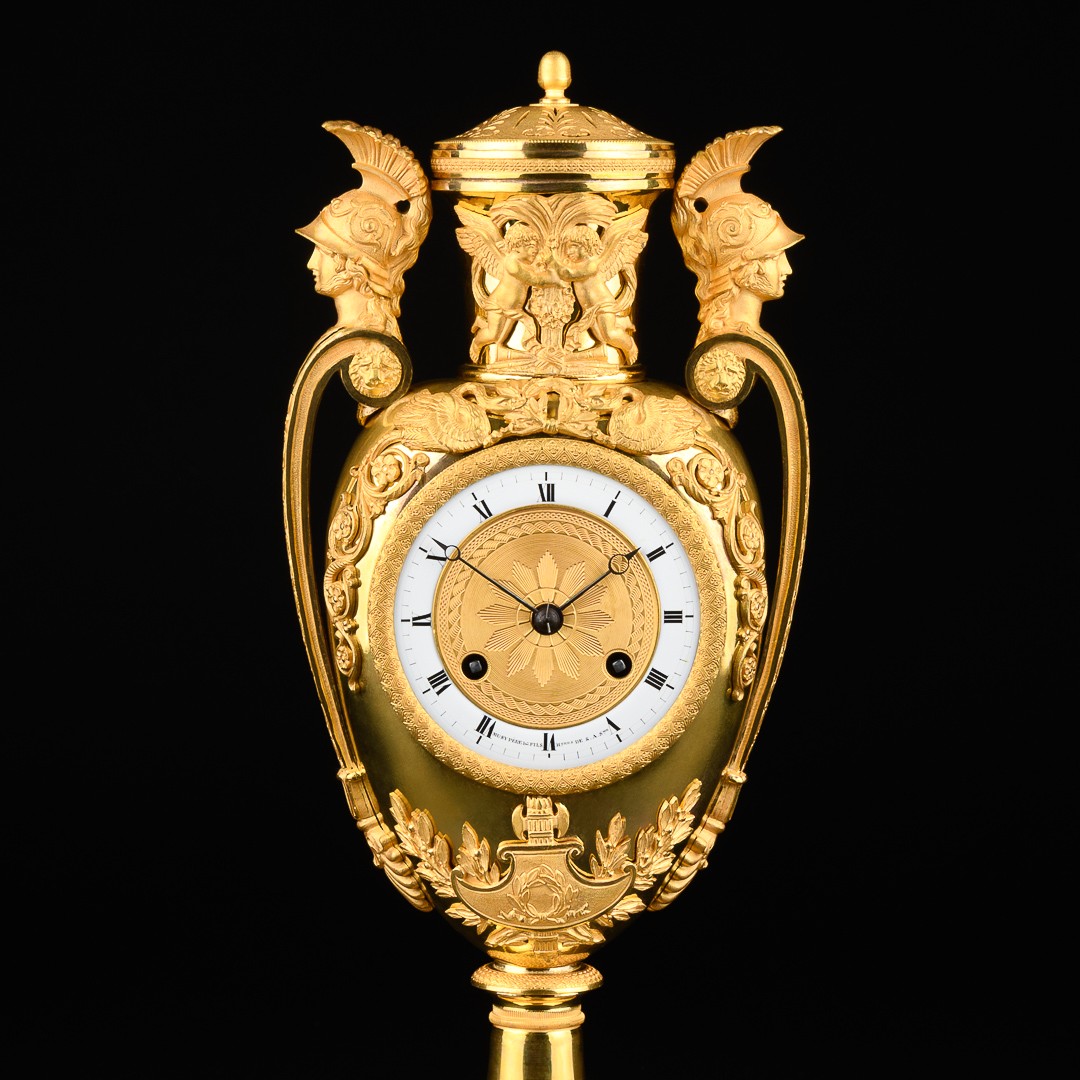
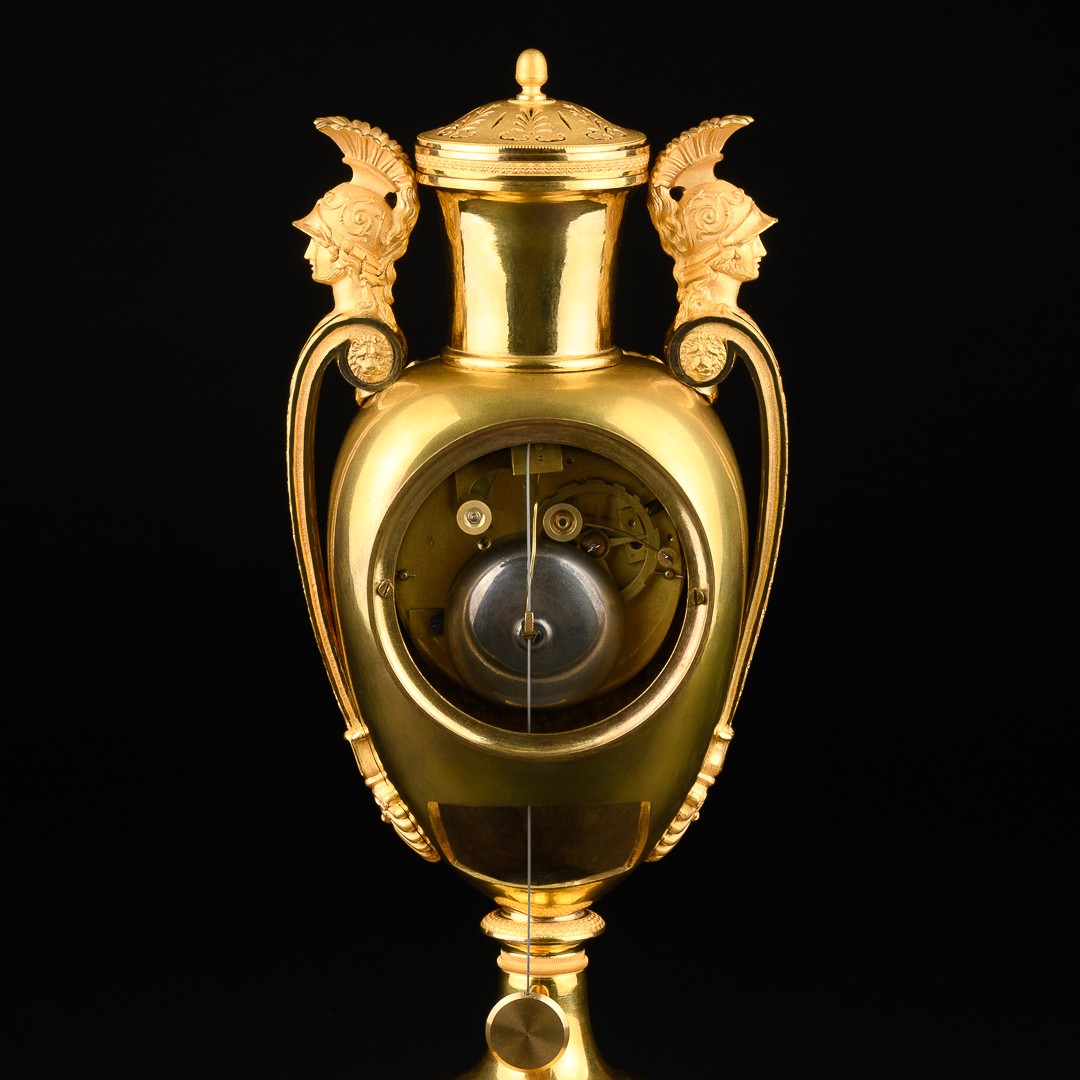
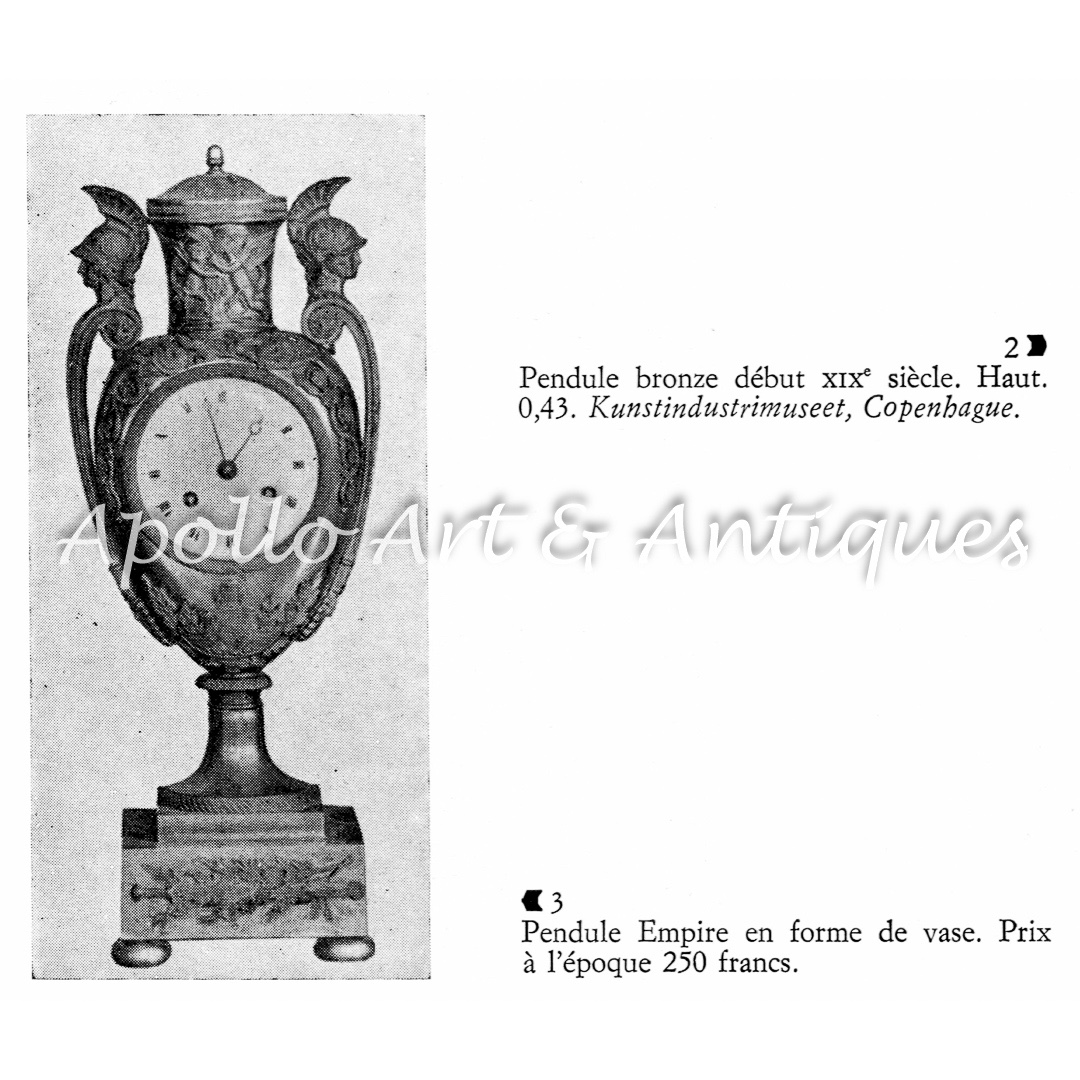
Conceived in the form of an ovoid vase, this distinguished Empire clock with Roman military motifs is exquisitely cast and finely chased in gilt bronze, adorned with a refined repertoire of military and classical motifs characteristic of the period. The lidded top may also serve as an incense or perfume burner. It is fitted with a Paris movement and a dial signed Musy Père & Fils.
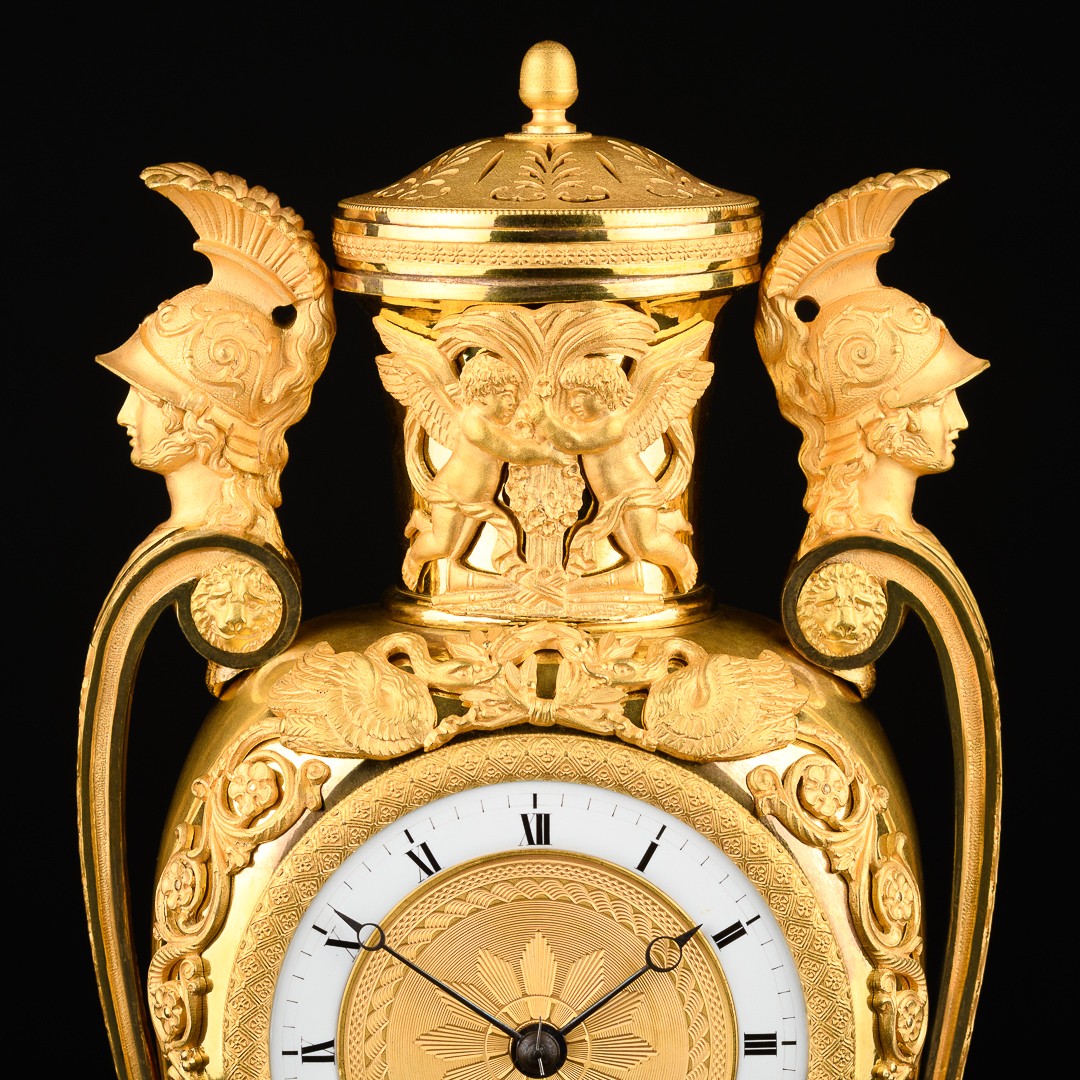
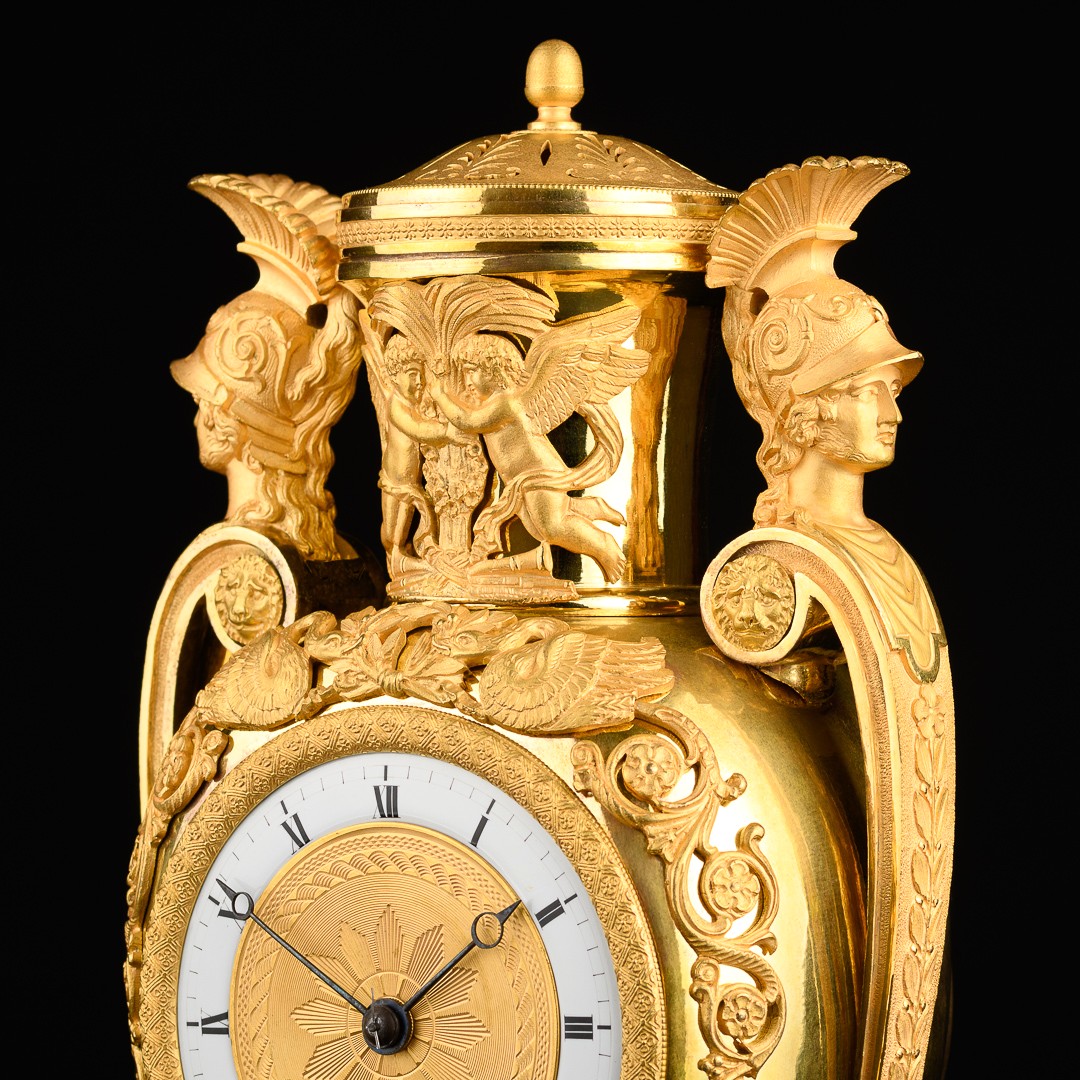
An openwork, lidded upper section is enriched with sculptural putti, emblems of vitality and continuity, while elegant scrolling handles rise to terminate in finely modelled busts of Roman soldiers. These figures deliberately evoke the imagery of Imperial Rome, a central reference in Empire design, intended to align contemporary authority with ideals of discipline, heroism and enduring power. Below, the urn rests upon a waisted socle set on a square plinth with turned feet, forming a composition of architectural clarity and classical balance.
The richly gilded surface is further animated by an elaborate array of symbolic mounts and appliqués, executed with exceptional precision and depth of chasing. Soldiers’ busts, crossed weapons, laurel wreaths, swans and putti together articulate a coherent visual language. Laurel wreaths signify victory and honour, while the swan, sacred to Apollo, conveys refinement and cultural supremacy, themes central to the Empire aesthetic. Expertly cleaned and remarkably well preserved, the clock retains its original mercury gilding, notable for its depth and lustre.
A partly enamelled, partly gilt bronze dial displays Roman numerals and is fitted with fine Breguet-style hands. The movement strikes the hours on a bell via a rack striking system and is regulated by a silk-suspended pendulum. The clock is supplied complete with its pendulum and winding keys.
Origin: France, Empire period, circa 1815.
Dimensions: Height 44 cm (17.3″), Width 16.5 cm (6.5″), Depth 13 cm (5.1″).
Base: 13 × 13 cm (5.1″ × 5.1″).
Literature
- Elke Niehüser, “French Bronze Clocks”, 1997, p.265 #1360.
- Tardy, “La pendule française” II, p. 382.
- Tardy, “Dictionnaire des horlogers français”, p. 483.
We remain at your disposal via our website and WhatsApp. Fluent in French, English, German and Dutch, we will be delighted to assist with any enquiries or to arrange an appointment.












 Le Magazine de PROANTIC
 TRÉSORS Magazine
 Rivista Artiquariato