

Set Of 8 Art Nouveau Architectural Tiles In Glazed Terracotta By émile Müller
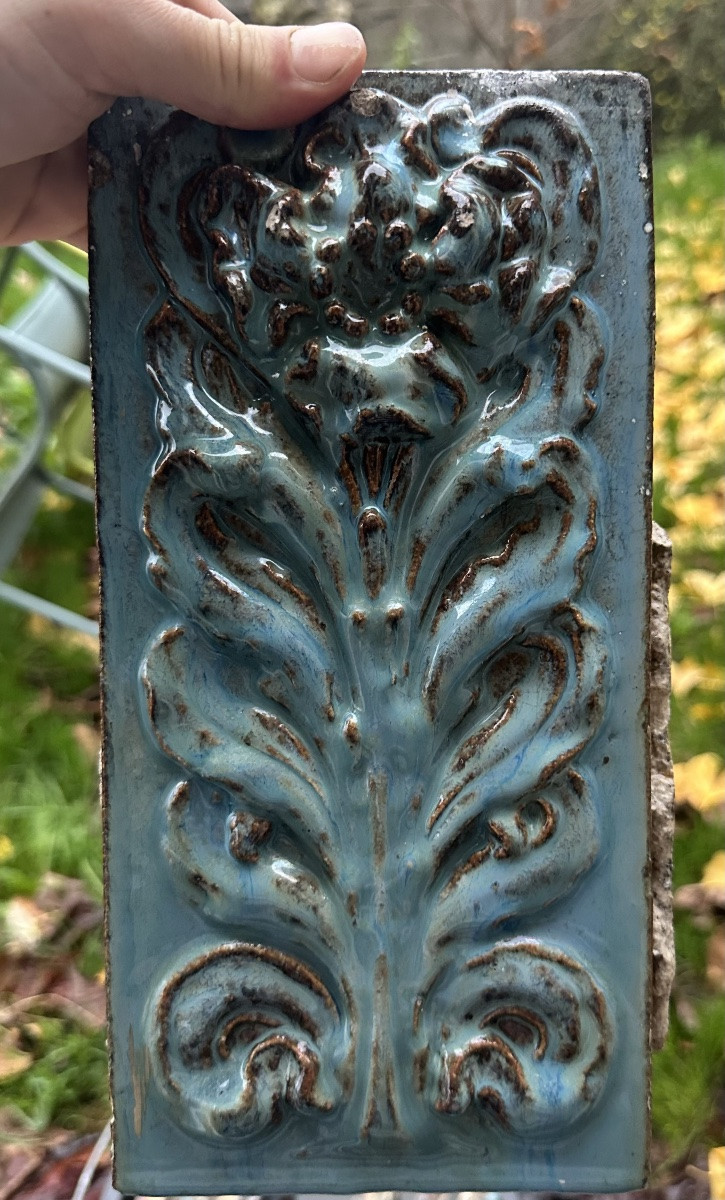
Set of eight architectural tiles in glazed terracotta (ceramic), Art Nouveau period, produced by the Émile Müller & Cie manufactory in Ivry-sur-Seine circa 1895–1910.
Each tile features a stylized vegetal décor in the form of an ascending palmette, molded in relief and covered with a turquoise to blue glaze, displaying subtle firing variations characteristic of late 19th-century productions.
On the reverse, the beige-ochre, granular clay body attests to molded terracotta manufacture. Traces of original installation and mortar residues are visible, confirming their architectural use in situ, most likely on a façade, fireplace surround, vestibule, or staircase of an Art Nouveau building.
One of the tiles bears the oval stamp “ÉMILE MULLER – IVRY,” an identifiable mark of this renowned Paris-area manufacturer of architectural ceramics, active on major Art Nouveau projects.
Artistic context and collaborations
The Émile Müller manufactory worked closely with several leading figures of Parisian Art Nouveau, notably Jules Lavirotte, Henri Sauvage, and Charles Plumet. These collaborations place Müller’s production at the heart of the decorative renewal of Paris around 1900, alongside the major achievements of the Art Nouveau movement.
Tile dimensions: 13.5 × 27.5 cm.
Overall good condition for historic architectural elements: light wear consistent with age and firing variations, with no significant damage to the relief decoration. A coherent and homogeneous set, particularly well suited for architectural reuse, Art Nouveau interior restoration, or a high-end decorative project.
Period: 20th century
Style: Art Nouveau
Condition: Good condition
Material: Terracotta
Reference (ID): 1693907
Availability: In stock