




Marble Torso Of Ganymede – Roman Empire – 2nd Century Ad
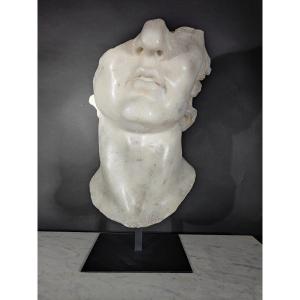
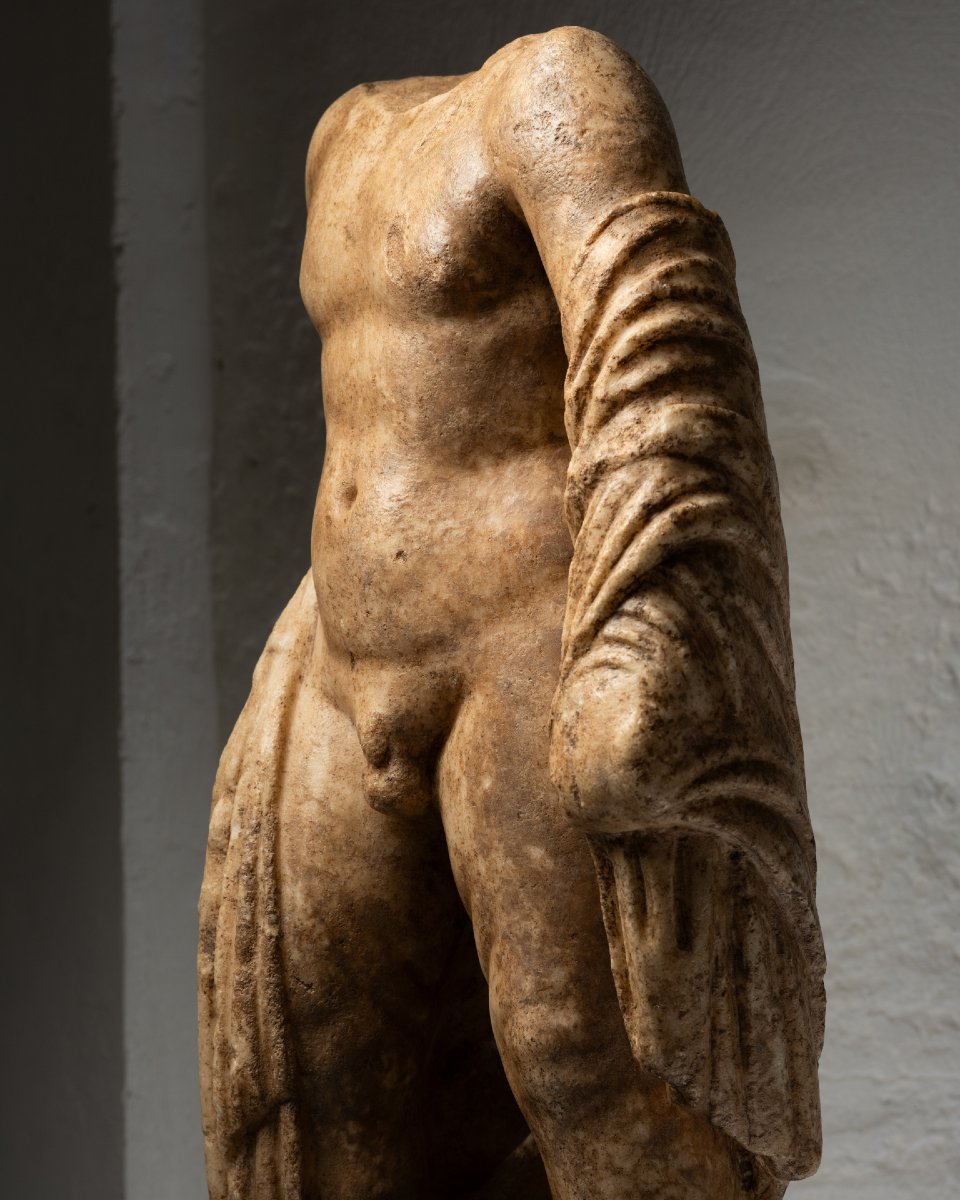
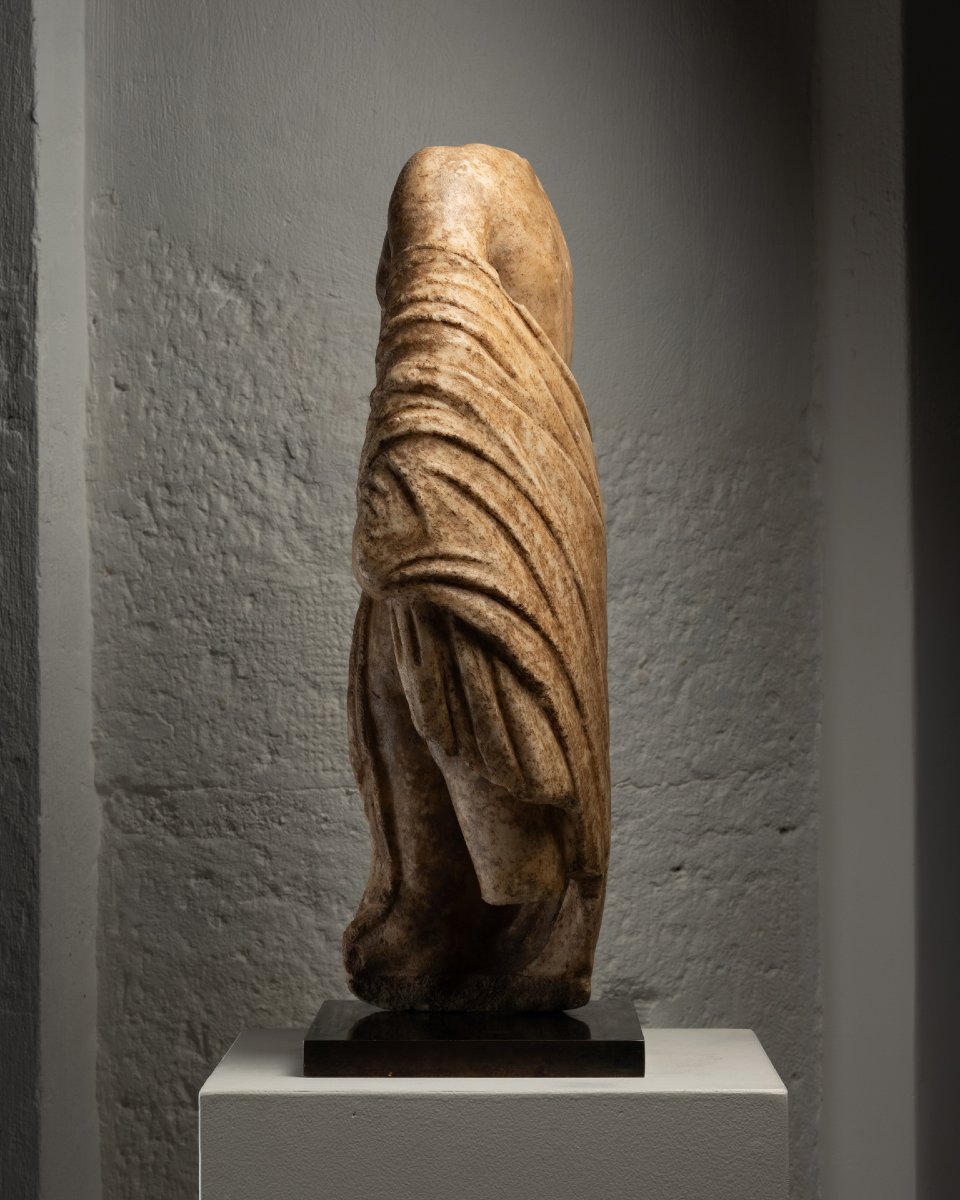
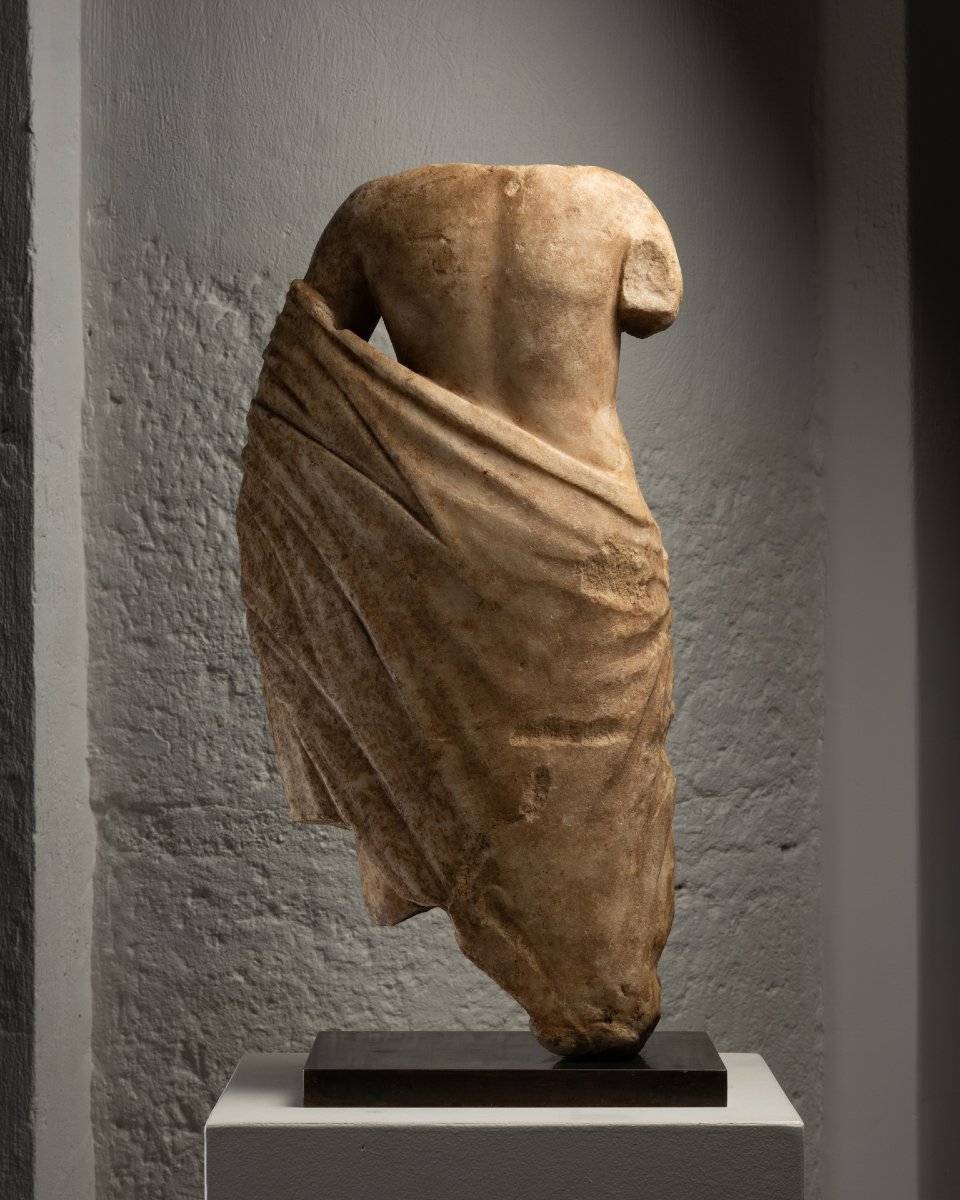
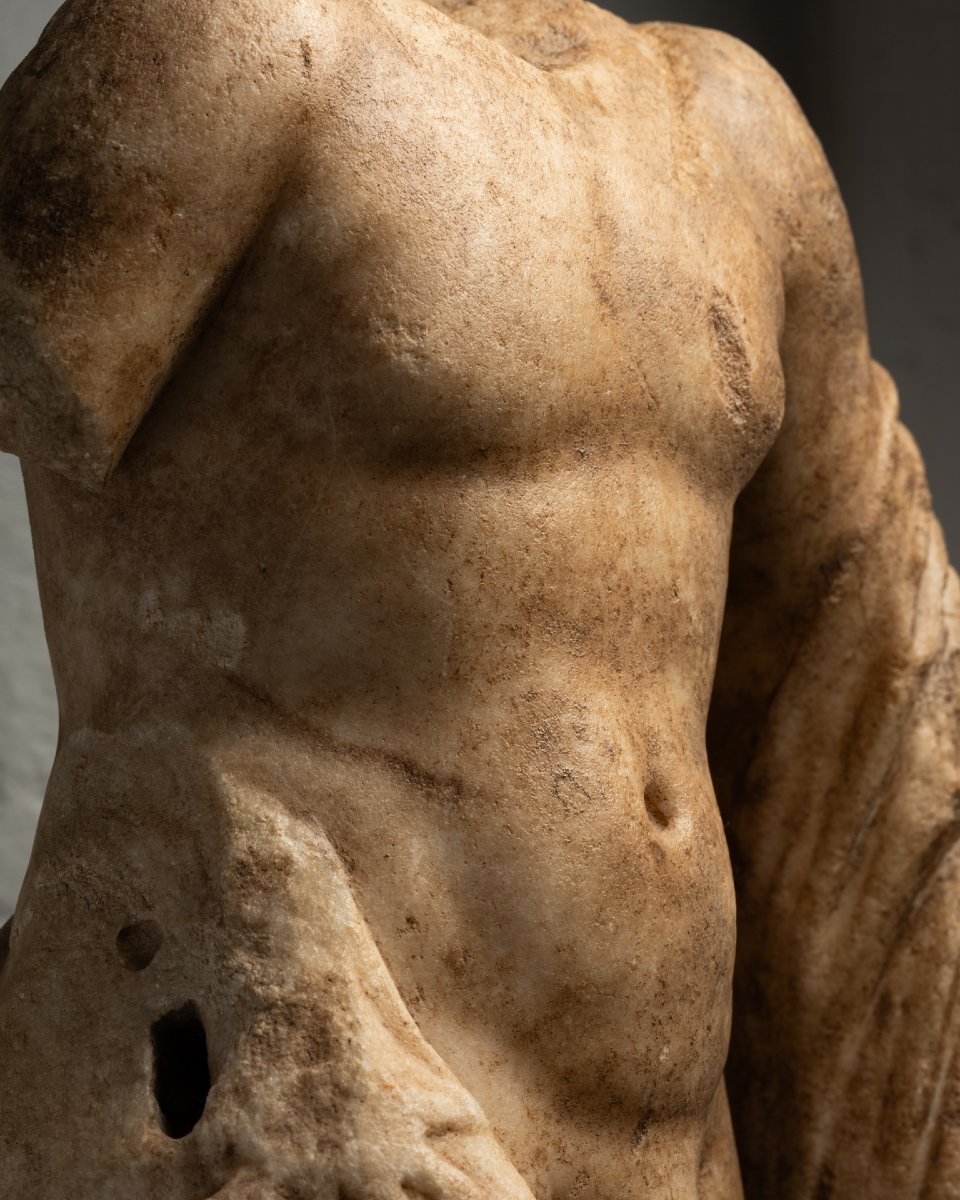
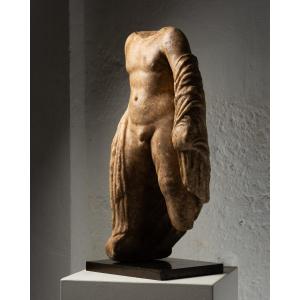
This marble torso represents Ganymede, a divine hero of Greek mythology, famous for his ideal youth and his abduction by Zeus. It comes from a once-complete ancient sculpture, of which only the body survives today, carved primarily from a single block of marble. Given its size and meticulous craftsmanship, the work was likely intended for a private setting, possibly to adorn a garden or reception area, while still retaining strong symbolic and aesthetic value. The figure is depicted nude, according to the canons of classical statuary, with a slender, youthful body. The finely sketched musculature has not yet reached the anatomical maturity of adulthood, emphasizing the ideal of adolescent beauty associated with Ganymede. This approach highlights grace and harmony rather than the strength characteristic of Greek models of the 4th century BC. The style, dating from the 1st century BC and widely adopted during the Roman period, depicts a cloak wrapped around the forearm, unfurling in deep, dynamic folds along the back and legs. The drapery, accentuated and rhythmic, introduces an upward movement that reinforces the narrative interpretation of the work, evoking the moment of divine abduction. The contrast between the softness of the bodily forms and the rigidity of the fabric highlights the sculptor's technical virtuosity. Although the sculpture is now headless and missing its upper limbs, several elements confirm its identification. On the right side of the torso, a rectangular cavity, accompanied by two perfectly regular circular perforations, testifies to the former attachment of added elements. These can be identified as the talons of Zeus, who took the form of an eagle to abduct Ganymede and carry him off to the realm of the gods. This assembly technique, common in ancient statuary, allowed for bold compositions while ensuring the overall solidity of the piece. The front of the torso boasts a particularly refined finish, while the back is treated more simply. This difference suggests that the work was designed to be viewed primarily from the front, placed in a niche or against a wall. The reddish-brown patina that now covers the marble, resulting from its long burial underground, gives the sculpture visual depth while also attesting to its excellent state of preservation. Stylistically, this torso belongs to the tradition of models inspired by the great Greek masters of the late Classical period, particularly those attributed to Leochare, whose innovative compositions around the figure of Ganymede profoundly influenced ancient sculpture. Through its quality of execution, the subtlety of its anatomy, and the richness of its iconography, this torso of Ganymede constitutes a remarkable testimony to the transmission of Greek aesthetic ideals through Roman art, and illustrates the enduring presence of myth in the history of Western sculpture.
30 000 €
Period: Before 16th century
Style: Rome and Antic Greece
Condition: Good condition
Material: Marble
Width: 24 cm
Height: 50 cm
Depth: 18 cm
Reference (ID): 1692772
Availability: In stock
Print