



Gaetano Fasanotti (milan, 1831 – 1882), The Return From Fishing
Gaetano Fasanotti (Milan, 1831 – 1882)
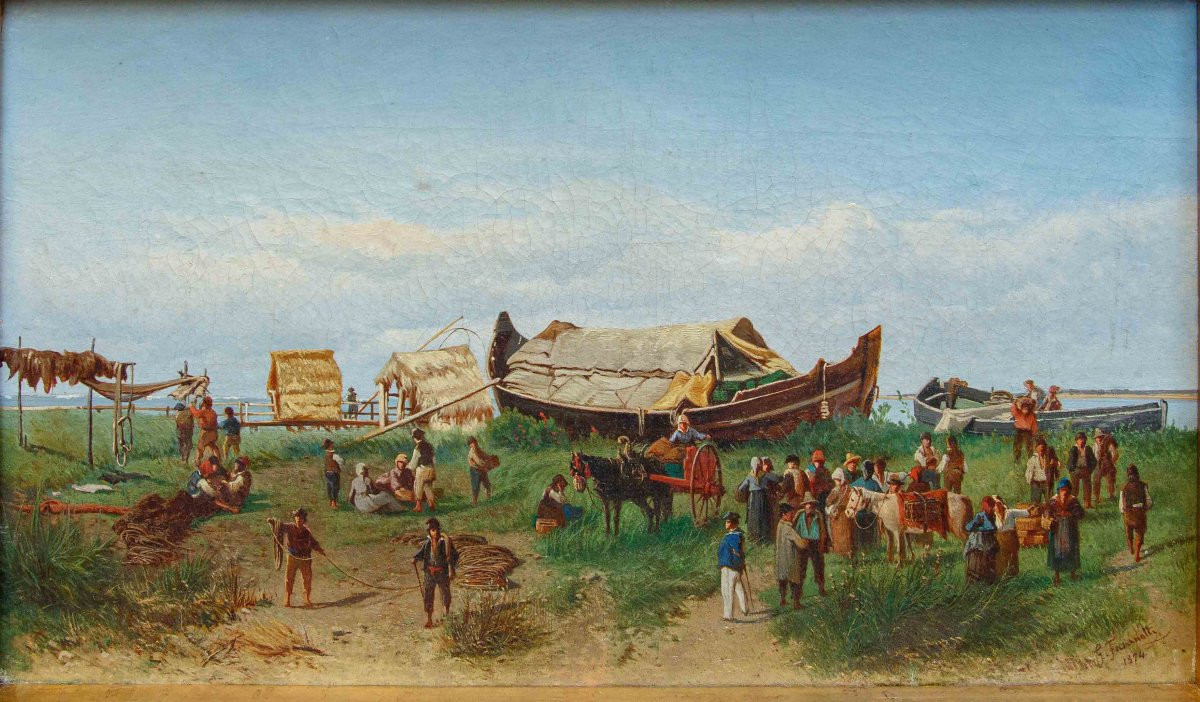
The return from fishing
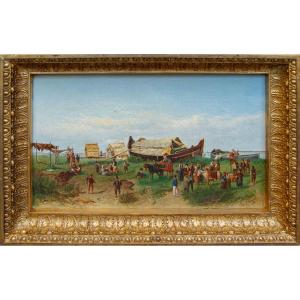
Oil on canvas, 32 x 52 cm – With frame, 43 x 63 cm
Signed and dated lower right: “G. Fasanotti 1874”
«The frankness of the touch, the infinite variety of reflections, the richness of the palette are qualities that stand out. He knows how to convey to the former the most characteristic aspect of a country, the most artistic form of an object...it is nature, it is precisely her!»: these are the words with which critics defined the painting of Gaetano Fasanotti (Milan, 1831 – 1882) on the occasion of the Second National Exhibition of Fine Arts in Milan in 1873.
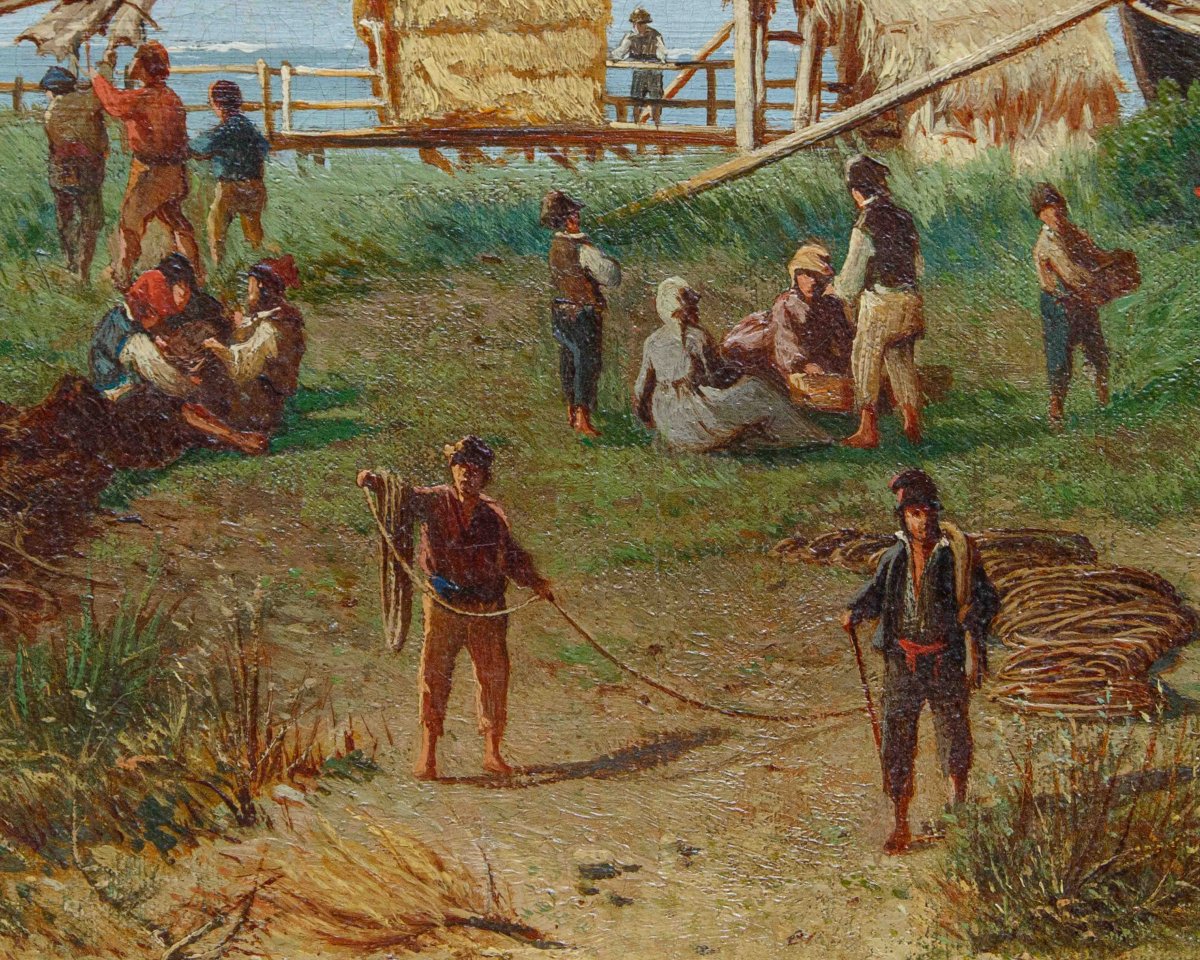
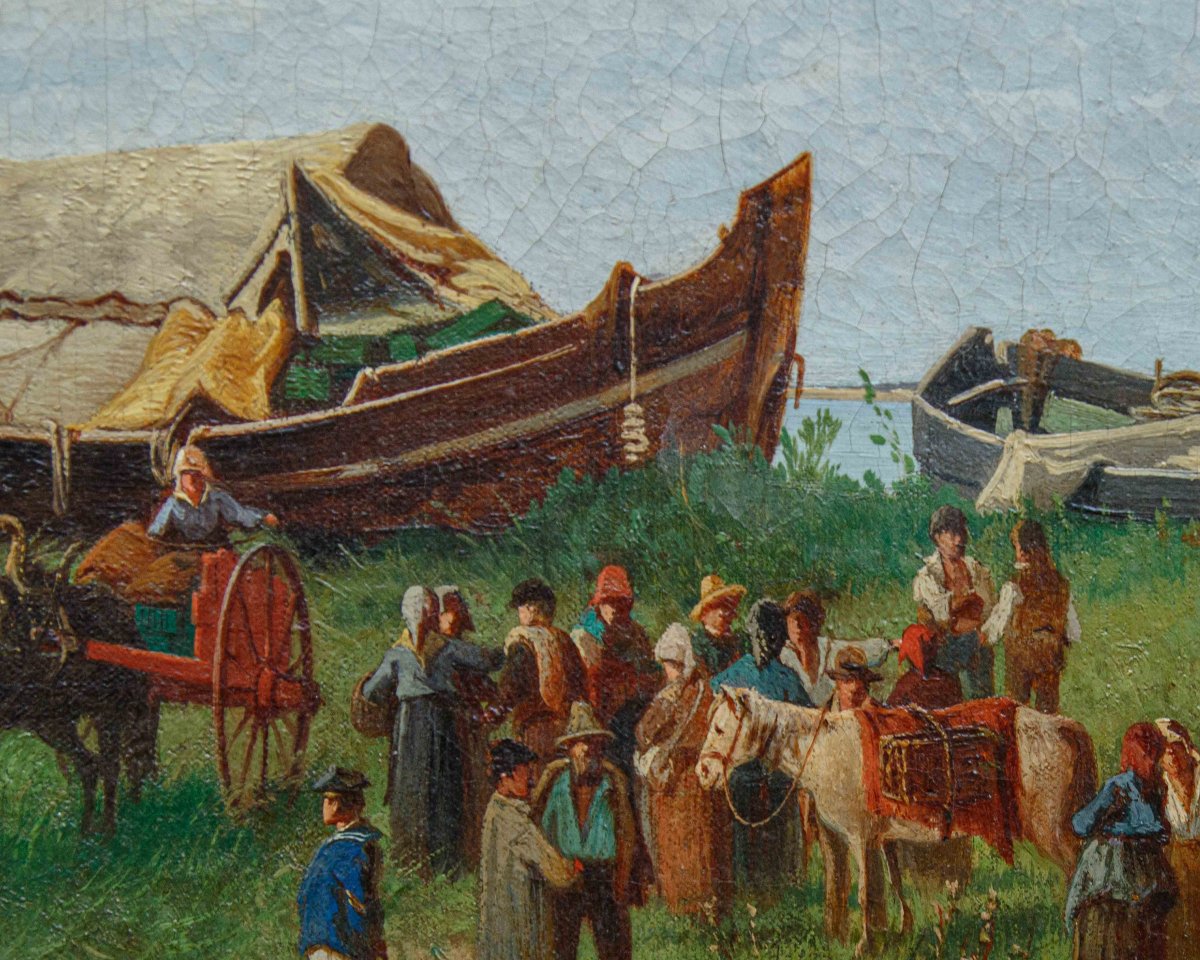
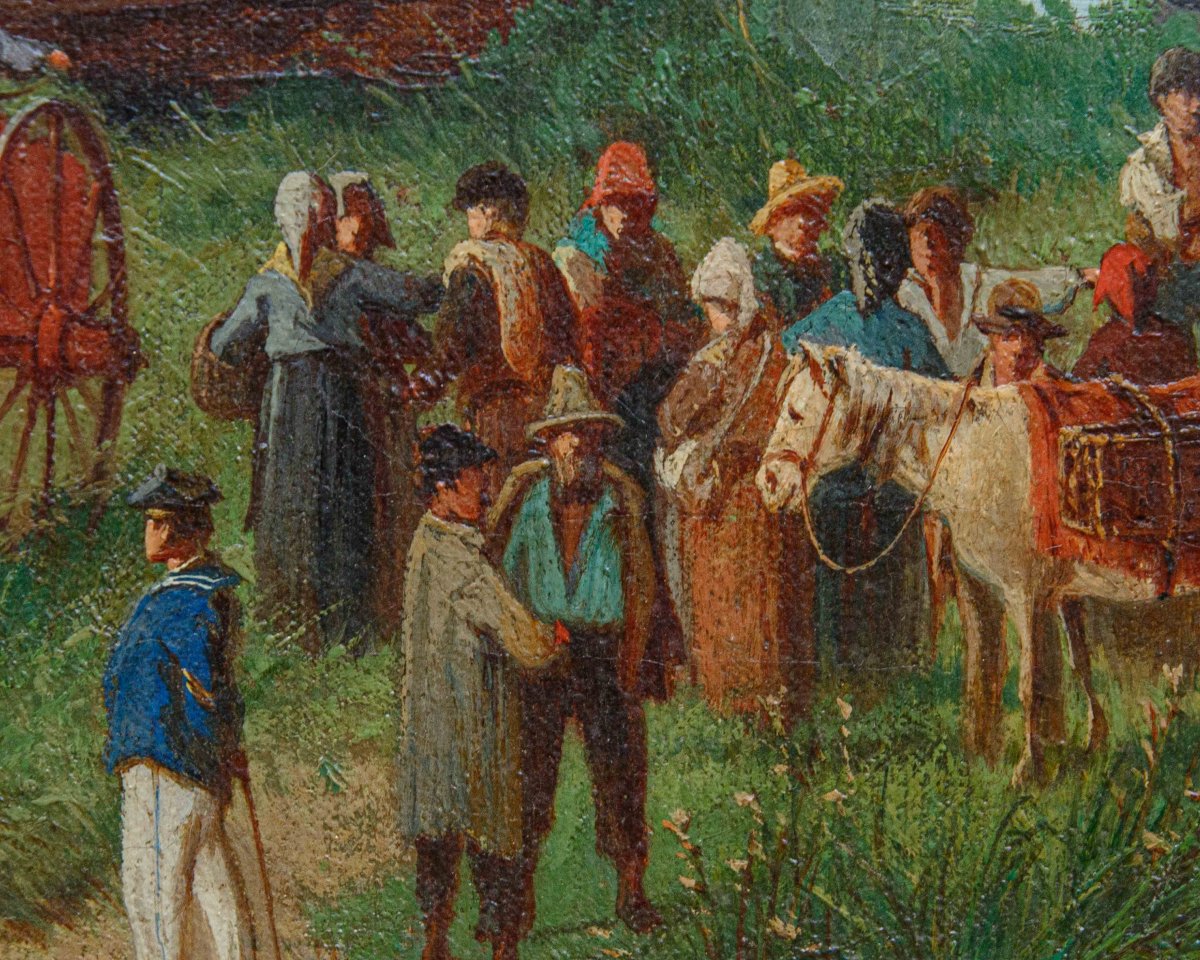
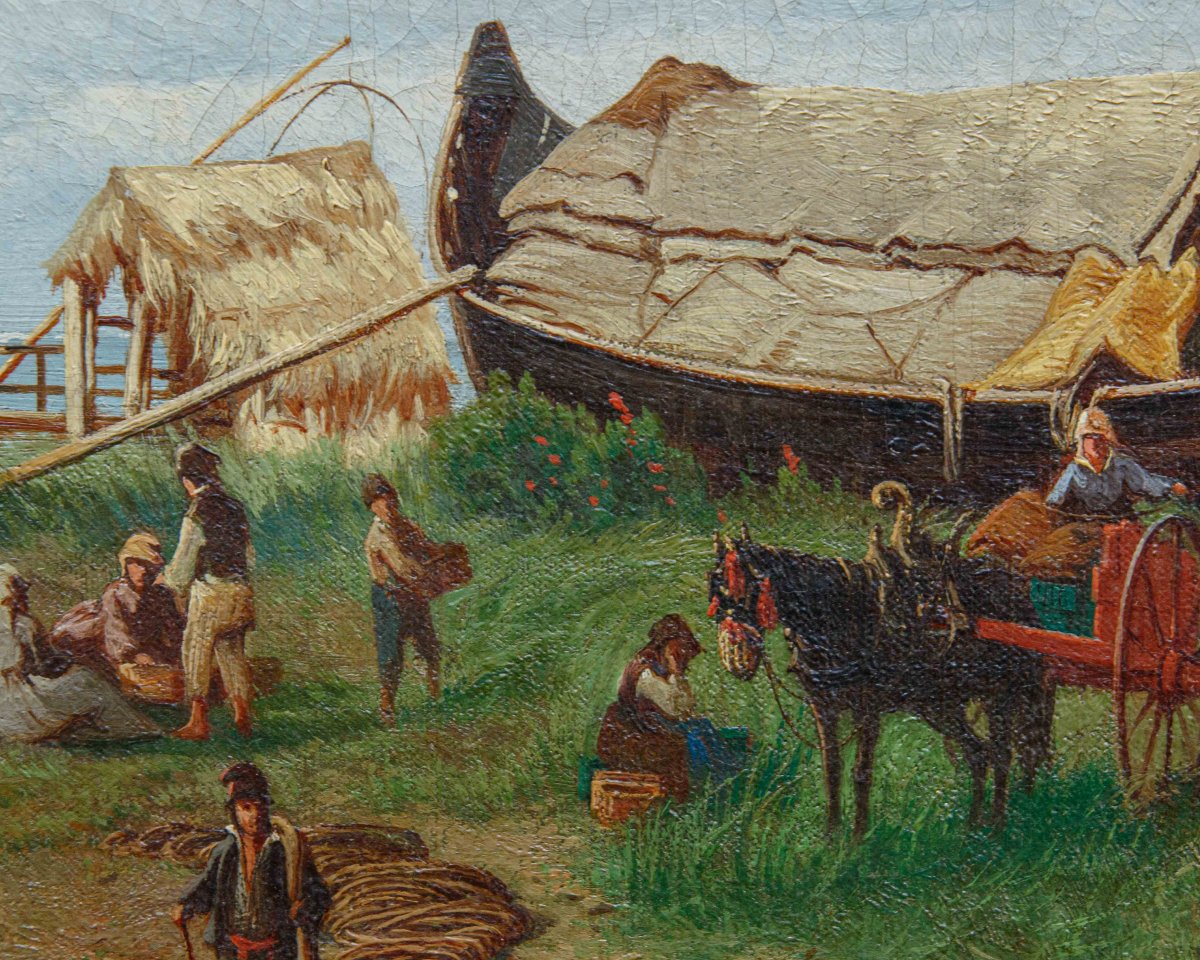
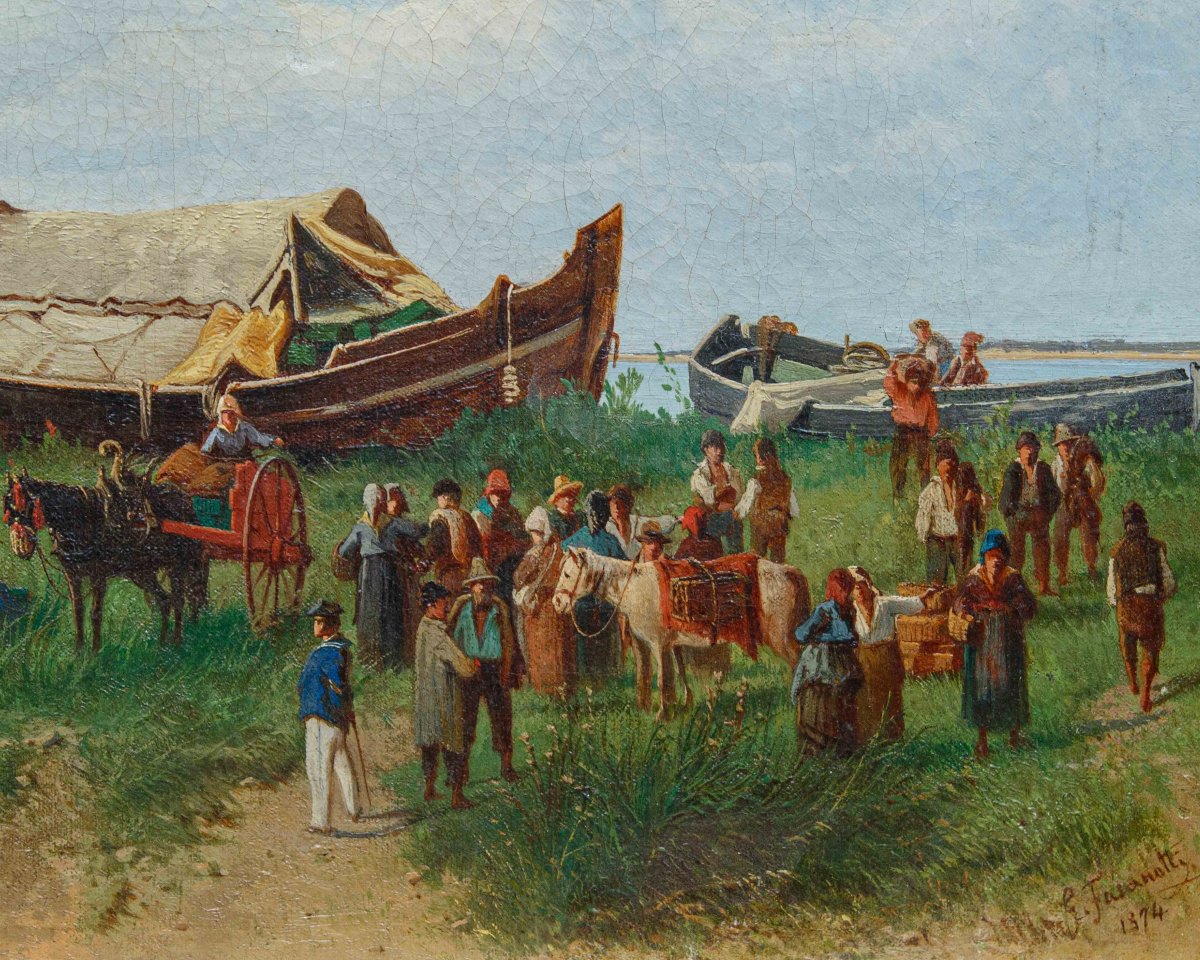
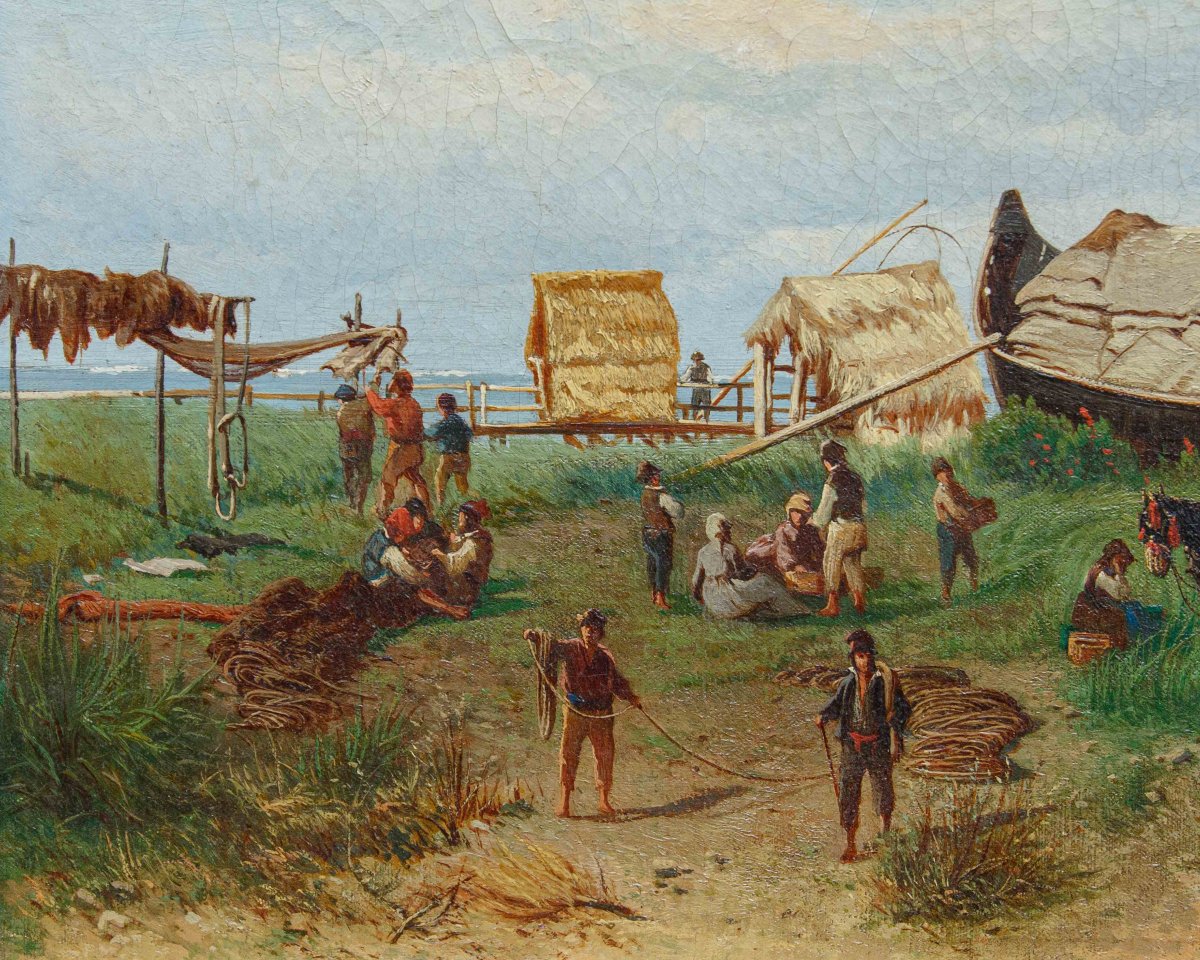
Born in Milan in 1831, Fasanotti distinguished himself in the 19th-century art scene for his dedication to landscape and genre painting. Trained as a self-taught artist, far from the academic environment, in 1848 he decided to voluntarily enlist in the First War of Independence (1848 – 1849), a circumstance that initially influenced him towards historical painting (see Berengario's Descent into Italy, today preserved at the Accademia Carrara in Bergamo). It was starting in 1856, under the guidance of the private master Giovanni Renica, that Fasanotti began to turn artistically towards the representation of nature, initiating a change of direction that marked the beginning of a career full of successes. His passion for landscape and natural environments, especially the landscapes of Brianza, the Lombard Prealps and Valsassina, led him to develop a style capable of expertly combining a genuine and luminous rendering of subjects with an extremely attentive approach to realistic data. Considered among the pioneers of the practice of plein air painting in Italy, after the moderate success achieved with View from Life in the Oberland purchased in 1858 by the Brera Academy of Fine Arts, in 1860 Fasanotti became professor of landscape painting at the same Academy, exerting a decisive influence on the formation of new generations of artists such as Filippo Carcano, Eugenio Gignous, Guido Ricci, Federico Ashton and his brothers Ernesto and Leonardo Bazzaro, among his main students, to whom he taught the importance of painting outdoors, directly from nature. This innovation, opposed by the academic council and by critics still strongly linked to Romanticism who forced him to resign, effectively led to the rebirth of the Lombard school of landscape, contributing to a renewed interest in Italian natural beauty. He participated in important international events, such as the Universal Exhibition of Paris in 1867, the Universal Exhibition of Munich in 1869 and the Universal Exhibition of Vienna in 1873, achieving international fame and recognition. Today his works, identifiable by his unique ability to capture the atmosphere of places with vivid colors and light, are preserved at the main institutions of northern Italy, including the Accademia Carrara in Bergamo, Villa Necchi Campiglio, the Galleria d'Arte Moderna in Milan, the Pinacoteca di Brera, the Civic Museums of Pavia, the Ala Ponzone Civic Museum in Cremona and many others. Masanotti died in 1882 in Milan. In the work in question, an oil on canvas from 1874 signed at the bottom right and depicting the moment of returning from a fishing trip by the river, the artist illuminates the scene with a clear, diffused light, typical of plein air painting. The composition of the rural episode appears perfectly balanced, with the large boat in the center surrounded by a crowd of figures that enlivens the coastline, while the earthy hues and clear sky contribute to creating a peaceful yet vital atmosphere.
The return from fishing
Oil on canvas, 32 x 52 cm – With frame, 43 x 63 cm
Signed and dated lower right: “G. Fasanotti 1874”
«The frankness of the touch, the infinite variety of reflections, the richness of the palette are qualities that stand out. He knows how to convey to the former the most characteristic aspect of a country, the most artistic form of an object...it is nature, it is precisely her!»: these are the words with which critics defined the painting of Gaetano Fasanotti (Milan, 1831 – 1882) on the occasion of the Second National Exhibition of Fine Arts in Milan in 1873.
Born in Milan in 1831, Fasanotti distinguished himself in the 19th-century art scene for his dedication to landscape and genre painting. Trained as a self-taught artist, far from the academic environment, in 1848 he decided to voluntarily enlist in the First War of Independence (1848 – 1849), a circumstance that initially influenced him towards historical painting (see Berengario's Descent into Italy, today preserved at the Accademia Carrara in Bergamo). It was starting in 1856, under the guidance of the private master Giovanni Renica, that Fasanotti began to turn artistically towards the representation of nature, initiating a change of direction that marked the beginning of a career full of successes. His passion for landscape and natural environments, especially the landscapes of Brianza, the Lombard Prealps and Valsassina, led him to develop a style capable of expertly combining a genuine and luminous rendering of subjects with an extremely attentive approach to realistic data. Considered among the pioneers of the practice of plein air painting in Italy, after the moderate success achieved with View from Life in the Oberland purchased in 1858 by the Brera Academy of Fine Arts, in 1860 Fasanotti became professor of landscape painting at the same Academy, exerting a decisive influence on the formation of new generations of artists such as Filippo Carcano, Eugenio Gignous, Guido Ricci, Federico Ashton and his brothers Ernesto and Leonardo Bazzaro, among his main students, to whom he taught the importance of painting outdoors, directly from nature. This innovation, opposed by the academic council and by critics still strongly linked to Romanticism who forced him to resign, effectively led to the rebirth of the Lombard school of landscape, contributing to a renewed interest in Italian natural beauty. He participated in important international events, such as the Universal Exhibition of Paris in 1867, the Universal Exhibition of Munich in 1869 and the Universal Exhibition of Vienna in 1873, achieving international fame and recognition. Today his works, identifiable by his unique ability to capture the atmosphere of places with vivid colors and light, are preserved at the main institutions of northern Italy, including the Accademia Carrara in Bergamo, Villa Necchi Campiglio, the Galleria d'Arte Moderna in Milan, the Pinacoteca di Brera, the Civic Museums of Pavia, the Ala Ponzone Civic Museum in Cremona and many others. Masanotti died in 1882 in Milan. In the work in question, an oil on canvas from 1874 signed at the bottom right and depicting the moment of returning from a fishing trip by the river, the artist illuminates the scene with a clear, diffused light, typical of plein air painting. The composition of the rural episode appears perfectly balanced, with the large boat in the center surrounded by a crowd of figures that enlivens the coastline, while the earthy hues and clear sky contribute to creating a peaceful yet vital atmosphere.
3 400 €
Period: 19th century
Style: Other Style
Condition: Good condition
Material: Oil painting
Width: 52
Height: 32
Reference (ID): 1692234
Availability: In stock
Print