THIS OBJECT WAS SOLD
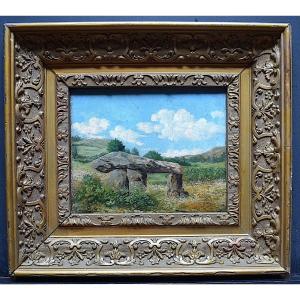
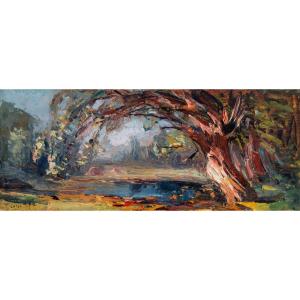
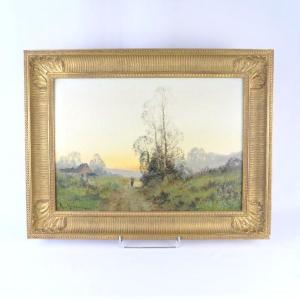
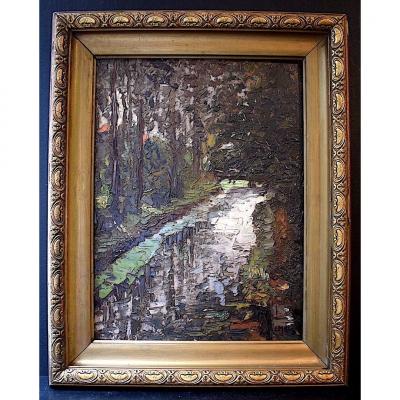
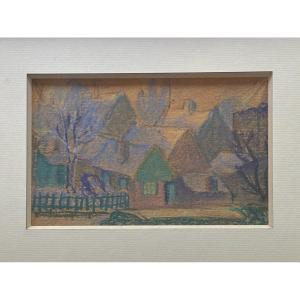
Eugène Charasson (1874-1939) Landscape Oil On Canvas
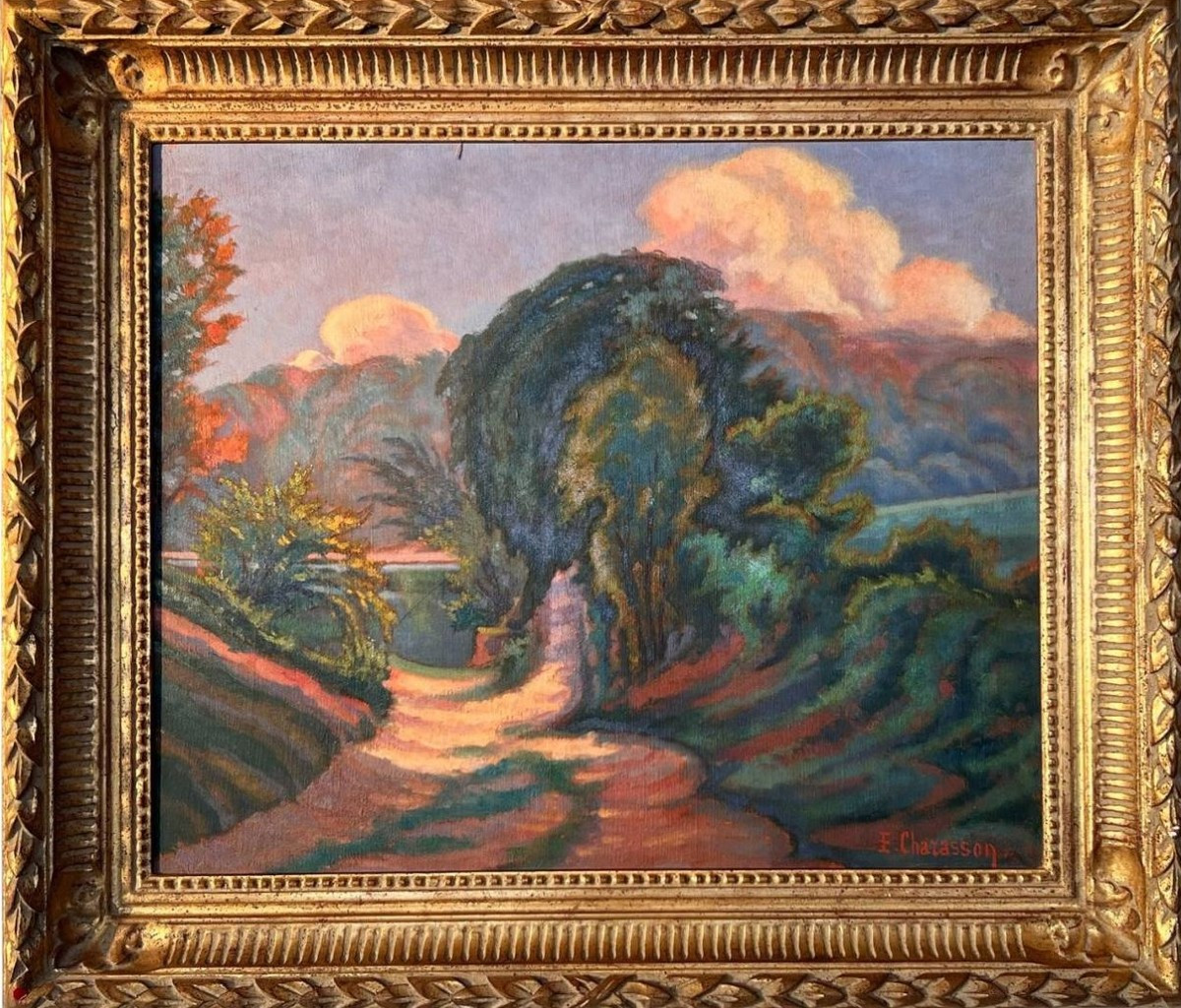
Eugène Charasson (1874-1939) was a painter associated with the Creuse region and the Crozant school (Guillaumin, Madeline, etc.), and known for his plein air landscapes.
Eugène Charasson was born in Aigurande (Indre) on November 25, 1874, into a family of wine merchants, and died in the same town on December 18, 1939. He developed a passion for the arts at a very young age (painting, but also music; he notably played the flute) before dedicating himself fully to painting.
His paintings sometimes exhibit varied styles, but remain focused on the rural landscape, villages, markets, and sites such as La Celle-Dunoise and Crozant.
Today, he is considered an important figure in Aigurande and the Valley of the Painters, and his works are regularly featured in local exhibitions (Hôtel Lépinat). inCrozant, Berry Museums). Recent exhibitions have featured loans fromthe family and private collections, helping to reposition him withinthe history of the Crozant school. The candor of his line and the highly personal nature of his compositions contribute to this unique position, halfway between regionalist landscape, post-impressionist
modernity, and a more intuitive expression.
Eugène Charasson was born in Aigurande (Indre) on November 25, 1874, into a family of wine merchants, and died in the same town on December 18, 1939. He developed a passion for the arts at a very young age (painting, but also music; he notably played the flute) before dedicating himself fully to painting.
His paintings sometimes exhibit varied styles, but remain focused on the rural landscape, villages, markets, and sites such as La Celle-Dunoise and Crozant.
Today, he is considered an important figure in Aigurande and the Valley of the Painters, and his works are regularly featured in local exhibitions (Hôtel Lépinat). inCrozant, Berry Museums). Recent exhibitions have featured loans fromthe family and private collections, helping to reposition him withinthe history of the Crozant school. The candor of his line and the highly personal nature of his compositions contribute to this unique position, halfway between regionalist landscape, post-impressionist
modernity, and a more intuitive expression.
Explore similar pieces and discover your ideal find:
Landscapes