

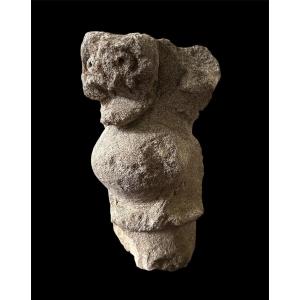


12th Century Stone Capital Depicting A Cockatrice
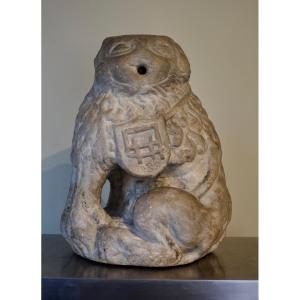
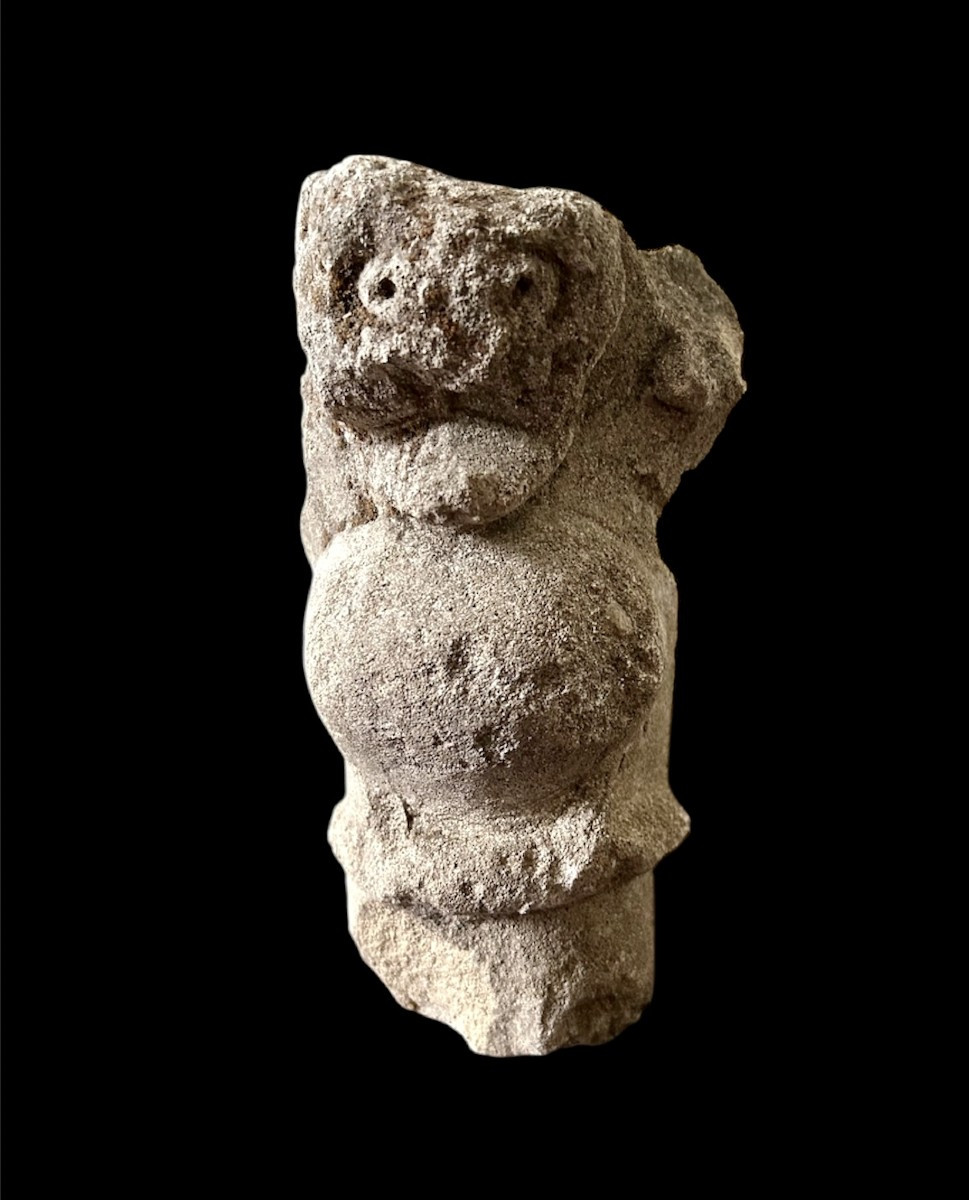
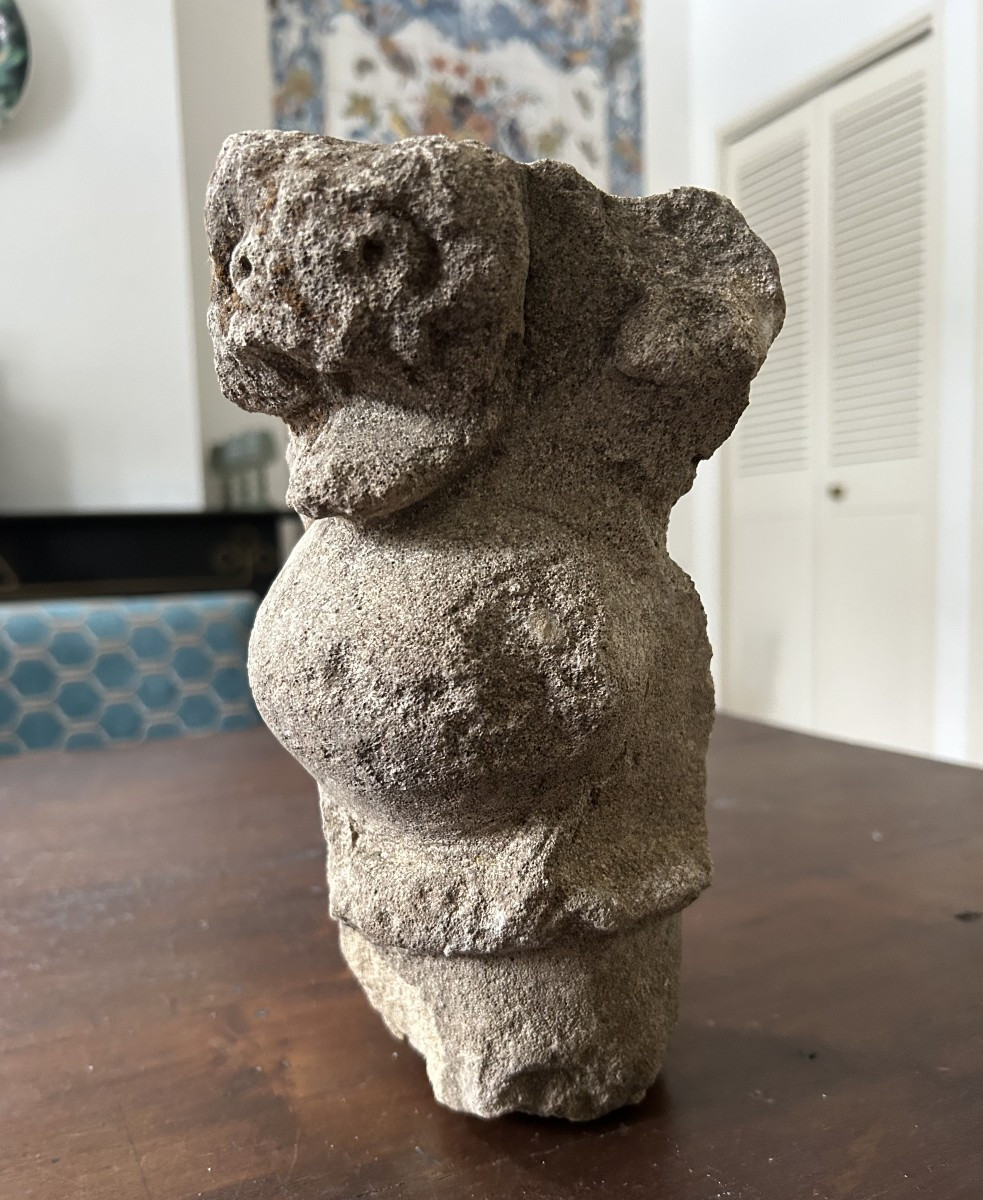
This is a rare fragment of French Romanesque sculpture depicting a cockatrice, a hybrid and mythical creature from the symbolic imagination of the Middle Ages, appearing in medieval bestiaries. Cockatrices are bipedal dragons or serpents with a rooster's head, first mentioned in the Bible as a venomous, fiery serpent. Similar to the Greek basilisk, some believe it to be the same cryptid, except for the name.
The basilisk, like the cockatrice, could kill with a single glance, a touch, or even a breath. The weasel was the only animal apparently immune, and the only way to kill it was to force it to gaze upon its own reflection. Placing the cockatrice on religious or civic buildings gives it an apotropaic function: it does not glorify evil, but represents it in order to ward it off. Its sculpted presence acts as a warning, a symbolic boundary between the profane world and sacred space, reminding the faithful of the dark forces that lurk outside the divine order.
The stone used is a local sedimentary rock, probably a coarse limestone or sandstone, a material commonly used in rural Romanesque statuary of the Massif Central. The surface shows old and regular erosion, evidence of prolonged exposure to the elements. The base is truncated, indicating earlier removal, suggesting that this sculpture was originally an architectural element: a corbel, a fragment of a capital, or a secondary element of a cornice or portal.
Condition: "as is" – original breaks and losses, old erosion consistent with age and exposure to the elements, no visible modern restoration.
Height: 25 cm
The basilisk, like the cockatrice, could kill with a single glance, a touch, or even a breath. The weasel was the only animal apparently immune, and the only way to kill it was to force it to gaze upon its own reflection. Placing the cockatrice on religious or civic buildings gives it an apotropaic function: it does not glorify evil, but represents it in order to ward it off. Its sculpted presence acts as a warning, a symbolic boundary between the profane world and sacred space, reminding the faithful of the dark forces that lurk outside the divine order.
The stone used is a local sedimentary rock, probably a coarse limestone or sandstone, a material commonly used in rural Romanesque statuary of the Massif Central. The surface shows old and regular erosion, evidence of prolonged exposure to the elements. The base is truncated, indicating earlier removal, suggesting that this sculpture was originally an architectural element: a corbel, a fragment of a capital, or a secondary element of a cornice or portal.
Condition: "as is" – original breaks and losses, old erosion consistent with age and exposure to the elements, no visible modern restoration.
Height: 25 cm
675 €
Period: Before 16th century
Style: Renaissance, Louis 13th
Condition: En l'etat
Material: Stone
Height: 25 c.m.
Reference (ID): 1690153
Availability: In stock
Print