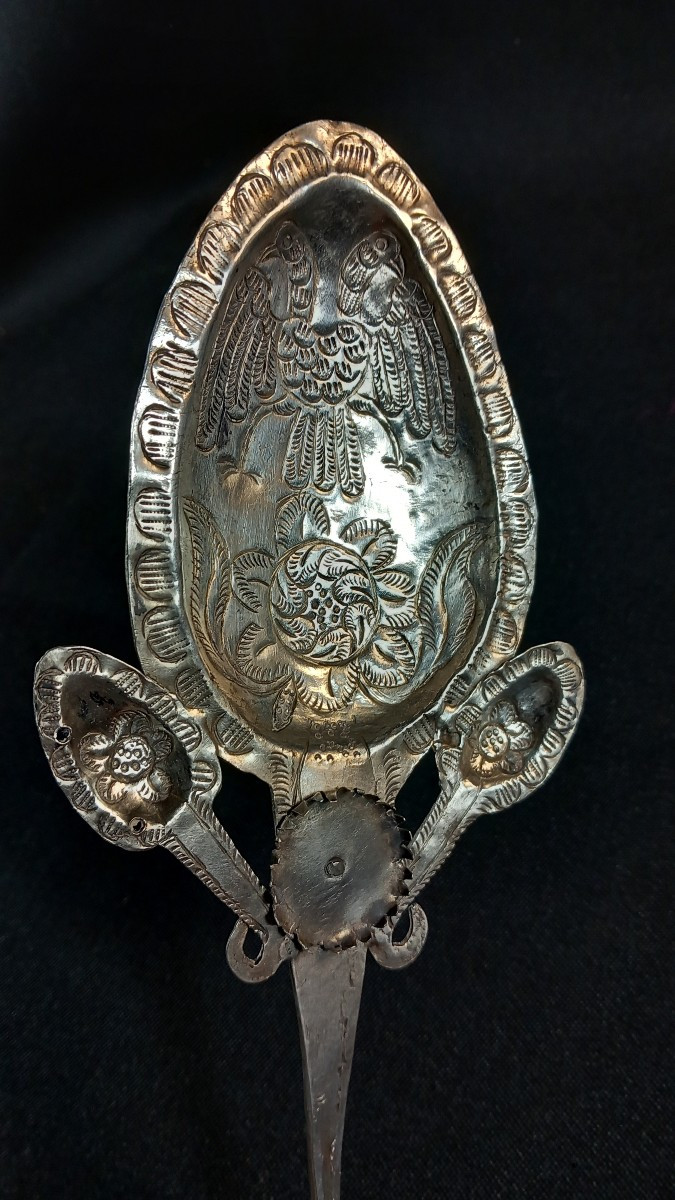
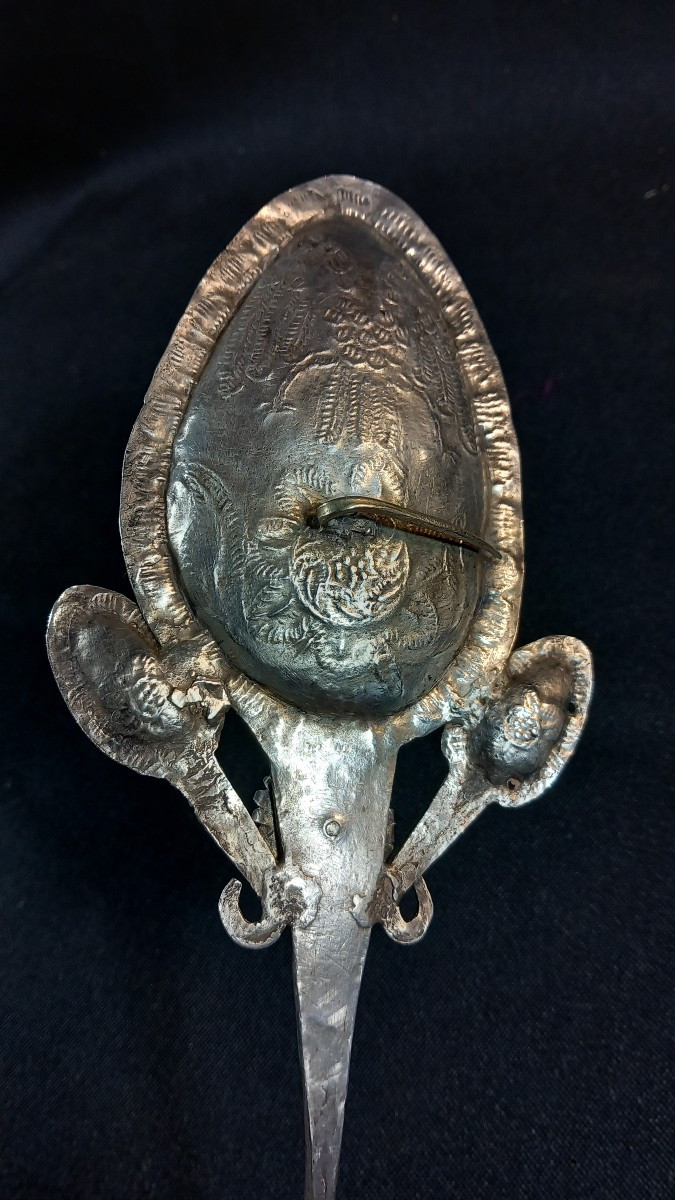
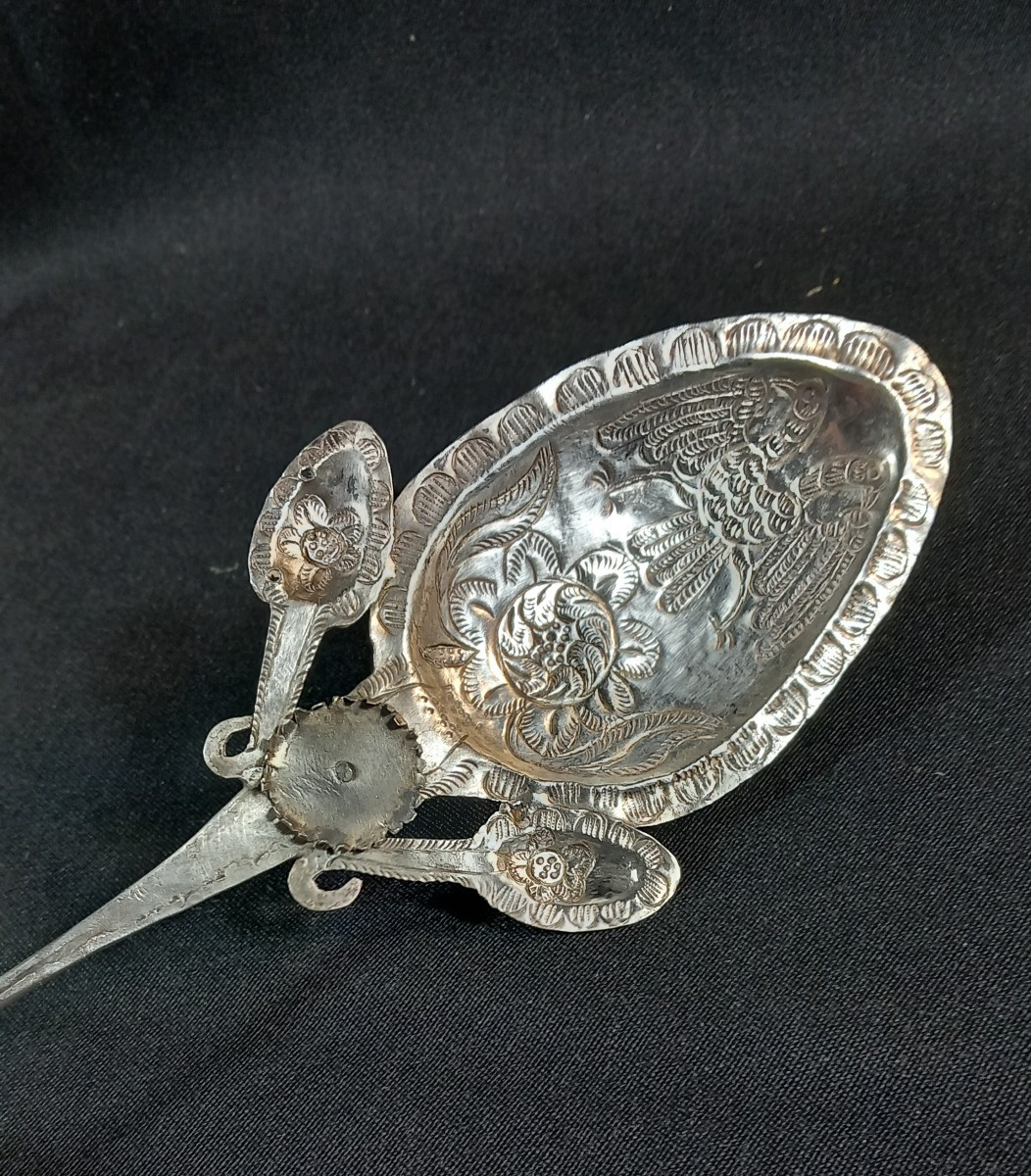


Silver Fibula Or Pin, Ttipqui Or Tupo, Peru, 17th Century South América Spanish Colonial
A silver fibula or pin, known as a Ttipqui or Tupo, used in the 17th century to fasten the skirts of Peruvian women's dresses. This object, among the most interesting examples of South American folk art, beautifully illustrates the exchange between local and European traditions, particularly in textile fashion and related accessories. This fibula, used to secure dresses, is adorned with a double-headed eagle, a reminder of the Spanish monarchy, which colonized numerous territories in South America, especially in Peru, the country of origin of this particular example. Other foliate and floral motifs contribute to the overall ornamentation of this fashion accessory. The wearer of this piece of jewelry thereby affirmed her bicultural identity, blending local and Iberian traditions. Dimensions: length 27.5 cm; weight 59 g. Several major museums in the United States possess some rare examples of these fibulae: Metropolitan Museum of Arts, Denver Art Museum.
450 €
Period: 17th century
Style: Renaissance, Louis 13th
Condition: En l'etat
Material: Sterling silver
Length: 27,5 cm
Reference (ID): 1686740
Availability: In stock
Print