




Attributed To Léveillé And Rousseau, Covered Box In Glass And Silver, Late 19th Century
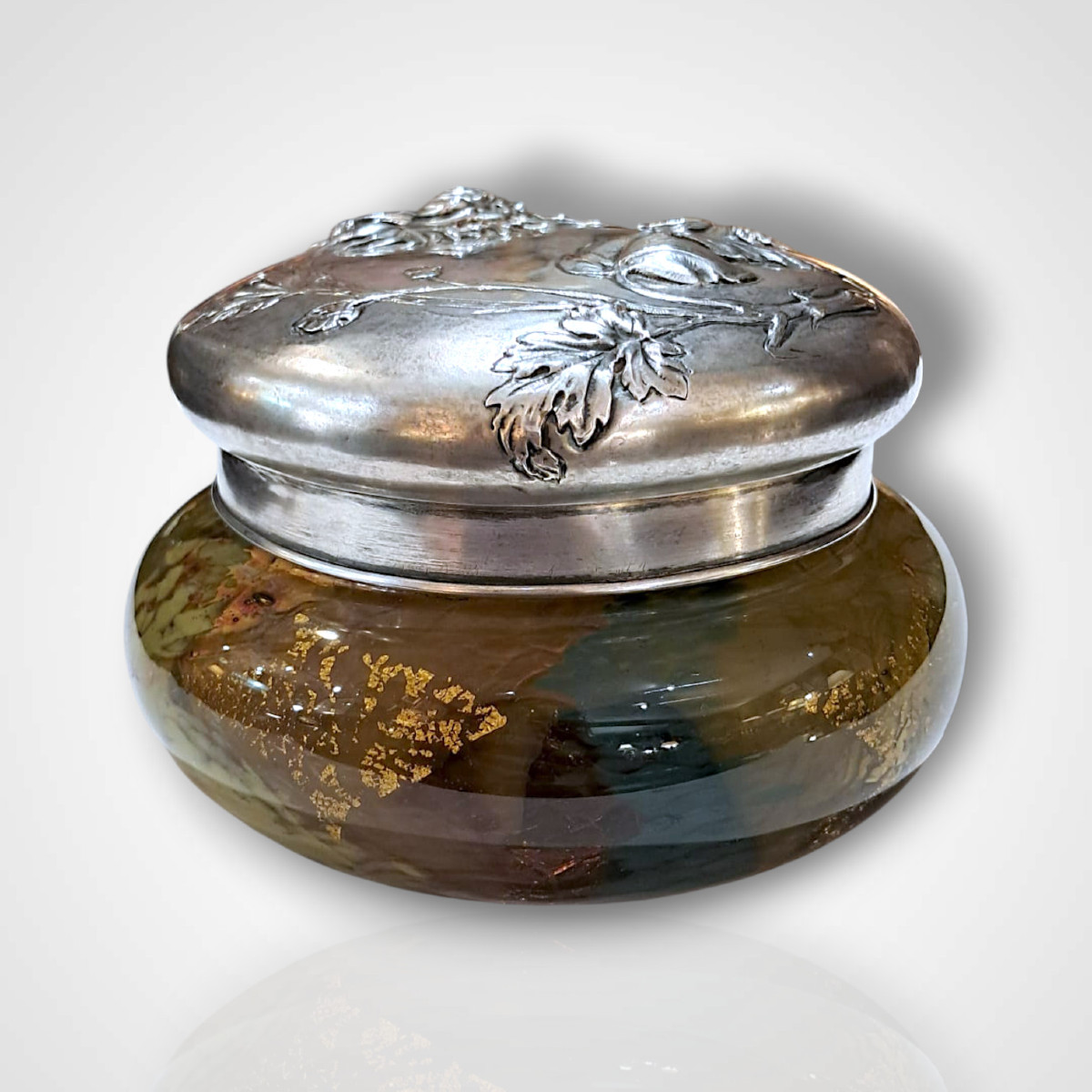
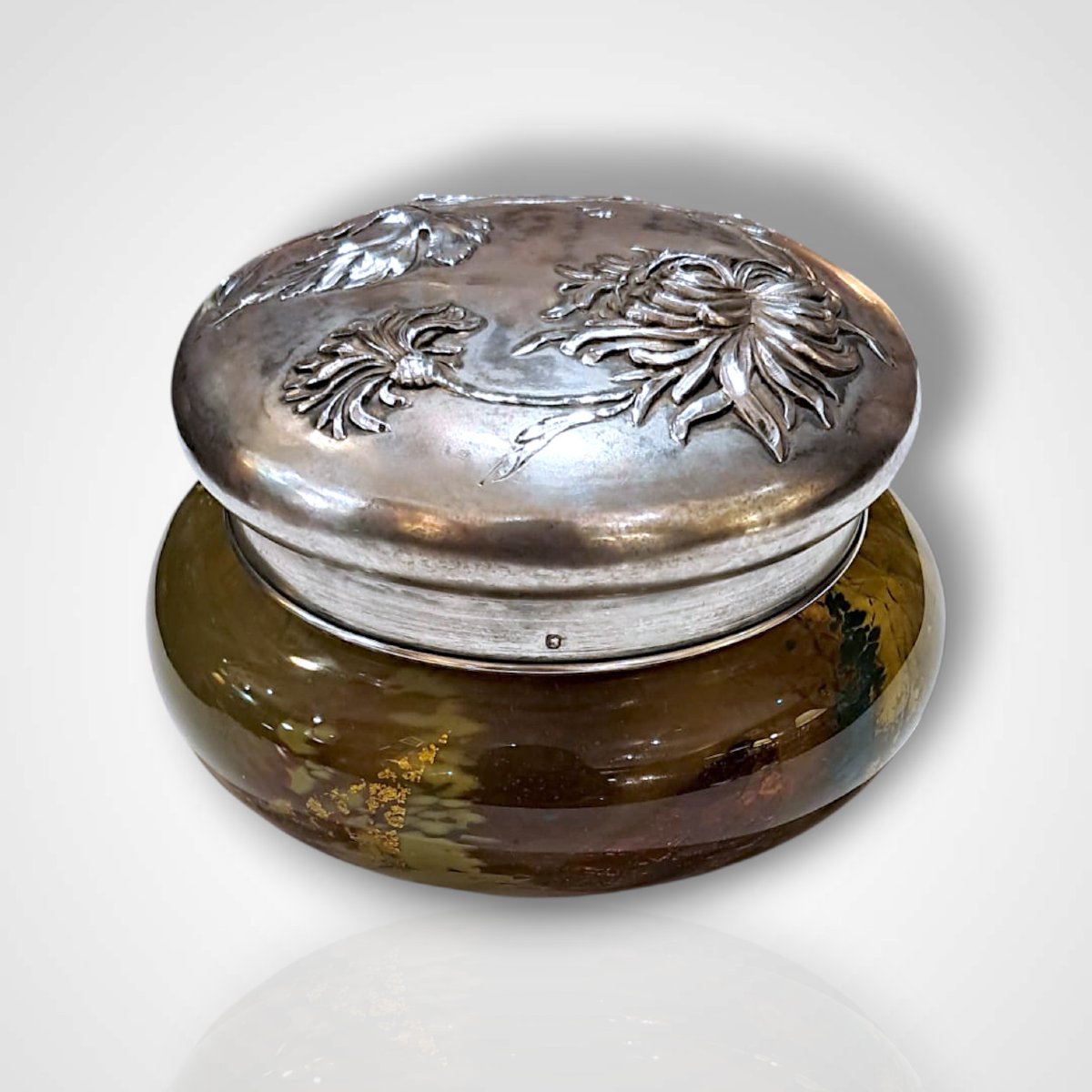
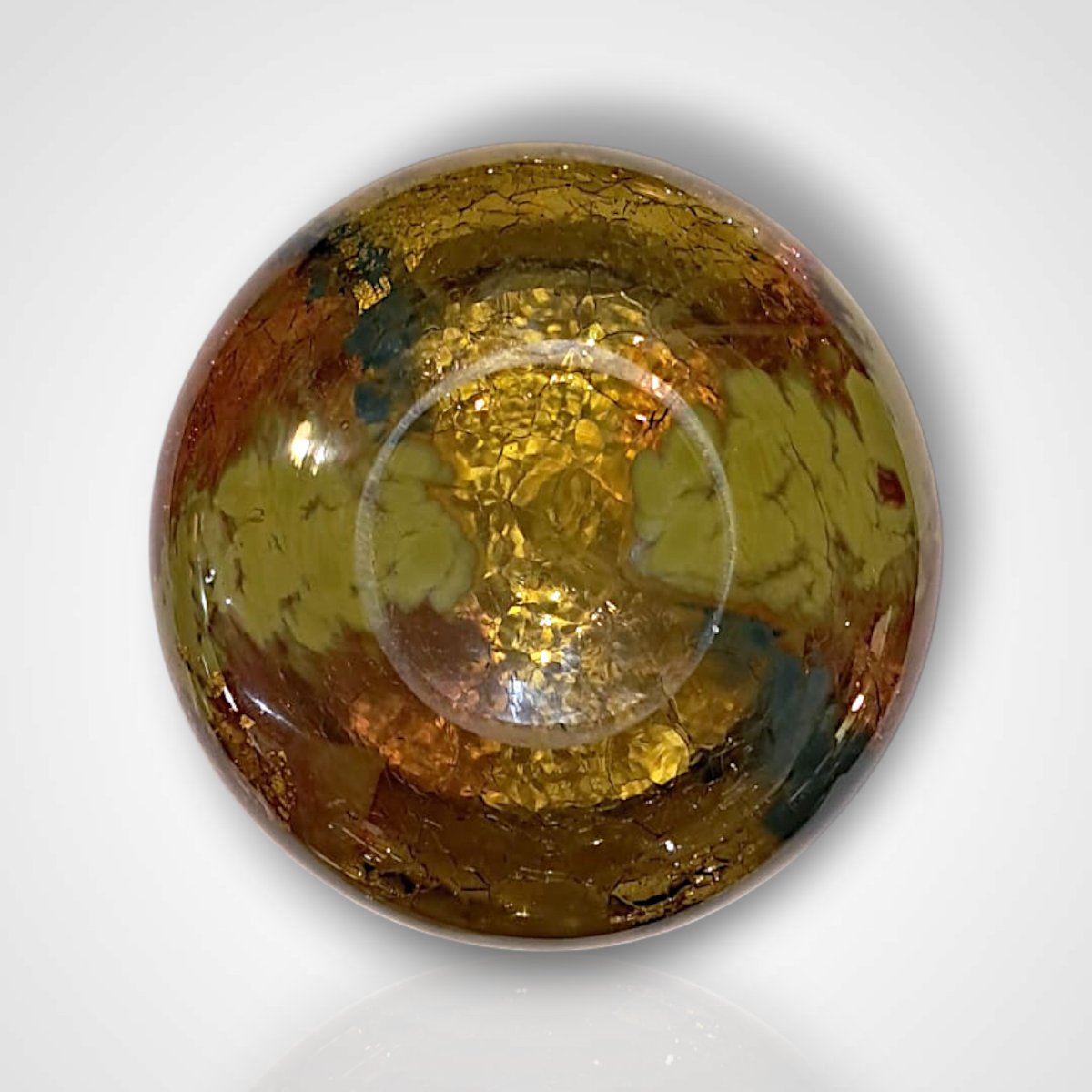
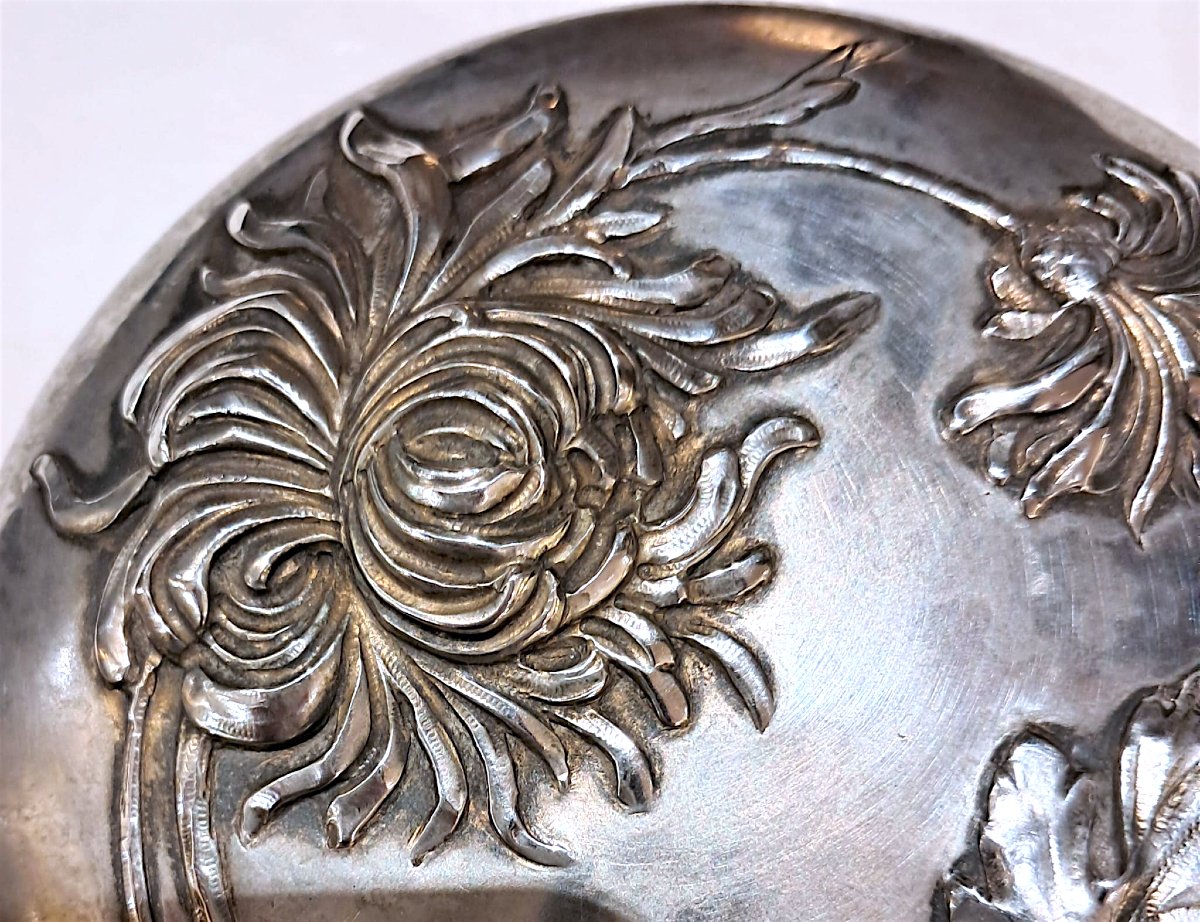
A double-layered colored glass box in shades of green, blue and ochre, with a crackled effect and gold leaf inlays, topped with a solid silver lid decorated with embossed floral motifs. The technique and style are reminiscent of the work of glassmakers Rousseau and Léveillé.
The Minerva hallmark for first standard and the partially erased maker's mark of Antoine Eysen (AE and a balance, registered on March 15, 1895, at 3 rue Guichard in Paris) are found around the rim of the lid.
François-Eugène Rousseau (1827-1890) began his career in porcelain and earthenware, taking over his father's business in 1855. Attentive to the artistic innovations of his time, he was one of the first to draw inspiration from Japanese art, designing with Félix Bracquemond an earthenware service inspired by the work of Hokusai, which was presented at the 1867 Universal Exhibition. Shortly afterward, he decided to turn to glass and collaborated with various master glassmakers to create pieces whose forms and decorations he conceived. At the 1884 Exhibition of the Central Union of Decorative Arts, he presented works in crackled glass and various colors, inspired by a 16th-century Venetian technique, which would become his trademark. The following year, he sold his business to Ernest-Baptiste Léveillé (1841-1913), a merchant and publisher of porcelain and crystal, who had also been his student and had founded the Léveillé company in 1869. Until 1890, the year of Rousseau's death, he operated the business under the name "Maison Rousseau et Léveillé réunies" (Rousseau and Léveillé United House), then, under the name "E. Léveillé," he created art objects in crackled and engraved glass on three layers, which earned him a gold medal.
Good overall condition.
Late 19th century.
Dimensions:
Diameter: 14 cm
Height: 10 cm
The Minerva hallmark for first standard and the partially erased maker's mark of Antoine Eysen (AE and a balance, registered on March 15, 1895, at 3 rue Guichard in Paris) are found around the rim of the lid.
François-Eugène Rousseau (1827-1890) began his career in porcelain and earthenware, taking over his father's business in 1855. Attentive to the artistic innovations of his time, he was one of the first to draw inspiration from Japanese art, designing with Félix Bracquemond an earthenware service inspired by the work of Hokusai, which was presented at the 1867 Universal Exhibition. Shortly afterward, he decided to turn to glass and collaborated with various master glassmakers to create pieces whose forms and decorations he conceived. At the 1884 Exhibition of the Central Union of Decorative Arts, he presented works in crackled glass and various colors, inspired by a 16th-century Venetian technique, which would become his trademark. The following year, he sold his business to Ernest-Baptiste Léveillé (1841-1913), a merchant and publisher of porcelain and crystal, who had also been his student and had founded the Léveillé company in 1869. Until 1890, the year of Rousseau's death, he operated the business under the name "Maison Rousseau et Léveillé réunies" (Rousseau and Léveillé United House), then, under the name "E. Léveillé," he created art objects in crackled and engraved glass on three layers, which earned him a gold medal.
Good overall condition.
Late 19th century.
Dimensions:
Diameter: 14 cm
Height: 10 cm
450 €
Period: 19th century
Style: Art Nouveau
Condition: Good condition
Material: Glass
Diameter: 14 cm
Height: 10 cm
Reference (ID): 1685332
Availability: In stock
Print