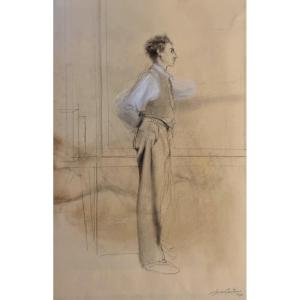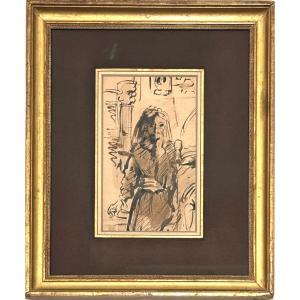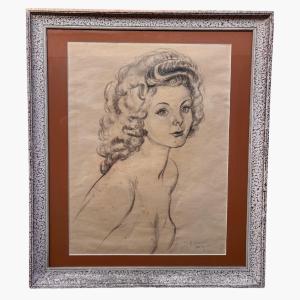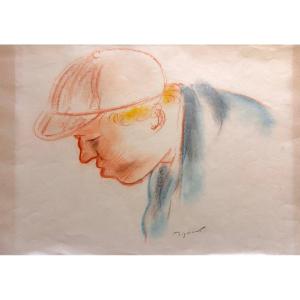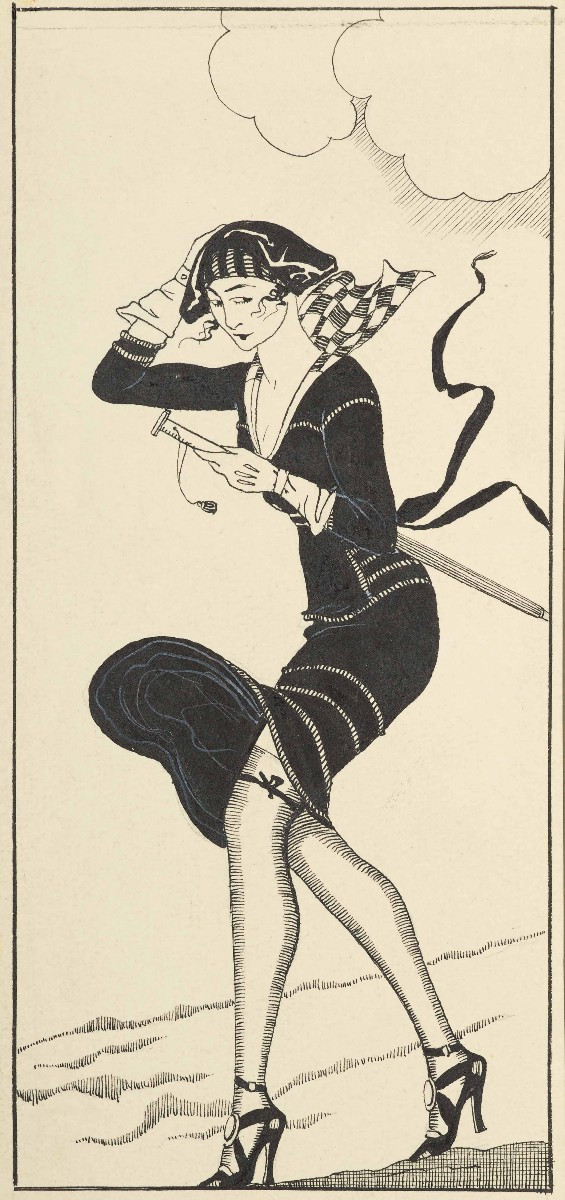

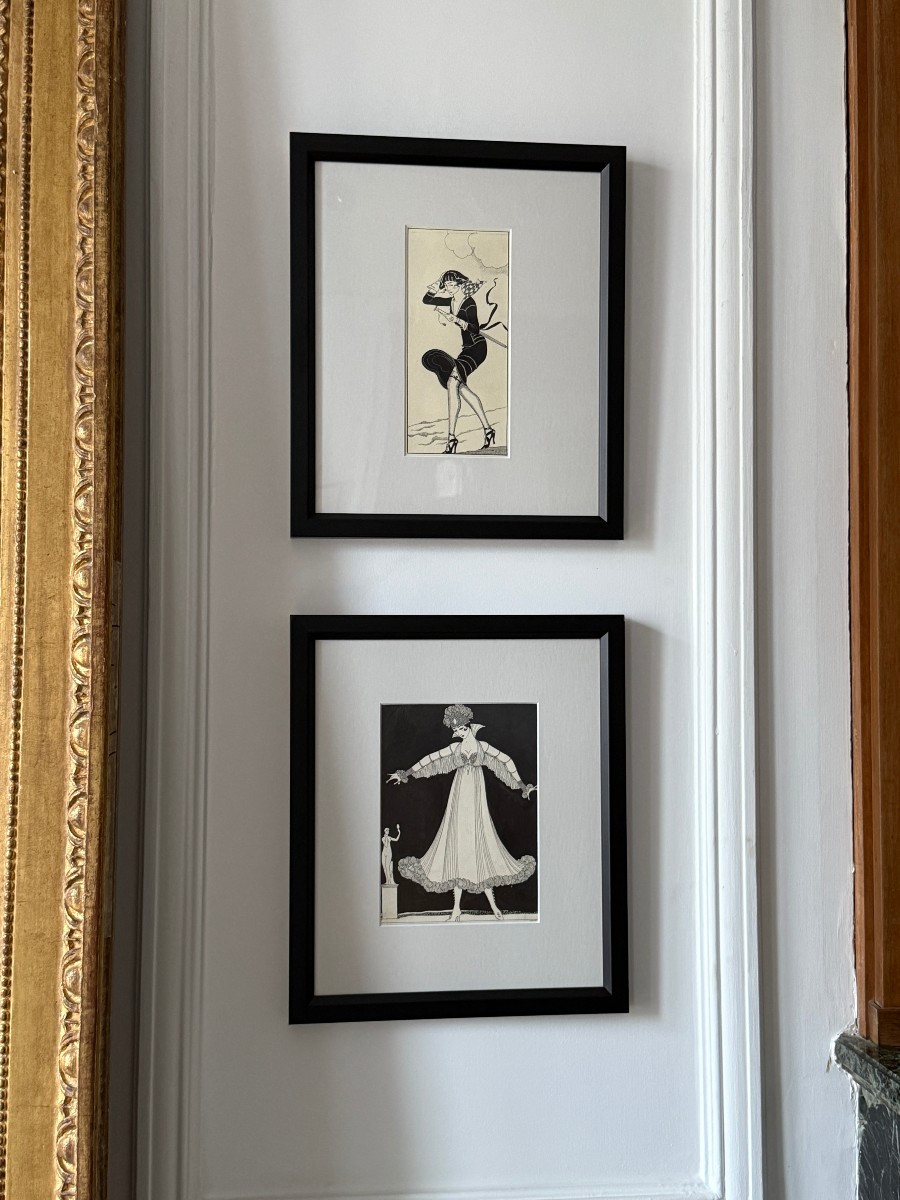
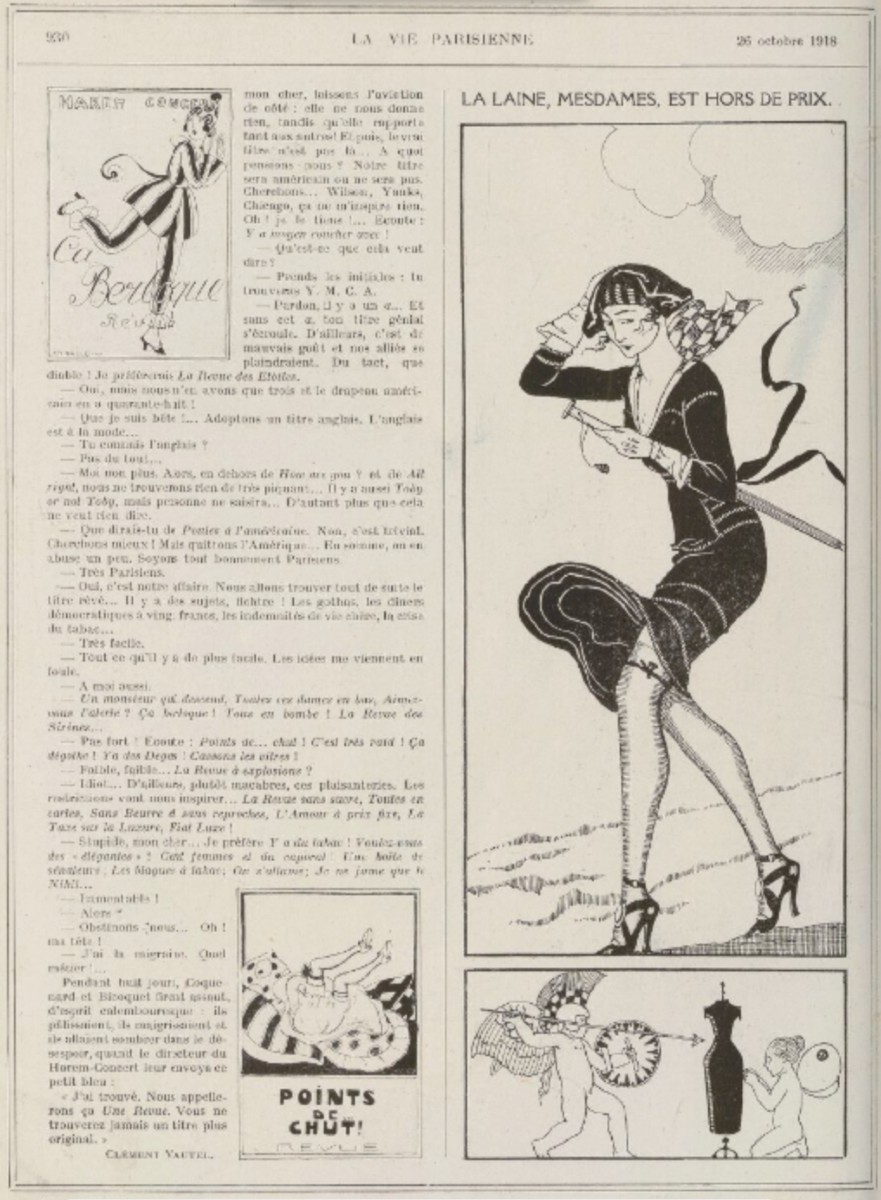


George Barbier - Wool, Ladies, Is Outrageously Expensive - 1918 - Drawing - La Vie Parisienne
Artist: George Barbier (1882-1932)
This drawing was published in La Vie Parisienne on October 26, 1918. It appeared alongside a second drawing, a continuation of the first, entitled "Only Silk Can Save Us." Beyond Barbier's distinctive style, one recognizes his whimsical elegance, his wit, and his refined eroticism.
Born in Nantes in 1882, George Barbier was one of the most sophisticated illustrators of the Art Deco period. Likely trained at the Académie Julian, he established himself as a master of fashion illustration and graphic elegance as early as 1911. A contributor to prestigious magazines such as La Gazette du Bon Ton and Vogue, Barbier created exquisitely delicate illustrations that blended the influence of 18th-century miniatures, Japanese prints, and modern theater.
He depicted the contemporary woman with grace and sophistication, in a world of stylized luxury and precious colors. A versatile artist, he also designed sets and costumes for the theater, the Ballets Russes, and film, sharing with his contemporaries like Paul Poiret a taste for exoticism and decorative refinement. Dying prematurely in 1932, Barbier left behind a body of work emblematic of the Art Deco aesthetic—an art of line, rhythm, and elegance—now rediscovered as a symbol of the Roaring Twenties.
Born in Nantes in 1882, George Barbier was one of the most sophisticated illustrators of the Art Deco period. Likely trained at the Académie Julian, he established himself as a master of fashion illustration and graphic elegance as early as 1911. A contributor to prestigious magazines such as La Gazette du Bon Ton and Vogue, Barbier created exquisitely delicate illustrations that blended the influence of 18th-century miniatures, Japanese prints, and modern theater.
He depicted the contemporary woman with grace and sophistication, in a world of stylized luxury and precious colors. A versatile artist, he also designed sets and costumes for the theater, the Ballets Russes, and film, sharing with his contemporaries like Paul Poiret a taste for exoticism and decorative refinement. Dying prematurely in 1932, Barbier left behind a body of work emblematic of the Art Deco aesthetic—an art of line, rhythm, and elegance—now rediscovered as a symbol of the Roaring Twenties.
1 000 €
Period: 20th century
Style: Art Deco
Condition: Excellent condition
Material: Paper
Width: 10 cm.
Height: 21,5 cm.
Reference (ID): 1683313
Availability: In stock
Print