THIS OBJECT WAS SOLD
Japanese Bronze Sculpture By Ikeda Yûhachi - Hare And Its Leveret
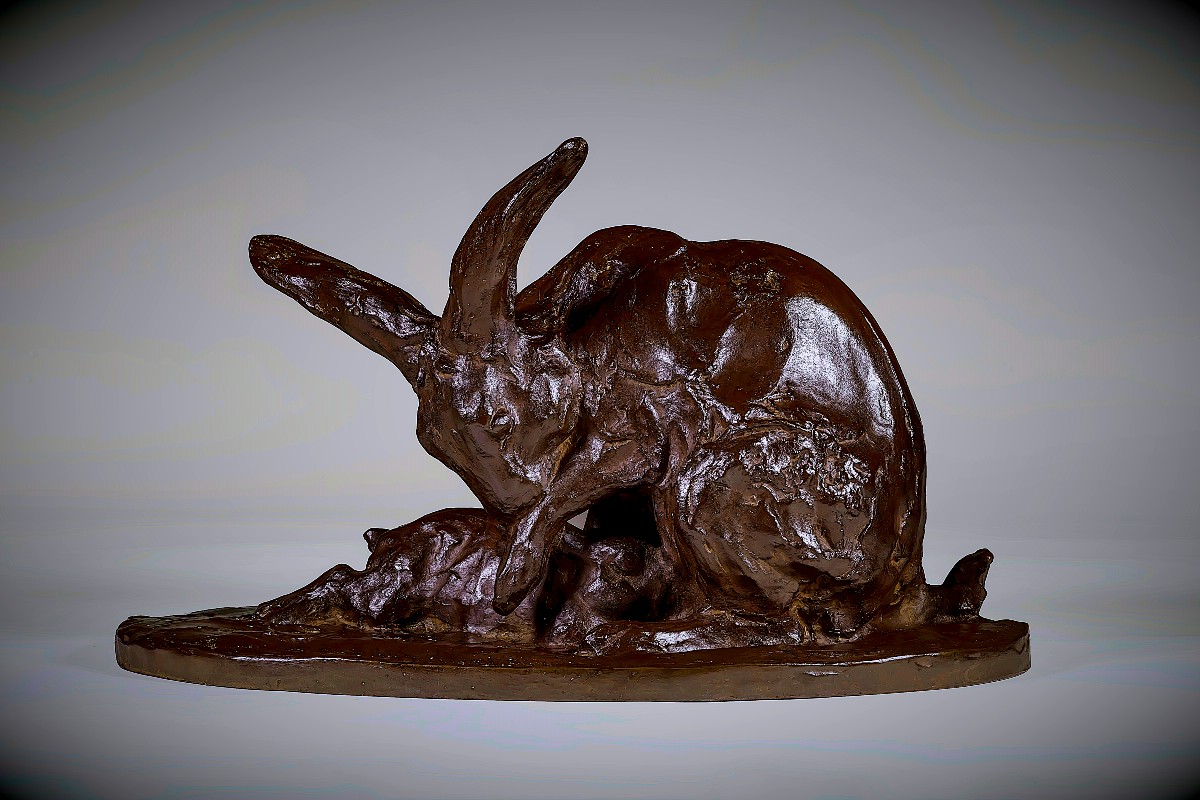
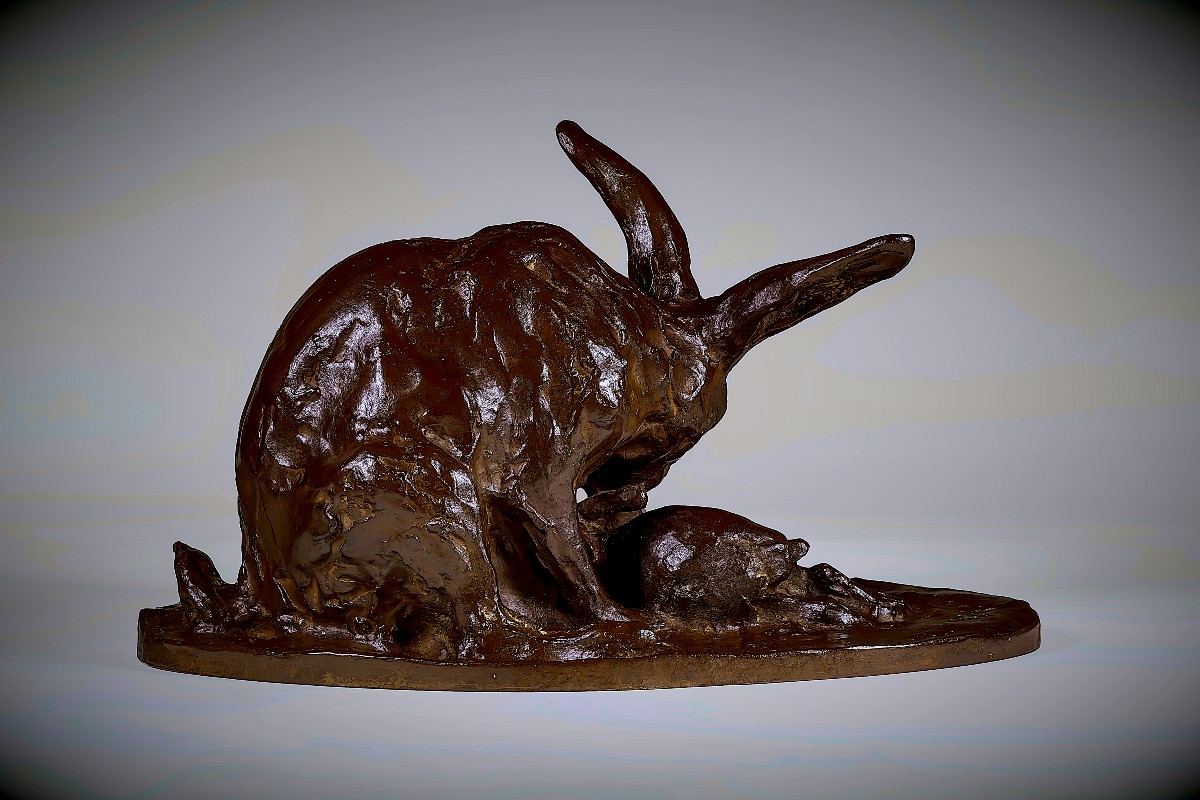
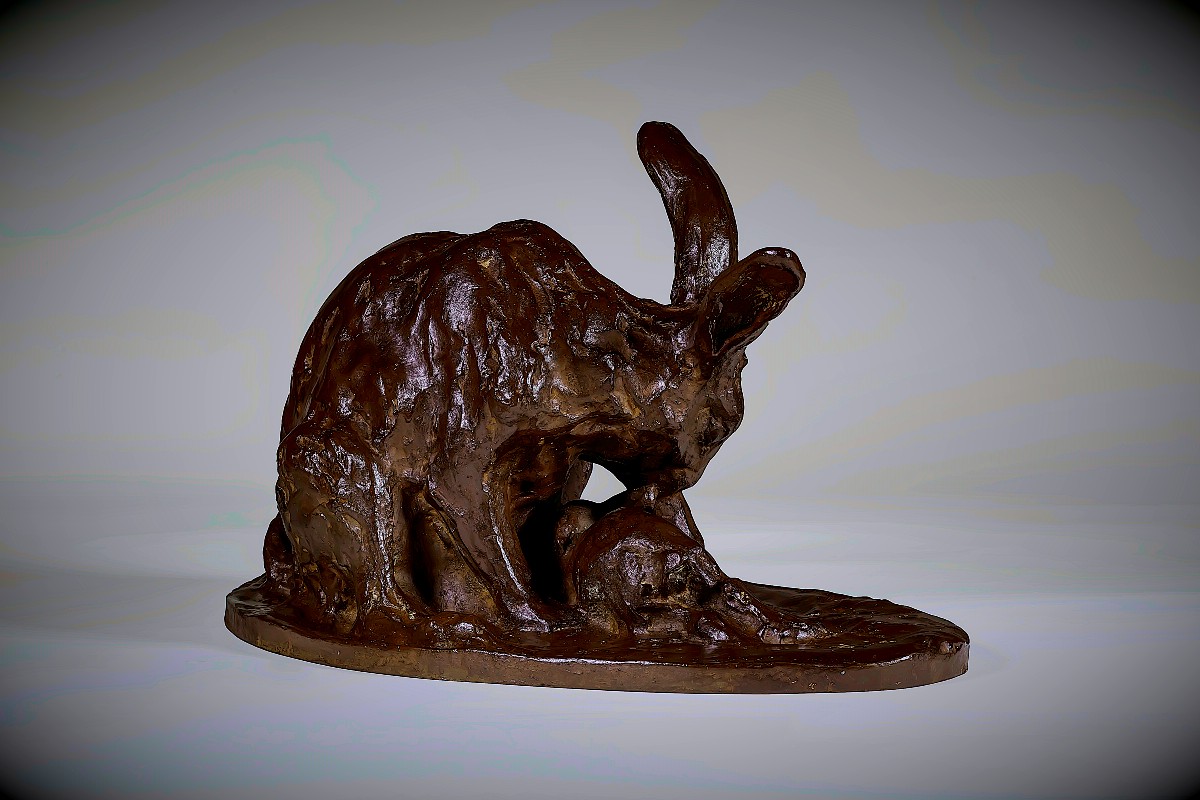
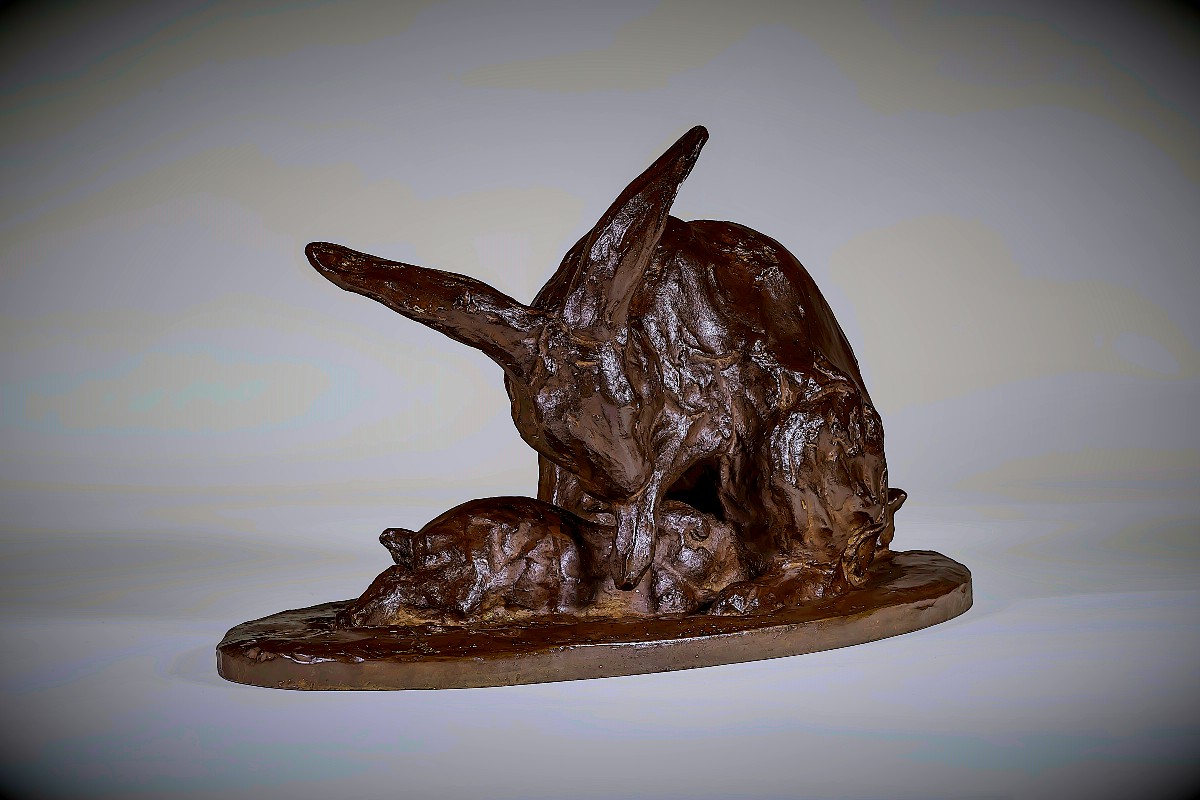
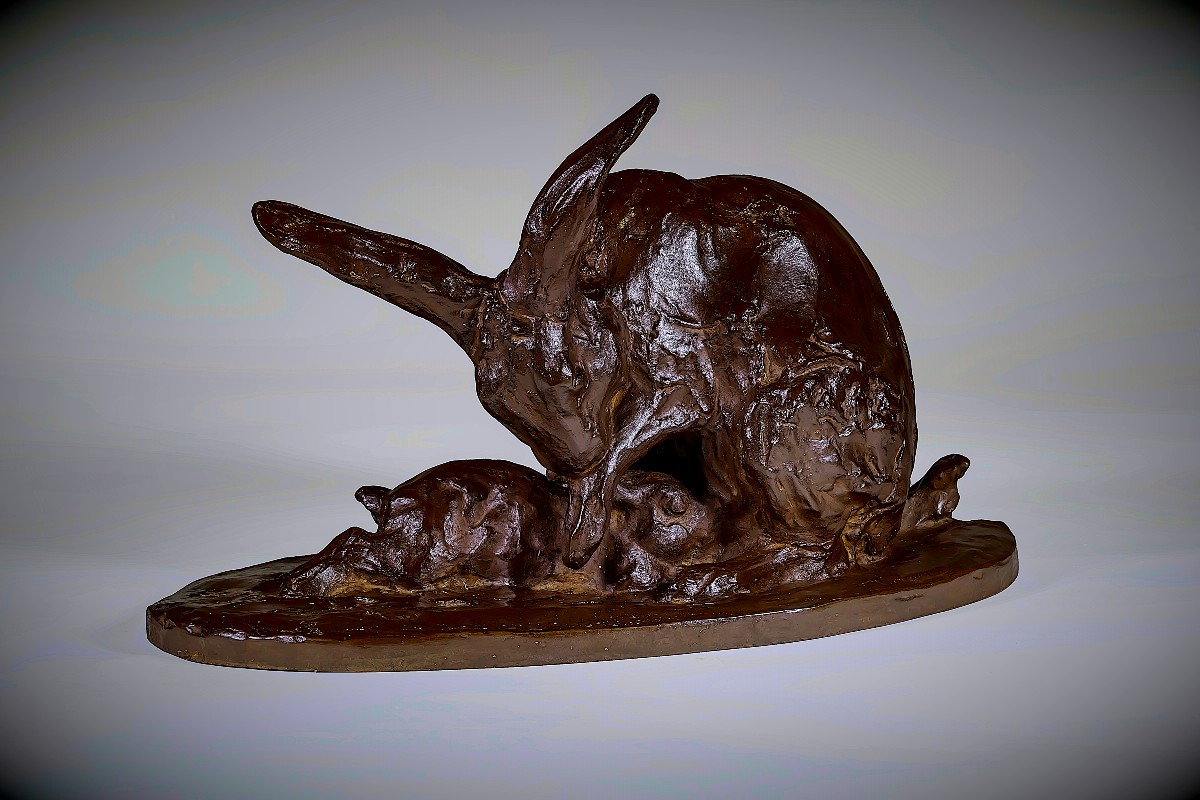


This finely modeled bronze sculpture depicts a hare protecting her leveret, a subject that allowed Ikeda Yūhachi to express with exceptional subtlety both his observation of nature and his emotional restraint. The adult hare leans over her young, her long ears and slightly arched body forming a rhythmic and enveloping silhouette. The compact and intimate composition underscores the bond between mother and offspring without theatricality.
The surface is enlivened by Ikeda's delicate treatment of textures: smooth, polished areas contrast with more vigorously worked passages, capturing the taut musculature and alert vitality characteristic of the hare. The dark brown patina accentuates these nuances, allowing light to play across the surface and highlighting the sculptor's assured modeling. The work combines realism and understated lyricism, a hallmark of Ikeda's animal sculptures. This theme of maternal protection, rendered with economy and empathy, places this sculpture among the most endearing small and medium-sized animal bronzes by Ikeda Yūhachi.
Ikeda Yūhachi (池田勇八) was a major Japanese sculptor of the Meiji, Taishō, and Shōwa eras, famous for his animal sculptures. Born in 1886 in Kagawa Prefecture, he studied sculpture at the Tokyo School of Fine Arts, where he was a student of Asakura Fumio, a central figure in modern Japanese academic sculpture. Ikeda gained particular renown for his depictions of animals—especially horses, earning him the nickname "Yūhachi of Horses" (馬の勇八)—but his work also includes hares, dogs, goats, and other creatures, all characterized by keen anatomical knowledge and restrained emotional depth.
His works were regularly exhibited at the national Bunten, Teiten, and Nitten exhibitions, and he later served on the juries, highlighting his institutional importance. International recognition came to him through his participation in Olympic art competitions, with works exhibited at the 1932 Los Angeles and 1936 Berlin Olympic Games.
After World War II, despite material shortages, Ikeda continued to sculpt, often working with wood, and remained active until his death in 1963. Today, Ikeda Yūhachi's sculptures are featured in major Japanese public collections and are increasingly appreciated by international collectors for their synthesis of Western academic realism and a distinctly Japanese sensitivity to nature.
Between 1930 and 1940
The surface is enlivened by Ikeda's delicate treatment of textures: smooth, polished areas contrast with more vigorously worked passages, capturing the taut musculature and alert vitality characteristic of the hare. The dark brown patina accentuates these nuances, allowing light to play across the surface and highlighting the sculptor's assured modeling. The work combines realism and understated lyricism, a hallmark of Ikeda's animal sculptures. This theme of maternal protection, rendered with economy and empathy, places this sculpture among the most endearing small and medium-sized animal bronzes by Ikeda Yūhachi.
Ikeda Yūhachi (池田勇八) was a major Japanese sculptor of the Meiji, Taishō, and Shōwa eras, famous for his animal sculptures. Born in 1886 in Kagawa Prefecture, he studied sculpture at the Tokyo School of Fine Arts, where he was a student of Asakura Fumio, a central figure in modern Japanese academic sculpture. Ikeda gained particular renown for his depictions of animals—especially horses, earning him the nickname "Yūhachi of Horses" (馬の勇八)—but his work also includes hares, dogs, goats, and other creatures, all characterized by keen anatomical knowledge and restrained emotional depth.
His works were regularly exhibited at the national Bunten, Teiten, and Nitten exhibitions, and he later served on the juries, highlighting his institutional importance. International recognition came to him through his participation in Olympic art competitions, with works exhibited at the 1932 Los Angeles and 1936 Berlin Olympic Games.
After World War II, despite material shortages, Ikeda continued to sculpt, often working with wood, and remained active until his death in 1963. Today, Ikeda Yūhachi's sculptures are featured in major Japanese public collections and are increasingly appreciated by international collectors for their synthesis of Western academic realism and a distinctly Japanese sensitivity to nature.
Between 1930 and 1940
Explore similar pieces and discover your ideal find:
Asian Bronze Sculptures