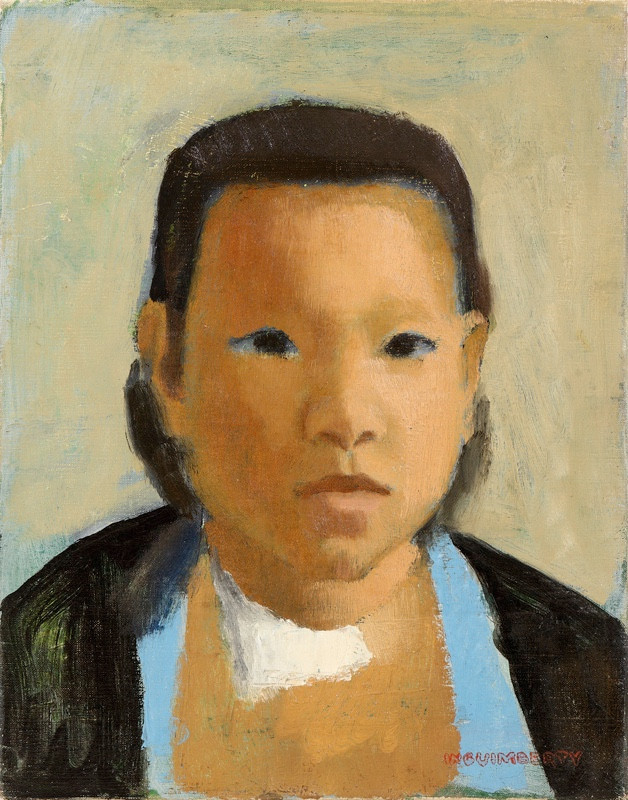
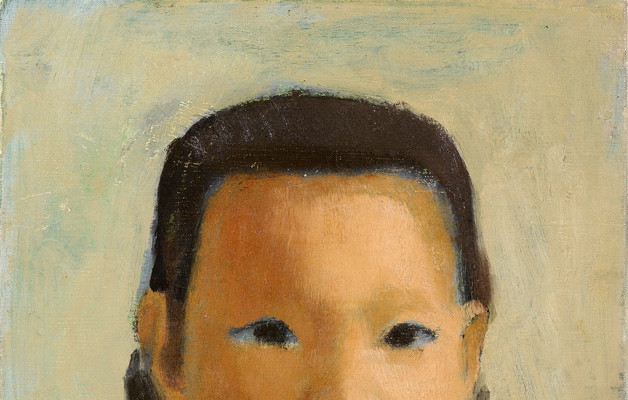
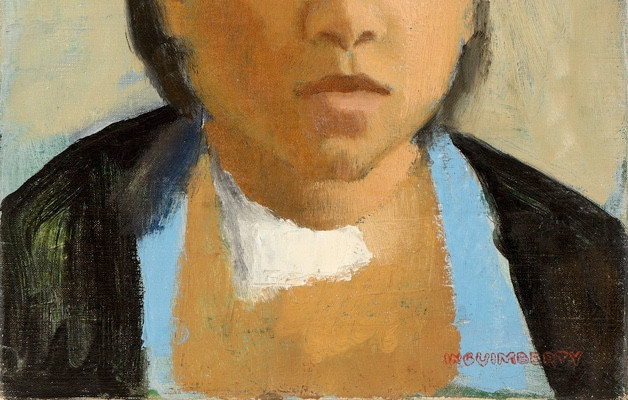
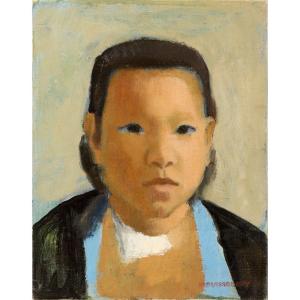


Joseph Inguimberty (1896 - 1971) — Portrait Of A Child, Vietnam
Artist: Joseph Inguimberty
Portrait of a Child, Vietnam
Oil on canvas, artist's studio stamp lower right.
37 x 27 cm.
Provenance:
Joseph Inguimberty Studio;
Alexis Pentcheff Gallery;
Private Collection, France.
Certificate of authenticity issued by Giulia Pentcheff, author of the first catalogue of the artist's painted work.
The Painter of Two Shores: From Indochina to Provence
Born in Marseille in 1896, Joseph Inguimberty left his hometown for Paris, where he trained at the École Nationale des Arts Décoratifs. In 1925, he answered Victor Tardieu's call and settled in Hanoi to teach at the École des Beaux-Arts, which he supported for over twenty years in the birth of modern Vietnamese art. Alongside Alix Aymé, he participated in the revival of the traditional lacquer technique, which they adapted by skillfully blending Asian know-how and Western influences. The Second World War interrupted this long period in Indochina. Returning to France in 1946, Inguimberty settled in Menton, his wife's hometown, and rediscovered the Provençal landscapes, which he painted with a perspective profoundly transformed by his Asian experience. His works combine flat planes of color, serenity, and slender forms, creating a subtle fusion between the rice paddies of Tonkin and the lavender fields of Provence. Marseille, his hometown, remained a constant source of inspiration. He had already painted monumental scenes of dockworkers on the quays in the 1920s, and he continued to explore its ports and coves, faithful to his practice of painting en plein air. Despite a rich career and regular exhibitions in Parisian galleries, he remained little known locally, while he is now recognized in Vietnam as one of the major artists of his time. In 2012, the Alexis Pentcheff Gallery in Marseille organized a major retrospective entitled "The South of Joseph Inguimberty," restoring visibility to his work in France. Simultaneously, the publication of the first catalogue raisonné, edited by Giulia Pentcheff in collaboration with the artist's children, reconciled the different facets of his work and revealed the profound unity of a journey shared between two cultures, two worlds, two forms of light. Joseph Inguimberty thus created a unique body of work, at the crossroads of cultures, that transcends geographical and temporal boundaries. An art both rooted and fluid, where painting becomes the meeting place between memories of distant lands and familiar landscapes, between tradition and modernity.
Discover more works by this artist on the gallery's website: https://www.galeriepentcheff.fr/fr/peintre-joseph-inguimberty
Oil on canvas, artist's studio stamp lower right.
37 x 27 cm.
Provenance:
Joseph Inguimberty Studio;
Alexis Pentcheff Gallery;
Private Collection, France.
Certificate of authenticity issued by Giulia Pentcheff, author of the first catalogue of the artist's painted work.
The Painter of Two Shores: From Indochina to Provence
Born in Marseille in 1896, Joseph Inguimberty left his hometown for Paris, where he trained at the École Nationale des Arts Décoratifs. In 1925, he answered Victor Tardieu's call and settled in Hanoi to teach at the École des Beaux-Arts, which he supported for over twenty years in the birth of modern Vietnamese art. Alongside Alix Aymé, he participated in the revival of the traditional lacquer technique, which they adapted by skillfully blending Asian know-how and Western influences. The Second World War interrupted this long period in Indochina. Returning to France in 1946, Inguimberty settled in Menton, his wife's hometown, and rediscovered the Provençal landscapes, which he painted with a perspective profoundly transformed by his Asian experience. His works combine flat planes of color, serenity, and slender forms, creating a subtle fusion between the rice paddies of Tonkin and the lavender fields of Provence. Marseille, his hometown, remained a constant source of inspiration. He had already painted monumental scenes of dockworkers on the quays in the 1920s, and he continued to explore its ports and coves, faithful to his practice of painting en plein air. Despite a rich career and regular exhibitions in Parisian galleries, he remained little known locally, while he is now recognized in Vietnam as one of the major artists of his time. In 2012, the Alexis Pentcheff Gallery in Marseille organized a major retrospective entitled "The South of Joseph Inguimberty," restoring visibility to his work in France. Simultaneously, the publication of the first catalogue raisonné, edited by Giulia Pentcheff in collaboration with the artist's children, reconciled the different facets of his work and revealed the profound unity of a journey shared between two cultures, two worlds, two forms of light. Joseph Inguimberty thus created a unique body of work, at the crossroads of cultures, that transcends geographical and temporal boundaries. An art both rooted and fluid, where painting becomes the meeting place between memories of distant lands and familiar landscapes, between tradition and modernity.
Discover more works by this artist on the gallery's website: https://www.galeriepentcheff.fr/fr/peintre-joseph-inguimberty
20 000 €
Period: 20th century
Style: Asian art
Condition: Good condition
Material: Oil painting
Reference (ID): 1678223
Availability: In stock
Print