THIS OBJECT WAS SOLD
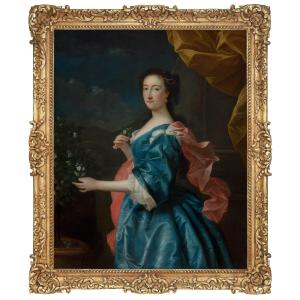
Portrait Of Elizabeth Wriothesley, Countess Of Northumberland C. 1665-1669; Sir Peter Lely
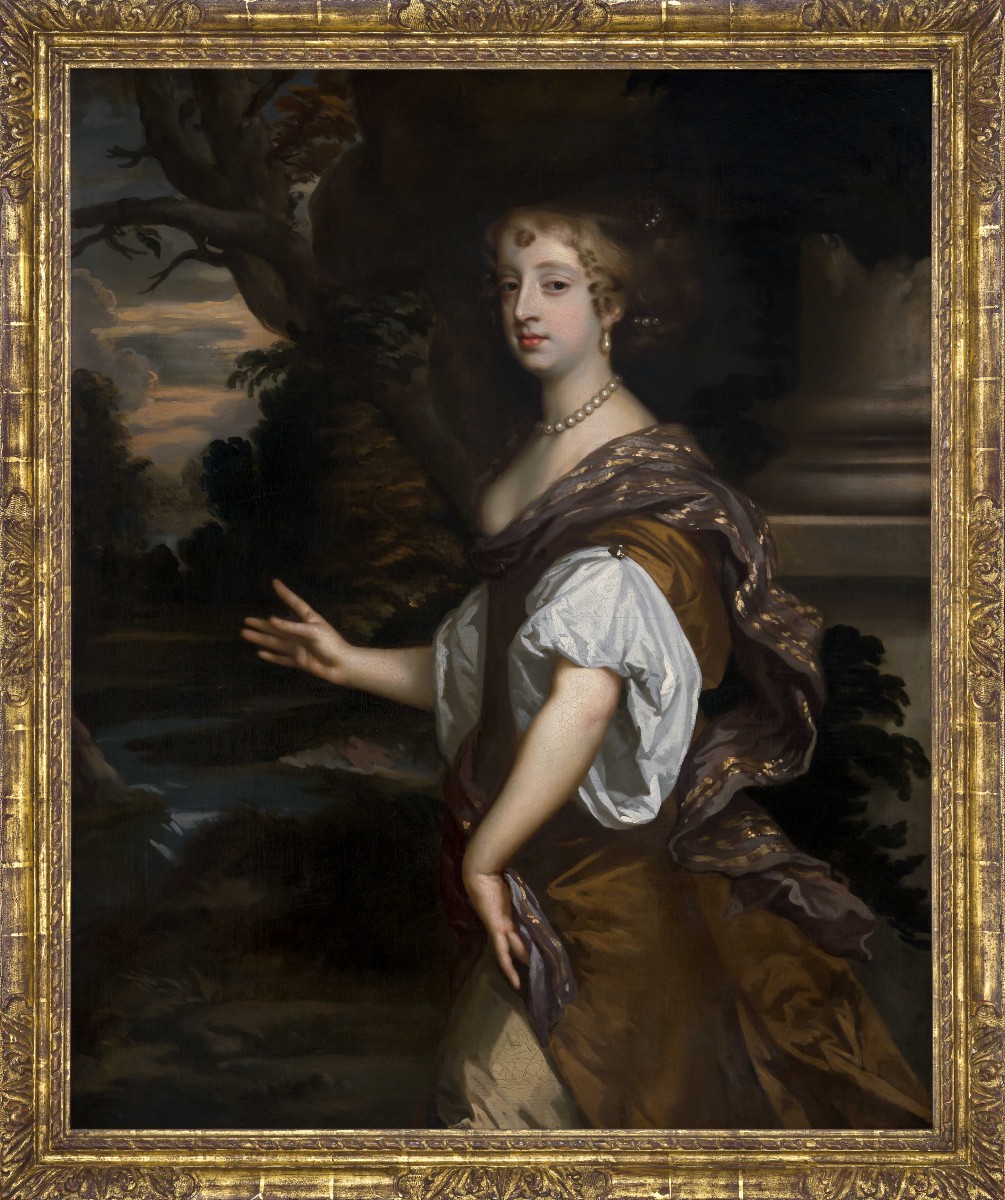
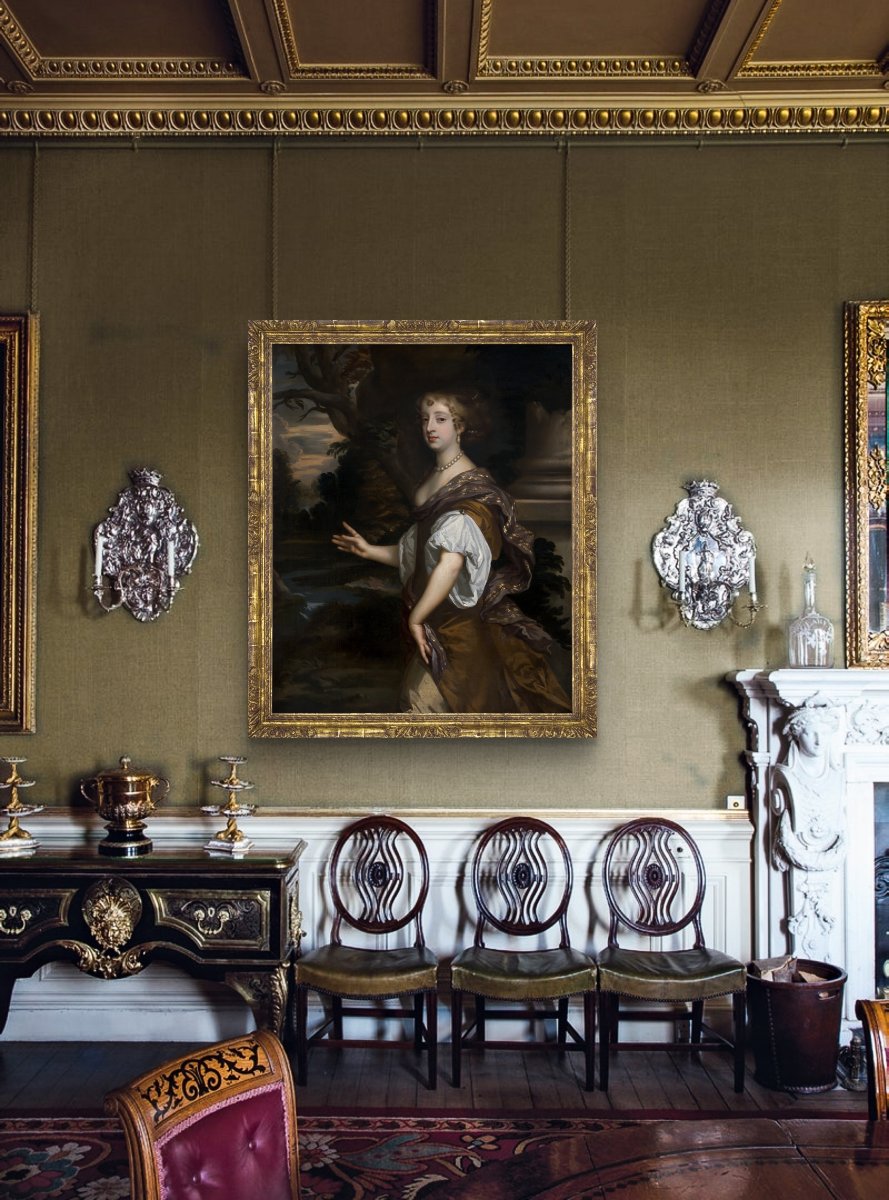

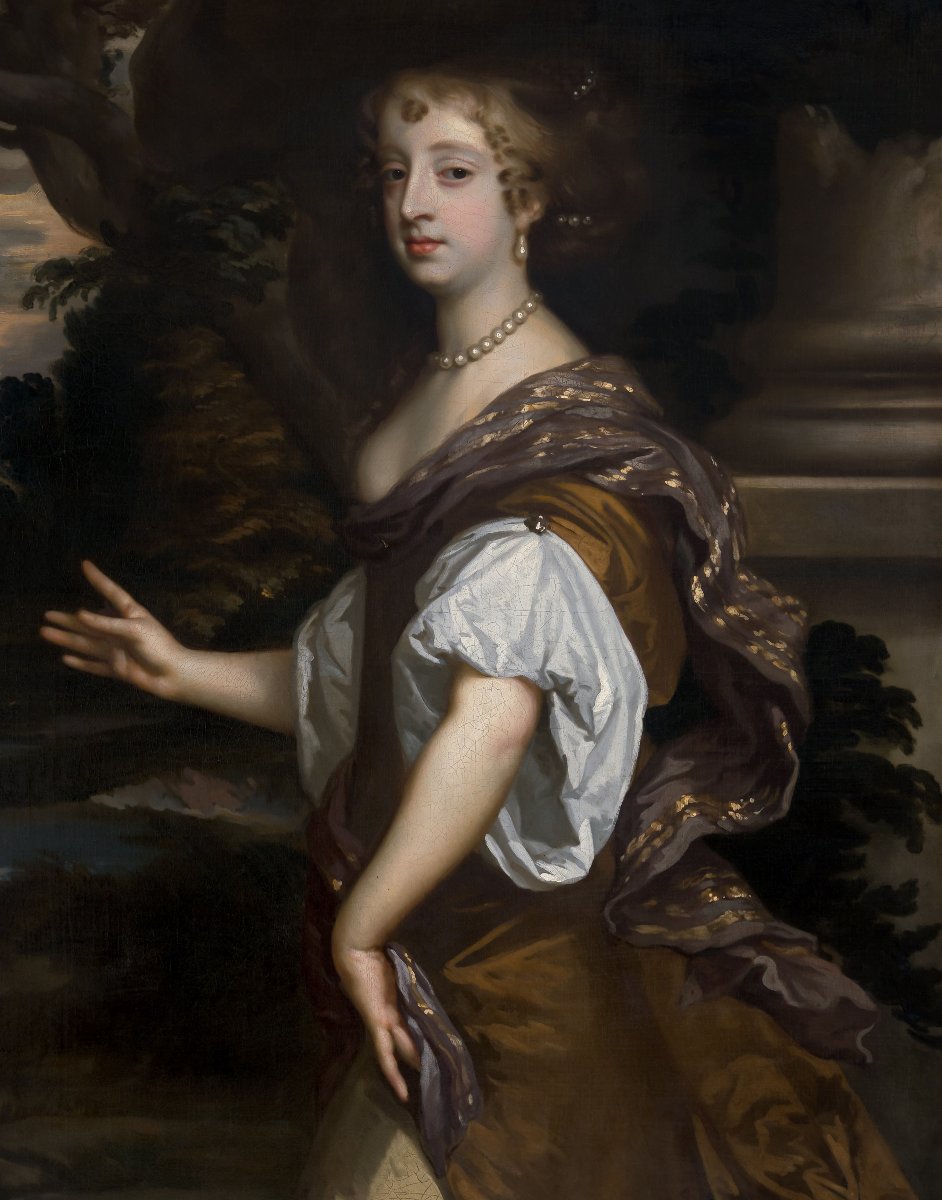
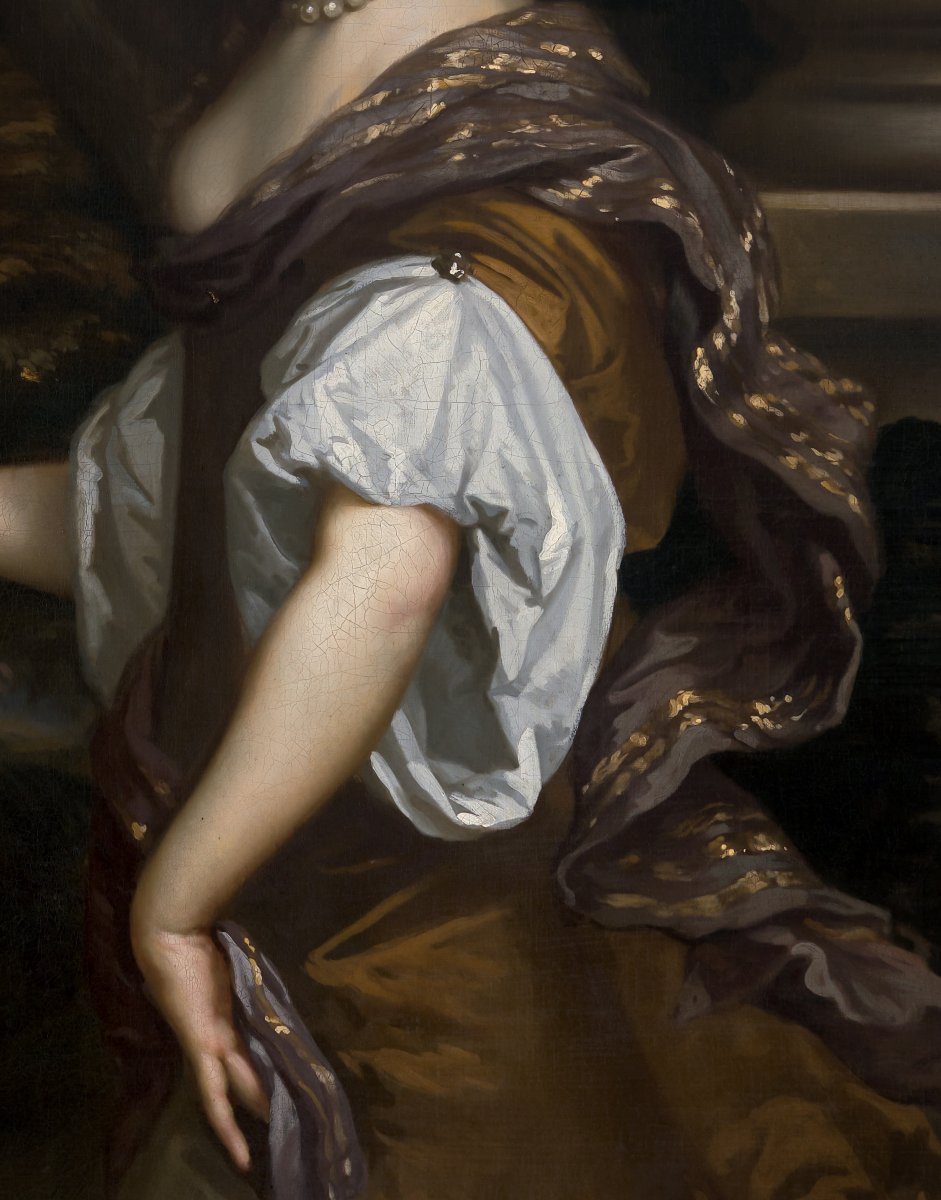


Portrait of Elizabeth Wriothesley, Countess of Northumberland (1646-1690) (later Duchess of Montagu) c.1665-1669
Studio of Peter Lely (1618-1680)
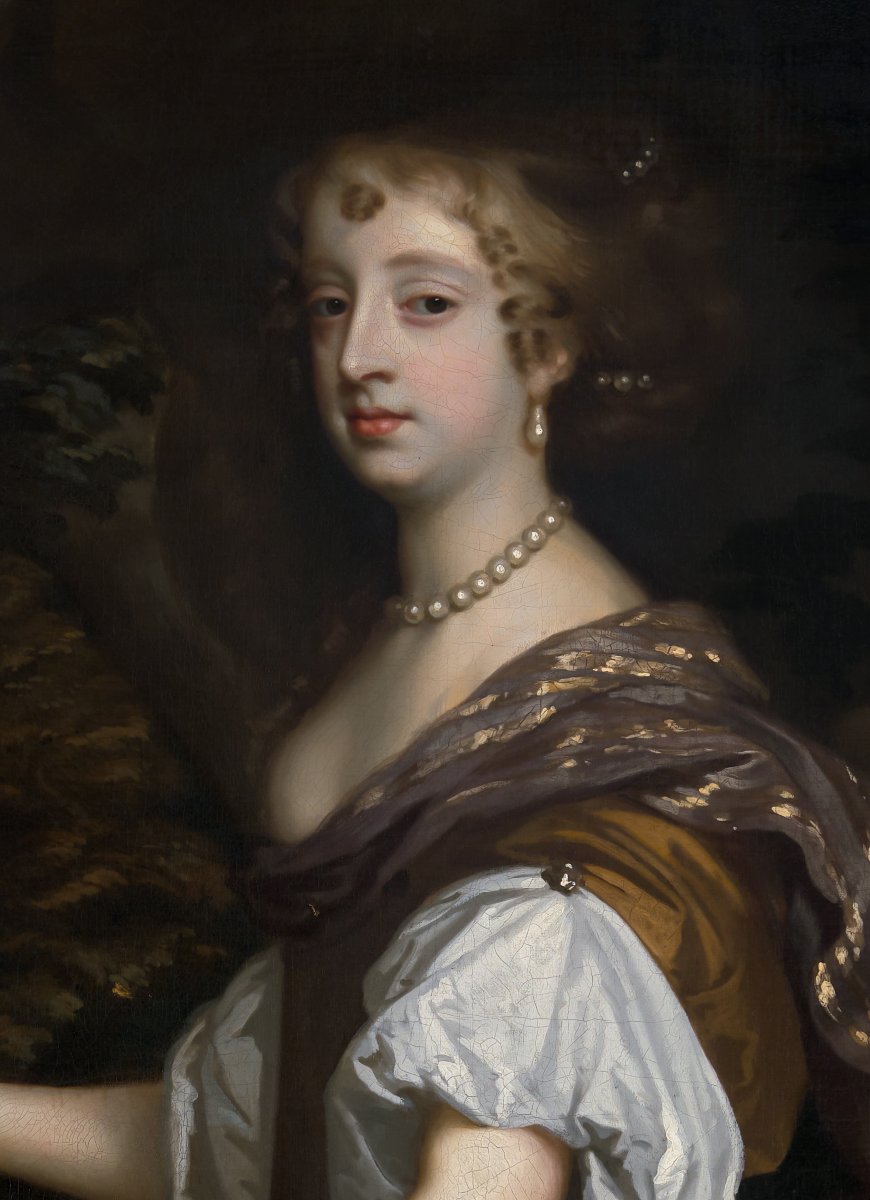
This exemplary three-quarter-length portrait presents Elizabeth Wriothesley (1646–1690)—Countess of Northumberland and later Duchess of Montagu—one of the most celebrated women of the Restoration court. As an item, it is more than a beautiful likeness. It is a powerful artefact of Restoration culture: a portrait of a woman whose life connected major dynasties and international diplomacy, painted in the orbit of the most famous court portrait series of the age, and grounded in the visual language that Peter Lely created for England’s revived monarchy. It is a fine work produced within the mechanisms of Restoration image-making – Lely’s studio.
Elizabeth was born into a political family of national importance. Her father, Thomas Wriothesley, 4th Earl of Southampton, was a leading statesman of the Restoration period, helping to stabilise England’s government and finances after the return of Charles II in 1660. For a daughter of such a house, life was shaped by ceremony and strategy: marriage alliances, the management of great households, and the careful cultivation of reputation within a society where rank and influence were displayed as much as they were exercised.
In 1662, Elizabeth married Joceline Percy, 11th Earl of Northumberland, entering one of England’s most historic dynasties. The Percy inheritance brought her not only a title but a world of estates and expectations—great houses that functioned as theatres of power. One of the family’s principal seats, Petworth House in Sussex, was emblematic of the aristocratic rhythm of the age: long periods in the country overseeing an immense household, interspersed with London seasons where court attendance, social negotiation, and political visibility mattered intensely. To be Countess of Northumberland was to live at the intersection of domestic magnificence and national identity.
Widowed young, Elizabeth married again in 1673 to Ralph Montagu (later 1st Duke of Montagu), an English ambassador in France. This second marriage places her at a key cultural crossroads. Restoration taste was profoundly influenced by continental models—especially French court sophistication—and ambassadors were conduits of style, manners, and luxury goods. Elizabeth’s life therefore spans two kinds of eminence: the ancient dynastic authority of the Percys and the cosmopolitan brilliance of diplomatic court culture.
The exceptional historical resonance of this portrait lies in its relationship to the “Windsor Beauties”—a celebrated set of portraits painted by Sir Peter Lely in the early 1660s, assembled for Anne Hyde, Duchess of York. These pictures were far more than a gallery of attractive sitters. They were a deliberate visual programme, projecting a new ideal of courtly elegance at precisely the moment England was rebuilding its identity after civil war, Commonwealth rule, and exile. Displayed together, the Beauties created an immersive statement: beauty as authority, refinement as legitimacy, glamour as a form of political confidence. Samuel Pepys famously noted that Lely’s portraits were “good, but not like”—an observation that captures the series’ paradox and its genius. Lely was not merely recording faces; he was shaping them into a recognisable courtly type—softened gaze, poised sensuality, luminous flesh, and an air of composed, aristocratic distance. The Beauties became a standard by which Restoration style was measured, and their fame encouraged the production of versions, repetitions, and studio replicas for allied households and collectors who wanted to participate in the court’s visual language.
To understand why this painting is so compelling, one must understand Peter Lely (1618–1680) and the transformation he helped engineer. Born in the Low Countries and trained within a sophisticated European tradition, Lely arrived in England in the 1640s. After the death of Van Dyck, England lacked an artist who could translate power into elegance with effortless authority. Lely filled that role and, following the Restoration, became the dominant portraitist of the reign.
Appointed Principal Painter to Charles II in 1661, Lely effectively invented the look of the Restoration court. His paintings communicate status through atmosphere: flesh rendered as cool, pearly light; fabrics that shift from satin shimmer to velvety depth; hair arranged with controlled abundance; expressions calibrated to suggest both intimacy and unapproachable rank. Lely’s influence was not only aesthetic but structural. He professionalised the English court portrait studio as a high-demand enterprise—capable of producing images that preserved a coherent “Lely look,” and thereby shaping English portrait culture for decades.
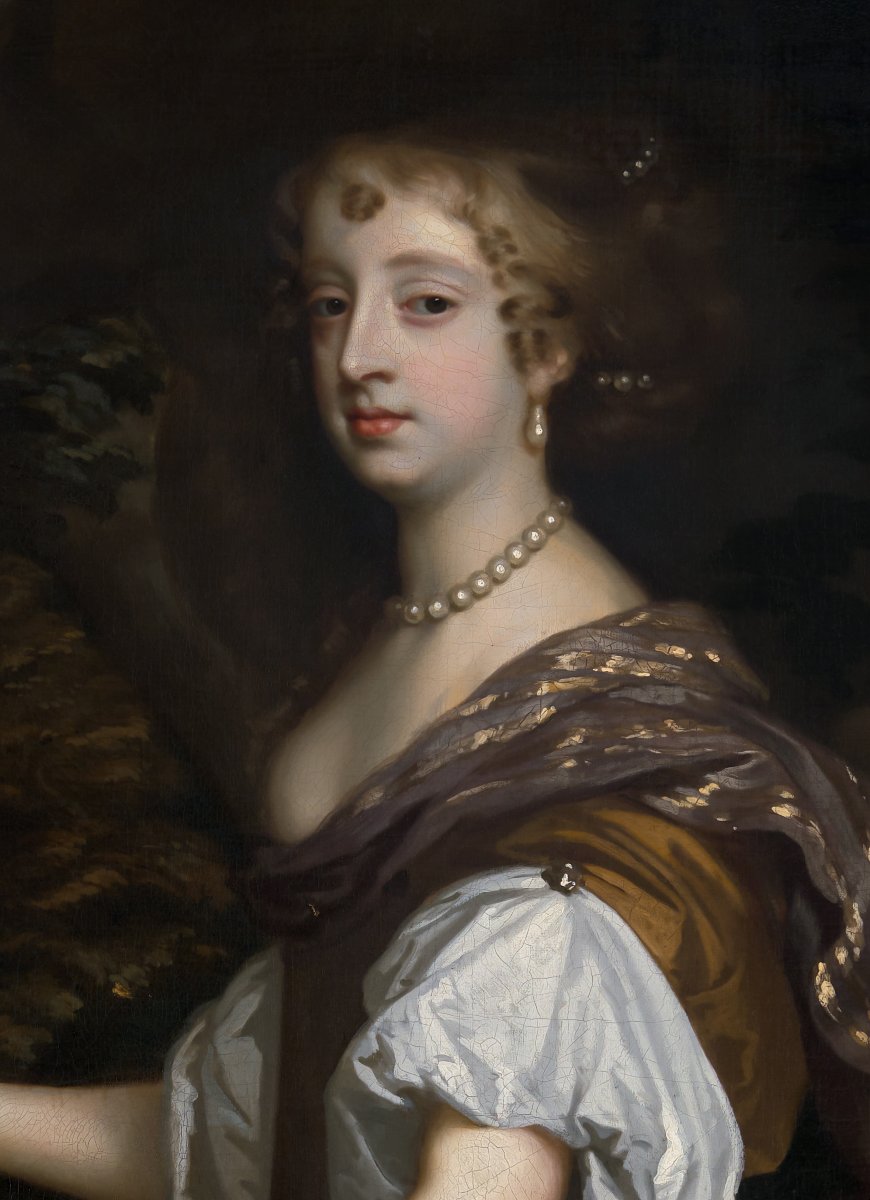
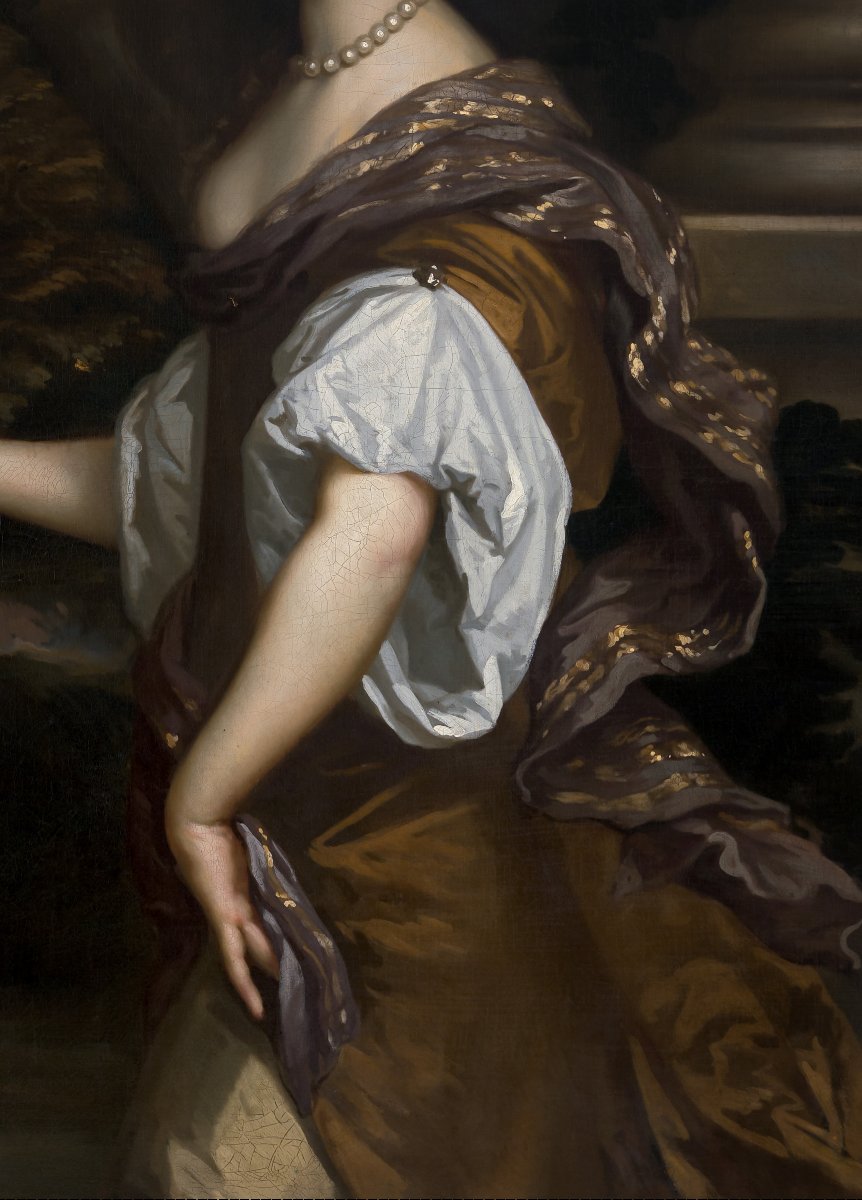
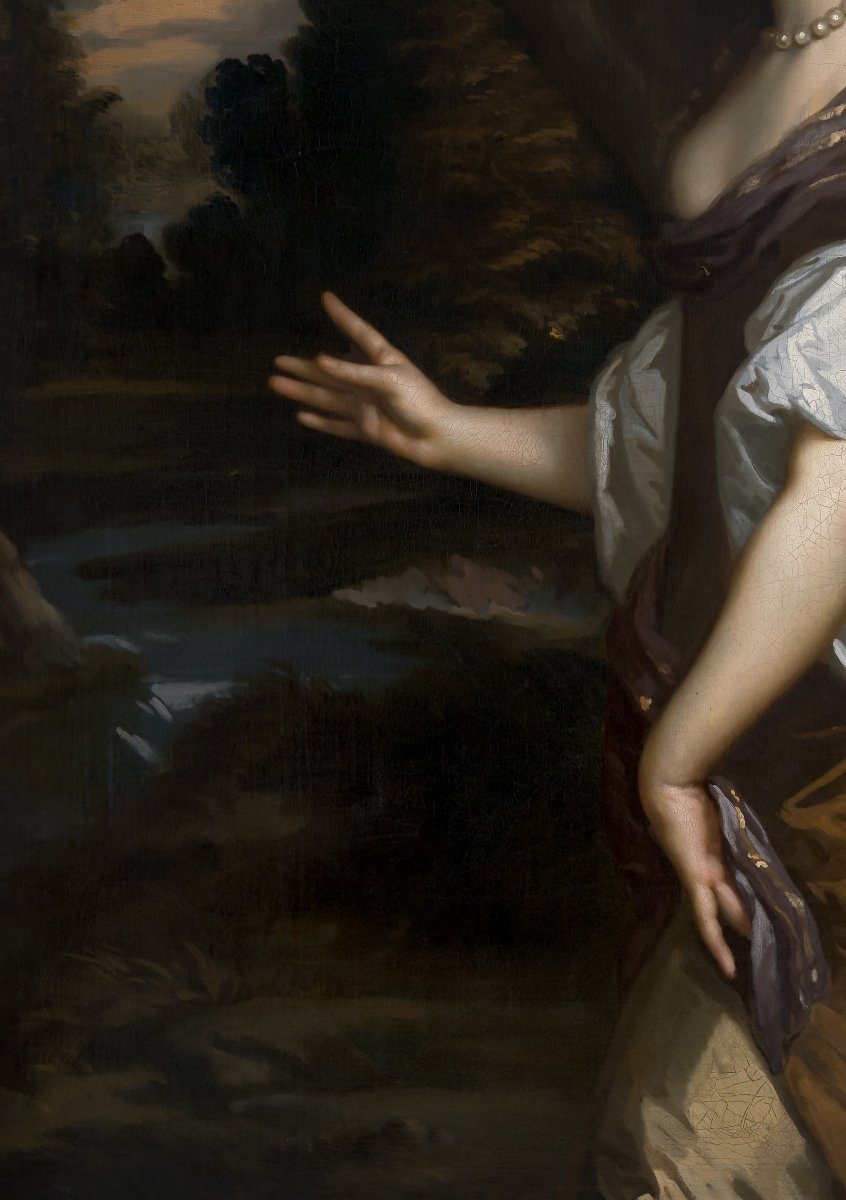
The sitter’s attire belongs unmistakably to the mid-1660s Restoration idiom. The open neckline and softly draped shoulder convey a controlled intimacy; the luminous sleeves and rich drapery are designed to catch light in a grand interior. Pearls—necklace and drop earring—signal aristocratic refinement without ostentation. The setting deepens the portrait’s rhetoric: the base of a classical column and receding architectural elements locate the sitter within a world of cultivated order and antique authority. Landscape and architecture are not merely background; they are stagecraft, elevating the figure into a timeless emblem of nobility.
This prime portrait of Elizabeth Wriothesley of this type by Lely is in the Royal Collection (Windsor Beauties context). The attribution of our portrait is historically meaningful because it describes how such celebrated images functioned. Lely’s studio was asked to meet extraordinary demand, and successful prototypes were repeated so that the most admired court portraits could circulate—across multiple residences, through allied families, and within collections assembled as statements of cultural alignment. Technically, the portrait’s scale and design align with that purpose. The head and flesh passages are orchestrated to persuade at close range, while the drapery and architectural setting read with commanding clarity from across a room—precisely the balance expected in high-status portraiture meant for display.
This fine portrait is a direct product of the workshop that defined Restoration England’s visual language—made from the same patterns and priorities that served the King’s court itself.
Provenance:
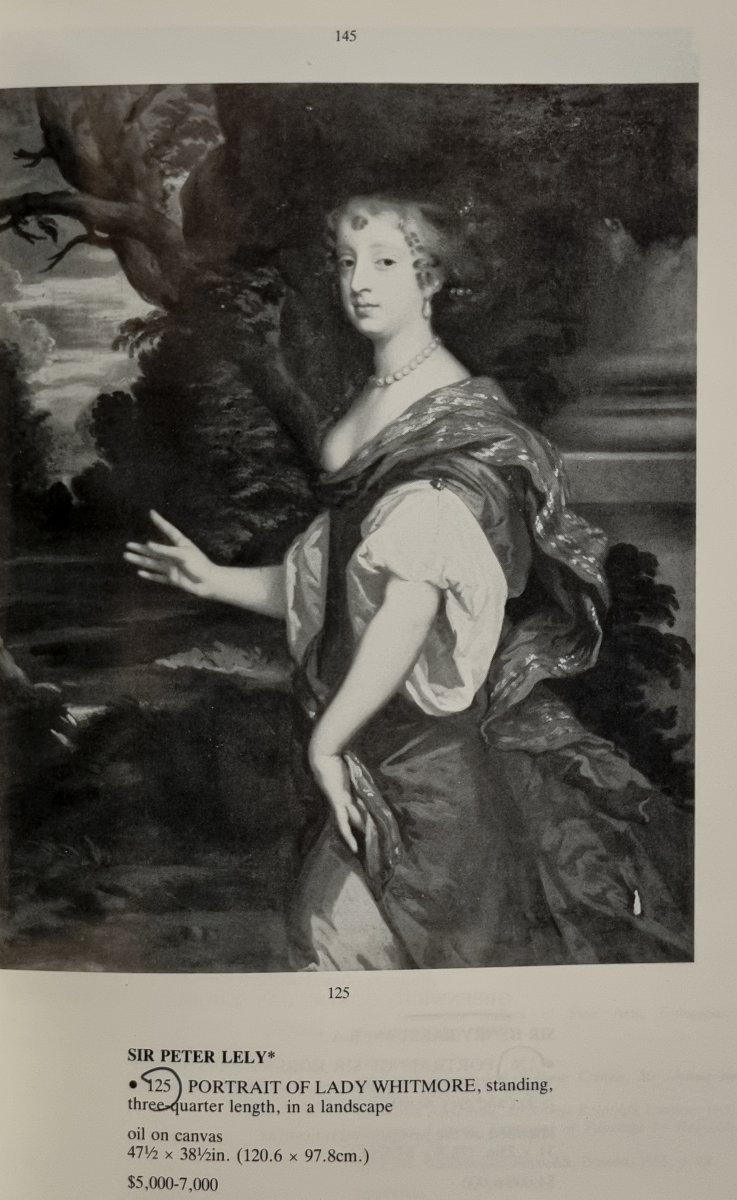
Sale Christies New York, 15 Jan 1985 [Lot 125] as: “Sir Peter Lely, Portrait of Lady Whitmore, standing, three quarter length, in a landscape, oil on canvas”;
With Mr Nicholas Stogdon (1948-2024), former art dealer and print specialist, by May 1985
Measurements:
Height 139cm, Width 116cm framed (Height 54.75”, Width 45.5” framed)
Studio of Peter Lely (1618-1680)
This exemplary three-quarter-length portrait presents Elizabeth Wriothesley (1646–1690)—Countess of Northumberland and later Duchess of Montagu—one of the most celebrated women of the Restoration court. As an item, it is more than a beautiful likeness. It is a powerful artefact of Restoration culture: a portrait of a woman whose life connected major dynasties and international diplomacy, painted in the orbit of the most famous court portrait series of the age, and grounded in the visual language that Peter Lely created for England’s revived monarchy. It is a fine work produced within the mechanisms of Restoration image-making – Lely’s studio.
Elizabeth was born into a political family of national importance. Her father, Thomas Wriothesley, 4th Earl of Southampton, was a leading statesman of the Restoration period, helping to stabilise England’s government and finances after the return of Charles II in 1660. For a daughter of such a house, life was shaped by ceremony and strategy: marriage alliances, the management of great households, and the careful cultivation of reputation within a society where rank and influence were displayed as much as they were exercised.
In 1662, Elizabeth married Joceline Percy, 11th Earl of Northumberland, entering one of England’s most historic dynasties. The Percy inheritance brought her not only a title but a world of estates and expectations—great houses that functioned as theatres of power. One of the family’s principal seats, Petworth House in Sussex, was emblematic of the aristocratic rhythm of the age: long periods in the country overseeing an immense household, interspersed with London seasons where court attendance, social negotiation, and political visibility mattered intensely. To be Countess of Northumberland was to live at the intersection of domestic magnificence and national identity.
Widowed young, Elizabeth married again in 1673 to Ralph Montagu (later 1st Duke of Montagu), an English ambassador in France. This second marriage places her at a key cultural crossroads. Restoration taste was profoundly influenced by continental models—especially French court sophistication—and ambassadors were conduits of style, manners, and luxury goods. Elizabeth’s life therefore spans two kinds of eminence: the ancient dynastic authority of the Percys and the cosmopolitan brilliance of diplomatic court culture.
The exceptional historical resonance of this portrait lies in its relationship to the “Windsor Beauties”—a celebrated set of portraits painted by Sir Peter Lely in the early 1660s, assembled for Anne Hyde, Duchess of York. These pictures were far more than a gallery of attractive sitters. They were a deliberate visual programme, projecting a new ideal of courtly elegance at precisely the moment England was rebuilding its identity after civil war, Commonwealth rule, and exile. Displayed together, the Beauties created an immersive statement: beauty as authority, refinement as legitimacy, glamour as a form of political confidence. Samuel Pepys famously noted that Lely’s portraits were “good, but not like”—an observation that captures the series’ paradox and its genius. Lely was not merely recording faces; he was shaping them into a recognisable courtly type—softened gaze, poised sensuality, luminous flesh, and an air of composed, aristocratic distance. The Beauties became a standard by which Restoration style was measured, and their fame encouraged the production of versions, repetitions, and studio replicas for allied households and collectors who wanted to participate in the court’s visual language.
To understand why this painting is so compelling, one must understand Peter Lely (1618–1680) and the transformation he helped engineer. Born in the Low Countries and trained within a sophisticated European tradition, Lely arrived in England in the 1640s. After the death of Van Dyck, England lacked an artist who could translate power into elegance with effortless authority. Lely filled that role and, following the Restoration, became the dominant portraitist of the reign.
Appointed Principal Painter to Charles II in 1661, Lely effectively invented the look of the Restoration court. His paintings communicate status through atmosphere: flesh rendered as cool, pearly light; fabrics that shift from satin shimmer to velvety depth; hair arranged with controlled abundance; expressions calibrated to suggest both intimacy and unapproachable rank. Lely’s influence was not only aesthetic but structural. He professionalised the English court portrait studio as a high-demand enterprise—capable of producing images that preserved a coherent “Lely look,” and thereby shaping English portrait culture for decades.
The sitter’s attire belongs unmistakably to the mid-1660s Restoration idiom. The open neckline and softly draped shoulder convey a controlled intimacy; the luminous sleeves and rich drapery are designed to catch light in a grand interior. Pearls—necklace and drop earring—signal aristocratic refinement without ostentation. The setting deepens the portrait’s rhetoric: the base of a classical column and receding architectural elements locate the sitter within a world of cultivated order and antique authority. Landscape and architecture are not merely background; they are stagecraft, elevating the figure into a timeless emblem of nobility.
This prime portrait of Elizabeth Wriothesley of this type by Lely is in the Royal Collection (Windsor Beauties context). The attribution of our portrait is historically meaningful because it describes how such celebrated images functioned. Lely’s studio was asked to meet extraordinary demand, and successful prototypes were repeated so that the most admired court portraits could circulate—across multiple residences, through allied families, and within collections assembled as statements of cultural alignment. Technically, the portrait’s scale and design align with that purpose. The head and flesh passages are orchestrated to persuade at close range, while the drapery and architectural setting read with commanding clarity from across a room—precisely the balance expected in high-status portraiture meant for display.
This fine portrait is a direct product of the workshop that defined Restoration England’s visual language—made from the same patterns and priorities that served the King’s court itself.
Provenance:
Sale Christies New York, 15 Jan 1985 [Lot 125] as: “Sir Peter Lely, Portrait of Lady Whitmore, standing, three quarter length, in a landscape, oil on canvas”;
With Mr Nicholas Stogdon (1948-2024), former art dealer and print specialist, by May 1985
Measurements:
Height 139cm, Width 116cm framed (Height 54.75”, Width 45.5” framed)
Explore similar pieces and discover your ideal find:
Portraits